
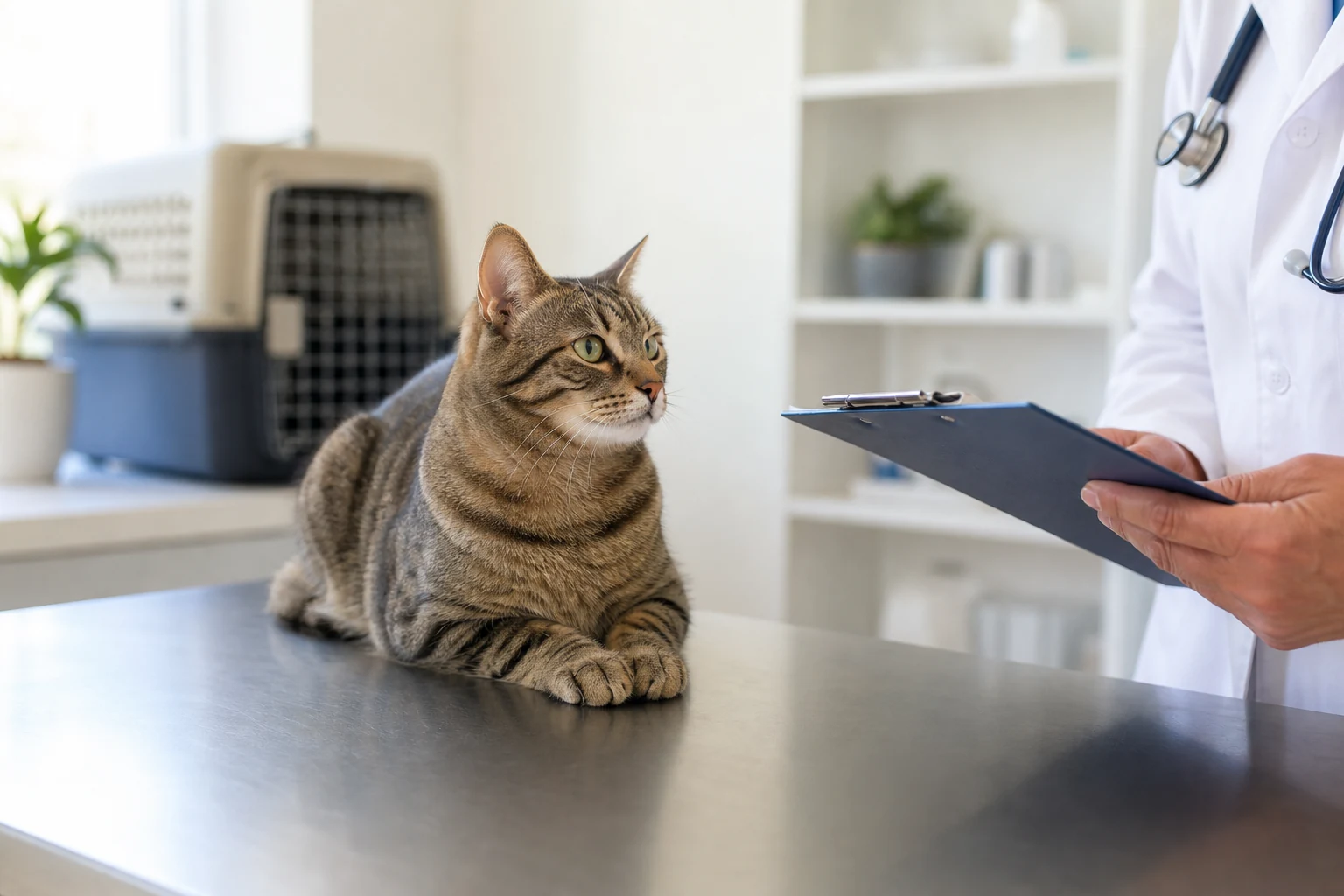
Mild cat vaccine side effects are usually short-lived: a little sleepiness, a tender injection spot, a reduced appetite, or mild fever for a day or two. Call your veterinarian promptly if your cat has facial swelling, trouble breathing, repeated vomiting or diarrhea, collapse, extreme weakness, severe pain, or a lump that grows instead of shrinking.
Vaccines are meant to train the immune system, so a quiet day after shots does not automatically mean something went wrong. The useful question is whether your cat looks mildly off but stable, or whether the signs are intense, worsening, or out of proportion for your cat.
This guide explains what is commonly normal after cat vaccines, what warning signs deserve a same-day call, and how to monitor an injection-site lump without guessing. For vaccine timing and core-vaccine decisions, start with our cat vaccine schedule guide.
Table of Contents
- What cat vaccine side effects are normal?
- How long do cat vaccine side effects usually last?
- When should you call the vet after cat vaccines?
- When is vomiting after a vaccine an emergency?
- How should you monitor a vaccine-site lump?
- Are some cats more likely to feel tired after shots?
- How can you help your cat recover comfortably at home?
- Conclusion: Most reactions are mild, but clear warning signs matter
- Frequently Asked Questions
- References
What cat vaccine side effects are normal?
Normal post-vaccine reactions are usually mild, temporary signs that your cat's immune system noticed the vaccine. AAHA/AAFP guidance describes commonly reported reactions as lethargy, reduced appetite, fever for a few days, or local inflammation at the injection site 1.
VCA lists similar mild effects after vaccination, including redness, mild swelling, tenderness where the vaccine was given, decreased activity, loss of appetite, low-grade fever, and short respiratory signs after an intranasal vaccine 2. These signs should be mild, not dramatic.
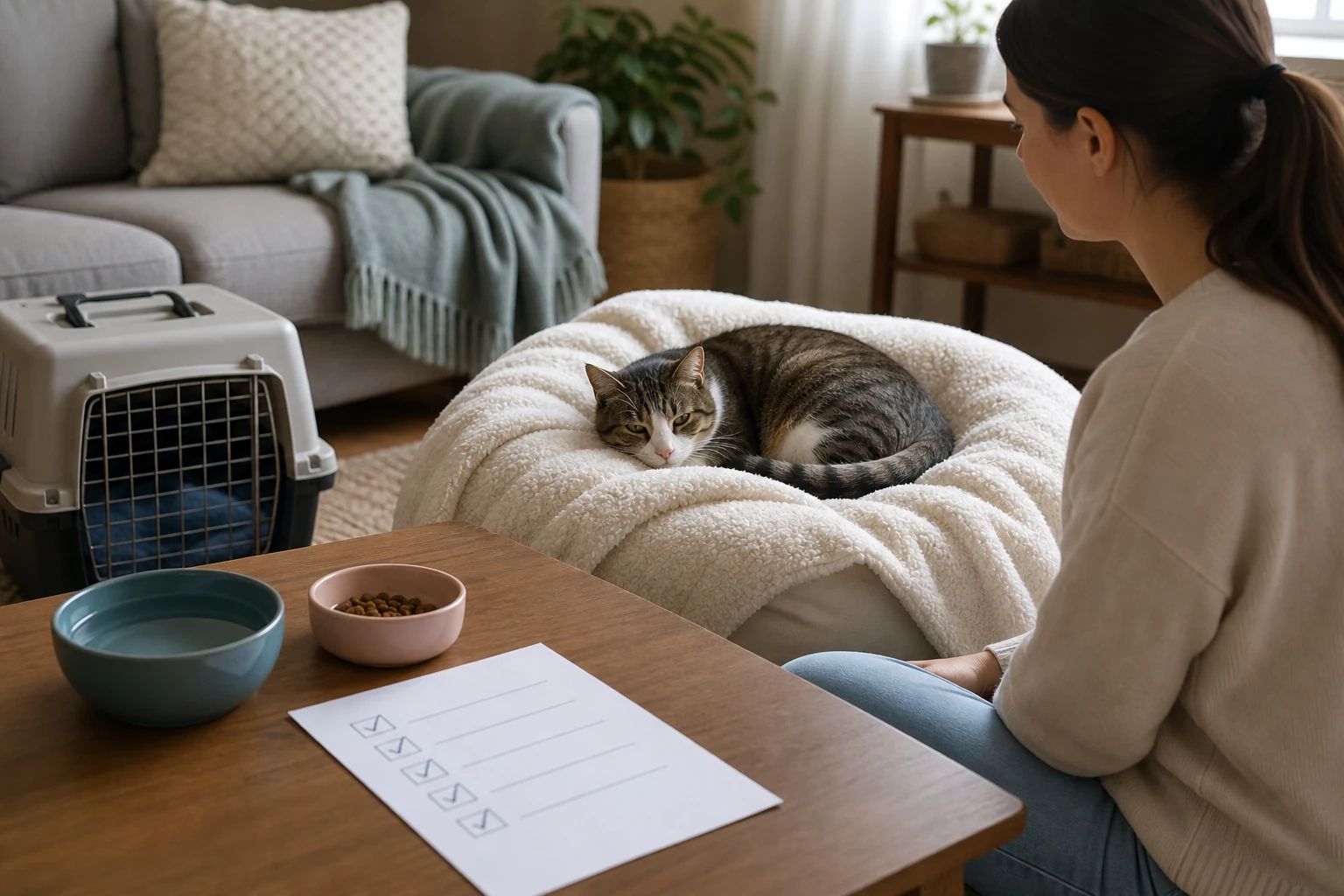
For most cats, "normal" looks like:
| Sign | What it may look like | What to do next |
|---|---|---|
| Sleepiness | Your cat naps more or chooses a quiet room | Offer a calm space and monitor energy |
| Tender injection spot | Mild flinch when touched near the site | Do not massage the area; watch for swelling |
| Reduced appetite | Eats less for one meal but still drinks and acts stable | Offer normal food and call if it persists |
| Mild feverish behavior | Warm ears, lower play interest, more resting | Keep your cat comfortable and observe closely |
| Small firm bump | A pea-like lump at the injection site | Track size and call if it grows or persists |
The key is trend. A cat who is sleepy but gradually brighter is different from a cat who becomes weaker, hides continuously, refuses all food, or seems painful. If you are unsure, use your veterinary clinic as the tie-breaker; they know your cat's vaccine history and health risks better than a generic checklist. You can also keep browsing our broader cat health guides for symptom context.
How long do cat vaccine side effects usually last?
Many mild side effects improve within 24 to 48 hours. VCA advises notifying your veterinarian if mild signs last more than 24 hours or if your pet appears extremely uncomfortable 2.
That does not mean every sleepy cat needs an emergency visit after one quiet afternoon. It means you should watch the whole pattern:
- Is your cat becoming brighter, eating more, and moving normally?
- Is your cat still drinking and using the litter box?
- Is the injection site only mildly tender?
- Are symptoms stable or improving instead of escalating?
If the answer is mostly yes, quiet monitoring may be enough. If appetite disappears, energy drops sharply, breathing changes, vomiting starts, diarrhea appears, or pain seems more than mild soreness, call your vet rather than waiting out the clock.
Kittens, seniors, cats with chronic illness, and cats who received more than one vaccine may need a more conservative plan. WSAVA emphasizes individualized vaccination decisions and adverse-event reporting so veterinary teams can keep improving vaccine safety 3.
When should you call the vet after cat vaccines?
Call your veterinarian the same day if the reaction is intense, worsening, or makes you uneasy. Vaccine reactions are considered uncommon, but the rare serious ones matter because fast care can be important 1.
Use this practical triage table:
| What you see | How urgent it is | Why it matters |
|---|---|---|
| Mild sleepiness for a day | Monitor, unless it worsens | Common short-term reaction |
| Mild soreness at injection site | Monitor and avoid pressing it | Local inflammation can happen |
| Not eating well for more than a day | Call your veterinarian | Cats should not go long without food |
| Facial swelling, hives, intense itching | Urgent call or emergency care | Possible allergic reaction |
| Trouble breathing, collapse, pale gums | Emergency care now | Possible severe systemic reaction |
| Repeated vomiting or diarrhea | Urgent call or emergency care | Can be part of a serious reaction |
| Lump grows, hurts, or does not shrink | Veterinary exam | Needs measurement and documentation |
Cats often hide discomfort, so body language matters. If your cat is hunched, avoids being touched, growls when lifted, has squinted eyes, or stops normal movement, review our guide to subtle cat pain signs and call your veterinary team for next steps.
Do not give human pain medicine after vaccines unless your veterinarian specifically prescribed it for your cat. Many common human medications are dangerous for cats, and a reaction should be assessed rather than masked.
When is vomiting after a vaccine an emergency?
Vomiting after a vaccine deserves a call because it can be mild stress, motion sickness, or part of a more serious reaction. Repeated vomiting, vomiting with diarrhea, facial swelling, weakness, collapse, breathing difficulty, or pale gums should be treated as urgent.
Allergic reactions can happen within minutes to hours after vaccination, and serious reactions can involve multiple body systems. VCA notes that less common but serious vaccine reactions may occur within minutes to hours and require immediate veterinary care 2.
If your cat vomits once after a stressful car ride but then acts normal, your vet may advise monitoring. If vomiting continues, your cat becomes weak, or any breathing or swelling signs appear, seek emergency veterinary care. For a broader symptom comparison, see our guide to vomiting warning signs in cats.
How should you monitor a vaccine-site lump?
Monitor a vaccine-site lump by noting when you found it, where it is, how large it feels, whether it is painful, and whether it is shrinking or growing. Do not squeeze, massage, or repeatedly poke it.
Small local swelling can happen after vaccination. The concern is a lump that persists, grows, or becomes painful. AAHA/AAFP recommends monitoring vaccine sites using the "3-2-1" rule: a mass should be evaluated if it remains present 3 months after vaccination, is larger than 2 cm, or is increasing in size 1 month after vaccination 1.
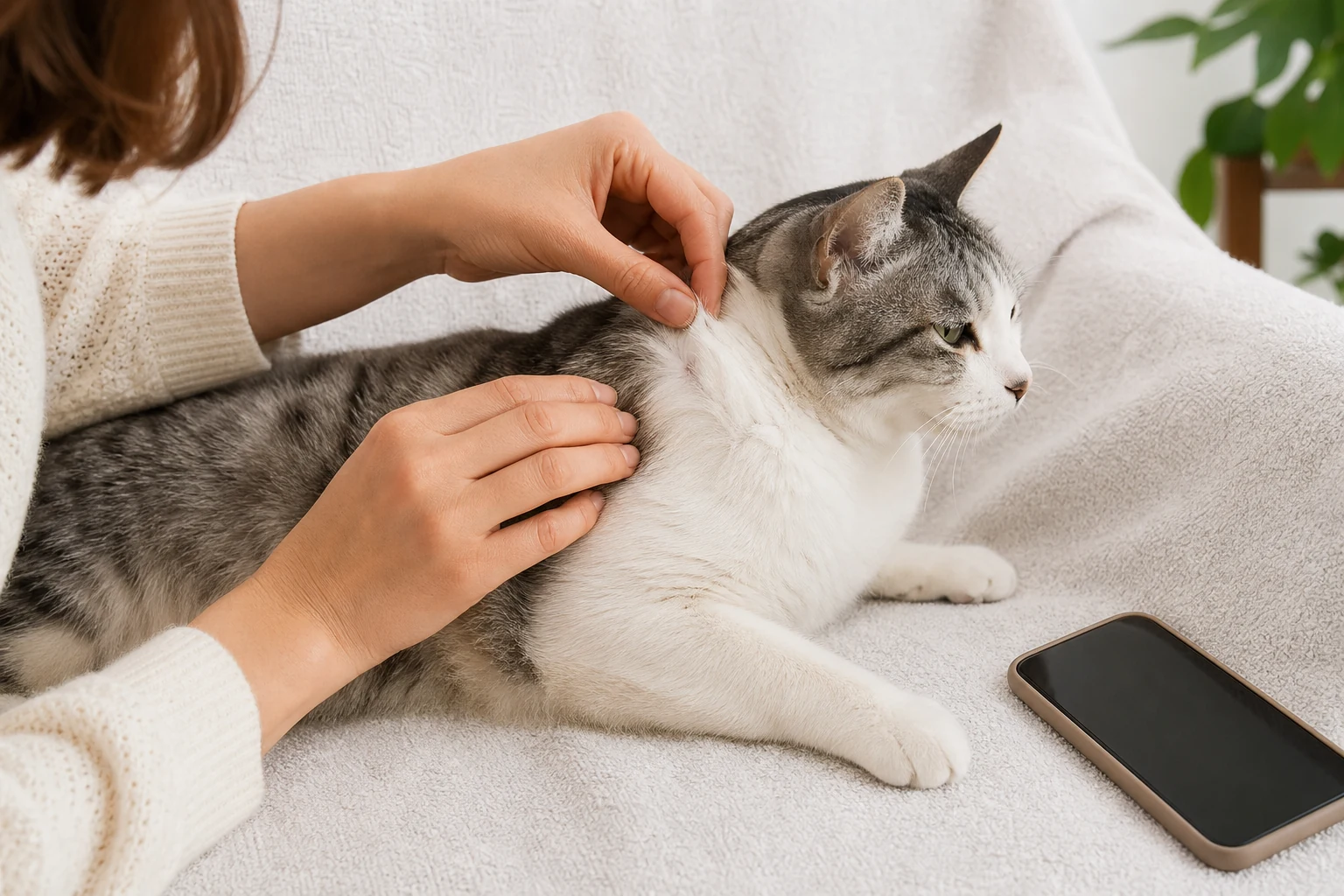
The AVMA explains that most post-vaccine side effects are temporary and minor, but cats are susceptible to a rare serious condition called feline injection-site sarcoma 5. Merck Veterinary Manual also notes that some chronic inflammatory reactions to long-acting feline vaccines may eventually lead to vaccine-associated sarcoma at the injection site in cats 4.
That does not mean every small bump is cancer. It means you should document it clearly and let your veterinarian decide what needs a recheck.
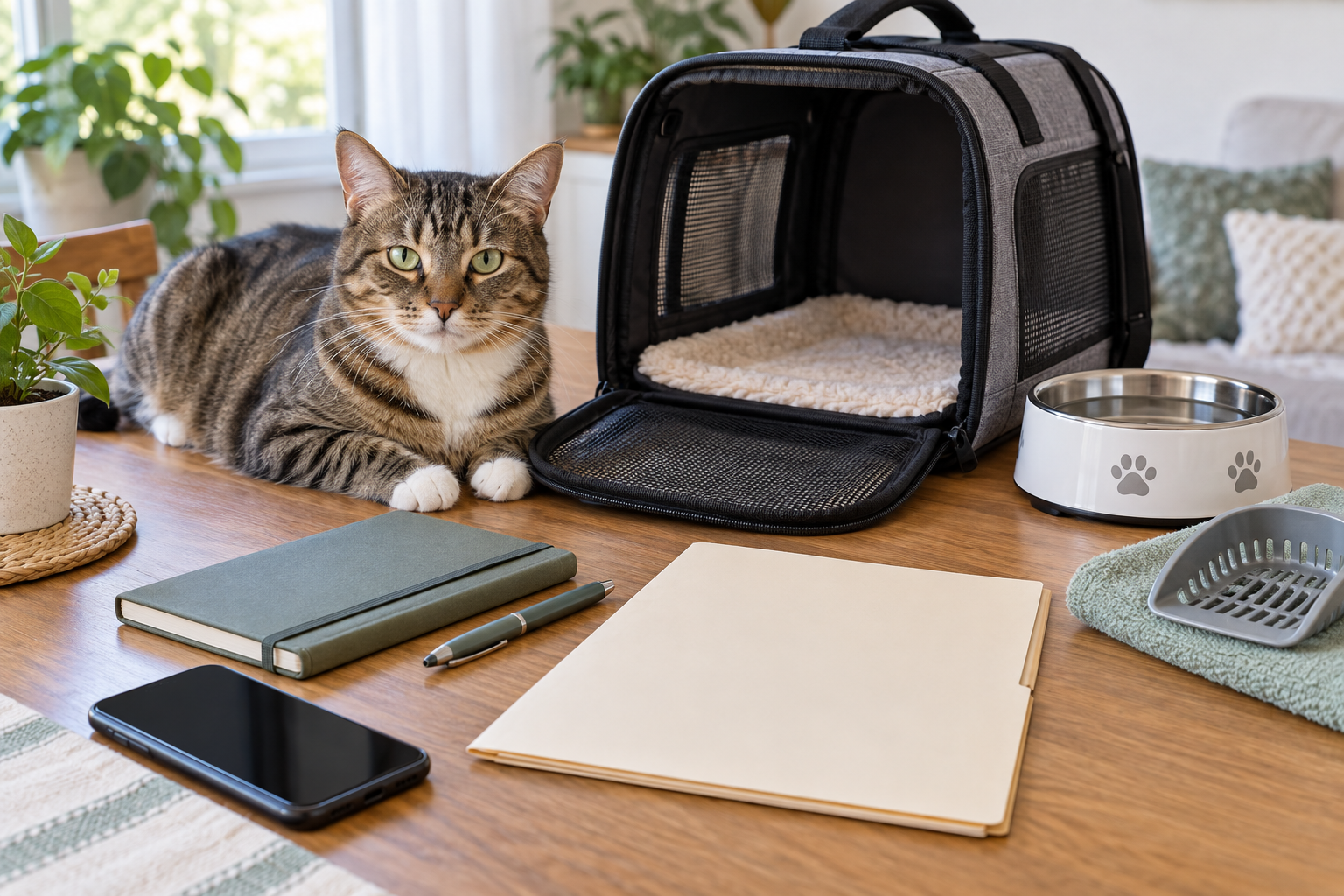
A simple home note can include:
- Date of vaccination
- Vaccines given, if listed on your receipt
- Location of the injection site
- Date you first noticed the lump
- Approximate size compared with a pea, bean, grape, or ruler measurement
- Whether the lump is getting smaller, staying the same, or getting larger
- Any pain, warmth, discharge, skin change, or behavior change
If your cat resists handling, skip the wrestling match and call your clinic. A stressed, frightened cat is harder to assess safely.
Are some cats more likely to feel tired after shots?
Some cats may be more likely to seem tired after vaccination because of age, stress, health status, vaccine history, or the number of vaccines given at one appointment. AAHA/AAFP notes that adverse-reaction risk in one large population was greatest in cats around 1 year of age and increased with the total volume and number of vaccines given concurrently 1.
Your vet may adjust future plans if your cat had a previous reaction. That might mean spacing vaccines, choosing a different product when appropriate, pre-visit planning, longer observation after vaccination, or documenting the reaction prominently in the medical record. Do not skip core protection on your own; ask for a risk-benefit plan.
Health status matters too. A cat who is underweight, overweight, painful, feverish, or fighting another illness may not respond like a healthy adult at a routine wellness visit. If you are already tracking weight or muscle changes, our body condition and muscle condition guide can help you prepare useful notes before the appointment.
How can you help your cat recover comfortably at home?
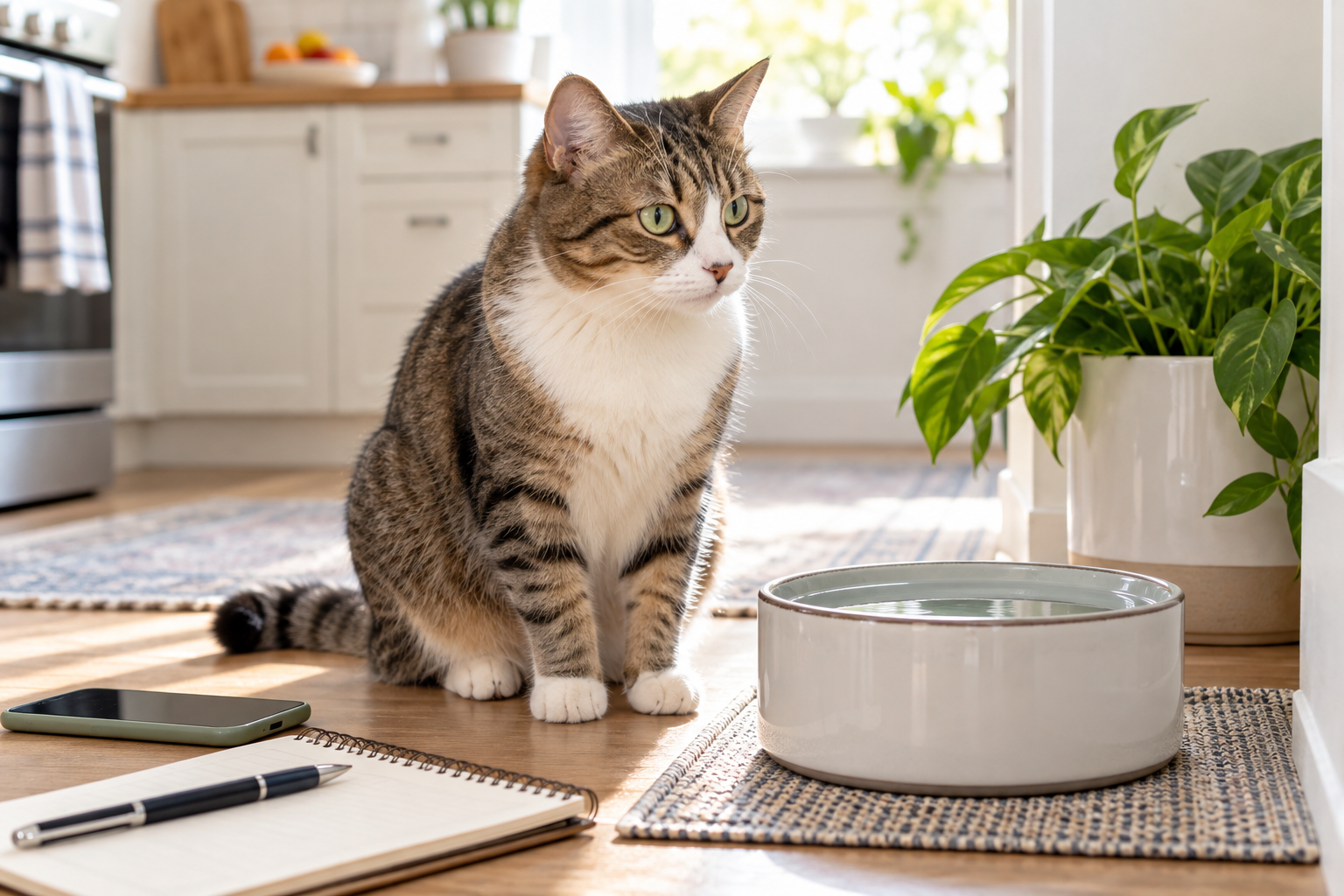
Help your cat recover by making the next 24 hours boring in the best way: quiet room, normal food and water, clean litter box access, gentle observation, and no forced play or unnecessary handling.
Try this after-vaccine routine:
- Keep your cat indoors and away from rough play.
- Offer regular meals, not new treats or a new diet.
- Let your cat choose a quiet hiding or resting spot.
- Avoid pressing on the injection area.
- Check breathing, appetite, litter box use, and energy a few times.
- Keep your clinic's phone number and emergency clinic information handy.
- Record any reaction details for the next vaccine visit.
Do not bathe your cat, start a new supplement, host a stressful introduction, or push a grooming session right after vaccination unless your veterinarian told you to do so. The goal is to make it easy to notice whether your cat is simply resting or actually declining.
Conclusion: Most reactions are mild, but clear warning signs matter
Most cat vaccine side effects are mild and short-lived: a quiet day, a tender spot, a small bump, or a reduced appetite that improves. The warning signs are different: facial swelling, breathing trouble, collapse, repeated vomiting or diarrhea, severe pain, extreme weakness, or a lump that grows or fails to resolve.
Your safest plan is simple. Know what was given, watch your cat calmly, document anything unusual, and call your veterinarian when the reaction is more than mild or does not improve. Vaccines protect cats from serious diseases, and careful monitoring helps your vet make future vaccine visits safer and more tailored to your cat.
Frequently Asked Questions
Is it normal for my cat to sleep all day after vaccines?
Mild sleepiness can be normal for a short time after vaccination. Call your veterinarian if your cat is extremely weak, difficult to wake, not eating, breathing abnormally, or not improving by the next day.
How long should a cat be sore after shots?
Mild soreness is usually short-lived and should gradually improve. If the area becomes very painful, hot, increasingly swollen, or your cat reacts strongly when touched, call your veterinarian.
Should I give my cat medicine for vaccine soreness?
Do not give human pain relievers or leftover pet medication unless your veterinarian specifically prescribed it for this situation. Cats are highly sensitive to many drugs, and vaccine reactions should be assessed by a veterinary professional.
Can cats have allergic reactions to vaccines?
Yes, allergic reactions can happen, although serious reactions are uncommon. Facial swelling, hives, vomiting, diarrhea, breathing difficulty, weakness, or collapse after vaccination should be treated as urgent.
Is a lump after a cat vaccine always dangerous?
No. Some small vaccine-site lumps are temporary. A lump should be checked if it is growing, painful, larger than about 2 cm, still present 3 months later, or increasing in size 1 month after vaccination.
Should my cat get vaccines again after a reaction?
Do not decide alone. Tell your veterinarian exactly what happened, when it started, and how long it lasted. Your vet can weigh disease risk, legal requirements, previous reactions, vaccine type, and whether future vaccines should be spaced or monitored differently.
References
[1] AAHA/AAFP. (2020). Adverse Postvaccination Reactions. Read the AAHA/AAFP guidance
[2] VCA Animal Hospitals. (2024). Care for Your Pet After Vaccination. Read the VCA after-vaccination guide
[3] WSAVA. (2024). 2024 Guidelines for the Vaccination of Dogs and Cats. Read the WSAVA vaccination guidelines
[4] Merck Veterinary Manual. (2023). Vaccine Failure and Other Adverse Events in Animals. Read the Merck Veterinary Manual overview
[5] American Veterinary Medical Association. (2024). Vaccines and Sarcomas: A Concern for Cat Owners. Read the AVMA owner resource
 Why Does My Cat Flinch When Touched While Sleeping? Startle, Trust, and Pain Clues">
 Cat Scratching Baseboards: Trim Guards and Route Fixes">
 EN
EN DE
DE ES
ES PT
PT