
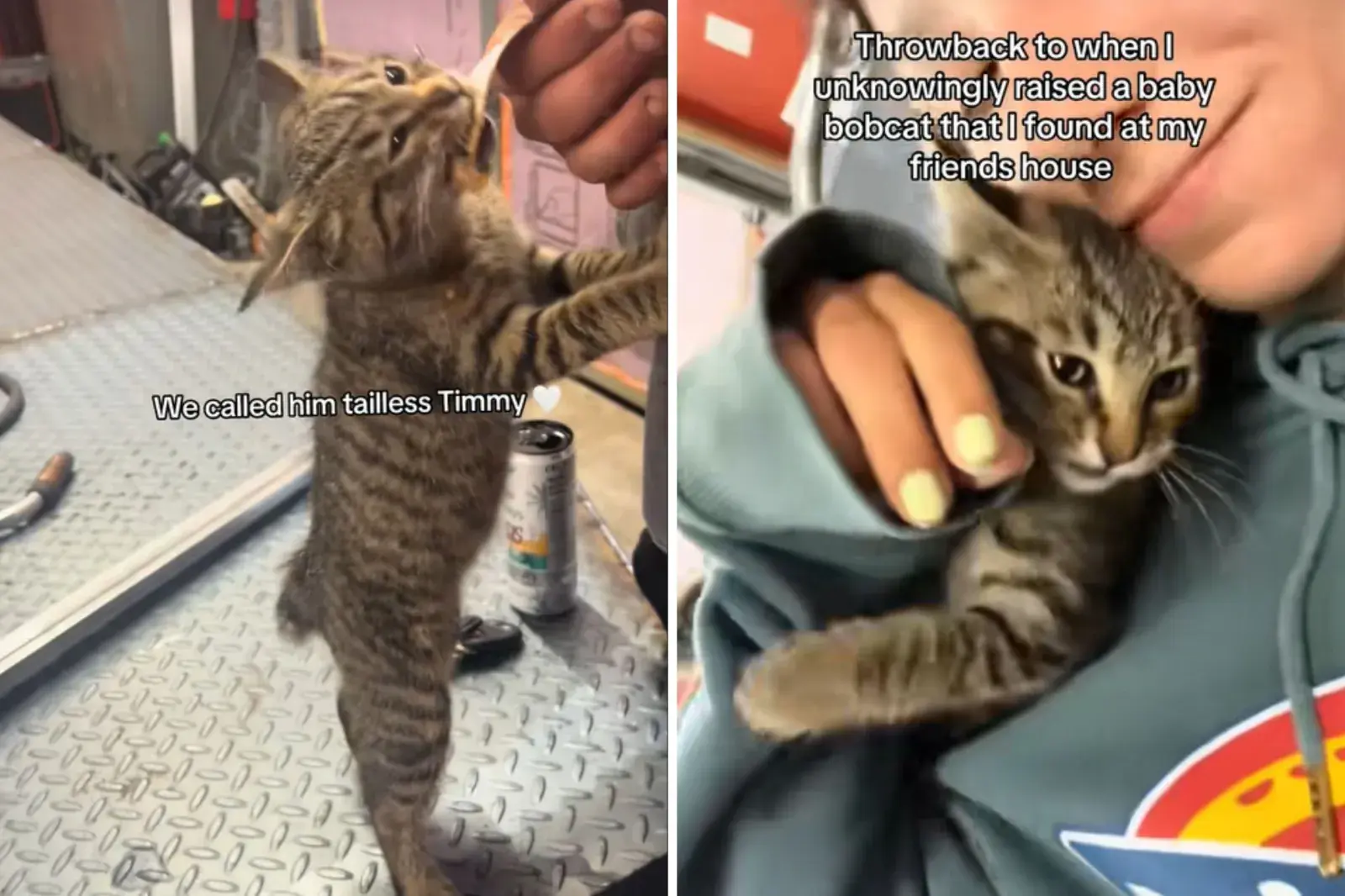
As pet parents, we often open our hearts to strays, but one woman’s act of kindness in Jackson, Michigan, led to a wild surprise. Audriana, known as @audriana.3 on TikTok, thought she’d adopted a typical kitten, only to suspect it was part bobcat as it grew.
Her viral story, shared with Snugglesouls, highlights the challenges of identifying wild cat hybrids and keeping pets safe. Here’s what happened and how to spot the difference between a domestic cat and a bobcat.
A Kitten with a Wild Side
About two years ago, Audriana found a stray kitten near railroad tracks and welcomed him into her family. For five to six months, all seemed normal—until the kitten started growing rapidly, gaining 15 pounds in just four months. Concerned, she took him to a vet for shots and a checkup.
The vet suggested he might be a stray mix, possibly half bobcat, but approved keeping him if he remained non-aggressive. Unfortunately, the cat soon ran away, leaving Audriana without definitive proof of his lineage.
Months later, the cat returned to her farm as a “full-grown bobcat self,” weighing within the typical adult bobcat range of 15–30 pounds. His behavior turned predatory, snatching chickens and even a duck just 20 feet from Audriana’s family.
“We chased him throughout our neighborhood, trying to find where his den or home was and never found it,” she told Snugglesouls. Her August 9, 2025, TikTok video reflecting on their time together exploded with 4.3 million views and 614,000 likes, but viewers were skeptical, suggesting breeds like Manx or American Bobtail instead, with some calling him “adorable” and “spicy.”
Can Bobcats Breed with Domestic Cats?
The idea of a bobcat-domestic cat hybrid is captivating but unproven. A vet-approved Catster article notes no scientific evidence supports viable offspring between bobcats (Lynx rufus) and domestic cats (Felis catus), as their reproductive systems differ significantly. Claims of hybrids, like Audriana’s kitten, are often anecdotal. However, certain breeds resemble bobcats:
- Pixie-Bob: Bred to mimic bobcats with spotted coats and short tails, but DNA tests confirm no bobcat ancestry.
- American Bobtail: Known for stubby tails and robust builds, often mistaken for wild hybrids.
- Highlander: Features curled ears and spotted fur, adding to the wild look.
Bobcats, found across Southern Canada and most of the U.S., have distinct traits: striped legs, spotted bodies, short black-tipped tails, and muscular builds. Domestic cats rarely have these features, though breeds like the Manx or Maine Coon may share superficial similarities, per the ASPCA.
How to Identify a Bobcat Kitten
If you find a stray kitten and suspect it’s a bobcat, look for these characteristics, per For Fox Sake Wildlife Rescue:
- Tail: Bobcats have short, stubby tails (4–8 inches) with a black tip and white underside, unlike most domestic cats.
- Coat: Always spotted, with stripes on legs and sometimes faint rosettes, rare in domestic cats.
- Build: Bobcats are larger and more muscular, even as kittens, often twice the size of domestic kittens.
- Behavior: Bobcat kittens are more aggressive, wary of humans, and may snarl or hiss when handled.
- Ears: May have black tufts with white “false eye” markings, though not always present in young kittens.
If you suspect a bobcat, contact a wildlife rehabilitator immediately, as they’re wild animals and not suitable as pets.
Keeping Pets and Farms Safe
Audriana’s experience shows the risks of mistaking a wild animal for a pet. Her cat’s predatory behavior endangered farm animals, a common issue as bobcats adapt to human encroachment by preying on small pets, per A-Z Animals. To protect your pets and livestock:
- Keep Cats Indoors: Indoor cats avoid predators like bobcats, which can scale fences to attack.
- Secure Outdoor Animals: Use enclosed coops or barns for chickens and ducks, especially in areas with bobcats.
- Microchip Pets: Ensure cats have microchips and ID tags in case they escape.
- Supervise Outdoor Time: Walk pets on a leash and monitor farm animals closely.
- Contact Professionals: If a wild animal appears, call a wildlife rehabilitator rather than attempting to care for it.
Coping with a Wild Surprise
Audriana’s story resonates with pet parents who’ve faced unexpected challenges with strays. While she cherished her time with the kitten, his wild behavior and departure were heartbreaking. For those in similar situations, consider:
- DNA Testing: Use a cat-specific DNA test to explore your pet’s ancestry, though bobcat markers are unlikely.
- Support Shelters: Donate to or adopt from shelters to help domestic cats find safe homes.
- Share Your Story: Like Audriana, sharing on platforms like TikTok can connect you with others and raise awareness.
Takeaway for Pet Parents
Audriana’s viral TikTok reminds us that stray kittens can bring surprises—sometimes wild ones. If you adopt a stray, watch for unusual traits and consult a vet early.
Keep pets indoors and secure farm animals to protect them from predators like bobcats. Visit your local shelter to adopt a domestic cat with a wild look, like a Pixie-Bob, and give them a loving home. Let’s keep our pets safe and our hearts open to the unexpected!
FAQ
Can bobcats breed with domestic cats?
No scientific evidence confirms bobcats and domestic cats can produce viable offspring, though anecdotal reports exist. Breeds like Pixie-Bobs mimic bobcat traits but are fully domestic.
How can I tell if my kitten is a bobcat?
Look for a short, black-tipped tail, spotted coat, striped legs, and a muscular build. Bobcat kittens are larger and more aggressive than domestic ones. Contact a wildlife expert if unsure.
How do I protect my pets from bobcats?
Keep cats indoors, secure outdoor animals in enclosed spaces, use microchips, and supervise outdoor time. Bobcats can prey on small pets, especially in rural areas.





 EN
EN DE
DE ES
ES PT
PT