Why Cats Wiggle Before They Pounce? (Butt Wiggle Explained)
If you’ve ever seen your cat crouch low, lock onto a toy, and do that adorable butt wiggle right before a leap—you’re not imagining things. It’s a common (and very normal) pre-pounce behavior.
Quick answer: Cats often wiggle before pouncing to plant their back feet for better traction, fine-tune balance and distance, and release a burst of excited energy right before they push off with both hind legs.
Quick data snapshot: cats are common worldwide
Cats are one of the world’s most common companion animals, so it’s not surprising that many guardians (across different countries and home setups) notice the same “pre-pounce wiggle.”
United States: about 42.1 million households owned a cat in 2024.
United Kingdom: about 12.5 million pet cats in 2024, with 29% of households owning a cat.
Note: These are survey/industry estimates; totals vary by method and year.
In this guide, you’ll learn the most likely reasons behind the wiggle, what it means during play, and how to use it as a cue for healthier indoor enrichment.
Table of Contents
Key takeaways
The wiggle can help your cat “set” their hind paws so they don’t slip during the jump.
It may help with timing, balance, and aim, especially on rugs or smooth floors.
During play, it’s usually harmless—but if you see pain signs (limping, yowling, sudden avoidance), it’s worth a vet check.
Top reasons cats wiggle before they pounce (cat “butt wiggle” explained)
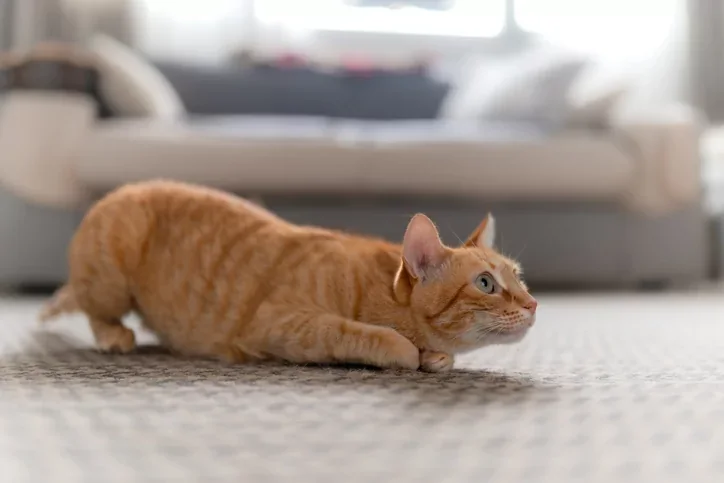
Your cat’s pounce is powered by the back legs. Right before launch, many cats shift their hips side-to-side in a small “wiggle” to get their rear paws, muscles, and balance exactly where they want them. Think of it like a tiny pre-jump setup—part mechanics, part excitement.
1. They’re planting their back feet for traction and stability
A pounce is powered by a two-leg push-off from the hind legs. The wiggle helps your cat subtly reposition their rear paws, grip the surface, and stabilize their body before the leap—especially on rugs, blankets, or slick floors.
More stability: shifting hips helps align the spine and hips for a clean launch
Cleaner takeoff: a stable rear base makes the pounce more accurate
2. They’re calibrating distance, aim, and timing (and “loading” the muscles)
That brief wiggle can be your cat’s way of fine-tuning the jump—micro-adjusting the angle and distance before committing. At the same time, the movements help “load” the hind-leg muscles like springs.
Aim check: small shifts help line up the body with the target
Timing reset: a half-second pause improves precision on moving toys
Muscle prep: subtle motion can warm and prime the legs for an explosive push
3. They’re releasing excitement right before the pounce
Sometimes…it’s just hype. Play and hunting-style games can create a burst of excitement, and the wiggle looks like a quick energy release right before the “GO!” moment.
Anticipation outlet: releases tension without breaking focus
Play drive: common when the target is extra “tempting” (feathers, fast movement)
Totally normal: especially during energetic play sessions
Bonus: Wiggling can also help get the cat’s front paws into the ideal position before the jump, so their landing and “grab” are more controlled.
Wiggling the back end might help get the cat’s front paws into the ideal position.
Is the butt wiggle normal? When to worry
In most cats, the pre-pounce butt wiggle is completely normal—it’s part of hunting-style play and body positioning before a jump.
Normal (and common) when you see it:
During play with toys (wand toys, strings, crinkle balls)
Right before a jump onto a toy, sibling, or soft target
Watch your cat walk and jump on a familiar surface. Are they moving normally?
Try a lower-intensity play session. Are they eager—or avoiding pouncing?
If the change is sudden, persistent, or painful-looking, it’s safest to pause intense play and contact a vet.
Note: This guide is informational and not a substitute for veterinary advice. If you suspect pain or injury, get professional guidance.
Do kittens wiggle before they pounce? (Instinct + practice)
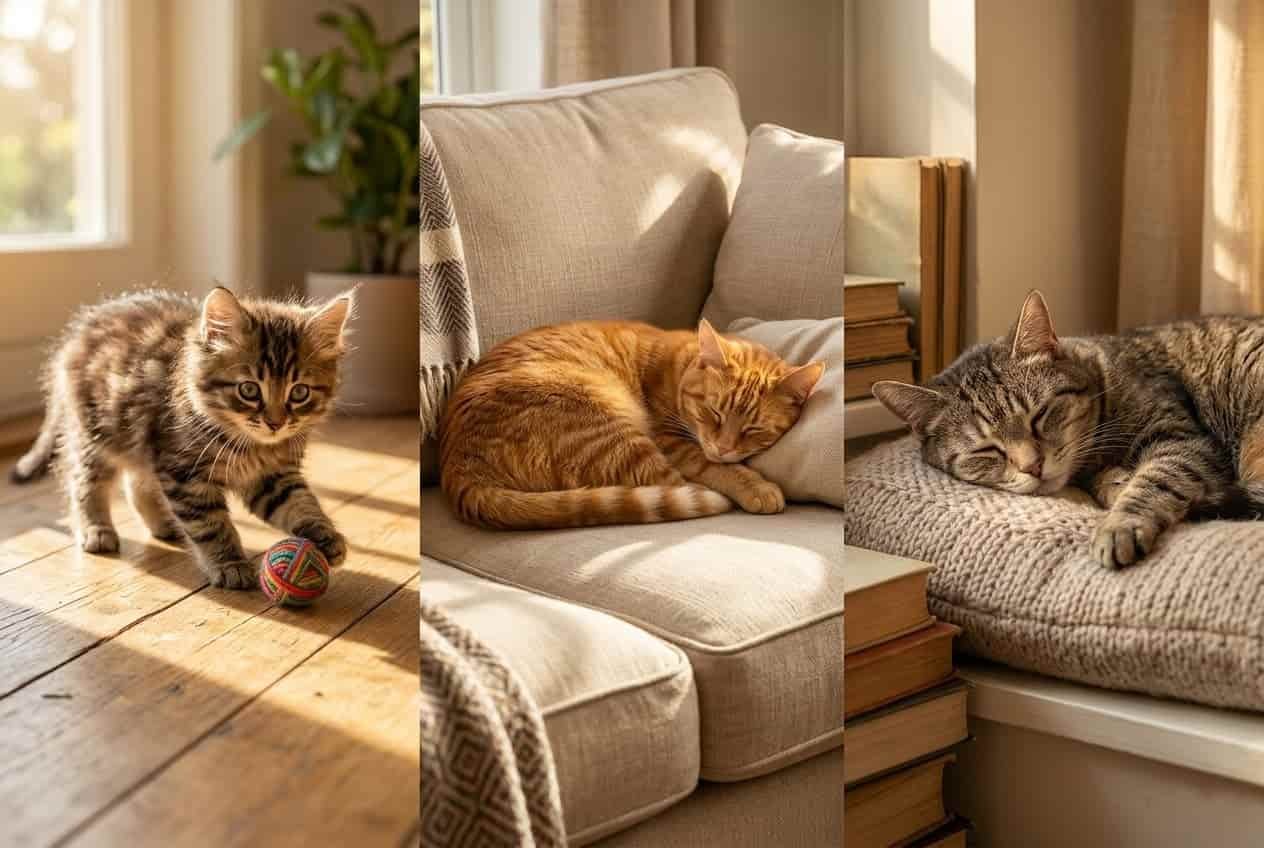
Yes—many kittens do a clumsy version of the butt wiggle before pouncing, and it usually comes down to instinct plus coordination practice. The hunting sequence (stalk → crouch → wiggle → pounce) is partly hardwired, but kittens often need time to learn distance, timing, and balance.
Kittens typically begin experimenting with pouncing when they’re very young, but early attempts can look awkward: wobbly hips, misjudged leaps, and dramatic “oops” landings. Watching and playing with other cats (including mom or littermates) can help them refine the pattern—especially the moment right before takeoff, when they’re trying to set their back legs and aim.
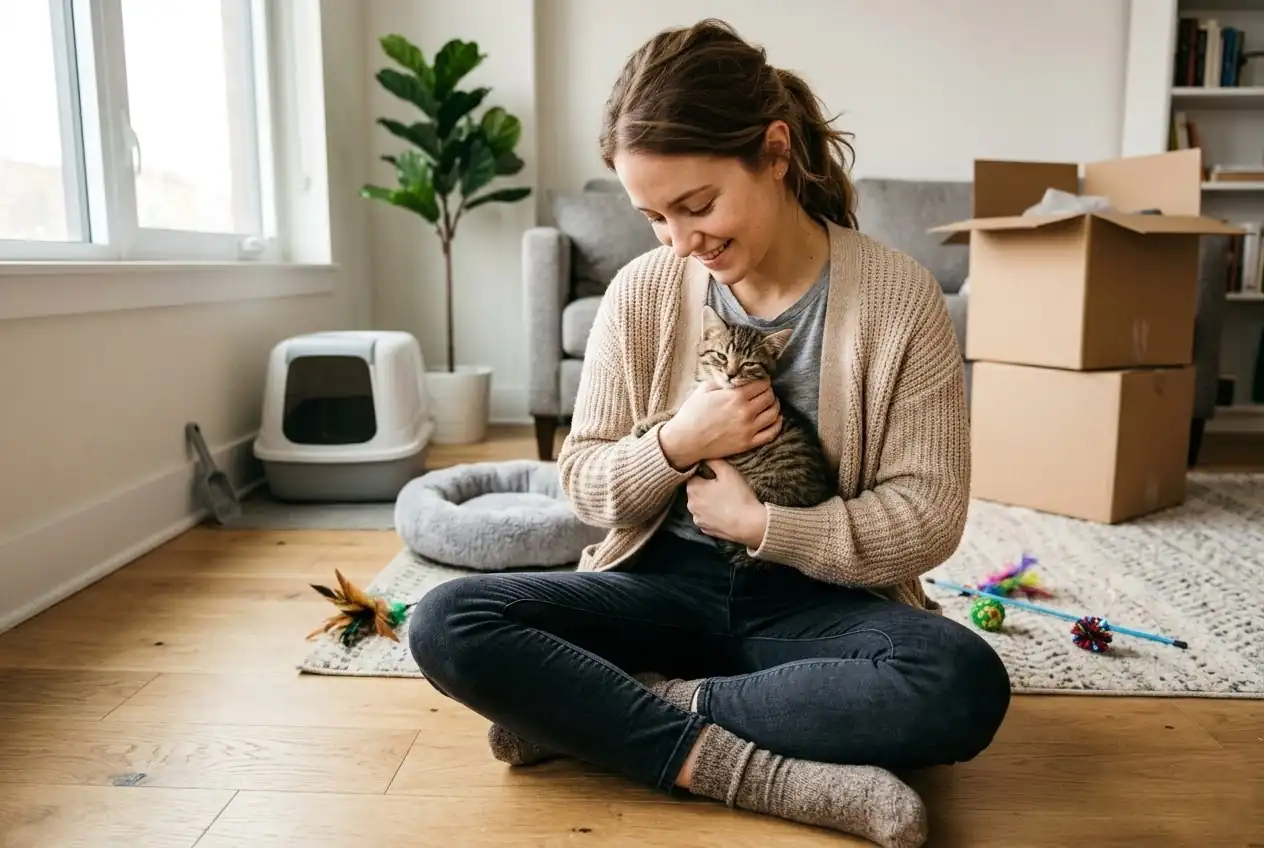
How to help your kitten practice safely
Use wand toys to encourage stalking and controlled pounces (avoid hands/feet).
Play in a non-slip area (rugs/mats help reduce slipping during takeoff).
Keep sessions short: 5–10 minutes, 2–3 times/day works well for kittens.
End with a “catch” so the hunt feels complete (toy + treat, if appropriate).
When to pay attention
If the “wiggle” looks like stiffness, limping, repeated falling, or obvious discomfort, it may be more than play mechanics—consider checking with a vet.
How to tell your cat is about to pounce (quick checklist)
The butt wiggle is usually just one part of your cat’s “launch sequence.” If you notice several of these at once, a pounce is coming—especially during play.
Signs a pounce is imminent
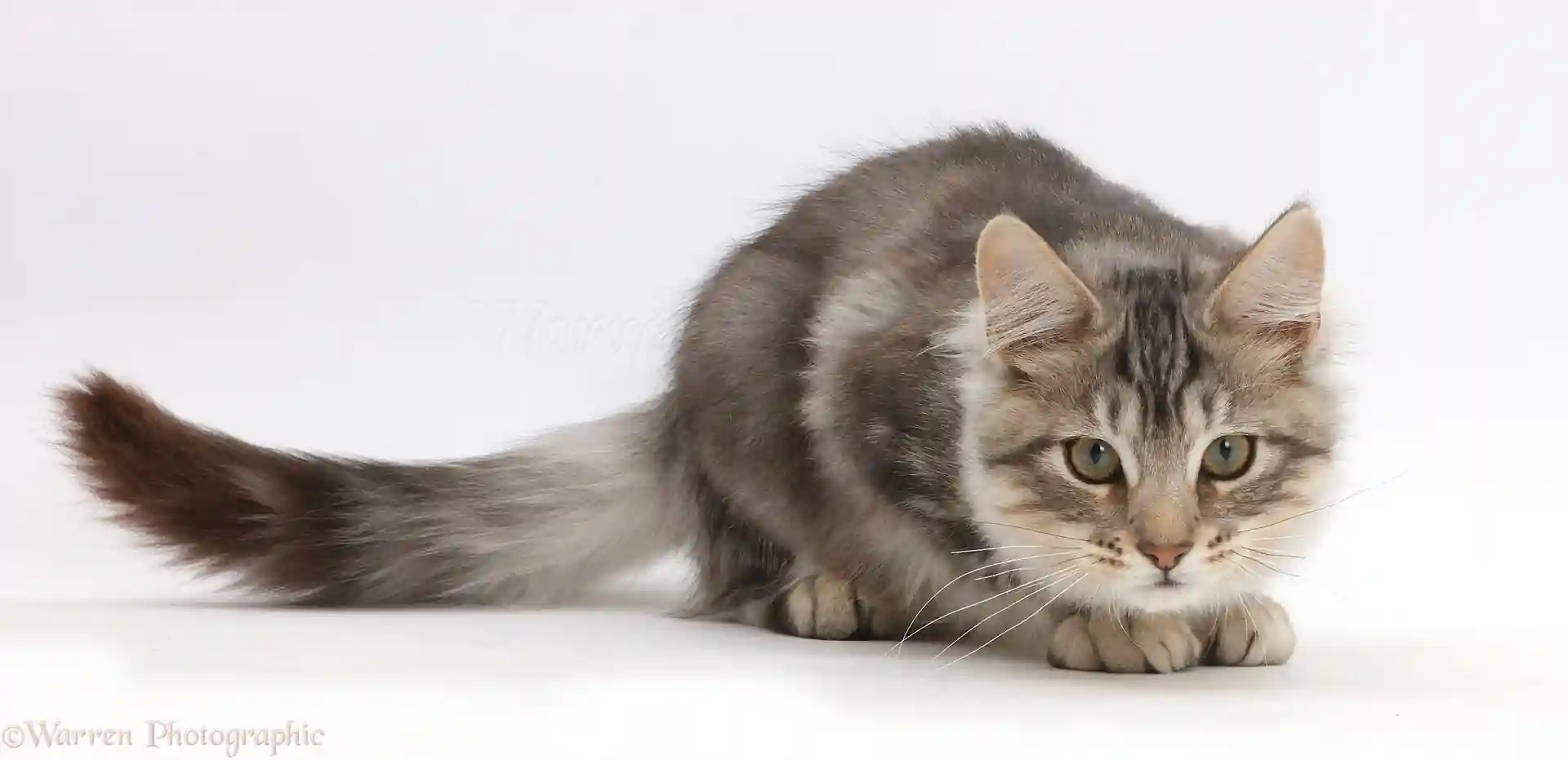
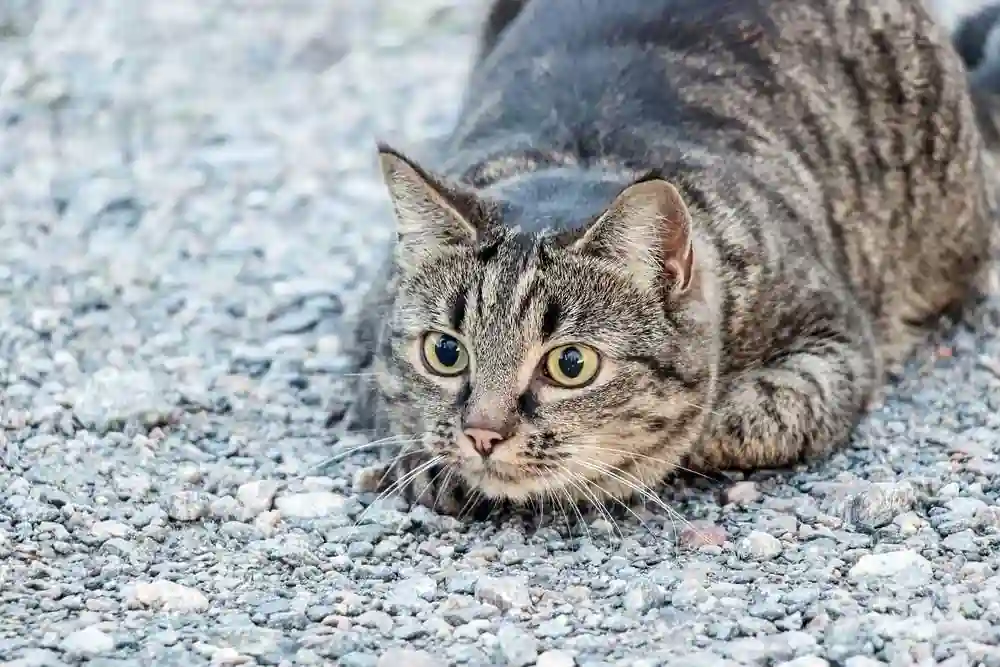
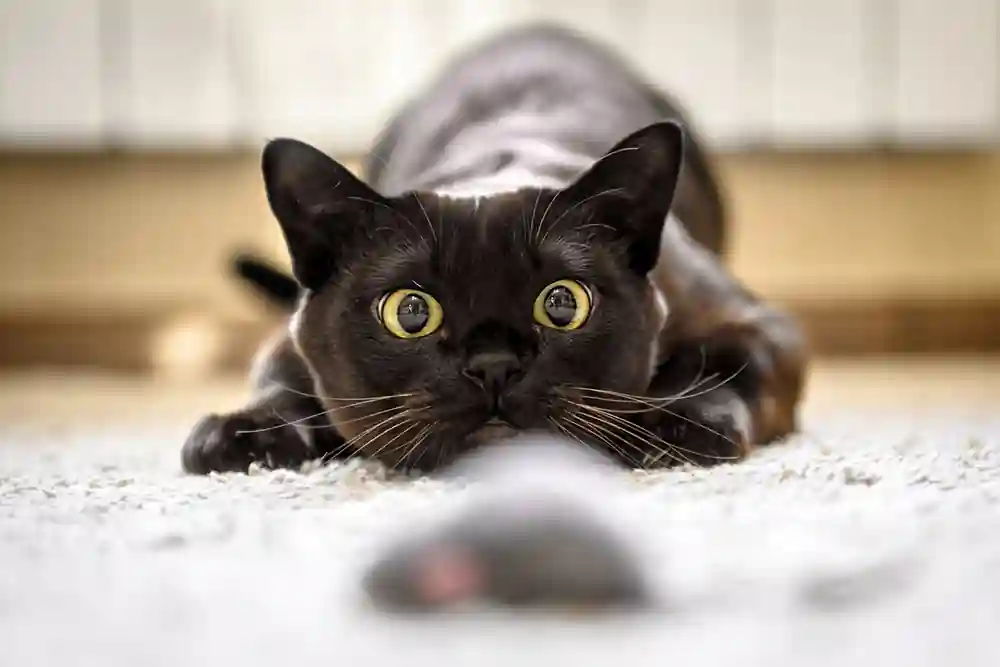
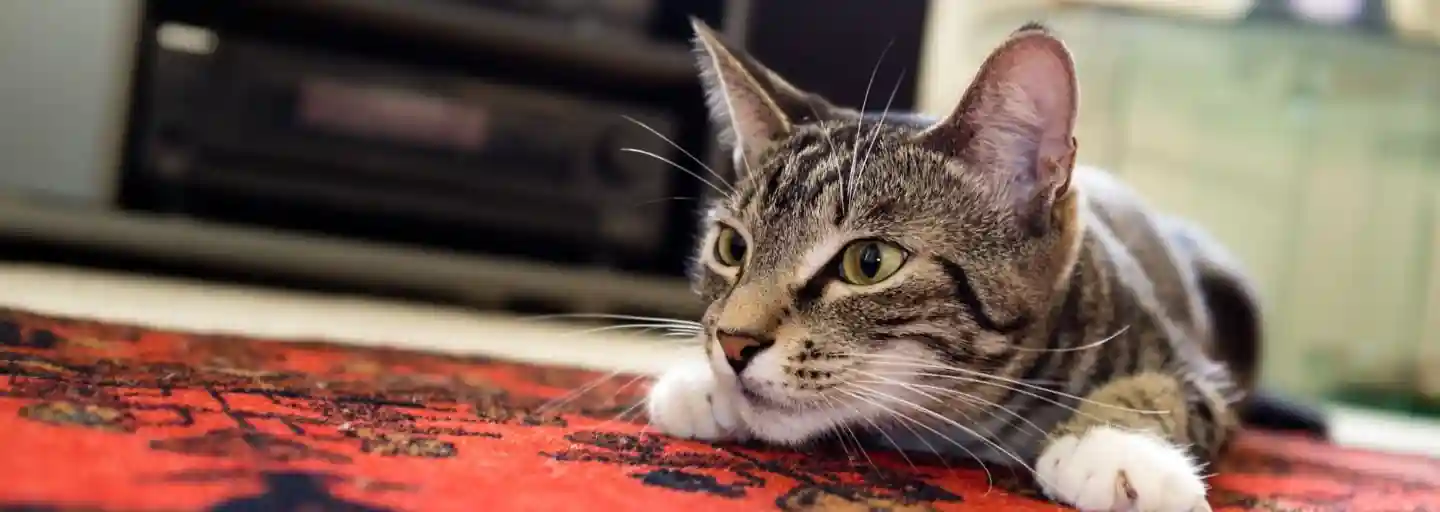
Freeze + low crouch: Body drops close to the floor and movement slows to tiny, deliberate steps.
Locked-on stare: Eyes fix on the “prey” (toy, string, moving object) with intense focus.
Rear-end wiggle or weight shift: Hips sway slightly as they set their hind feet for takeoff.
Tail signals: Tail tip twitching, tail swishing, or a tight little flick right before the leap.
Forward ears + whiskers: Ears and whiskers angle forward, aiming toward the target.
Micro-adjustments: Small paw shuffles—your cat is fine-tuning distance and angle.
What you should do when you see it
Redirect to the right target: Offer a wand toy, kicker, or rolling toy to keep ankles safe.
Let them “catch” sometimes: End play with a successful grab to prevent frustration.
Turn it into healthy enrichment: A short daily “stalk → pounce → catch” session helps indoor cats burn energy and reduces surprise ambushes.
When it’s not play (quick caution)
If the wiggle + stare comes with hissing, growling, flattened ears, puffed fur, or repeated stalking of people/pets, pause play and give space. If it’s frequent or escalating, consider a behavior consult.tructured play, boosting mental health and curbing those surprise foot ambushes.
Bottom line
Your cat’s butt wiggle is usually a smart (and adorable) pre-pounce setup: it helps with traction, balance, and timing, and sometimes it’s simply excitement. Use it as a cue to offer healthy play—15 minutes with a wand toy or a quick “hunt-catch-eat” routine can do wonders for indoor cats.
Next step: If you want more quirky cat body-language guides, explore our cat behavior articles
FAQ: Why Cats Wiggle Before Pouncing
Why do cats wiggle before they pounce?
Most cats wiggle before pouncing to get their back legs “set” for a strong launch. The movement can help with traction, balance, and timing, especially when they’re about to push off with both hind legs. Sometimes it’s also simple excitement—your cat is hyped and ready to strike the toy.
What does the cat “butt wiggle” mean?
In most cases, the butt wiggle is a normal hunting/play cue: your cat is locked in, lining up the jump, and preparing for an explosive burst of speed. Think of it as a tiny pre-jump routine—part coordination, part anticipation.
Do all cats wiggle before pouncing?
No. Some cats do it often, some only occasionally, and some barely at all. Cats have different play styles, body types, surfaces to jump from, and confidence levels. A cat that doesn’t wiggle can still pounce perfectly—it’s just one of several normal “launch prep” behaviors.
Is a butt wiggle a sign of aggression?
Usually, no—it’s typically play/hunting behavior, not anger. Look at the full body language: during playful hunting, you’ll see focused eyes, a crouch, and a controlled pounce. If the wiggle is paired with hissing, growling, flattened ears, or repeated stalking of people, redirect to toys and give your cat space.
Why does my kitten wiggle more (or more awkwardly) than my adult cat?
Kittens are still learning distance, balance, and timing. Their wiggle can look extra dramatic because they’re practicing coordination and building strength. With age (and lots of play), most cats refine their technique and become smoother, faster, and more accurate.
My cat wiggles and then pounces on me—how do I stop that?
Don’t punish the wiggle—it’s natural. Instead, redirect the pounce target. Keep wand toys handy, schedule short daily play sessions, and avoid using hands/feet as “prey.” If your cat ambushes ankles, interrupt with a toy toss or wand lure and reward pouncing on the toy instead.
Can pain cause a weird pre-jump wiggle? When should I worry?
Sometimes discomfort (hips, back, knees) can change how a cat prepares to jump. Consider a vet check if the wiggle is new or paired with limping, stiffness, yowling, hesitation to jump, or reduced play. If your cat looks comfortable and only wiggles during play, it’s usually normal.
How much playtime should an indoor cat get each day?
A common goal is 15–30 minutes daily, split into short sessions. Try a “hunt routine”: stalk → chase → pounce → catch (then a small treat or meal). This supports healthy weight, reduces boredom behaviors, and makes your cat’s natural hunting instincts a positive outlet.
Every SnuggleSouls article is created by real cat guardians and reviewed by
qualified experts so you know you’re getting trustworthy, compassionate advice.
Chris has spent many years living with, observing, and caring for cats, and now focuses on turning science-backed research into clear, practical guides for everyday cat guardians.
he helps you understand the “why” behind good feline care so you can communicate better with your vet and make more informed choices for your cat.
This content has undergone a rigorous fact-checking and accuracy screening process by the SnuggleSouls editorial team. We ensure that all recommendations are based on publicly available guidelines and reliable sources with in-depth interpretations from authoritative organizations such as AVMA.
SnuggleSouls is an independent, non-commercial cat care education platform.
Our content is for educational purposes and is not a substitute for a
personal veterinary diagnosis or treatment. If your cat seems unwell,
always contact your local vet promptly.




 EN
EN DE
DE ES
ES PT
PT