
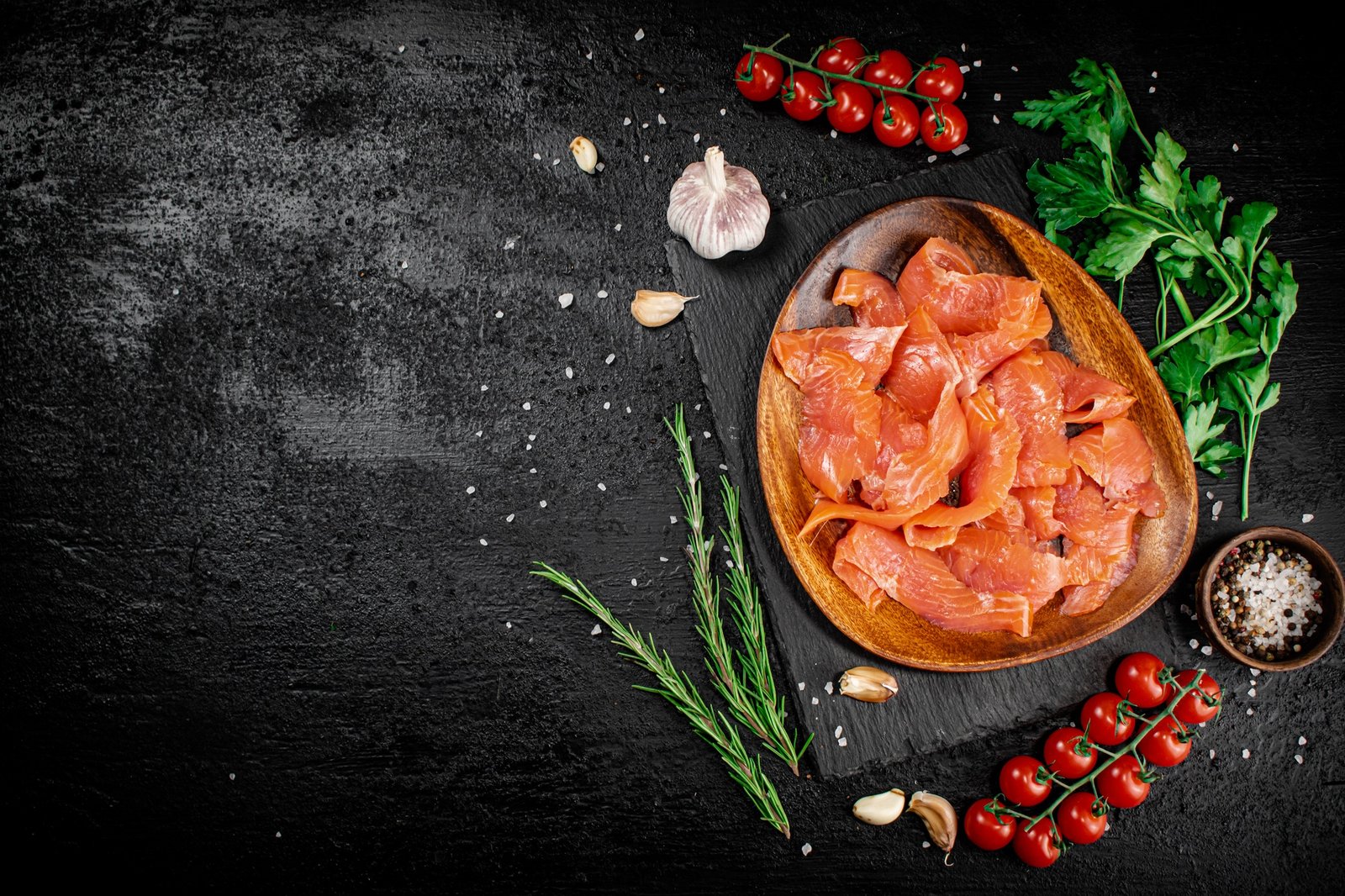
Yes, most healthy cats can eat a small amount of plain, fully cooked salmon as an occasional treat. It should be boneless, unseasoned, and served without oil, butter, salt, garlic, onion, lemon, sauces, or spices. Salmon should not replace a complete and balanced cat food, and raw, smoked, canned-in-salt/oil, or seasoned salmon is not a safe choice.
The safest way to think about salmon is simple: treat it like a small extra, not a meal plan. Cats need a complete and balanced diet that matches their life stage, and treats should stay limited so they do not crowd out essential nutrients 1, 2.
Table of Contents
- Can cats eat salmon safely?
- What kind of salmon is safest for cats?
- What salmon should cats avoid?
- How much salmon can I give my cat?
- When should salmon be off-limits?
- What should I do if my cat ate unsafe salmon?
- Is salmon cat food the same as giving salmon?
- Frequently Asked Questions
- References
Can cats eat salmon safely?
Cats can eat salmon safely when it is plain, cooked, boneless, fresh, and offered in a very small amount. The risk rises when salmon is raw, smoked, salty, oily, seasoned, spoiled, or used too often.
Salmon is an animal protein, so many cats find it tempting. That does not mean a salmon fillet is nutritionally equivalent to a complete cat food. Commercial cat food labeled complete and balanced is formulated to provide required nutrients in the right proportions for a cat’s life stage 2, while a plain piece of salmon is only a single food.
Use salmon only as:
- A tiny occasional treat.
- A way to encourage interest in food only if your vet says that is appropriate.
- A topping in a very small amount, not a replacement for the meal.
If your cat has never had salmon before, start with a pea-sized bite and watch for vomiting, diarrhea, itching, appetite changes, or unusual behavior over the next day.
What kind of salmon is safest for cats?
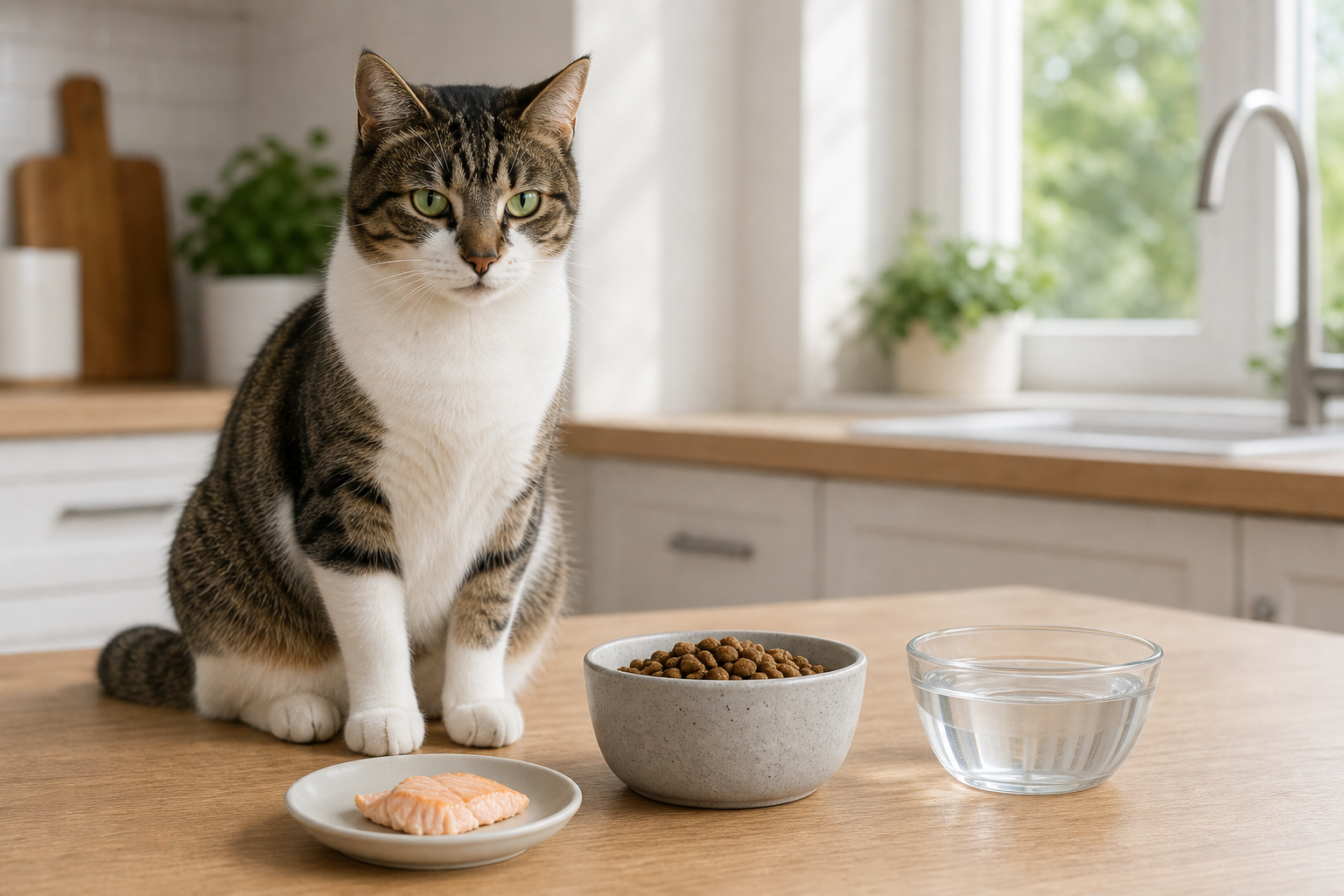
The safest salmon for cats is plain, fully cooked, boneless salmon with no added ingredients. Bake, steam, poach, or grill it without seasoning, then let it cool and break off a tiny, soft piece.
| Salmon type | Can cats eat it? | What to know |
|---|---|---|
| Plain cooked salmon | Usually yes, in a tiny amount | Best option if it is fully cooked, boneless, unseasoned, and cooled. |
| Baked or steamed salmon | Usually yes, in a tiny amount | Safe only if no oil, butter, garlic, onion, salt, lemon, herbs, or sauce were added. |
| Salmon from your plate | Usually no | Human recipes often contain salt, fat, garlic, onion, spices, citrus, or sauce. |
| Canned salmon in water | Sometimes, with caution | Choose no-salt-added if available, check for bones and ingredients, and serve only a tiny amount. |
| Salmon-flavored cat food | Yes, if complete and balanced | This is different from feeding salmon. The label should match your cat’s life stage. |
Before offering salmon, run through this quick checklist:
- Is it fully cooked all the way through?
- Is it free of bones?
- Is it plain, with no salt, oil, butter, sauce, garlic, onion, lemon, herbs, or spices?
- Is the piece smaller than a normal treat?
- Is your cat healthy enough for a new treat?
If any answer is no, skip it.
What salmon should cats avoid?
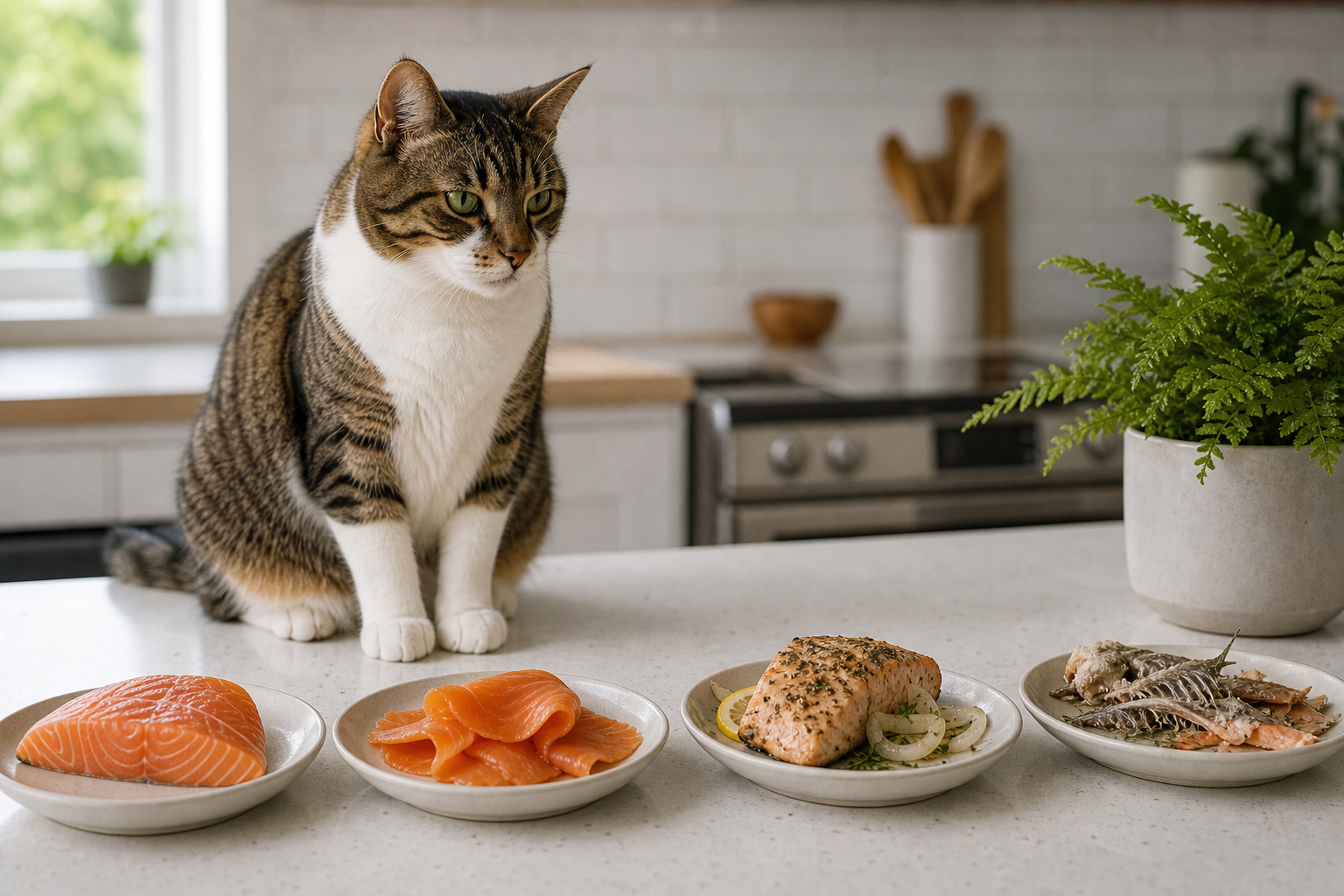
Cats should avoid raw salmon, smoked salmon, seasoned salmon, salmon bones, spoiled salmon, and salmon cooked with oils, butter, salt, onion, garlic, lemon, sauces, or spices.
| Salmon to avoid | Why it is risky |
|---|---|
| Raw salmon | Raw pet foods can carry harmful bacteria and create risks for pets and people handling the food 3. |
| Smoked salmon | Often very salty and may contain curing ingredients or seasonings. |
| Seasoned salmon | Garlic, onion, excess salt, spices, sauces, and citrus are not appropriate treat ingredients for cats. |
| Salmon bones | Small bones can injure the mouth, throat, or digestive tract, or create choking risk. |
| Oily or buttered salmon | Extra fat can upset digestion, especially in cats with sensitive stomachs or a history of pancreatitis. |
| Spoiled salmon | Old fish can cause vomiting, diarrhea, lethargy, or worse. |
If you are building a general safe-food list for your cat, use salmon as a “small cooked treat only” item in your broader what cats can eat notes.
How much salmon can I give my cat?
For most healthy adult cats, a few tiny flakes of plain cooked salmon are enough. Think treat-size, not side-dish-size.
A practical rule is to keep all treats and extras to a small portion of daily calories, while the main diet remains complete and balanced. If your cat already gets treats, dental snacks, table tastes, or food toppers, salmon should fit inside that same treat allowance instead of being added on top.
| Cat situation | Safer salmon portion idea |
|---|---|
| First time trying salmon | One pea-sized flake, then wait and watch. |
| Healthy adult cat | A few small flakes occasionally, not daily. |
| Overweight cat | Skip it or use a very tiny amount counted within the day’s calories. |
| Kitten | Ask your vet first; kittens need consistent complete nutrition for growth. |
| Senior cat | Use caution, especially with kidney, thyroid, dental, or digestive issues. |
| Cat on a prescription diet | Do not add salmon unless your veterinarian says it fits the diet plan. |
If you are unsure whether a treat fits your cat’s daily intake, start with the guide on how much should I feed my cat or estimate baseline needs with the cat calorie calculator. Those tools do not replace veterinary advice, but they help prevent “just a little” extras from quietly becoming too much.
When should salmon be off-limits?
Salmon should be off-limits when your cat has a medical diet, a known fish sensitivity, vomiting, diarrhea, sudden appetite change, unexplained weight loss, urinary signs, or a condition where diet changes should be managed by a veterinarian.
Be extra cautious with:
| Cat or situation | Better choice |
|---|---|
| Prescription urinary, kidney, GI, allergy, or weight-loss diet | Stick to the prescribed diet unless your vet approves a treat. |
| Vomiting or diarrhea | Do not add new foods. Call your vet if signs persist, worsen, or include lethargy. |
| Sudden hunger or appetite loss | Treats may hide an underlying issue. Track food intake and contact your vet. |
| Pregnant or nursing cat | Keep nutrition consistent and ask your vet before adding extras. |
| Kitten | Prioritize kitten-formulated complete food. |
| Cat with pancreatitis history | Avoid fatty extras unless your vet gives specific guidance. |
| Cat with food allergies | Do not test salmon without a plan from your vet. |
Cats are obligate carnivores, but that does not mean every animal food is automatically a good match. The most reliable daily diet is still a complete, balanced cat food selected for your cat’s age, body condition, and health needs 1, 2. For broader food selection, see choosing healthy cat food and wet vs dry cat food.
What should I do if my cat ate unsafe salmon?
If your cat ate a tiny amount of plain cooked salmon, monitor them. If your cat ate raw, spoiled, salty, seasoned, oily, bony, or a large amount of salmon, call your veterinarian or an animal poison control service for case-specific advice.
| What happened | What to do next |
|---|---|
| One tiny bite of plain cooked salmon | Monitor appetite, stool, vomiting, and behavior. |
| Ate seasoned salmon | Check ingredients if possible, especially garlic, onion, salt, sauce, or spices. Call your vet for advice. |
| Ate raw salmon | Contact your vet, especially if your cat is young, old, immunocompromised, or showing symptoms. |
| May have swallowed bones | Call your vet promptly. Watch for gagging, drooling, pawing at the mouth, vomiting, pain, or not eating. |
| Ate a large amount | Call your vet, especially if your cat is small, overweight, or has digestive or pancreatic history. |
| Vomiting, diarrhea, lethargy, weakness, collapse, breathing trouble, pain, or repeated retching | Seek urgent veterinary care. |
Do not try to make your cat vomit unless a veterinarian or poison control professional instructs you to do so. Home attempts can be dangerous.
Is salmon cat food the same as giving salmon?
No. Salmon-flavored or salmon-based cat food can be complete and balanced if the label says it is formulated for your cat’s life stage. A piece of salmon from the kitchen is not the same thing.
Pet food labels and nutrient adequacy statements matter because they tell you whether the food is intended to be complete and balanced, for which life stage, and whether it is a treat, supplement, intermittent food, or daily diet 2, 4. If a product says it is for intermittent or supplemental feeding, it should not be your cat’s main food.
This distinction is important for searchers who ask “can cats eat salmon” because the answer is not just “yes” or “no.” A salmon-based complete cat food may be suitable for some cats. A salty smoked salmon slice or a buttered dinner scrap is a different situation entirely.
Frequently Asked Questions
Can cats eat cooked salmon?
Yes, cats can eat a small amount of plain cooked salmon if it is boneless, unseasoned, and cooled. It should be an occasional treat, not a replacement for complete cat food.
Can cats eat raw salmon?
Raw salmon is not recommended for cats. Raw pet foods can carry harmful bacteria and create handling risks for both pets and people 3.
Can cats eat smoked salmon?
Smoked salmon is not a good treat for cats because it is usually salty and may contain curing ingredients or seasonings. Choose plain cooked salmon instead, or skip salmon entirely.
Can cats eat canned salmon?
Some cats can have a tiny amount of canned salmon if it is packed in water, low in sodium, boneless, and free of added seasonings. Many canned products are too salty or contain bones, so check the label carefully.
Can kittens eat salmon?
Kittens need consistent complete and balanced kitten food for growth. Ask your veterinarian before adding salmon or other extras, especially if the kitten is very young, underweight, or has digestive issues.
Is salmon good for cats every day?
No. Salmon should not be a daily add-on unless it is part of a complete and balanced cat food. Frequent extras can unbalance calories and nutrients.
What signs should I watch for after my cat eats salmon?
Watch for vomiting, diarrhea, drooling, gagging, refusal to eat, lethargy, itchiness, facial swelling, pain, or behavior changes. Call your vet if signs are severe, repeated, or unusual for your cat.
References
[1] Cornell Feline Health Center. Feeding Your Cat.
[2] U.S. Food and Drug Administration. Complete and Balanced Pet Food.
[3] U.S. Food and Drug Administration. Get the Facts! Raw Pet Food Diets can be Dangerous to You and Your Pet.
[4] U.S. Food and Drug Administration. FDA’s Regulation of Pet Food.
 EN
EN DE
DE ES
ES PT
PT