
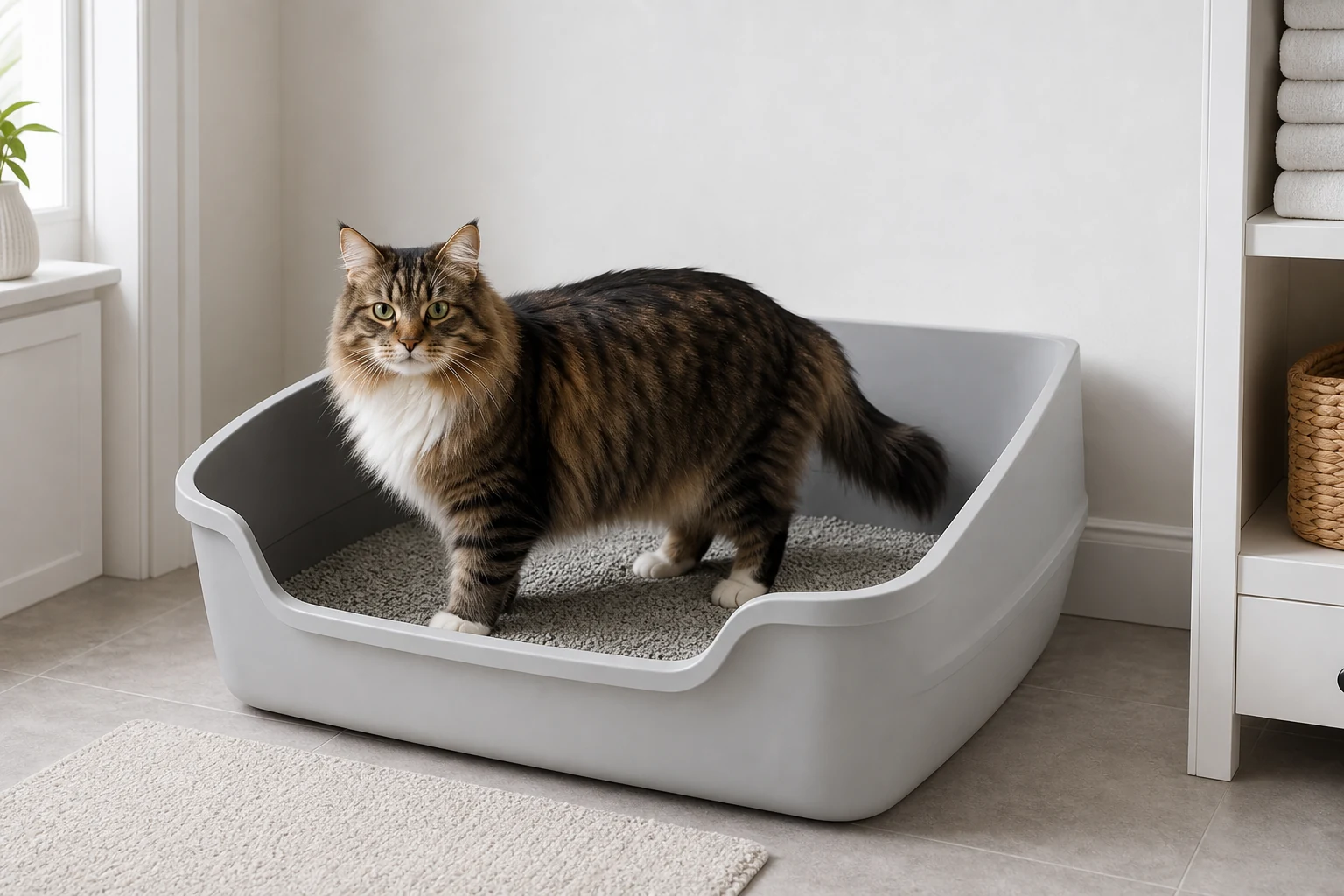
A large cat needs a litter box with enough inside floor space to stand, turn around, dig, posture, and step out without squeezing. Start with the biggest open box your space can reasonably support, then check entry height, route, and cleaning routine before assuming your cat is being picky.
Large cats are not just heavier cats. Many are longer through the body, taller at the shoulder, broader through the hips, or less agile as they age. A box that looks jumbo on the store shelf may still feel cramped once a big cat tries to turn, squat, and cover waste inside it.
Table of Contents
- What makes a litter box too small for a large cat?
- How big should a litter box be for a large cat?
- What entry height works best for a big cat?
- Should a large cat use a covered litter box?
- Where should you place a large litter box?
- How deep should litter be in a large cat's box?
- How do you keep a large litter box usable?
- When should litter box trouble be treated as a health clue?
- Conclusion: Choose the box that fits your cat
- Frequently Asked Questions
- References
What makes a litter box too small for a large cat?
A litter box is too small when your cat has to curl, perch, back out awkwardly, step in waste, or leave part of the body outside while eliminating. The problem is usually usable interior space, not the marketing size printed on the label.
Watch your cat's posture, not just whether the box gets used. A large cat may tolerate a cramped box until the litter is slightly dirty, a new cat appears, or stiffness makes awkward turning uncomfortable. At that point, accidents can look sudden even though the setup was marginal for a long time.
Common signs include:
- Your cat keeps the front paws outside the box while urinating or defecating.
- The tail, hips, or rear end hangs over the edge.
- The cat scratches the wall, rim, lid, or floor instead of the litter.
- Waste often lands near the entrance or outside the box.
- Your cat leaves quickly without covering.
- The cat uses a bathtub, laundry pile, rug, or shower mat instead.
- A bigger temporary tray is used more reliably than the regular box.
For a full home setup overview, use this article with our broader cat litter box setup guide. The large-cat version simply raises the bar on space, entry, and route comfort.
How big should a litter box be for a large cat?
The practical rule is to choose a box long enough for your cat to stand on all fours and turn around comfortably. Ohio State's Indoor Pet Initiative says cats generally prefer large, uncovered boxes and that the box should be large enough for the cat to stand and turn around in.1
For large cats, measure the inside floor, not the outside rim. Thick sides, rounded corners, built-in filters, hoods, and raised entrances can shrink the space your cat can actually use.
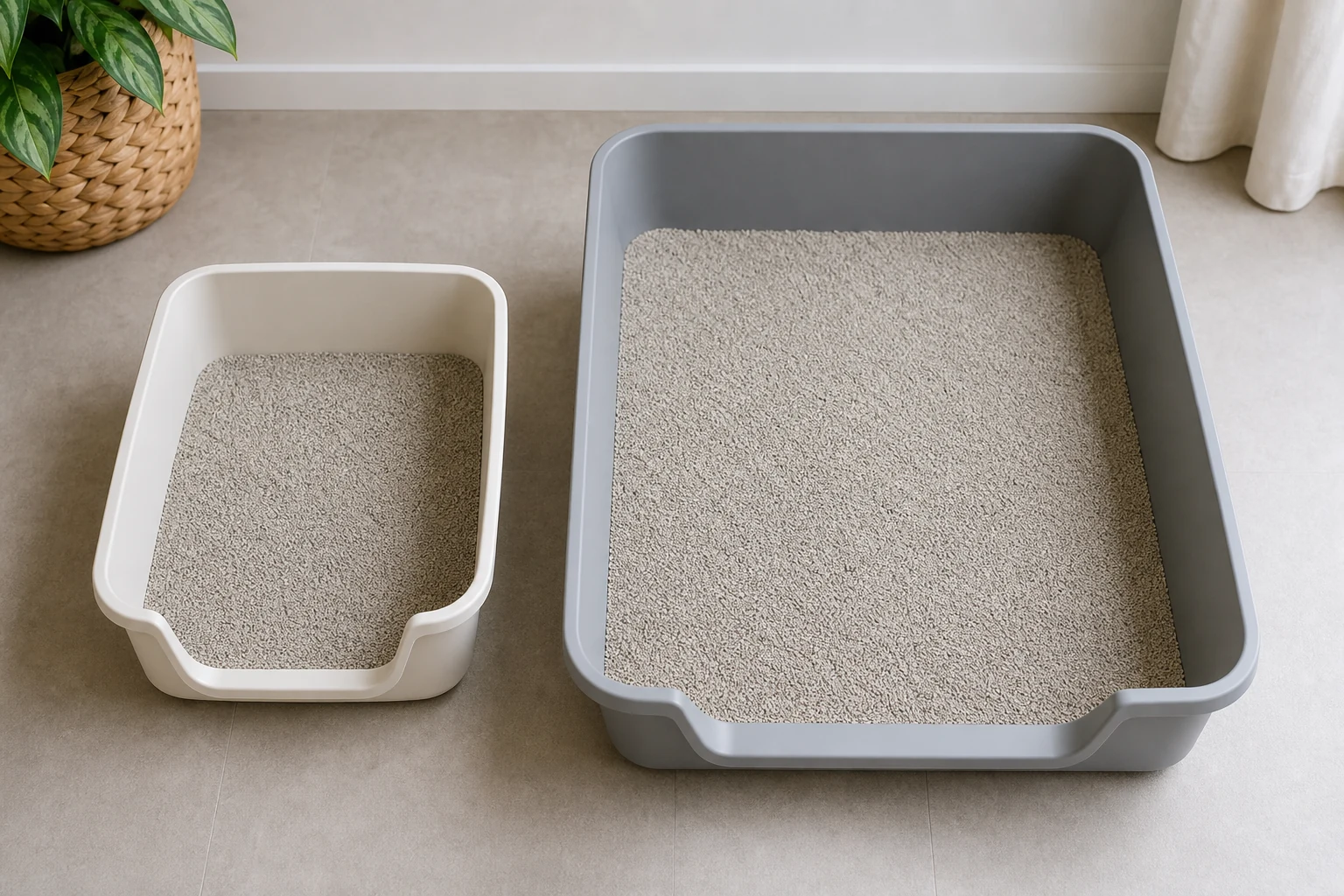
Use this buying checklist:
| What to check | Better choice for a large cat | Why it matters |
|---|---|---|
| Interior length | Long enough for full body length and turning | Prevents awkward posture and edge accidents |
| Interior width | Wide enough for hips, digging, and turning | Helps the cat choose a clean spot |
| Entry opening | Wide, stable, and easy to step through | Reduces squeezing and hesitation |
| Wall height | Tall enough to contain litter, low enough to enter | Balances scatter control with access |
| Shape | Rectangular or roomy open footprint | Usually gives more usable space than novelty shapes |
| Surface | Smooth, washable plastic | Scratched or textured surfaces can hold odor |
If commercial boxes are too small, a low-sided storage container, concrete mixing tray, or under-bed storage bin can work if it is stable, easy to wash, and has no sharp modified edges. Do not make the cat climb into a tall tote unless you have safely cut and smoothed a low entrance.
What entry height works best for a big cat?
Choose the lowest entry that still keeps litter reasonably contained. A healthy large cat may handle a higher wall, but a low front entry is kinder for cats with long bodies, heavy builds, short legs, arthritis, hip discomfort, or senior stiffness.
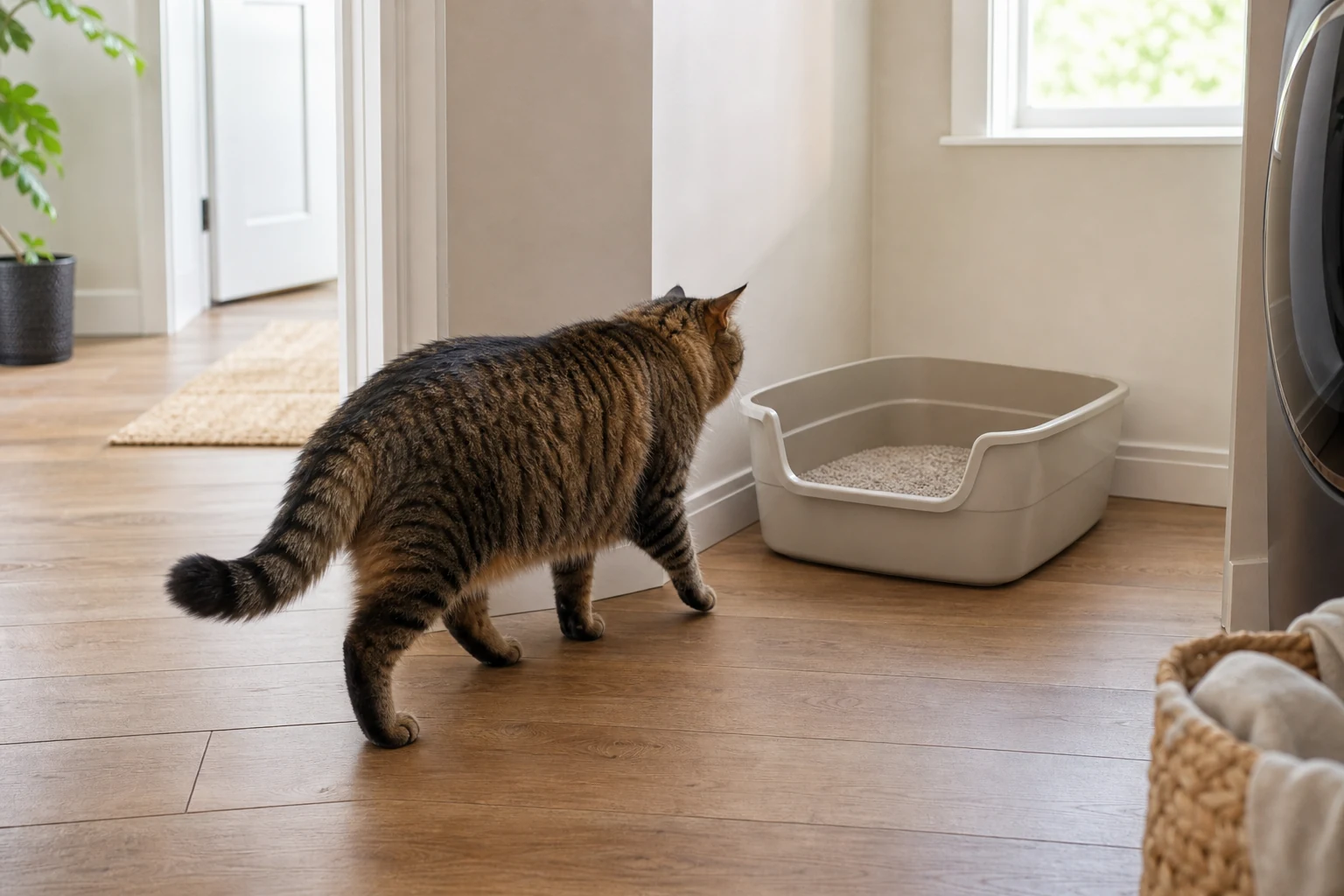
Cornell notes that young kittens, elderly cats, cats with mobility problems, overweight cats, and large cats may need boxes that are low-sided or bigger.2 That guidance matters because entry height is not just about getting in. The cat also has to exit after balancing on shifting litter.
Think in zones:
- Low front: easier entry and exit.
- Higher back and sides: better for diggers or cats that urinate high.
- Open top: more headroom and easier turning.
- Non-slip approach: helpful on tile, laminate, or polished floors.
- Clear landing area: lets a big cat step out without bumping furniture.
If your large cat is also older, compare litter box hesitation with other older cat arthritis signs such as reduced jumping, stiffness after rest, or reluctance on stairs. Do not give pain medicine without veterinary guidance, but do make the box easier to enter while you arrange an exam.
Should a large cat use a covered litter box?
Most large cats do better when the first option is open, roomy, and easy to exit. A covered box can work only if the inside is genuinely large, the entrance is wide, the cat can turn without rubbing the hood, and odor is controlled by cleaning rather than fragrance.
Covered boxes often look tidy to people but feel smaller to cats. The lid may reduce headroom, limit sightlines, and trap odors. International Cat Care recommends placing litter trays in quiet locations away from food, water, and busy areas, and the same comfort logic applies to whether the box feels safe once the cat is inside.4
If you want to test a hood, do it as a choice:
- Keep the familiar open box available.
- Add the covered box with the same litter type and depth.
- Remove any flap door at first.
- Scoop both boxes equally often.
- Watch which box your cat uses calmly for at least one to two weeks.
Our covered vs uncovered litter boxes guide walks through that trial in more detail. For a big cat, do not accept a cover that forces crouching or tight turns just because the product is labeled "large."
Where should you place a large litter box?
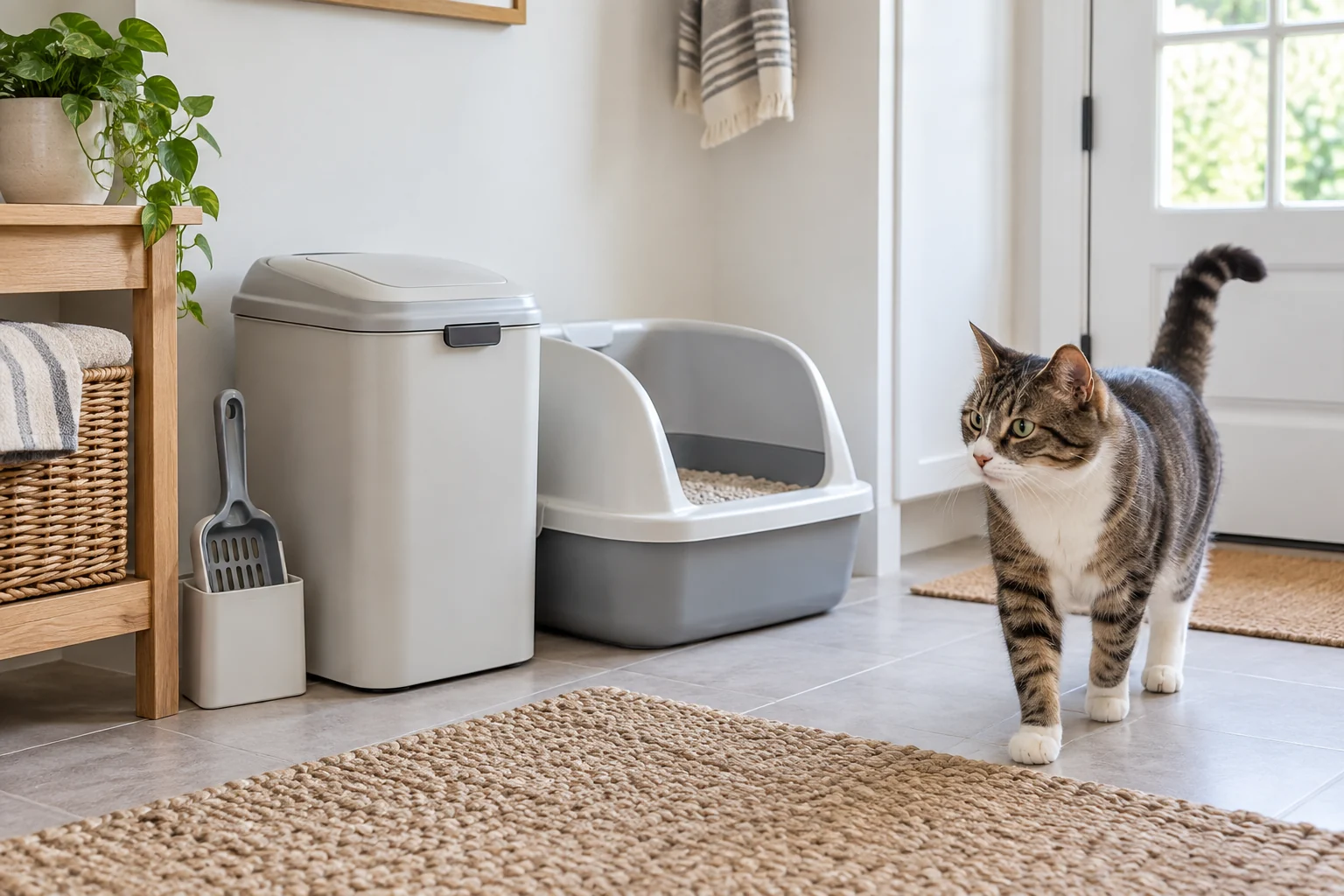
Place the box where your cat can reach it easily, turn around outside it, and leave without being cornered. Large cats need more approach space than small cats, especially if the box sits between a wall, cabinet, washer, toilet, or narrow doorway.
Good placement usually means:
- A quiet area with low foot traffic.
- A route that stays open day and night.
- No food or water bowls beside the box.
- No loud appliances that startle the cat.
- Enough floor space for a full-body turn outside the box.
- More than one litter station in multi-cat or multi-floor homes.
- Separation from other boxes, so one cat cannot guard every option.
The ASPCA notes that many cats prefer large boxes that are easy to enter and emphasizes clean boxes, unscented litter, and practical box conditions when troubleshooting litter problems.3 For big cats, the surrounding floor is part of those conditions. A perfect box wedged into a tight closet can still feel difficult.
If you are rearranging a room, include the litter route in your wider plan for cat-proofing your home. Make sure doors cannot close accidentally, children cannot block the cat, and another pet cannot wait at the only exit.
How deep should litter be in a large cat's box?
Start with a moderate depth that lets your cat dig and cover without making the surface unstable. The ASPCA suggests many cats like a shallow bed of about one to two inches, while preferences can vary by cat and litter type.3
Large cats sometimes need a slightly wider clean surface more than they need extra-deep litter. Too much litter can shift under a heavy cat's paws, make footing less secure, and encourage digging that throws litter over the sides. Too little can leave wet spots on the base and make odor harder to control.
Adjust gradually:
- Keep the same litter type while testing depth.
- Mark the comfortable depth on the inside of the box.
- Top up after scooping if the level drops.
- Avoid sudden switches to scented, crystal, pellet, or very rough textures.
- Watch whether your cat digs normally, hesitates, or avoids the box.
For more detail on depth, topping up, and waste control, see our guide on how much cat litter to use.
How do you keep a large litter box usable?
Scoop at least daily, and more often if several cats use the same station or your large cat produces big clumps. A roomy box stops feeling roomy when waste takes up the clean walking and turning area.
Use this routine:
| Task | Why it matters for large cats |
|---|---|
| Scoop urine clumps and stool daily | Preserves enough clean floor space to turn and dig |
| Smooth the litter surface | Helps you see whether depth is still comfortable |
| Wipe the low entry when needed | Keeps paws and belly fur cleaner |
| Wash with mild unscented soap | Reduces lingering odor without strong fragrance |
| Inspect scratches and corners | Damaged plastic can hold smell and residue |
| Replace warped or deeply scratched boxes | Large cats need stable footing and clean surfaces |
A box that is bigger is not automatically lower maintenance. It may hold more litter, but the cat still deserves a clean place to step. Our litter box cleaning schedule can help you set a routine that does not depend on smell alone.
Longhaired large cats may also track litter in belly, tail, or toe fur. A washable mat outside the box can help, but avoid mats that feel sharp, wobbly, or unpleasant under the paws.
When should litter box trouble be treated as a health clue?
Treat sudden litter box changes as health information, not misbehavior. A large cat that begins missing the box may be dealing with urinary discomfort, constipation, diarrhea, joint pain, weakness, stress, or difficulty entering and posturing. VCA notes that inappropriate elimination can involve medical, environmental, and behavioral factors, so a veterinary exam is important when the change is new or persistent.5
Call a veterinarian promptly if your cat:
- Strains or repeatedly visits the box with little or no urine.
- Cries, hides, vomits, collapses, or seems weak.
- Has blood in urine or stool.
- Has diarrhea, constipation, or repeated vomiting.
- Suddenly urinates outside the box after reliable habits.
- Avoids jumping, stairs, or high-sided boxes.
- Stops eating or seems painful when handled.
Repeated trips with little or no urine can be an emergency, especially for male cats. Make the box easier to enter, but do not let a setup change delay urgent care.
Conclusion: Choose the box that fits your cat
The best litter box for a large cat is roomy on the inside, easy to enter, easy to leave, and placed where the cat has a clear, calm route. Choose a large open footprint first, keep the entry low enough for comfort, avoid cramped covered boxes, and scoop often enough that the usable space stays clean.
A big cat should not have to fold itself into a small box to meet a basic daily need. When the box fits the cat's body and the location fits the cat's sense of safety, litter habits become easier for everyone to maintain.
Frequently Asked Questions
What size litter box does a Maine Coon need?
A Maine Coon usually needs an extra-large open box with generous interior length and width, not just a product labeled "jumbo." Measure whether your cat can enter, turn, squat, dig, and exit without rubbing the sides or hanging over the edge.
Is a storage bin safe to use as a large cat litter box?
It can be safe if it is stable, smooth, easy to clean, and modified with a low entrance that has no sharp edges. Avoid tall bins that require climbing unless the entry has been cut down and fully smoothed.
Do big cats need high-sided litter boxes?
Some large cats benefit from higher back and side walls because they dig vigorously or urinate high. The entrance should still be low and wide enough for comfortable access, especially for senior or stiff cats.
Why does my large cat pee over the edge of the box?
The box may be too short, too narrow, too low at the wrong side, dirty, or difficult for your cat to posture in. If the behavior is new, check with your veterinarian because pain, urinary issues, or mobility changes may also affect posture.
Should I put two large litter boxes next to each other?
Two boxes side by side may function like one station from your cat's point of view. In multi-cat homes, separate boxes into different safe locations so one cat cannot block every option.
References
[1] The Ohio State University Indoor Pet Initiative. Litter Boxes. Read the guidance
[2] Cornell Feline Health Center. Feline Behavior Problems: House Soiling. Read the Cornell guide
[3] ASPCA. Litter Box Problems. Read the ASPCA guide
[4] International Cat Care. Choosing a Litter Tray for Your Cat. Read the article
[5] VCA Animal Hospitals. Inappropriate Elimination Disorders in Cats. Read the VCA guide
 EN
EN DE
DE ES
ES PT
PT