
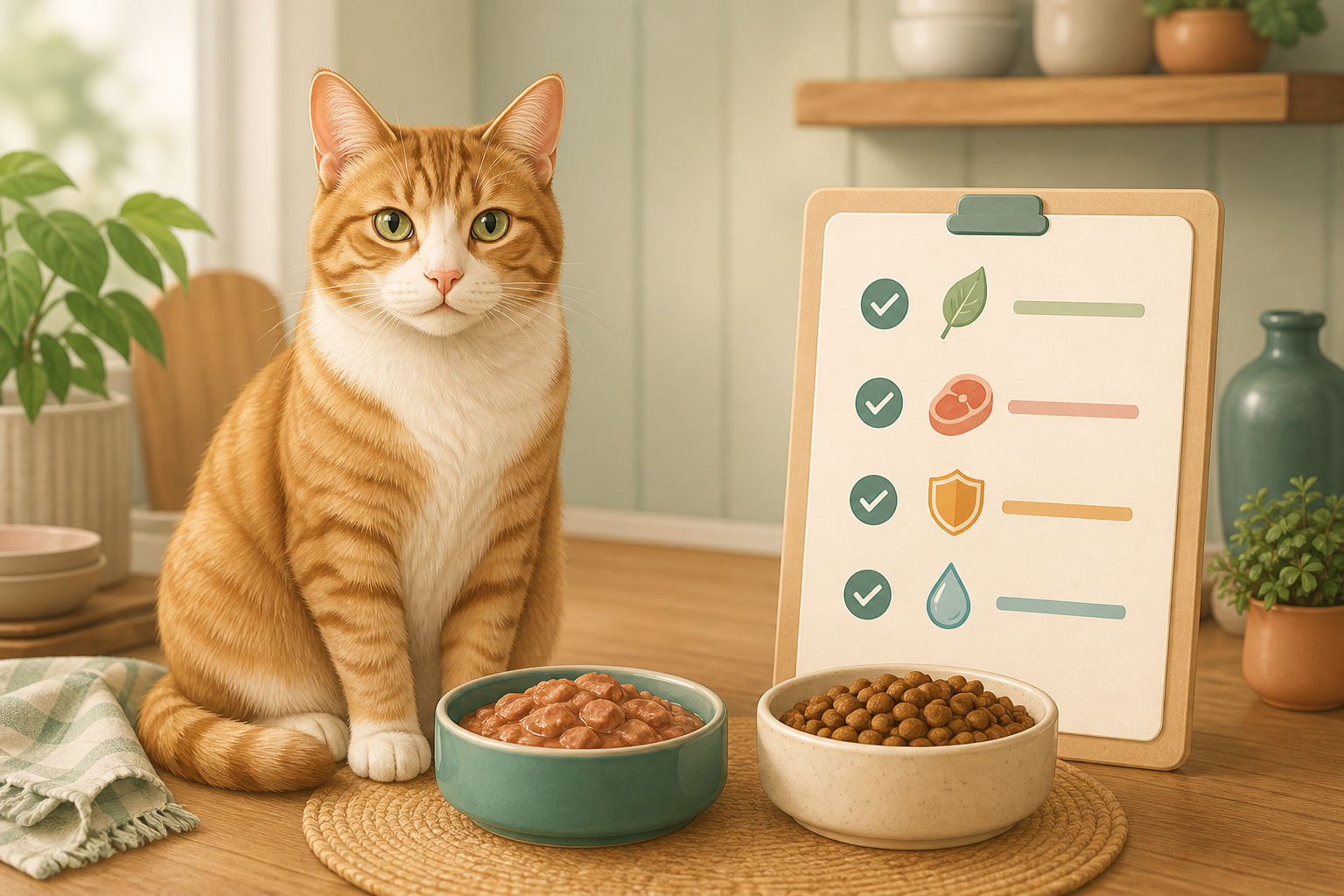
The best cat food for most cats is not the one with the flashiest ingredient list. It is a complete and balanced food for your cat’s life stage, made by a company that can explain its nutrition standards, and fed in an amount that keeps your cat at a healthy body condition.
That sounds less exciting than a shelf full of labels promising wild protein, ancestral diets, or superfood blends. But for a real cat parent standing in the aisle, it is also much more useful. Your goal is not to find the fanciest food. Your goal is to choose a diet your cat can safely live on every day.
This guide will help you read a cat food label, compare wet and dry food without getting pulled into marketing arguments, and know when to ask your veterinarian for help. If your cat has kidney disease, diabetes, urinary problems, chronic vomiting, allergies, or sudden appetite changes, use this as background education and make the final food decision with your vet.
Table of Contents
- How do you know whether a cat food is complete and balanced?
- Which life stage should the food match?
- Is wet food, dry food, or mixed feeding better?
- How much food should your cat eat each day?
- What should you check on a cat food label?
- What cat food choices need extra caution?
- When should you ask a veterinarian about cat food?
- Conclusion: Choosing the Best Cat Food Starts With Basics
- Frequently Asked Questions
- References
How do you know whether a cat food is complete and balanced?
Look for a nutritional adequacy statement that says the food is complete and balanced for cats at your cat’s life stage. In the United States, this statement usually references AAFCO nutrient profiles or feeding trials, which gives you more confidence that the product is designed as a daily diet rather than a snack or topper 1.
“Complete” means the food includes the nutrients cats need. “Balanced” means those nutrients are present in appropriate proportions. Cats are obligate carnivores, so they require nutrients such as taurine, arachidonic acid, preformed vitamin A, and specific amino acids that must be supplied correctly in the diet 2.
This is why a beautiful ingredient list is not enough. A food can sound natural and still be nutritionally incomplete. A product can also be useful as a treat, mixer, or short-term appetite helper while still being wrong as the only thing your cat eats.
If you are building a feeding routine from scratch, start with SnuggleSouls’ cat feeding guide and then use this article to compare specific labels.
Which life stage should the food match?
Choose food for your cat’s current life stage: kitten growth, adult maintenance, or all life stages. Kittens, pregnant cats, and nursing cats have higher nutritional demands than a typical healthy adult cat, so feeding an adult maintenance food to a growing kitten can be a mismatch.
The life stage statement matters more than front-label words like “premium,” “natural,” or “indoor.” A kitten food should support growth. An adult food should support maintenance. A senior cat may not always need a food labeled “senior,” but older cats often benefit from a vet-guided discussion about weight, muscle, dental comfort, kidney values, hydration, and appetite.
Use this quick check:
| Cat’s situation | Label to look for | Extra note |
|---|---|---|
| Kitten under 12 months | Growth or all life stages | Large or slow-maturing cats may need individual guidance |
| Healthy adult cat | Adult maintenance or all life stages | Watch calories and body condition |
| Pregnant or nursing cat | Growth/reproduction or all life stages | Ask a vet if appetite or weight changes quickly |
| Cat with a medical condition | Vet-recommended diet plan | Do not self-select prescription-style diets |
If your kitten is approaching adulthood, the transition timing matters. SnuggleSouls has a separate guide on when to switch from kitten to cat food that can help you plan the change gradually.
Is wet food, dry food, or mixed feeding better?
Wet food, dry food, and mixed feeding can all work when the diet is complete and balanced. The better choice depends on your cat’s hydration, weight, dental comfort, preferences, budget, and any medical concerns.

Wet food, dry food, and mixed feeding can all work when portions are measured and matched to the cat’s needs.
Wet food has much more moisture, which can help cats who do not drink much water. It is often easier for cats with dental discomfort to eat, and the portions can feel more satisfying for some weight-management plans. Dry food is convenient, usually less expensive per calorie, and easier to use in food puzzles or measured meals.
Mixed feeding can be a practical middle ground. For example, a cat may eat wet food at breakfast and dinner with a measured amount of dry food in a puzzle feeder. The key word is measured. Free-pouring dry food into a bowl can quietly add more calories than your cat needs.
If you are leaning toward wet food, read SnuggleSouls’ guide to choosing the right wet food for your cat. For routine planning, this guide on how often to feed cat wet food can help you set a daily rhythm.
| Feeding style | Potential benefit | Watch-out |
|---|---|---|
| Wet food | Higher moisture, often satisfying | Opened cans need safe storage |
| Dry food | Convenient and easy to measure | Easy to overfeed if free-fed |
| Mixed feeding | Flexible and cat-friendly | Total daily calories still matter |
| Treats and toppers | Can support bonding or appetite | Usually should not replace balanced meals |
How much food should your cat eat each day?
Your cat should eat enough to maintain a lean, healthy body condition, not simply the amount printed on the bag or can. Feeding directions are a starting estimate, but your cat’s needs can vary with age, neuter status, activity, body size, metabolism, and health 2.
Start with the label’s calorie information and feeding guide. Then adjust based on your cat’s body condition over time. A cat who is gaining weight on the suggested amount may need less. A cat who is losing weight unexpectedly needs a veterinary check, not just a bigger scoop.
For a practical estimate, try the SnuggleSouls cat calorie calculator. To check whether the amount is working, pair it with the cat body condition and weight calculator.
If you feed wet food, portion math can get confusing because can sizes and calorie density vary. SnuggleSouls’ guide on how much wet food to feed a cat walks through that calculation in more detail.
Safe feeding adjustments are usually small and gradual. If your cat is overweight, avoid crash dieting. Rapid calorie restriction can be dangerous for cats, especially if they stop eating. Ask your veterinarian for a weight-loss plan that protects muscle and appetite.
What should you check on a cat food label?
Read the label like a safety checklist, not a marketing story. The ingredient list can be useful, but it does not tell you whether the diet is nutritionally appropriate by itself. WSAVA encourages pet owners to look beyond ingredients and ask about formulation expertise, quality control, and whether the company can provide meaningful nutrition information 3.
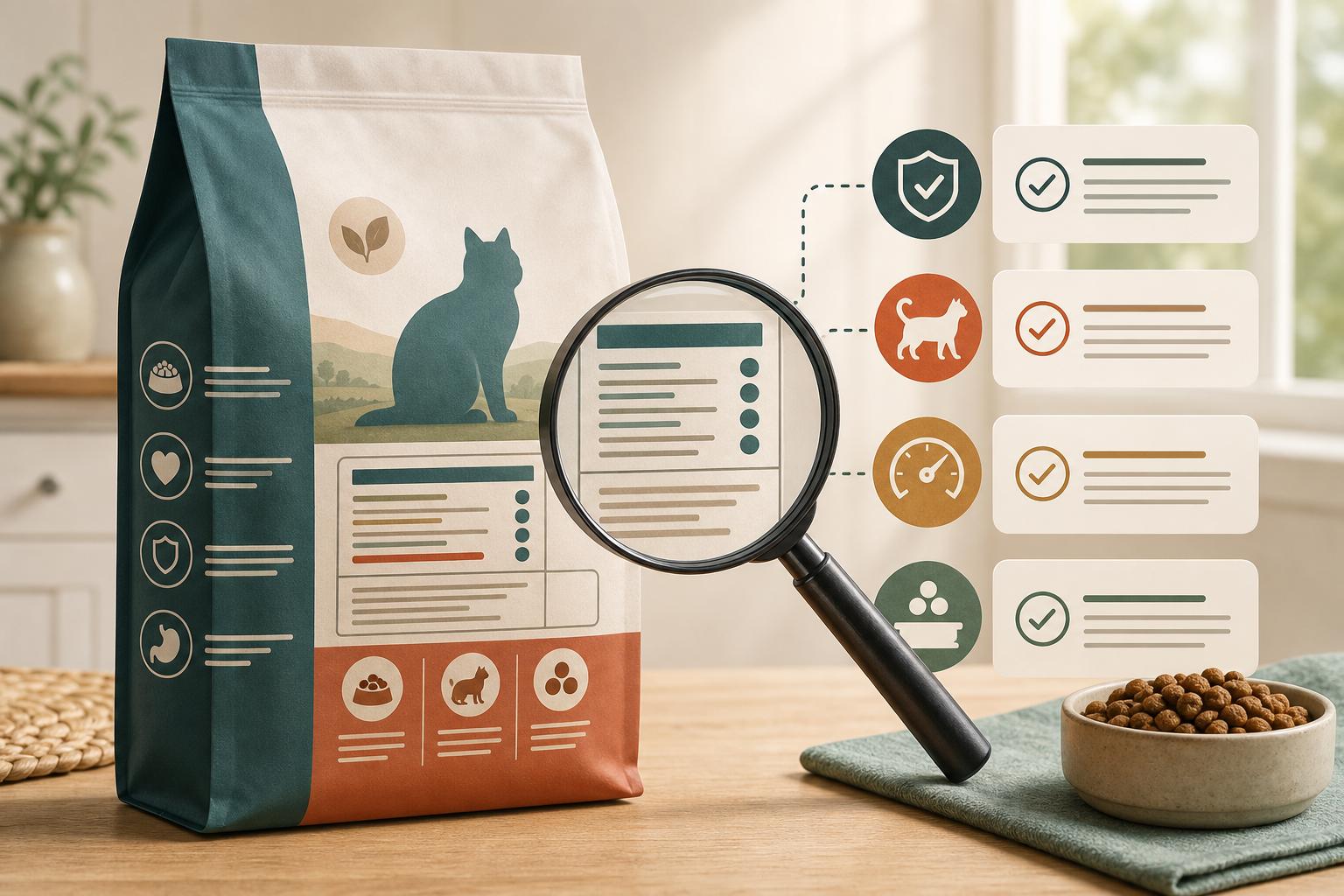
A cat food label should be checked for nutritional adequacy, life stage, calories, and manufacturer transparency.
Here is what to check first:
- Nutritional adequacy statement: Is it complete and balanced, and for which life stage?
- Calories: How many kilocalories are in each can, cup, pouch, or serving?
- Feeding directions: Are they clear enough to use as a starting point?
- Manufacturer information: Can you contact the company with nutrition questions?
- Intended use: Is it a full diet, treat, topper, supplement, or veterinary diet?
AAFCO’s consumer label guidance explains that treats are often not intended to provide a complete and balanced diet, even when they are sold near regular pet food 4. That distinction matters if your cat loves broths, freeze-dried toppers, lickable treats, or meal mixers.
The FDA also notes that pet food regulation involves both federal and state-level responsibilities, and many rules are based on AAFCO models 5. In everyday terms, you still need to read the label and choose a product that clearly fits your cat’s role: daily diet, occasional treat, or vet-directed food.
What cat food choices need extra caution?
Some food choices deserve extra care because the downside can be serious if they are not properly formulated or handled. Homemade diets, raw diets, and heavy topper-based routines are the big ones.
Cornell Feline Health Center does not recommend raw diets because of infection risks for cats and people and a lack of clear health benefit 2. Homemade diets can also become deficient or imbalanced unless they are formulated by a qualified veterinary nutrition professional. If you are curious about cooking for your cat, read SnuggleSouls’ guide to homemade cat food before making changes.
Be careful with these situations:
| Choice | Why it needs caution | Safer next step |
|---|---|---|
| Raw food | Pathogen risk and balance concerns | Discuss risks with your vet |
| Homemade food | Easy to miss essential nutrients | Use a veterinary nutritionist-formulated recipe |
| Grain-free by default | Not automatically healthier for cats | Choose based on the full nutrition profile |
| Toppers as meals | Often incomplete as the main diet | Keep toppers occasional unless labeled complete |
| Prescription-style claims | May not be right for your cat’s condition | Use therapeutic diets only with vet guidance |
None of this means every mainstream food is perfect or every boutique food is bad. It means your cat’s daily diet should be judged by nutrition adequacy, safety, evidence, and how your individual cat does on it.
When should you ask a veterinarian about cat food?
Ask your veterinarian before changing food if your cat has a medical condition, is very young or old, is pregnant or nursing, has unexplained weight change, or has ongoing digestive signs. Food can be part of care, but it should not be used as a substitute for diagnosis.
Get veterinary help promptly if your cat has any of these red flags:
- Not eating for 24 hours, or sooner for a kitten or sick cat
- Repeated vomiting or severe diarrhea
- Straining to urinate, crying in the litter box, or not passing urine
- Sudden weight loss, weakness, collapse, or rapid decline
- Breathing trouble
- Suspected poisoning or eating a dangerous human food
For ordinary food transitions, move slowly over about a week unless your veterinarian gives different instructions. Mix a small amount of the new food into the old food, then increase gradually. If your cat develops vomiting, diarrhea, refusal to eat, or intense itching, pause and ask your vet what to do next.
Conclusion: Choosing the Best Cat Food Starts With Basics
The best cat food is the one that is complete and balanced for your cat’s life stage, fits your cat’s health needs, and is fed in the right amount. Start with the nutritional adequacy statement, check the calories, choose a realistic feeding style, and watch your cat’s body condition over time.
Marketing words can be loud, but your cat’s daily comfort is quieter and more important. A good food should help your cat stay steady: eating well, using the litter box normally, maintaining healthy weight and muscle, and feeling bright in everyday life.
If you are unsure, bring the label, calorie information, and your cat’s current weight to your veterinarian. That small conversation can save a lot of guessing.
Frequently Asked Questions
What is the healthiest cat food?
The healthiest cat food is complete and balanced for your cat’s life stage and appropriate for your cat’s individual health. There is no single best food for every cat. A healthy kitten, an overweight adult cat, and a senior cat with kidney disease may all need different feeding plans.
Is wet food better than dry food for cats?
Wet food is helpful for moisture intake and may support some cats with weight or urinary concerns, but dry food can also be part of a healthy plan if it is complete and balanced. Many cats do well with mixed feeding. The total calories and your cat’s health needs matter more than choosing a side.
Should cats eat grain-free food?
Grain-free food is not automatically better for cats. Cats need a diet that supplies the right nutrients in the right balance. If your cat has a suspected food allergy or medical condition, choose food with your veterinarian instead of relying on a grain-free label.
How do I know if my cat food is complete and balanced?
Look for a nutritional adequacy statement on the label. It should say the food is complete and balanced for a specific life stage, often based on AAFCO nutrient profiles or feeding trials. If the product is a treat, topper, or supplement, it may not be suitable as your cat’s main diet.
How often should I change my cat’s food?
You do not need to change food often if your cat is healthy, enjoys the diet, and maintains good body condition. If you do change foods, transition gradually over several days. Sudden changes can cause digestive upset, and repeated food switching can make it harder to identify what agrees with your cat.
References
[1] FDA. (2024). *”Complete and Balanced” Pet Food*. [https://www.fda.gov/animal-veterinary/animal-health-literacy/complete-and-balanced-pet-food]
[2] Cornell Feline Health Center. (2026). *Feeding Your Cat*. [https://www.vet.cornell.edu/departments-centers-and-institutes/cornell-feline-health-center/health-information/feline-health-topics/feeding-your-cat]
[3] WSAVA. (2024). *Global Nutrition Guidelines*. [https://wsava.org/global-guidelines/global-nutrition-guidelines/]
[4] AAFCO. (2026). *Reading Labels*. [https://www.aafco.org/consumers/understanding-pet-food/reading-labels/]
[5] FDA. (2026). *FDA’s Regulation of Pet Food*. [https://www.fda.gov/animal-veterinary/animal-health-literacy/fdas-regulation-pet-food]


 EN
EN DE
DE ES
ES PT
PT