
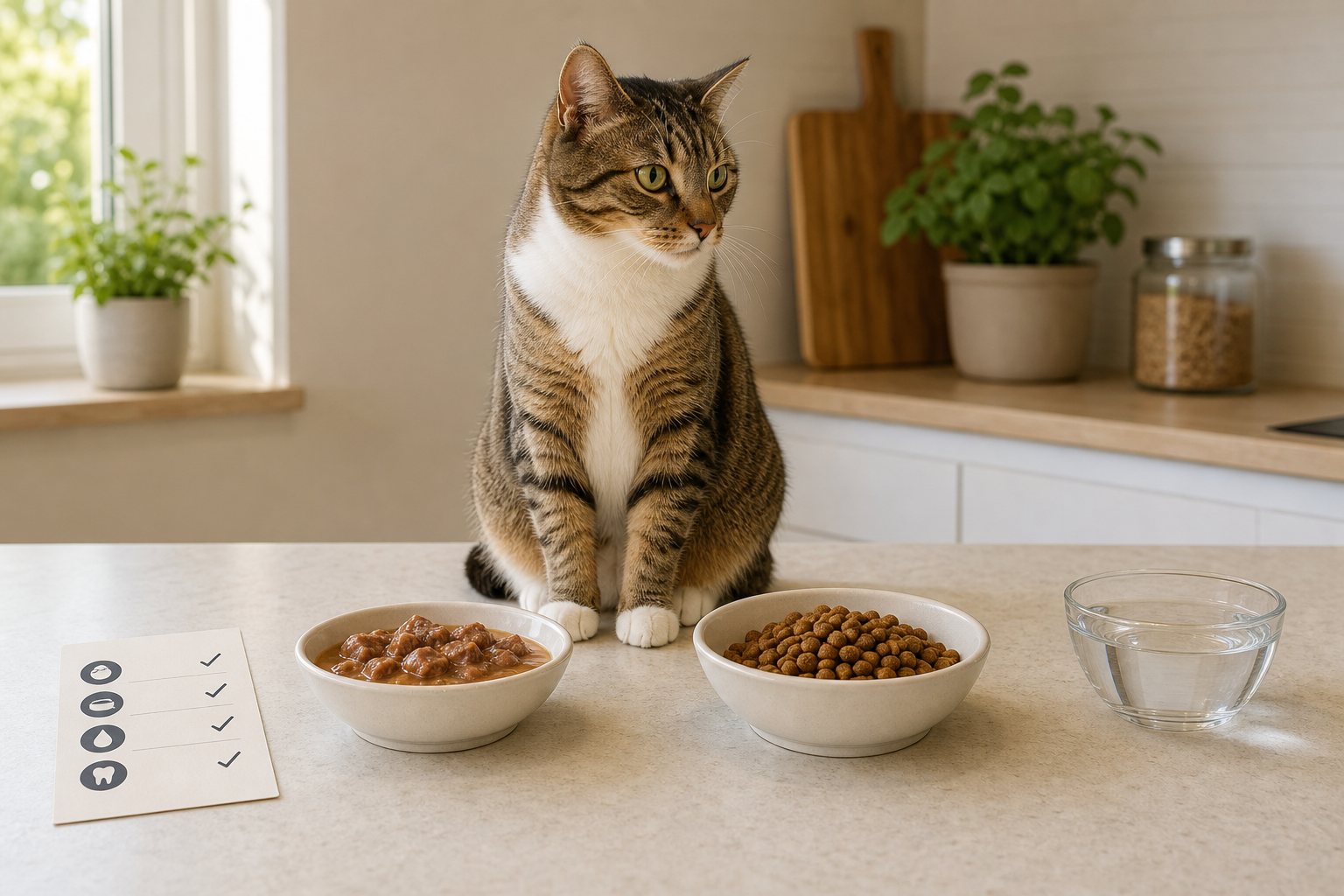
Wet vs dry cat food is not a one-size-fits-all decision. For most healthy adult cats, either wet food, dry food, or a carefully portioned mix can work, as long as the food is complete and balanced, matched to your cat's life stage, and fed in the right amount.
The better choice depends on your cat's hydration, weight, appetite, dental needs, medical history, budget, and daily routine. Wet food often helps cats take in more moisture and may support portion control. Dry food is convenient, usually more affordable per serving, and easier to use in puzzles or automatic feeders. The goal is not to pick a winner for every cat; it is to pick the format that helps your cat stay healthy in your actual home.
Table of Contents
- What are the real differences between wet and dry cat food?
- When is wet cat food usually the better choice?
- When is dry cat food usually the better choice?
- Is mixed feeding a good compromise?
- How do you switch without overfeeding?
- What safety details matter with wet food?
- How should you choose between wet and dry food for your cat?
- Conclusion: Wet vs dry cat food is about fit, not a universal winner
- Frequently Asked Questions
- References
What are the real differences between wet and dry cat food?
The biggest practical differences are moisture, calorie density, storage, texture, and feeding flexibility. Both formats can be nutritionally appropriate if the label shows the food is complete and balanced for your cat's life stage, but they behave very differently in the bowl.
Wet cat food usually contains much more water than dry kibble. That can matter because cats evolved with a low thirst drive compared with some other animals, and many cats do not drink enough to fully make up the difference when they eat only dry food. Cornell Feline Health Center notes that cats need adequate water intake for normal body function, and diet can contribute to hydration as well as drinking water 5.
Dry cat food is more calorie-dense because it contains little moisture. A small-looking bowl can hold many calories, which is why free-feeding dry kibble may quietly lead to weight gain in some cats. On the other hand, kibble is shelf-stable, easy to measure, and useful for food puzzles, training rewards, and timed feeders.
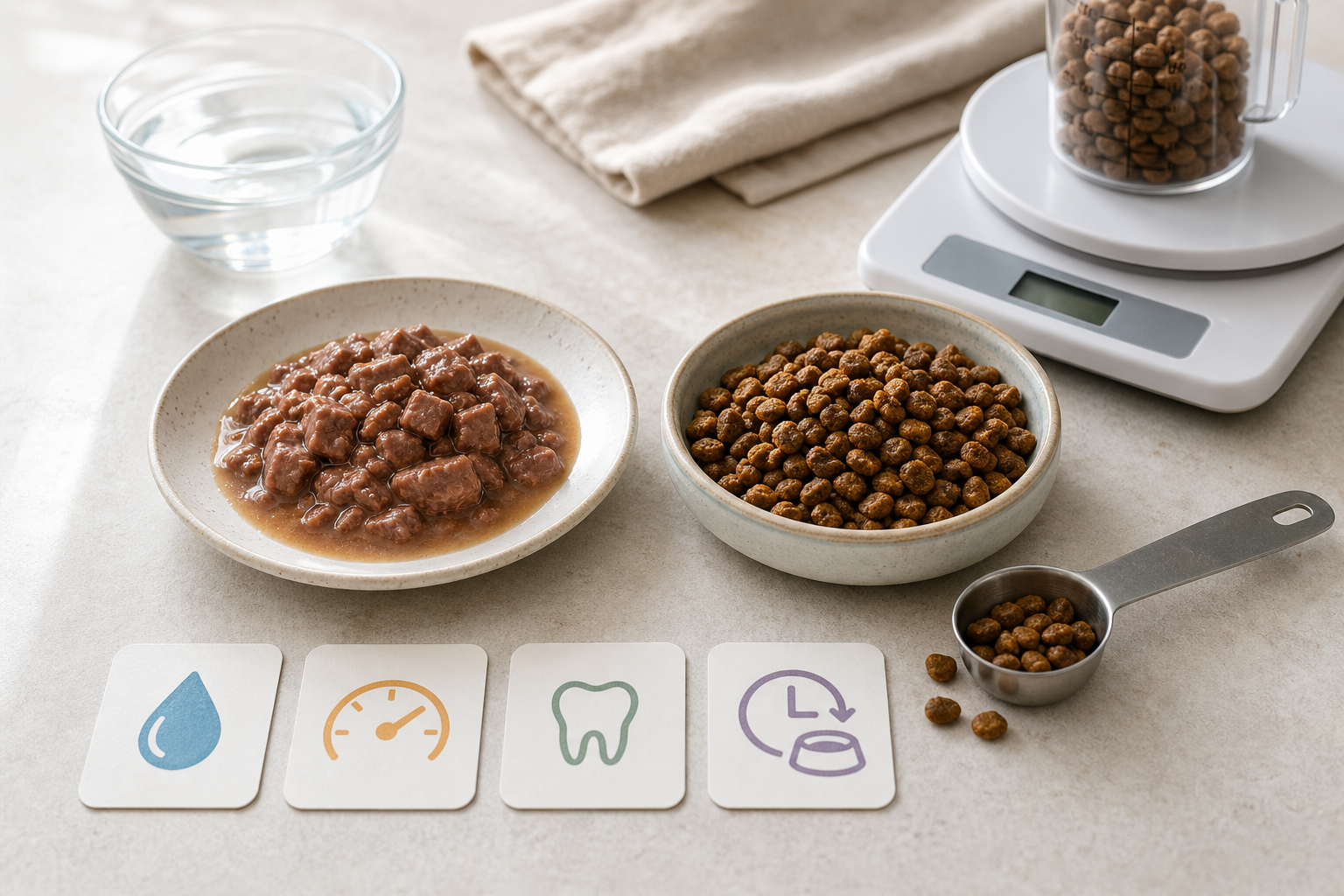
| Factor | Wet cat food | Dry cat food | What it means for you |
|---|---|---|---|
| Moisture | Usually high | Usually low | Wet food can help cats who need more dietary water. |
| Calories per bite | Often lower because of water | Often higher | Dry food needs careful measuring. |
| Storage | Refrigerate after opening | Easier pantry storage | Wet food requires stronger food-safety habits. |
| Feeding routine | Best for meals | Works for meals, puzzles, or timed feeders | Dry food is convenient for long workdays. |
| Palatability | Often very appealing | Varies by cat | Picky cats may prefer one texture strongly. |
| Cost | Often higher per day | Often lower per day | Budget can shape the best realistic plan. |
If you are building a broader feeding routine, start with a complete overview in the SnuggleSouls cat feeding guide and then use this article to choose the best format.
When is wet cat food usually the better choice?
Wet food is often the better choice when hydration, appetite, or portion control is the main concern. It is not automatically healthier for every cat, but it can make several common goals easier.
Wet food may be especially helpful for cats who do not drink much water, cats with a history of urinary concerns, senior cats with lower appetite, and cats who need a lower-calorie-feeling meal. Because it contains water, the portion often looks more satisfying than the same number of calories from kibble. That can help some cats feel fed without increasing daily energy intake.
Wet food can also be easier for cats who have dental pain, missing teeth, or difficulty chewing. However, a cat who suddenly refuses dry food, drops food, paws at the mouth, drools, or seems painful while eating should see a veterinarian. Food texture can make eating easier, but it does not treat dental disease.
Choose wet food carefully. Look for a nutritional adequacy statement that says the food is complete and balanced for your cat's life stage, such as growth, adult maintenance, or all life stages. FDA explains that complete and balanced pet foods are formulated to provide required nutrients when fed as directed 2. AAFCO also explains how pet food labels help consumers understand ingredients, nutritional adequacy, feeding directions, and other label details 4.
For a deeper wet-food buying checklist, read SnuggleSouls' guide to choosing the right wet food for your cat. If your main question is hydration and appetite, the related guide on the benefits of wet food for cats can help you decide whether wet food should be the main format or just part of the routine.
When is dry cat food usually the better choice?
Dry food is often the better choice when convenience, controlled access, budget, and enrichment feeding are the main concerns. A high-quality dry food can be a perfectly reasonable option for many healthy cats when it is complete and balanced and not overfed.
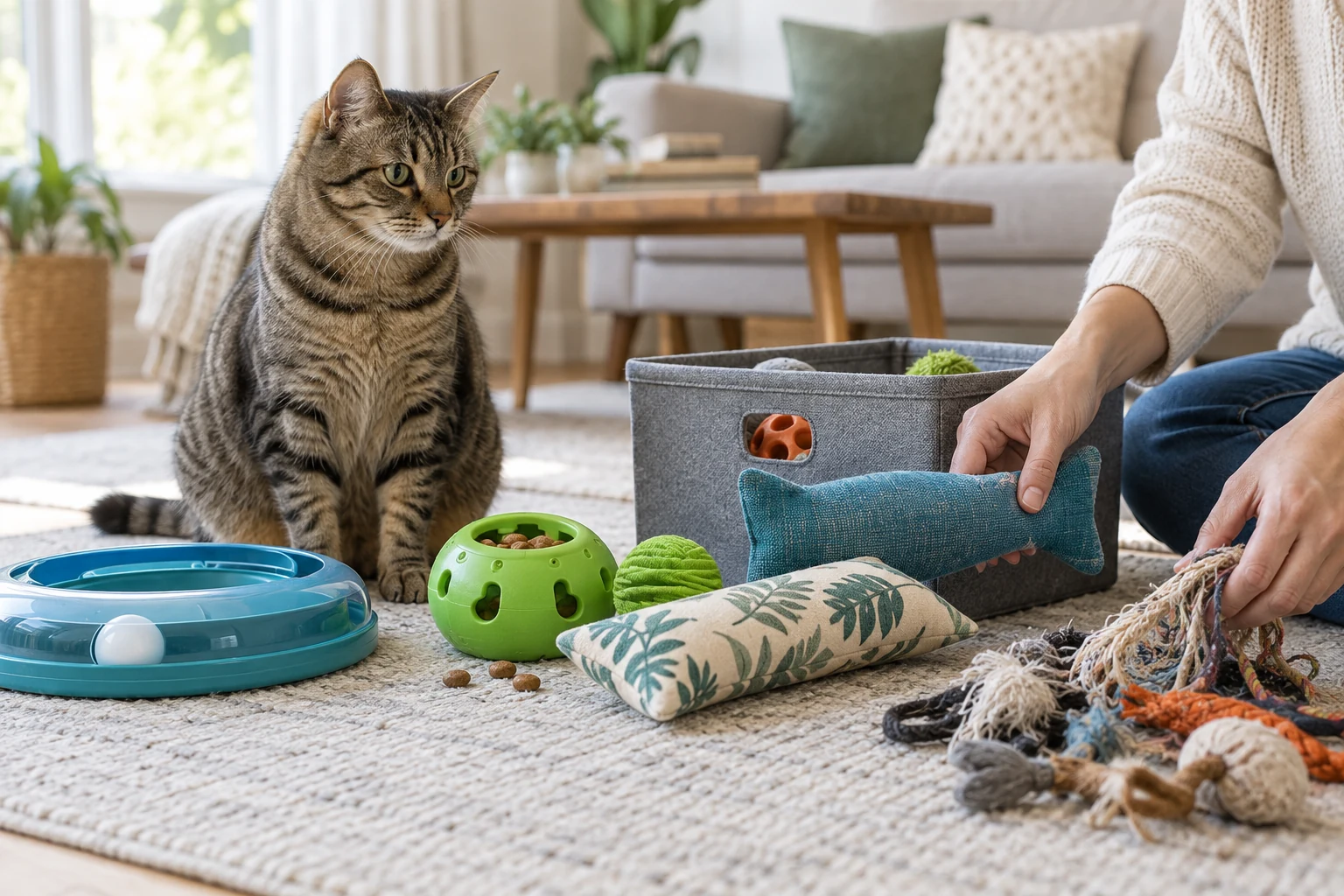
Dry kibble is easier to store, usually less expensive per serving, and simple to use in timed feeders. That matters for cat parents who work long shifts, manage multiple cats, or need a predictable routine. Kibble also works well in food puzzles, snuffle mats, and training games, which can slow fast eaters and add mental enrichment.
The risk is portion drift. A scoop that looks small may contain more calories than expected, and topping off the bowl throughout the day can turn into accidental free-feeding. Cornell's feeding guidance emphasizes that cats should be fed an appropriate amount for their body condition and needs, not simply given unlimited access to food 1.
Dry food may also be a good part of the plan for cats who strongly prefer crunchy textures. Some cats become stressed when their food changes too abruptly. If your cat is healthy, eating well, drinking normally, and maintaining a healthy body condition, there may be no urgent reason to force a full switch to wet food.
Dental health deserves nuance. Dry food is not a substitute for veterinary dental care. Some dental diets are designed and tested for oral health, but ordinary kibble should not be treated as a toothbrush. If your cat has bad breath, red gums, loose teeth, drooling, or painful chewing, ask your veterinarian rather than relying on a texture change.
Is mixed feeding a good compromise?
Mixed feeding can be an excellent compromise when you want the moisture and meal satisfaction of wet food plus the convenience and enrichment value of dry food. The key is to split daily calories, not add wet food on top of a full dry-food ration.
A simple mixed plan might look like wet food at breakfast and dinner, with a measured dry-food portion reserved for puzzle feeding during the day. Another cat may do better with mostly wet meals and a tiny dry portion for a timed feeder overnight. The right split depends on appetite, weight, medical needs, and what your household can maintain consistently.
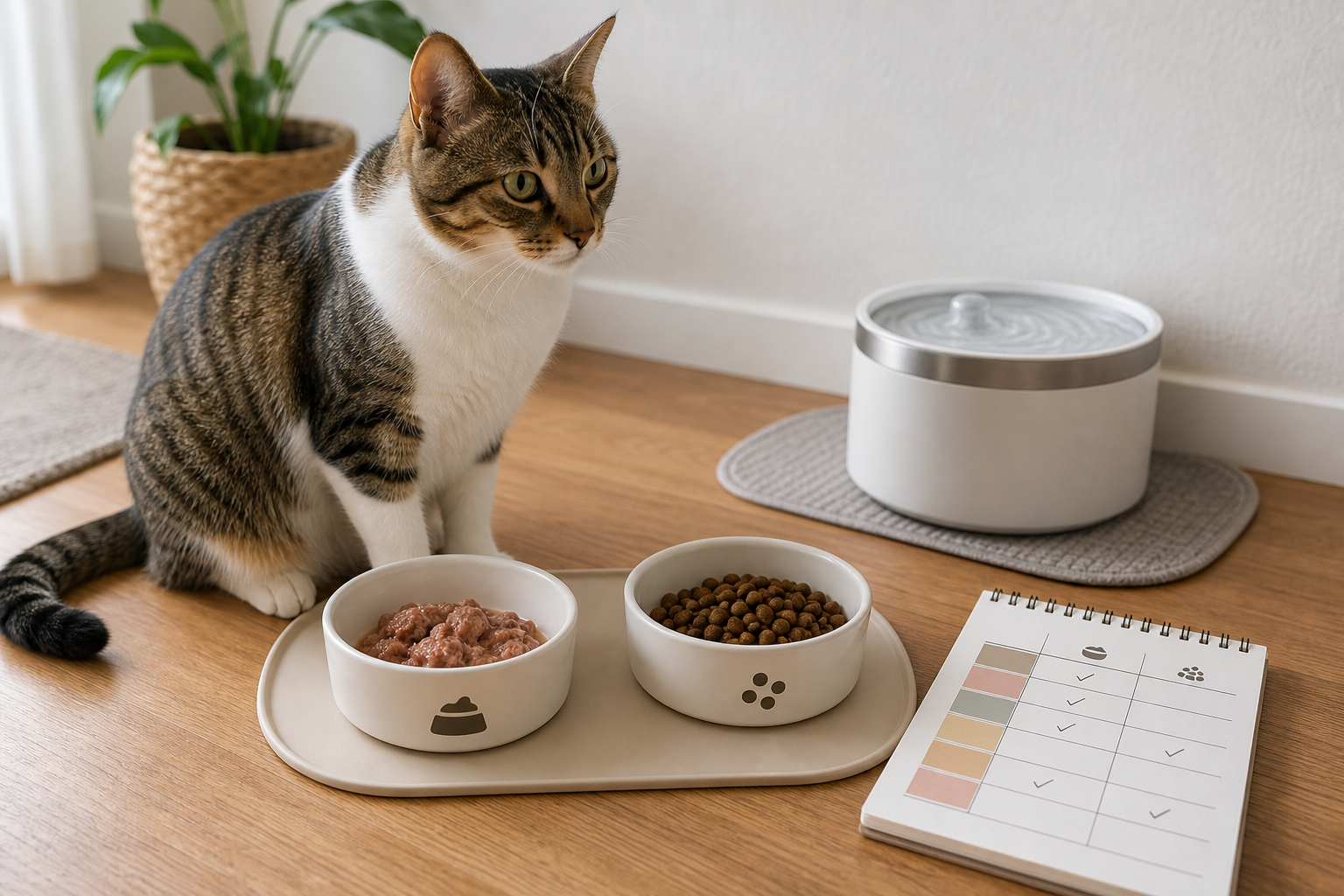
Mixed feeding is also useful during transitions. If your cat has eaten only kibble for years, a gradual introduction of wet food may be less stressful than a sudden swap. Start small, keep the old food stable, and watch stool quality, appetite, and overall energy. If vomiting, diarrhea, refusal to eat, or rapid weight change appears, slow down and contact your veterinarian.
For timing ideas, see SnuggleSouls' guide on how often to feed cat wet food. The practical win is consistency: cats often do best when meals happen at predictable times and portions are measured.
How do you switch without overfeeding?
Switch by calories first, then by texture. If you add wet food without reducing dry food, your cat may gain weight even if the new food is nutritious.
Start by checking the calories per can, pouch, cup, or gram. Then estimate your cat's daily needs using body weight, age, neuter status, activity level, and body condition. SnuggleSouls' cat calorie calculator can help with a starting estimate, while the cat body condition and weight calculator can help you think beyond the number on the scale.
Use this transition framework:
| Transition step | What to do | What to watch |
|---|---|---|
| Days 1-3 | Replace a small amount of the usual food with the new format. | Appetite, stool, vomiting, stress. |
| Days 4-7 | Increase the new food if your cat is comfortable. | Whether total calories are still controlled. |
| Week 2 | Move toward the target wet, dry, or mixed ratio. | Body condition and meal satisfaction. |
| Ongoing | Recheck portions every few weeks. | Weight gain, hunger, food guarding, leftovers. |
If your cat has diabetes, kidney disease, urinary disease, food allergies, gastrointestinal disease, pancreatitis, or any prescription diet, do not change formats without veterinary guidance. WSAVA's nutrition resources emphasize that nutrition assessment should be part of routine veterinary care, especially when health conditions are present 3.
For wet-food math specifically, SnuggleSouls' guide on how much wet food to feed a cat can help you turn cans or pouches into a realistic daily routine.
What safety details matter with wet food?
Wet food needs stronger storage habits than dry food. Once opened, it should be covered, refrigerated, and used within a safe timeframe based on the product label and general food-safety guidance.
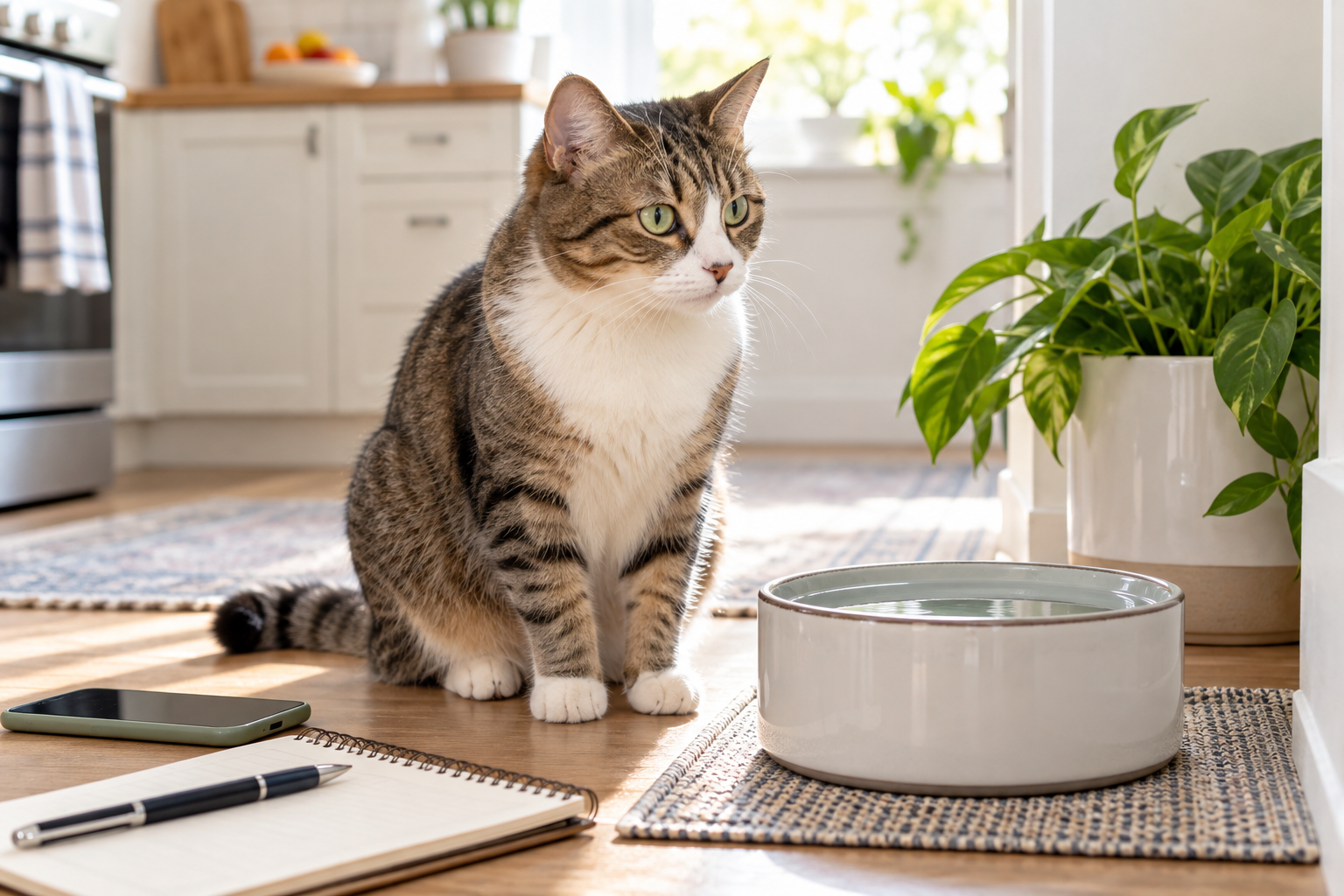
Do not leave wet food sitting out for long periods, especially in a warm room. Many cats prefer smaller fresh meals instead of a large portion that dries out. If your cat grazes, consider offering a smaller wet meal and using measured dry food for the part of the day when you cannot supervise.
Clean bowls daily. Wash water bowls and fountains regularly. If you use both wet and dry food, keep the feeding area dry and remove old residue so smell, bacteria, and pests do not build up.
For more practical storage steps, use the SnuggleSouls wet cat food storage guide. Good storage is not glamorous, but it is one of the easiest ways to make wet food safer and more appealing.
How should you choose between wet and dry food for your cat?
Choose the format that best solves your cat's real problem while still meeting basic nutrition standards. The right answer for a young, lean, active cat may not be the right answer for an older cat with urinary concerns or a cat who gains weight easily.
Use this decision checklist:
| Your cat's situation | Better starting point | Why |
|---|---|---|
| Low water intake or urinary history | Wet or mixed feeding | Adds dietary moisture and may support hydration. |
| Weight gain on free-fed kibble | Wet meals or measured mixed feeding | Easier to control portions and reduce grazing. |
| Long workdays or timed feeding needs | Dry or mixed feeding | More practical for feeders and puzzles. |
| Picky eater who loves gravy or pate | Wet food | Palatability may improve reliable intake. |
| Multi-cat home with food stealing | Meal-fed wet, measured dry, or microchip feeders | Prevents one cat from eating everyone else's food. |
| Tight budget | Measured dry plus targeted wet meals | Keeps routine realistic while adding moisture. |
| Medical condition or prescription diet | Ask your veterinarian | Diet format may affect treatment goals. |
Whatever you choose, check four basics: complete and balanced label, correct life stage, measured calories, and your cat's actual body condition. Then adjust based on results. A shiny label does not matter if your cat gains weight, refuses meals, or develops digestive problems.
Conclusion: Wet vs dry cat food is about fit, not a universal winner
Wet food is often better for hydration, appetite support, and portion satisfaction. Dry food is often better for convenience, budget, puzzle feeding, and timed routines. Mixed feeding can give many cats the best parts of both, as long as you calculate total daily calories.
The healthiest choice is the one your cat can eat comfortably, that you can feed consistently, and that keeps your cat at a healthy weight with normal energy, stool, hydration, and appetite. If your cat has a medical condition, sudden appetite change, weight loss, vomiting, diarrhea, urinary signs, or pain while eating, make the feeding decision with your veterinarian.
Frequently Asked Questions
Is wet food better than dry food for cats?
Wet food is often better for cats who need more moisture, have urinary concerns, or need meals that feel fuller with fewer calories. Dry food can still be healthy for many cats if it is complete and balanced, measured carefully, and your cat drinks enough water.
Can cats live on dry food only?
Many healthy cats can live on a complete and balanced dry food if portions are controlled and they maintain good hydration and body condition. However, cats with urinary, kidney, weight, or appetite concerns may benefit from wet food or a veterinarian-guided diet plan.
Is it okay to mix wet and dry cat food?
Yes, mixing wet and dry cat food can work well. The important rule is to divide daily calories between the two formats instead of feeding a full amount of each.
Does wet food help cats drink more water?
Wet food adds water through the diet, which can improve total moisture intake for many cats. It does not replace the need for fresh drinking water, so keep clean bowls or a fountain available.
Does dry food clean cats' teeth?
Regular dry kibble should not be treated as dental care. Some veterinary dental diets are designed for oral health, but cats still need dental checks and appropriate care if they have bad breath, red gums, drooling, or painful chewing.
How many times a day should I feed wet food?
Many cats do well with two or more wet meals per day, but the best schedule depends on total calories, appetite, and your household routine. If you use mixed feeding, reserve part of the daily calories for dry food rather than adding it freely.
References
[1] Cornell Feline Health Center. (2026). Feeding Your Cat. Cornell Feline Health Center
[2] U.S. Food and Drug Administration. (2024). "Complete and Balanced" Pet Food. FDA
[3] World Small Animal Veterinary Association. (2024). Global Nutrition Guidelines. WSAVA
[4] Association of American Feed Control Officials. (2026). Reading Labels. AAFCO
[5] Cornell Feline Health Center. (2026). Hydration. Cornell Feline Health Center

 Why Does My Cat Flinch When Touched While Sleeping? Startle, Trust, and Pain Clues">
 Cat Scratching Baseboards: Trim Guards and Route Fixes">
 EN
EN DE
DE ES
ES PT
PT