

A coughing cat should be discussed with a veterinarian, even when breathing looks comfortable between episodes. Coughing can come from airway inflammation, asthma, infection, parasites, inhaled irritants, or other conditions that cannot be diagnosed at home. Seek emergency care now for open-mouth breathing, blue or gray gums, collapse, or obvious breathing effort.
This guide is educational and cannot identify the cause of your cat’s cough. Watch breathing first, keep the cat calm, and contact a veterinary clinic for guidance.
Table of Contents
- When is cat coughing an emergency?
- Is my cat coughing or trying to bring up a hairball?
- What can cause coughing in cats?
- When should I call the vet about a cough?
- What should I do while waiting for veterinary advice?
- What should I record for the veterinarian?
- What might the veterinarian check?
- What should I avoid giving a coughing cat?
- Conclusion
- Frequently Asked Questions
- References
When is cat coughing an emergency?
Any sign that a cat is struggling to breathe is an emergency. Do not wait for another coughing episode or try a home remedy when breathing looks difficult.
| What you see | Recommended response |
|---|---|
| Open-mouth breathing or panting that is not immediately explained by brief extreme stress | Seek emergency veterinary care now |
| Blue, gray, or very pale gums or tongue | Seek emergency veterinary care now |
| Collapse, severe weakness, inability to stand, or reduced responsiveness | Seek emergency veterinary care now |
| Obvious abdominal effort, exaggerated chest movement, neck extended to breathe, or inability to settle | Seek emergency veterinary care now |
| Continuous coughing or distress that does not resolve | Seek urgent veterinary care |
| Coughing while breathing comfortably between episodes | Call your veterinarian and arrange assessment |
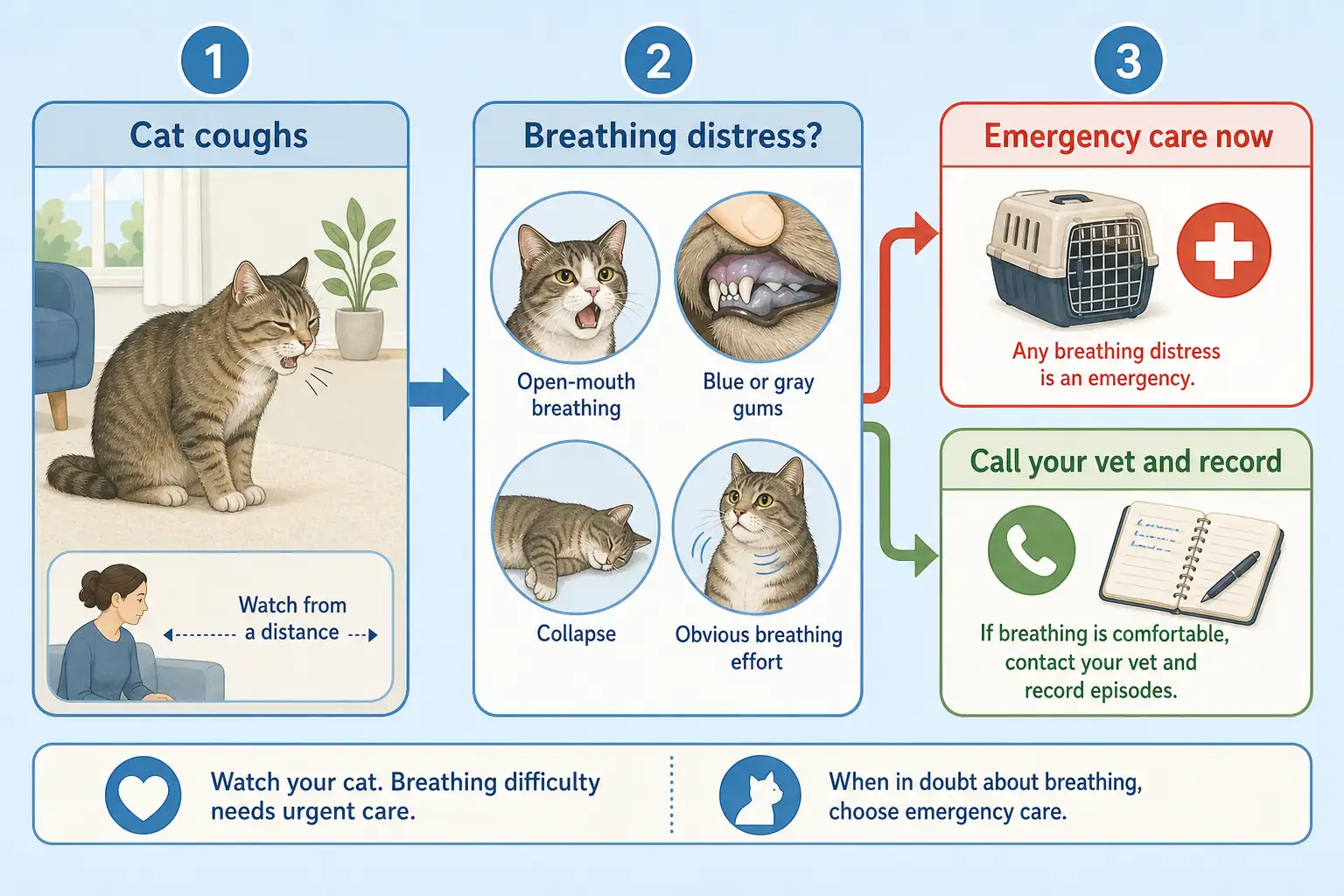
Transport a cat with breathing difficulty as calmly as possible. Minimize handling, avoid compressing the chest, use a carrier if it can be done without a struggle, and call the emergency clinic while preparing to leave.
Is my cat coughing or trying to bring up a hairball?
Coughing and retching can look similar, especially in a short episode. A video is often more useful to the veterinarian than an owner’s label, so record safely without delaying care.
| Observation | May look more like coughing | May look more like retching or vomiting |
|---|---|---|
| Posture | Crouched low with neck extended forward | Hunched with repeated abdominal contractions |
| Sound or movement | Quick expirations or dry hacking | Rhythmic heaving, swallowing, or lip licking |
| What comes up | Often nothing | Fluid, food, foam, or a hairball may appear |
| Afterward | May resume normal behavior or breathe differently | May swallow, lick lips, or approach/avoid food |
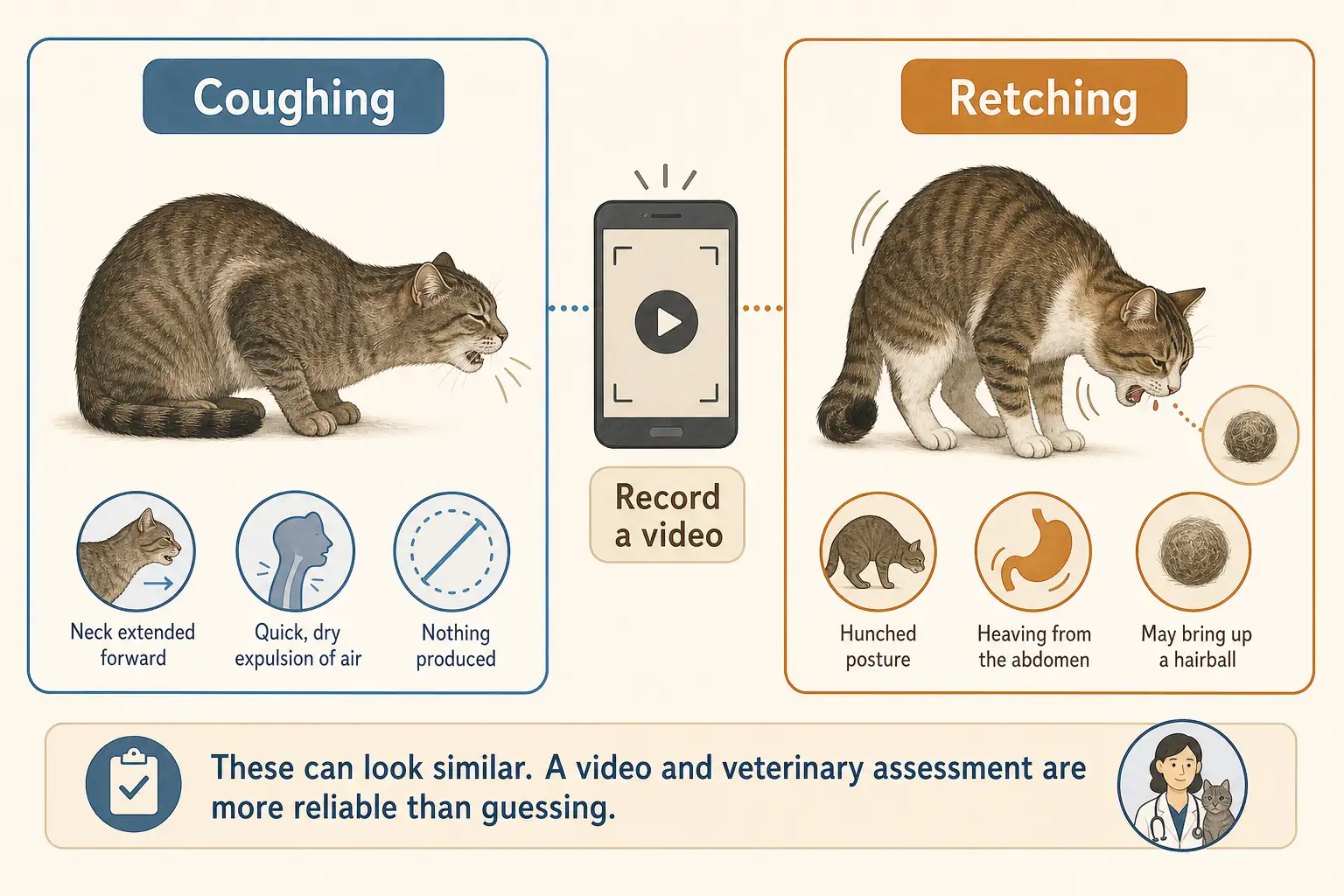
Do not assume repeated dry episodes are “just a hairball” because nothing appears. VCA notes that coughing is often mistaken for vomiting or trying to pass a hairball.2
What can cause coughing in cats?
Coughing is a sign, not a diagnosis. Possible causes involve the airways, lungs, parasites, irritants, and other conditions, and similar-looking episodes may need different treatment.
| Cause category | Examples or context |
|---|---|
| Airway inflammation | Feline asthma or chronic bronchial disease |
| Infection | Respiratory infections or pneumonia |
| Parasites | Lungworms or heartworm-associated respiratory disease, depending on exposure and region |
| Irritants | Smoke, aerosols, scented products, dusty litter, or other airborne material |
| Inhaled material | Foreign material or aspiration |
| Other chest disease | Conditions affecting the lungs, airways, or structures in the chest |
Cornell explains that feline asthma involves inflammation and narrowing of the lower airways and may cause coughing, wheezing, rapid breathing, or respiratory distress.1 The American Heartworm Society notes that cats with heartworm-associated disease can have coughing, asthma-like signs, vomiting, or sudden severe illness.3
These possibilities are why a response to one treatment does not safely confirm the cause and why household observation cannot replace an examination.
When should I call the vet about a cough?
Call your veterinarian for any confirmed or suspected cough, especially when episodes repeat, increase, or occur with another change. A single brief episode in a cat breathing comfortably may not require an emergency visit, but it still deserves a call if you are unsure.
Call promptly when coughing occurs with:
- wheezing, noisy breathing, or faster breathing than usual
- reduced appetite, weight loss, lethargy, or hiding
- nasal discharge, fever concern, or repeated sneezing
- gagging, repeated swallowing, or possible foreign-material exposure
- vomiting or difficulty eating
- recent travel, outdoor exposure, new animals, or missed parasite prevention
- smoke, fire, aerosol, chemical, or dust exposure
- a known heart, lung, or airway condition
Use a lower threshold for kittens, senior cats, and cats with existing medical conditions. If your cat begins hiding more than usual or suddenly sleeps much more, tell the clinic rather than treating those changes as separate.
What should I do while waiting for veterinary advice?
Keep your cat calm, reduce avoidable airborne irritants, and follow the clinic’s instructions. Do not create steam, force activity, or attempt to test the cat’s breathing by handling them repeatedly.
Safe practical steps include:
- Stop active sprays, smoke, candles, diffusers, and dusty cleaning near the cat.
- Move other pets and children away if they increase stress.
- Let the cat choose a comfortable position.
- Observe breathing from a distance.
- Prepare the carrier and call the clinic.
- Record an episode only when doing so does not delay emergency care.
Do not place a distressed cat in a hot, steamy bathroom. Heat, handling, and delay can worsen stress, and steam does not address the many possible causes of coughing.
What should I record for the veterinarian?
Record the episode’s timing, duration, posture, sound, breathing comfort, and possible triggers. A short clear video and factual timeline can help the veterinarian distinguish coughing from retching and choose initial tests.

Note:
- when the first episode occurred
- frequency and duration
- what the cat was doing immediately beforehand
- posture, sounds, and whether anything came up
- breathing appearance before and after
- appetite, weight, energy, sleep, and hiding
- nasal discharge, sneezing, vomiting, or swallowing changes
- smoke, aerosols, fragrance, dust, litter, renovation, or chemical exposure
- indoor/outdoor access, travel, and parasite-prevention history
- current medications and known health conditions
If safe and your veterinarian recommends it, count sleeping breaths without touching or disturbing the cat. Do not rely on one number to decide that breathing distress is safe to monitor.
What might the veterinarian check?
The veterinarian will use the history, examination, and the cat’s stability to decide what testing is appropriate. Coughing workups may be stepwise because different diseases can produce similar signs.
Possible steps include:
- observing breathing and listening to the chest
- checking temperature, gums, hydration, and overall condition
- reviewing videos and exposure history
- chest radiographs or other imaging
- blood, fecal, parasite, or infectious-disease testing when indicated
- additional airway or heart-related assessment
Do not delay an urgent visit while trying to obtain a perfect video. A cat in respiratory distress may need stabilization before a detailed workup.
What should I avoid giving a coughing cat?
Do not give human cough medicine, cold medicine, inhalers, antibiotics, antihistamines, supplements, essential oils, honey, or leftover pet medication unless a veterinarian specifically directs you. Products that seem mild can be unsafe, ineffective, or interfere with diagnosis.
Also avoid:
- forcing food, water, or oral medication during or immediately after an episode
- using essential-oil diffusers or strong fragrances
- spraying aerosol products near the cat
- changing parasite medication without veterinary guidance
- assuming a cough is asthma and using another pet’s inhaler
- waiting for a hairball when coughing continues or breathing changes
Treatment depends on the underlying cause. The safest home action is to reduce stress and irritants while contacting a veterinary professional.
Conclusion
Cat coughing is not a normal behavior to manage repeatedly with home remedies. First determine whether breathing is comfortable. Open-mouth breathing, blue or gray gums, collapse, or obvious breathing effort requires emergency care now.
When breathing is comfortable, record the episode, note possible triggers and other changes, and call your veterinarian. A video may help distinguish coughing from retching, but only veterinary assessment can identify the cause and choose appropriate treatment.
Frequently Asked Questions
Why is my cat coughing but no hairball comes out?
The episode may be coughing rather than retching. Repeated dry episodes should not be assumed to be hairballs. Record a video when safe and contact your veterinarian.
Is an occasional cough normal for a cat?
Cats may cough briefly after an irritant exposure, but coughing is not considered a routine normal behavior. Call your veterinarian if you confirm a cough, episodes repeat, or you are unsure what you saw.
When is cat coughing an emergency?
Seek emergency care for open-mouth breathing, blue or gray gums, collapse, severe weakness, continuous distress, or obvious breathing effort. When in doubt about breathing, choose emergency care.
Can dusty litter or fragrance make a cat cough?
Airborne irritants may contribute to coughing in some cats, but removing an irritant does not rule out asthma, infection, parasites, or another condition. Discuss the episode with your veterinarian.
Can I give my cat honey for a cough?
Do not give honey or other home remedies as a substitute for veterinary assessment. Coughing has several possible causes, and home treatment may delay appropriate care.
How can I tell cat asthma from a hairball?
Asthma-related coughing and retching can look similar at home. A video, examination, and appropriate testing are more reliable than guessing from posture or sound alone.
Should I count my cat’s breathing rate?
A veterinarian may ask you to count sleeping breaths when the cat is calm. Do not disturb a cat that is struggling to breathe or use a count to delay emergency care when breathing looks abnormal.
References
[1] Cornell Feline Health Center. Feline Asthma: What You Need to Know.
[2] VCA Animal Hospitals. Coughing in Cats.
[3] American Heartworm Society. Heartworms in Cats.
 EN
EN DE
DE ES
ES PT
PT