
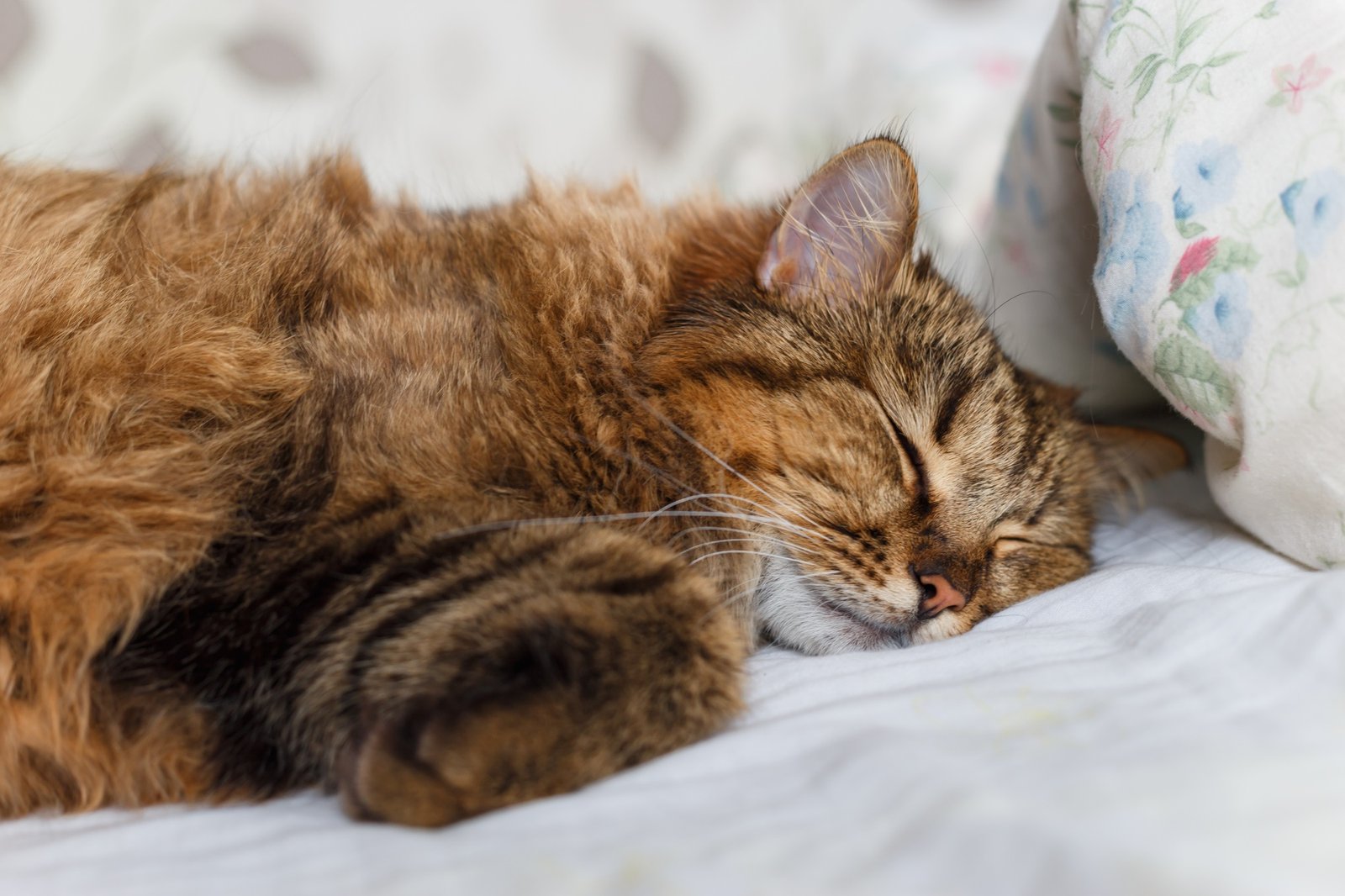
If you have ever caught your feline friend snoozing for what feels like the hundredth time in a single day, you are not alone. A common question among pet parents is whether their cat is simply lazy or whether this extended rest is actually normal. The truth is that cats sleep a lot—but the “normal” number of hours depends heavily on their age, health, and daily routine.
In this comprehensive guide, we will break down exactly how many hours cats sleep at every life stage, from the nonstop naps of newborn kittens to the slow, cozy days of senior cats. You will learn what affects their sleep patterns, how to decode their resting behaviors, and how to spot the clear red flags that may signal stress or underlying illness.
Table of Contents
Quick Answer: How Many Hours Do Cats Sleep?
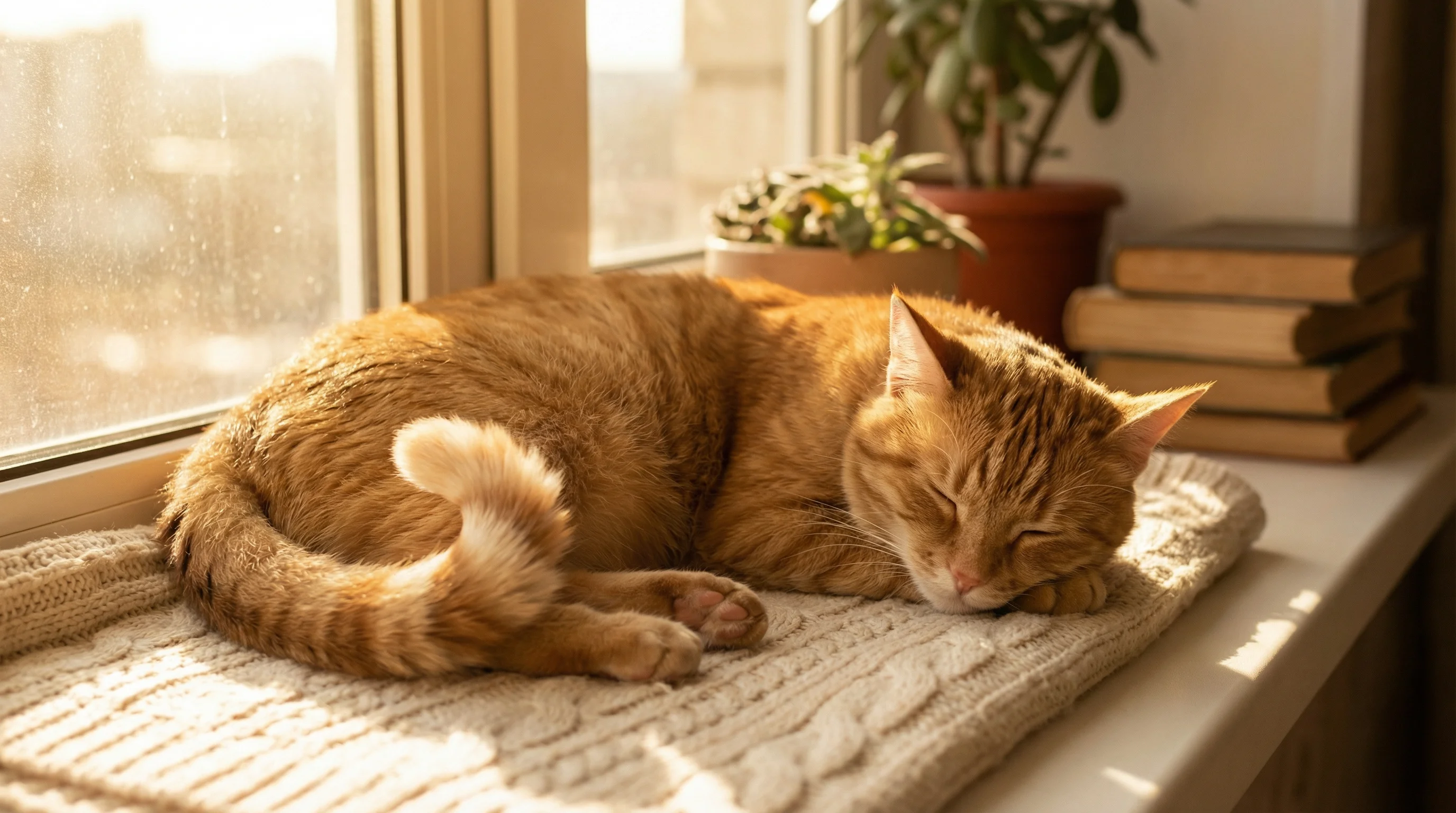
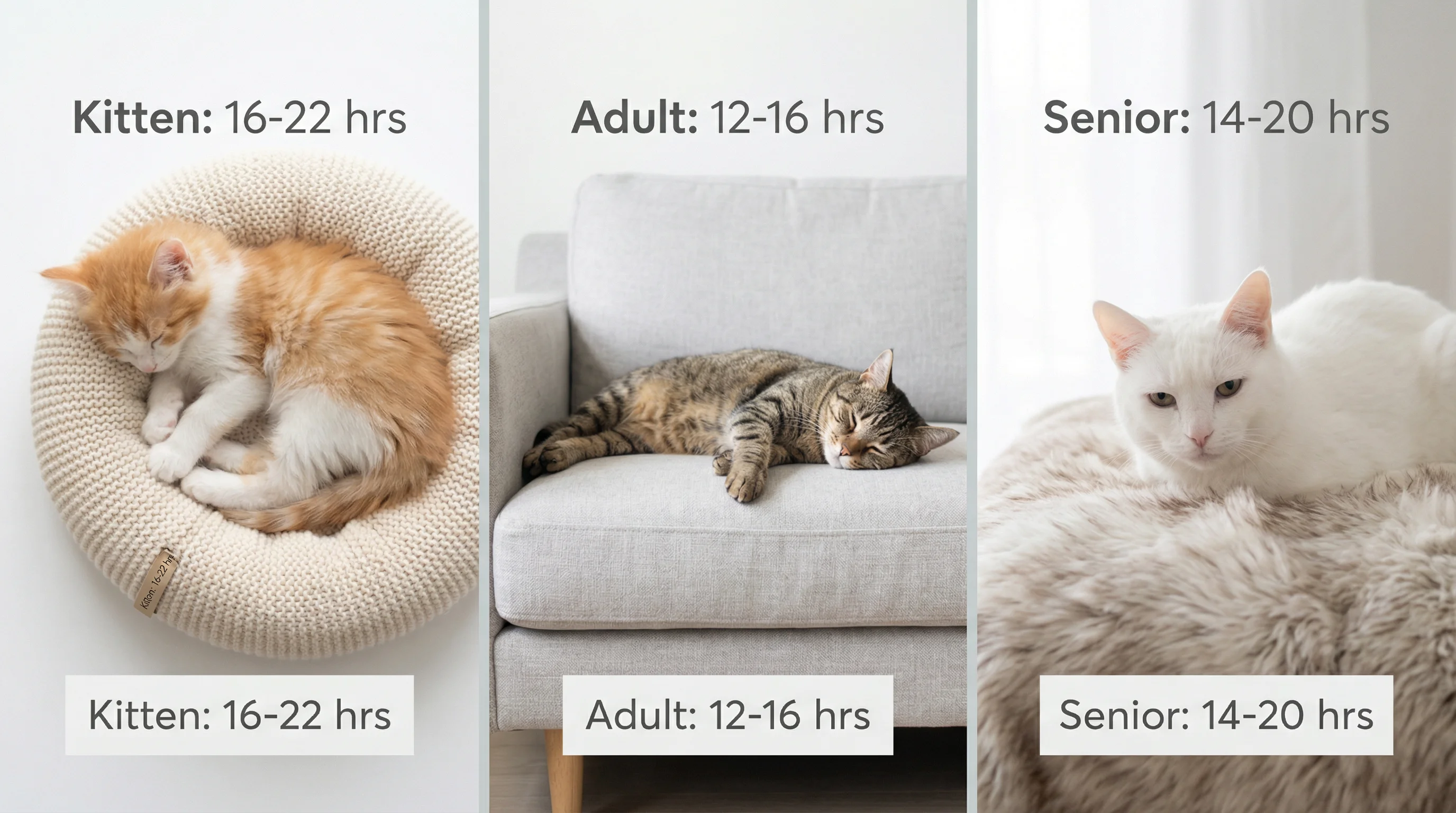
Most healthy cats sleep between 12 and 16 hours per day. However, this number fluctuates significantly based on life stage. Kittens typically sleep 16 to 22 hours to support rapid physical and cognitive growth. Adult cats usually average around 15 hours, taking multiple short naps throughout the day. Senior cats commonly sleep 18 to 20 hours as their metabolism slows down and their energy levels decrease.
What matters most is not the exact number of hours, but rather the consistency of your cat’s routine. A sudden increase or decrease in sleep—especially when accompanied by changes in appetite or behavior—can be an early indicator of stress or illness.
Cat Sleep Hours by Age (Quick Reference Chart)
Understanding your cat’s life stage is the first step in evaluating their sleep habits. Here is a breakdown of what you can expect at each stage.
| Life Stage | Typical Sleep per Day | What You Will Usually Notice |
|---|---|---|
| Kittens (0–6 months) | 16–22 hours | High-energy play bursts followed by sudden, deep crashes into sleep |
| Adolescents (6–12 months) | 14–18 hours | Still napping heavily, but with longer alert periods |
| Adult Cats (1–10 years) | 12–16 hours | Frequent short naps; highly alert at dawn and dusk |
| Mature Adults (7–10 years) | 14–18 hours | Slightly longer naps; may begin seeking warmer spots |
| Senior Cats (11+ years) | 14–20 hours | Longer, deeper naps; slower movements; preference for warm, quiet spots |
Not sure which category your feline friend falls into? Try our Cat Age Calculator to confirm their exact life stage in human years.
How Long Do Cats Sleep by Life Stage?
Kittens (0–6 months): The Growth Phase
For kittens, sleep is not a sign of laziness—it is a critical biological necessity. Newborn kittens can sleep up to 22 hours a day, and even a robust six-month-old often logs between 16 and 20 hours of rest. During these early months, sleep supports essential brain development, learning, and memory consolidation. Their immune systems are simultaneously building defenses, and physical growth—including bone and muscle development—primarily occurs during rest.
You will typically notice that kittens exhibit intense bursts of energy, often called “zoomies,” before suddenly flopping over into a deep sleep, completely exhausted from their play. This cycle of explosive activity followed by immediate, heavy sleep is entirely normal and a sign of healthy development.
Adult Cats (1–10 years): The Polyphasic Sleepers
Most adult cats sleep around 12 to 16 hours daily. Unlike humans, who typically consolidate their sleep into one long block, cats are polyphasic sleepers. This means they rest in many short naps distributed across both day and night rather than in a single extended period.
The total sleep time for an adult cat is heavily influenced by their environment and enrichment level. Cats with high activity levels and plenty of mental stimulation may sleep slightly less. Conversely, indoor cats living in quiet, warm environments without adequate stimulation might sleep closer to 18 hours out of sheer boredom. Understanding why cats behave the way they do is key to providing the right balance of rest and activity.
Senior Cats (11+ years): The Cozy Rest Phase
As cats age, their sleep needs increase once again. Senior cats often sleep 14 to 20 hours per day. A slower metabolism, reduced stamina, and age-related joint stiffness all contribute to this increased need for rest. You will likely notice your senior cat taking longer naps and actively seeking out the warmest, softest spots in the house, such as sunbeams or heated blankets.
It is worth noting that approximately 90% of cats over the age of 12 show evidence of degenerative joint disease, according to veterinary research. This discomfort can make movement painful, which naturally increases resting time. If you are concerned about your older cat’s comfort and behavior, you might want to explore our guide on Why Is My Cat So Cuddly? to understand how aging affects their affection and attachment levels.
How Cats Sleep: Light Naps vs. Deep REM Sleep
Even when it looks like your cat has been asleep all day, they are usually cycling through distinct stages of rest. Understanding these stages makes it much easier to distinguish between normal feline relaxation and true lethargy.
The Classic Catnap (Light Sleep)
Cats spend roughly three-quarters of their resting time in light sleep. During a catnap, your cat is resting but remains partially alert to their surroundings. You might notice their ears twitching or rotating toward sounds, and their eyes may even remain partially open. Their body stays slightly tense, allowing them to spring into action immediately if they hear a food bag open or sense a potential threat. These naps typically last anywhere from 15 to 30 minutes.
Deep Sleep and Dreaming (REM Sleep)
After a period of light sleep, cats will cycle into deep sleep, which includes the REM (Rapid Eye Movement) phase. This is the restorative stage where dreaming is believed to occur.
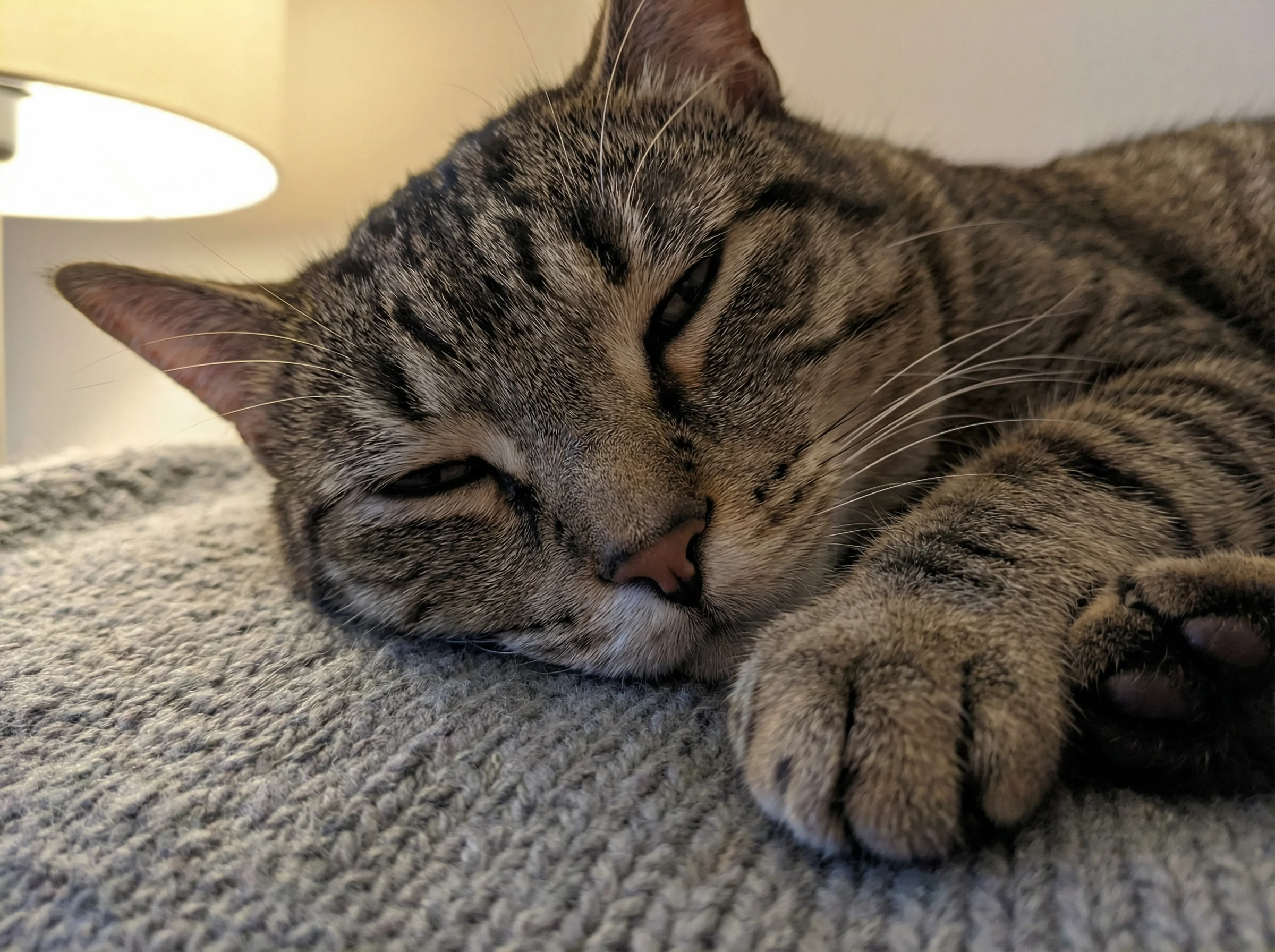
During REM sleep, your cat’s body becomes fully relaxed. You may observe subtle signs that they are dreaming, such as twitching whiskers, gentle paw movements, or tiny “sleep chirps.” While mild twitching is completely normal, intense or frequent full-body, seizure-like movements are abnormal and should be discussed with a veterinarian. Deep sleep phases are relatively brief, typically lasting only five to seven minutes at a time, before the cat cycles back into lighter sleep.
This polyphasic pattern—alternating between light and deep sleep many times throughout the day—is why your cat may appear to be sleeping continuously, even though they are not spending all of that time in truly restorative rest.
7 Key Factors That Change How Long Cats Sleep
Even within the same age group, two healthy cats can have vastly different sleep totals. If your cat is sleeping more than usual, it typically means something has shifted in their body, environment, or daily routine. Here is a breakdown of the most common influencing factors.
| Factor | Increases Sleep When… | Decreases Sleep When… |
|---|---|---|
| Activity Level | Bored, understimulated | Daily play and climbing routines |
| Diet and Meals | Large meals, excess weight | Smaller, timed meals after play |
| Temperature | Cold weather, dark months | Comfortable, stable room temperature |
| Stress | New pets, visitors, moving | Calm, predictable environment |
| Health and Pain | Arthritis, illness, injury | Comfortable, pain-free movement |
| Household Schedule | Quiet, empty house | Active, stimulating environment |
| Enrichment | No toys, no vertical space | Puzzle feeders, cat trees, window perches |
Daily Activity and Boredom: Indoor cats without regular play routines often sleep out of sheer boredom. Adding vertical space, puzzle feeders, and daily interactive play sessions can naturally reduce excessive daytime sleeping.
Diet and Weight: Large meals naturally lead to longer naps, as cats are biologically wired to “hunt, eat, and rest.” Carrying extra weight also makes movement more exhausting, leading to increased sleep. Curious about optimizing their nutrition? Check out our thoughts on Is Homemade Cat Food Better? for a balanced perspective on feline dietary choices.
Health and Pain: This is the most critical factor to rule out. Pain from conditions like arthritis, dental disease, or internal illness can make movement uncomfortable, causing the cat to remain stationary and sleep more. If the increased sleep is sudden and accompanied by other symptoms, this should always be your first concern.
Are Cats Nocturnal? Understanding the 3 AM Zoomies
A common frustration for cat owners is a pet that sleeps all day and turns into a tiny tornado at 3:00 AM. Despite popular belief, cats are not truly nocturnal. They are crepuscular, meaning their natural biological rhythm makes them most active during the twilight hours of dawn and dusk.
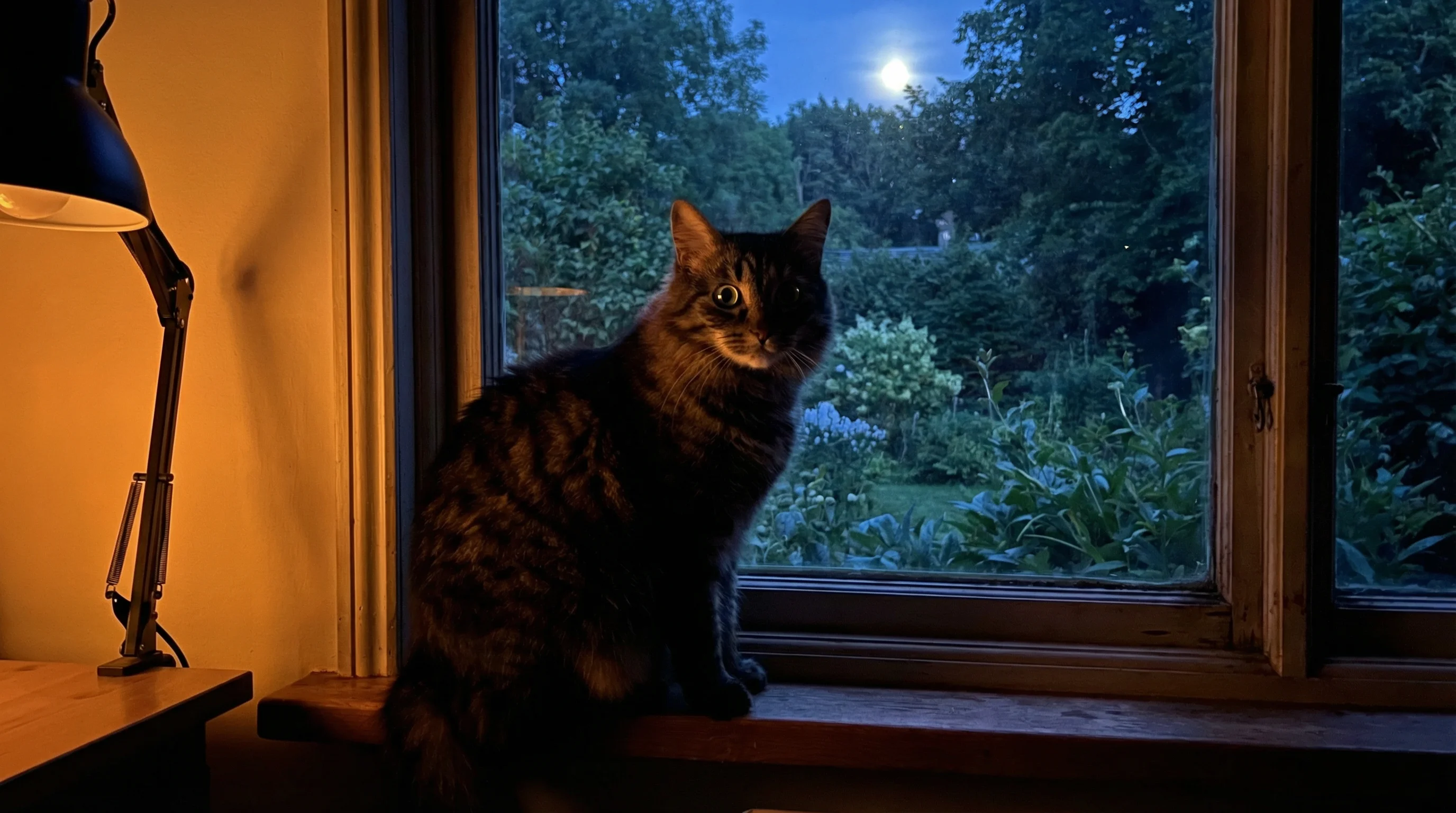
When an indoor cat exhibits excessive nighttime activity, it is usually a schedule problem rather than a personality flaw. They may be under-stimulated during the day, or they may have learned that waking you up results in food or attention—a reinforced behavior that can be difficult to break.
A Simple Evening Routine That Works
To align your cat’s schedule with your own, you need to leverage their natural “hunt, catch, kill, eat, groom, sleep” cycle. Try implementing this consistent evening routine for at least two weeks:
- Evening Play (10–20 minutes): Engage your cat with a wand toy or laser pointer to simulate hunting and drain their energy reserves.
- Late Dinner: Feed their main meal immediately after the play session. This mimics the natural post-hunt feeding reward.
- Wind Down (5–10 minutes): Provide calm petting or brushing to signal that the active period is ending.
- Set Clear Boundaries: Once the lights are out, completely ignore nighttime meowing or pawing. Getting up—even once—to feed them or shoo them away only reinforces the behavior.
Consistency is everything. The first few nights may actually get worse before they improve, as your cat tests the new boundaries. Stay the course.
If you are dealing with persistent behavioral quirks, you might also find our article on Why Cats Wiggle Before They Pounce helpful in understanding their deeply ingrained predatory instincts.
When Is Cat Sleep “Too Much”? Healthy Rest vs. Lethargy
Because cats are master nappers, it can be genuinely difficult to tell when healthy sleep crosses the line into concerning lethargy. The key metric is not the total hours slept, but rather a sudden change from your cat’s established baseline, especially when accompanied by other symptoms.
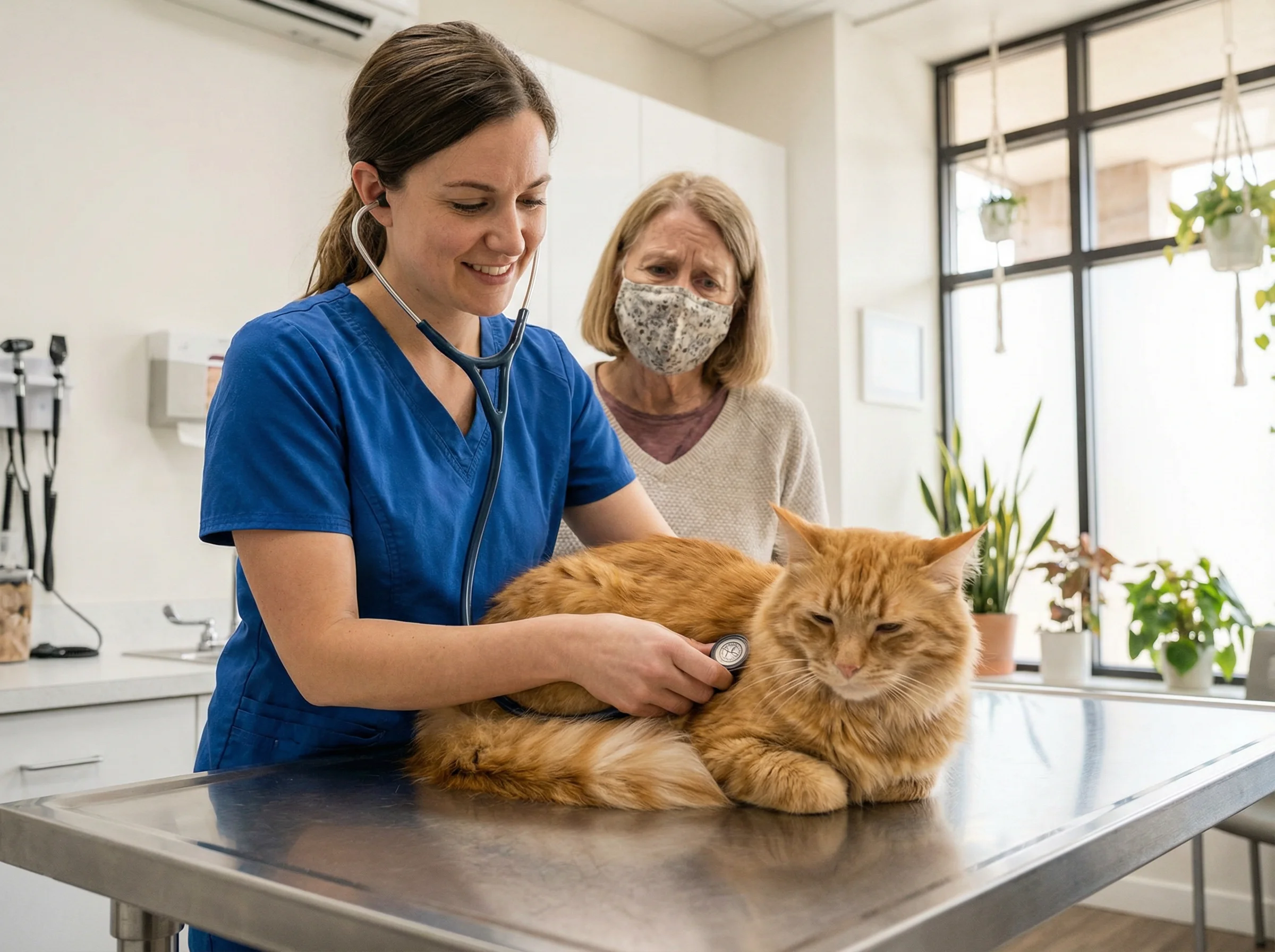
Healthy Sleep vs. Concerning Lethargy
| Healthy, Sleepy Cat | Concerning Lethargy |
|---|---|
| Wakes up eagerly for food or favorite sounds | Hard to rouse; unusually weak or unresponsive |
| Uses the litter box normally | Litter box changes: straining, accidents, or no urination |
| Maintains normal grooming habits | Stops grooming; coat looks dull, unkempt, or greasy |
| Has brief moments of alertness and curiosity | No interest in play or interaction throughout the day |
| Sleep pattern is consistent week to week | Sudden increase in sleep over one to three days |
Red Flags: When to Contact Your Vet
You should contact your veterinarian promptly if increased sleep is accompanied by any of the following:
- A noticeable decrease in appetite or water intake.
- Hiding in unusual places or showing a lack of interest in social interaction.
- Changes in litter box habits, such as straining, accidents, or no urination.
- Physical symptoms like vomiting, diarrhea, or persistent coughing.
- Signs of pain, such as limping, stiffness, or hesitation to jump onto furniture.
- A dull, unkempt coat due to a lack of grooming.
- Any difficulty breathing or open-mouth breathing, which is a veterinary emergency.
If you suspect a skin condition or parasite might be causing discomfort and lethargy, read our Caring Owner’s Guide to Ringworm in Cats for more specific symptom tracking and treatment guidance.
Frequently Asked Questions
How many hours a day do cats sleep by age?
Most kittens sleep about 16 to 22 hours per day, adult cats usually sleep 12 to 16 hours, and senior cats often sleep 16 to 20 hours. Individual cats vary based on activity level, routine, and health. What matters most is whether your cat’s sleep pattern is consistent for them over time.
Is it normal for cats to nap so many times a day?
Yes, absolutely. Cats are polyphasic sleepers, meaning they rest in many short naps instead of one long sleep. A cat can appear “asleep all day” even though much of that time is light dozing rather than deep, restorative sleep.
Is it normal for my cat to sleep 20 hours a day?
It can be normal for young kittens and some senior cats, especially during growth spurts or lower-energy periods. For healthy adult cats, 20 hours is on the high end and may be normal for some individuals—but if it is new or sudden, treat it as a potential red flag and look for accompanying changes in appetite, playfulness, litter box habits, or mobility.
Why is my cat suddenly sleeping more than usual?
A sudden increase in sleep can happen after stress, changes in routine, or a drop in activity—but it can also be linked to pain or illness. If the change lasts more than a day or two, or comes with reduced appetite, hiding, vomiting, or difficulty jumping, contact your veterinarian. For a deeper dive into this specific concern, read our guide on Why Is My Cat Sleeping So Much? which covers eight common causes and when to worry.
Do cats sleep more in winter or cold weather?
Many cats do sleep more in colder months. Cooler temperatures and shorter days make resting more appealing, and cats often seek warm spots to conserve energy. Seasonal increases are usually gradual. A sharp, sudden increase in sleep is more concerning than a slow seasonal shift.
Are cats nocturnal?
No. Cats are crepuscular, meaning they are naturally most active at dawn and dusk. A cat that is highly active at night is often responding to a learned behavior pattern or a lack of daytime stimulation, not their natural instinct.
Conclusion
Cats genuinely do sleep a lot, and for the most part, it is perfectly healthy behavior deeply rooted in their evolutionary history as energy-conserving predators. Whether you have a growing kitten logging 20 hours a day or a senior cat enjoying long, cozy naps in the sun, understanding their life stage is the key to knowing what is normal for them.
By providing adequate daytime enrichment, maintaining a consistent feeding and play schedule, and keeping a watchful eye out for sudden behavioral changes, you can ensure your feline companion is getting the high-quality rest they need to thrive. When in doubt, your veterinarian is always the best resource for assessing whether your cat’s sleep patterns reflect healthy rest or something worth investigating.
References
[7] Ohio State University Indoor Pet Initiative. “Sleeping Habits.” IndoorPet.OSU.edu.
[1] Sleep Foundation. “How Much Do Cats Sleep?” SleepFoundation.org.
[2] Zittritsch, N., LVT, BSc, MPH. “Why Do Cats Sleep So Much?” PetMD, updated March 2026.
[3] American Animal Hospital Association (AAHA) & American Association of Feline Practitioners (AAFP). “2021 AAHA/AAFP Feline Life Stage Guidelines.” AAHA.
[4] VCA Animal Hospitals. “Recognizing the Signs of Illness in Cats.” VCAHospitals.com.
[5] San Francisco SPCA. “Nocturnal Behavior in Cats.” SFSPCA.org.
[6] East Bay SPCA. “Managing Feline Nighttime Activity.” EastBaySPCA.org.


 EN
EN DE
DE ES
ES PT
PT