
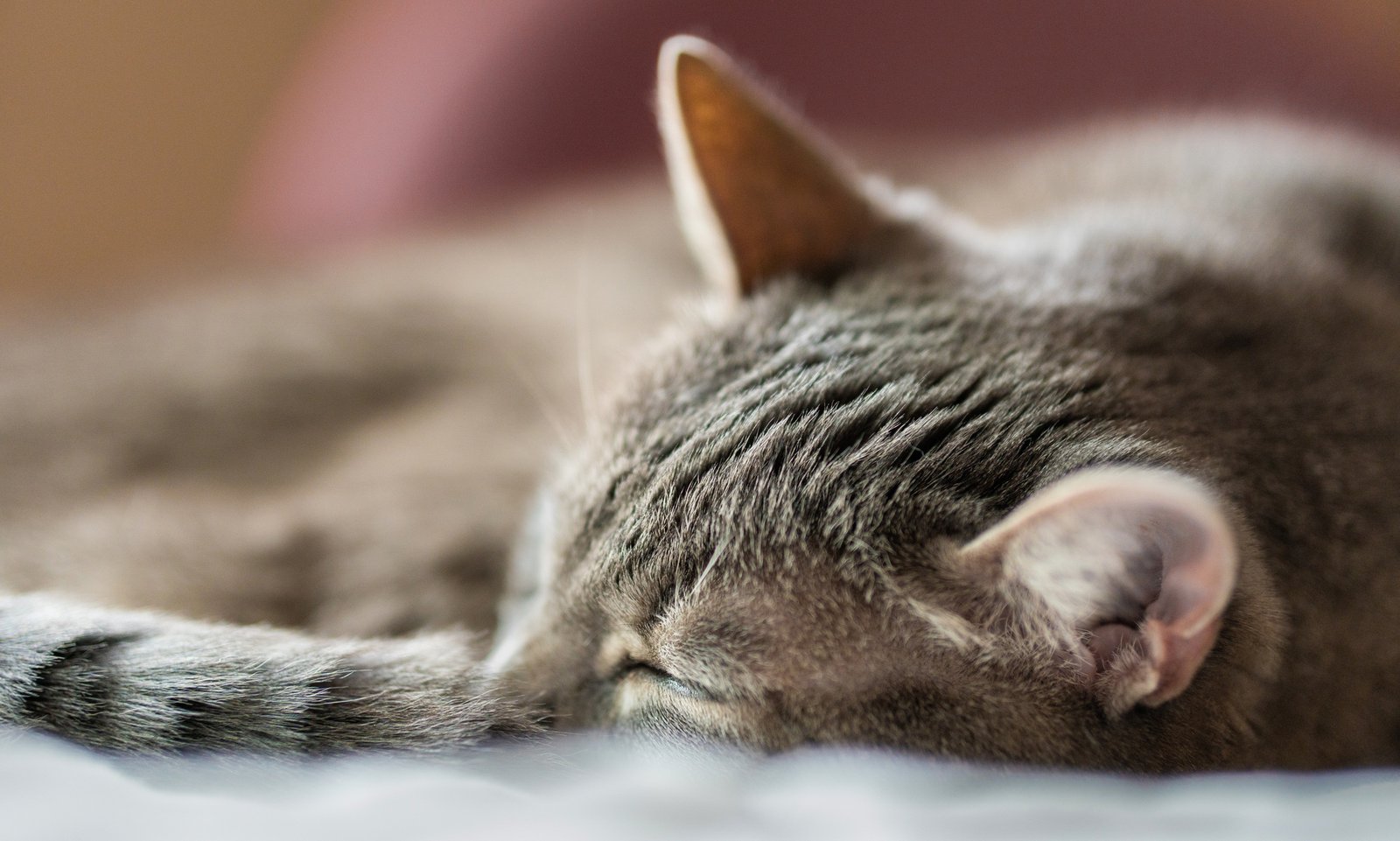
If your cat is sleeping more than usual, the change from their normal pattern matters more than one daily hour count. Cats often sleep about 12–16 hours a day, but pain, illness, stress, age, medication, or a routine change can also reduce activity. Watch how your cat acts when awake and check for other symptoms.1
Quick answer: A cat that wakes normally and still eats, grooms, moves, and shows interest in familiar activities may simply be following its usual sleep pattern. A sudden change—especially with weakness, appetite loss, hiding, pain, vomiting, or breathing trouble—deserves veterinary advice. A cat that is difficult to wake or cannot stand needs emergency care.2
Table of Contents
- Is it normal for a cat to sleep so much?
- Why is my cat sleeping so much? 8 possible reasons
- How can I tell normal sleep from lethargy?
- When should I call a vet?
- What should I monitor at home?
- What might my vet ask or check?
- How can I support healthy sleep?
- Conclusion
- Frequently Asked Questions
- References
Is it normal for a cat to sleep so much?
Often, yes. Many adult cats sleep around 12–16 hours in a day, and cats may rest in multiple short periods rather than one long overnight block.1 Individual routines vary, so compare your cat with their own usual behavior instead of treating a single number as a diagnosis.
Kittens and older cats may have different rest patterns, but there is no one age-based hour limit that can tell you whether a particular cat is healthy. For the life-stage ranges and sleep schedule details, see our guide to how long cats sleep by age.
The most useful questions are: Does your cat wake normally? Are they alert during their usual active periods? Are appetite, drinking, grooming, movement, and litter-box habits unchanged? A familiar heavy sleeper who behaves normally when awake is different from a cat whose energy or routine has clearly changed.
Why is my cat sleeping so much? 8 possible reasons
Extra sleep can reflect ordinary feline behavior, a change in the home, or a health problem. These possibilities can look similar from a distance, so use the whole pattern—not the nap count alone—to decide what to do.
1. A normal feline sleep-wake pattern
Cats often sleep and wake repeatedly across both day and night. Their pattern differs from the single long sleep period many people expect, which can make a normal cat appear to sleep all day.3 If your cat wakes readily and remains engaged with familiar routines, this may simply be their baseline.
2. Age or life stage
Young cats and older cats may rest differently from healthy adults. Older cats can become less active and sleep more, but a new change should not automatically be dismissed as “just age.” Cornell advises that changes in an older cat’s sleeping, eating, or behavior can signal a health issue and merit veterinary attention.4
3. Recovery after an unusually active day
A cat may rest more after a particularly active day, a new play routine, travel, or a busy household event. That explanation fits best when the increase is brief and the cat returns to their normal behavior. If the cat stays unusually quiet or other symptoms appear, contact your veterinarian rather than assuming they are simply recovering.
4. A quiet or under-stimulating routine
When an indoor cat has few chances to play, explore, climb, or watch activity, more of the day may be spent resting. Offer safe play and enrichment when your cat is awake and interested; do not try to keep a sleepy cat awake to reduce their sleep.
5. Stress or a change at home
Visitors, construction, a new pet, changed schedules, or conflict with another animal can alter a cat’s routine. Some stressed cats hide or withdraw instead of showing obvious agitation. If your cat is also avoiding people or favorite places, our guide to why cats hide can help you track that behavior.
6. Pain, injury, or reduced mobility
Pain can make a cat less active or change where and how they rest. Clues may include avoiding jumps, taking longer to move after lying down, grooming less, reacting to touch, or choosing lower resting spots. Cats may show subtle behavior changes rather than crying or limping; the FelineVMA’s owner guidance lists changes in sleep, social behavior, movement, and grooming among signs to watch.5 See our guide to subtle signs of pain in cats.
7. An illness that lowers energy
Infection and other illnesses can make a cat quieter or less interested in usual activities. Increased sleep is not enough to identify a cause, but it matters more when paired with appetite or thirst changes, vomiting, diarrhea, weight loss, poor grooming, coughing, or a change in breathing.6
8. A chronic health problem or medication effect
Some ongoing health conditions and some medicines can affect energy or activity. Decreased activity or lethargy can occur with certain veterinary medicines.7 If the change began after a prescription, dose adjustment, or new treatment, tell the prescribing veterinarian. Do not stop, skip, or change a medication without their direction. Your veterinarian can decide whether the timing is relevant and what should be checked.
How can I tell normal sleep from lethargy?
Normal sleep is a resting state; lethargy means a noticeable drop in responsiveness or normal activity. A sleeping cat should generally rouse in their usual way and act like themselves when awake. A lethargic cat may be unusually weak, difficult to engage, or unwilling or unable to do routine activities.
| What you notice | More consistent with normal rest | More concerning change |
|---|---|---|
| Waking | Responds to familiar sounds or routine | Hard to rouse or unusually unresponsive |
| Appetite and water | Usual interest and intake | Eating or drinking much less or more |
| Movement | Walks and jumps as usual | Weakness, stiffness, limping, or avoiding movement |
| Social behavior | Returns to normal interaction | New hiding, withdrawal, confusion, or irritability |
| Other signs | No new symptoms | Vomiting, diarrhea, weight change, breathing change, or poor grooming |
This table is a guide for noticing changes, not a way to diagnose the cause. If you are unsure whether your cat is simply asleep or unusually lethargic, call your veterinary clinic and describe what you see.
When should I call a vet?
Contact a veterinarian when your cat’s sleep or energy has clearly changed, particularly if the change persists or appears with another symptom. The level of urgency depends on the full picture and your cat’s age and medical history.
| Situation | What to do |
|---|---|
| Long-standing sleep pattern; cat wakes normally and otherwise behaves as usual | Keep observing the baseline and mention any changes at routine checkups. |
| New or persistent increase in sleep, or extra sleep plus appetite, litter-box, grooming, movement, or behavior changes | Call your veterinary clinic for guidance and an appointment. Do not wait for a particular number of days if your cat seems unwell. |
| Cat has not eaten for 24 hours, or has breathing difficulty, straining to urinate, or another severe symptom | Seek prompt veterinary advice; VCA identifies these as signs that need immediate attention.6 |
| Difficult to wake, cannot stand or walk when prompted, collapse, or obvious breathing distress | Go to an emergency veterinary hospital now.2 |
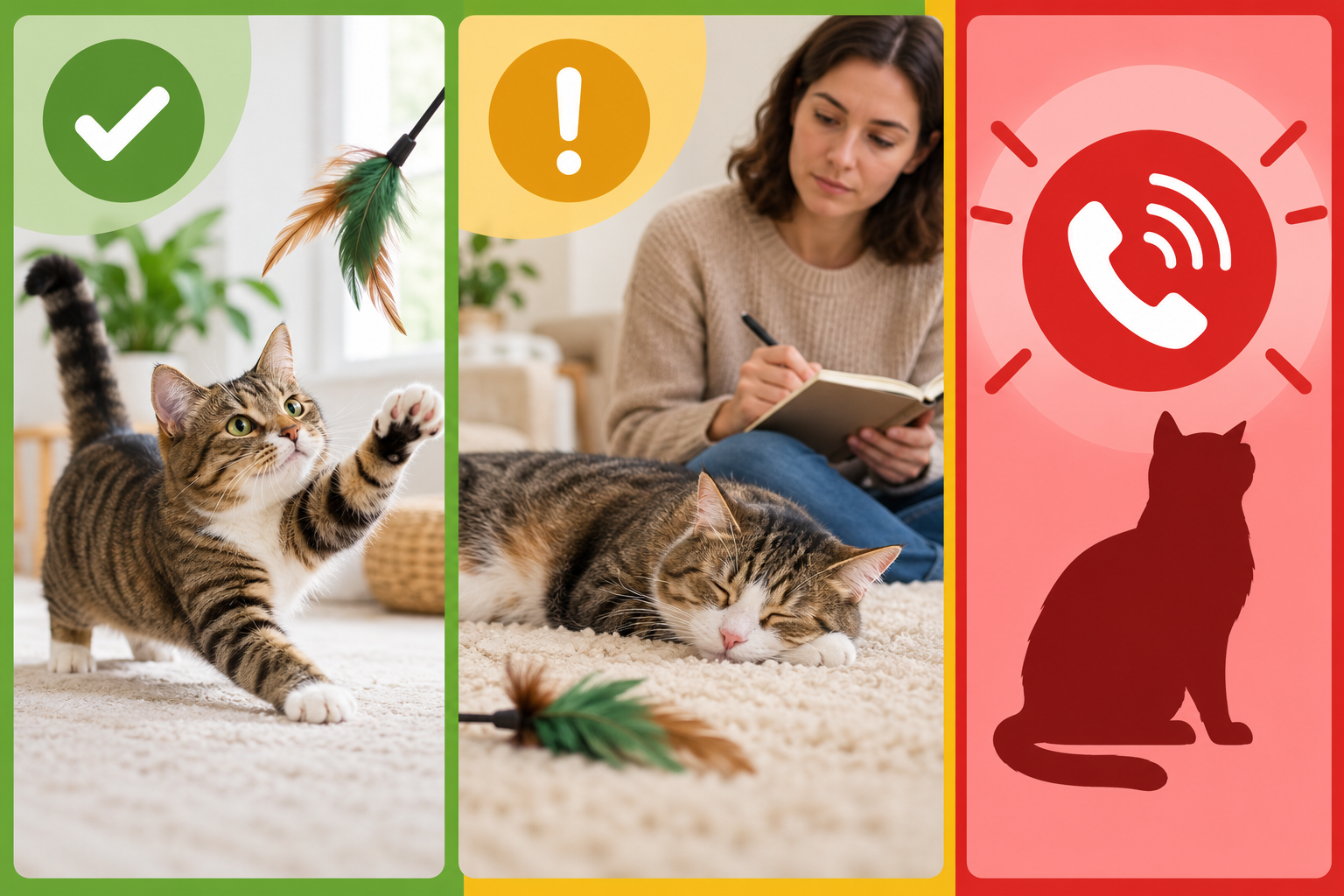
If a kitten, senior cat, or cat with a known condition is affected, ask your vet for timing suited to that cat. When breathing looks labored or your cat cannot be roused or stand, do not delay to complete a home checklist.
What should I monitor at home?
Write down what is different and when it started. A short, factual record helps your veterinarian compare the current pattern with your cat’s normal routine.
Record:
- When the change began and whether it is getting better, worse, or staying the same.
- Whether your cat wakes to their usual cues and what they do after waking.
- Appetite, water intake, vomiting or diarrhea, and litter-box changes.
- Jumping, walking, grooming, hiding, social behavior, and signs of discomfort.
- Any recent household change, illness, injury, new medicine, or dose adjustment.
- A short video of an unusual episode, if it is safe to record without disturbing your cat.
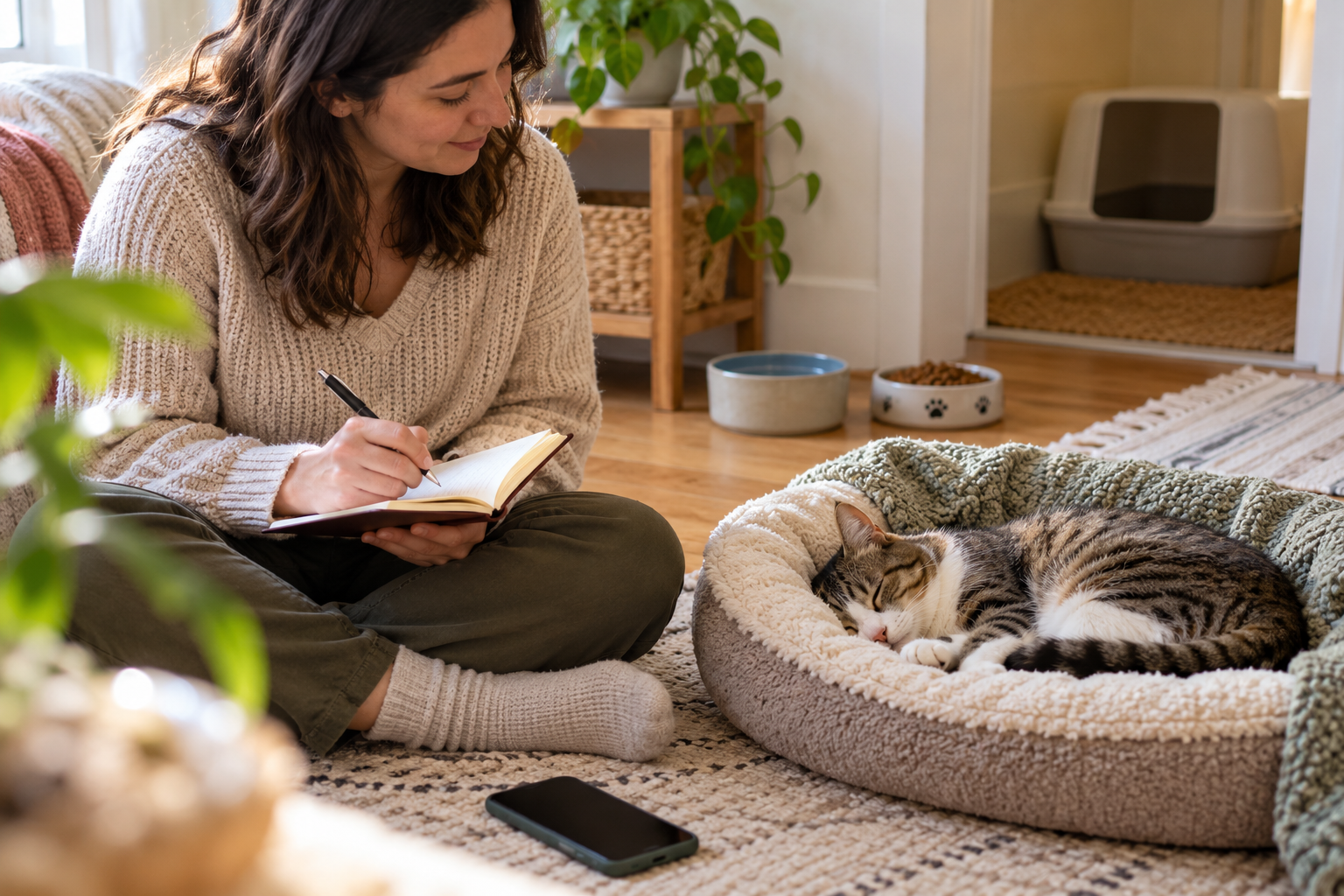
Do not repeatedly wake your cat or force activity to test them. If your cat seems difficult to wake, weak, or short of breath, contact an emergency clinic instead of continuing to observe at home.
What might my vet ask or check?
Your veterinarian may ask when the behavior changed, whether your cat still eats and drinks normally, what you have noticed in the litter box, and whether movement or social behavior has changed. Bring the medication list and any notes or video you collected.
Depending on the history and examination, the vet may recommend tests to look for a medical cause. The appropriate evaluation is individual; sleep behavior alone cannot identify which test or treatment a cat needs.
How can I support healthy sleep?
Keep quiet, comfortable resting places available and maintain a predictable routine. If your cat is otherwise alert and well, offer short play sessions and safe enrichment at times they naturally want to engage. Older or mobility-limited cats may benefit from easy access to favorite beds, food, water, and litter; our guide to setting up a comfortable cat sleep environment covers practical options.
These steps support comfort; they do not treat an illness or pain. If your cat’s sleep has changed alongside other signs, contact your vet before trying to solve it with more play, supplements, or medication changes.
Conclusion
Cats commonly sleep for much of the day, but the number of hours is only one part of the picture. A cat who wakes normally and behaves as usual is different from one whose sleep increase comes with weakness, appetite changes, hiding, pain, or other new symptoms.
Track what has changed and call your veterinary clinic when the pattern is new or your cat seems unwell. Difficulty waking, inability to stand, collapse, and breathing distress need emergency care.
Frequently Asked Questions
Is it normal for a cat to sleep 20 hours a day?
There is no single hour cutoff that determines whether a cat is healthy. Some cats may rest more than the typical adult range, but a new change, trouble waking, or other symptoms matter more than the number alone. Ask your vet if you are concerned.
Why is my cat suddenly sleeping more than usual?
Possible reasons include a changed routine, stress, pain, illness, medication effects, or an age-related change. Look for changes in appetite, water intake, litter-box use, movement, grooming, and responsiveness, and call your veterinarian if the change is clear or your cat seems unwell.
Do older cats naturally sleep more?
Some older cats become less active and may sleep more, but new behavior changes should not automatically be attributed to age. Pain or illness can also change a senior cat’s routine, so tell your veterinarian about a noticeable difference.4
Should I wake my cat if they sleep all day?
Do not keep waking a cat who is resting comfortably. Notice whether they rouse normally on their own or to familiar cues. If they are difficult to wake, unusually weak, or unable to stand, seek emergency veterinary care.2
Can cold weather make a cat sleep more?
Cats may choose warmer resting spots or follow a different routine as the home and daylight change. Do not use the season as the only explanation for a sudden or persistent change, especially when appetite, movement, breathing, or other behavior is also different.
References
[1] VCA Animal Hospitals. Is Your Pet Sleeping Too Much?
[2] VCA Animal Hospitals Urgent Care. Lethargy: When to Schedule Urgent Care or Seek Emergency Care
[3] Ohio State University Indoor Pet Initiative. Sleeping Habits
[4] Cornell University College of Veterinary Medicine. Loving Care for Older Cats
[5] Feline Veterinary Medical Association. Chronic Pain: Information for Cat Caregivers
[6] VCA Animal Hospitals. Recognizing the Signs of Illness in Cats
[7] Merck Veterinary Manual. Treatment of Behavior Problems in Cats
 EN
EN DE
DE ES
ES PT
PT