
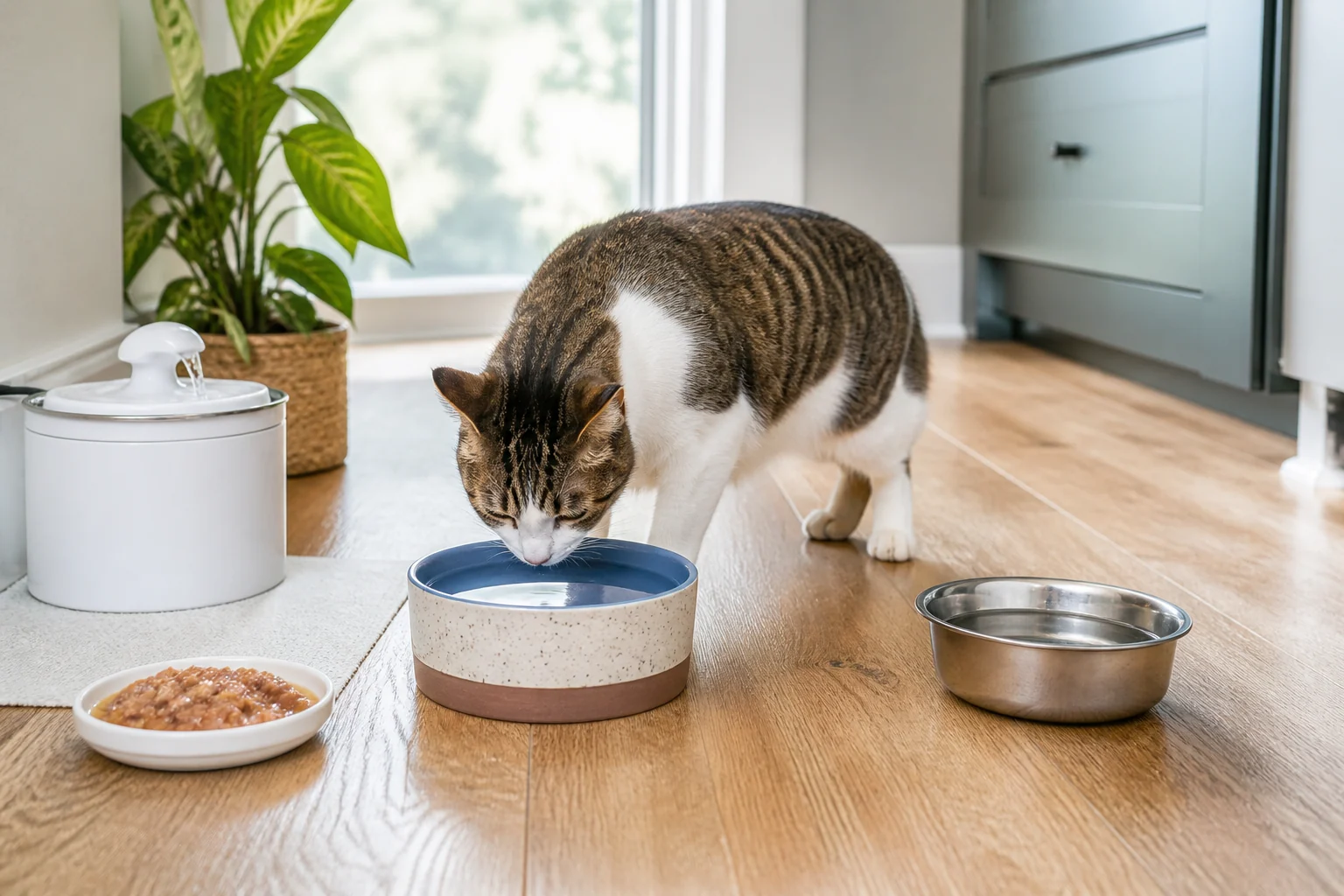
After urinary problems, the safest way to encourage a cat to drink more is to make water easy, fresh, quiet, and appealing while following your veterinarian's diet and recheck plan. Hydration can support urinary comfort, but it does not replace veterinary care if your cat is straining, painful, blocked, or producing little urine.
This guide focuses on home setup: bowls, fountains, wet food moisture, placement, and monitoring. If your cat recently had a urinary blockage, start with your discharge instructions and our cat urinary blockage aftercare guide, because a blocked cat needs urgent care rather than water tricks.
Table of Contents
- What warning signs mean you should call the vet now?
- How much should a cat drink after urinary problems?
- Where should you put water bowls and fountains?
- What type of bowl or fountain works best?
- Can wet food help a cat get more moisture?
- How do litter boxes affect drinking and urinary comfort?
- What should you track each day?
- Conclusion: make hydration easy, then keep watching the litter box
- Frequently Asked Questions
- References
What warning signs mean you should call the vet now?
Call a veterinarian urgently if your cat strains in the litter box, cries while trying to urinate, produces only drops, has blood in the urine, vomits, hides intensely, refuses food, seems weak, or cannot pass urine. A cat who cannot urinate normally may have a life-threatening obstruction, especially if the cat is male.
Cornell describes feline lower urinary tract disease as a group of conditions that can cause signs such as frequent urination, painful urination, blood in the urine, and urinating outside the box 2. Merck notes that lower urinary tract disease in cats can involve inflammation, stones, urethral plugs, infection, or other causes, so home observation cannot reliably identify the diagnosis 5.
Use this quick triage guide:
| What you see | What it may mean | What to do |
|---|---|---|
| Repeated box trips with no normal urine clump | Possible obstruction | Emergency veterinarian now |
| Tiny drops, crying, vomiting, or weakness | Possible serious urinary disease | Emergency veterinarian now |
| More drinking plus larger urine clumps | Could be diet, kidney, diabetes, medication, or other causes | Book a veterinary check |
| Stable cat passing urine after a recent urinary issue | Recovery may be on track | Keep the recheck and hydration plan |
Do not give human pain medicine, urinary supplements, cranberry products, acidifiers, or leftover antibiotics unless your veterinarian specifically prescribed them. Hydration support is helpful only when the medical plan is already clear.
How much should a cat drink after urinary problems?
There is no single perfect water-bowl number after urinary problems, because total fluid intake includes both drinking water and food moisture. Cornell's hydration guidance gives a broad estimate of about 4 ounces of water per 5 pounds of lean body weight per day, while noting that cats eating wet food may drink less from the bowl because the meal already contains water 1.
That means a wet-food cat may look like a light drinker and still take in meaningful moisture. A dry-food cat may need to visit the bowl more often. Cats with kidney disease, diabetes, medication changes, vomiting, diarrhea, fever, or urinary issues may have different needs, so ask your veterinarian what pattern is expected for your cat.
Instead of chasing a fixed ounce target at home, watch trends:
- Is your cat passing urine normally?
- Are urine clumps becoming smaller, larger, or absent?
- Is drinking suddenly much higher or much lower?
- Is appetite steady?
- Is your cat comfortable enough to move, eat, groom, and rest?
A simple daily log is more useful than guessing. If your cat had a recent urinary problem, your veterinarian may want updates about urine output, appetite, medication timing, and any return of straining.
Where should you put water bowls and fountains?
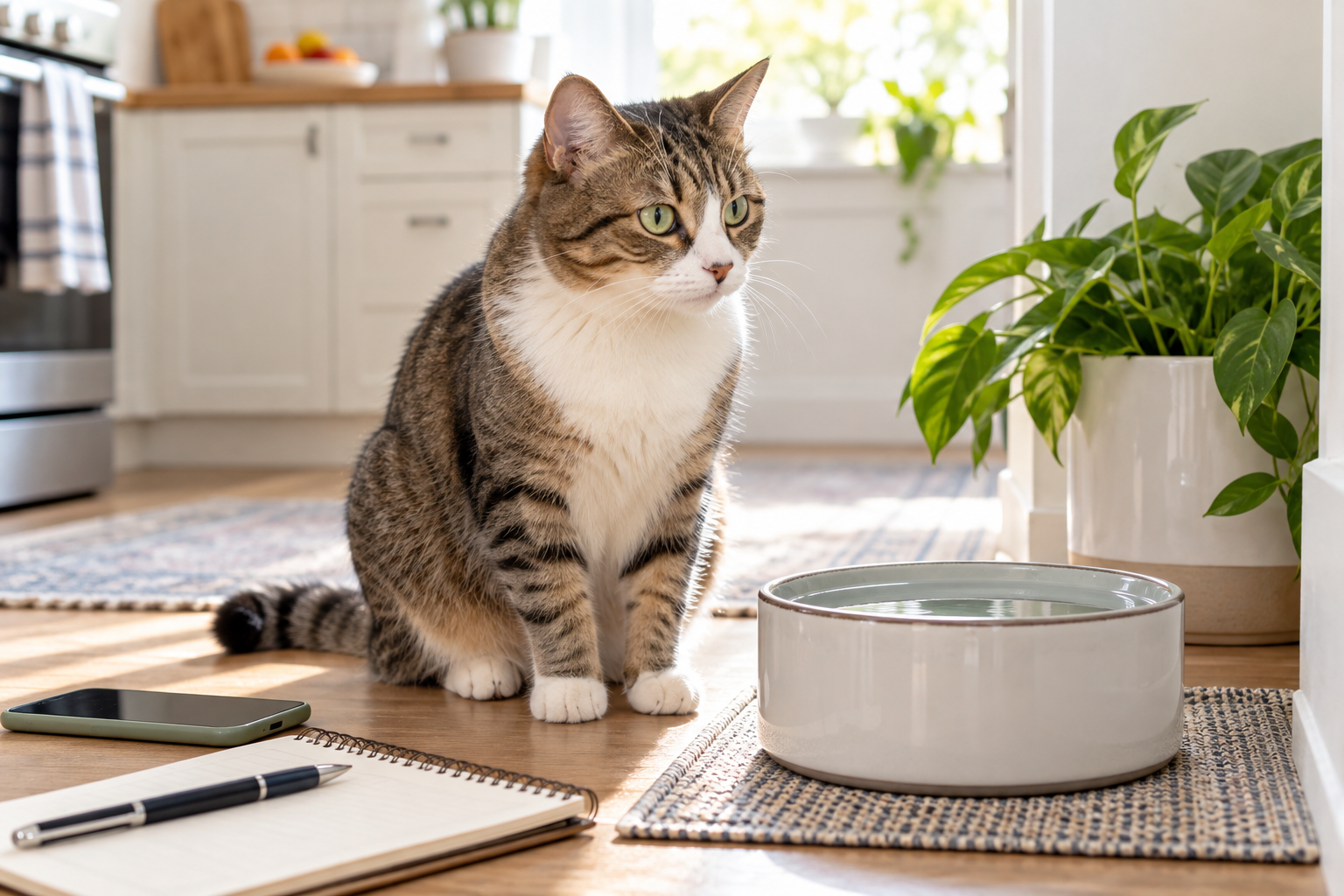
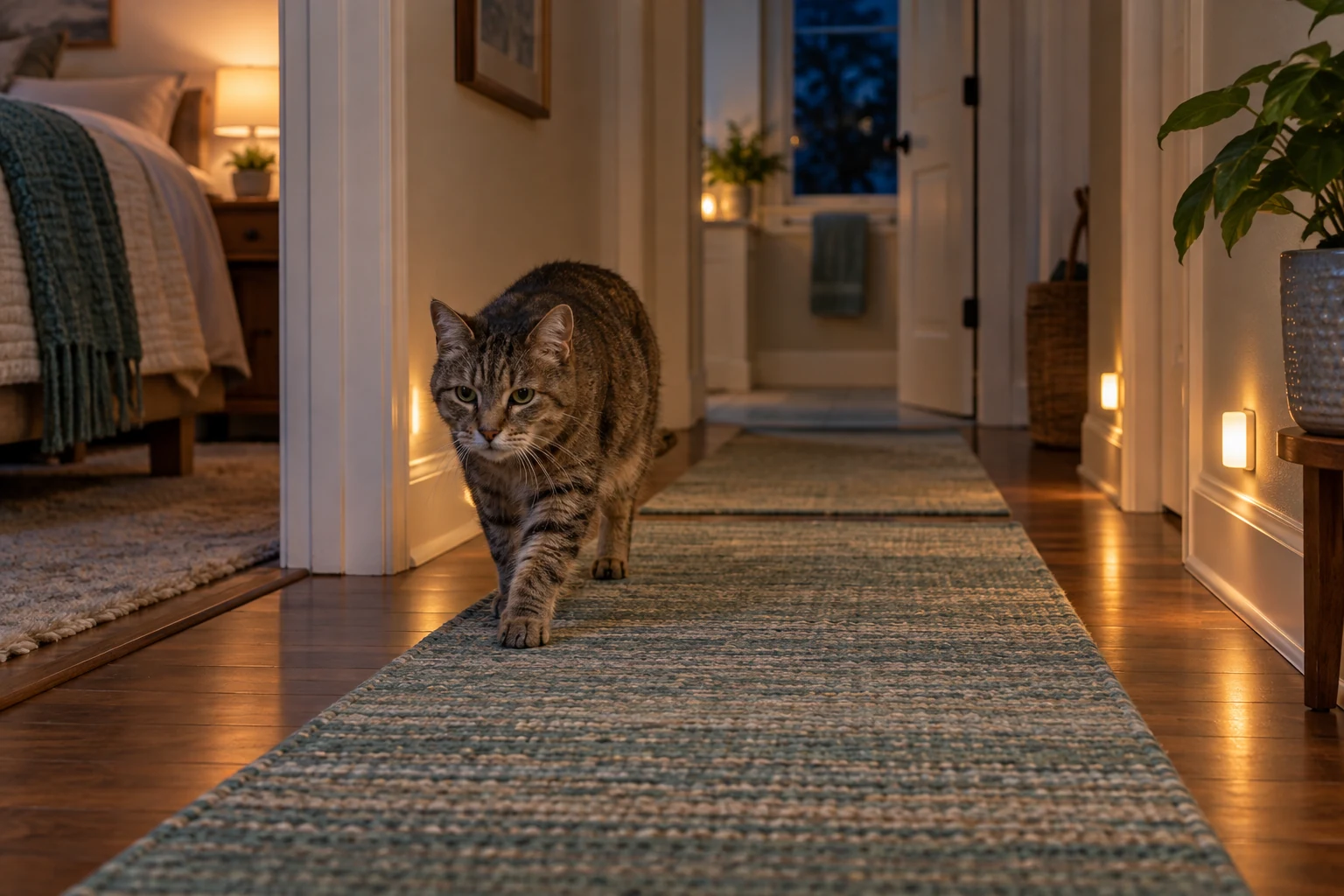
Place water where your cat already feels safe: quiet paths, resting areas, and easy-to-reach rooms. Avoid trapping water in one busy location, beside loud appliances, beside the litter box, or directly beside a food bowl if your cat tends to ignore water there.
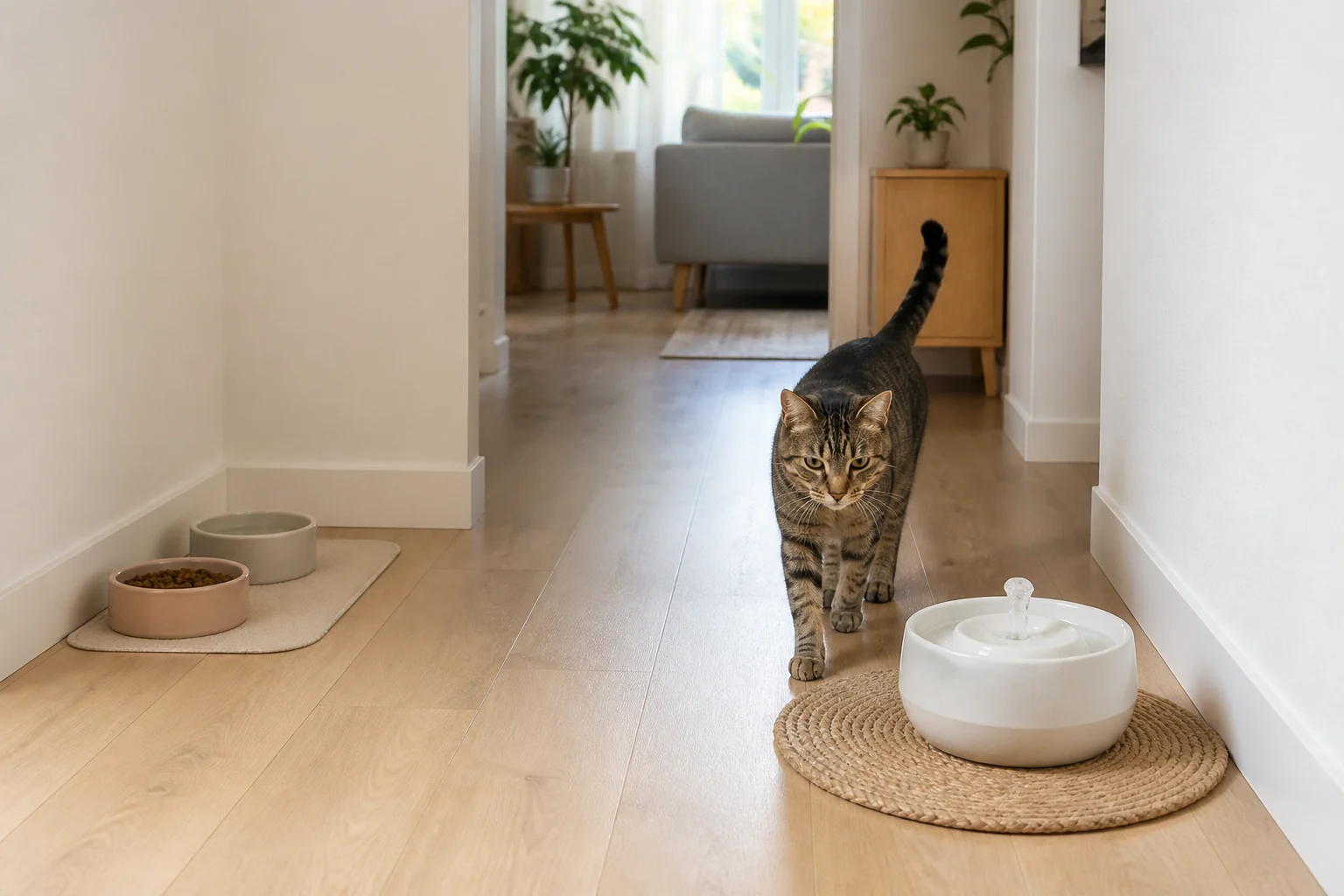
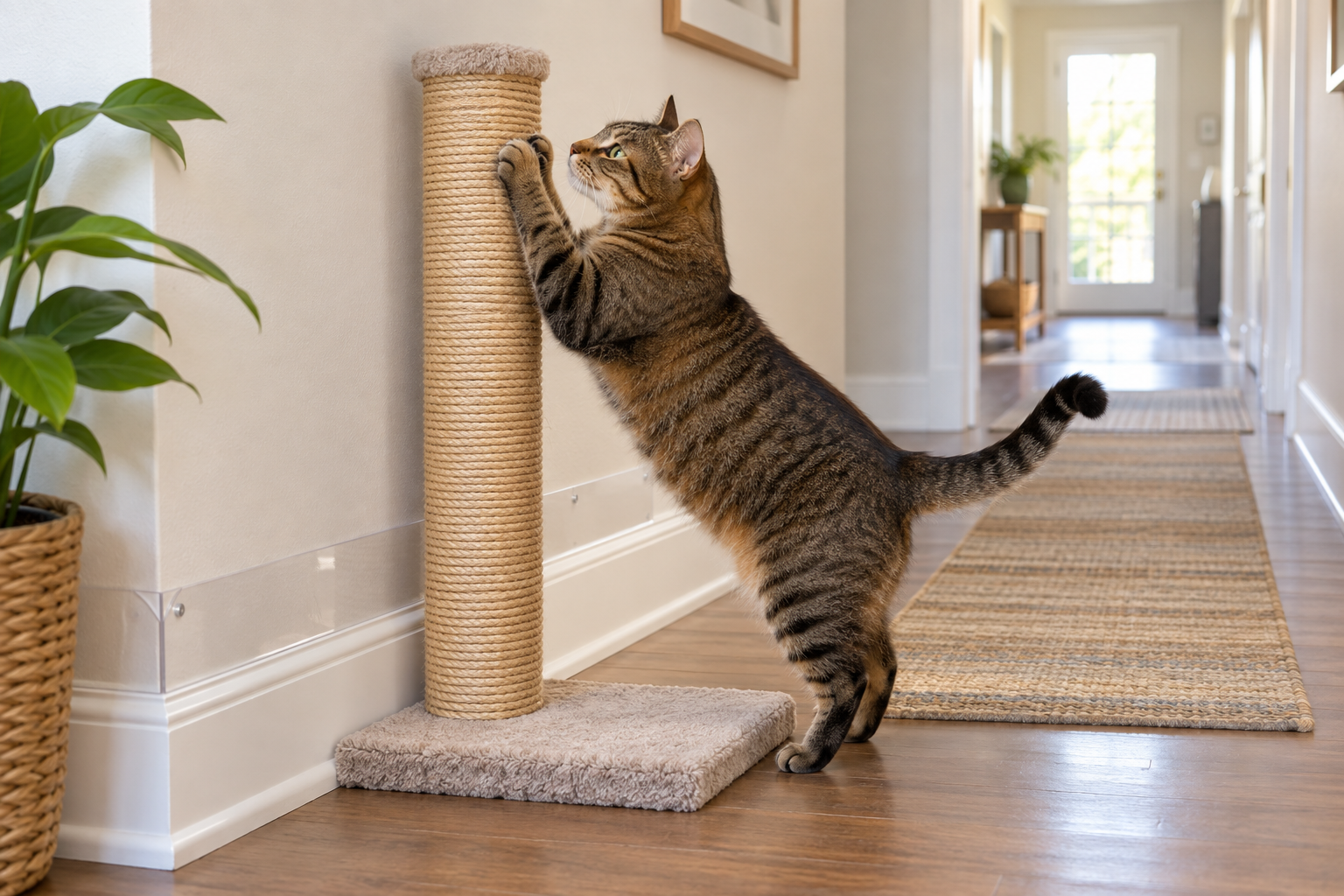
The AAFP and ISFM environmental guidelines emphasize that cats need multiple, separated key resources, including food, water, toileting areas, scratching areas, play areas, and resting places 4. This matters after urinary problems because stress, blocked access, household conflict, and inconvenient resources can all make healthy routines harder.
Try this setup for one week:
- Put one wide water bowl near a favorite resting route.
- Put a second bowl or fountain in another quiet room.
- Keep water away from litter boxes and strong smells.
- Give senior or arthritic cats a station on each floor they use.
- In multi-cat homes, place stations out of sight from each other so one cat cannot guard all the water.
If your cat chooses one station consistently, keep it. If a station stays untouched, move it rather than assuming your cat dislikes water.
What type of bowl or fountain works best?
The best water container is the one your cat uses reliably and that you can clean well. Many cats prefer wide, shallow ceramic, glass, or stainless bowls because their whiskers do not rub the sides. Some cats prefer moving water from a fountain; others dislike the motor noise or bubbling.
Test one change at a time so you know what helped. For example, switch from a narrow bowl to a wide bowl for several days before adding a fountain. Then compare whether your cat drinks more often, whether the water stays clean, and whether the setup is easy to maintain.
| Option | Why it may help | Watch for |
|---|---|---|
| Wide ceramic bowl | Stable, quiet, whisker-friendly | Chips or residue |
| Stainless bowl | Durable and easy to clean | Sliding if too light |
| Glass bowl | Easy to inspect for cleanliness | Breakage risk |
| Fountain | Moving water attracts some cats | Filter changes, motor noise, slime buildup |
| Multiple small stations | More access points | Bowls forgotten during cleaning |
Refresh water daily and wash bowls often. A fountain is not a substitute for cleaning; biofilm can build up in pumps, filters, and seams.
Can wet food help a cat get more moisture?
Wet food can help many cats take in more moisture because water is built into the meal, but urinary cases need veterinary guidance before changing foods. This is especially important if your cat is on a prescription urinary diet, has crystals or stones, kidney disease, food allergies, weight issues, or a recent blockage.
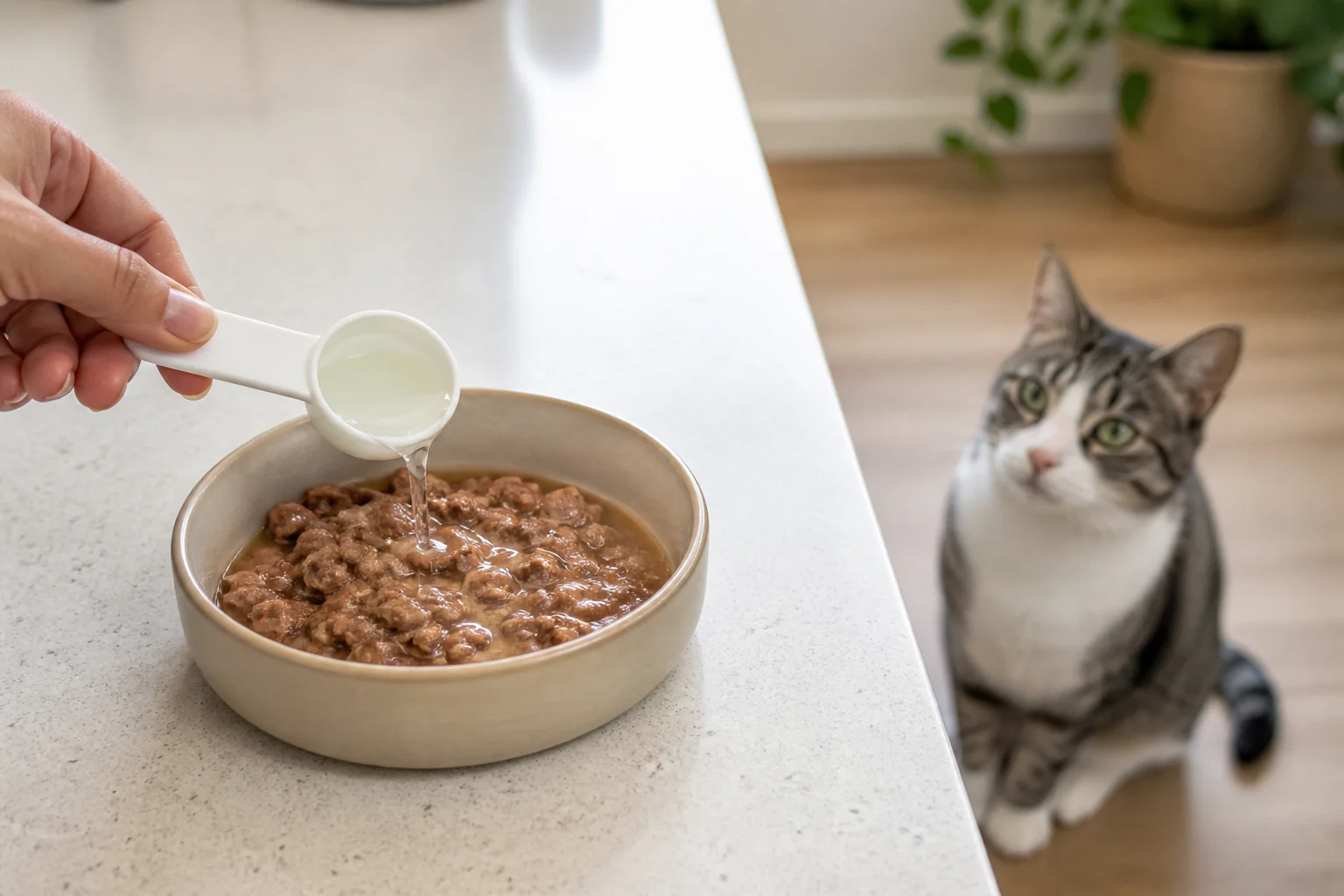
International Cat Care notes that increasing water intake and encouraging more frequent urination are commonly recommended in FLUTD management, and that wet diets may help some cats increase fluid intake 3. Cornell also includes clean fresh water, small frequent meals, weight management, litter box care, and stress reduction among prevention-oriented steps for cats prone to lower urinary tract signs 2.
Practical meal ideas to discuss with your vet include:
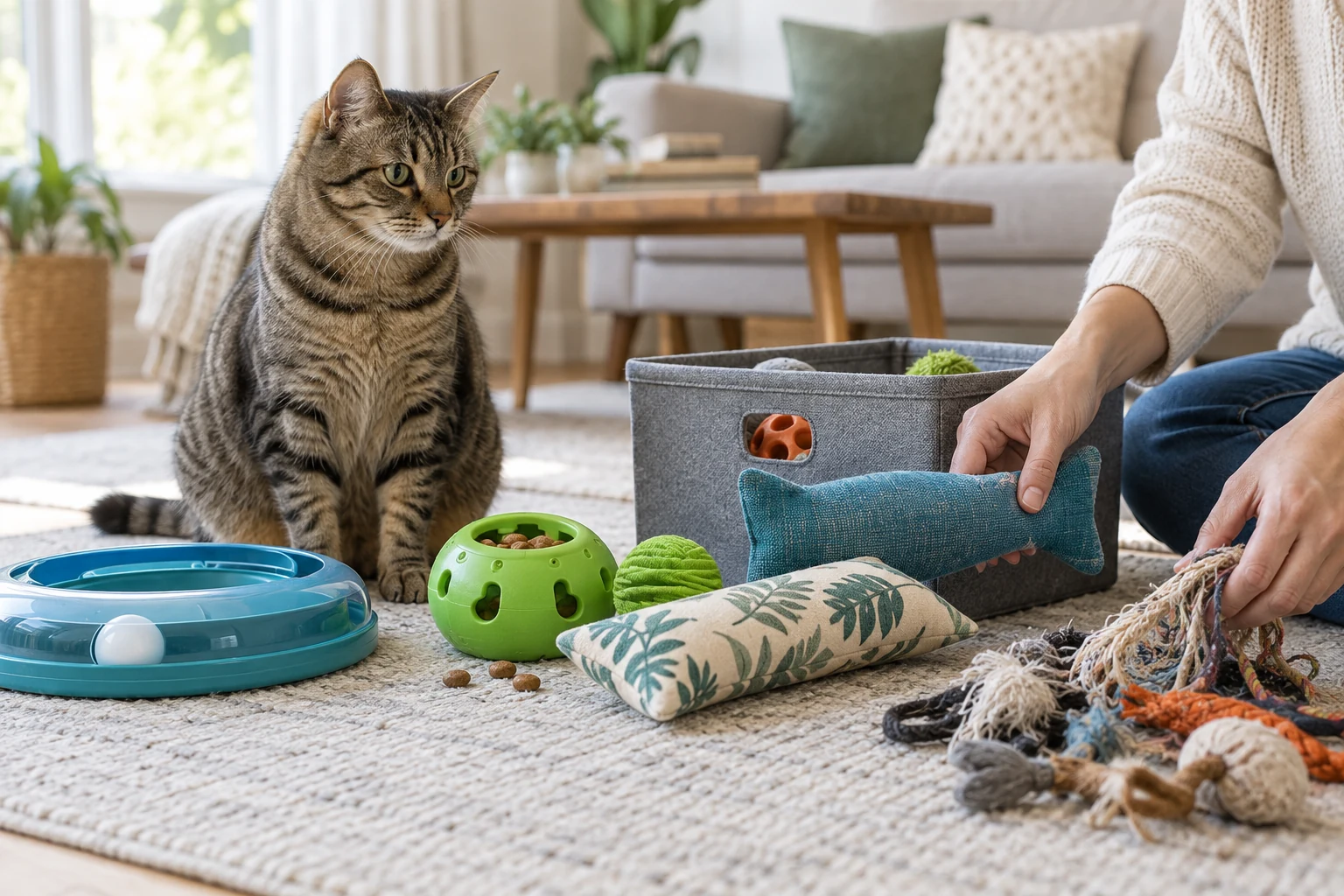
- Adding a small amount of plain water to wet food.
- Offering smaller, more frequent meals if your cat prefers fresh portions.
- Warming wet food slightly to improve aroma, then checking that it is not hot.
- Keeping the prescribed urinary diet consistent if one was given.
- Avoiding salty broths, onion, garlic, seasonings, supplements, and human foods.
For general feeding context, see our benefits of wet food for cats and wet vs dry cat food guide. For a cat with urinary disease, use those guides as background, not as a reason to override the veterinarian's plan.
How do litter boxes affect drinking and urinary comfort?
Litter boxes do not make a cat drink directly, but they strongly affect whether you can monitor urinary patterns and whether your cat feels safe enough to urinate normally. A painful, dirty, guarded, noisy, or hard-to-enter box can make urinary stress harder to spot.
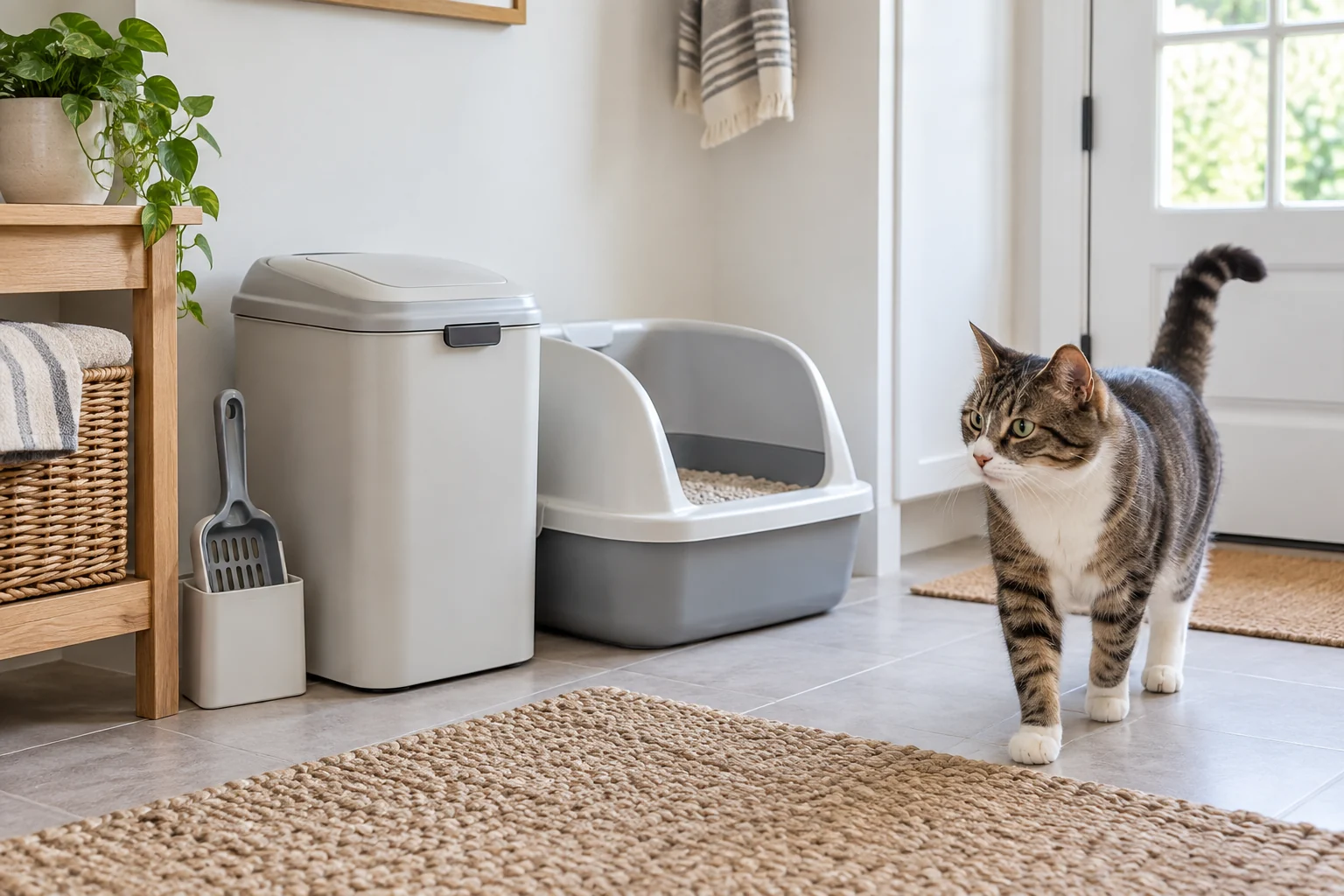
Keep boxes clean and easy to access. In many homes, the safest starting point is one box per cat plus one extra, placed in separate quiet areas. Low-entry boxes can help seniors, sore cats, and cats recovering from illness. Avoid covered boxes if they trap odor or allow another pet to ambush the cat at the exit.
Our best cat litter box setup guide can help you place boxes in calmer locations. After a urinary problem, the goal is not just cleanliness; it is early detection. You need to know whether your cat is producing normal clumps, small clumps, drops, blood, or nothing.
What should you track each day?
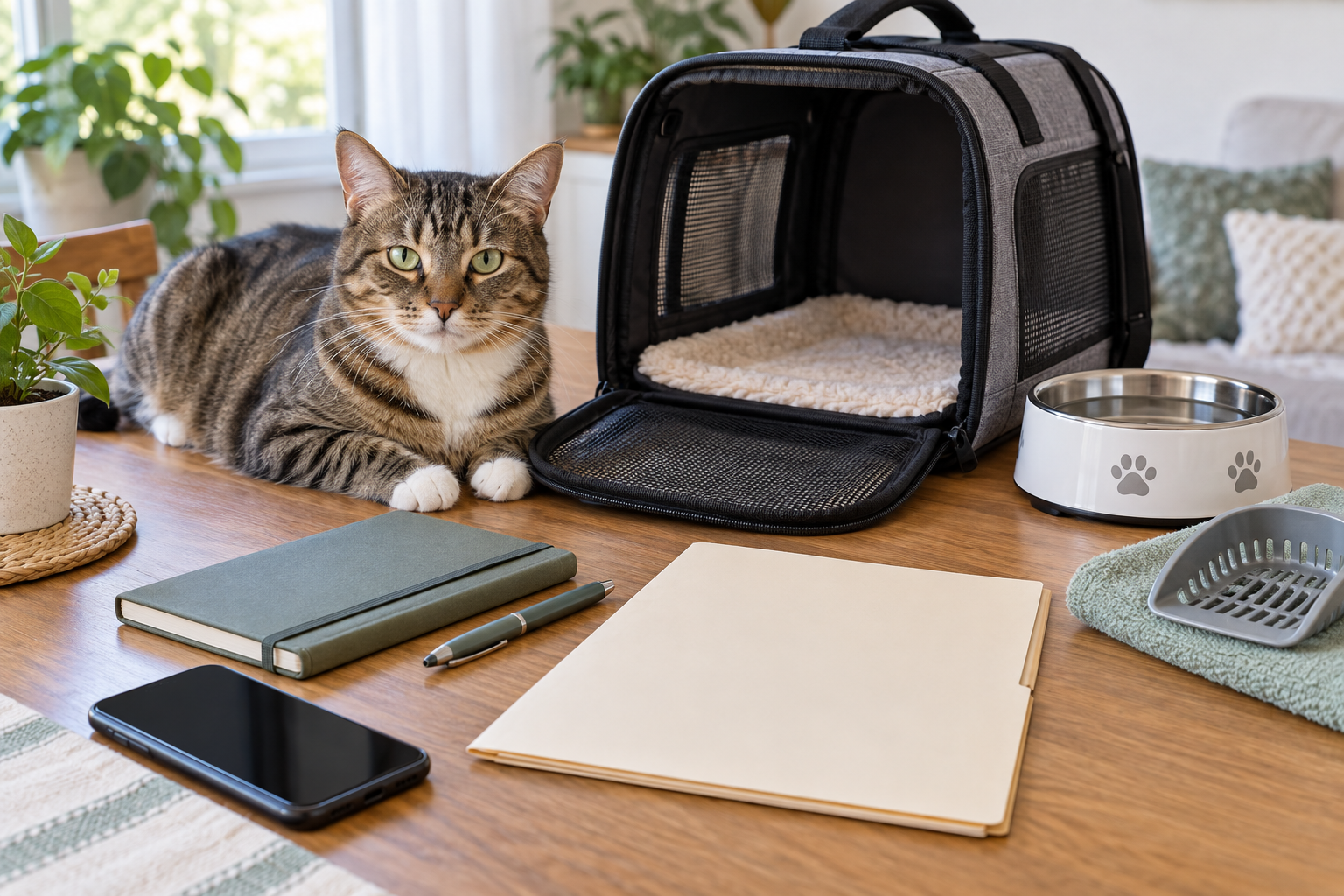
Track the patterns your veterinarian can act on: urine output, litter box frequency, appetite, vomiting, medication timing, water setup changes, and behavior. A short log can show whether a change helped or whether symptoms are returning.
Use a daily note like this:
| Daily check | What to write down |
|---|---|
| Water stations | Which bowls were used, whether water was refreshed |
| Food moisture | Wet food served, water added, appetite |
| Litter box output | Number and size of urine clumps, blood, straining |
| Behavior | Hiding, restlessness, grooming, vocalizing, normal play |
| Vet plan | Medication given, diet followed, recheck date |
In multi-cat homes, tracking can be tricky. If you cannot tell which cat is urinating, use short supervised separation in a comfortable room, a camera near the box, or separate recovery housing if your veterinarian recommends it. Do not wait to solve the mystery if one cat is repeatedly straining.
Conclusion: make hydration easy, then keep watching the litter box
The best way to encourage a cat to drink more after urinary problems is to remove friction: fresh water in several quiet places, bowls your cat likes, clean fountains if used, appropriate wet-food moisture when approved, and litter boxes that make urine output easy to monitor. Keep the plan simple enough that you can maintain it every day.
Hydration support is not emergency care. If your cat strains, cries, vomits, weakens, hides severely, or cannot pass urine, contact a veterinarian immediately. For broader follow-up reading, use the SnuggleSouls cat health guides and keep your own cat's veterinary instructions first.
Frequently Asked Questions
Should I force my cat to drink water after urinary problems?
No. Do not syringe water unless your veterinarian specifically tells you to do so. Forced water can stress your cat and may be unsafe if the cat struggles, feels nauseated, or has another medical problem.
Is a cat water fountain better than a bowl?
A fountain is better only if your cat drinks from it and you clean it consistently. Some cats love moving water, while others prefer a quiet wide bowl.
Can I add broth to my cat's water?
Ask your veterinarian first, especially after urinary disease. Many broths contain salt, onion, garlic, seasonings, or fat levels that are not appropriate for cats.
Why is my cat drinking less after switching to wet food?
Cats eating wet food may drink less from the bowl because the food contains more moisture 1. Watch total health patterns, especially urine output, appetite, and comfort.
When should I worry that my cat is blocked again?
Worry immediately if your cat repeatedly strains but produces little or no urine, cries in the box, vomits, becomes weak, or declines quickly. Treat this as an emergency and call an emergency veterinarian.
References
[1] Cornell Feline Health Center. (2026). Hydration. Cornell Feline Health Center
[2] Cornell Feline Health Center. (2026). Feline Lower Urinary Tract Disease. Cornell Feline Health Center
[3] International Cat Care. (2024). Feline Lower Urinary Tract Disease. International Cat Care
[4] AAFP and ISFM. (2013). Feline Environmental Needs Guidelines. Cat Friendly Homes
[5] Merck Veterinary Manual. (2026). Lower Urinary Tract Disease in Cats. Merck Veterinary Manual
 EN
EN DE
DE ES
ES PT
PT