
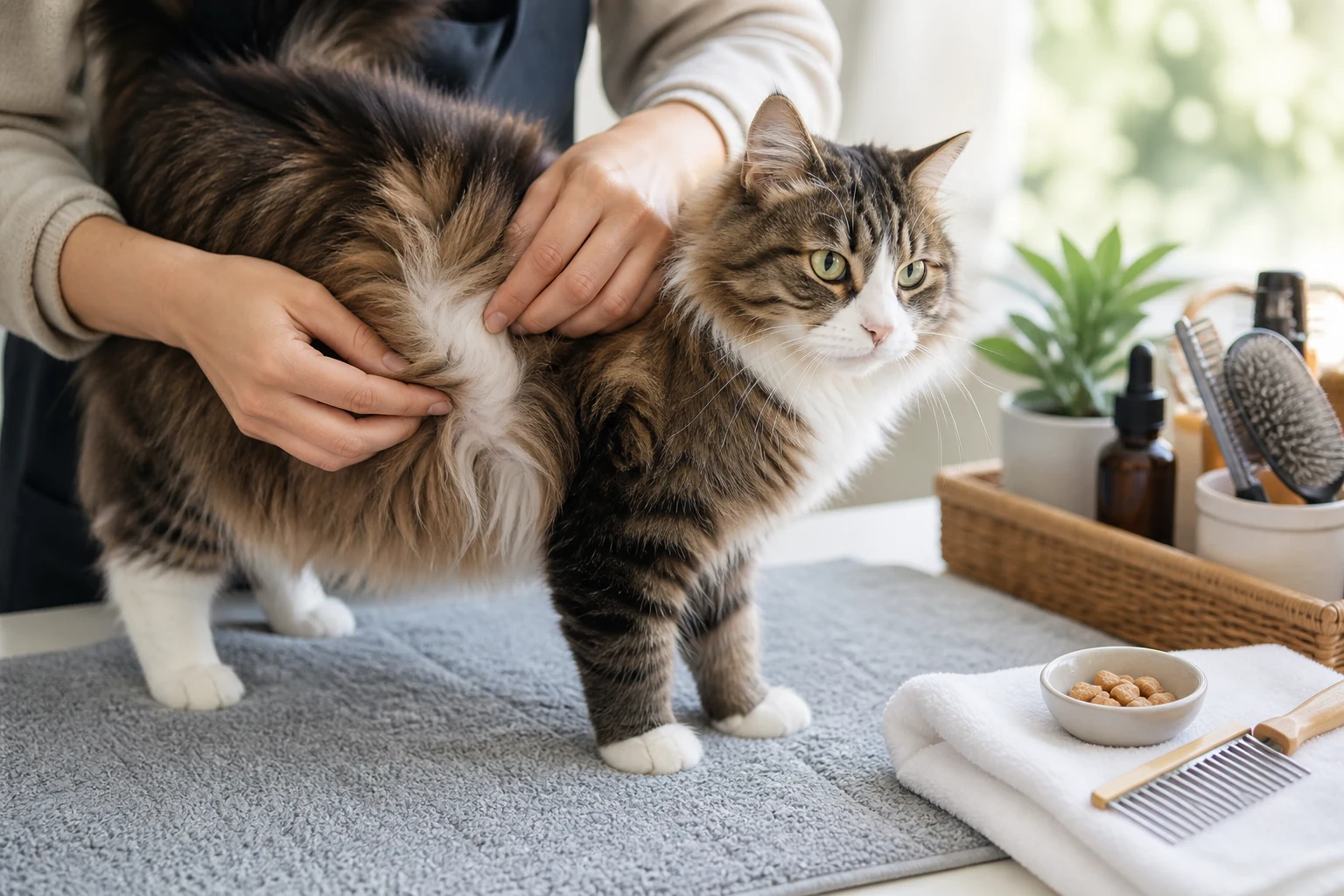
To prevent cat mats around the armpits and belly, check those friction zones before you brush the whole coat, use your fingers before tools, and stop while your cat is still calm. These areas have soft, mobile skin, so prevention should feel like a short comfort check rather than a wrestling match.
Armpit and belly mats often start quietly. A cat may look smooth across the back while small tangles are already forming under the front legs, across the chest, or along the lower belly. Regular brushing helps keep the coat clean and gives you a chance to notice skin changes early 1, but the safest routine is the one your cat will actually let you repeat.
This guide focuses on the trouble spots that are easiest to miss: armpits, belly fur, the chest line, and the inside edges of the front legs. For whole-coat prevention, pair it with SnuggleSouls' guide to prevent mats in longhaired cats.
Table of Contents
- Why do mats form around a cat's armpits and belly?
- How can you check armpit fur without pulling skin?
- What weekly routine prevents belly mats without forcing your cat?
- Which tools work best for armpit and belly checks?
- How do you handle a sensitive cat without making grooming worse?
- What should you do when you find a small tangle?
- Which cats need extra armpit and belly checks?
- Where does this routine fit into full-coat mat prevention?
- Conclusion: Keep Armpit and Belly Mats From Tightening
- Frequently Asked Questions
- References
Why do mats form around a cat's armpits and belly?
Mats form around the armpits and belly because the fur bends, rubs, and collects loose undercoat every time your cat walks, stretches, curls up, or grooms. The skin there also moves easily, which makes tight tangles more uncomfortable and harder to handle safely.
Longhaired cats are especially prone to hidden tangles because dead hair can stay trapped in the coat instead of falling away. ASPCA grooming guidance notes that longhaired cats who live indoors may need grooming every few days to remove dead hair and prevent tangles 3. The armpit and belly zones deserve extra attention because they are easy to skip during casual brushing.
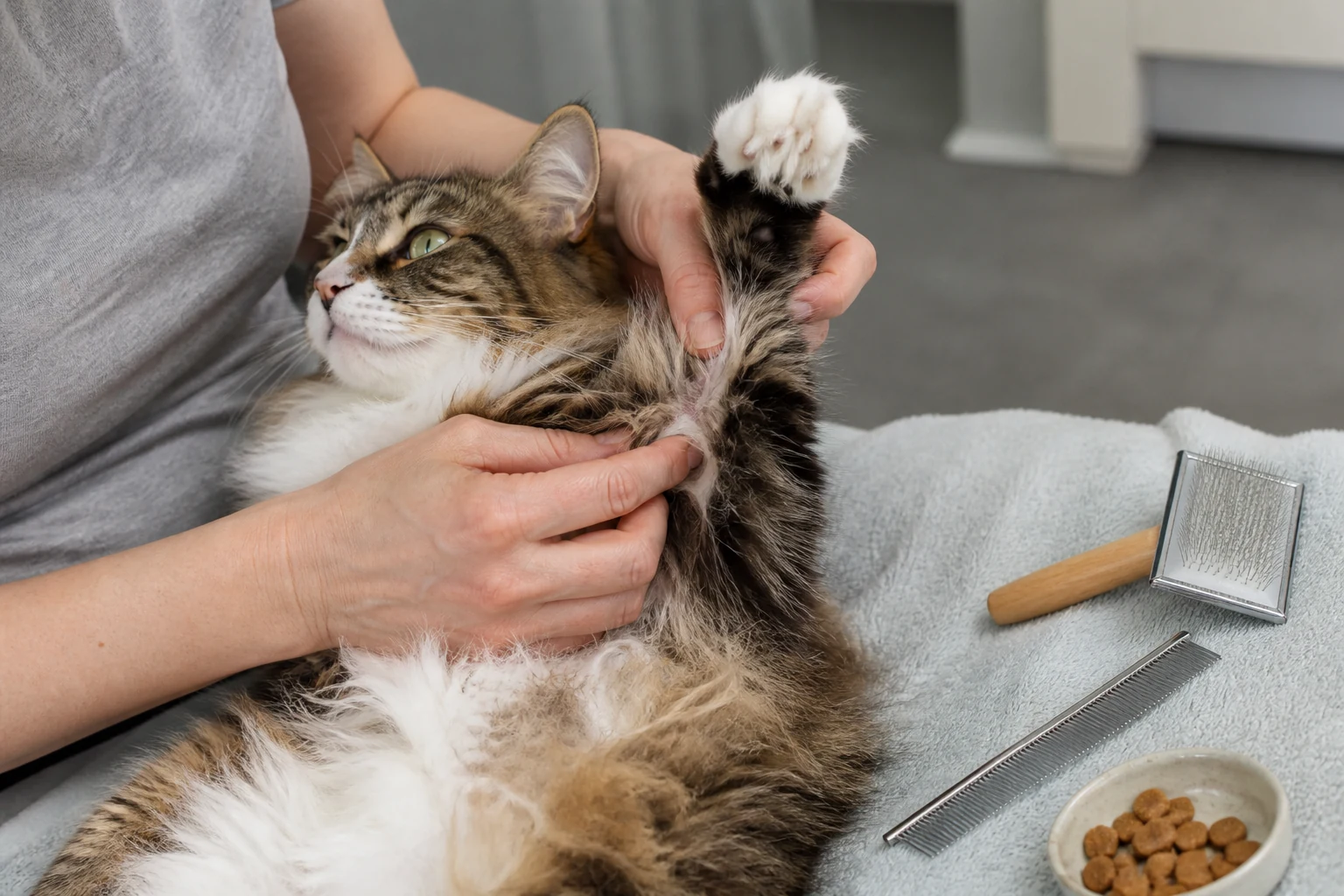
Use fingers first in the armpit area so you can feel tiny tangles without dragging a comb against sensitive skin.
Moisture can make the problem worse. Drool from grooming, damp belly fur after a spill, and residue from the litter area can help loose hairs clump. If a cat avoids reaching the belly because of age, body shape, stiffness, or pain, small tangles can turn into felted mats before anyone notices.
Use this friction-zone map during quick checks:
| Area to check | Why tangles start there | Best first move |
|---|---|---|
| Armpits under the front legs | Walking friction, flexible skin, dense undercoat | Slide fingers in gently while the leg rests naturally |
| Chest-to-belly line | Food, water, drool, and fur rubbing when lying down | Part the coat with fingertips before combing |
| Lower belly | Soft fur and low tolerance for handling | Check only during relaxed moments and stop early |
| Inside front legs | Hair bends each time the cat steps forward | Use tiny outward comb strokes after finger loosening |
| Groin-adjacent belly fur | Delicate skin and grooming avoidance | Leave tight tangles to a professional |
How can you check armpit fur without pulling skin?
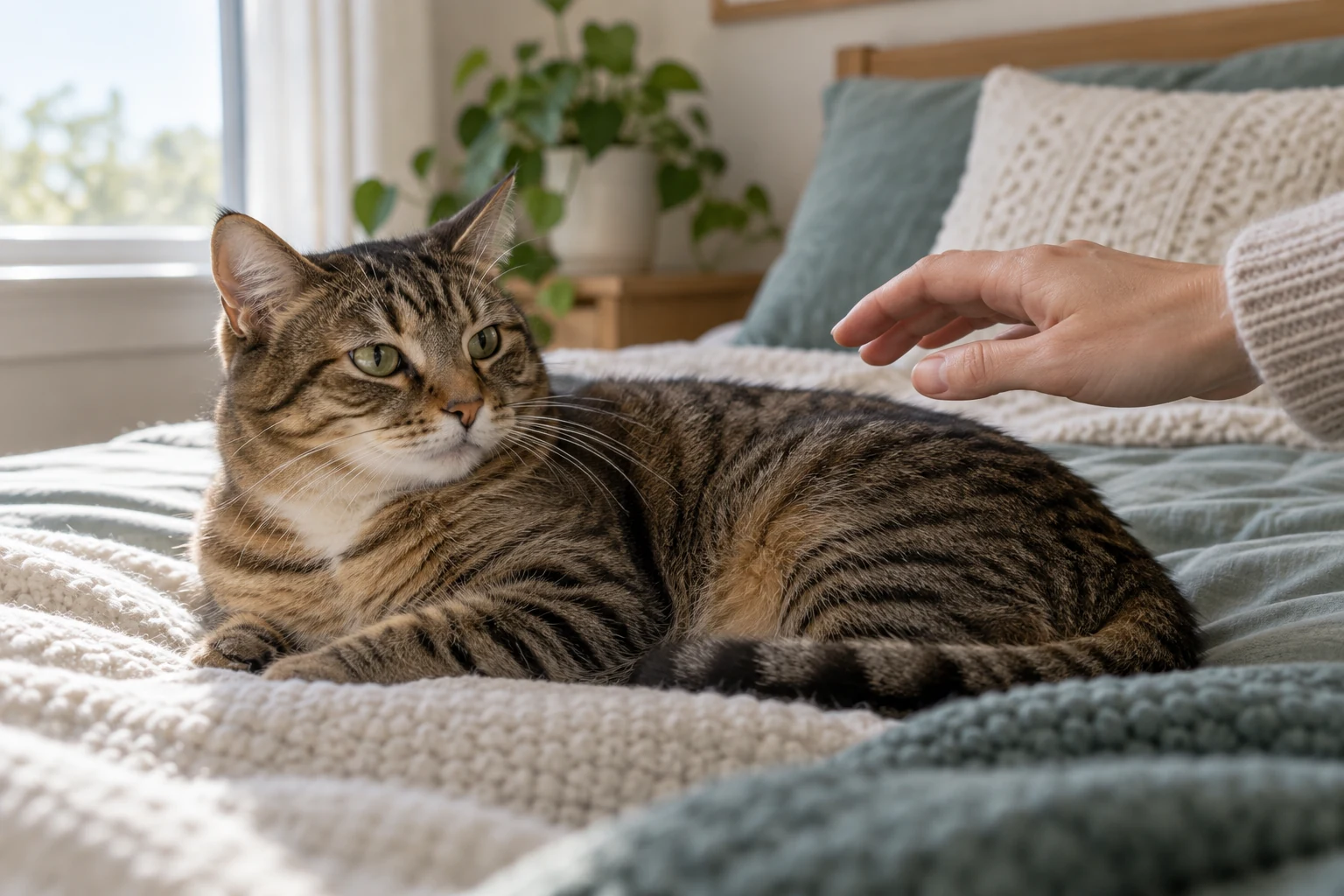
Check armpit fur by supporting your cat's body first, then touching the fur with flat fingers before lifting the leg. If the cat stiffens, twists, growls, or tries to leave, pause instead of holding tighter.
Start when your cat is already relaxed. Let them stand on a towel, sit beside you, or rest on your lap in a position they chose. Stroke the shoulder and chest first, then slide one or two fingers under the front leg where the fur folds. You are feeling for tiny knots, not forcing the leg into a grooming pose.
A calm sequence looks like this:
- Touch the shoulder or chest for one second.
- Reward with a treat or a short break.
- Part the armpit fur with your fingertips.
- Stop if the skin moves with a tangle.
- Repeat later on the other side.
The AAFP/ISFM cat-friendly interaction guidelines emphasize understanding the cat's emotional state and giving the cat a sense of control during handling 4. That principle matters at home too. A cooperative cat gives you better information than a pinned cat, because you can feel early tangles without adding fear or pain.
Avoid scruffing, pinning, or flipping your cat onto their back to reach the armpits. Heavy restraint can make the next session harder, and a frightened cat may bite or scratch to escape. If your cat only tolerates a two-second check, make that the routine for now.
What weekly routine prevents belly mats without forcing your cat?
A good belly-mat routine uses brief touch checks several times a week and one planned grooming session when your cat is calm. The goal is to catch loose tangles before they flatten against the skin.
Do not wait for a full brushing day to inspect the belly. Many cats dislike belly handling, so prevention works better in small pieces. If your cat rolls partly onto one side during petting, use that moment to look at one small patch. If they stay relaxed, part the fur once or twice with your fingers and stop before the mood changes.
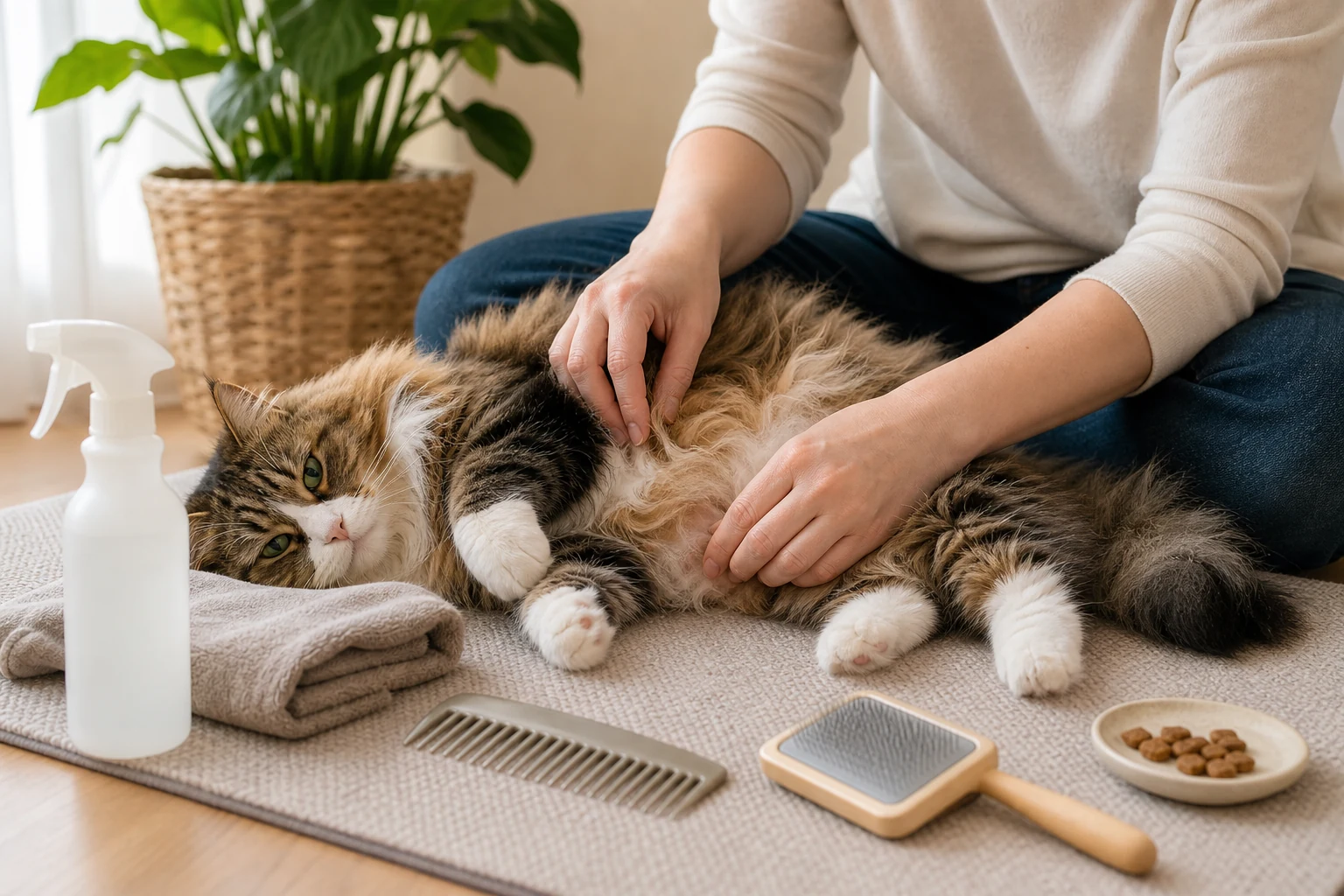
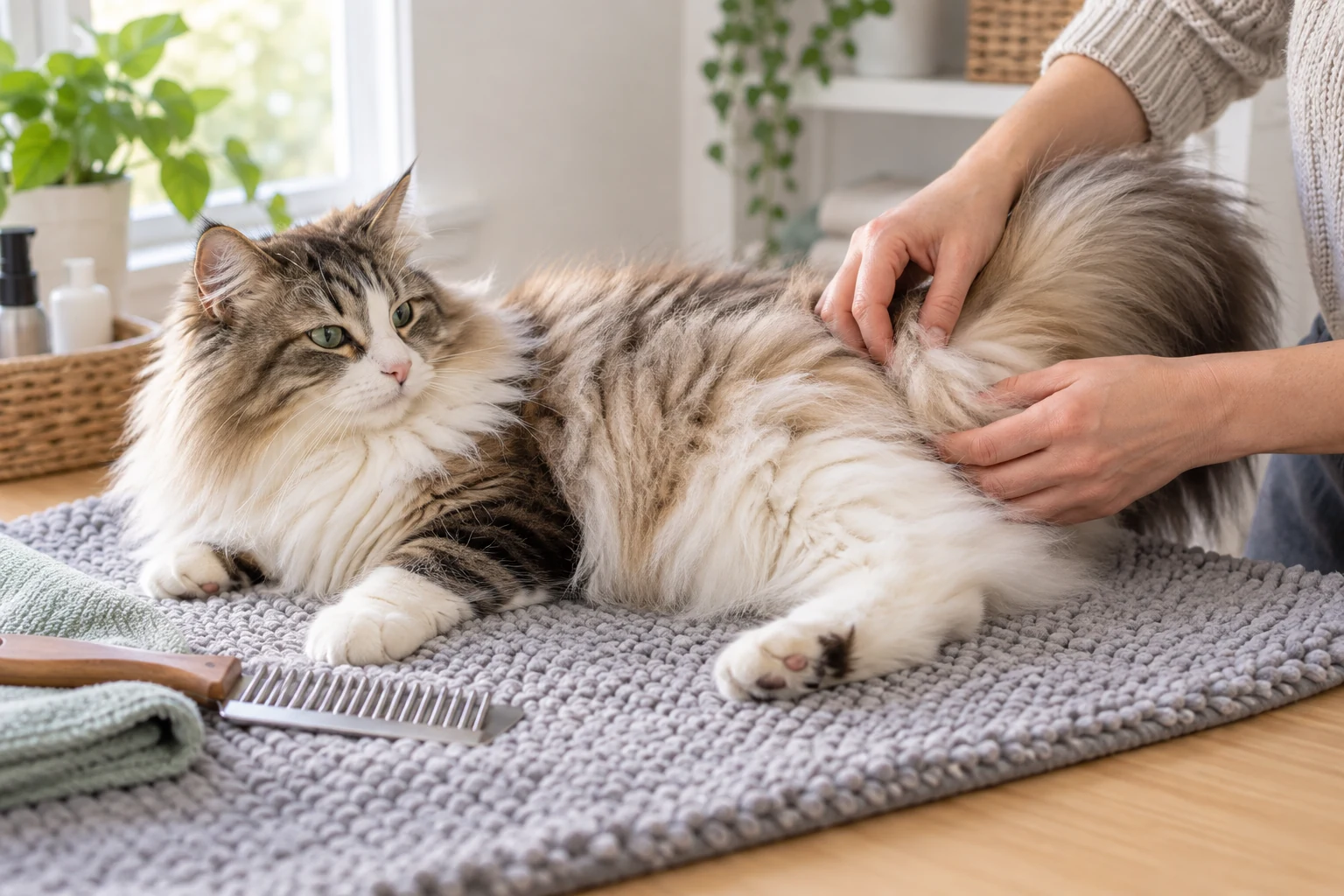
A simple grooming station helps you keep belly checks predictable, gentle, and short enough for your cat to tolerate.
For a weekly setup, keep the tools simple:
- A towel or non-slip grooming mat
- A wide-tooth metal comb with smooth tips
- A soft slicker brush used lightly
- High-value treats or a lickable reward
- Good lighting so you can see the skin line
Work in short zones. On Monday, check the left armpit and chest. On Wednesday, check the right armpit and chest. On Friday, check the lower belly only if your cat is relaxed enough to allow it. This is more realistic than trying to comb every sensitive area in one session.
If you are unsure how to move from touch checks to brushing, SnuggleSouls has a fuller step-by-step guide to brush a longhaired cat without pulling.
Which tools work best for armpit and belly checks?
The best tools are fingers, a wide-tooth comb, and a soft brush used with almost no pressure. The wrong tool, or the right tool used too aggressively, can tighten a small tangle or scrape sensitive skin.
Use fingers first because they can feel whether the skin is being pulled. If the fur separates easily, follow with the end teeth of a wide-tooth comb and make short strokes outward from the edge of the tangle. Never rake straight through a knot at the skin line.
VCA recommends professional care when tangles are severe or extensive and warns against using scissors to remove mats 2. That warning is especially important around armpits and belly fur, where cat skin can lift into the base of a mat. If you feel tempted to cut, the mat is no longer a home-prevention job.
Tool choice by situation:
| Situation | Tool to try | Tool to avoid |
|---|---|---|
| Loose surface fluff | Fingers, then wide-tooth comb | Hard pressure with a slicker |
| Tiny pea-sized tangle | Fingers from the outside edge | Pulling the whole knot upward |
| Flat mat close to skin | Professional groomer or veterinarian | Scissors at home |
| Sensitive belly fur | Fingers and one or two comb strokes | Long brushing sessions |
| Full-coat maintenance | Comb plus soft brush | Only brushing the back and skipping hidden zones |
For broader tool selection, use SnuggleSouls' cat grooming guide as a base, then reserve the gentlest tools for the armpits and belly.
How do you handle a sensitive cat without making grooming worse?
Handle a sensitive cat by shortening the session, reducing the target area, and ending before your cat feels trapped. A cat who learns that grooming stops when they ask for space is more likely to cooperate next time.
Watch the whole body, not just the fur. Tail thumps, skin ripples, head turns toward your hand, flattened ears, freezing, growling, and sudden grooming can all mean your cat is uncomfortable. Do not push through those signals. A calm pause protects trust and helps you avoid a bite or scratch.
Try a consent-based pattern:
- Present the comb and let your cat sniff it.
- Touch one easy area first, such as the shoulder.
- Check one friction zone for a few seconds.
- Give a treat.
- Let your cat walk away if they choose.
If claws make grooming difficult, trim only when your cat is relaxed and only within your skill level. SnuggleSouls' guide to trim cat nails safely can help you plan that separately. Do not combine nail trimming, mat checks, and bathing into one stressful session unless your cat already accepts all three calmly.
Some cats need a slower desensitization plan. Touch the shoulder today. Touch near the chest tomorrow. Reward belly-adjacent handling without combing at first. Progress is still progress if the cat stays relaxed.
What should you do when you find a small tangle?
When you find a small loose tangle, stop the regular brushing pattern and evaluate it before doing anything else. The key question is whether the tangle moves independently from the skin.
If the tangle is loose, dry, and near the surface, you can try to tease the outer hairs apart with your fingers. Hold the fur between the skin and the tangle so any movement does not pull directly on your cat. Then use a few tiny comb strokes from the outer edge, rewarding often.
Stop and get help if:
- The tangle is flat, hard, or warm.
- Skin lifts when the mat moves.
- The mat is near the nipple, groin, anus, or an irritated patch.
- Your cat flinches, growls, swats, bites, pants, or freezes.
- You see redness, moisture, odor, scabs, bleeding, or swelling.
Cats Protection advises not brushing or cutting out mats that have grown close to the skin because of the risk of tearing or injuring skin 5. For a safe decision tree once a mat already exists, use SnuggleSouls' guide on how to remove small cat mats safely.
If there is skin irritation, pain, sudden coat change, repeated matting, or your cat cannot tolerate gentle handling, call your veterinarian. Mats can hide skin disease, parasites, wounds, or mobility problems, and those need more than a grooming tool.
Which cats need extra armpit and belly checks?
Longhaired cats need extra checks, but they are not the only ones. Any cat who struggles to groom the belly, chest, or inner legs can develop hidden tangles.
Pay closer attention if your cat is:
- Longhaired, dense-coated, curly-coated, or double-coated
- Senior or less flexible than before
- Overweight or unable to reach the belly easily
- Arthritic, stiff, or reluctant to jump
- Recovering from illness, surgery, or a stressful move
- Wearing a harness, sweater, recovery suit, or collar that rubs the coat
- Grooming much more or much less than usual
The ASPCA notes that skin and coat changes can point to many underlying issues, including parasites, allergies, stress, or other health problems 3. If mats suddenly appear in a cat who used to groom well, treat that as a clue, not a housekeeping failure.
SnuggleSouls' guide to grooming changes can help you think through overgrooming and undergrooming patterns. If stiffness seems part of the problem, read how to help an arthritic cat at home and ask your veterinarian about pain control and mobility support.
Where does this routine fit into full-coat mat prevention?
Armpit and belly checks are one part of full-coat mat prevention, not a replacement for regular grooming. Think of them as the high-risk inspection that keeps hidden tangles from becoming painful mats.
A practical weekly rhythm might look like this:
- Daily or near-daily: run your hands along the chest, armpits, belly edge, and back legs.
- Two or three times weekly: comb easy coat areas, then check one sensitive zone.
- Weekly: do a brighter-light inspection of both armpits, chest, belly edge, tail base, and back legs.
- Monthly: review whether your cat is tolerating the routine or needs professional help.
If your cat is already matted, do not start with a full prevention routine. Start with safety. Tight or widespread mats should be handled by a veterinarian or qualified cat groomer, and painful skin changes should be checked by a veterinarian. Prevention gets easier after the coat is comfortable again.
The best routine is boring, brief, and repeatable. A few calm seconds around the armpits and belly can prevent a much harder grooming problem later.
Conclusion: Keep Armpit and Belly Mats From Tightening
Cat mats around the armpits and belly are preventable when you check early, work gently, and respect your cat's limits. Use fingers before tools, keep sessions short, and treat tight mats, irritated skin, or fearful reactions as reasons to stop rather than push harder.
Your goal is not a perfect grooming session. It is a cat who stays comfortable enough to let you check again tomorrow.
Frequently Asked Questions
Why does my cat get mats under the front legs?
The fur under the front legs rubs every time your cat walks, curls up, stretches, or jumps. Loose undercoat can twist in that fold and become a mat, especially in longhaired or dense-coated cats.
Can I cut armpit or belly mats with scissors?
No. Armpit and belly skin is delicate and can lift into the base of a mat, making accidental cuts easy. If a mat is tight enough that you want scissors, stop and contact a professional groomer or veterinarian.
How often should I check my cat's belly for mats?
For longhaired cats, quick belly-edge and armpit touch checks several times a week are ideal. Cats who are senior, overweight, stiff, or prone to matting may need daily touch checks and regular professional grooming support.
What if my cat hates belly brushing?
Do not force belly brushing. Start with one-second touch checks near the chest or side, reward generously, and stop early. If the belly already has tight mats or your cat reacts as if the area hurts, ask a veterinarian or qualified groomer for help.
Are belly mats a sign my cat is sick?
Sometimes. Belly mats can happen from coat type and friction, but sudden or repeated mats may mean your cat is grooming less because of pain, age, weight, skin irritation, stress, or illness. A veterinarian can help if the change is new or paired with behavior, appetite, skin, or mobility changes.
References
[1] Cornell Feline Health Center. (2026). Choosing and Caring for Your New Cat. Cornell Feline Health Center
[2] VCA Animal Hospitals. (2026). Grooming and Coat Care for Your Cat. VCA Animal Hospitals
[3] ASPCA. (2026). Cat Grooming Tips. ASPCA
[4] AAFP and ISFM. (2022). 2022 AAFP/ISFM Cat Friendly Veterinary Interaction Guidelines. AAFP/ISFM Cat Friendly Veterinary Interaction Guidelines
[5] Cats Protection. (2020). Tips for Grooming Long-Haired Cats. Cats Protection
 EN
EN DE
DE ES
ES PT
PT