
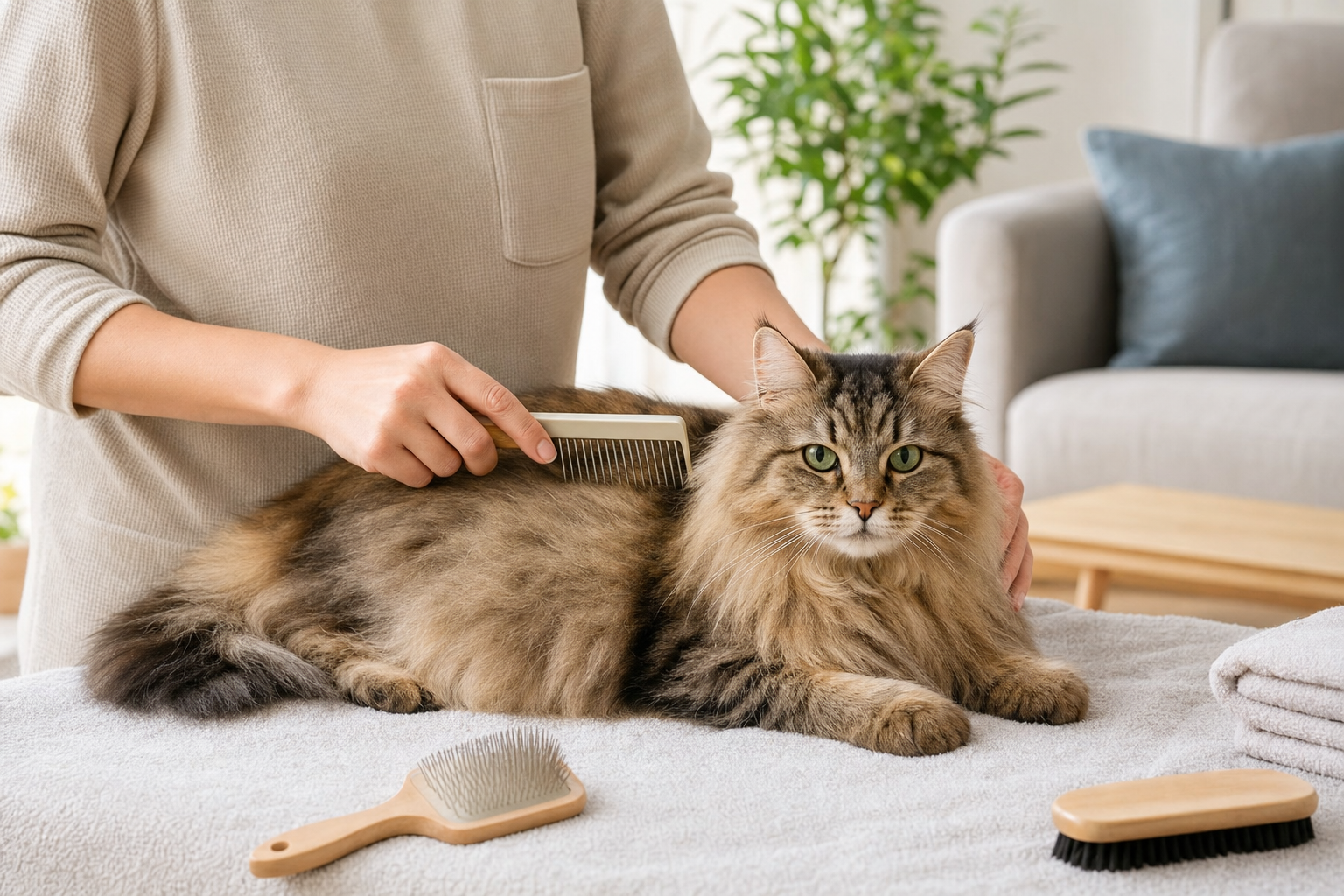
To brush a longhaired cat without pulling, work in short sessions, support the fur near the skin, start at the hair tips, and stop before your cat gets tense. Long coats need more routine combing than short coats because tangles can tighten into painful mats quickly.
The goal is not to make your cat look perfectly fluffed in one sitting. It is to keep the coat loose, comfortable, and easy to check. A gentle routine also gives you a regular chance to notice skin irritation, parasites, weight changes, or sore areas before they become harder to handle.
Table of Contents
- How often should you brush a longhaired cat?
- What tools do you need for a longhaired cat?
- How do you brush a longhaired cat without pulling?
- Where do longhaired cats mat most often?
- What should you do if your cat already has mats?
- How can you make brushing less stressful?
- When should mats or grooming changes mean a vet visit?
- Conclusion: Keep the coat comfortable and your cat calm
- Frequently Asked Questions
- References
How often should you brush a longhaired cat?
Most longhaired cats do best with daily brushing or combing, even if the session is only a few minutes. VCA notes that cats with long, silky, or curly coats often need daily brushing to prevent tangles and mats, especially around high-friction areas like the ears, armpits, and backs of the legs 1.
Daily does not have to mean a full coat session every time. For many cats, the better plan is a rotating routine: one day the chest and ruff, another day the sides, another day the belly and back legs if your cat tolerates it. This keeps sessions short enough that your cat can succeed.
If you are building a broader home-care rhythm, pair this guide with a complete cat grooming routine so brushing, nail care, ears, and skin checks do not all happen in one overwhelming session.
Longhaired cats may need extra help during seasonal shedding, after illness, with age-related stiffness, or if they have a dense undercoat. A cat who suddenly stops grooming a usual area may be uncomfortable, overweight, arthritic, stressed, or dealing with a skin problem.
What tools do you need for a longhaired cat?
You need a comb more than a pretty brush. A wide-tooth metal comb helps find tangles without yanking, a finer comb can finish loose areas, and a soft brush can smooth the coat after the hard work is done.
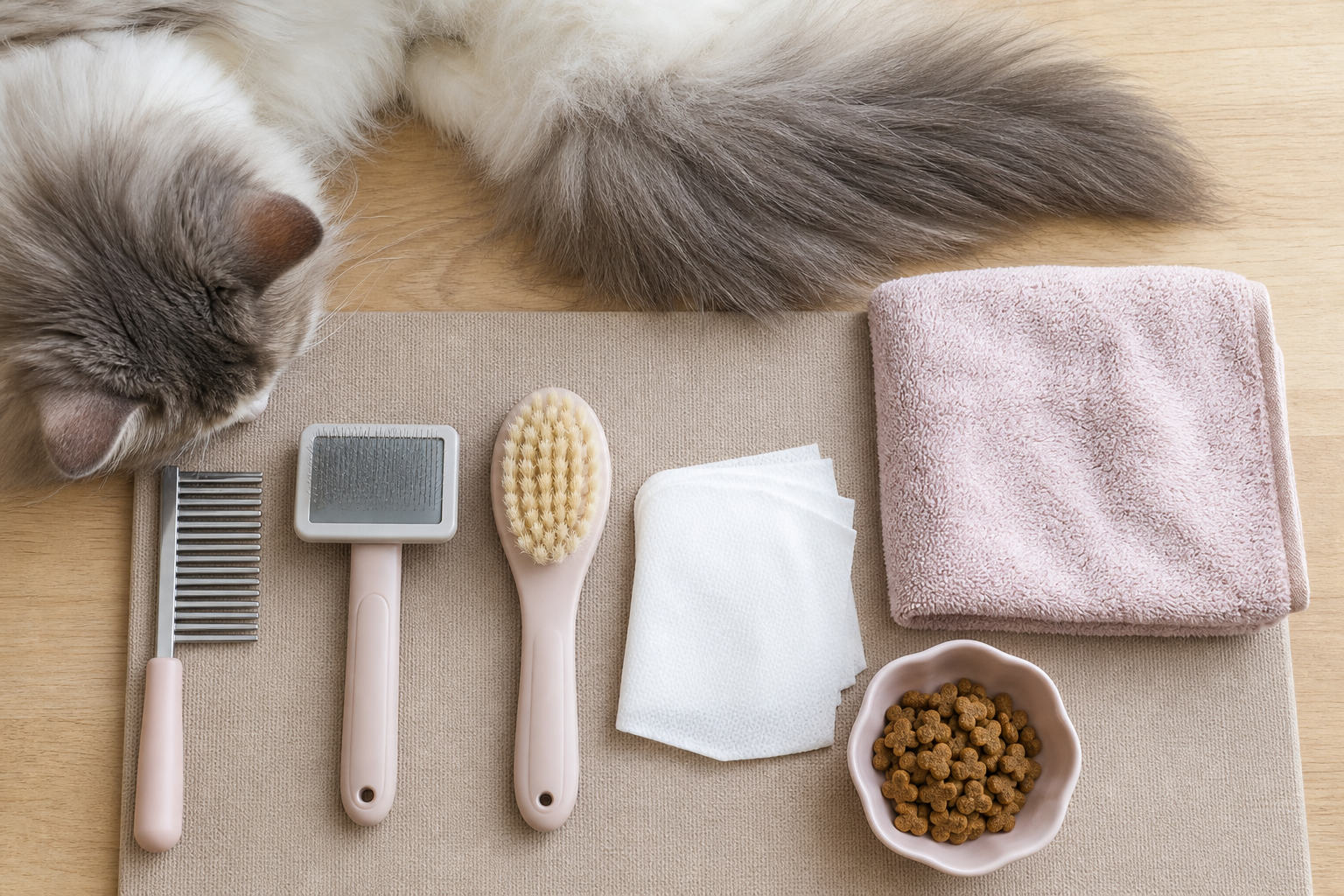
Useful longhaired-cat grooming tools include:
- A wide-tooth metal comb for first passes through the coat.
- A medium or fine comb for finishing only after the coat is loose.
- A slicker brush used lightly, not scraped against the skin.
- A soft bristle brush or grooming glove for cats who dislike firmer tools.
- A towel, non-slip mat, or familiar blanket.
- High-value treats for calm pauses.
- Good lighting so you can see the skin and coat direction.
Avoid using scissors to cut mats close to the skin. Cat skin is thin and flexible, and mats can pull the skin upward, making accidental cuts more likely. If a mat is tight, close to the skin, painful, or larger than a small tangle, it is safer to ask a professional groomer or veterinarian for help.
The tool test is simple: if it snags repeatedly, stop and switch to your fingers or a wider comb. A tool that works beautifully on one cat may be too harsh for another cat's coat texture or tolerance.
How do you brush a longhaired cat without pulling?
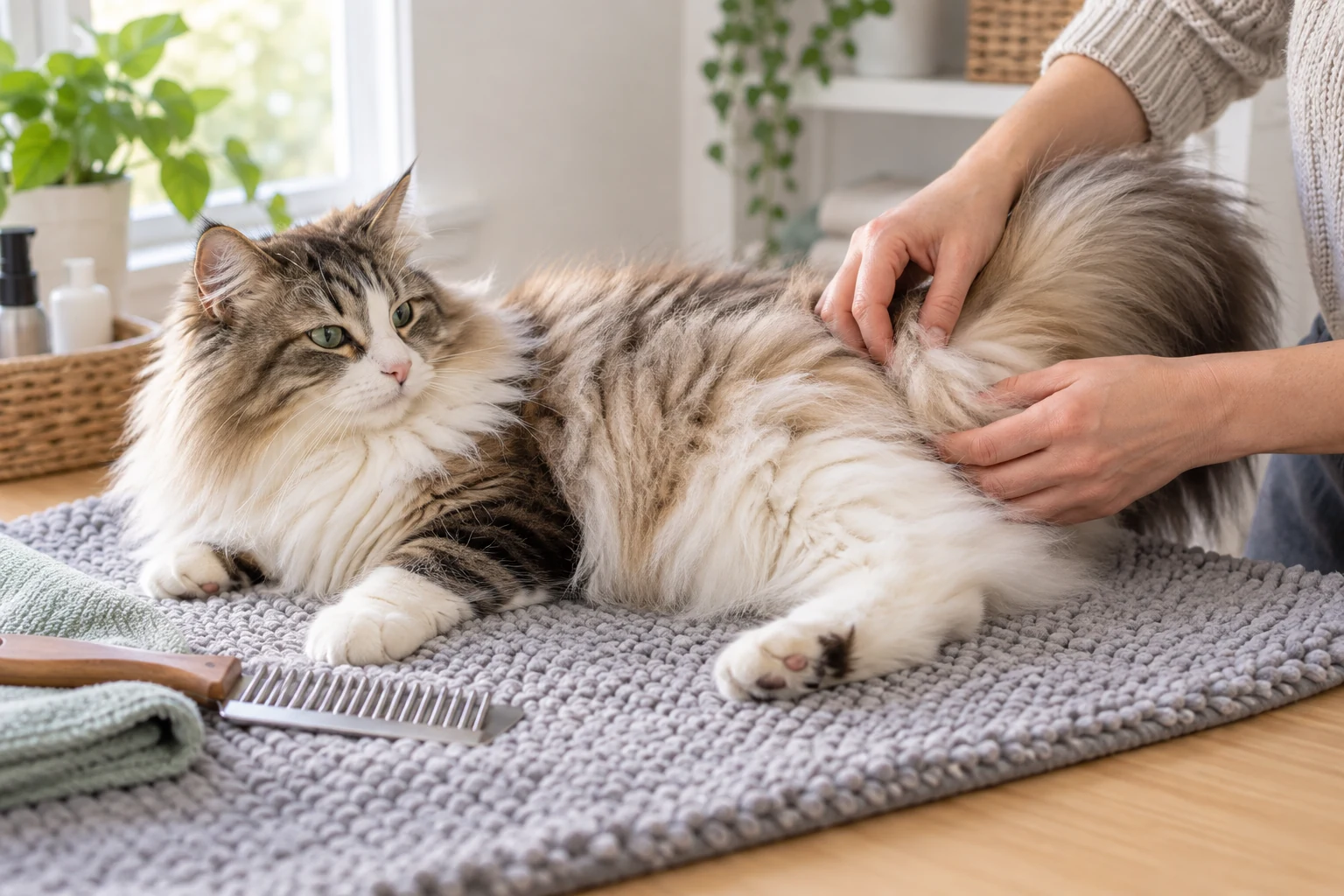
Brush a longhaired cat by stabilizing the fur, combing from the ends first, and moving toward the skin only after each section loosens. Pulling usually happens when the comb starts at the skin and hits hidden knots on the way out.
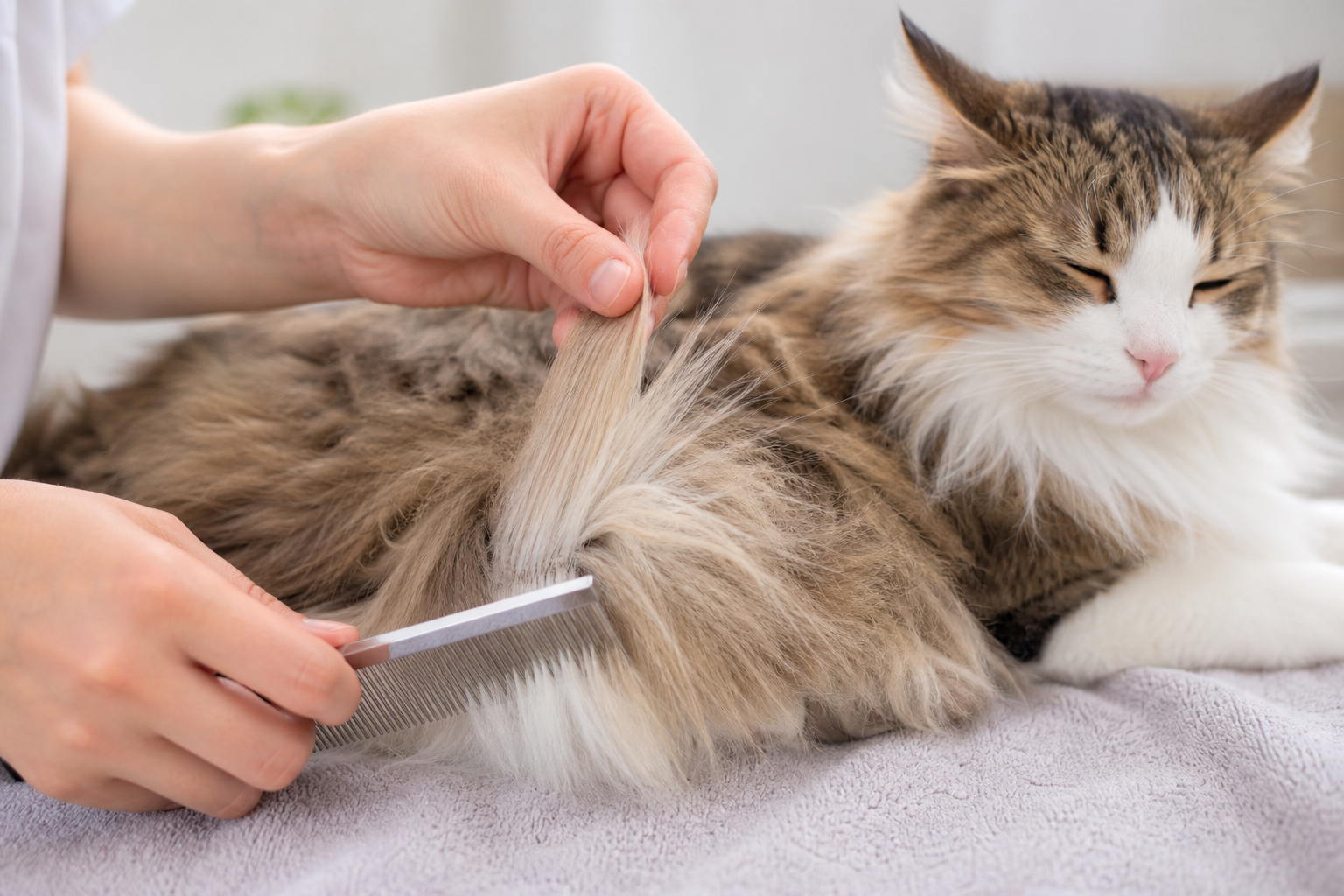
Use this no-pulling routine:
- Choose a calm time, not right after chasing, eating too fast, or a stressful visitor.
- Let your cat sniff the comb and reward calm interest.
- Start where your cat already accepts touch, often the cheeks, shoulders, or upper back.
- Lift a small section of fur with your fingers.
- Hold the fur gently near the skin so tension stays in your hand, not on your cat's skin.
- Comb the outer tips first.
- Move a little closer to the skin only when the comb slides easily.
- Stop after a few successful passes, before your cat needs to escape.
This technique is especially useful on feathering behind the legs, the chest ruff, and the tail base. Those areas can look smooth on top while small knots hide underneath.
Cornell Feline Health Center describes regular brushing or combing as a way to keep the coat clean and sleek while also monitoring skin for parasites and signs of disease 2. That skin check matters with long coats because fur can hide redness, scabs, fleas, dandruff, wounds, or tender spots.
Where do longhaired cats mat most often?
Longhaired cats mat most often where fur rubs, bends, gets damp, or is hard for the cat to reach. These trouble spots deserve quick daily checks even if you do not brush the whole coat.
| Area | Why it tangles | Gentle next step |
|---|---|---|
| Behind the ears | Fine hair rubs when the cat sleeps or scratches | Use fingers first, then a wide comb if loose |
| Armpits | Leg movement creates friction | Lift only if your cat is relaxed; stop fast if tense |
| Chest ruff | Food, water, and collar friction can catch fur | Comb in tiny sections, tips first |
| Belly | Sensitive skin and dense undercoat | Desensitize slowly; do not force belly access |
| Back of thighs | Sitting and walking compress the coat | Support fur near the skin and work outward |
| Tail base | Oil, shedding, and poor reach can build up | Use short passes and check for soreness |
| Rear end | Litter, stool, or urine can catch in fur | Keep sessions hygienic and call a vet if soiling is new |
Some mats start as small, soft tangles. Others feel like firm pads close to the skin. The closer and tighter a mat is, the less appropriate it is for forceful home brushing.
What should you do if your cat already has mats?
If your cat already has mats, first decide whether they are loose tangles or tight mats. Loose tangles may come apart with fingers and careful combing. Tight mats, mats near the skin, mats on sensitive areas, or mats that make your cat flinch should be handled by a professional.
Try this only for small, loose tangles:
- Keep the session short and quiet.
- Use your fingers to divide the tangle into smaller pieces.
- Hold the coat between the tangle and the skin.
- Comb the very ends first.
- Reward one tiny success and stop.
Do not bathe a matted cat before detangling unless a veterinarian or groomer tells you to. Water can tighten some mats and make them harder to remove. The ASPCA recommends brushing before bathing to remove loose hair and mats, and notes that long hair may need careful untangling with a wide-toothed comb after a bath 3.
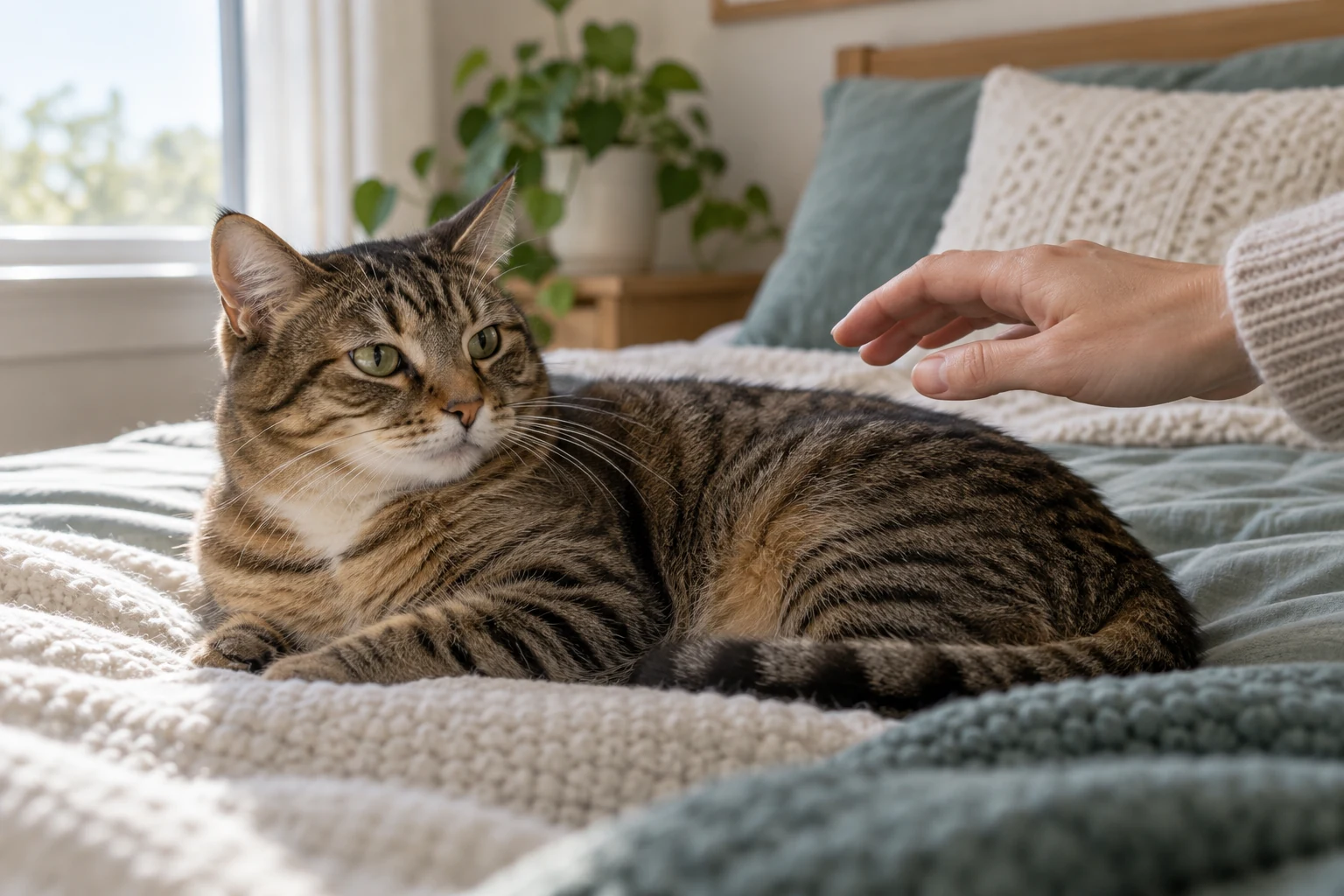
Do not pull, rip, or keep working on a mat while your cat is growling, biting, tail-thumping, freezing, or trying to leave. Those are not stubborn behaviors. They are information that the task is uncomfortable or frightening.
How can you make brushing less stressful?
Make brushing less stressful by turning it into a predictable, tiny routine instead of a full-body event. A cat who only sees the comb when a painful mat appears will learn that grooming means bad news.
Start with one brush stroke, one treat, and a release. Build slowly from there. If your cat tends to swat or nip during handling, review the warning signs before a cat bites so you can stop at the first signs of discomfort rather than the last ones.
Stress-reducing habits include:
- Grooming after a short interactive play routine, once your cat has settled.
- Keeping the comb visible between sessions so it is not a surprise.
- Using a towel or mat that smells familiar.
- Ending while your cat is still calm.
- Saving sensitive areas for later, not starting with the belly or rear end.
- Separating nail trims from coat work unless your cat is very relaxed.
If your cat's claws make grooming harder or unsafe, learn how to trim cat nails safely in separate sessions. Combining every care task at once often makes cats more defensive.
When should mats or grooming changes mean a vet visit?
Call a veterinarian if mats are sudden, widespread, painful, close to irritated skin, or paired with behavior changes. Grooming changes can be one of the first visible signs that a cat is uncomfortable.
Merck Veterinary Manual explains that skin problems in animals can show up as itching, hair loss, scaling, crusting, odor, ear inflammation, erosions, ulcers, or nonhealing wounds, and that many skin diseases can look similar without a proper exam 4. A long coat can hide many of those signs until brushing reveals them.
Vet guidance is especially important if you notice:
- Red, swollen, scabby, bleeding, or oozing skin under the coat.
- A bad smell, greasy patches, or sudden dandruff.
- Fleas, flea dirt, mites, or intense scratching.
- Limping, hissing, hiding, or flinching when touched.
- New matting in an older cat who used to groom well.
- Stool or urine trapped in rear-end fur.
- A cat who stops eating, seems weak, or declines quickly.
For pain-related behavior, compare what you see with subtle cat pain signs. If this is a newly adopted cat or a cat with a medical history you do not know, bring coat and skin questions to what to ask at a first vet visit.
Conclusion: Keep the coat comfortable and your cat calm
Brushing a longhaired cat without pulling is mostly about patience, support, and prevention. Use a wide comb, work from the tips upward, hold the fur near the skin, and keep sessions short enough that your cat can stay relaxed.
Small daily checks prevent many painful mats. When a mat is tight, close to the skin, or paired with soreness or skin changes, stop home brushing and get professional help. A comfortable coat is part of daily care, but your cat's trust matters just as much as the finished look.
Frequently Asked Questions
Should I brush my longhaired cat every day?
Yes, many longhaired cats benefit from daily brushing or combing, especially in friction areas such as behind the ears, armpits, belly, and back legs. If your cat dislikes brushing, make the daily session very short and rotate body areas instead of trying to finish the whole coat.
Is a brush or comb better for a longhaired cat?
A comb is usually better for finding hidden tangles in a long coat. Brushes can smooth loose fur, but they may glide over the top while knots remain underneath. Start with a wide-tooth comb, then use a soft brush for finishing if your cat enjoys it.
Can I cut mats out of my cat's fur?
Do not cut tight mats close to the skin with scissors. Cat skin can be pulled into the mat, and accidental cuts can happen quickly. Small loose tangles may be teased apart with fingers and a comb, but tight mats should go to a professional groomer or veterinarian.
Why does my cat hate being brushed?
Your cat may hate brushing because previous sessions pulled the coat, lasted too long, touched sensitive areas, or happened only when mats were already painful. Start over with one easy stroke, treats, and a quick release. If touch suddenly bothers your cat, schedule a vet check.
What is the safest way to remove small tangles?
Hold the fur between the tangle and the skin, separate the tangle with your fingers, and comb from the outer tips inward. Stop if the tangle does not loosen easily or if your cat reacts with pain or fear.
References
[1] VCA Animal Hospitals. (2026). Grooming and Coat Care for Your Cat. Grooming and Coat Care for Your Cat
[2] Cornell Feline Health Center. (2026). Choosing and Caring for Your New Cat. Choosing and Caring for Your New Cat
[3] ASPCA. (2026). Cat Grooming Tips. Cat Grooming Tips
[4] Merck Veterinary Manual. (2025). Dermatological Problems in Animals. Dermatological Problems in Animals


 Why Does My Cat Flinch When Touched While Sleeping? Startle, Trust, and Pain Clues">
 Cat Scratching Baseboards: Trim Guards and Route Fixes">
 EN
EN DE
DE ES
ES PT
PT