
Call a veterinarian promptly when a kitten has diarrhea, especially if the kitten is very young, has repeated or watery stool, vomits, refuses food, seems weak, loses weight, has blood or black stool, or may be dehydrated. Kittens can decline faster than adult cats. Do not fast a kitten or give human medicine, antibiotics, electrolyte drinks, or home remedies without veterinary guidance.
This guide is educational and cannot diagnose your kitten. A veterinarian who knows the kitten’s age, weight, vaccination status, and examination findings can recommend the safest next step.
Table of Contents
- Is kitten diarrhea an emergency?
- What are common causes of kitten diarrhea?
- How can I tell if my kitten is dehydrated or getting worse?
- What should I do right now?
- What should I not give a kitten with diarrhea?
- Could parasites or infection cause kitten diarrhea?
- What information should I give the vet?
- What tests or treatment might the vet discuss?
- Frequently Asked Questions
- References
Is kitten diarrhea an emergency?
Kitten diarrhea can become urgent quickly because small, young animals have less reserve when they lose fluid or stop eating. Contact a veterinary clinic for age-specific guidance rather than assuming a kitten can be monitored like a healthy adult cat.
| What you notice | Recommended next step |
|---|---|
| Weakness, collapse, severe lethargy, trouble standing, pale gums, breathing difficulty, or possible toxin/foreign-object exposure | Seek emergency veterinary care now |
| Blood in the stool, black or tar-like stool, repeated watery diarrhea, repeated vomiting, a painful or swollen abdomen, refusal to eat, or signs of dehydration | Call a veterinarian urgently for same-day guidance |
| Diarrhea in a very young, underweight, newly adopted, unvaccinated, or medically fragile kitten | Call a veterinarian promptly, even if other signs seem mild |
| One softer stool while the kitten remains bright, eating, drinking, and active | Call the clinic for guidance and monitor closely; escalate if it repeats or anything changes |
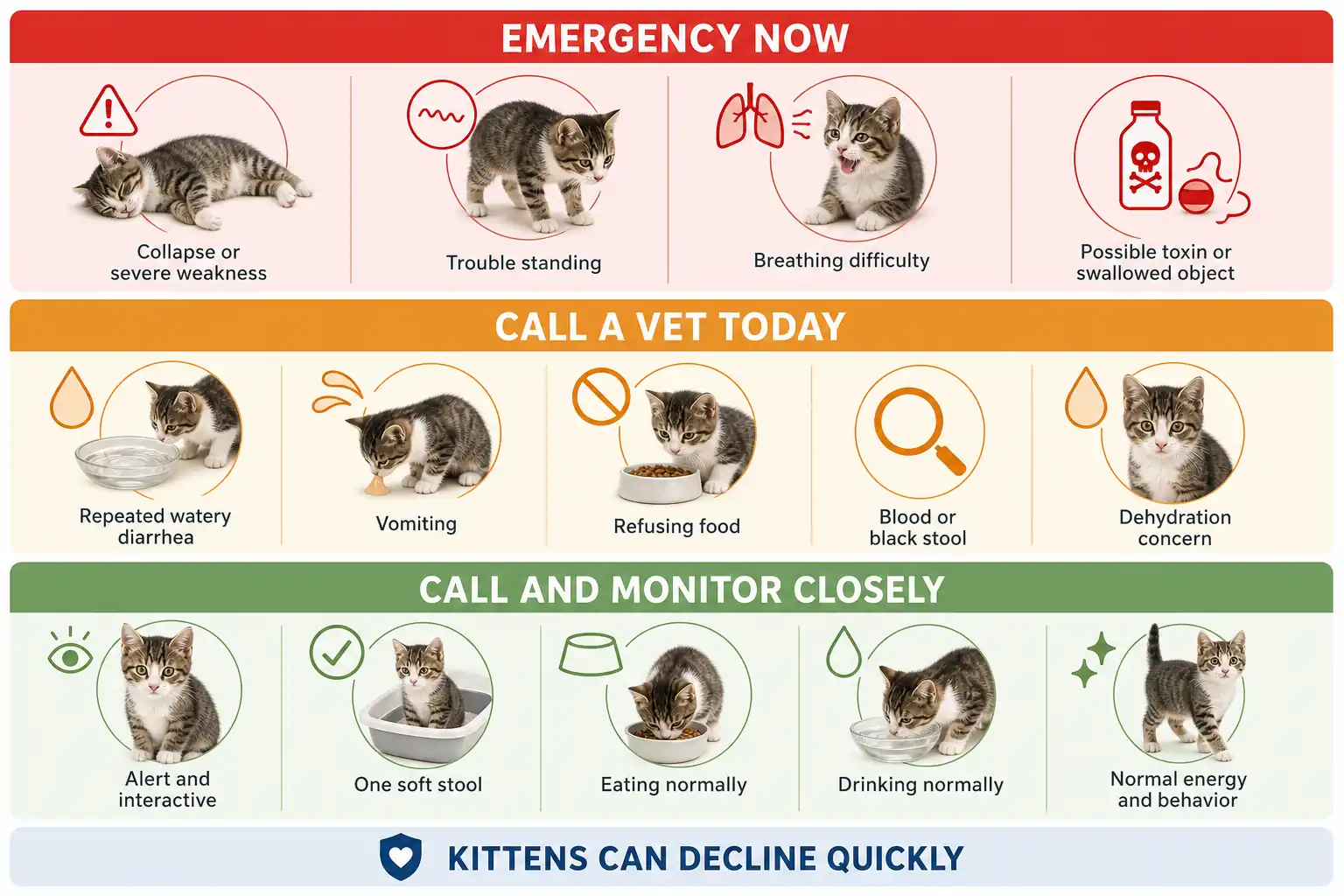
Cornell notes that diarrhea may accompany serious illness and advises prompt veterinary care when it persists or occurs with signs such as poor appetite, lethargy, or vomiting.1 If your kitten looks unwell, trust the whole-kitten picture rather than waiting for a specific number of loose stools.
When should I call a vet now?
Call now if your kitten:
- is unusually sleepy, weak, hiding, or difficult to wake
- will not eat or drink normally
- vomits more than once or cannot keep food or water down
- has frequent, fully liquid, bloody, or black stool
- is losing weight or not gaining weight
- strains repeatedly, seems painful, or has a swollen abdomen
- may have chewed string, plants, medication, chemicals, or another unsafe item
Sudden hiding can also be a sign that a cat feels unwell. Our guide to why cats hide can help you observe context, but a behavior change plus diarrhea warrants veterinary advice.
What are common causes of kitten diarrhea?
Kitten diarrhea has many possible causes, and the stool’s appearance alone usually cannot identify the cause. Diet disruption, parasites, infections, stress, medication effects, and underlying illness can produce similar signs.
| Possible cause | Helpful context to tell the vet |
|---|---|
| Sudden food change or too many treats | When the diet changed, exact foods, portions, and any table scraps |
| Overfeeding or feeding an unsuitable food | Daily amount, meal frequency, and whether the food is labeled for kitten growth |
| Intestinal parasites | Adoption/source history, deworming dates, outdoor or multi-pet exposure |
| Viral or bacterial infection | Vaccination status, exposure to other cats, and other symptoms |
| Stress | Recent move, adoption, boarding, new pets, or routine change |
| Medication or supplement effect | Product name, dose given, and timing |
| Foreign material or toxin exposure | Missing objects, chewed packaging, plants, cleaners, or human medications |
| Other medical conditions | Weight loss, poor growth, recurring episodes, vomiting, or appetite changes |
Roundworms, hookworms, Giardia, coccidia, and other gastrointestinal parasites can affect cats, with kittens at particular risk from some parasites.2 Because different causes require different responses, do not use leftover dewormers or antibiotics without a veterinarian’s instructions.
If the episode followed a feeding change, review what your kitten ate and how much. Use a complete-and-balanced kitten food, and discuss changes with the clinic. These guides explain what cats can eat, choosing healthy cat food, and how much to feed a cat.
How can I tell if my kitten is dehydrated or getting worse?
Watch changes in energy, appetite, drinking, urination, body weight, vomiting, and stool frequency. No single home check can reliably rule out dehydration in a kitten, so contact a veterinarian if you are concerned.
Track these observations:
- Energy: Is the kitten alert and responsive, or quieter and weaker than usual?
- Food and water: Is the kitten eating normal meals and drinking voluntarily?
- Urination: Are urine clumps appearing normally in the litter box?
- Weight: Is body weight stable, or has it dropped since the previous day?
- Stool: How many episodes occurred, and were they soft, watery, bloody, or black?
- Other signs: Is there vomiting, abdominal discomfort, feverish behavior, or hiding?
A dry mouth, sunken-looking eyes, weakness, reduced urination, or a notable behavior change can be concerning. Do not rely on a skin-tent test to decide that a kitten is safe; age, body condition, and technique can make home interpretation unreliable.
For help describing what you see, compare stool appearance with our cat poop color chart, but remember that a chart cannot diagnose the cause.
What should I do right now?
Call your veterinarian, keep the kitten warm and comfortable, offer fresh water and the kitten’s normal complete-and-balanced food, and record what is happening. Follow the clinic’s instructions about feeding, samples, and timing of care.
- Call the clinic. Give the kitten’s age, weight, symptoms, and vaccination/deworming history.
- Keep normal essentials available. Offer fresh water and the normal kitten diet unless the veterinarian gives different instructions.
- Prevent exposure. Keep unsafe foods, plants, string, cleaners, and medications out of reach.
- Clean promptly. Scoop and clean soiled areas, wash hands, and use separate supplies if other pets live in the home.
- Document changes. Note each stool, meal, drink, urination, vomiting episode, and behavior change.
- Ask about a sample. The clinic may request a fresh stool sample in a clean, sealed container.
Do not force food or water by syringe unless a veterinarian has specifically taught you to do so. Incorrect syringe-feeding can cause choking or aspiration.
What should I not give a kitten with diarrhea?
Do not give a kitten human anti-diarrhea medicine, leftover antibiotics, unprescribed dewormers, electrolyte drinks, oils, supplements, probiotics, pumpkin, or a homemade diet unless a veterinarian specifically recommends the product and amount for that kitten.
Also avoid:
- fasting a kitten
- abruptly switching foods repeatedly
- using another pet’s prescription
- guessing medication doses from internet advice
- force-feeding or force-watering
- delaying care because the kitten briefly seems better
Some medications and household products can be dangerous to cats, and diarrhea treatment depends on the underlying cause. Merck’s veterinary overview explains that gastrointestinal disorders can have infectious, inflammatory, obstructive, toxic, dietary, and other causes.3
For broader adult-cat context, see our cat diarrhea treatment guide, but always use the more cautious threshold for a kitten.
Could parasites or infection cause kitten diarrhea?
Yes. Parasites and infections are important possibilities, especially in newly adopted kittens, kittens from group environments, unvaccinated kittens, and multi-pet homes. A veterinary examination and fecal testing may be needed to identify the cause.
Until your veterinarian advises otherwise:
- use a separate litter box, bowls, bedding, and cleaning supplies
- scoop stool promptly and dispose of it securely
- wash hands after handling the kitten or litter
- prevent other pets from sharing the kitten’s litter box or bowls
- tell the clinic if another pet or person in the home has gastrointestinal symptoms
Cornell’s parasite guidance notes that some feline gastrointestinal parasites can cause diarrhea and that accurate diagnosis matters because treatment and prevention differ by parasite.2
What information should I give the vet?
Give the clinic a concise timeline and the details most likely to change the urgency or diagnostic plan. Photos, records, packaging, and a sample can be useful when the clinic requests them.
Have these details ready:
- kitten’s age, current weight, and recent weight trend
- when diarrhea began and how often it has occurred
- stool consistency and whether blood or black stool is present
- appetite, drinking, urination, energy, and hiding behavior
- any vomiting, straining, pain, or abdominal swelling
- current food, recent diet changes, treats, and possible scavenging
- vaccination, deworming, medication, and supplement history
- adoption/source history and contact with other animals
- possible access to string, plants, chemicals, medications, or spoiled food
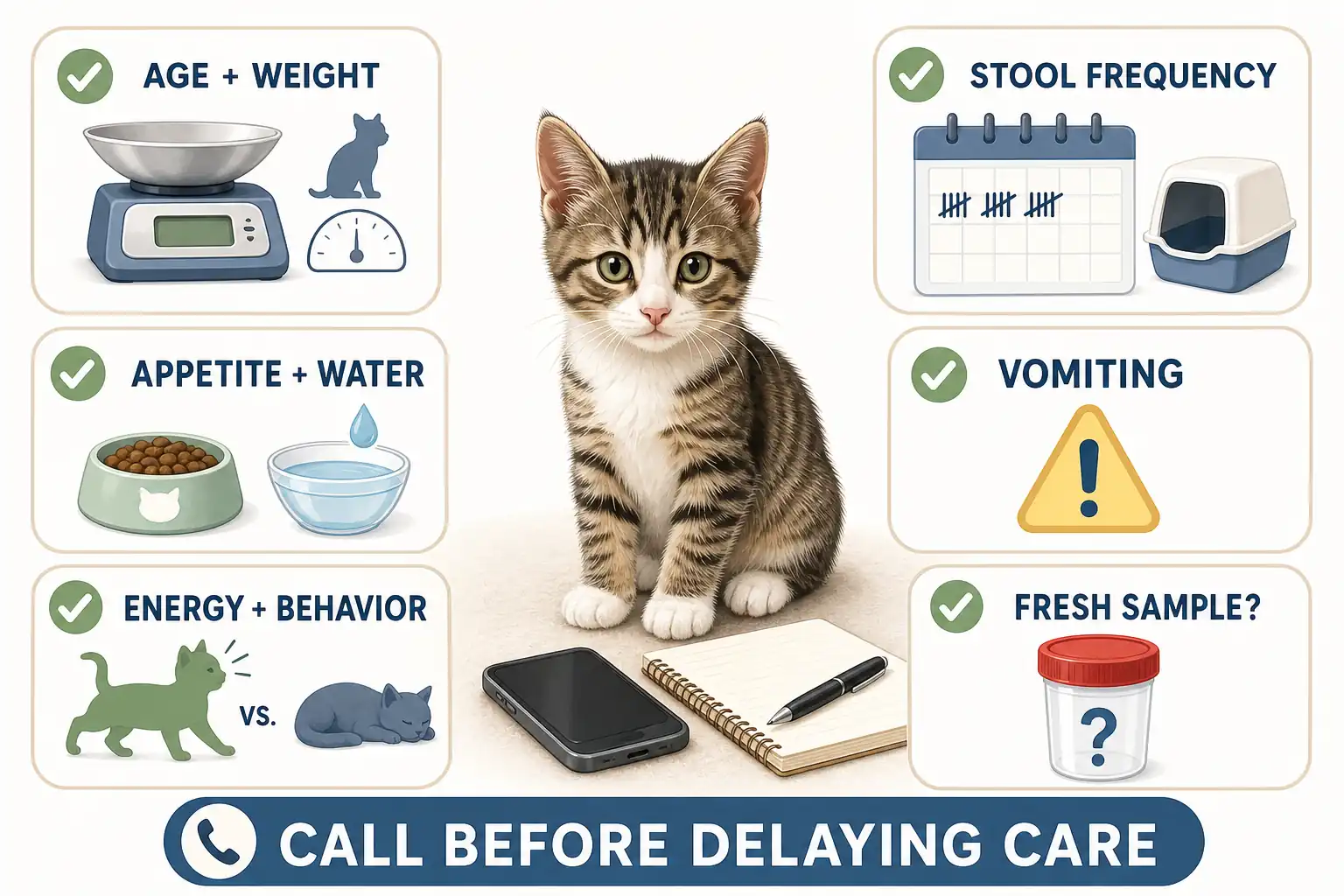
If the clinic wants a sample, ask how fresh it should be and how to store and transport it. Do not delay urgent care while trying to collect one.
What tests or treatment might the vet discuss?
The veterinarian may assess weight, temperature, hydration, abdominal comfort, and overall condition, then recommend testing or supportive care based on the findings. Possible next steps include fecal testing, additional laboratory tests, imaging, fluids, nutritional support, or cause-specific medication.
Treatment is not one-size-fits-all. A kitten with parasites needs a different plan from one with a foreign-body obstruction, dietary intolerance, or infection. Follow-up may also be important if diarrhea recurs, weight gain stalls, or initial testing is negative.
Bring the exact names or packaging of anything the kitten has eaten or received. Never start or repeat a medication simply because it was previously prescribed to another animal.
Frequently Asked Questions
Can kitten diarrhea go away on its own?
A single soft stool may not continue, but kittens can worsen quickly and the cause may still need attention. Call a veterinary clinic for guidance, especially for young, newly adopted, unvaccinated, underweight, or unwell kittens.
Should I fast a kitten with diarrhea?
No. Do not fast a kitten unless a veterinarian specifically instructs you to do so. Young kittens need regular nutrition and can be vulnerable when they stop eating.
Can I give my kitten pumpkin or probiotics?
Only if your veterinarian recommends a specific product and amount for your kitten. Supplements and home remedies may be inappropriate for the cause and can delay needed care.
Is blood in kitten diarrhea an emergency?
Blood or black, tar-like stool warrants urgent veterinary guidance. Seek emergency care if it occurs with weakness, collapse, repeated vomiting, severe pain, or other serious signs.
Should I collect a stool sample?
Ask the veterinary clinic. If requested, use a clean sealed container and follow the clinic’s instructions for freshness, storage, and transport. Never delay urgent care to obtain a sample.
Can kitten diarrhea spread to other pets?
Some parasitic and infectious causes can spread. Until the cause is known, use separate litter and feeding supplies, clean promptly, wash hands, and ask your veterinarian how to protect other pets.
References
[1] Cornell Feline Health Center. Diarrhea.
[2] Cornell Feline Health Center. Gastrointestinal Parasites of Cats.
[3] Merck Veterinary Manual. Disorders of the Stomach and Intestines in Cats.
 EN
EN DE
DE ES
ES PT
PT