
Recurring or persistent diarrhea in a cat needs veterinary investigation, even when the cat seems fairly well between episodes. Possible causes range from parasites and diet-related problems to intestinal inflammation and other diseases. Call sooner for weakness, repeated vomiting, refusal to eat, weight loss, dehydration concern, blood, or black stool. Do not keep cycling through home remedies.
This guide is educational and cannot diagnose your cat. A veterinarian needs the cat’s history, examination findings, and sometimes several tests to identify the cause and choose treatment.
Table of Contents
- When is cat diarrhea considered chronic or recurring?
- When does chronic diarrhea need urgent veterinary care?
- What can cause chronic diarrhea in cats?
- What should I track before the veterinary appointment?
- What tests might a veterinarian discuss?
- What should I avoid doing at home?
- How can I support my cat while following the veterinary plan?
- Conclusion
- Frequently Asked Questions
- References
When is cat diarrhea considered chronic or recurring?
Diarrhea deserves investigation when it persists, repeatedly returns, or occurs alongside weight, appetite, or behavior changes. Do not wait for a precise number of days before calling if the cat seems unwell.
| Pattern | What it may look like | Next step |
|---|---|---|
| Persistent | Loose or watery stool continues without returning to normal | Arrange a veterinary appointment |
| Recurring | Stool improves, then diarrhea repeatedly returns | Keep a timeline and arrange an examination |
| Progressive | Episodes become more frequent, watery, or accompanied by other signs | Call the veterinarian promptly |
| Intermittent with weight loss | Cat seems normal at times but gradually loses weight or condition | Arrange veterinary assessment rather than repeated diet experiments |
| Sudden severe episode during a chronic pattern | New weakness, vomiting, blood, black stool, or refusal to eat | Seek urgent veterinary guidance |
Cornell explains that diarrhea has many possible causes and advises prompt veterinary care when it persists or occurs with poor appetite, lethargy, or vomiting.1 A cat can have a long-running problem even when some stools look normal.
For a single recent episode, the broader cat diarrhea guide may provide useful context. This page focuses on diarrhea that continues or keeps returning.
When does chronic diarrhea need urgent veterinary care?
Chronic diarrhea still can become an emergency. The duration does not make new severe signs less important.
| What you notice | Recommended response |
|---|---|
| Collapse, severe weakness, breathing difficulty, or inability to stand | Seek emergency veterinary care |
| Repeated vomiting, inability to keep water down, or marked dehydration concern | Seek urgent veterinary care |
| Blood in the stool or black, tar-like stool | Call a veterinarian urgently |
| Refusal to eat, rapid weight loss, severe lethargy, or painful/swollen abdomen | Call a veterinarian promptly |
| Very young, elderly, underweight, or medically fragile cat with diarrhea | Use a lower threshold for calling |
| Ongoing loose stool while otherwise stable | Schedule an examination and track changes |
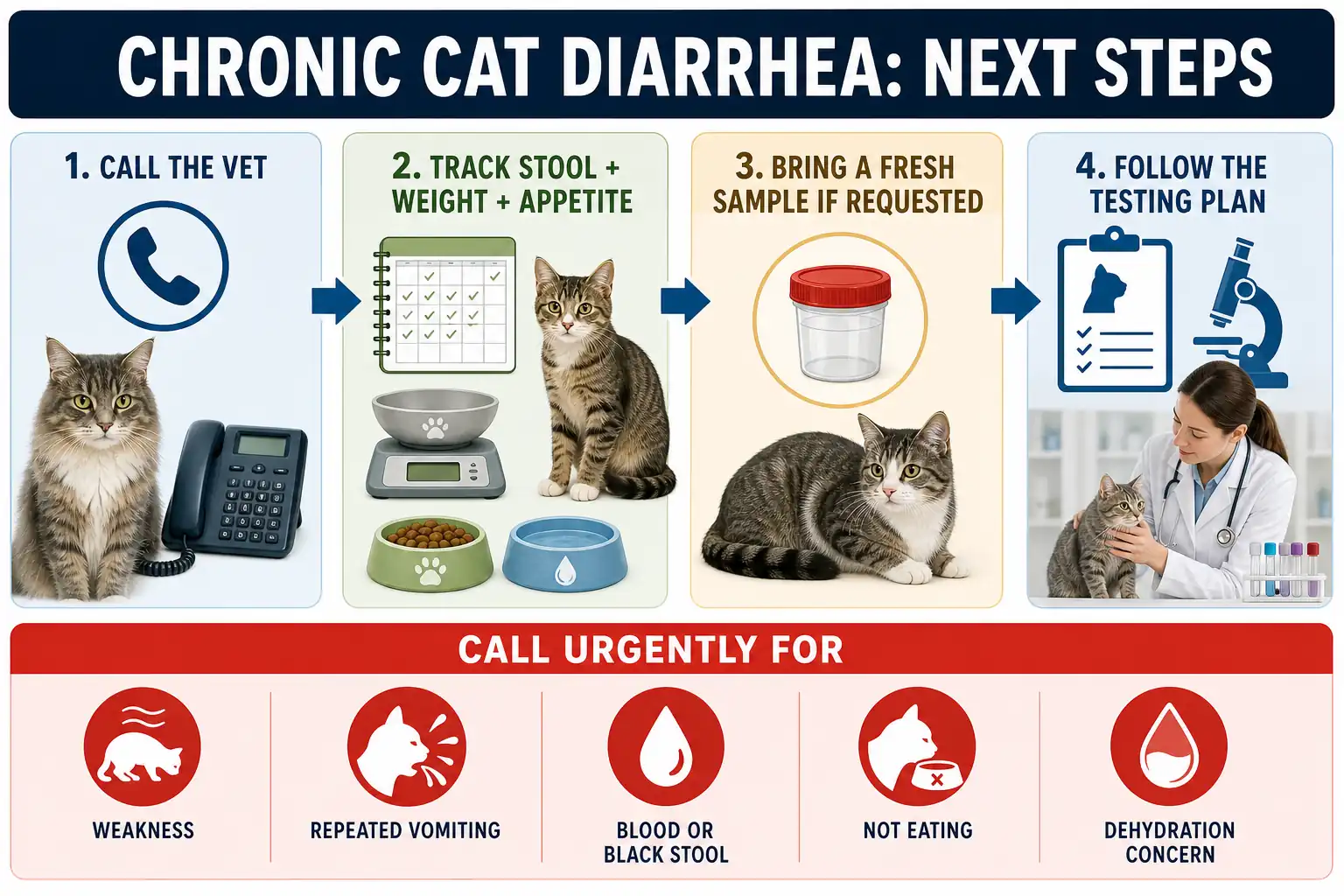
Do not assume blood is harmless because it has appeared before. The cat poop color chart may help you describe what you see, but stool appearance alone cannot identify the cause or urgency.
What can cause chronic diarrhea in cats?
Chronic or recurring diarrhea is a symptom, not a diagnosis. Different conditions can look similar at home, which is why guessing from stool alone often leads to ineffective or unsafe treatment.
| Cause category | Examples or useful context |
|---|---|
| Parasites | Roundworms, hookworms, Giardia, coccidia, and other gastrointestinal parasites |
| Diet-related problems | Abrupt changes, food intolerance, unsuitable food, overfeeding, or unbalanced diets |
| Infection | Certain bacterial, viral, or other infectious conditions |
| Intestinal inflammation | Chronic inflammatory conditions affecting the gastrointestinal tract |
| Disease outside the intestine | Conditions involving the pancreas, liver, thyroid, or other systems |
| Medication or supplement effects | Prescription drugs, unapproved supplements, or repeated home remedies |
| Structural or serious disease | Foreign material, intestinal changes, or cancer, depending on the cat |
Cornell notes that gastrointestinal parasites can cause signs including diarrhea and that accurate identification matters because parasites differ in diagnosis, treatment, and prevention.2 Merck’s overview also describes dietary, infectious, inflammatory, obstructive, toxic, and other causes of gastrointestinal disease.3
This range of possibilities is why leftover antibiotics, random dewormers, or repeated food changes are poor substitutes for a workup. A treatment that fits one cause may be ineffective or inappropriate for another.
What should I track before the veterinary appointment?
A clear timeline helps the veterinarian understand the pattern and choose initial tests. Record facts rather than trying to diagnose the cause yourself.
Track these details:
- when the diarrhea began and whether it ever fully resolves
- number of bowel movements and whether urgency or straining occurs
- stool consistency, color, mucus, blood, or black appearance
- vomiting, appetite, drinking, urination, energy, and hiding
- body weight and any change in body condition
- current food, treats, recent diet changes, and possible scavenging
- medications, supplements, and previous treatments
- parasite prevention, deworming, travel, outdoor access, and exposure to other animals
- whether other pets or people in the home have gastrointestinal symptoms
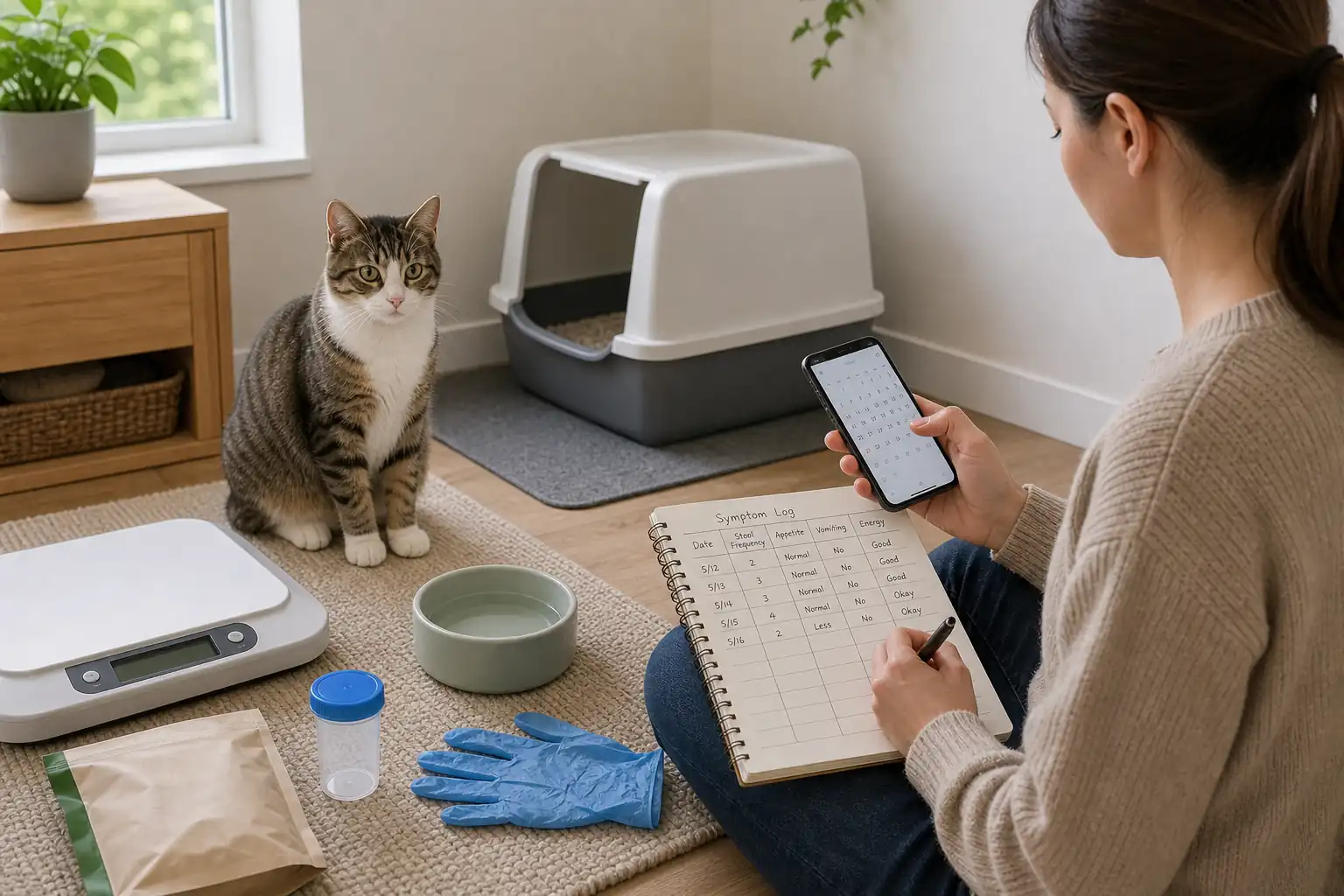
Ask the clinic whether it wants a fresh stool sample and how to collect, store, and transport it. Do not delay urgent care while trying to obtain one. Bring packaging or photos of foods, supplements, and medications when relevant.
Use the SnuggleSouls body condition and weight calculator to organize observations, but contact a veterinarian for unexpected weight loss. Sudden hiding or withdrawal can also matter; the guide to why cats hide can help you describe the change without diagnosing it.
What tests might a veterinarian discuss?
The testing plan depends on the cat’s age, history, examination, severity, and previous results. Chronic gastrointestinal problems sometimes require a stepwise investigation rather than one definitive test.
Possible steps include:
- physical examination, hydration assessment, and body-weight review
- fecal testing for parasites or other abnormalities
- blood and urine tests
- testing guided by age, travel, exposure, or regional risks
- dietary history review or a veterinarian-directed diet trial
- imaging such as radiographs or ultrasound
- additional gastrointestinal testing
- referral, endoscopy, or biopsy when appropriate
The veterinarian may begin with common or urgent possibilities and adjust the plan based on results and response. A negative test does not always end the investigation, and a temporary improvement does not necessarily confirm the cause.
Keep follow-up appointments and report whether stool, appetite, vomiting, weight, and energy change. If the veterinarian recommends a diet trial, follow the instructions closely; unplanned treats or extra foods can make the result difficult to interpret.
What should I avoid doing at home?
Avoid repeated treatment experiments that can mask changes, cause harm, or make the diagnostic history harder to interpret. Contact the veterinarian before giving anything intended to stop diarrhea.
Do not:
- give human anti-diarrhea medicine
- use leftover antibiotics or another pet’s medication
- repeat dewormers without veterinary guidance
- fast a cat unless a veterinarian specifically instructs you
- abruptly switch diets again and again
- start pumpkin, probiotics, supplements, herbs, oils, or homemade diets as a substitute for diagnosis
- force-feed or syringe water without veterinary instruction
- delay care because the cat seems normal between episodes
Diet can be part of treatment, but the correct plan depends on the suspected cause and the cat’s nutritional needs. For general food-selection principles, see how to choose healthy cat food. Do not use a general feeding article to replace a prescribed therapeutic diet.
How can I support my cat while following the veterinary plan?
Follow the plan exactly, keep the routine consistent, and report changes promptly. Good home support makes treatment and follow-up easier to evaluate without inventing new remedies.
Practical support includes:
- Give prescribed food or medication exactly as directed.
- Keep fresh water available and monitor drinking and urination.
- Measure meals and record appetite.
- Keep litter boxes clean so stool changes are easier to observe.
- Prevent affected pets from sharing litter boxes or bowls if the veterinarian advises separation.
- Wash hands after litter-box cleaning.
- Record stool, vomiting, weight, energy, and any side effects.
- Contact the clinic if the cat worsens or the plan is difficult to follow.
If the affected cat is a kitten, use the more cautious guidance in the kitten diarrhea guide while arranging veterinary care. Kittens can decline faster than healthy adults.
Conclusion
Chronic diarrhea in cats is not a condition to manage indefinitely with rotating home remedies. The useful next step is an organized veterinary investigation supported by a clear timeline, accurate food and medication history, weight tracking, and any samples the clinic requests.
Watch the whole cat, not only the litter box. A cat that is losing weight, vomiting, refusing food, weak, dehydrated, painful, or passing blood or black stool needs faster care. Once a plan begins, consistency and follow-up are essential because several different diseases can cause similar stool changes.
Frequently Asked Questions
How long is too long for a cat to have diarrhea?
Call a veterinarian when diarrhea persists, repeatedly returns, or occurs with another change. Call sooner for vomiting, poor appetite, weakness, weight loss, dehydration concern, blood, or black stool.
Can chronic diarrhea in cats be caused by food?
Yes, diet-related problems are one possibility, but they are not the only cause. Avoid repeated unplanned food changes and ask the veterinarian whether a structured diet trial is appropriate.
Should I give my cat probiotics for chronic diarrhea?
Only give a specific product if your veterinarian recommends it for your cat and diagnostic plan. Probiotics do not replace investigation of persistent or recurring diarrhea.
Can parasites cause recurring diarrhea in an indoor cat?
Parasites remain one possible cause depending on the cat’s history and exposure. A veterinarian can recommend appropriate fecal testing and treatment rather than guessing.
What should I bring to the vet?
Bring a symptom timeline, food and medication details, weight records, photos when useful, and a fresh stool sample only if the clinic requests one and provides handling instructions.
Why does my cat’s diarrhea improve and then return?
Recurring diarrhea can have many explanations, including incomplete resolution, ongoing exposure, dietary factors, or an underlying condition. A veterinarian needs the full pattern and test results to narrow the cause.
References
[1] Cornell Feline Health Center. Diarrhea.
[2] Cornell Feline Health Center. Gastrointestinal Parasites of Cats.
[3] Merck Veterinary Manual. Disorders of the Stomach and Intestines in Cats.
 EN
EN DE
DE ES
ES PT
PT