
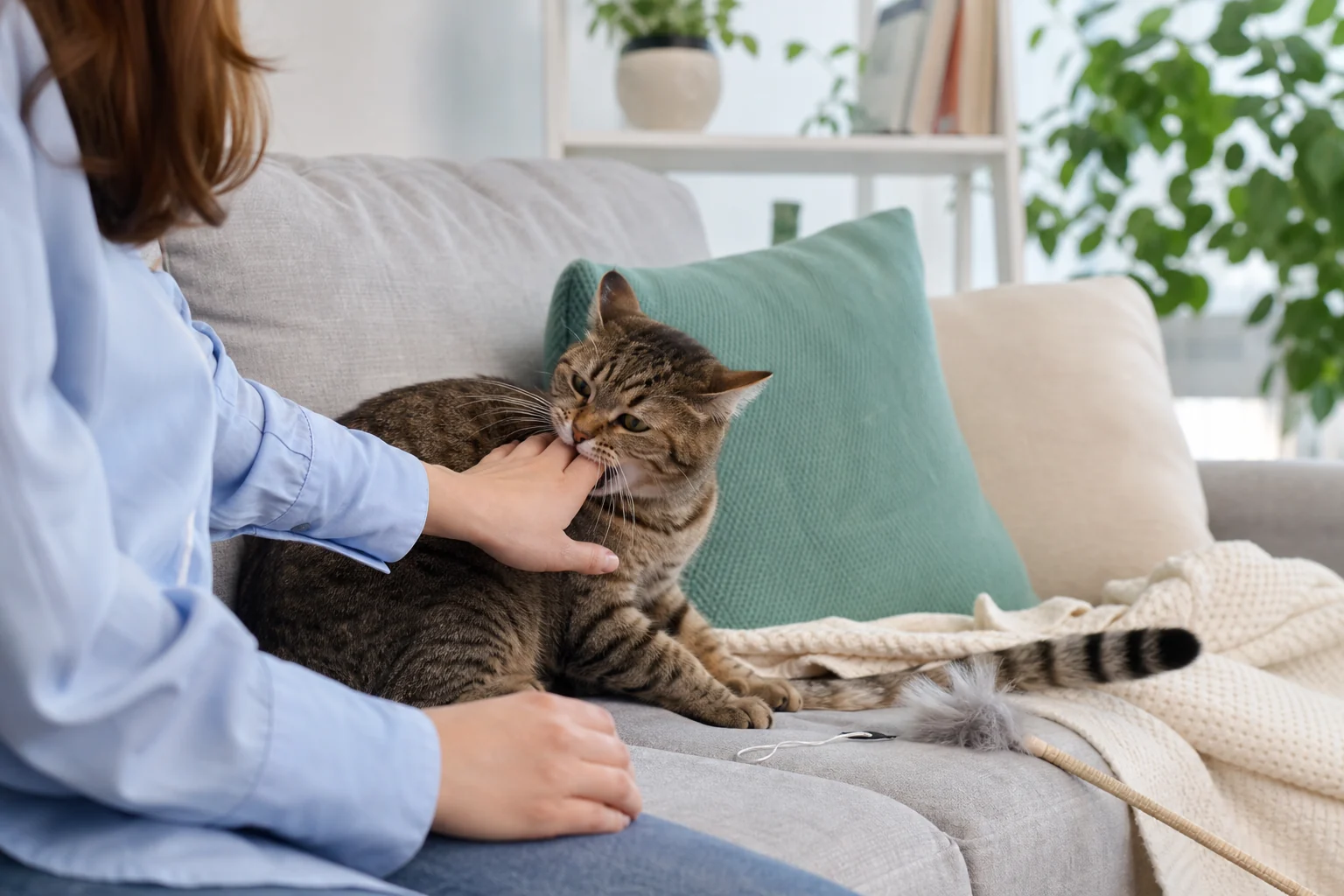
Why does my cat bite me? It depends on the moment. A cat who stalks and pounces may be playing; a cat who nips after petting may have reached a comfort limit; biting when cornered can signal fear; and sudden or touch-specific biting can point to pain. Pause, give space, and avoid punishment.
That does not mean your cat is "bad" or that your bond is broken. It means your cat is using teeth as communication, and your job is to slow the interaction down, notice the warning signs earlier, and rule out pain or stress when the pattern changes.
This guide explains the most common reasons cats bite, how to tell a playful nip from a warning bite, what to do in the moment, and when a veterinarian or qualified behavior professional should be involved.
Table of Contents
- Why does my cat bite me all of a sudden?
- What should I do right after my cat bites me?
- Why does my cat bite me while purring?
- How can I tell if my cat is overstimulated?
- What should I do when my cat bites during play?
- Could biting mean pain, fear, or illness?
- How can I reduce biting without scaring my cat?
- Conclusion
- Frequently Asked Questions
- References
Why does my cat bite me all of a sudden?
A sudden cat bite usually means the interaction changed faster than you noticed. Your cat may have become overstimulated by petting, switched into play mode, felt trapped, reacted to pain, or redirected frustration from something else in the environment.
Cornell Feline Health Center explains that cat aggression has different causes, including play aggression, petting-induced aggression, redirected aggression, fear, and pain-related aggression 1. Those categories matter because the right response to a playful kitten is different from the right response to a painful senior cat who dislikes being touched near the hips.
Start by asking what happened just before the bite:
| Bite pattern | Possible explanation | First response and when to worry |
|---|---|---|
| Your cat stalks, pounces, or grabs a moving hand during an energetic moment | Play behavior | Redirect play to a wand or kicker toy. Get help if bites are forceful or escalating. |
| Your cat nips after petting, especially with tail flicks or ears turning back | Overstimulation or touch sensitivity | Stop at the first warning sign. Arrange a vet check if touch sensitivity is new. |
| Your cat bites when approached, picked up, or cornered | Fear, stress, or pain | Give an open escape route and avoid forced handling. Seek veterinary advice if this is new or persistent. |
| Your cat is agitated by an outside cat or sudden noise, then bites nearby | Redirected aggression | Reduce the trigger and give quiet space until the cat settles; do not try to restrain them. |
| A bite is suddenly harder, happens when one area is touched, or appears with other changes | Possible pain or illness | Contact your veterinarian promptly; do not assume it is a training problem. |
These patterns help you choose a safer response, but they do not diagnose the cause. A new, worsening, or location-specific bite is more concerning than a familiar, predictable play or petting pattern.
If you are trying to compare biting with other signals, the SnuggleSouls cat behavior guides can help you read patterns across hiding, vocalizing, loafing, purring, and stress behaviors.
What should I do right after my cat bites me?
Pause the interaction and give your cat space. Avoid yelling, hitting, scruffing, chasing, or grabbing; punishment can increase fear or anxiety and make aggression worse 1. Once the cat is calm, use the context to decide what to change next.
- Stop contact calmly. Keep your movements slow and give the cat a clear path away from you.
- Reduce the trigger. End hand play, stop petting, or block the view of an outside animal when that appears to be the trigger.
- Do not force a reset. Let the cat settle before offering attention or play; do not pick them up or corner them.
- Track the pattern. Note what happened beforehand, where the cat was touched, the body-language cues, and whether the bite broke skin.
- Get the right help. Contact a veterinarian when biting is new, worsening, or linked to pain or other changes. If a cat bite breaks your skin, wash it immediately with warm soapy water. Seek medical attention if the wound is serious, the cat appears ill or its rabies vaccination status is unknown, or the bite area becomes red, painful, warm, or swollen 6.
If the cat is still highly aroused, do not reach in to comfort or move them. Increase distance and, if needed, use a door or other barrier to separate safely while they settle.
Why does my cat bite me while purring?
A cat can bite while purring because the purr and the bite are not always opposites. Your cat may be enjoying contact at first, then reaching a sensory limit, or may be using a soft bite to say "stop," "change what you are doing," or "I want play instead."
This is why a purring cat can still need space. If your cat climbs into your lap, purrs, accepts a few strokes, then turns and nips, the purr may show comfort at the beginning while the bite shows that the interaction went too long or touched the wrong area. For more context, read why purring does not always mean everything is fine.
Petting-sensitive cats often have specific limits. Some prefer chin and cheek rubs but dislike long strokes along the back. Some tolerate three gentle touches, not thirty. Some are fine when they initiate contact but uncomfortable when a person keeps reaching after they have tried to move away.
The goal is not to punish the bite after it happens. The goal is to learn the pattern before the bite. Count how many strokes your cat usually accepts, where your cat likes to be touched, and which body-language changes appear right before teeth.
How can I tell if my cat is overstimulated?
An overstimulated cat often gives small warnings before biting. Watch the tail, ears, eyes, skin, body tension, and whether your cat is leaning into touch or leaning away.
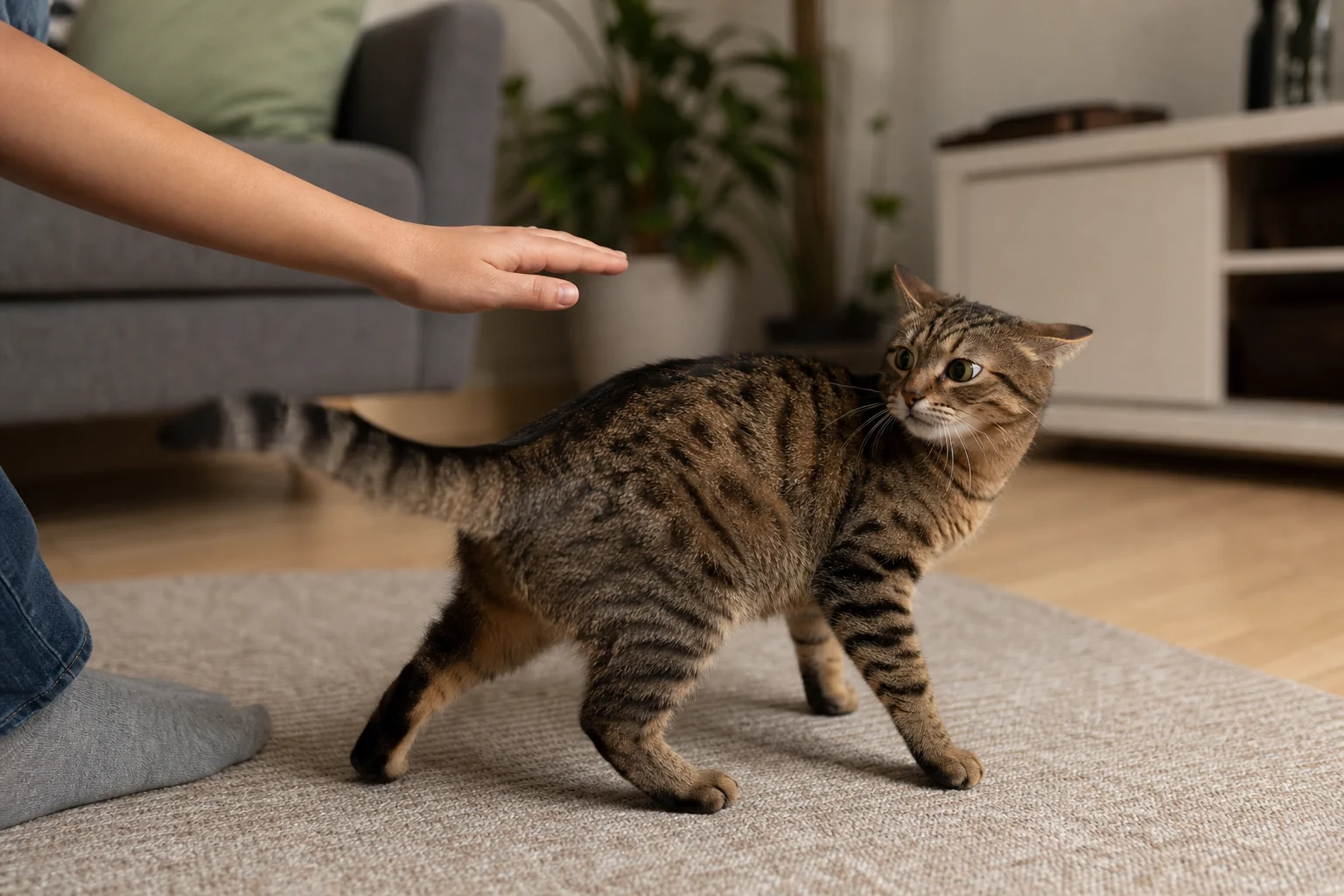
VCA notes that cats who are becoming reactive during petting may pull their ears back, tense the body, or flick the tail 3. Cornell also lists tail thrashing, ears pinned or moved back, and dilated pupils among warning signs seen with play and petting-related aggression 1.
Common early signs include:
- Tail tip twitching, tail lashing, or tail thumping
- Ears rotating sideways or backward
- Skin rippling along the back
- Sudden stillness or a tense crouch
- Head turning quickly toward your hand
- Paw grabbing, bunny kicking, or mouthing
- Wide pupils or a hard stare
- Leaning away, shifting weight, or trying to leave
Some relaxed poses can look compact, so compare the whole body. A comfortable cat may tuck into a loaf with soft eyes and neutral ears; this guide to relaxed loafing and tense crouching can help you compare posture clues.
When you see warning signs, stop touching before the bite. Let your hand go still, give your cat a path away, and avoid chasing the interaction with more petting.
What should I do when my cat bites during play?
If your cat bites during play, end hand play and redirect the hunting behavior toward toys. Cats need to chase, grab, bite, and kick, but hands and ankles should not become the target.
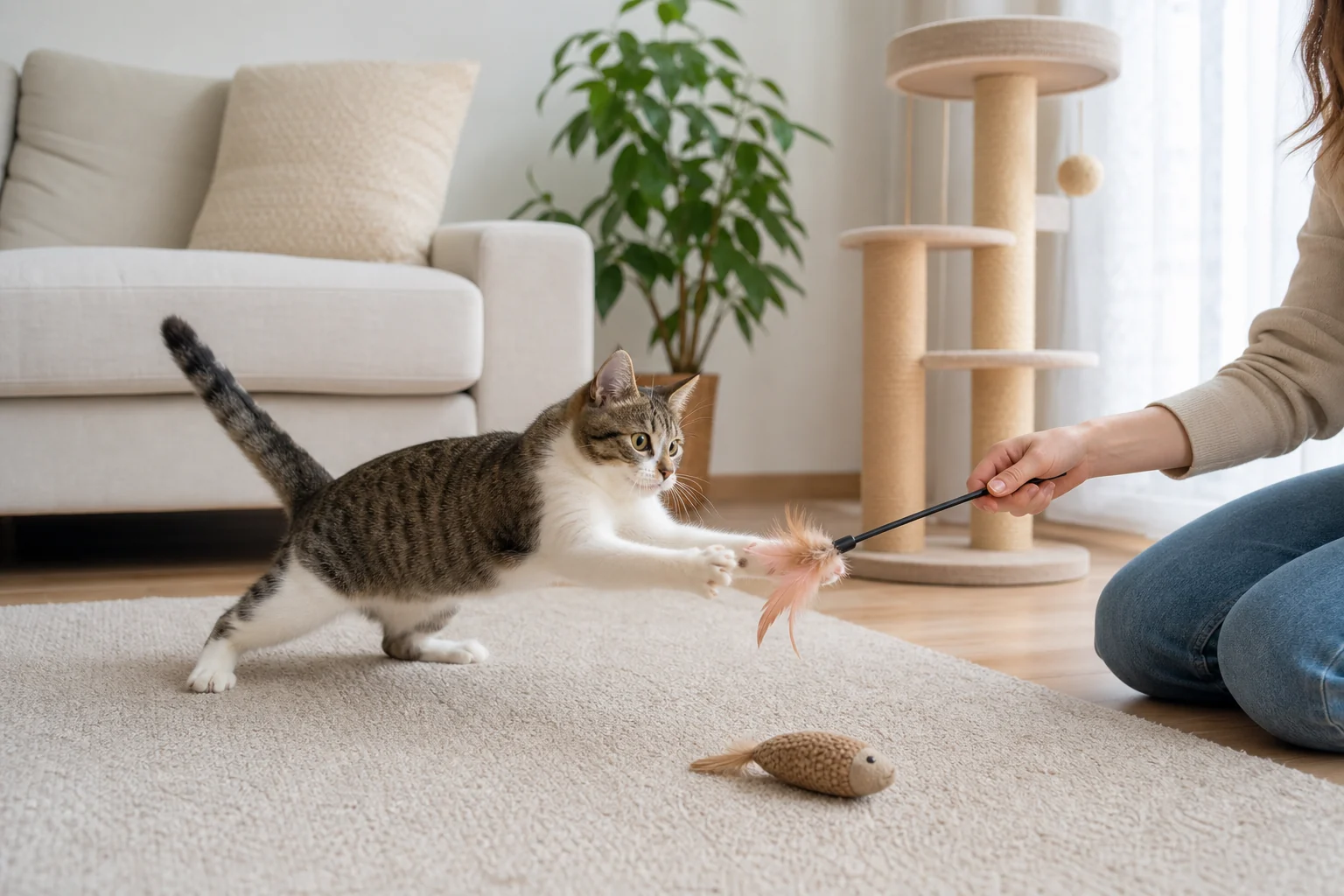
The AAFP/ISFM environmental needs guidelines include opportunity for play and predatory behavior as a core part of a healthy feline environment 4. That matters for biting because under-stimulated cats may create their own hunting games using moving human hands, feet, or pant legs.
Use this safer play plan:
- Offer a few short interactive play sessions across the day, adjusted to your cat's age and energy.
- Use wand toys, toss toys, kicker toys, tunnels, and puzzle feeders.
- Move the toy like prey: away from the cat, around corners, and under safe cover.
- Keep hands away from your cat's mouth and belly.
- Let your cat catch the toy sometimes so play stays satisfying.
- End with a small meal or treat if that fits your cat's diet.
If your kitten or young cat bites hard, freeze instead of jerking your hand away, then calmly remove attention. Fast hand movement can make the game more exciting. Physical punishment, yelling, scruffing, or restraint can increase fear and worsen aggression 1.
Could biting mean pain, fear, or illness?
Yes. Biting can mean pain, fear, illness, or stress, especially when the behavior is new, more intense than usual, or linked to being touched in one body area.
Merck Veterinary Manual notes that pain, discomfort, or irritability can lead to aggression in cats 2. Merck's pain-sign table also lists aggression and irritability among possible signs of pain in pets 5. A cat who suddenly bites when touched near the back, mouth, abdomen, hips, paws, or tail may need a veterinary exam rather than a training plan alone.
Pay closer attention if biting appears with:
- Hiding, withdrawal, or avoiding family members
- Limping, stiffness, reluctance to jump, or sensitivity to touch
- Appetite change, weight change, vomiting, diarrhea, or drooling
- Litter box changes, straining, accidents, or urine marking
- Sudden grooming changes, mats, overgrooming, or coat neglect
- More growling, hissing, yowling, or other sudden vocal changes
- A new pattern after a fall, fight, vet visit, move, new pet, or household disruption
If your cat is biting and hiding, compare the pattern with this guide on why cats hide. If biting appears alongside accidents or marking, this guide to stress-related litter box changes may help you organize clues before calling your vet.
Seek urgent veterinary care if the behavior is paired with trouble breathing, collapse, seizures, suspected poisoning, inability to urinate, severe injury, or profound weakness. Contact your veterinarian promptly if a new bite pattern comes with pain, hiding, appetite changes, vomiting or diarrhea, or litter-box changes.
How can I reduce biting without scaring my cat?
Reduce biting by making your cat feel safer, giving appropriate play outlets, and stopping interactions before your cat has to use teeth. The most effective plan is calm, consistent, and boring.
Try this step-by-step approach:
- Track the pattern. Write down when bites happen, what body area was touched, how long petting lasted, and what happened just before the bite.
- Shorten petting sessions. If your cat usually bites after ten strokes, stop at five.
- Pet preferred areas. Many cats prefer cheeks, chin, and the base of the ears over belly, paws, tail, or long back strokes.
- Let your cat choose contact. Invite with a finger or relaxed hand, then let your cat approach or decline.
- Reward calm contact. Pair one or two gentle strokes with a tiny treat if your cat stays loose and relaxed.
- Use toys before touch. If your cat is energetic, play first, then offer quiet contact later.
- Give escape routes. Do not corner, hold, chase, or keep petting when your cat tries to leave.
For repeated biting, especially hard bites, bites that break skin, bites involving children, or aggression between pets, ask your veterinarian for help. A medical check should come before assuming the issue is purely behavioral. If health is cleared, a credentialed feline behavior professional can help you build a plan around triggers, home setup, and safe handling.
Conclusion: What your cat's bite is really saying
Cat biting is communication, not a personality flaw. Your cat may be playing, overstimulated, afraid, frustrated, painful, or trying to end contact. The safest response is to pause, read the whole body, and adjust the environment before the bite becomes a habit.
If the biting is gentle, predictable, and tied to petting or play, shorter touch sessions and better toy play often help. If the biting is new, intense, painful, paired with hiding or illness signs, or triggered by touching one body area, involve your veterinarian.
Frequently Asked Questions
Are cat love bites actually affectionate?
Some gentle nips happen during social contact, but "love bite" can hide the real message. A soft bite may mean your cat is overstimulated, wants petting to stop, or has shifted into play. Treat it as information and watch what your cat does next.
Why does my cat grab my arm and bite?
Arm grabbing and biting often points to play behavior, overstimulation, or frustration. If your cat wraps the front paws around your arm and bunny-kicks, redirect that energy to a kicker toy and stop using hands as toys.
Should I yell when my cat bites me?
No. Yelling, hitting, spraying, scruffing, or forcing your cat away can increase fear and make biting worse. Stay calm, stop the interaction, give space, and change the setup so your cat has less reason to bite next time.
Why does my cat bite me then lick me?
Biting followed by licking can happen when a cat is conflicted, overstimulated, grooming socially, or shifting between play and contact. Do not assume the lick cancels out the bite. If teeth appear, pause and give your cat a break.
When should I see a vet about cat biting?
Call your veterinarian if biting is sudden, hard, increasing, linked to touch in one area, paired with hiding or appetite change, or happening with other symptoms. Pain, skin problems, dental disease, arthritis, urinary issues, and stress can all change how a cat reacts to handling.
References
[1] Cornell Feline Health Center. (n.d.). Feline Behavior Problems: Aggression. Feline Behavior Problems: Aggression
[2] Merck Veterinary Manual. (2025). Behavior Problems of Cats. Behavior Problems of Cats
[3] VCA Animal Hospitals. (n.d.). Cat Behavior Problems: Petting Aggression. Cat Behavior Problems: Petting Aggression
[4] AAFP and ISFM. (2013). Feline Environmental Needs Guidelines. Feline Environmental Needs Guidelines
[5] Merck Veterinary Manual. (n.d.). Signs of Pain in Pets. Signs of Pain in Pets
[6] Centers for Disease Control and Prevention. (n.d.). Cats: Healthy Pets, Healthy People. Cats
 EN
EN DE
DE ES
ES PT
PT