
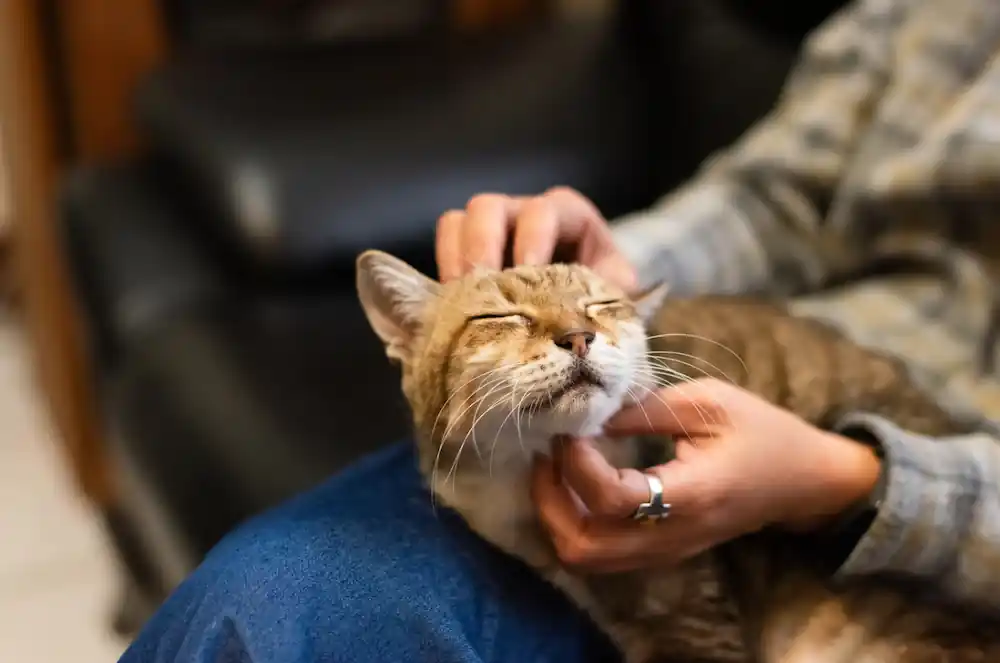
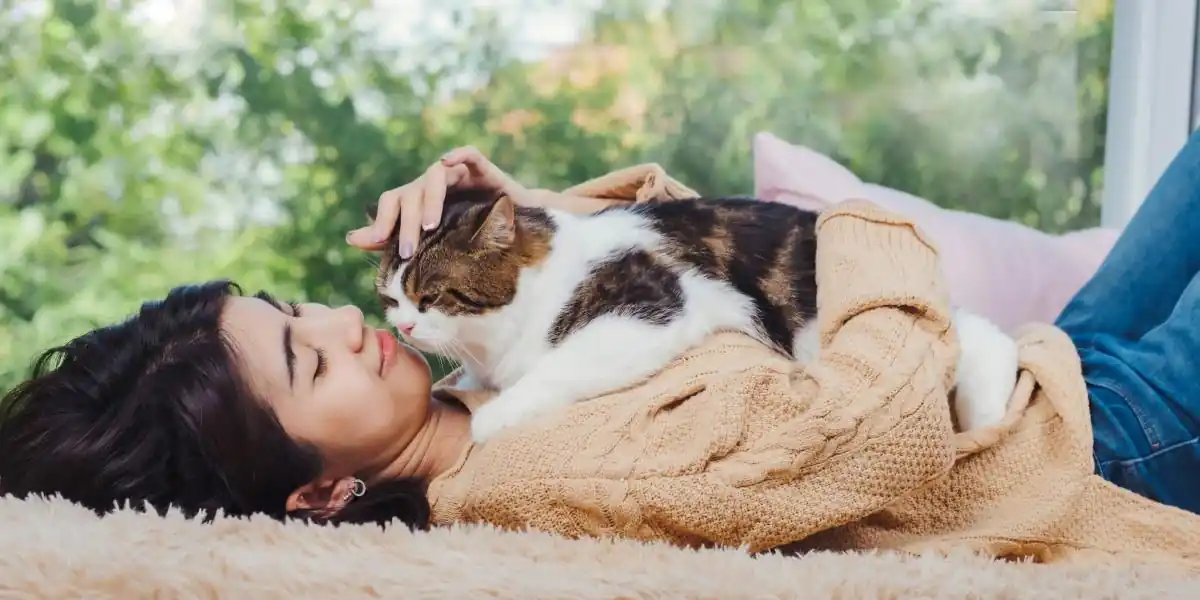
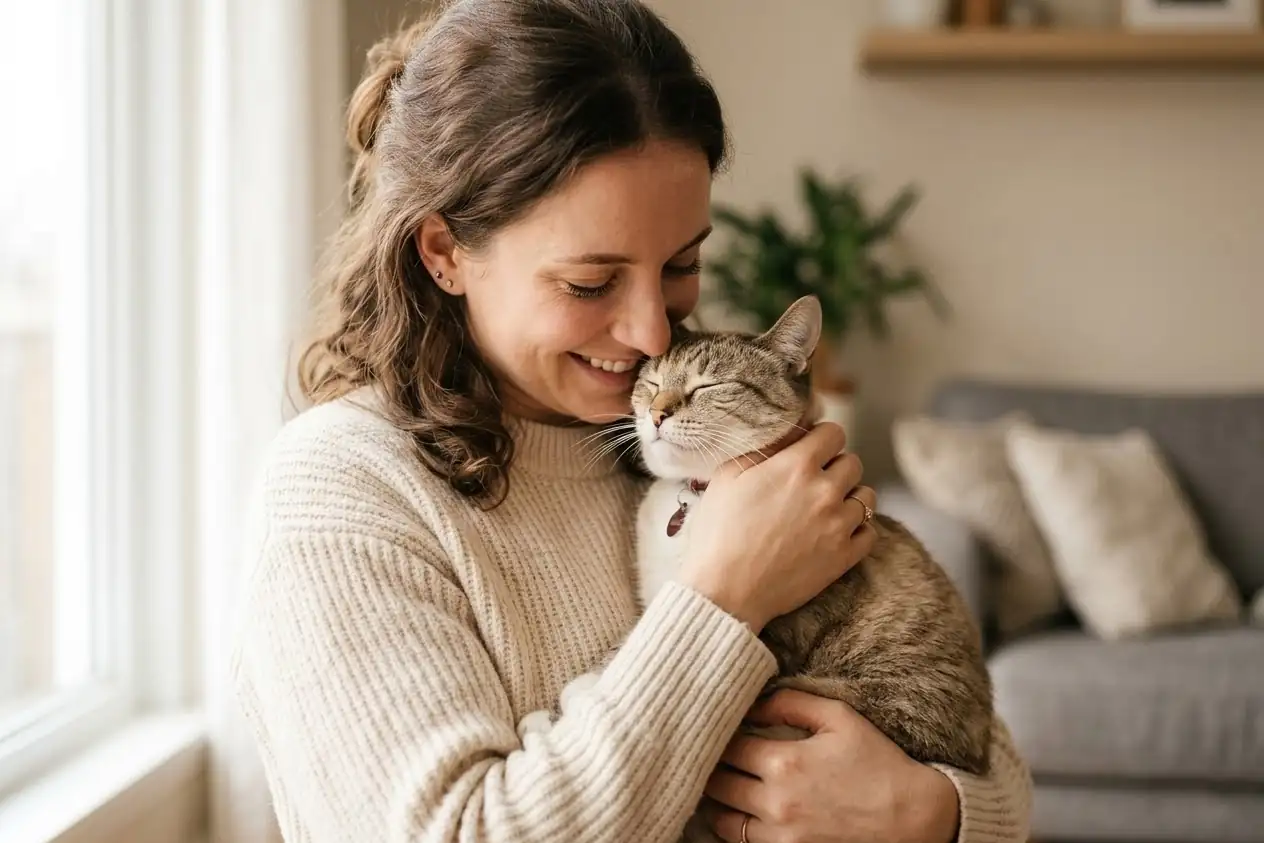
Cats get extra cuddly when they feel safe and bonded—but also when they’re cold, stressed, hormonal, or seeking comfort. Most of the time it’s perfectly normal. If the clinginess is sudden and comes with changes like weight loss, increased thirst, litter box issues, or nonstop vocalizing, it’s worth calling your vet.
In this guide, you’ll learn the most common reasons cats become more affectionate, the sweetest signs of trust, and a simple checklist to tell “normal cuddles” from potential red flags.
Table of Contents
Key Takeaways
- Most cuddly cats are showing trust: bonding, safety, and routine are top reasons.
- Common triggers: colder temps, schedule changes, stress, heat cycles, and mealtime learning.
- Sudden clinginess can be a clue: watch for weight loss, thirst changes, appetite shifts, litter box changes, or unusual vocalizing.
- Breed and kitten socialization matter, but any cat can become affectionate with patient handling.
- Use the checklist in this article to decide whether to enjoy the snuggles—or book a vet visit.
Decision Tool: Why Is My Cat So Cuddly? Is Normal?
Use this 30-second check. Start at Step 1 and follow the “If yes →” line.
Step 1 — Did something “normal” change recently?
If YES, it’s often normal—go to Step 3.
If NO, go to Step 2.
Common normal triggers
- Weather/temperature changed (colder season, stronger AC, drafty room)
- You returned from travel or your schedule shifted
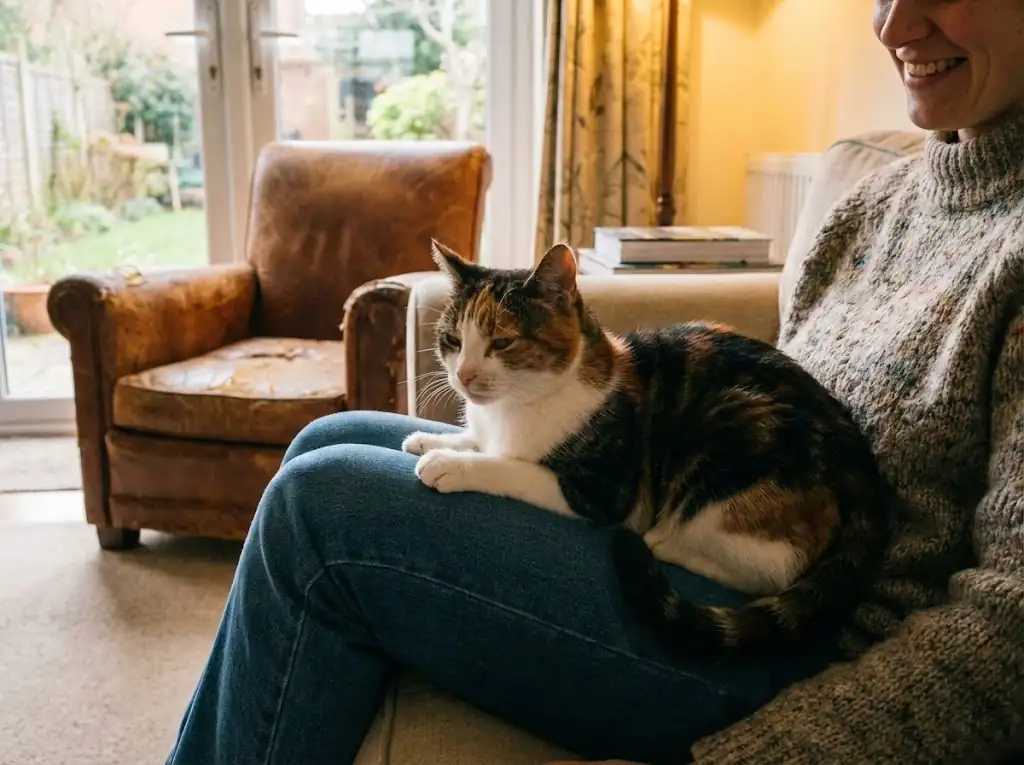
- Your cat gets cuddly mainly when you’re still (couch/bedtime)
- Cuddles increase around meals or treats (learned routine)
- Household change (guests, noise, new smell/cleaner) without other symptoms
Step 2 — Are there any red-flag changes along with the cuddles?
If YES, contact your vet (same day if severe).
If NO, go to Step 3.
Red flags to watch for
- Weight loss, reduced appetite, or sudden appetite increase
- Increased thirst or more frequent urination
- Vomiting or diarrhea that keeps happening
- Litter box changes (straining, accidents, going outside the box)
- Hiding more than usual, limping, or pain when touched/picked up
- Confusion/disorientation (especially in older cats)
- Nonstop yowling or unusual vocalizing (especially new for your cat)
Step 3 — What to do next (based on what you found)
If Step 1 was YES and Step 2 was NO:
Enjoy the snuggles and support comfort:
- Keep routines steady (meals, play, sleep)
- Add a warm option (heated bed/blanket) and a quiet safe spot
- Add two short play sessions daily (5–10 minutes)
If Step 1 was NO and Step 2 was NO:
Monitor closely for new symptoms:
- Track eating, drinking, and litter box habits for a few days
- If your gut says “this isn’t normal,” call your vet anyway
If Step 2 was YES:
Call your vet and mention: “Sudden increase in cuddling + these changes…” (list the symptoms)
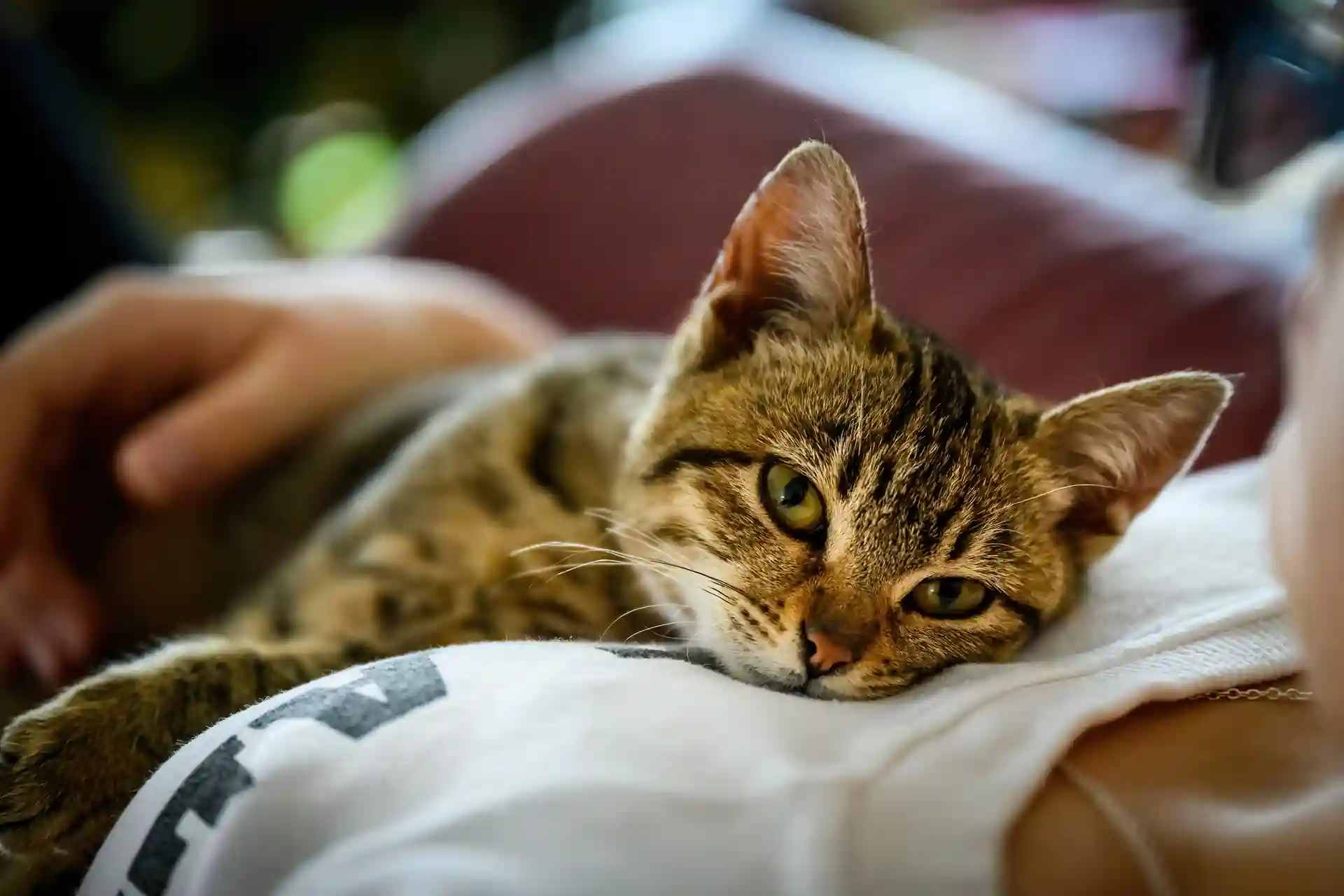
How Cats Whisper “I Love You” in Their Own Furry Way
Cats show affection in subtle, repeatable ways. If you learn the signals—and respond in ways your cat finds safe—you’ll usually see more calm, confident cuddles over time.
Here are some classic ways our cats express their adoration—watch for these to feel even more connected:
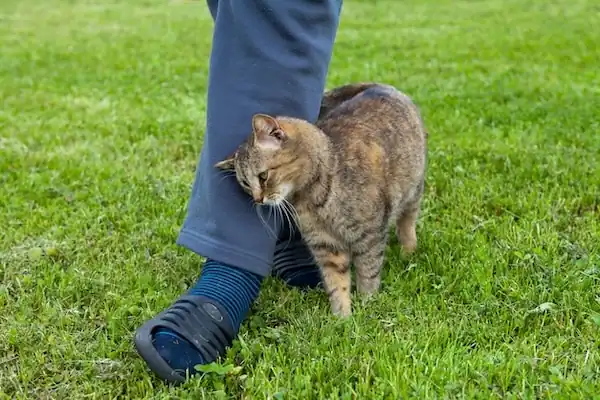
- Rubbing and Arching: That leg weave or cheek press? It’s scent-marking you as family, a ultimate trust signal.
- Vocal Vibes: Meows, purrs, or those adorable trills are their love language, often ramping up when you’re home.
- Touchy-Feely Moments: Paw pats or headbutts invite pets, showing they’re craving your gentle strokes.
- Shadowing Shenanigans: Trailing you room to room? You’re their favorite adventure buddy.
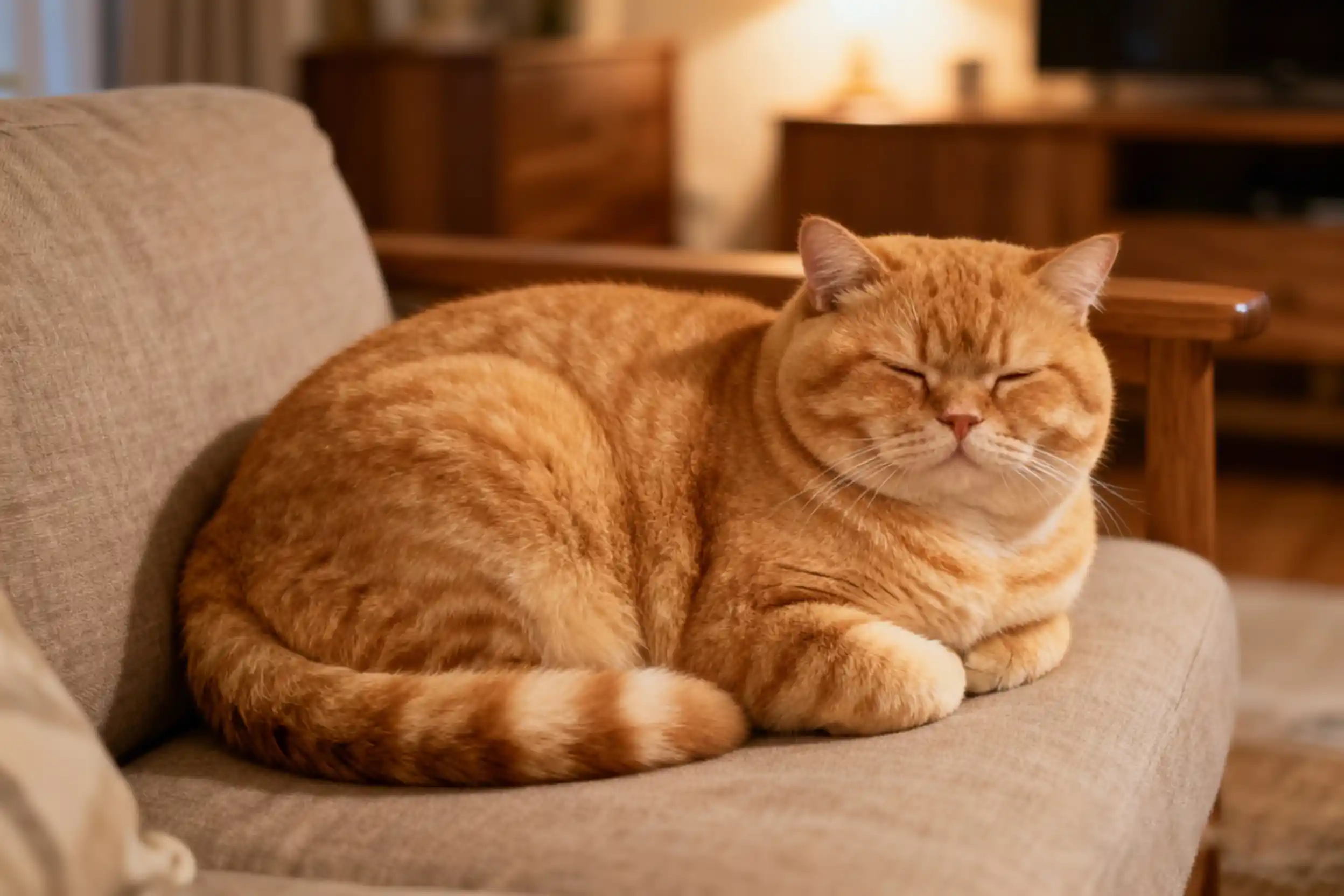
- Cozy Companionship: Lounging beside (or boldly on) the couch or bed means they feel safe and cherished with you.
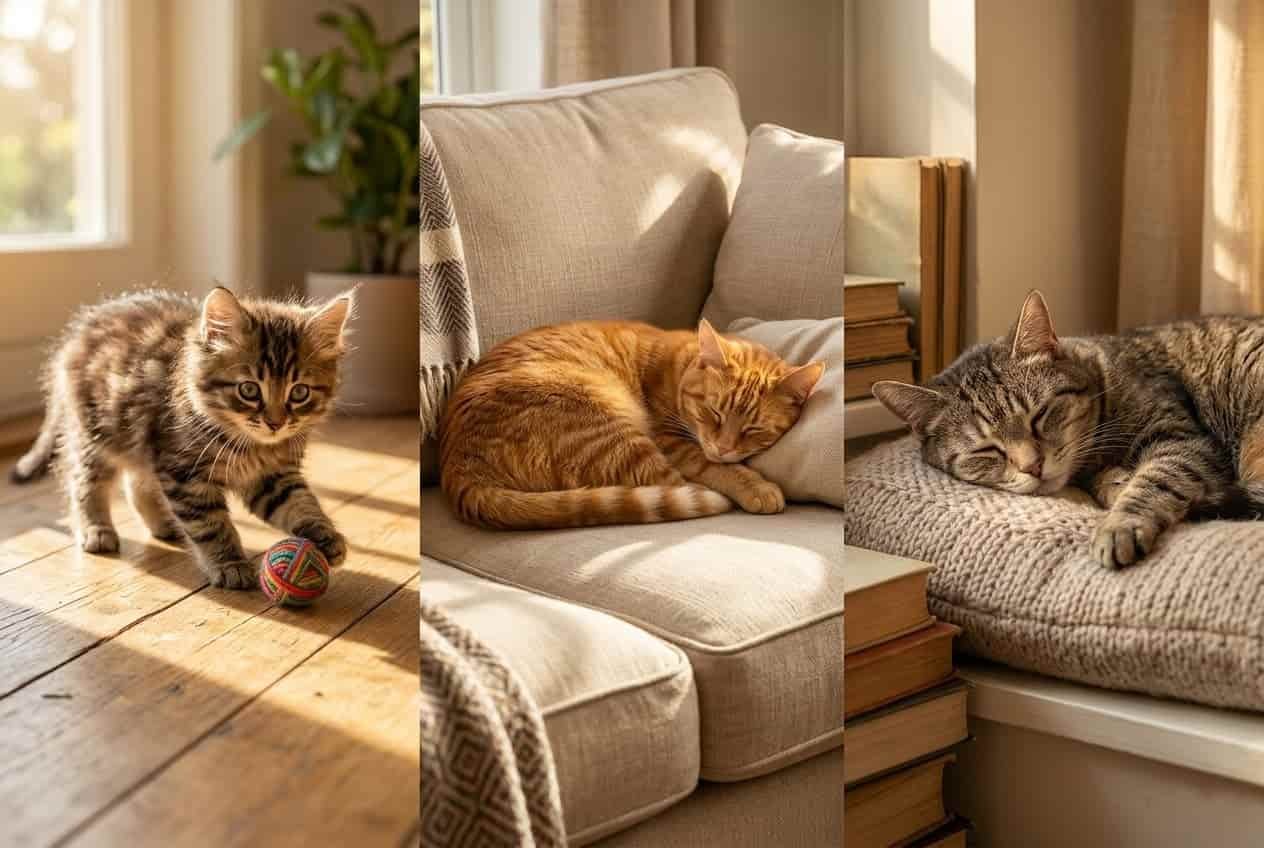
Quick fact: Many adult cats sleep about 12–18 hours a day, so calm nap-time proximity can be a normal “safe and cozy” bonding moment.
Watch: common signs of cat affection and what they mean.
Why Is My Cat Suddenly So Cuddly or Clingy? (Common Causes)
If your cat’s affection spikes overnight, it’s usually one of these:
1. You were gone—or your routine changed
What you’ll notice: shadowing, extra lap sits, more “check-ins.”
Try this today: keep routines steady for 2–3 days + add 1 extra short play session to help them decompress.
Escalate if: they also stop eating, hide more than usual, or vocalize nonstop.
2. They learned cuddling gets rewards
What you’ll notice: cuddles spike before feeding or treats.
Try this today: feed on schedule; give attention/treats after calm behavior, not during frantic meowing.
Optional: teach “sit on mat/blanket” → reward, so affection has a calm routine.
3. They’re cold (warmth-seeking)
What you’ll notice: more lap time, bed snuggles, seeking sunny spots/vents.
Try this today: add a warm bed/blanket near you; block drafts; keep a predictable cozy spot available.
Result: you keep the affection without creating clinginess that depends only on your lap.
4. Stress or environmental change
What you’ll notice: clinginess or hiding, jumpiness, less play, appetite shifts.
Try this today: reduce change where possible (quiet room, consistent feeding) + add hiding options (covered bed/box) + play gently to rebuild confidence.
Escalate if: stress signs last >48 hours or include litter box issues.
5. Hormones (especially in unspayed females)
What you’ll notice: rolling, rubbing, calling/yowling, restlessness, attention-seeking.
Try this today: keep indoors, add play to reduce agitation, and contact your vet to discuss spay timing.
Escalate if: appetite drops sharply or vocalizing becomes constant.
6. Less stimulation or loneliness
What you’ll notice: “Velcro cat” behavior during work hours, boredom meows, pestering at predictable times.
Try this today: 2 daily play sessions + rotate toys weekly + add puzzle feeding or scatter feeding.
Bonus: add vertical space (cat tree/perch) to increase confidence and reduce anxious attachment.
7. Aging and reassurance-seeking
What you’ll notice: more lap seeking, more sleep, occasional confusion, increased vocalizing at night.
Try this today: increase routine consistency + add night lights + keep food/water/litter easy to reach.
Escalate if: new yowling, litter changes, or noticeable weight change.
8. Discomfort or illness (worth ruling out)
What you’ll notice: clinginess plus any “not normal for your cat” change (eating, thirst, litter, hiding, pain).
Try this today: start a 24-hour notes log: appetite, water, pee/poop, vomiting/diarrhea, energy, vocalizing.
Escalate: if symptoms stack up, book the vet—clinginess can be comfort-seeking.
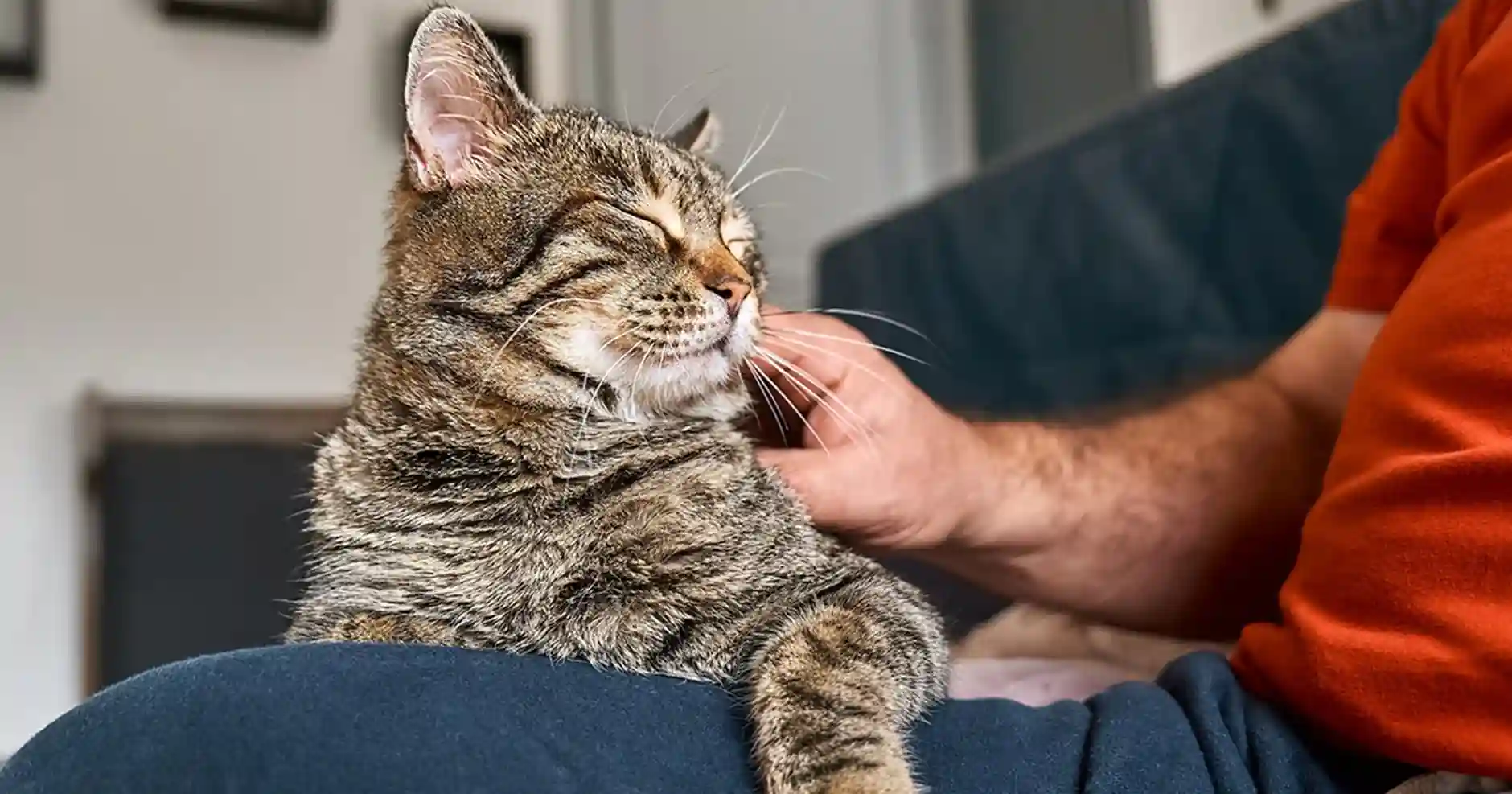
What Makes Some Cats More Affectionate? (Personality, Early Handling, and Genetics)
Early handling matters
Kittens that experience gentle, positive human handling during early development often grow into cats that seek human proximity more readily. Calm petting, respectful pickup practice, and positive play help build trust.
Personality + genetics matter too
Cats vary widely: some are naturally people-oriented, others are “nearby but not on you.” A cat can be deeply bonded while still preferring short contact bursts. Instead of chasing a “cuddly type,” focus on building predictable, positive interactions (play → treat → calm downtime).
Genetics and early handling can interact. A classic study found that kittens with friendlier fathers and kittens that received early gentle handling were more likely to show friendly behavior toward people later on—suggesting both inherited temperament and early experience matter.
Home setup can amplify clinginess
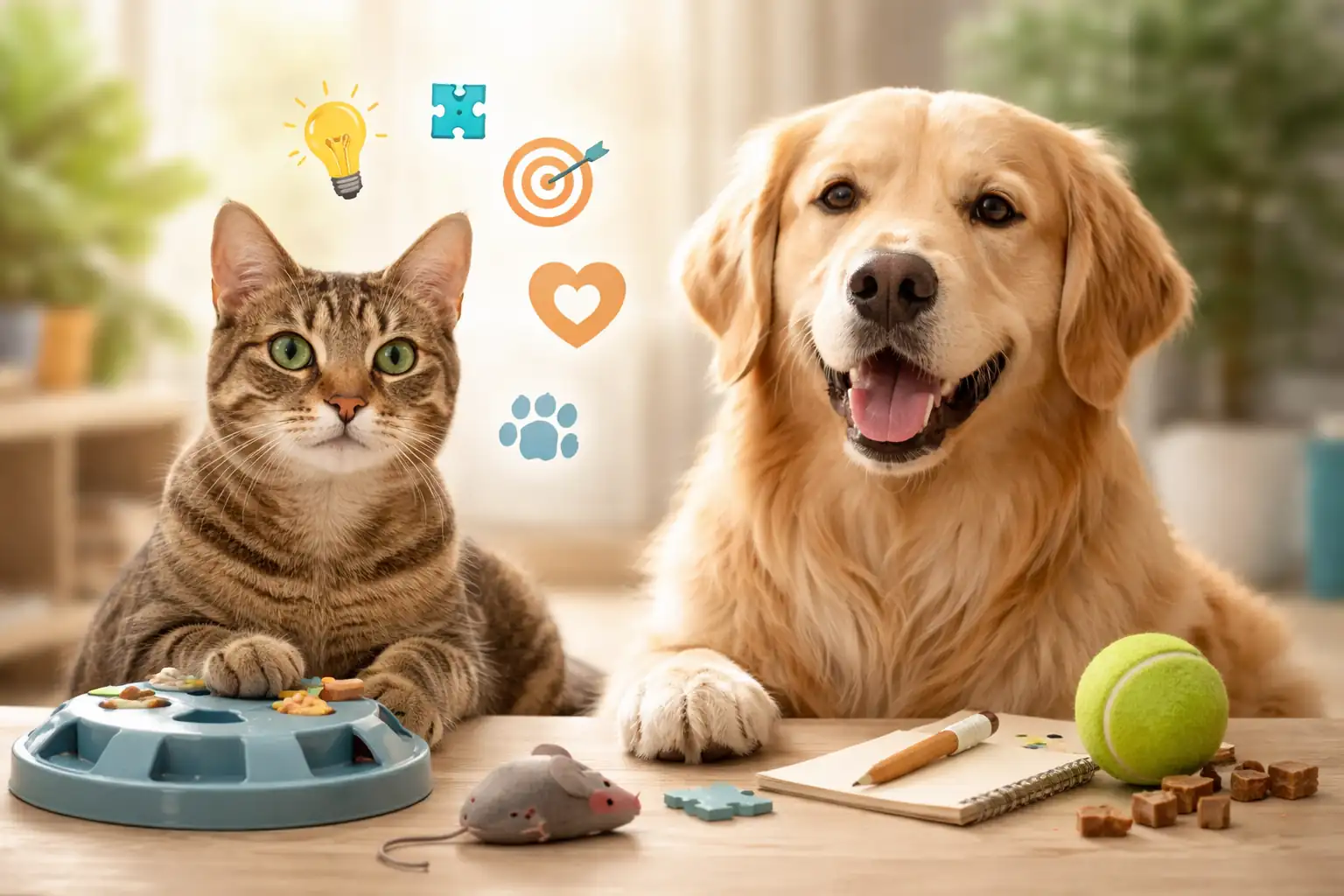
Single cats, bored cats, or cats without predictable enrichment may rely more heavily on their human for stimulation. Adding climbing spots, puzzle feeders, and two short daily play sessions can reduce anxious clinginess while preserving healthy affection.
Starter kit: one perch, one puzzle feeder, one daily wand-toy routine, and one quiet hide spot—these four changes often reduce anxious clinginess while keeping affection healthy.
Breeds That Crave Your Lap
If breed plays into your cat’s lovebug status, you might have one of these attention-loving lines. These varieties were bred for companionship, blending stunning looks with a knack for melting hearts. Here’s a roundup of top clingy cat breeds, complete with why they’re pet-parent favorites:
- Siamese: Vocal virtuosos who chat all day and shadow you like a furry detective—ideal for chatty households.
- Ragdolls: Named for their floppy, relaxed cuddles; they go limp in your arms, pure bliss for lap lovers.
- Persians: Plush and pampered, these gentle giants prefer serene snuggles over wild antics.
- Balinese: Sleek Siamese cousins with a silky coat and endless devotion, always up for a stroke session.
- Tonkinese: Playful hybrids (Burmese-Siamese mix) that blend energy with affection, perfect for active families.
- Himalayans: Colorpoint Persians with a calm, loving vibe—think luxurious lounging on your chest.
Pro Tip: No matter the breed, every cat’s unique. If you’re eyeing adoption trends, check out local shelters for these gems—mixes often surprise with extra sweetness.
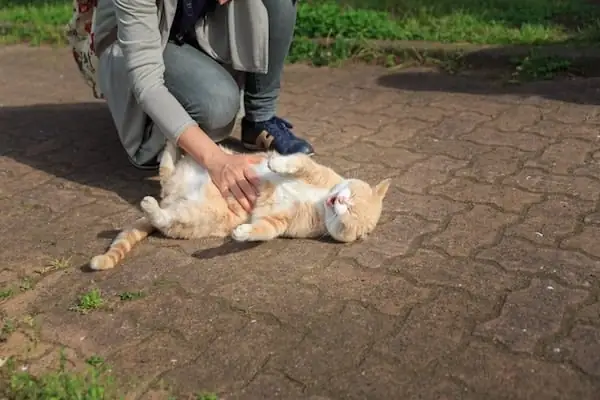
Decoding the Snuggle Surge: Everyday Reasons Your Cat’s Extra Lovey
One day your cat’s independent, the next they’re glued to your side—what gives? Sudden affection spikes are usually harmless (and heartwarming), but tuning into the “why” helps you respond with empathy. Common culprits include:
The Welcome Wagon Effect
If you’ve been away from home for an extended period—whether for a work trip, vacation, or other commitments—your cat is likely to show heightened affection toward you in the days following your return.
This sweet display of attachment can manifest in various endearing ways: they might trail closely behind you from room to room, weaving between your legs as you move about, or let out soft, insistent meows that feel like gentle calls for your attention.
Some cats may also press their bodies against yours, rub their cheeks on your hands, or even curl up beside you more often than usual, as if making up for the time you spent apart by staying as close as possible.
Mealtime Magic
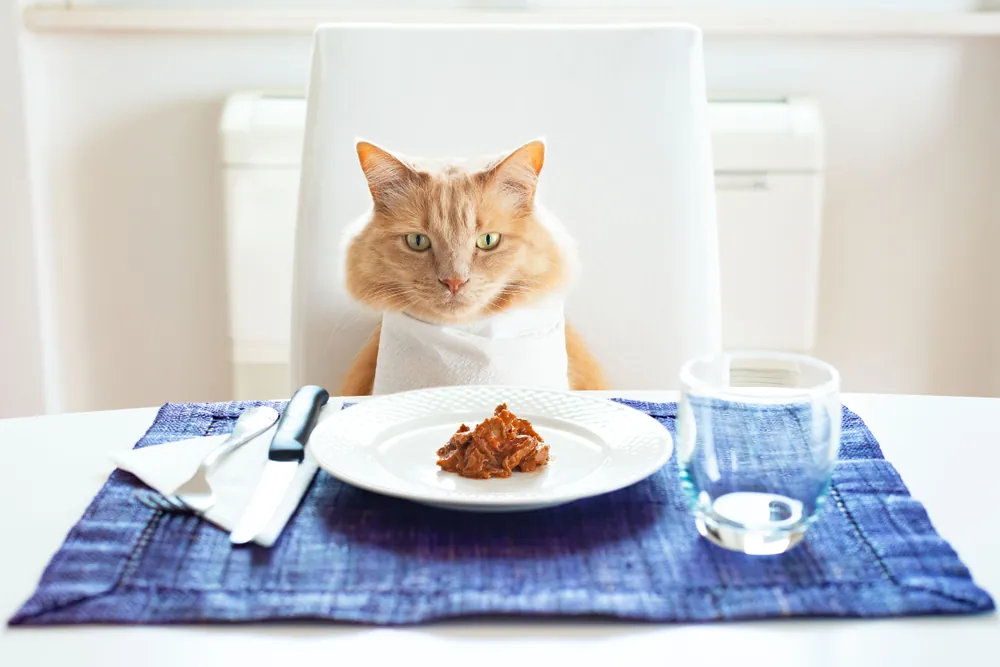
Many felines display remarkable levels of warmth and affection when mealtime rolls around.
Driven by their natural hunger cues, these clever creatures have gradually figured out that certain actions—like letting out soft or insistent meows, nuzzling your hands or legs gently, or rubbing their bodies against you repeatedly—are highly effective at getting their human companions to serve up their favorite food during those regular daily windows.
Over time, this behavior becomes a learned routine: they associate the anticipation of eating with interacting with you in these affectionate ways, turning mealtime into not just a feeding ritual but also a sweet moment of connection between cat and owner.
Seasonal Shifts
Female cats that haven’t been spayed tend to show noticeably increased affectionate tendencies when they enter their heat cycle.
This surge in loving behavior isn’t limited to a single target — it often extends to their human caregivers, whether that means extra headbutts, persistent purring, or seeking constant physical contact.
Additionally, these affectionate gestures may also be directed toward other animals in the home, such as fellow cats, dogs, or even smaller pets, as the hormonal changes during heat drive them to seek connection and interaction with those around them.
When Cuddles Are a Red Flag (When to Call the Vet)
Extra affection alone is usually harmless. The concern is cuddling + other changes.
Quick check: Normal vs. Vet Visit
| If you notice… | This may be… | What to do |
|---|---|---|
| Cuddly mostly when it’s cold or you’re sitting still | Warmth + opportunity | Add a heated bed/blanket and keep routines steady |
| Cuddly after you return from being away | Reconnection behavior | Give calm attention + short play sessions |
| Cuddly around meal times | Learned food association | Feed on schedule; reward calm behavior, not frantic meowing |
| Sudden clinginess + appetite change | Stress or medical issue | Monitor for 24 hours; call if persistent beyond 24–48 hours or if any additional red-flag symptom appears. |
| Cuddly + weight loss, thirst increase, vomiting/diarrhea | Possible illness | Vet visit ASAP |
| Cuddly + hiding, litter box changes, pain signals | Possible pain/discomfort | Vet visit ASAP |
Signs it’s time to book a vet appointment
- Your intuition says “this isn’t my cat’s normal”
- Big changes in eating or drinking
- Weight loss or belly bloating
- Litter box changes (frequency, accidents, straining)
- New hiding, aggression, or unusual restlessness
- Excessive vocalizing (especially in older cats)
- Vomiting/diarrhea that doesn’t resolve quickly
How Can I Get a Cuddly Cat?
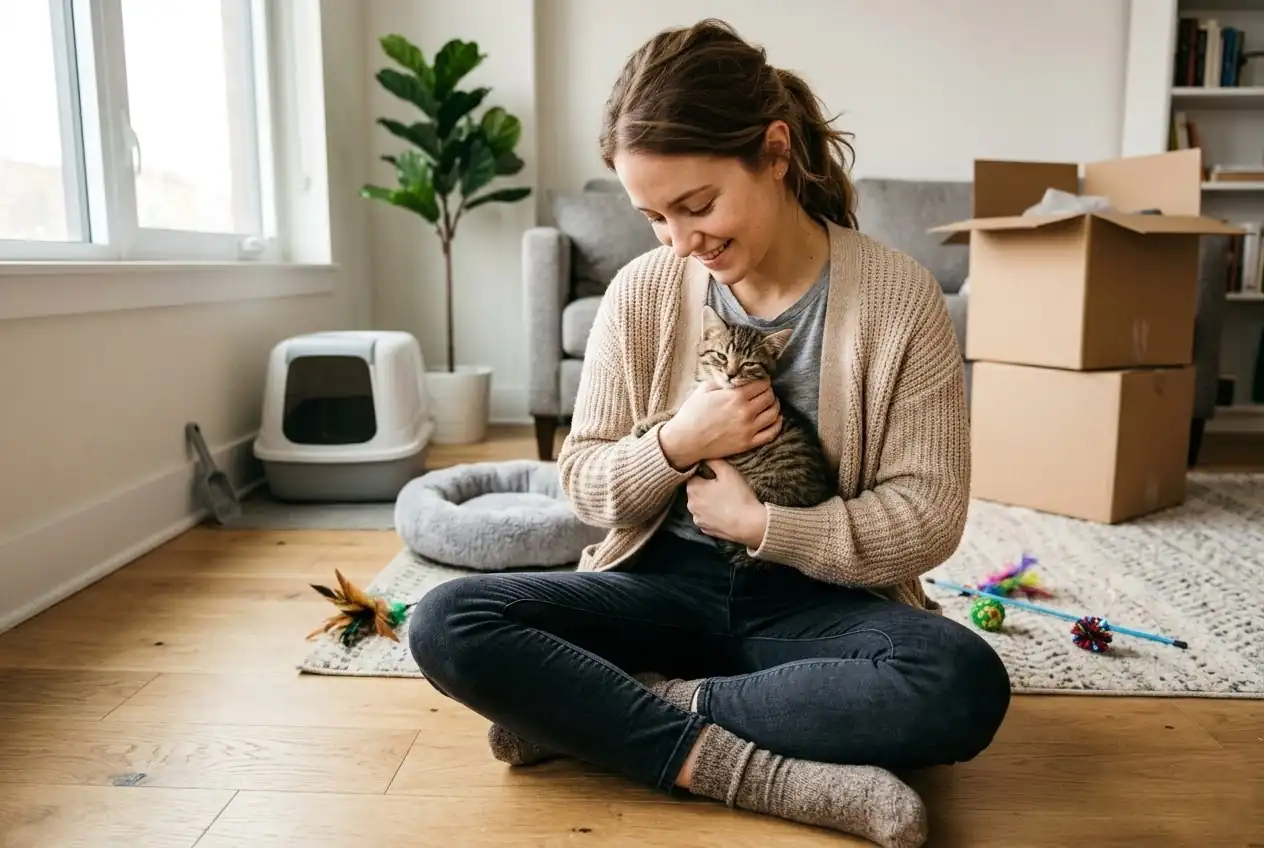
When bringing a kitten into your home, there’s no sure way to predict just how cuddly they’ll become as an adult — but investing in thoughtful, consistent socialization from an early age lays a strong foundation for them to develop into a friendly, well-adjusted companion.
A cat’s willingness to snuggle and engage in physical affection as they mature is also shaped significantly by how you interact with and handle them day-to-day.
This includes respecting their personal space instead of forcing contact, allowing them to initiate interactions on their own terms, and ensuring any kids in the household learn to handle the kitten gently, without pulling tails, grabbing paws, or overwhelming them.
All of these practices play a key role in fostering trust and comfort, which in turn boosts the chances that your cat will actively seek out interaction and cuddles with you.
Adopting a cuddly adult cat
It’s truly impossible to foresee a cat’s exact demeanor once they join your household, but opting for an adult cat—whose temperament is fully formed—could be a wise choice. Adult cats who show cuddly behavior in a shelter or their prior living situation are far more prone to being affectionate with you too.
When you visit a shelter cat, signs like them winding around your feet, jumping onto your lap, or nuzzling your head are strong clues that you’re interacting with a loving feline.
A number of shelters now use the ASPCA’s Meet Your Match Feline-ality Adoption Program. This research-backed initiative pairs cats with distinct personalities with adopters whose own traits and lifestyles align best with theirs.
Cats aged 9 months and older go through an evaluation process. This assessment helps forecast how each cat will likely act in their new home. There are nine distinct Feline-alities: from the energetic “Party Animal” and “Leader of the Band” to the companionable “Sidekick” and “Personal Assistant,” who thrive on being around their humans.
If a cuddly companion is what you’re after, the “Love Bug” Feline-ality is worth considering—these are lap cats that adore being petted, love to purr, and cherish time spent together.
Why Is My Cat Cuddlier at Night?
Many cats get more affectionate at night because:
- You’re finally still: Calm humans are easier to cuddle than moving targets.
- Warmth: Your bed is the warmest, softest spot in the house.
- Routine: Cats love predictable patterns—bedtime becomes “together time.”
- Crepuscular energy: Many cats are most active around dawn/dusk, then settle into contact rest.
If night clinginess becomes disruptive
- Avoid reinforcing midnight meowing with immediate feeding
- Add a 10–15 minute play session 1–2 hours before bed
- Feed a small scheduled bedtime meal (if it fits your feeding plan)
- Provide a cozy alternative: a warm bed near you (or a heated pad made for pets)
Night plan (simple):
Play 10–15 minutes in the evening → 2. small meal → 3. lights dim → 4. warm bed near you.
Cherish and Care for Your Cat’s Love
Your cat’s cuddly quirks? They’re a testament to the deep, trusting bond you’ve built—one that outshines any aloof stereotype.
From genetic gifts to learned loyalties, affection in cats is as varied as their purrs, but always rooted in feeling safe with you.
Key takeaway: Lean into the love with daily rituals like brush sessions or window perches, but stay vigilant for changes. Your furry family member deserves the best, and spotting the sweet from the serious keeps tails (and hearts) high.
FAQ
Are cuddly cats a sign of a strong bond?
Absolutely—it’s your cat’s way of saying you’re their safe haven. Reciprocate with calm pets to deepen that trust.
Why does my cat get extra clingy at night?
Nocturnal by nature, they sync with your wind-down routine. A single-cat home amps this; try bedtime toys for independent fun.
Can spaying change my cat’s affection levels?
Post-spay clinginess often ties to recovery discomfort—monitor for pain and consult your vet for meds if needed.
Is sudden affection ever a health red flag?
Yes, paired with symptoms like weight loss or thirst, it could signal issues like diabetes. A check-up ensures it’s just love.
How can I encourage more cuddles from a shy cat?
Start slow with treats during quiet times and respect their space—patience turns wallflowers into lap cats.
References
McCune, S. (1995). The impact of paternity and early socialisation on the development of cats’ behaviour to people and novel objects. Applied Animal Behaviour Science.
Cats Protection: kitten socialisation period guidance.
Cornell Feline Health Center: diabetes signs (thirst/urination, weight loss)
Cornell Feline Health Center: hyperthyroidism signs
MSD Veterinary Manual: hyperthyroidism (vocalization, weight loss, etc.)
VCA Animal Hospitals: diabetes signs
Cat sleep time ranges (12–18 hours/day)
Early socialization window research context (2–7 weeks estimate)
Paternity + socialization effects study (classic cat friendliness paper)

 EN
EN DE
DE ES
ES PT
PT