
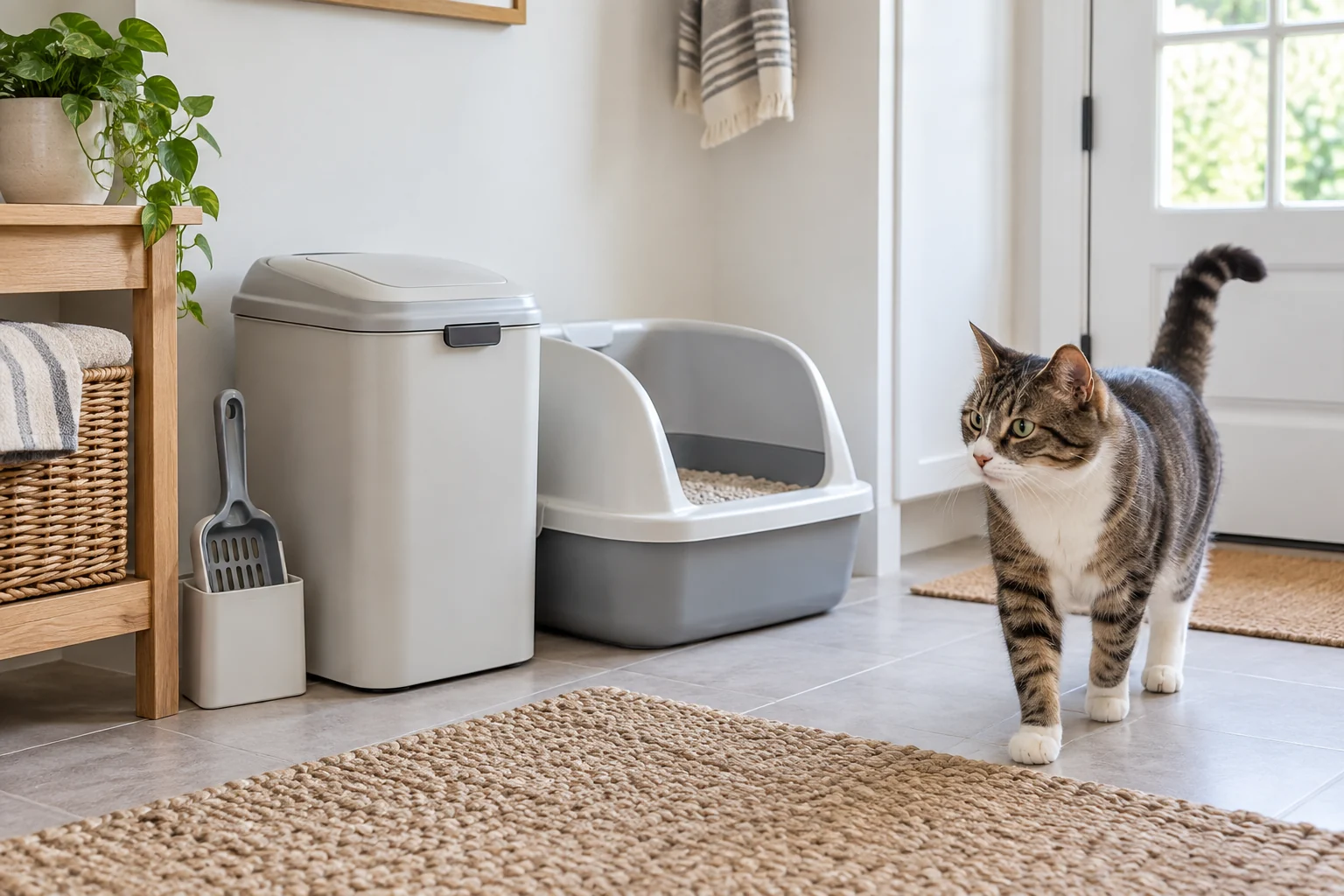
A sealed cat litter waste bin is worth choosing when daily scooping still leaves the litter area smelling stale, but the best bin is not the one with the strongest fragrance. Choose a tight-sealing, easy-to-line, easy-to-empty container that lets you remove waste quickly every day without placing perfumed products near your cat's bathroom.
Think of the bin as part of the cleaning routine, not a magic odor machine. Cats are sensitive to smell, and litter box comfort depends on clean boxes, predictable access, and low-stress surroundings. If the whole litter area smells even after scooping, start with SnuggleSouls' guide to reducing cat litter area smell without scented products, then use this article to choose a better waste container.
Índice
- Why does a separate waste bin matter?
- What features actually control cat litter waste bin odor?
- What size bin works for one cat or multiple cats?
- Which liners are easiest to use and least smelly?
- Where should the waste bin go?
- How often should you empty the waste bin?
- How do you keep the area around the bin clean?
- What should you avoid when buying a litter waste bin?
- Conclusion: Choose containment, not cover-up
- Preguntas frecuentes
- Referencias
Why does a separate waste bin matter?
A separate waste bin matters because scooped litter is heavy, damp, and odor-producing, and carrying it through the house after every scoop makes the routine harder to keep. A small sealed bin beside the litter area can make daily scooping faster, which is good for both your home and your cat.
The real win is consistency. The ASPCA advises removing solid waste from the litter box at least once a day and notes that cats may avoid a messy, smelly box 1. Its litter box behavior guidance is even more direct: cats like clean boxes, and scooping or changing litter daily can help make the box more appealing 2.
The bin should support that habit. If it is easy to open, scoop into, close, and empty, you are more likely to scoop before odor builds. If it is awkward, flimsy, or too far from the box, it quietly trains everyone in the household to delay the job.
A sealed waste bin is most useful when:
- you scoop once or twice daily but dislike carrying waste to an outdoor trash can each time;
- the litter box is on an upper floor, basement level, or far from the kitchen trash;
- you have more than one cat and clumps collect quickly;
- you want guests, sitters, or family members to follow the same routine;
- you need a tidy spot for bags, liners, and the scoop without using scented sprays.
The goal is simple: scoop promptly, seal the waste, empty it before it gets overloaded, and keep the litter box itself clean.
What features actually control cat litter waste bin odor?
Odor control comes from sealing, airflow control, liner fit, and frequent emptying. Fragrance can hide smell for a short time, but it should not be the main feature because strong scents near the litter box may bother some cats.
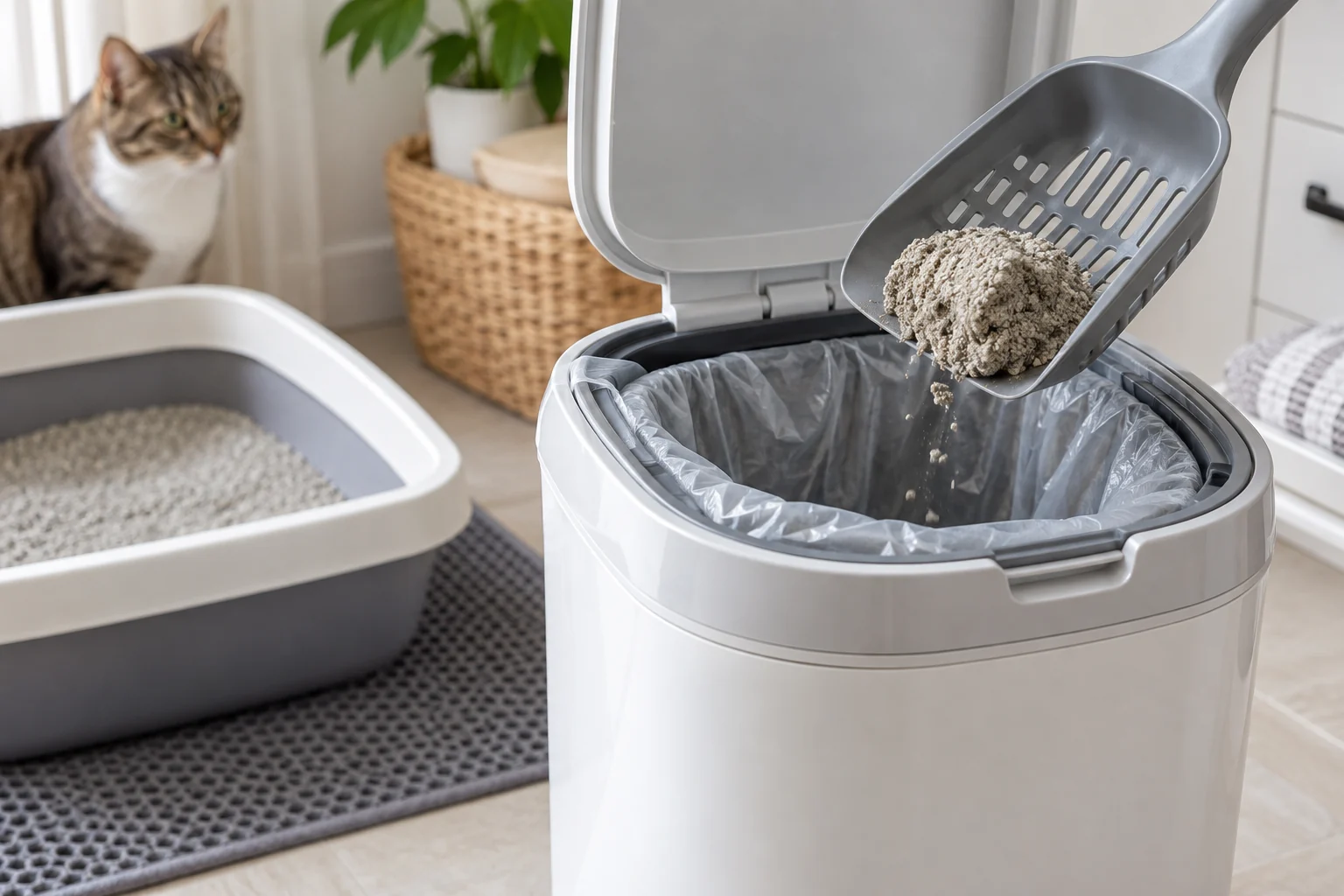
Look first at the lid. A good cat litter waste bin should close firmly after every scoop. Step pedals can help if they close smoothly and completely, but a simple flip lid can work if it seals well. The lid should not stay cracked open because the liner bunches under the rim.
Next, inspect the rim and liner channel. The bag should sit snugly enough that scooped clumps do not fall between the liner and the bin wall. If waste misses the liner, the bin itself starts to smell even when you change bags.
Useful features include:
| Feature | Por qué es útil | What to check before buying |
|---|---|---|
| Tight lid or gasket | Reduces odor escaping between scoops | Lid closes fully with a liner installed |
| Smooth interior | Easier to wipe if dust or clumps escape | No deep grooves that trap litter |
| Stable base | Prevents tipping when you scoop quickly | Bin does not wobble when opened |
| Removable inner bucket | Makes cleaning and liner changes easier | Bucket lifts out without spilling |
| Simple liner system | Keeps refills affordable and available | Works with standard bags if possible |
| Scoop holder | Keeps the scoop off the floor | Holder can be cleaned separately |
VCA's house-soiling guidance stresses that litter boxes should be kept clean and that strong cleaners or lingering odors can contribute to aversion for some cats 3. That same principle applies around the waste station. A bin that contains odor physically is usually a better choice than one that depends on perfume.
What size bin works for one cat or multiple cats?
Choose the smallest bin that holds your household's scooped waste between planned emptying times. Oversized bins seem convenient, but they can encourage waste to sit too long. A tiny bin can be annoying if it overfills before the day is done.
For one healthy adult cat using clumping litter, a small sealed pail is usually enough if you empty it every few days or sooner when odor appears. For two or more cats, choose a larger bin only if the lid still seals tightly and the liner can be tied off before it is packed down.
The right size also depends on litter depth, box count, and clump volume. If you are not sure whether your litter box has too much or too little litter, use SnuggleSouls' guide to how much cat litter to use as a companion. Deep litter can create larger, heavier clumps; shallow litter may leave more wet residue in the box.
Use this practical sizing guide:
| Household | Good starting point | Emptying rhythm |
|---|---|---|
| One cat, one box | Small sealed pail | Every 2-3 days, or sooner if odor appears |
| One cat, multiple boxes | Small or medium pail | Every 1-3 days depending on clump volume |
| Dos gatos | Medium sealed pail | Daily to every 2 days |
| Three or more cats | Medium pail or separate pails by area | Daily, with more frequent resets if odor builds |
| Senior, ill, or monitored cat | Small pail plus daily review | Daily so changes in urine or stool are easier to notice |
If your cat's urine clumps suddenly become much larger, smaller, blood-tinged, unusually frequent, or paired with straining, do not treat the bin as the problem. Changes in litter box output can signal health issues, and a veterinarian should guide the next step.
Which liners are easiest to use and least smelly?
The easiest liner is the one that fits the bin, stays under the rim, resists punctures, and ties closed without forcing you to touch the waste. Fancy refill systems are helpful only if they are affordable and easy to keep in stock.
For many households, standard small trash bags work well in a smooth lidded pail. Dedicated refill cartridges can be neater, but they may cost more and lock you into one brand. Biodegradable bags sound appealing, but some are thinner or less moisture-resistant, so test them carefully before trusting them with damp clumps.
Prioritize these liner traits:
- strong enough for heavy clumps;
- wide enough to fold securely around the rim;
- tall enough to tie without overfilling;
- unscented or very low odor;
- easy to remove without scraping against the lid hardware;
- readily available for the bin size you choose.
Avoid confusing waste-bin liners with litter box liners. Some cats dislike box liners in the actual litter box, and the ASPCA's behavior guidance lists removing covers and liners from all litter boxes as one troubleshooting step when a cat is eliminating outside the box 2. A waste-bin liner is different because it is inside the trash pail, not under your cat's paws.
If you are testing a new waste bin, do a one-week liner trial before buying refills in bulk. Scoop normally, change the liner at your planned interval, and check whether the bag sags, tears, traps odor, or blocks the lid from sealing.
Where should the waste bin go?
Place the waste bin close enough that scooping is easy, but not so close that it blocks your cat's entry, exit, or turning space. Your cat should be able to use the litter box without squeezing past a pail, hearing a lid slam, or feeling cornered.
Start with the full litter station. SnuggleSouls' La mejor configuración para la bandeja sanitaria del gato guide covers size, placement, and cleaning rhythm; the waste bin should support that setup instead of crowding it. If you are deciding between covered vs uncovered litter boxes, keep the waste bin decision separate. A covered litter box changes the cat's bathroom experience; a sealed trash pail should sit beside the routine without changing the box itself.
Good locations are usually:
- beside the litter mat, not on the mat where your cat steps;
- near the scoop holder, so the job takes one short motion;
- away from food and water bowls;
- out of narrow doorways and escape routes;
- on a washable floor surface;
- close enough for the caregiver, not intrusive for the cat.
Watch your cat for the first few days. If the pail makes them pause, sniff nervously, detour, or rush out of the box, move it farther away. Litter stations work best when the cat feels they can enter, eliminate, cover, and leave without interruption.
How often should you empty the waste bin?
Empty the waste bin before it smells when closed, before the liner becomes heavy, and before anyone is tempted to press waste down to make more room. For many homes, that means every day to every few days, even if the bin is not full.
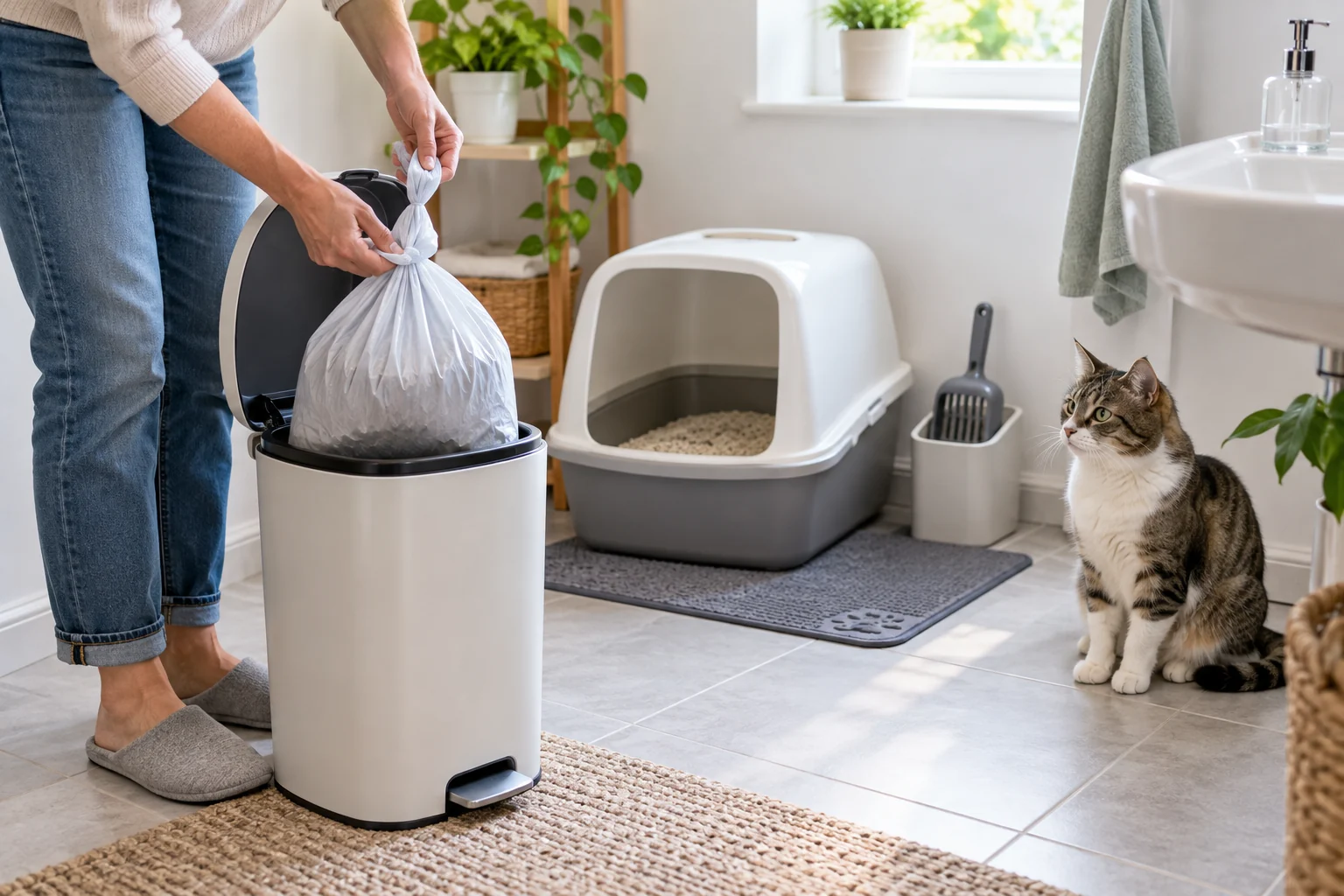
Daily scooping still matters more than bin capacity. The AAFP/ISFM house-soiling guidelines note that a cat's preference may be influenced more by regular cleaning than by whether the litter box is covered 4. VCA similarly recommends cleaning boxes daily, removing stool and moist urine areas, and avoiding strong residual odors 3.
Use SnuggleSouls' full guide on how often to clean a litter box for the box schedule. For the waste bin, use this simpler rule:
| Signal | What it means | Qué hacer |
|---|---|---|
| Odor escapes when lid is closed | Seal, liner, or timing is not enough | Empty now; check lid and liner fit |
| Lid no longer closes easily | Bag is too full or liner is blocking the rim | Tie off and reset |
| Waste is heavy or damp | Bag may tear during removal | Empty sooner next time |
| Dust or clumps fall outside liner | Liner is too small or slipping | Clean bin and change liner style |
| Cat avoids the nearby area | Bin may be too close, noisy, or smelly | Move bin and reset cleaning schedule |
There is also a household-health reason not to let litter waste sit. The CDC recommends changing the litter box daily as part of toxoplasmosis prevention and advises gloves and handwashing for people who must change cat litter, especially when pregnant or immunocompromised 5. A sealed pail can contain waste between trips to the trash, but it should not become long-term storage.
How do you keep the area around the bin clean?
Keep the area around the bin clean by controlling dust, wiping the bin rim, cleaning the scoop holder, and removing litter tracked near the pail. If the waste bin looks tidy but the floor around it holds damp litter, odor will still build.
After each scoop, check three spots:
- The rim: did any clumps touch the lid, hinge, or liner edge?
- The floor: did litter fall between the box and pail?
- The scoop holder: is damp litter stuck inside the slots or bottom?
Wipe only with cat-safe, unscented cleaning methods appropriate for the surface, and let the area dry before your cat uses it. The ASPCA warns against ammonia, deodorants, and scents, especially lemon, when cleaning litter boxes 1. Strong-smelling cleaning products near the waste station can undo the whole point of choosing an odor-conscious setup.
If the pail sits near a mat, add mat care to the routine. SnuggleSouls' guide to how to clean a cat litter mat can help you separate trapped litter dust from true odor problems. A mat full of damp granules can make a clean bin seem like the source of smell.
Weekly, do a quick reset:
- remove the liner;
- inspect the inside bucket for escaped litter;
- wipe the rim, pedal, lid edge, and scoop holder;
- let removable parts dry fully;
- replace the liner so the lid closes flush;
- sweep or vacuum the surrounding floor.
If the empty bin still smells after cleaning, the plastic may be holding odor. At that point, replacing the bin may be more effective than adding stronger fragrances.
What should you avoid when buying a litter waste bin?
Avoid any waste bin that solves your problem by creating a new problem for your cat. The bin should make scooping easier without adding noise, fragrance, clutter, or blocked access.
Be cautious with:
- heavily scented liners or deodorizer pods;
- lids that slam, squeak, or startle the cat;
- bins that tip when the pedal is pressed;
- narrow openings that make scooping messy;
- complicated refill systems that caregivers avoid using;
- bins so large they encourage waste to sit too long;
- open baskets or decorative containers that do not seal;
- rough interiors that trap damp litter;
- pails placed where a cat has to squeeze around them.
The best choice often looks boring: smooth plastic or metal, tight lid, stable base, washable bucket, unscented liner, and a size that matches your real emptying habit. If your household has a cat sitter, choose a system a new person can understand in ten seconds.
For multi-cat homes, remember that a waste bin is only one part of the bathroom system. If one box smells or one cat guards the route, more sealing will not fix the behavior. Keep box access, number of boxes, cleanliness, and placement in the plan.
Conclusion: Choose containment, not cover-up
A good sealed cat litter waste bin controls odor by making daily scooping easy and physically containing waste until you take it out. Choose a tight lid, stable base, smooth interior, practical liner, and a size that pushes you toward frequent emptying instead of delayed cleaning.
Skip strong fragrances and focus on the routine your cat actually benefits from: clean litter, open access, safe placement, and a calm area that does not smell like perfume or stale waste. For more household setup help, browse the SnuggleSouls Guías de cuidados diarios.
Preguntas frecuentes
Is a diaper pail safe to use for cat litter waste?
A diaper pail can work if it seals well, uses sturdy unscented liners, and is easy to clean. Avoid scented cartridges if the smell spreads into the litter area, and make sure the opening is wide enough that scooped clumps do not hit the rim.
Should I use scented liners for cat litter waste?
Unscented liners are usually the safer first choice. Strong scents can make the litter area less appealing to some cats, and odor is better controlled by sealing, frequent emptying, and cleaning escaped litter from the bin rim.
Can I keep the waste bin right next to the litter box?
You can keep it nearby, but leave enough space for your cat to enter, turn, dig, cover, and exit normally. If the bin crowds the box, blocks a route, or makes your cat hesitate, move it farther away.
How do I stop the bin itself from smelling?
Use a liner that fits, empty it before it is packed full, and wipe the rim, lid, pedal, and inner bucket regularly. If clean plastic still holds odor, the bin may need replacement.
Should cat litter waste go in the kitchen trash?
It is usually better to keep scooped litter waste in a dedicated sealed pail near the litter area, then tie it off and take it to the household trash or outdoor bin according to your local waste rules. Keep it away from food preparation areas.
Referencias
[1] ASPCA. (n.d.). General Cat Care. ASPCA General Cat Care
[2] ASPCA. (s. f.). Problemas con la bandeja sanitaria. ASPCA Litter Box Problems
[3] VCA Animal Hospitals. (n.d.). Cat Behavior Problems: House Soiling. VCA Cat Behavior Problems: House Soiling
[4] American Association of Feline Practitioners and International Society of Feline Medicine. (2014). Guidelines for Diagnosing and Solving House-Soiling Behavior in Cats. AAFP/ISFM House-Soiling Guidelines
[5] Centers for Disease Control and Prevention. (2024). Preventing Toxoplasmosis. CDC Preventing Toxoplasmosis
 EN
EN DE
DE ES
ES PT
PT