
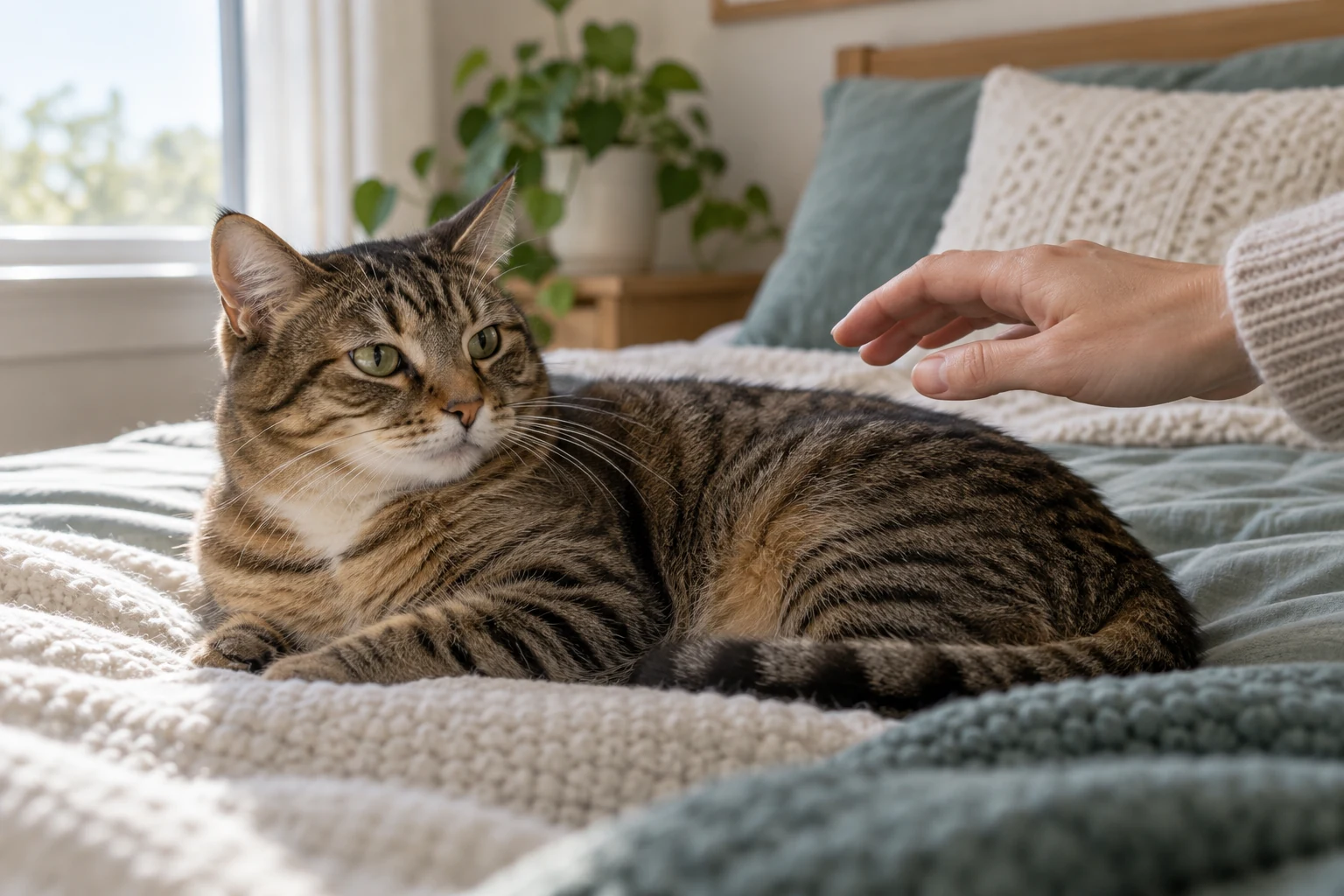
If your cat flinches when touched while sleeping, the most common explanation is a normal startle response: they were deeply relaxed, half-awake, or surprised by contact they did not see coming. It is worth paying closer attention if the flinch happens every time you touch one body area, comes with hissing or biting, or your cat seems painful, confused, stiff, weak, or unlike themselves afterward.
Sleeping cats are not ignoring you. They are in a vulnerable state, and a sudden hand can feel very different from the same petting when they are awake and inviting contact. The kindest next step is to stop touching first, wake them gently with your voice, then look for body-language and health clues before assuming it is a trust problem.
Índice
- Why does my cat flinch when touched while sleeping?
- How can you tell startle from fear or pain?
- What body language should you check before touching a sleeping cat?
- Could pain, skin sensitivity, or hyperesthesia be involved?
- When should you call a veterinarian right away?
- ¿Qué datos debes anotar antes de la visita al veterinario?
- How can you prevent sleepy-touch flinching at home?
- Conclusion: make sleepy touch predictable
- Preguntas frecuentes
- Referencias
Why does my cat flinch when touched while sleeping?
Your cat may flinch because touch arrived before their brain had time to identify who or what was nearby. Cats rely heavily on control, prediction, and choice during interactions, and cat-friendly handling guidance emphasizes reading the cat's current emotional state rather than assuming all touch is welcome 1.
A one-time flinch, quick head lift, or small shoulder jump is usually less worrying when your cat relaxes again, blinks softly, stretches, or goes back to sleep. That pattern fits surprise more than fear. It can happen if you touch from behind, touch a whisker or paw, brush against sensitive fur, or wake them during a dream-like sleep movement.
This topic is slightly different from why cats jerk awake suddenly. A spontaneous jerk can happen without anyone touching the cat. Touch-triggered flinching asks a more specific question: did your hand surprise your cat, or did contact reveal a sore or sensitive spot?
How can you tell startle from fear or pain?
Look at what happens before, during, and after the flinch. A normal startle is brief, proportional, and followed by recovery. Fear or pain tends to linger, repeat, or escalate.
| Lo que se nota | More likely explanation | ¿Qué hacer ahora? |
|---|---|---|
| One quick flinch, then your cat settles | Startle from unexpected touch | Wake with your voice before touching next time |
| Flinching only when you touch the back, hips, belly, tail base, or paws | Local soreness, skin sensitivity, arthritis, injury, or irritation | Avoid that spot and book a vet check if it repeats |
| Ears flatten, pupils widen, tail lashes, or your cat swats | Fear, overstimulation, or defensive communication | Stop touching and give space |
| Hissing, biting, crying, hiding, stiffness, or appetite change | Pain or significant stress is possible | Call your veterinarian |
| Collapse, paddling, loss of bladder or bowel control, prolonged confusion, or repeated episodes | Seizure-like or urgent neurological concern | Acude al veterinario de urgencia |
If your main concern is sleep movement without touch, compare this pattern with cat twitching in sleep y cat kicking while sleeping. Those guides focus more on dream-like movements, spasms, and when sleep activity crosses into warning-sign territory.
What body language should you check before touching a sleeping cat?
Before touching, check whether your cat looks loose, settled, and easy to wake. If they are tucked tightly, ears angled back, tail wrapped hard against the body, whiskers pushed forward or stiff, or eyes half-open in a tense way, let them sleep.
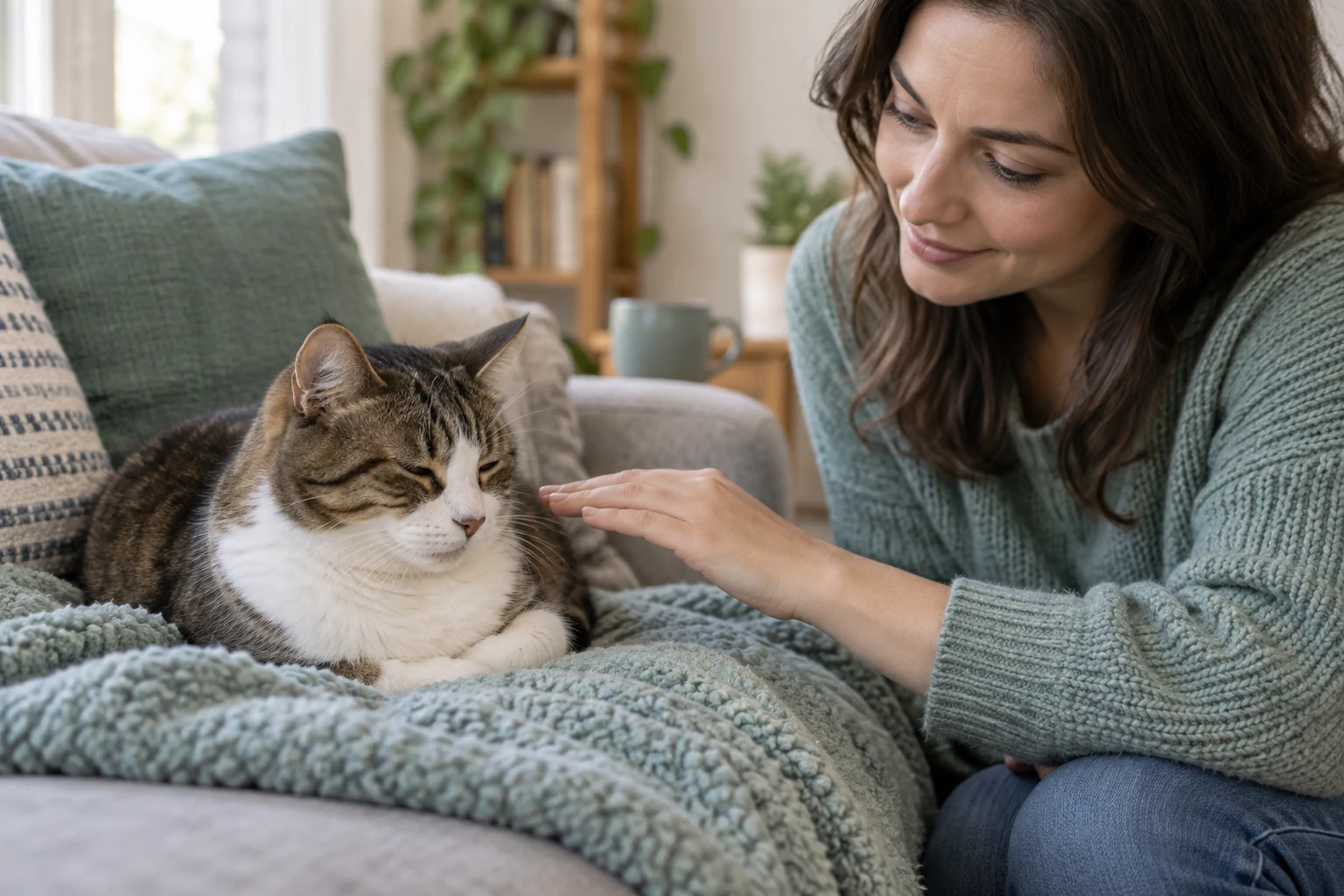
Try this safer sequence:
- Say your cat's name softly before reaching.
- Move your hand into their side vision rather than coming from behind.
- Pause a few inches away and let them sniff or ignore your hand.
- Touch the shoulder or cheek briefly if they lean in or stay loose.
- Stop after one or two strokes and see whether they ask for more.
This is not about making your cat "win." It is about making contact predictable. The 2022 AAFP/ISFM interaction guidelines describe cat-friendly interaction as understanding the cat's emotional state and giving the cat a perceived sense of control 1. At home, that can be as simple as giving a sleepy cat a second to wake up before your hand lands.
Could pain, skin sensitivity, or hyperesthesia be involved?
Yes, especially if the reaction is new, repeated, or tied to the same body area. Cats often hide pain, and International Cat Care notes that at-home pain clues can include changes in normal behavior, not wanting to be stroked or groomed, hiding, altered resting posture, reduced appetite, stiffness, and changes in facial expression 2.
Touch-triggered flinching can be associated with:
- A sore back, hips, neck, tail base, or joints
- Dental pain that makes head or cheek touching unpleasant
- Skin irritation from fleas, allergies, wounds, mats, or infection
- Arthritis, especially in older cats
- Stress that lowers tolerance for surprise contact
- Feline hyperesthesia-like sensitivity, especially around the back or tail base
Cornell Feline Health Center describes feline hyperesthesia as extreme skin sensitivity, often over the back near the tail, and notes that some cats react suddenly when petted in that area 3. That does not mean every flinch is hyperesthesia. It means repeated touch sensitivity deserves a veterinarian's eyes, because pain, skin disease, parasites, allergies, and neurological issues may need to be ruled out.
If your cat's face, posture, or habits have changed, use our guide to signos sutiles de dolor en los gatos as a companion checklist. If the reaction includes rippling skin, tail chasing, sudden biting at the back, or intense sensitivity near the tail base, read more about feline hyperesthesia syndrome and contact your vet rather than trying to solve it as a training issue.
When should you call a veterinarian right away?
Call a veterinarian promptly if the flinching is new, worsening, painful-looking, or paired with any broader illness sign. Seek urgent care if your cat has trouble breathing, collapses, cannot walk normally, has a seizure-like episode, repeatedly vomits, refuses food, cannot urinate, is exposed to a toxin, or declines quickly.
For this specific sleep-touch pattern, stronger vet-call clues include:
- Crying, growling, hissing, biting, or swatting when one body area is touched
- Limping, stiffness, reluctance to jump, or difficulty getting comfortable
- Hiding more than usual or avoiding family contact
- A matted, wounded, swollen, hot, or itchy area where they flinch
- Sudden aggression in a cat who normally enjoys petting
- Repeated flinching even when you wake them gently first
- Confusion, staring, drooling, paddling, urination, defecation, or collapse around an episode
VCA describes generalized seizure signs such as loss of consciousness, paddling or erratic muscle movement, urination or defecation, and post-episode confusion or unusual behavior 4. If you see those signs, do not put your hand in your cat's mouth. Move hazards away, time the episode, record video only if you can do so safely, and contact emergency veterinary care.
Touch-related biting can also be communication, not "meanness." If your cat warns, swats, or bites after being touched in sleep, pause and compare the episode with our guide to why cats bite when touched. Defensive bites are a signal to change the setup and check for discomfort.
¿Qué datos debes anotar antes de la visita al veterinario?
Track the pattern, not just the flinch. A short, calm record can help your veterinarian decide whether this looks like startle, pain, skin sensitivity, behavior, or a neurological concern.
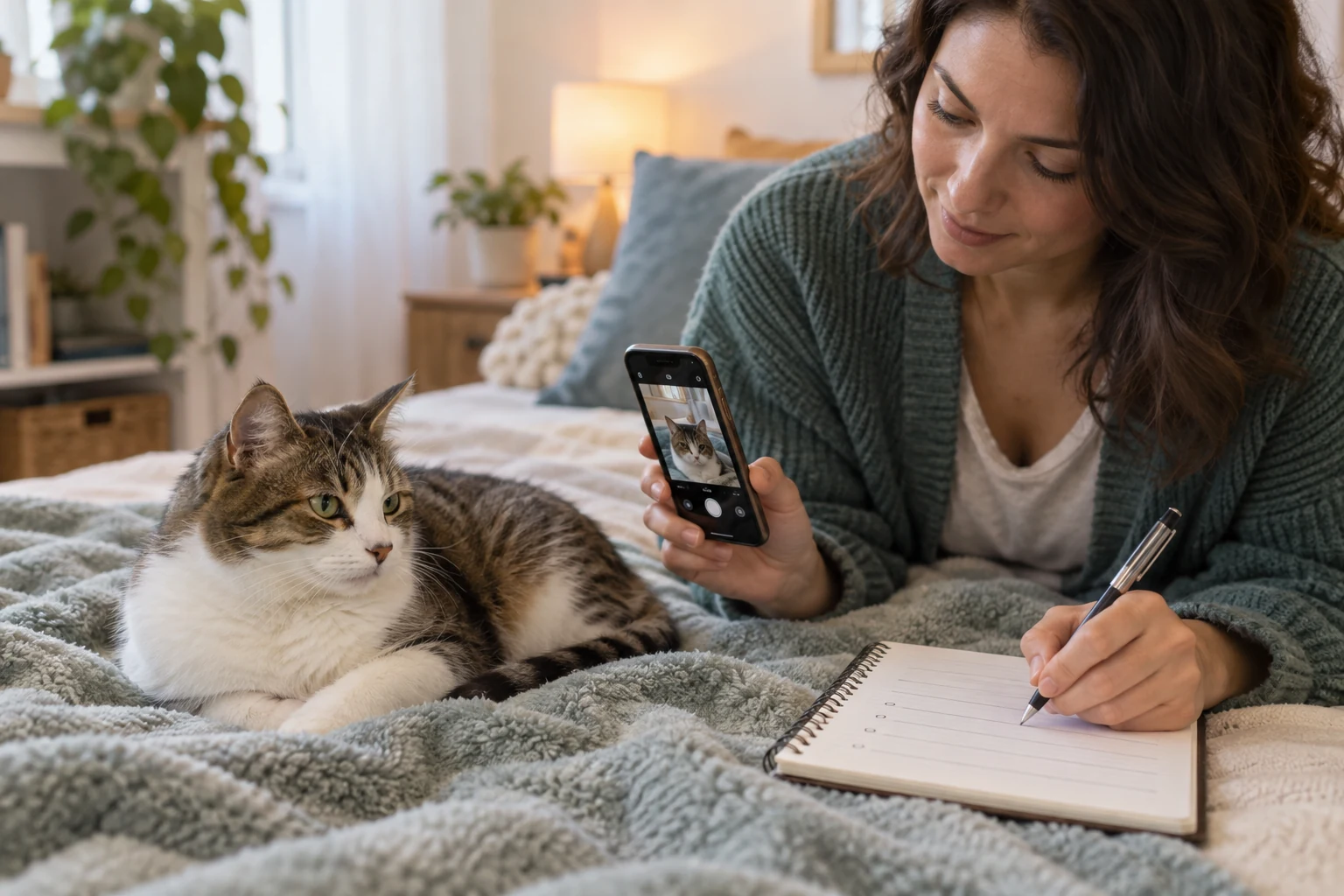
Write down:
- Date and time of the episode
- Where your cat was sleeping
- Whether you used your voice before touching
- Which body area you touched
- What the flinch looked like: jump, skin ripple, paw pull, hiss, bite, cry, or full-body movement
- How long it lasted
- How your cat behaved afterward
- Appetite, litter box use, jumping, grooming, play, and hiding changes
- Any recent falls, fights, flea problems, grooming mats, diet changes, medications, or stressful events
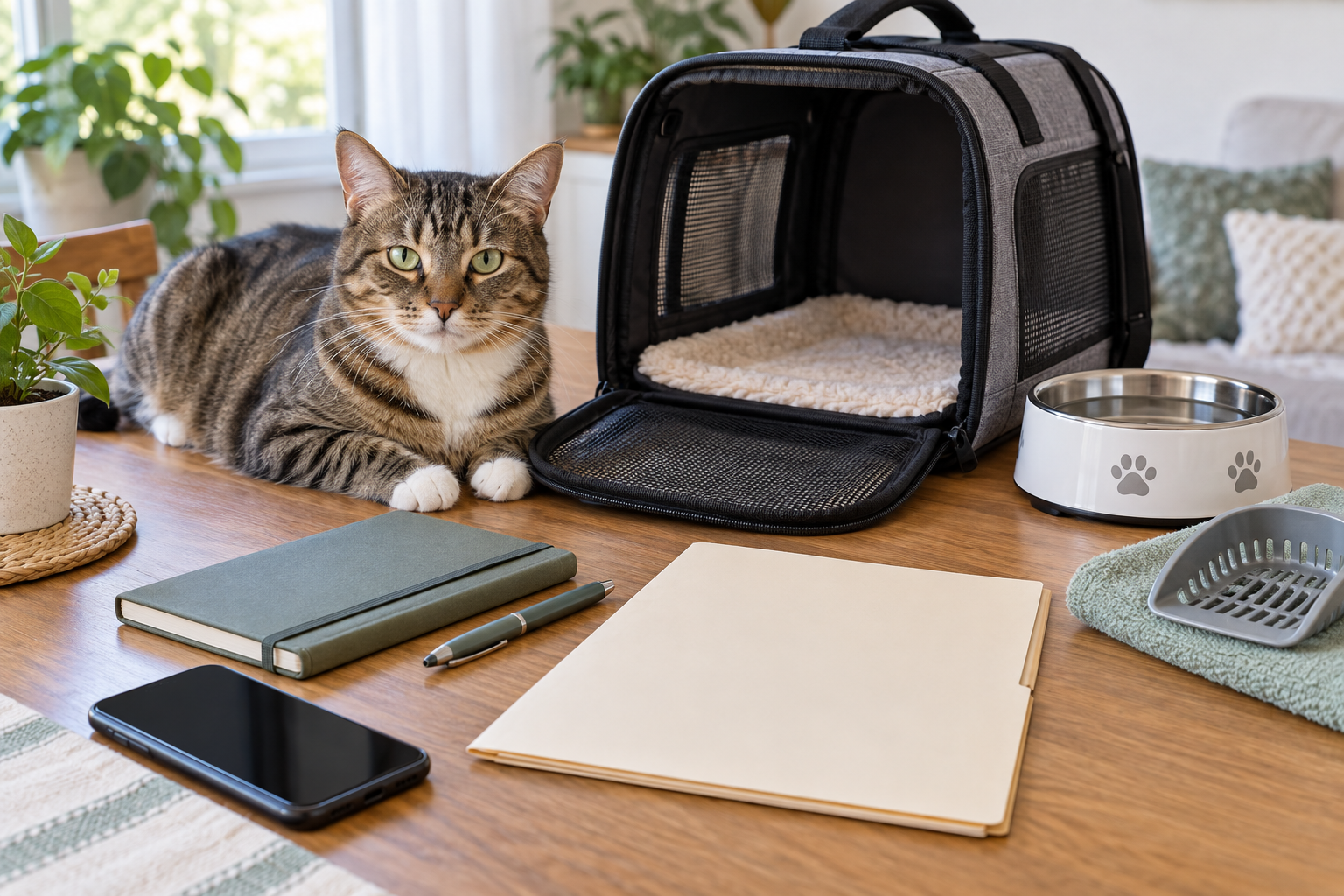
Video can be useful when it is safe and calm to record. Do not recreate the trigger repeatedly just to capture footage. One or two naturally occurring clips plus your notes are usually kinder and more helpful than testing the same sore or scary touch over and over.
How can you prevent sleepy-touch flinching at home?
Prevent it by making sleep a protected state. Give your cat resting spots where they are not grabbed, startled, or repeatedly interrupted. The AAFP/ISFM environmental guidelines emphasize that a healthy feline environment supports natural behavior, reduces stress, and improves welfare 5.
Simple changes often help:
- Avoid petting a deeply sleeping cat from behind.
- Wake with your voice before reaching.
- Teach children that sleeping cats get space.
- Keep favorite beds away from high-traffic doorways.
- Offer elevated beds, boxes, or quiet corners where your cat can opt out.
- Stop after brief contact instead of waiting for a swat or bite.
- Avoid touching known sensitive areas until your vet has checked them.
- Keep flea prevention, grooming, nail trims, and mat checks current.
If your cat now hides after being touched, treat that as information. Our guide to por qué se esconden los gatos can help you separate normal decompression from fear, pain, or illness clues.
The goal is not to stop all surprise forever. It is to show your cat that your hands are predictable, gentle, and easy to escape from. Cats who trust that they can say no often need fewer loud warnings.
Conclusion: make sleepy touch predictable
A cat who flinches when touched while sleeping is often simply startled, especially if they recover quickly and act normal afterward. Repeated flinching, touch sensitivity in one spot, aggression, hiding, stiffness, appetite change, or seizure-like signs deserves more caution.
Start with consent-based handling: wake your cat with your voice, pause before touching, and stop if their body says no. If the pattern is new, painful-looking, or escalating, record what you notice and call your veterinarian. That keeps the focus where it belongs: your cat's comfort, safety, and trust.
Preguntas frecuentes
Is it bad to pet my cat while they are sleeping?
It is not always bad, but it is easy to surprise a sleeping cat. Use your voice first, approach where your cat can see you, and stop if they tense, flinch, flatten their ears, or move away.
Why does my cat flinch only when I touch their back?
Repeated back or tail-base flinching can point to soreness, skin irritation, mats, flea sensitivity, stress, or hyperesthesia-like sensitivity. Avoid testing the area repeatedly and schedule a vet check if it is new, intense, or consistent.
Does flinching mean my cat does not trust me?
Not necessarily. A cat can trust you and still flinch when touched suddenly during sleep. Trust is built by making contact predictable, respecting refusals, and checking for pain if the reaction keeps happening.
Why does my cat bite after waking up?
Some cats bite because they were startled and are defending themselves before they fully orient. Biting can also happen when a touched area hurts or when earlier body-language warnings were missed. Stop touching, give space, and call your vet if the bite response is new or tied to one body area.
Should I wake my cat before petting them?
Yes, especially if your cat has flinched before. Say their name softly, let them notice your hand, and wait for relaxed body language before petting.
Referencias
[1] Feline Veterinary Medical Association. (2022). 2022 AAFP/ISFM Cat Friendly Veterinary Interaction Guidelines: Approach and Handling Techniques. FelineVMA
[2] International Cat Care. (2025). Cat Carer Guide: Acute Pain. Cuidado internacional de los gatos
[3] Cornell Feline Health Center. (2021). Síndrome de hiperestesia. Facultad de Veterinaria de la Universidad de Cornell
[4] VCA Animal Hospitals. (2026). Seizures and Epilepsy in Cats. VCA Animal Hospitals
[5] Feline Veterinary Medical Association. (2013). 2013 AAFP/ISFM Environmental Needs Guidelines. FelineVMA

 EN
EN DE
DE ES
ES PT
PT