
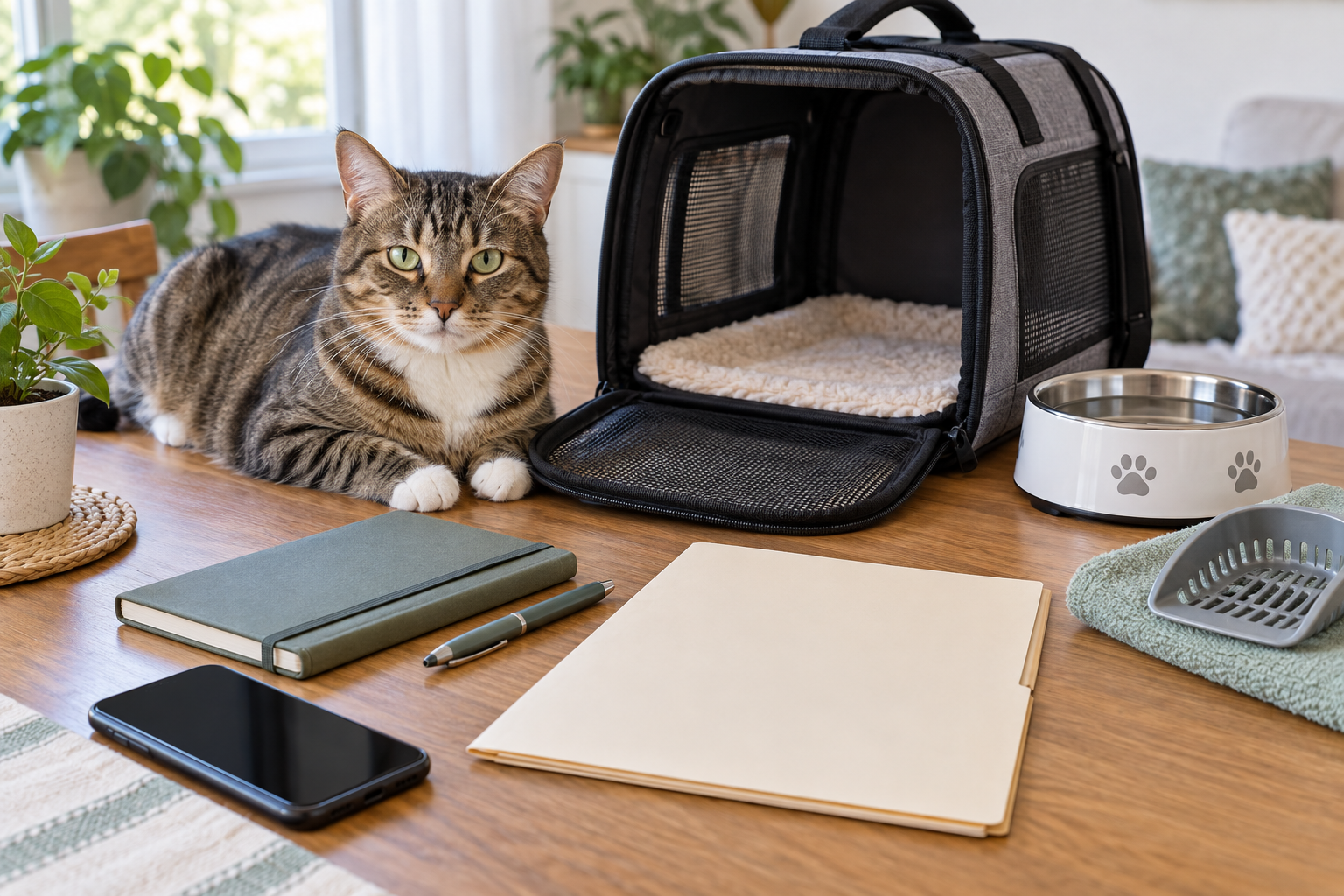
A cat urinary recheck visit is easier when you bring a concise log, key photos, medication notes, and focused questions for your veterinarian.
Your goal is not to diagnose a UTI, crystals, cystitis, kidney disease, or a blockage at home. It is to give your veterinarian clean information for the next decision.
Lower urinary tract signs can include frequent litter box trips, painful urination, blood in the urine, urinating outside the box, crying, licking, and producing little or no urine 1, 5. Because several conditions can look similar from the outside, a simple handoff packet is more useful than unfiltered notes.
Índice
- When is a urinary recheck urgent?
- What should you bring to a cat urinary recheck?
- How do you turn home logs into a useful summary?
- Which photos and videos help without overdoing it?
- Should you collect a urine sample at home?
- What questions should you ask the vet?
- How do you explain medications, diet, and household changes?
- What changes should you track after the appointment?
- Conclusion: A good recheck turns scattered worry into a plan
- Preguntas frecuentes
- Referencias
When is a urinary recheck urgent?
If your cat is straining and producing little or no urine, treat that as urgent and contact an emergency veterinarian now. Cornell describes urethral obstruction as an absolute emergency, and cats with obstruction may pass little or no urine while becoming increasingly distressed 1.
Do not wait for a scheduled recheck if your cat:
- Enters the litter box repeatedly but produces no normal urine clump
- Produces only drops, cries in the box, pants, collapses, or seems rapidly weaker
- Has a tense or painful belly
- Vomits, will not eat, or is not drinking with urinary signs
- Is a male cat with renewed straining after urinary treatment
- Recently had a urinary blockage and is not clearly passing urine
- Has blood in the urine plus repeated straining or obvious pain
In that situation, your notes can come with you, but they should not delay care. If your cat was already treated for obstruction, use SnuggleSouls' cat urinary blockage aftercare guide only after following your clinic's discharge instructions. If vomiting and poor drinking are part of the pattern, the guide to cat vomiting and not drinking water can help you describe dehydration clues.
What should you bring to a cat urinary recheck?
Bring a short written summary, your home log, two or three useful photos or videos, medication and diet details, and any sample your clinic specifically asked you to collect. The best packet answers "what happened since the last visit?" quickly.
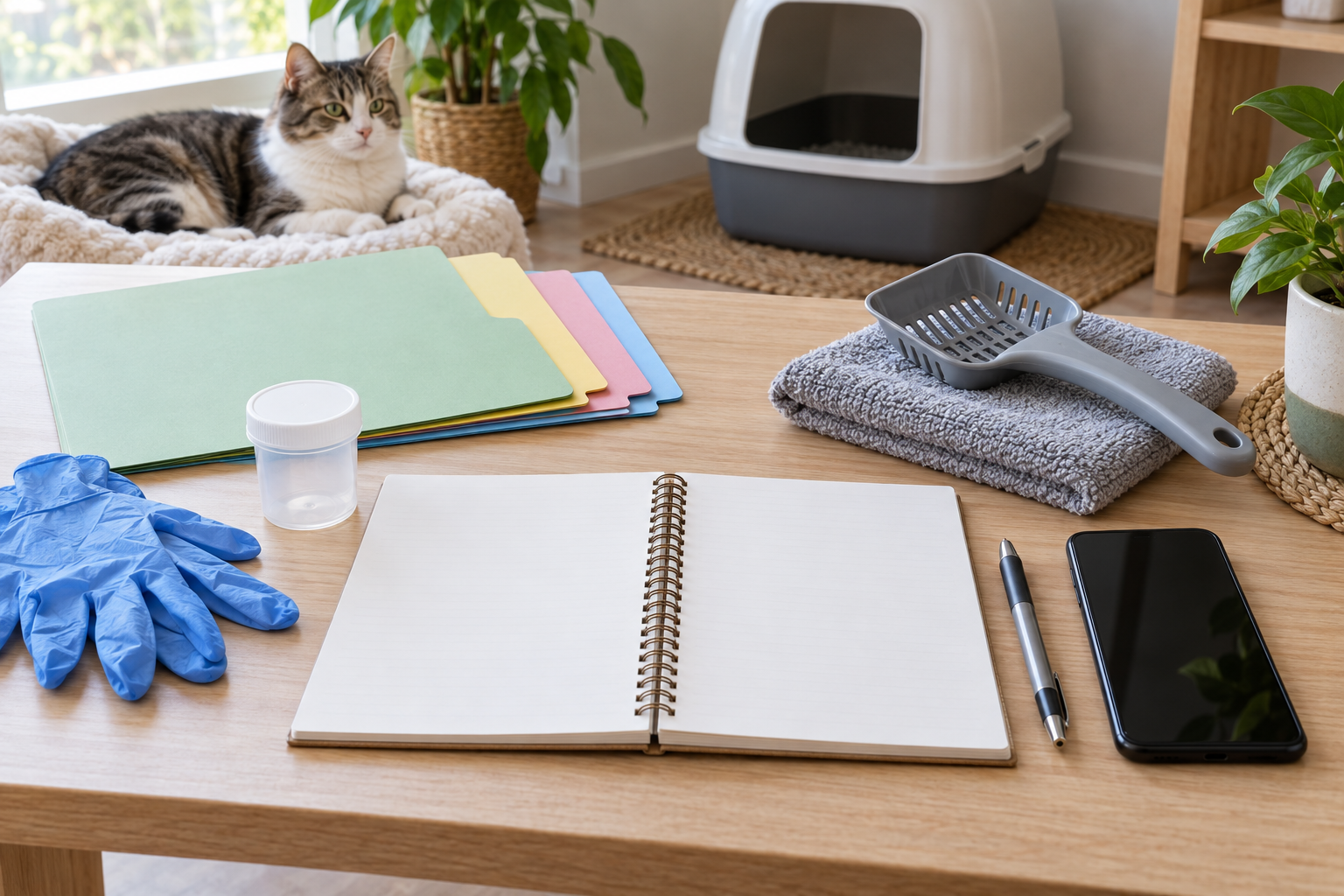
Pack these items:
| Artículo | What to include | Por qué es útil |
|---|---|---|
| One-page summary | Diagnosis or suspected issue, treatment dates, current concern | Gives the vet the story fast |
| Litter box log | Time, output, discomfort, blood, accidents, appetite, water | Connects symptoms to daily pattern |
| Photos or short videos | Unusual clumps, blood-tinged litter, straining posture, medication label if needed | Shows changes that are hard to describe |
| Medication list | Name, schedule, missed doses, side effects | Helps prevent confusion |
| Diet and water notes | Prescription food, wet food amount, water stations, appetite | Adds context for urine volume and recovery |
| Questions | Three to six prioritized questions | Keeps the recheck focused |
Avoid bringing every photo you took. Choose the clearest examples: the first day, the worst day, and the current day. If nothing dramatic changed, say that plainly.
How do you turn home logs into a useful summary?
Turn your log into a three-part summary: timeline, current pattern, and open questions. Veterinarians use history, exam findings, urine tests, and sometimes bloodwork or imaging to investigate urinary disorders 2. Your notes fill in what happens between clinic visits.
If you are already using SnuggleSouls' guide to track cat urination in a multi-cat home, mark uncertainty clearly. "Not sure which cat used the upstairs box" is much better than guessing. If clump size is the main thing you watched, bring the simple pattern from the cat urine clump size after urinary problems guide rather than trying to measure every clump perfectly.
Use plain labels: normal for my cat, changed, improving, still concerning, and unsure. That last category matters because uncertainty can help your veterinarian decide whether the next step should be more observation, a different sample, culture, imaging, or another exam.
Which photos and videos help without overdoing it?
Helpful photos show the pattern without stressing your cat: unusual clumps, pink or blood-tinged litter, repeated tiny wet spots, an accident location, or the box setup. Helpful videos are short clips of behavior when your cat is stable enough to record.
Do not hover over a cat who is trying to urinate. A cat with pain, repeated attempts, or little urine needs help, not a better video.
Good image notes include date, time, box location, whether you know which cat used it, whether the clump was fresh or overnight, and any behavior you saw before or after.
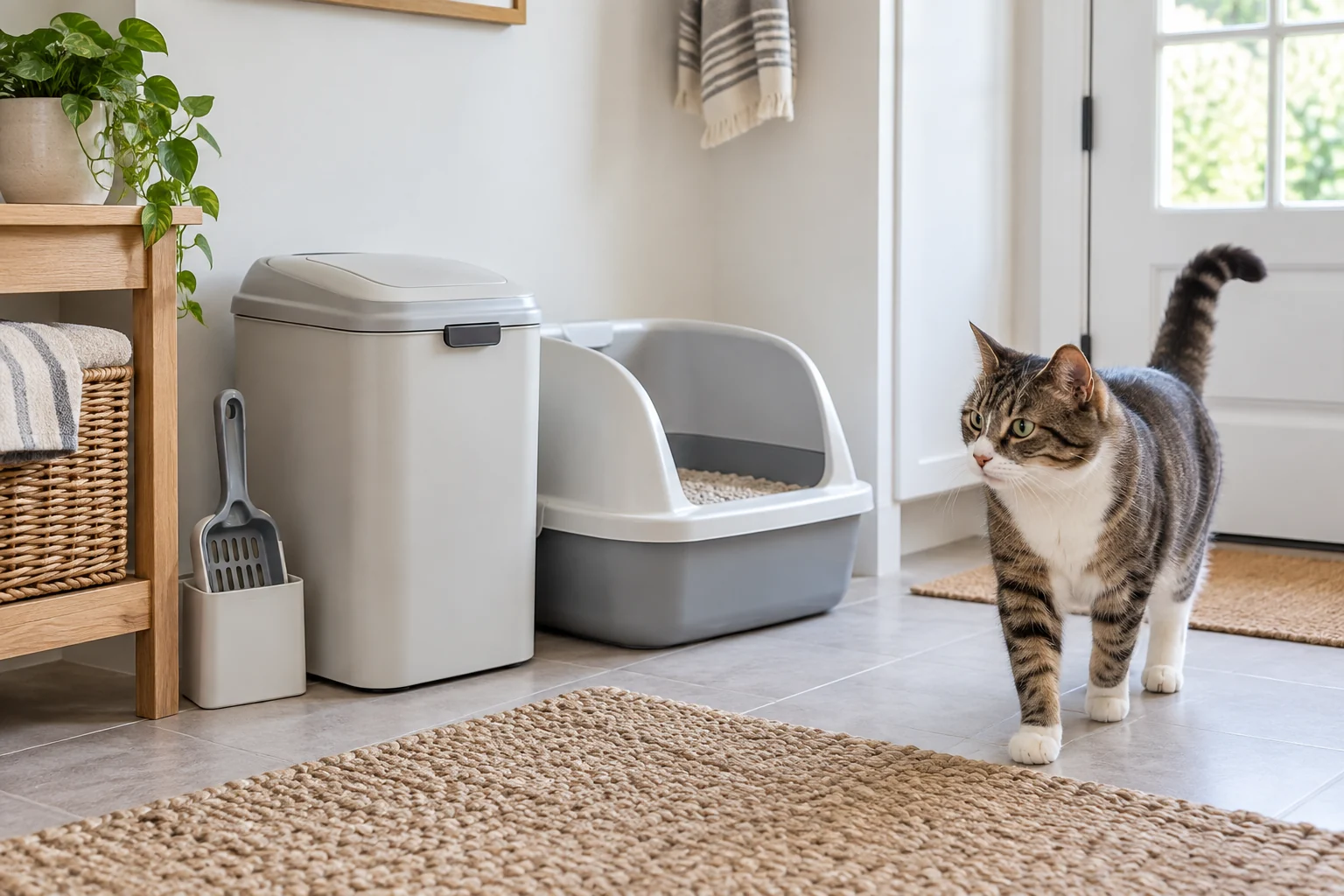
Photos are especially useful when words are vague. "A small clump" can mean different things to different people. A photo with a clean scoop nearby for scale can help, as long as it does not contaminate anything your clinic asked you to save.
Should you collect a urine sample at home?
Only collect a urine sample at home if your clinic asks for it and tells you how fresh it needs to be, what container to use, and whether refrigeration is appropriate. Urinalysis is best performed on fresh urine, and Merck advises letting your veterinarian know the collection time if you collect a sample at home 2.
Sample type matters. VCA explains that cystocentesis collects urine directly from the bladder and is ideal for assessing the bladder and kidneys and detecting bacterial infection because it reduces lower-tract contamination 3. Free-catch urine may be easier at home, but it is more likely to pick up debris from the environment 3.
Ask your clinic:
- Do you want a clinic-collected sample or an at-home sample?
- If at home, should I use non-absorbent litter or another kit?
- What container should I use?
- How soon should the sample arrive?
- Should I refrigerate it if I cannot come right away?
- Is this for urinalysis, culture, or both?
For infection questions, AAHA notes that culture plus lower urinary tract signs may be important, and that cystocentesis can help distinguish true bacteriuria from contamination 4. VCA also explains that collection method affects contamination risk, so ask your clinic which sample type they want before you collect anything at home 3.
Do not delay an urgent visit because you are trying to collect a sample. A bladder may be empty, painful, or blocked. Your veterinarian can decide the safest way to obtain information.
What questions should you ask the vet?
Ask questions that turn the recheck into a clear home plan: what changed, what is still unknown, what signs mean urgent care, and what to do until the next update. Urinary signs alone cannot prove whether the cause is infection, stones, inflammation, obstruction risk, kidney changes, or another issue 1, 2.
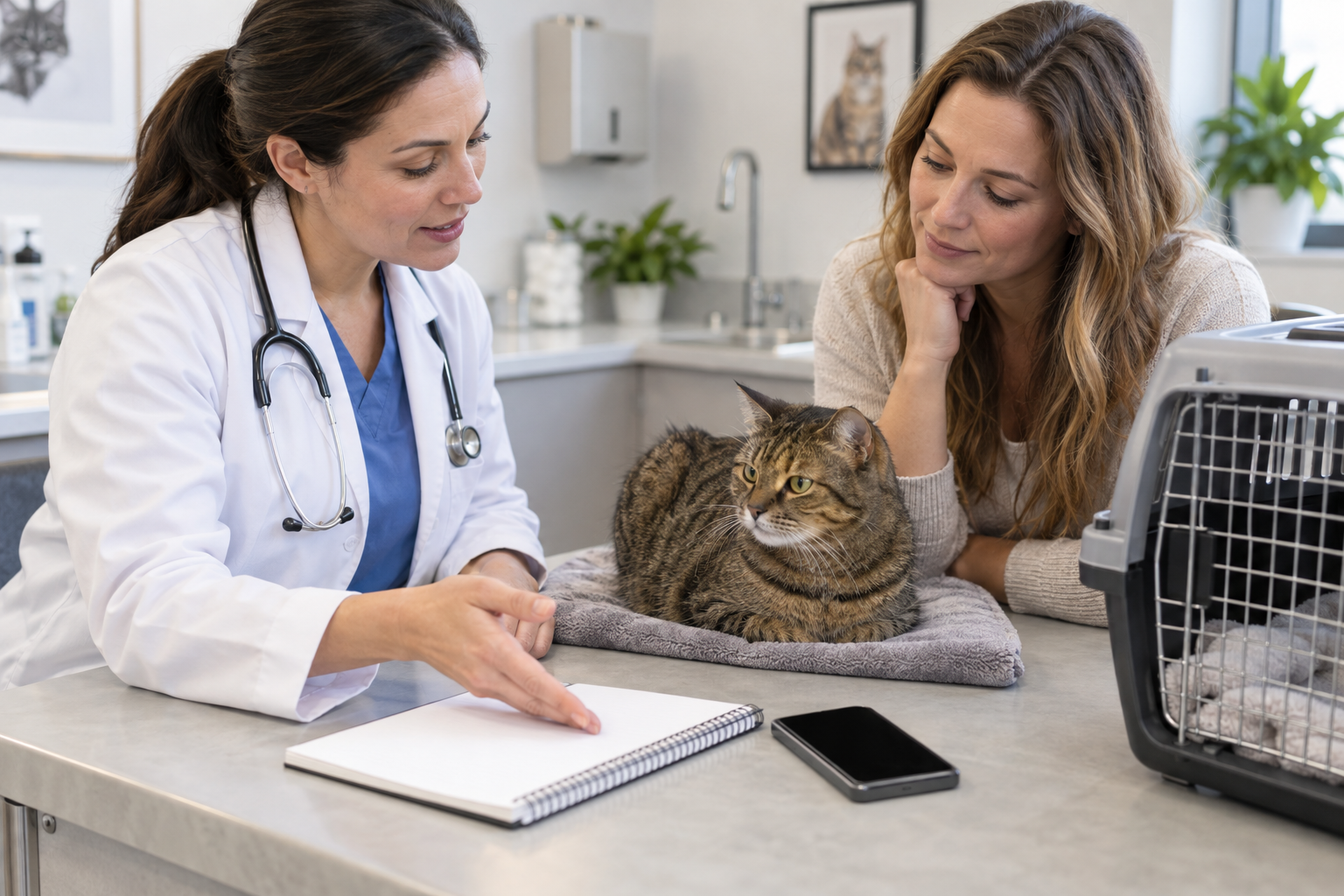
Algunas preguntas útiles son:
- Based on today's exam and tests, what is improving?
- What findings are still uncertain?
- What signs mean emergency care tonight or this week?
- How much urine output should I expect at home?
- Should I keep tracking clump size, frequency, accidents, water intake, or appetite?
- When should I send an update, and what should it include?
- If symptoms return, should I call regular care, urgent care, or emergency care?
If you are unsure whether symptoms fit infection, blockage risk, or bladder irritation, review SnuggleSouls' cat UTI symptoms guide before the appointment so your questions are more specific. Do not ask for antibiotics "just in case." AAHA stresses diagnostic testing and culture/susceptibility when bacterial infection is suspected 4.
How do you explain medications, diet, and household changes?
Explain changes as facts, not confessions. Your veterinarian needs the timeline: what your cat took, ate, drank, missed, refused, or reacted to. That helps them interpret whether the urinary pattern is improving, worsening, or being affected by food, stress, pain, hydration, or household access.
Trae apuntes sobre:
- Every medication or supplement your cat received
- Missed or delayed doses
- Vomiting, drooling, hiding, diarrhea, appetite loss, or sedation after medication
- Prescription food start date and whether your cat actually ate it
- Wet food, added water, fountains, or new water stations
- Visitors, construction, travel, new pets, conflict between cats, or routine disruption
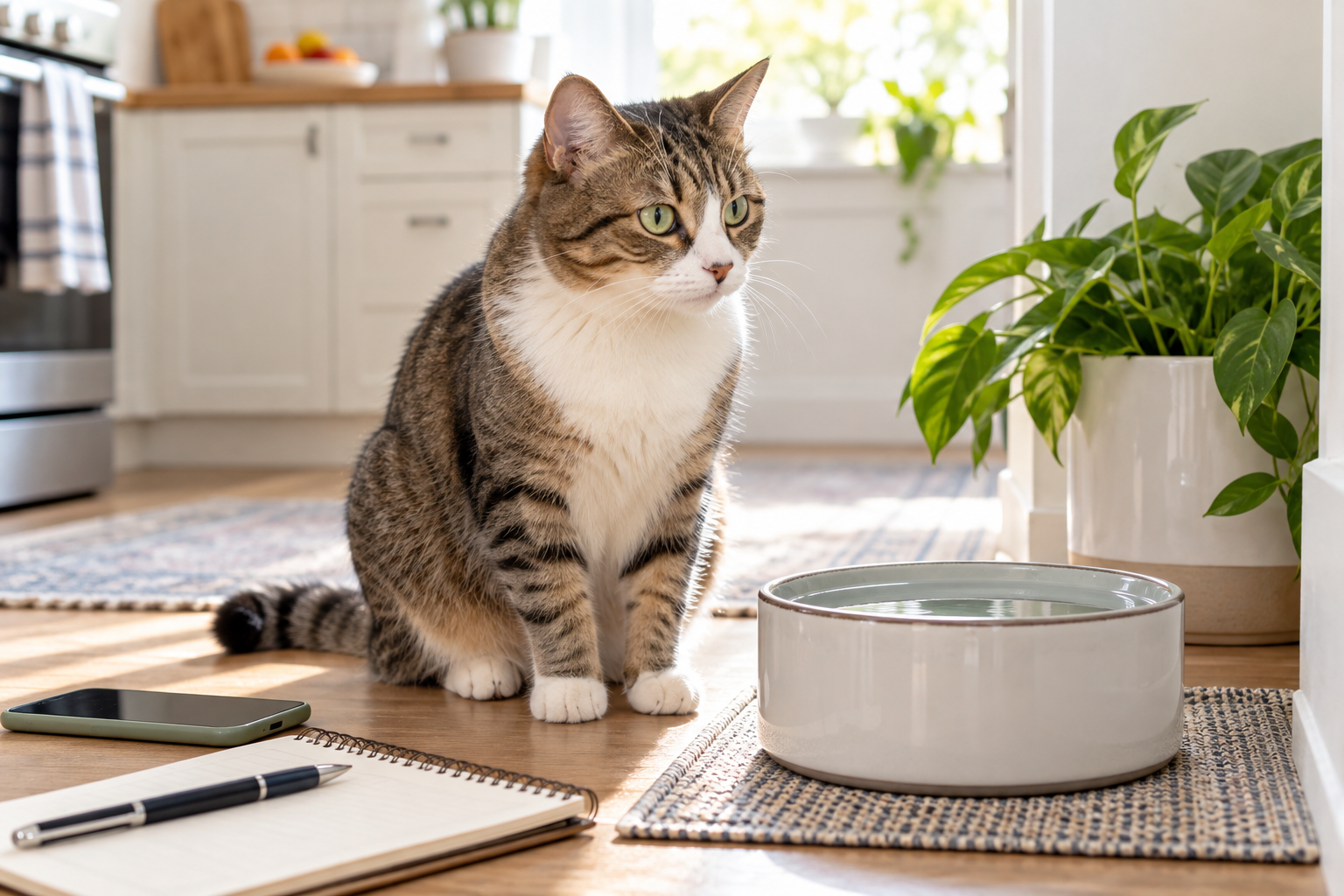
Do not change prescription urinary food, pain medication, antibiotics, or supplements without asking your veterinarian. If hydration support is part of the plan, SnuggleSouls' guide to encourage a cat to drink more after urinary problems can help you make water easier to access within that plan.
For multi-cat households, mention whether another cat guards the box, blocks doorways, or crowds food and water. Cornell notes that stressful environmental factors and multi-cat household changes may increase lower urinary tract risk in some cats 1.
What changes should you track after the appointment?
After the recheck, track only what your veterinarian says matters most: often urine output, box frequency, discomfort, blood, appetite, water intake, vomiting, energy, and medication response. Too much tracking can bury the signal.
Use this small follow-up table:
| What to watch | What to write down |
|---|---|
| Urine output | Usual clump, tiny clumps, large clumps, no urine, accidents |
| Comfort | Straining, crying, licking, hiding, belly pain, relaxed box use |
| Appetite and water | Ate normally, ate less, wet food intake, drinking more or less |
| Medication response | Given on time, missed dose, vomiting, sedation, refusal |
| Energía | Normal, quieter, hiding, playful, weak |
| Escalation sign | Any symptom your vet said should trigger urgent care |
Older cats deserve special attention when urinary signs overlap with thirst or larger urine clumps. SnuggleSouls' guide to senior cat drinking more water at night can help you describe the pattern, but your clinic should decide which tests matter.
Set a reminder for the next update. A simple message such as "three normal clumps daily, no straining, appetite normal, finished medication Tuesday" is often enough.
Conclusion: A good recheck turns scattered worry into a plan
A cat urinary recheck visit is not a test of whether you tracked everything perfectly. It is a chance to turn home observations, photos, urine output, comfort signs, and your biggest questions into a safer plan.
Bring the pattern, not every scrap of data. Escalate immediately if your cat cannot pass urine or seems rapidly worse. For stable cats, a concise summary, a few clear photos, medication and diet details, and focused questions can help your veterinarian decide what to recheck, what to change, and what to watch next. You can find more connected support in SnuggleSouls' Guías sobre la salud de los gatos.
Preguntas frecuentes
How many days of urinary notes should I bring?
Bring the period your veterinarian requested. If they did not specify, three to seven days of clear notes is usually easier to review than a month of scattered details.
Should I bring litter clump photos to the vet?
Yes, if they show a change that is hard to describe, such as tiny clumps, blood-tinged litter, or a sudden shift from usual output. Choose a few clear examples and label the date, time, box, and whether you know which cat used it.
Can I skip the recheck if my cat seems normal again?
Do not cancel a recommended recheck without asking your clinic. Some cats look better before urine findings, infection questions, diet response, or relapse risk are fully clarified.
What if my cat will not urinate before the appointment?
Do not force water, withhold the carrier, or delay care while waiting for a sample. Tell your clinic when your cat last urinated and ask whether they want to try sample collection at the clinic or reschedule only if it is safe.
Should I ask for a urine culture?
Ask whether a culture is appropriate for your cat's signs and sample type. Your veterinarian should decide based on symptoms, urinalysis, collection method, age, history, and risk factors 4.
Referencias
[1] Cornell Feline Health Center. (2016). Feline Lower Urinary Tract Disease. URL
[2] Merck Veterinary Manual. (2024). Detecting Disorders of the Kidneys and Urinary Tract of Cats. URL
[3] VCA Animal Hospitals. (2024). Análisis de orina. URL
[4] Asociación Americana de Hospitales Veterinarios. (2022). Diagnostic Testing. URL
[5] Cat Friendly Homes. (2021). Feline Lower Urinary Tract Disease. URL
 EN
EN DE
DE ES
ES PT
PT