
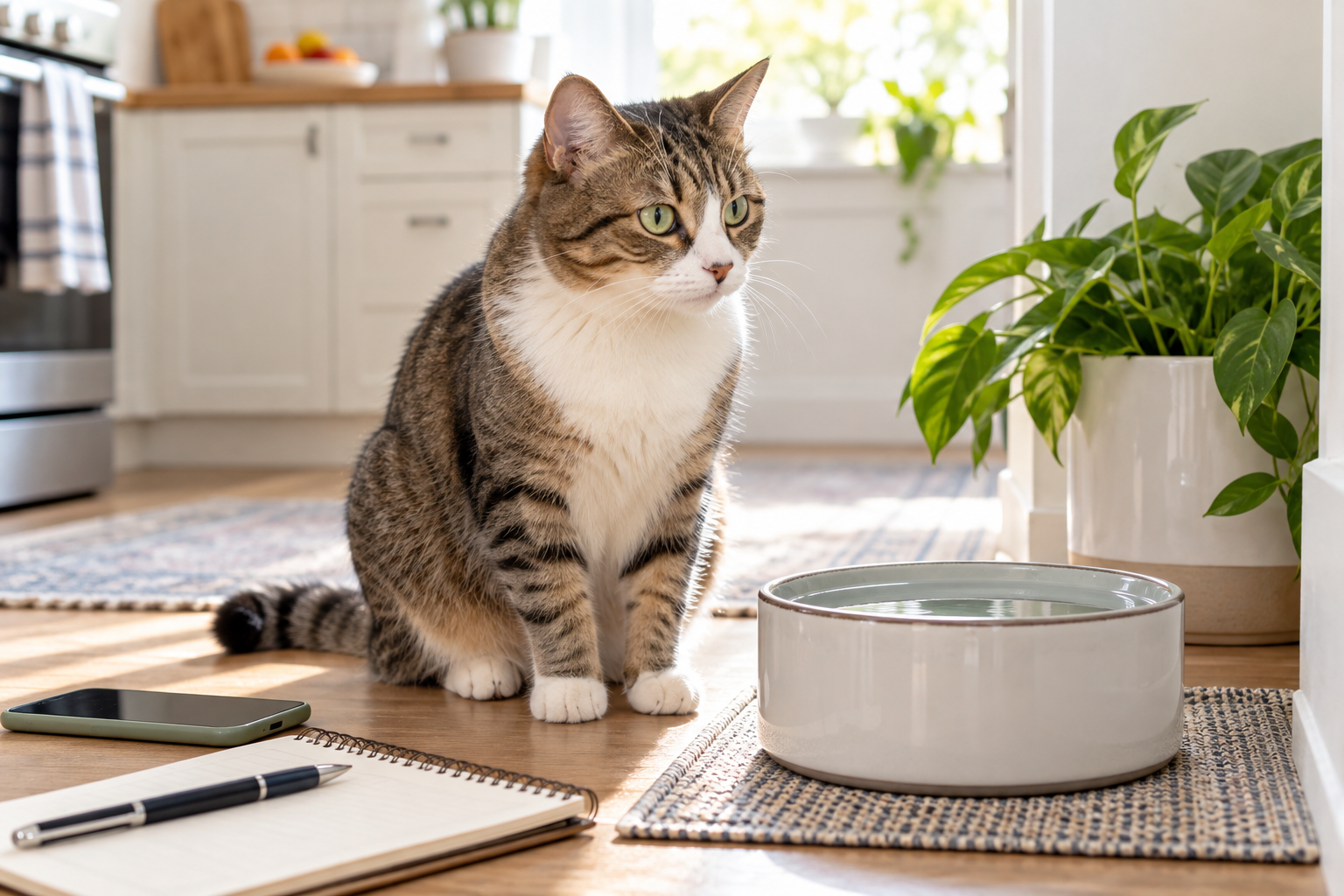
If your cat is vomiting and not drinking water, treat the combination as more concerning than a single mild vomiting episode. Cats can become dehydrated when they lose fluid through vomiting and do not replace it, and a cat who looks weak, painful, withdrawn, or unable to keep water down needs veterinary help promptly.
This does not mean every cat who skips the water bowl for an hour is in crisis. Wet food, cool weather, stress, hiding, nausea, and pain can all change visible drinking. The key is the pattern: how often your cat vomits, whether appetite is down, whether urine clumps change, and whether your cat still acts like themselves.
Índice
- Why would a cat vomit and stop drinking?
- Is this different from vomiting right after drinking?
- What symptoms make this more concerning?
- When is vomiting and not drinking an emergency?
- Can you encourage drinking at home?
- What should you track before calling the vet?
- What should you avoid doing?
- Conclusion: Do not wait if the pattern is worsening
- Preguntas frecuentes
- Referencias
Why would a cat vomit and stop drinking?
A cat may vomit and avoid water because nausea, stomach irritation, pain, fever, stress, toxin exposure, obstruction, kidney disease, diabetes, hyperthyroidism, or another illness is changing both appetite and thirst. Cornell lists vomiting as a sign that can occur with many digestive and whole-body problems, including toxins, swallowed objects, kidney disease, diabetes, and hyperthyroidism 2.
Not drinking can mean several different things. Some cats are still getting water from canned food, while others are truly taking in too little. Cornell notes that cats eating wet food may drink less from a bowl because canned food contains substantial water, while dry-food cats usually rely more on drinking 1. That difference matters when you describe the problem to your veterinarian.
Use the overall pattern, not one clue alone:
| Lo que se nota | Qué puede significar | Un siguiente paso más seguro |
|---|---|---|
| One vomit episode, cat eats wet food and acts normal | Visible bowl drinking may be low but intake may not be zero | Monitor closely and record details |
| Vomiting plus hiding, lip licking, drooling, or refusing meals | Nausea or illness may be present | Call your veterinarian |
| Vomiting plus no interest in water or food | Higher dehydration and missed-meal concern | Contact a vet promptly |
| Vomiting plus more or less urination | Possible urinary, kidney, endocrine, or hydration issue | Arrange veterinary guidance |
| Vomiting after possible plant, medication, cleaner, string, toy, or toxin access | Posible emergencia | Seek urgent help now |
If the vomiting pattern itself is unclear, compare it with SnuggleSouls' broader guide to why cats vomit.
Is this different from vomiting right after drinking?
Yes. "Vomiting after drinking water" usually focuses on fluid coming up soon after a cat drinks. "Vomiting and not drinking" is more about reduced water intake, nausea, dehydration risk, and the possibility that the cat feels too unwell to drink normally.
If your cat drinks, immediately brings water back up, and then acts bright, start with the timing questions in our guide to cat vomiting after drinking water. If your cat is avoiding water, refusing food, hiding, or vomiting repeatedly, the concern shifts toward illness and dehydration.
It also helps to confirm whether the event is vomiting or passive fluid return. Vomiting is usually active and may include drooling, retching, abdominal effort, and forceful expulsion. Regurgitation is more passive and often happens soon after food or water. Our regurgitation vs vomiting guide can help you describe the motion more clearly.
Do not spend hours trying to label the episode perfectly if your cat is declining. A short video is useful when your cat is stable, but emergency signs should move you toward care.
What symptoms make this more concerning?
Vomiting becomes more concerning when it repeats or appears with appetite loss, low water intake, lethargy, diarrhea, pain, blood, dehydration clues, or urination changes. Cornell advises prompt veterinary evaluation for cats that vomit frequently or vomit with signs such as weakness, reduced appetite, blood, increased thirst, changed urination, or diarrhea 2.
A tener en cuenta:
- More than one vomiting episode in a short period.
- Vomiting that returns over several days.
- Not eating, eating much less, or walking away from favorite food.
- No clear drinking from the bowl in a cat who usually drinks.
- Very small urine clumps, no urine, unusually large clumps, accidents, or straining.
- Hiding, weakness, glassy eyes, hunched posture, pain, or rapid decline.
- Sticky or dry gums, sunken-looking eyes, tacky saliva, or poor energy.
- Diarrhea, black stool, blood, repeated drooling, or a swollen abdomen.
- White foam, yellow fluid, blood, plant pieces, string, or unusual material in vomit.
Vomiting foam is not automatically an emergency, but repeated foam plus poor drinking deserves caution. If that is the main pattern, our cat vomiting white foam guide can help you describe color and timing without losing sight of the whole cat.
When is vomiting and not drinking an emergency?
Go to an emergency veterinarian or call an emergency clinic now if your cat is repeatedly vomiting, cannot keep water down, will not eat or drink, seems weak or painful, may have swallowed a toxin or object, or shows blocked-urination signs. VCA recommends urgent veterinary care when vomiting is severe or appears with concerning signs such as weakness, dehydration, abdominal pain, weight loss, blood, or suspected foreign object or toxin exposure 4.
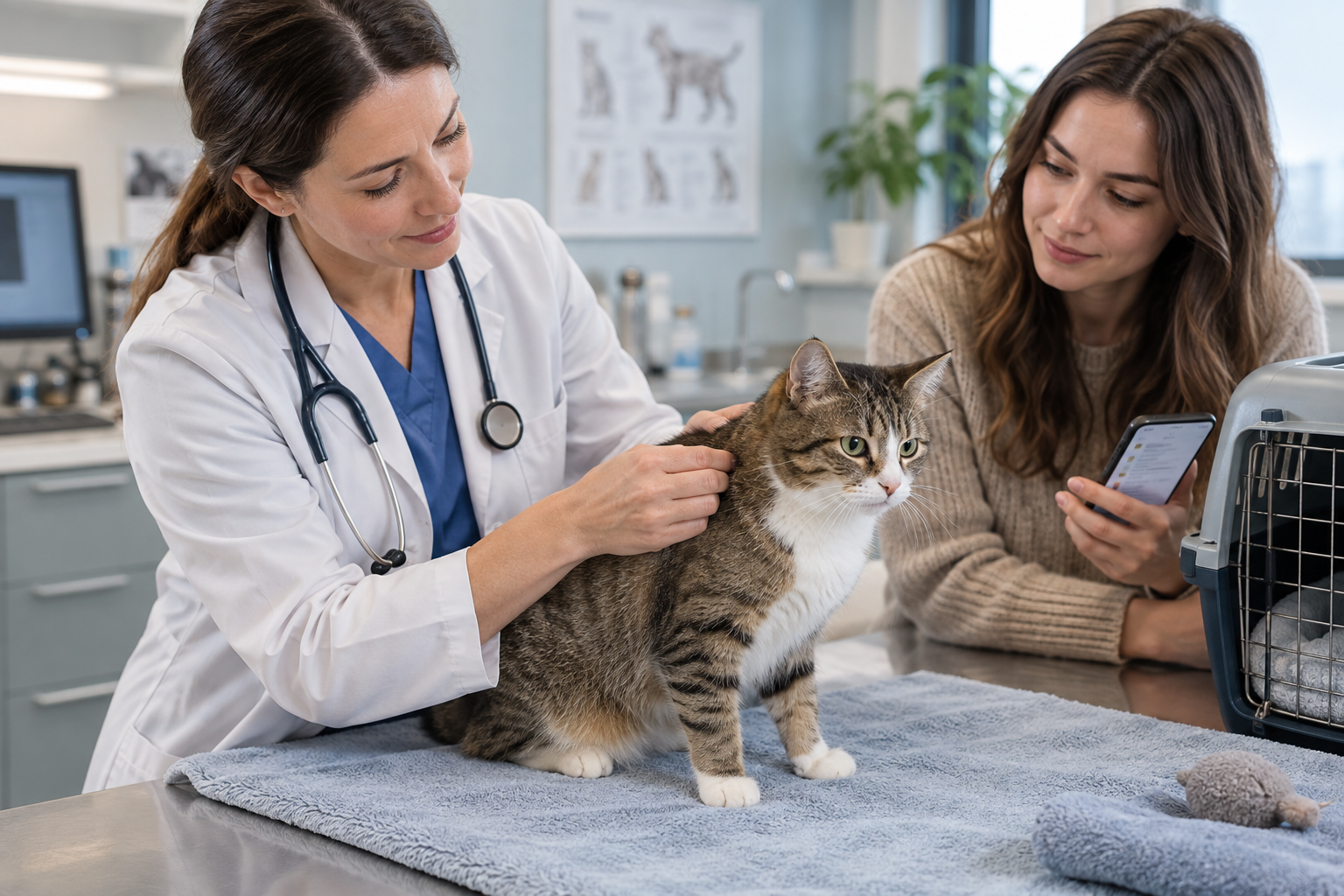
Vomiting with reduced drinking, dehydration clues, suspected toxins, or a sick-looking cat should be checked by a veterinarian promptly.
Treat these as urgent:
- Repeated vomiting or repeated retching.
- Vomiting plus refusal of water or inability to keep water down.
- Weakness, collapse, trouble breathing, seizures, severe pain, or rapid decline.
- Blood, black coffee-ground material, string, plant pieces, medication, or foreign material in vomit.
- Suspected access to lilies, toxic plants, human medication, cleaners, chemicals, pest products, string, ribbon, thread, hair ties, or small toys.
- Straining to urinate, frequent litter box trips with little or no urine, crying in the box, or a hard painful belly.
- Kitten, senior cat, diabetic cat, kidney-disease cat, or medically fragile cat with vomiting and poor intake.
Merck notes that long-term or severe vomiting may be associated with dehydration and electrolyte imbalance, and treatment may need to correct those problems 3. If poisoning is possible, contact your veterinarian, an emergency clinic, or ASPCA Animal Poison Control right away 5. Do not try to make your cat vomit at home unless a veterinary professional specifically directs you.
Can you encourage drinking at home?
You can make water easier to access if your cat had one mild episode and is otherwise bright, but do not use home hydration tricks to delay care when vomiting is repeated or your cat seems ill. Merck cautions that water should only be withheld if a veterinarian is providing fluids and directs that plan 3. Fresh water should remain available unless your veterinarian says otherwise.
Safe, low-pressure options include:
- Offer fresh water in a clean, wide bowl.
- Place a second bowl in a quiet room away from foot traffic.
- Clean and refill fountains if your cat prefers moving water.
- Serve normal wet food if your cat is already eating it and your vet has not restricted food.
- Keep water away from litter boxes and strong smells when space allows.
- Separate pets if another animal crowds the water station.
- Call your veterinarian if your cat still will not drink, vomits again, or refuses food.
Do not syringe water into a vomiting, weak, coughing, or struggling cat. It can increase stress and may be unsafe. If your cat has a urinary condition and your veterinarian has already recommended hydration support, use the plan from your clinic and review routine setup ideas in SnuggleSouls' guide to encourage a cat to drink more after urinary problems only after urgent illness is ruled out.
What should you track before calling the vet?
Track the facts that show whether fluid is being lost, replaced, and passed as urine. Cornell notes that cats need water for normal body function and that dehydration can affect circulation, temperature control, heart rhythm, and neurologic function 1. Your notes can help your veterinarian decide how urgent the pattern is.
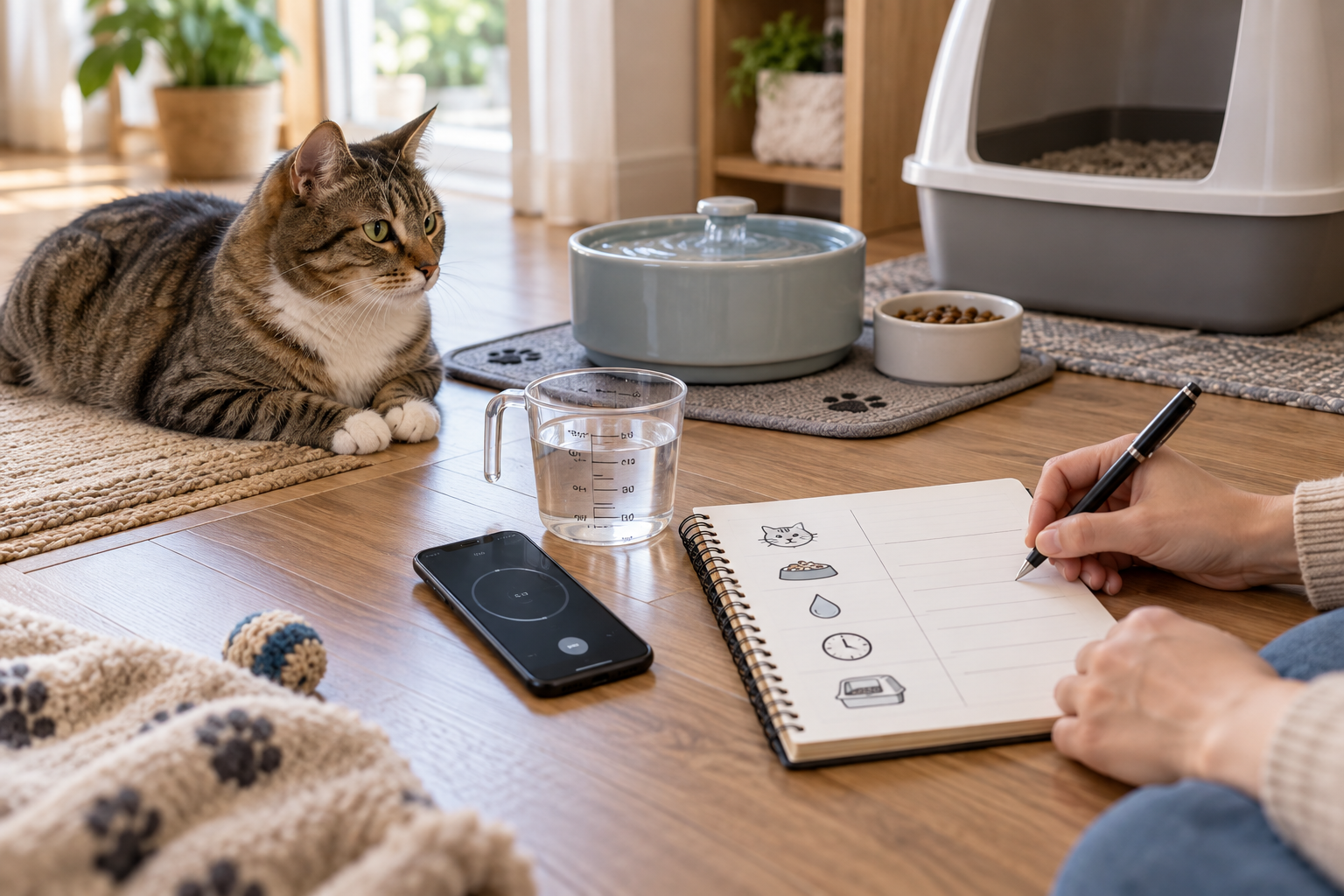
A simple log of vomiting, water intake, appetite, and litter box changes can help your veterinarian judge urgency and next steps.
Write down:
- Date and time of each vomiting episode.
- What came up: food, clear fluid, white foam, yellow fluid, hair, blood, plant material, string, or unknown material.
- Whether there was heaving, passive regurgitation, coughing, drooling, or gagging.
- Food intake: normal meal, partial meal, no food, treats only, or wet food only.
- Water interest: no visit, a few laps, normal drinking, repeated trips, or drinks that come back up.
- Urination: normal clumps, tiny clumps, larger clumps, more trips, accidents, straining, or no urine seen.
- Stool changes, diarrhea, constipation, black stool, or blood.
- Energy, hiding, pain, breathing, weight change, and medication or toxin access.
For cats with urinary history, tracking urine clump size changes can make the conversation with your veterinarian more concrete. In multi-cat homes, use the same practical approach from our guide to track cat urination in a multi-cat home so you do not accidentally attribute one cat's normal litter box use to the sick cat.
Do not wait for a perfect log if your cat has red flags. The notes support veterinary care; they do not replace it.
What should you avoid doing?
Avoid anything that forces water, hides symptoms, or adds risk before you know why your cat is vomiting. Cats are sensitive to many human medicines, and dehydration or obstruction can worsen while a family is trying home fixes.
No:
- Withhold water unless your veterinarian specifically instructs it.
- Force water into your cat's mouth.
- Give human nausea, pain, stomach, allergy, or diarrhea medication.
- Give hydrogen peroxide, salt, oil, laxatives, or supplements to trigger vomiting.
- Pull string, thread, ribbon, or fabric from the mouth or anus.
- Keep changing foods while vomiting continues.
- Assume a cat who is not drinking is fine because the bowl level looks unchanged.
- Delay emergency care after suspected toxin, medication, plant, or foreign-object exposure.
If your cat is stable after one mild episode, call your regular veterinary clinic for individualized guidance. If your cat is worsening, repeatedly vomiting, or not eating or drinking, use urgent care.
Conclusion: Do not wait if the pattern is worsening
Cat vomiting and not drinking water is a pattern worth taking seriously. A single mild episode in a cat who eats wet food and acts normal may be monitored closely, but repeated vomiting, poor appetite, reduced drinking, dehydration clues, urination changes, toxin risk, or weakness should prompt veterinary help.
Keep fresh water available, record what happened, avoid unsafe home remedies, and call sooner for kittens, seniors, and cats with chronic disease. For related symptom guides, visit the SnuggleSouls Guías sobre la salud de los gatos.
Preguntas frecuentes
How long can a cat go without drinking water after vomiting?
There is no safe universal number of hours because age, diet, temperature, illness, and vomiting frequency all matter. A cat eating wet food may drink visibly less, but a cat who is vomiting, refusing food, and not drinking should be discussed with a veterinarian promptly.
Should I syringe water if my cat is vomiting and not drinking?
Do not syringe water into a vomiting, weak, coughing, or struggling cat unless your veterinarian specifically tells you to. It can add stress and may be unsafe. Call your veterinarian or an emergency clinic for a plan if your cat cannot or will not drink.
Is it okay if my cat is not drinking but still eating wet food?
Wet food contains a lot of moisture, so some cats drink less from the bowl when they eat canned food 1. Still, vomiting plus reduced appetite, repeated vomiting, low energy, changed urination, or dehydration clues should be checked by a veterinarian.
What are dehydration signs after cat vomiting?
Possible clues include weakness, tacky or dry gums, low energy, sunken-looking eyes, thick saliva, poor appetite, reduced urination, or rapid decline. These signs are not a home diagnosis. A veterinarian can assess hydration and decide whether fluids, testing, or treatment are needed.
When should I call the emergency vet?
Call now for repeated vomiting, inability to keep water down, no interest in food or water, weakness, collapse, pain, blood, suspected toxin exposure, suspected string or foreign object, blocked-urination signs, or rapid decline. Kittens, seniors, diabetic cats, and cats with kidney disease should be seen sooner.
Referencias
[1] Centro de Salud Felina de Cornell. (2026). Hidratación. Read Cornell's feline hydration guide
[2] Cornell Feline Health Center. (2026). Vómitos. Read Cornell's feline vomiting guide
[3] Manual Veterinario de Merck. (2026). Vomiting in Cats. Read the Merck Veterinary Manual overview
[4] VCA Animal Hospitals. (2026). Vomiting in Cats. Read the VCA vomiting guide
[5] ASPCA Animal Poison Control Center. (2026). Control de envenenamiento de animales. Read ASPCA poison-control guidance
 EN
EN DE
DE ES
ES PT
PT