
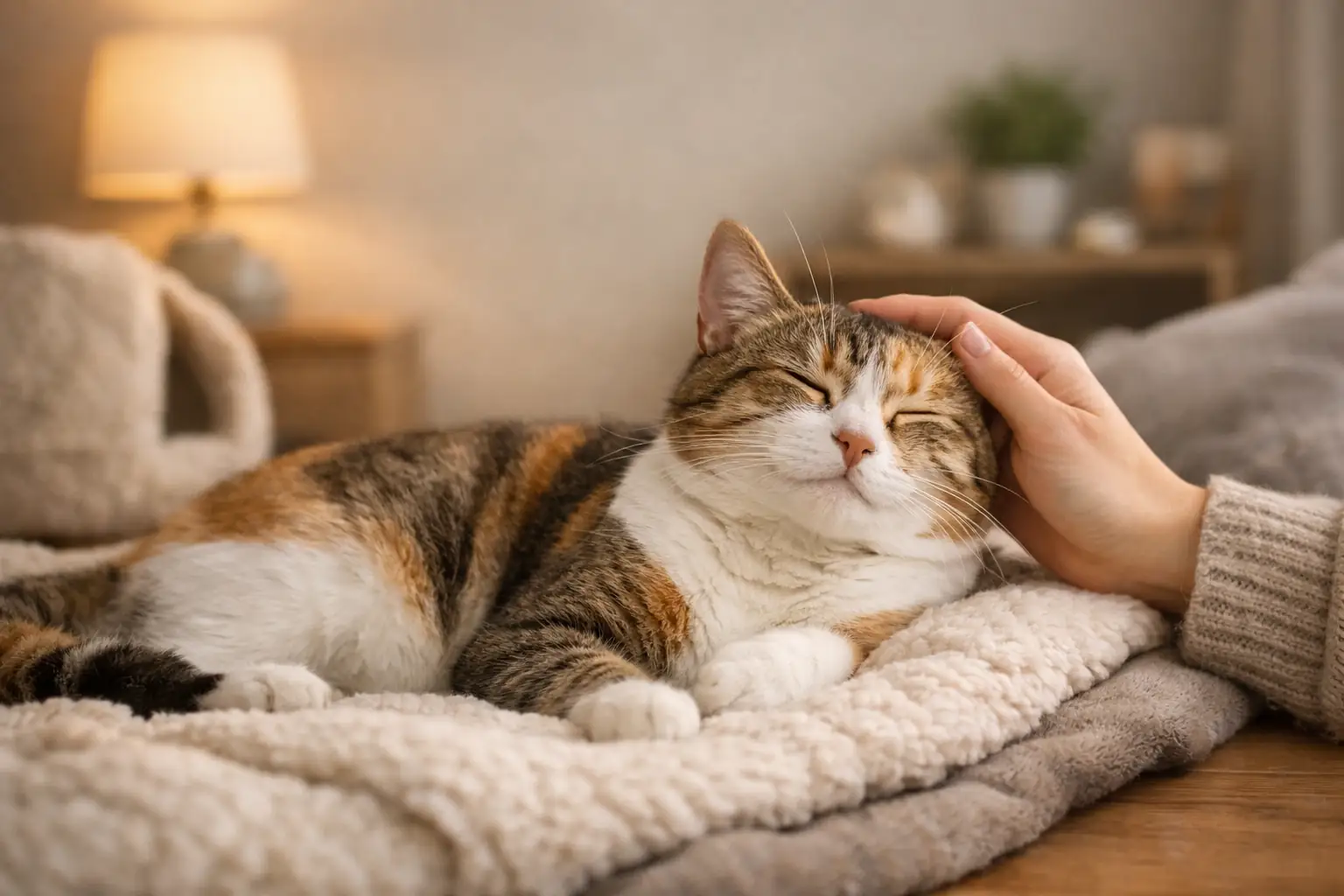
To help a cat in heat, keep her securely indoors, separate her from intact male cats, provide a quiet room with food, water, a clean litter box, and gentle play if she wants it. These steps may reduce stress, but they cannot stop the heat cycle. Call a veterinarian for illness signs or to discuss spaying.
This guide is educational. Do not give hormone products, human medicines, sedatives, supplements, or home remedies unless your veterinarian specifically prescribes them for your cat.
Table of Contents
- What can I do for a cat in heat right now?
- How can I keep a cat in heat from escaping or mating?
- How can I calm the yowling and restlessness?
- What should I avoid doing to a cat in heat?
- What signs are not normal heat behavior?
- Does spaying stop heat cycles?
- What should I track for the veterinarian?
- Conclusion
- Frequently Asked Questions
- References
What can I do for a cat in heat right now?
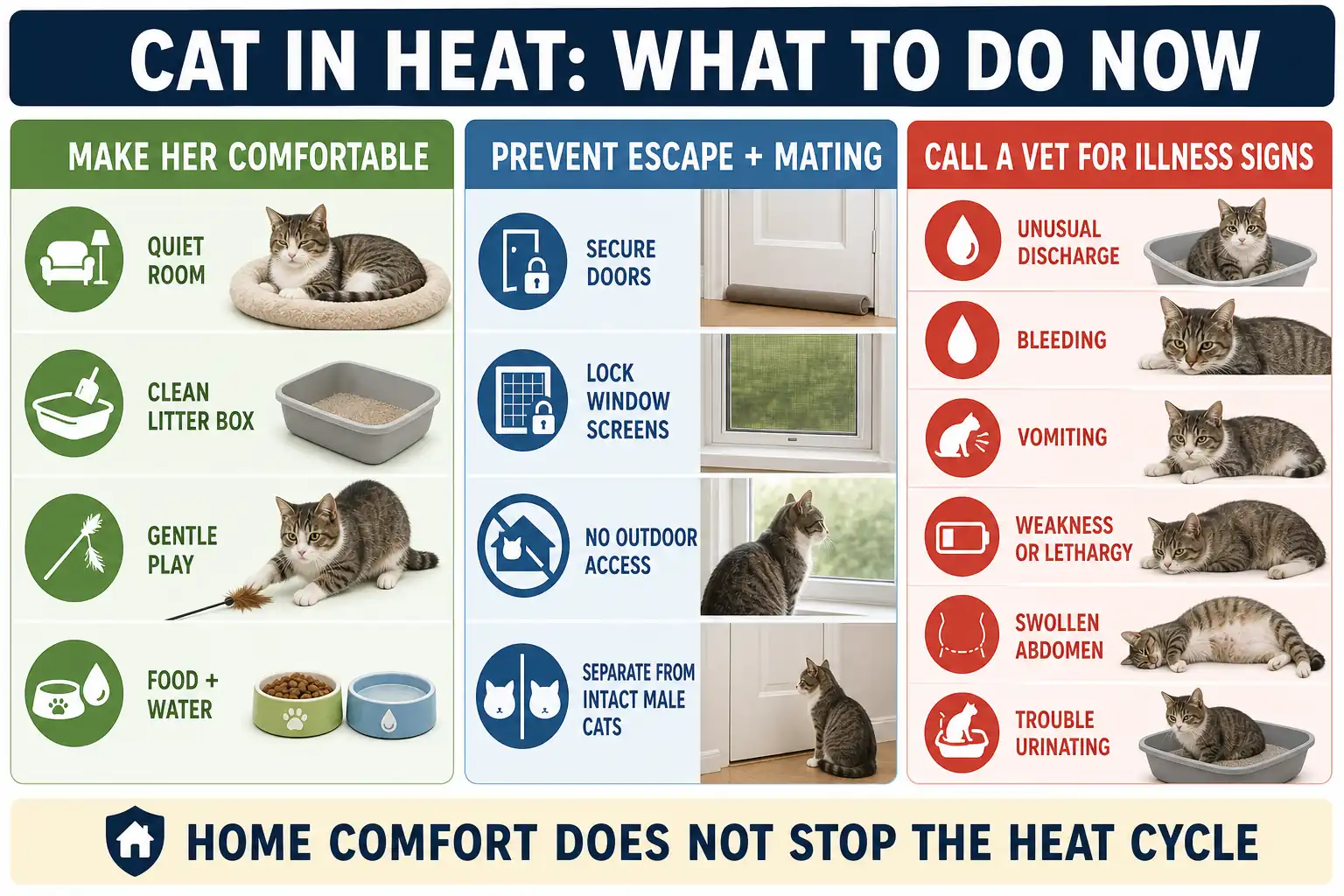
Focus on security, comfort, and reducing stimulation. You cannot reliably end a heat cycle at home, but you can make the environment safer and easier for your cat while you speak with your veterinarian about next steps.
| What to do | Why it helps | Important limit |
|---|---|---|
| Keep her securely indoors | Prevents mating, pregnancy, injury, and getting lost | Check every escape route, not just the front door |
| Provide a quiet room or retreat | Reduces household stimulation and gives her choice | Do not lock her away without food, water, litter, and contact |
| Keep the litter box clean | Supports normal toileting during a restless period | Straining or inability to urinate is not normal heat behavior |
| Offer gentle interactive play | May redirect attention briefly | Stop if she becomes more agitated or does not want to play |
| Maintain normal meals and water | Supports routine and makes appetite changes easier to notice | Do not force-feed or make abrupt diet changes |
| Offer affection only when invited | Some cats seek more contact during heat | Stop if her tail lashes, body tightens, or she moves away |
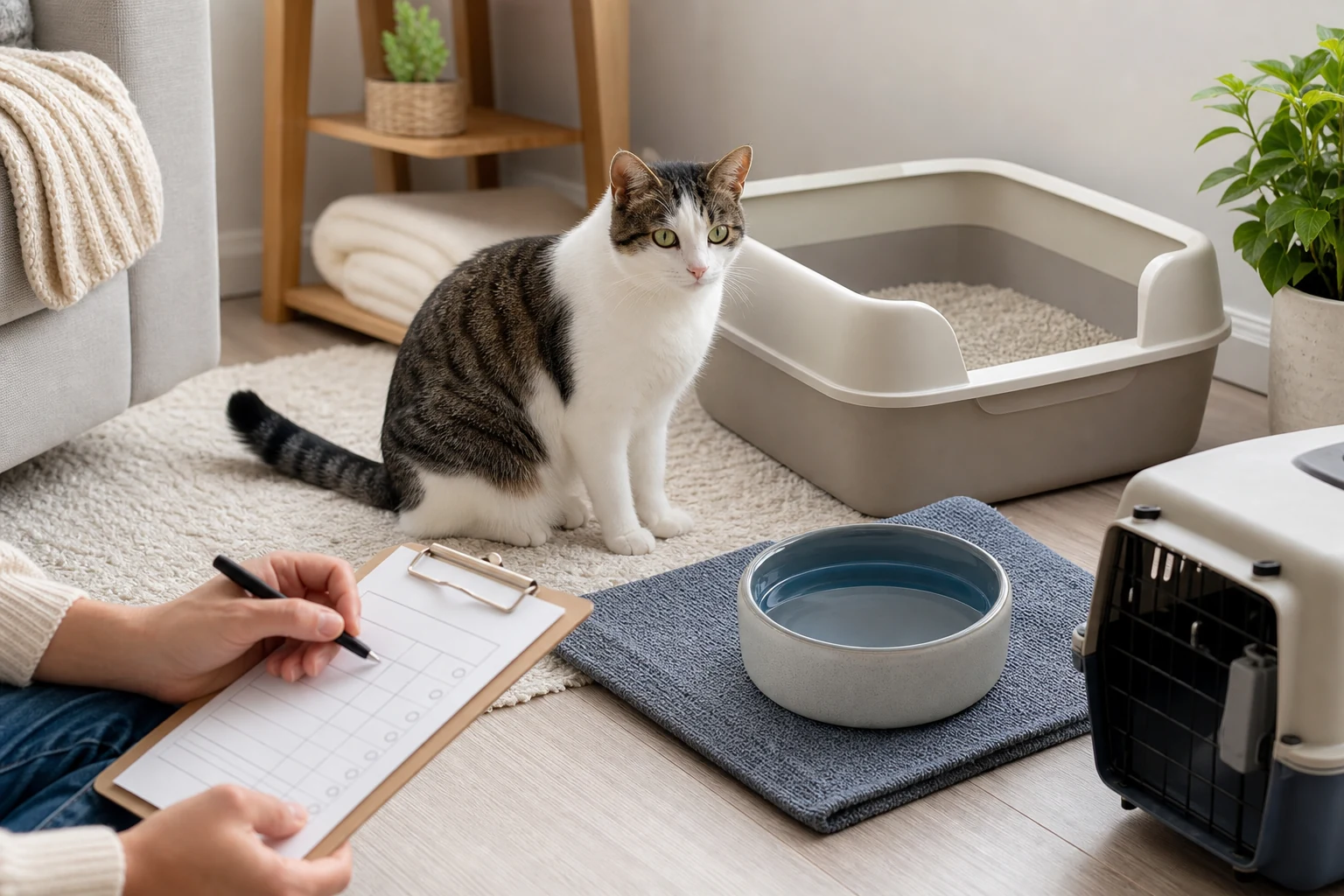
| Track dates and behavior | Helps identify the pattern and inform spay planning | A log cannot replace an exam when she seems ill |
VCA describes common estrus behaviors as increased affection, rubbing, rolling, loud vocalization, raising the hindquarters, and treading with the back feet.1 These behaviors can be intense while the cat remains otherwise alert and well.
How can I keep a cat in heat from escaping or mating?
Treat escape prevention as the highest-priority safety task. A cat in heat may be unusually motivated to reach an intact male, and a brief unsupervised escape can lead to pregnancy.
Use this home check:
- Secure exterior doors. Tell everyone in the household before opening a door and use a second barrier when practical.
- Inspect windows and screens. A partly open window or loose screen is not secure.
- Lock pet doors. Do not rely on the cat’s usual indoor habits during heat.
- Check balconies and porches. These are not safe substitutes for indoor confinement.
- Separate intact males completely. A baby gate or brief supervision is not enough.
- Check identification. Keep microchip and contact details current in case she escapes.
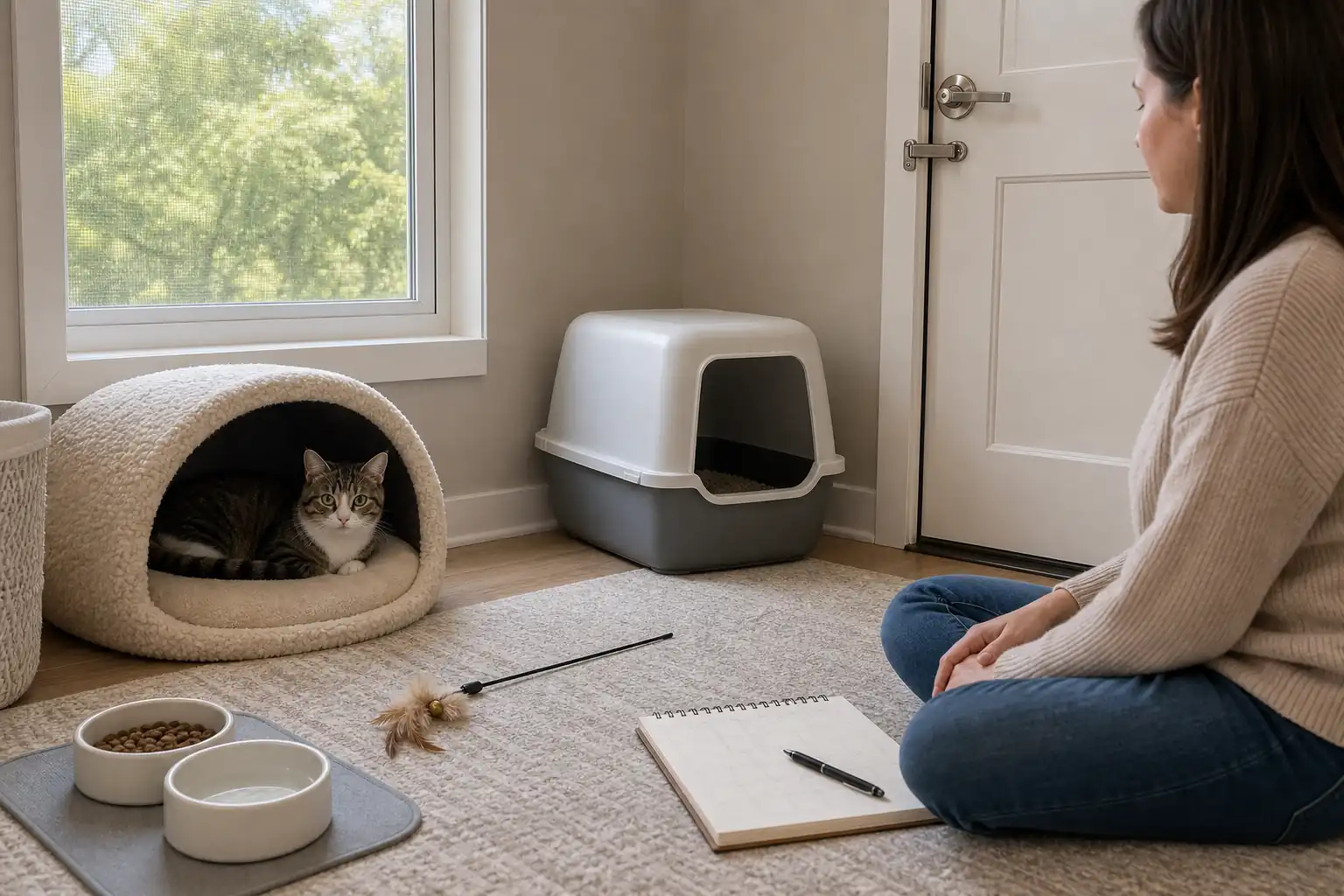
Do not take her outside on a leash as a calming strategy. Outdoor scents and nearby cats may increase agitation, and equipment can fail when a cat is highly motivated to escape.
If you are still confirming whether the behavior is estrus, compare the pattern with signs a cat is in heat.
How can I calm the yowling and restlessness?
You may be able to reduce stimulation and help the cat settle for short periods, but no comfort technique works for every cat. Keep expectations realistic and let her choose whether to interact.
Try these low-risk options:
- keep meals, lights, and household activity on a predictable routine
- provide a quiet resting place away from doors and windows
- close curtains if outdoor cats are visible
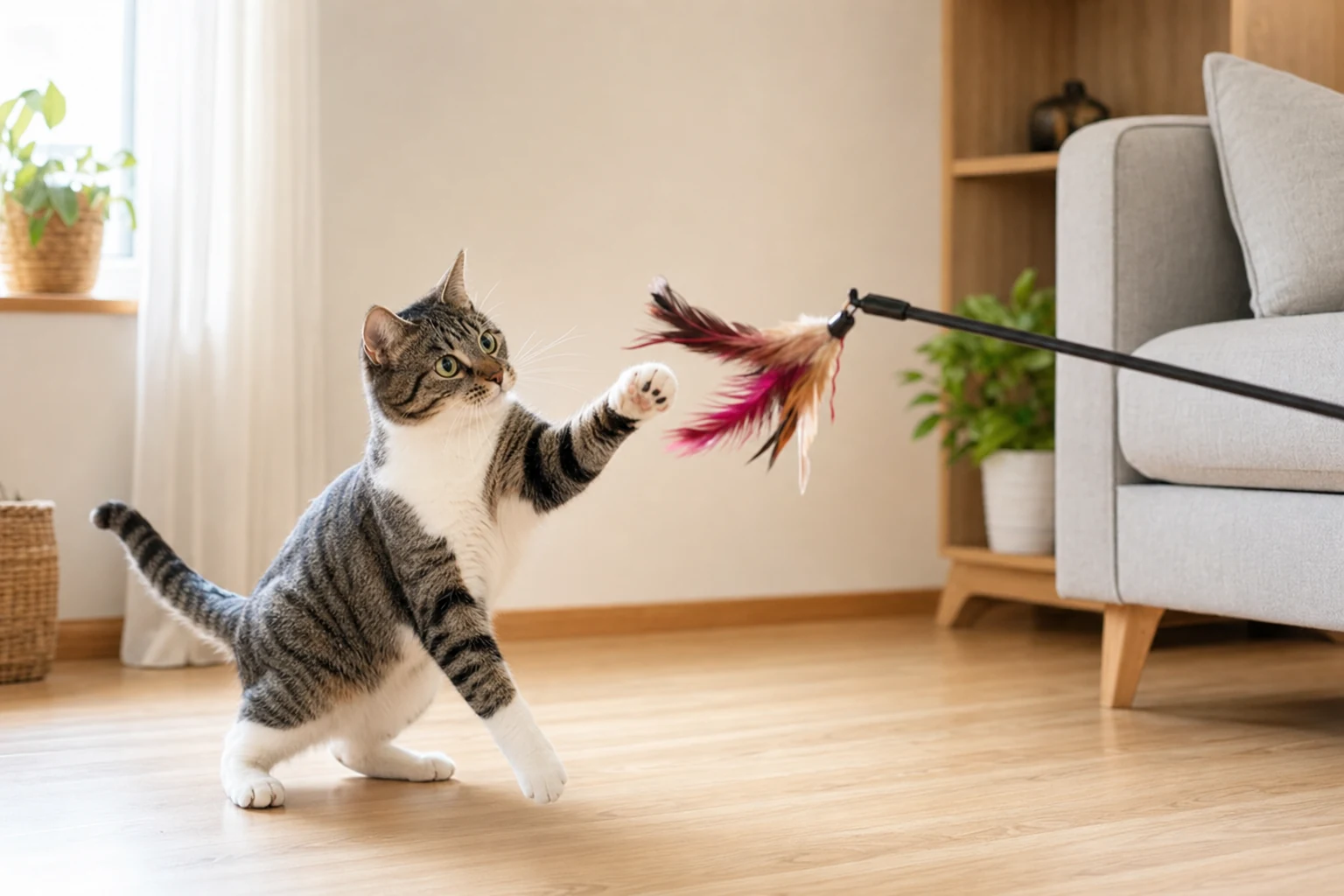
- offer a short wand-toy session if she engages willingly
- provide familiar bedding and hiding options
- use calm voice and gentle petting only if she requests contact
- keep the litter box especially clean
Her body language should guide the interaction. A raised hindquarters and tail moved to one side can be part of the mating posture, while fast tail lashing or body tension means it is time to stop touching. The cat tail language guide can help you read those signals without assuming every movement means the same thing.
Do not punish vocalization, rolling, marking, or restlessness. These are hormone-driven behaviors, not disobedience. If she retreats, allow her to use the hiding place; see why cats hide for help interpreting a sudden change.
What should I avoid doing to a cat in heat?
Avoid anything that could injure the cat, increase stress, cause poisoning, or create a false sense that the cycle has ended. Internet remedies are not a substitute for veterinary reproductive care.
Do not:
- let her outside to “get it over with”
- allow contact with an intact male unless planned breeding is being managed responsibly with veterinary guidance
- punish, spray, restrain, or repeatedly trigger the mating posture
- give human pain medicine, sleep aids, sedatives, or other medications
- use hormone products, supplements, or herbal remedies without veterinary direction
- apply essential oils or strongly scented products around her
- insert anything into the genital area or attempt to induce ovulation
- assume that quiet behavior proves the heat cycle is over
If mating may have occurred, call your veterinarian promptly to discuss appropriate options. Do not wait for pregnancy signs. The SnuggleSouls guide to how long cats are pregnant provides general context but cannot confirm pregnancy.
What signs are not normal heat behavior?
Normal heat behavior can look dramatic, but severe illness signs are not part of an ordinary heat cycle. Contact a veterinarian when your cat seems physically unwell, painful, or significantly different from her usual heat pattern.
| What you notice | What to do |
|---|---|
| Collapse, severe weakness, breathing difficulty, or inability to stand | Seek emergency veterinary care |
| Trouble urinating, repeated straining, or crying in the litter box | Seek urgent veterinary care |
| Heavy bleeding, pus-like or foul-smelling discharge | Call a veterinarian urgently |
| Vomiting, swollen or painful abdomen, marked lethargy, or refusal to eat | Call a veterinarian promptly |
| Heat-like behavior in a cat believed to be spayed | Arrange a veterinary assessment |
| Signs continue unusually long or keep changing from the usual pattern | Contact the veterinarian for guidance |
Pyometra is a serious uterine infection that can affect unspayed female cats. Merck lists signs that can include discharge, lethargy, poor appetite, vomiting, increased thirst or urination, and abdominal enlargement; a closed cervix can mean no discharge is visible.2 These signs require veterinary care, not home calming methods.
Also call if you are unsure whether the behavior is heat, pain, urinary trouble, or another problem. A short video and a clear timeline can help the clinic understand what you observed.
Does spaying stop heat cycles?
Yes. Spaying stops future heat cycles and prevents pregnancy. It is the long-term solution to repeated heat behavior, while environmental comfort measures only help manage the current period.
Cornell notes that spaying eliminates heat-cycle behaviors such as howling and restlessness, prevents unwanted litters, and provides additional health benefits.3
Ask your veterinarian:
- when your cat can be examined and scheduled
- whether the clinic performs surgery during heat or prefers to wait
- how to prevent escape and mating until the appointment
- what pre-operative instructions to follow
- what to do if mating may already have occurred
Do not try to choose surgical timing from internet advice alone. The safest timing depends on the cat’s age, health, current cycle, pregnancy risk, and the veterinarian’s surgical practice.
What should I track for the veterinarian?
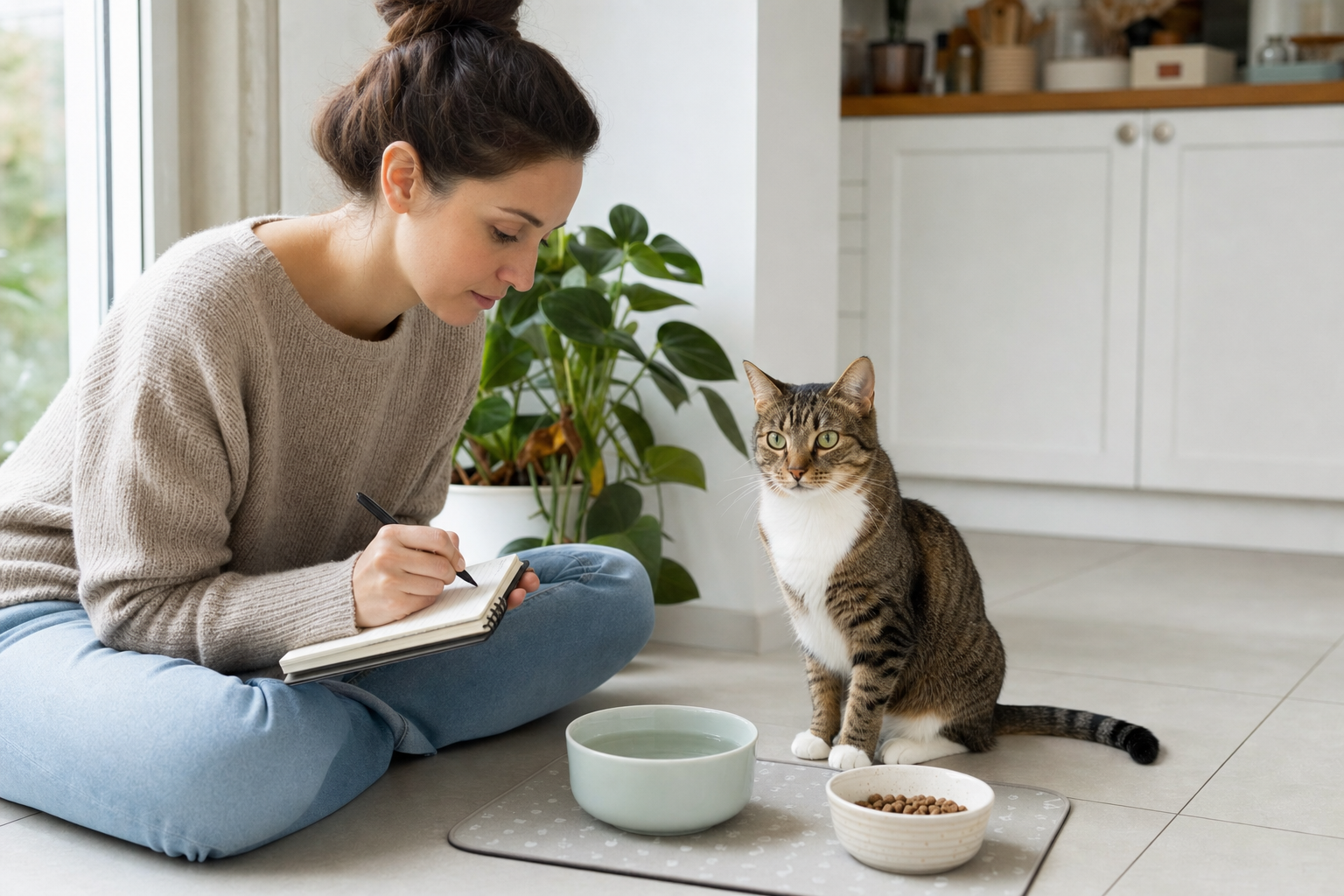
Record the cycle and any changes that could affect urgency or spay planning. A short, factual log is more useful than trying to interpret every behavior.
Track:
- when the behavior began and when it changes or stops
- vocalization, rolling, rubbing, mating posture, and escape attempts
- appetite, drinking, urination, stool, energy, and hiding
- any vomiting, discharge, bleeding, pain, or abdominal swelling
- whether contact with an intact male was possible
- whether the cat is definitely unspayed
- previous heat-cycle dates, if known
For timing context, see how long cats are in heat. If a cat later becomes pregnant and approaches delivery, use the cat giving birth guide rather than applying heat-cycle advice.
Conclusion
Helping a cat in heat is mainly a safety and comfort job. Keep her securely indoors, prevent any contact with intact males, maintain a calm predictable environment, and let her choose whether to play or receive affection. These steps can reduce stress, but they do not switch off the reproductive cycle.
The most important distinction is between intense-but-typical heat behavior and signs of illness. Yowling, rolling, rubbing, and restlessness may fit heat; weakness, vomiting, trouble urinating, abnormal discharge, heavy bleeding, or a swollen abdomen do not. Discuss spaying with your veterinarian as the reliable long-term way to stop future heat cycles.
Frequently Asked Questions
Can I stop my cat’s heat cycle at home?
No. You can provide comfort, reduce stimulation, and prevent mating, but you cannot reliably stop the hormone cycle at home. Speak with your veterinarian about spaying.
How do I calm a cat in heat at night?
Use a secure quiet room with food, water, a clean litter box, familiar bedding, and optional gentle play before bedtime. Keep doors and windows secured and do not punish vocalization.
Should I let my cat outside while she is in heat?
No. Keep her securely indoors and away from intact males. A cat in heat may escape unexpectedly and can become pregnant during the cycle.
Is a cat in heat in pain?
Heat behavior can look distressing, but typical estrus signs are hormone-driven. Pain, weakness, vomiting, trouble urinating, abnormal discharge, or a swollen abdomen require veterinary advice.
Can I give catnip, calming supplements, or medicine?
Do not give medicines, hormone products, supplements, or herbal remedies unless your veterinarian approves them for your cat. Responses vary, and some products can be unsafe.
Can a cat be spayed while in heat?
Sometimes, but clinic policies and individual risks vary. Ask your veterinarian whether to schedule during the cycle or after it ends.
References
[1] VCA Animal Hospitals. Estrous Cycles in Cats.
[2] Merck Veterinary Manual. Pyometra in Small Animals.
[3] Cornell Feline Health Center. Choosing and Caring for Your New Cat.
 How to Choose Low-Tracking Cat Litter: Dust, Texture, and Paw Comfort">
 How to Choose a Litter Box for a Large Cat: Size, Entry Height, and Placement">
 EN
EN DE
DE ES
ES PT
PT