
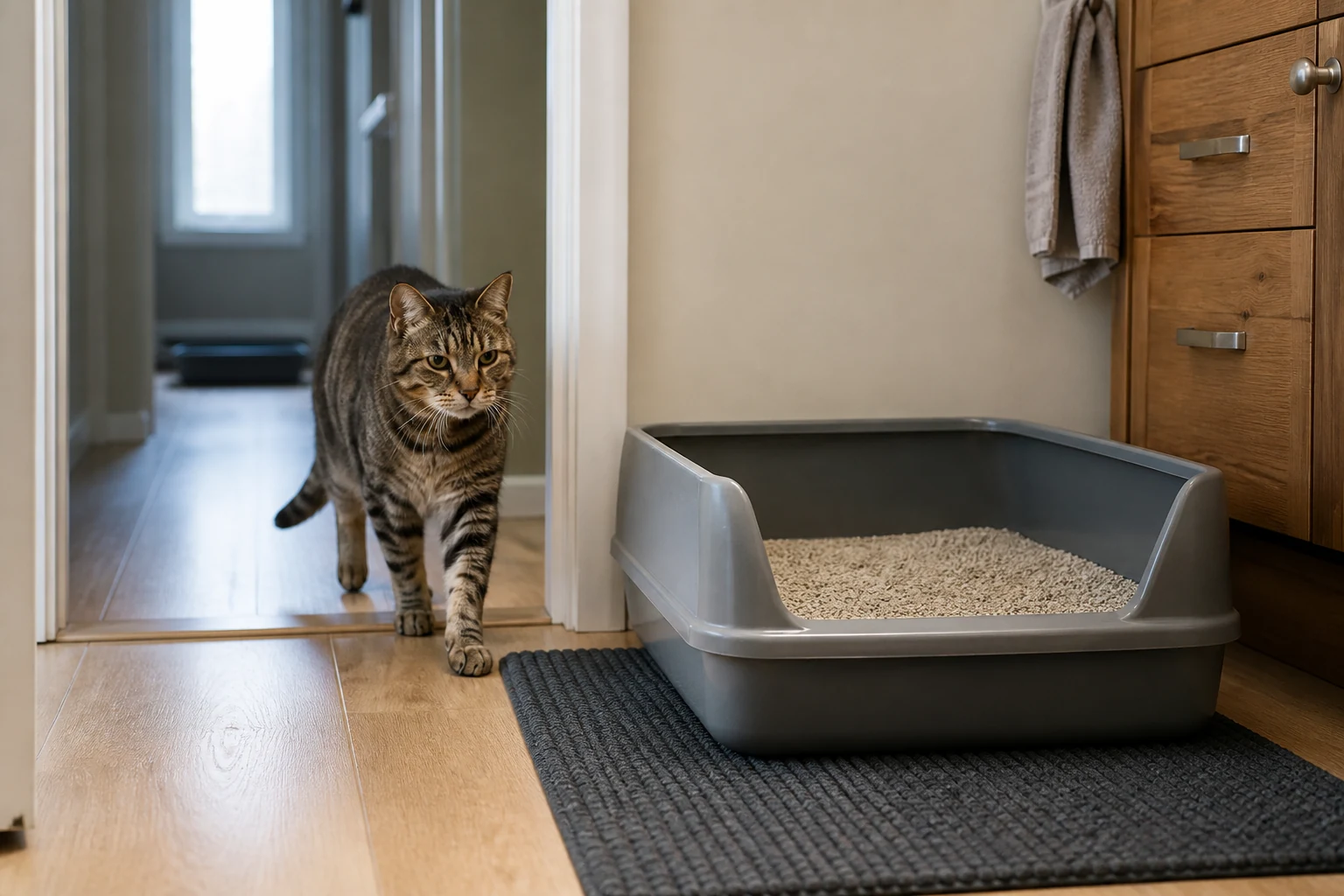
A senior cat should have litter boxes close enough that stairs, long hallways, closed doors, slippery floors, and other pets do not become barriers. In many homes, that means at least one accessible box on every floor your cat uses, plus a backup box near the route where accidents or hesitation are most likely.
This guide is not about buying the fanciest box. It is about mapping your older cat's real day: where they sleep, where they drink, when they wake at night, how confidently they handle stairs, and which routes feel safe. Once you see the home from your cat's height and mobility level, the right box locations become much easier to choose.
Table of Contents
- How many litter boxes does a senior cat need?
- Where should senior-cat litter boxes go in a two-story home?
- How far is too far for an older cat to walk?
- What makes each senior-cat litter box station easy to use?
- How do you set up backup spots without confusing your cat?
- What should you track after changing the litter-box layout?
- When should litter-box changes trigger a vet call?
- Conclusion: Keep the easiest route available
- Frequently Asked Questions
- References
How many litter boxes does a senior cat need?
Most senior cats need more than one usable option, even if they have used a single box for years. A common starting rule is one litter box per cat plus one extra, or one per social group plus one when you know which cats share space peacefully 1.
For a one-cat senior household, that often means two boxes in two genuinely different places. For a two-cat household, start with three boxes, then check whether any cat is blocking a doorway, guarding a hallway, or forcing the older cat to pass through a tense area.
The important detail is that the boxes cannot all sit side by side. Ohio State's Indoor Pet Initiative emphasizes both number and location, including the need for boxes on each level of a multi-story home 2. Two boxes in the same laundry room may look like two choices to you, but to a stiff or worried cat they can function like one location.
If you already have a good general layout, use the best cat litter box setup as your baseline, then adapt it for age, distance, and nighttime access.
| Household situation | Practical starting point | Senior-cat adjustment |
|---|---|---|
| One senior cat in a one-floor home | Two boxes in separate quiet areas | Put one near the main daytime route and one near the sleep area |
| One senior cat in a two-story home | One box on each floor, plus a backup if accidents happen | Avoid making stairs the only path to a box |
| Two cats who get along | Three boxes in different locations | Make sure the senior cat has a box that another cat cannot easily guard |
| Multi-cat tension or bullying | One box per cat plus one, spread widely | Add escape routes and avoid dead-end rooms |
| Senior cat with arthritis or weak balance | At least two very accessible boxes | Use low-entry boxes, stable mats, and short routes |
Where should senior-cat litter boxes go in a two-story home?
In a two-story home, place a senior-cat litter box on every floor your cat normally uses. Cornell's senior-cat guidance notes that older cats may have trouble reaching litter boxes when stairs, jumping, or painful arthritis are involved 3.
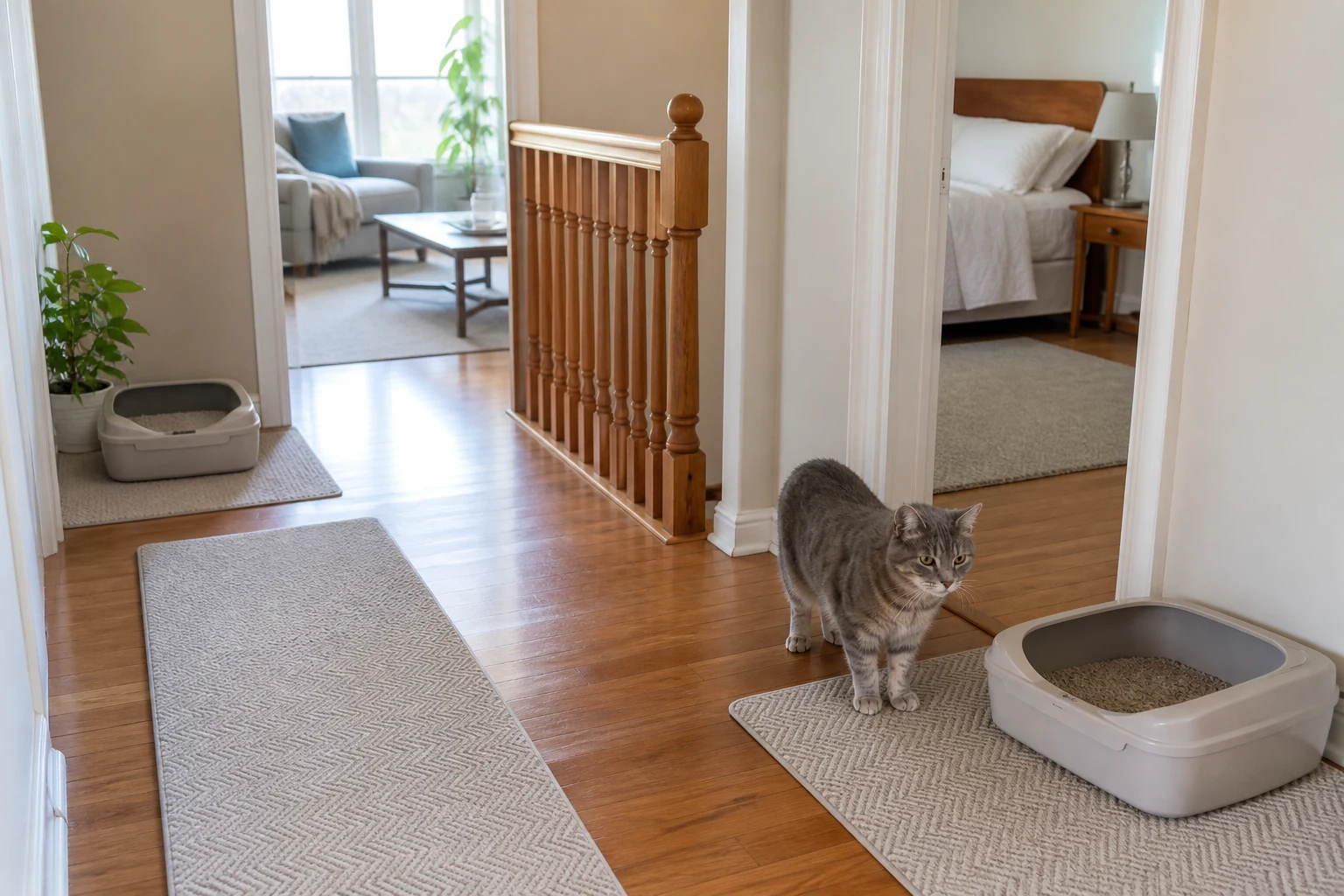
For senior cats, floor-by-floor access matters more than hiding every box in the most remote room.
Start with the places your cat already visits without being carried:
- One box near the floor where your cat sleeps most often.
- One box near the floor where your cat spends daytime hours.
- One backup option near a recurring accident spot, night route, or favorite resting area.
- Extra separation in multi-cat homes so one cat cannot guard all toileting options.
Avoid the common mistake of putting every box in the basement because it is convenient for humans. A basement box may work for a younger cat, but it becomes a problem if your senior cat is stiff after sleep, has reduced night vision, or hesitates at stairs.
The best location is quiet but not remote. Choose a spot with a clear approach, firm footing, and enough room for your cat to enter, turn, dig, and leave without backing into furniture. If a door often closes, the box behind it does not count as dependable access.
How far is too far for an older cat to walk?
Too far is any distance that makes your cat delay, rush, turn back, or choose a softer nearby surface instead. There is no universal number of feet because the answer depends on pain, vision, confidence, house layout, and whether another pet controls part of the route.
Watch your cat during normal routines. A senior cat who moves well after breakfast may still struggle after a long nap. Cornell also points out that older cats should have easy access to food, water, and litter boxes so they do not have to climb stairs if they would rather avoid them 4.
A route may be too difficult if your cat:
- pauses before stairs or avoids going down them at night;
- walks along walls or furniture for balance;
- slips on wood, tile, or laminate;
- waits near a closed door instead of going to the box;
- urinates near the box but not inside it;
- defecates outside the box while still urinating inside;
- avoids a route where another cat, dog, or child often appears.
If your cat is already showing stiffness, pair litter-box changes with broader comfort changes from how to help an arthritic cat at home. Rugs, ramps, lower resting spots, and predictable routes can make the box plan work better.
What makes each senior-cat litter box station easy to use?
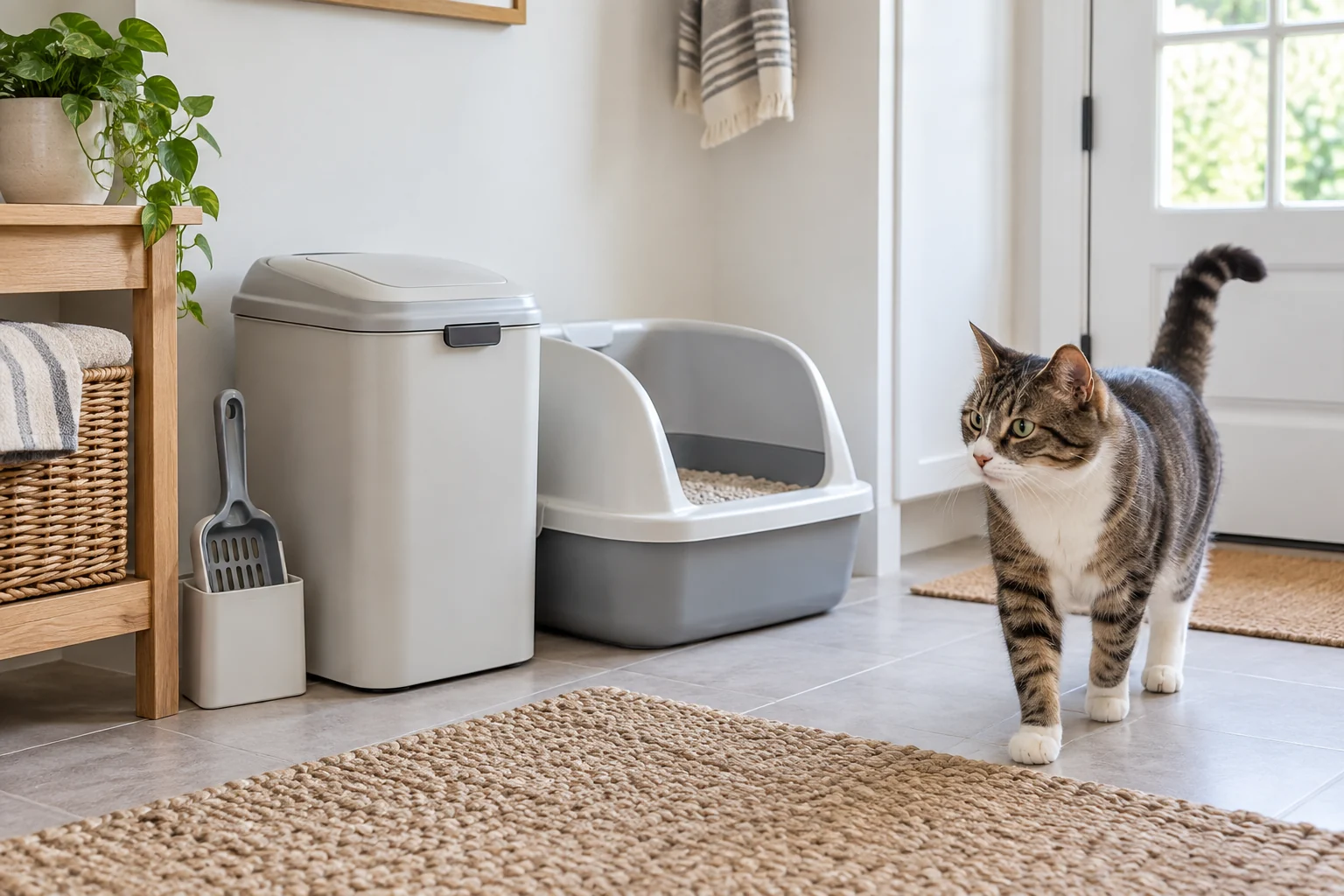
Each station should be easy to enter, large enough to move inside, clean, quiet, and placed on a route your cat trusts. Older cats often need a whole station, not just another tray.
Start with the box itself. A low-entry litter box for senior cats is usually easier than a high-sided, top-entry, or tight covered box. Ohio State notes that low-sided boxes are appropriate for older cats who have trouble getting in and out 2.
Then check the surrounding setup:
| Station feature | Senior-cat goal | What to avoid |
|---|---|---|
| Entry height | Step in without a high leg lift | Tall fronts, top-entry boxes, unstable ramps |
| Interior room | Turn and posture comfortably | Boxes too small for the cat's length |
| Surface underfoot | Stable approach and exit | Slippery floors, shifting mats, loose towels |
| Noise level | No sudden startle | Furnaces, laundry machines, loud vents |
| Privacy | Calm, predictable use | Busy doors, toddler traffic, dog beds |
| Exit route | Leave without feeling trapped | Dead-end closets, tight corners, blocked hallways |
If your cat is large, stiff, or has trouble turning, revisit the basics of choosing a litter box for a large cat. Size and entry height work together; a low doorway will not help much if the inside space forces your cat to twist.
Most senior cats do best with open boxes because they are easier to enter, smell less concentrated, and allow the cat to see the room. If you are deciding between a hooded and open setup, compare the tradeoffs in covered vs uncovered litter boxes before replacing a box your cat still trusts.
How do you set up backup spots without confusing your cat?
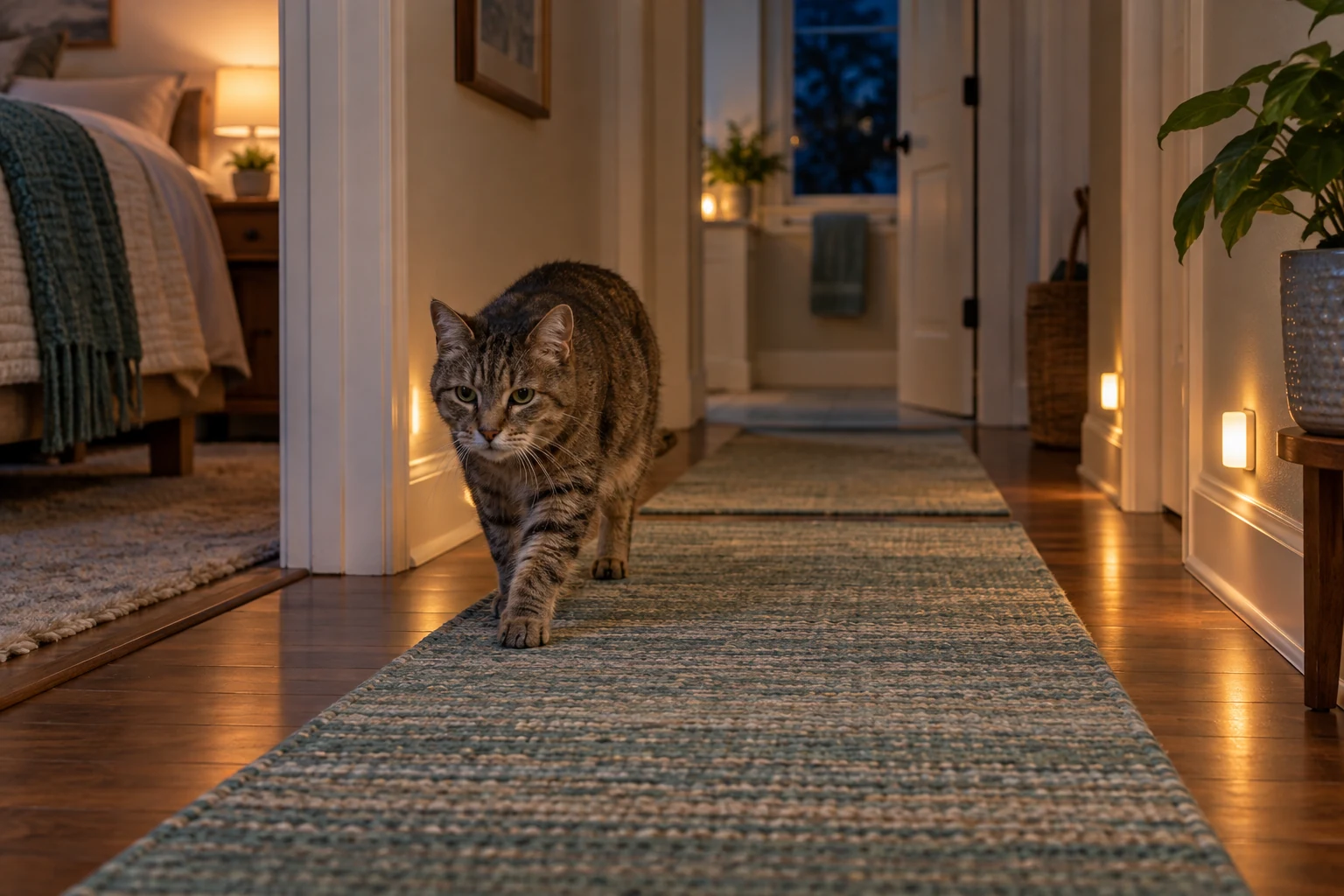
Add backup spots beside familiar routes, not in random hidden corners. A backup box should feel like an obvious extra option, especially near bedrooms, night paths, or areas where your cat has already hesitated.
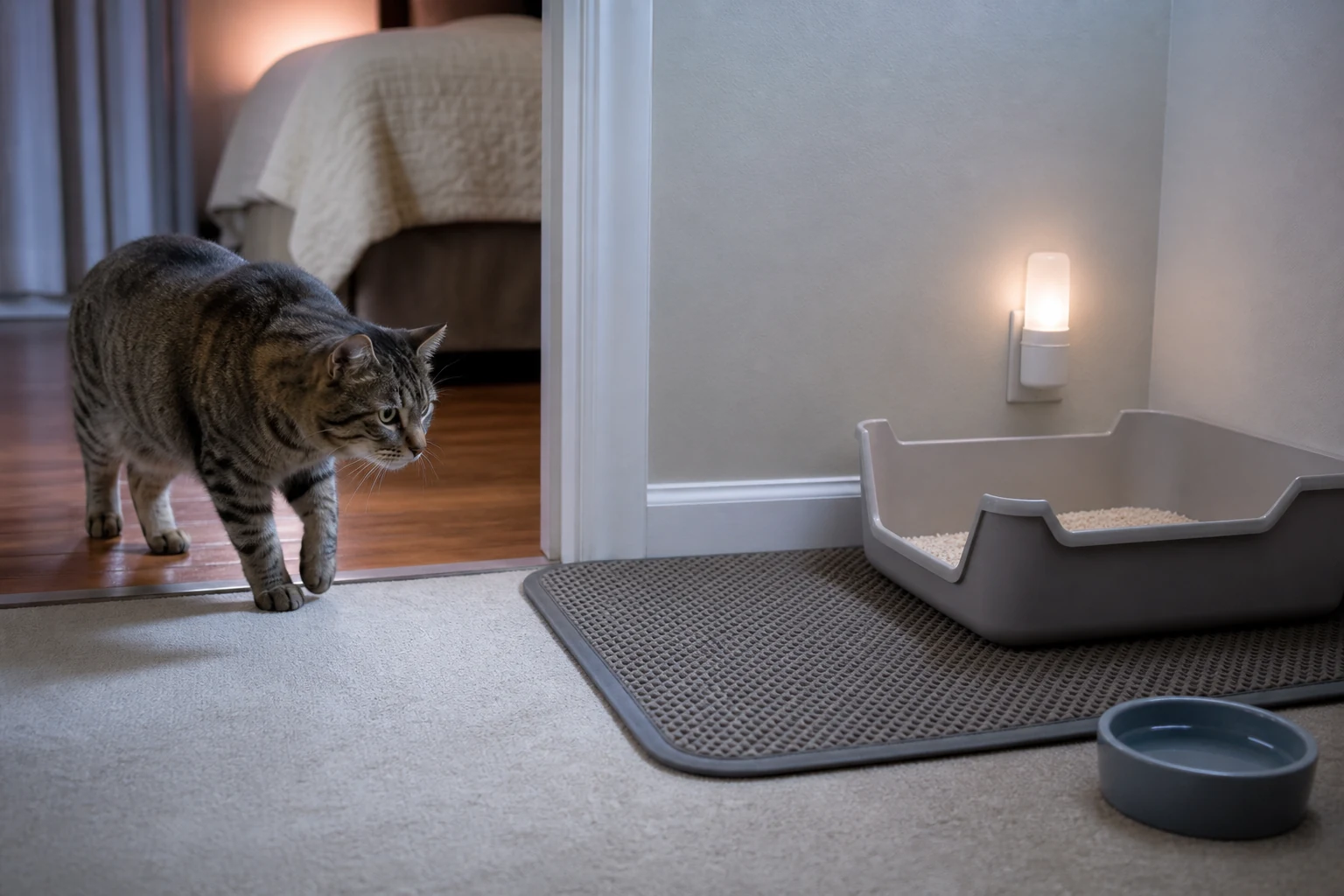
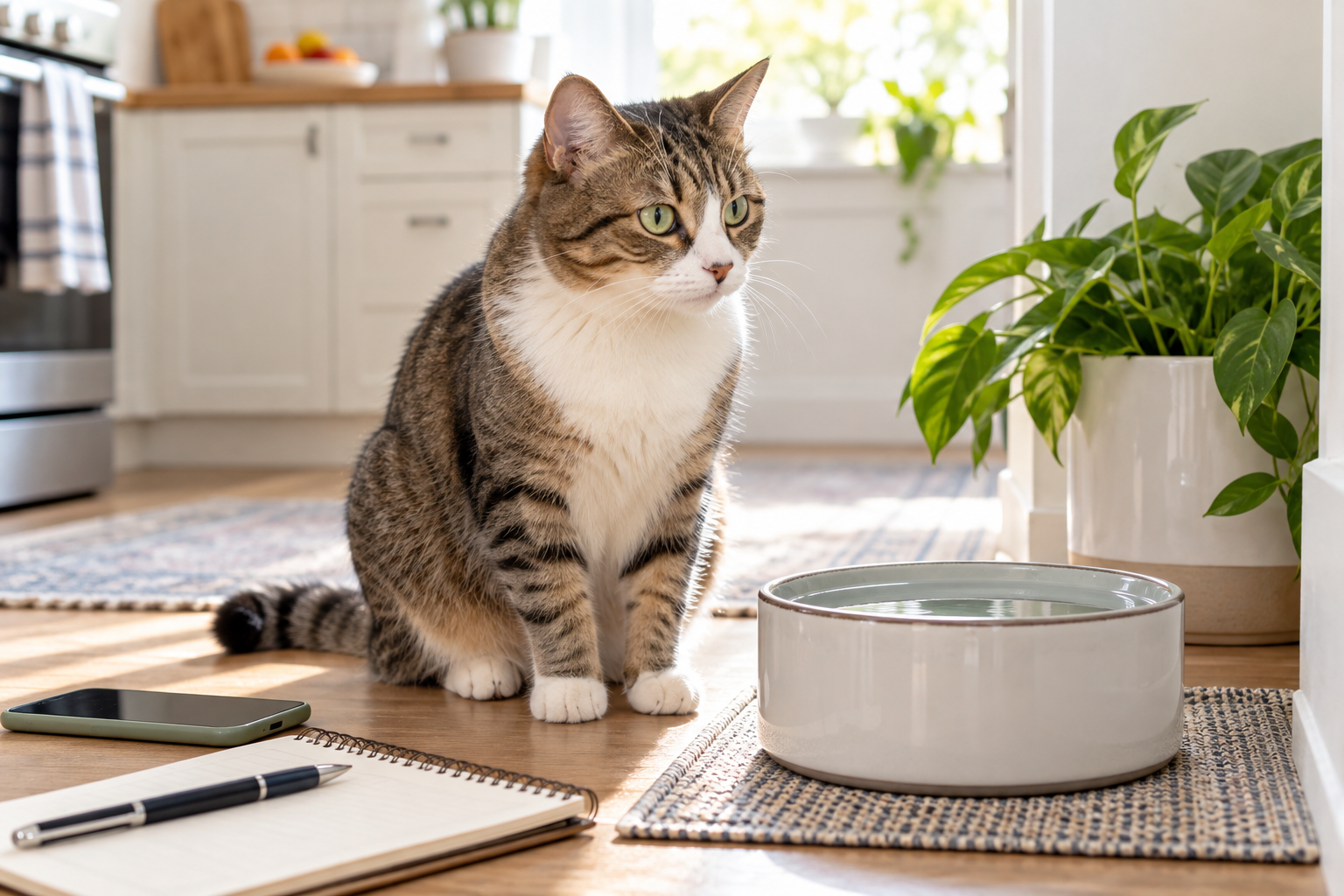
A backup box near a night route can prevent accidents when a senior cat is stiff, sleepy, or reluctant to use stairs.
Introduce one backup box at a time. Use the same litter at first, keep it clean, and leave the original box in place. If the new box is meant to replace an inconvenient one, wait until your cat has used the new option reliably before changing the old setup.
A good backup spot has:
- a short, visible route from a sleep or rest area;
- a low-entry open box;
- a stable mat that does not slide;
- a small night light if the route is dark;
- enough space around the box for turning and exiting;
- no food bowl directly beside the tray.
International Cat Care advises thinking carefully about tray placement for older cats, including easy access and separation from other key resources, while still making practical adjustments for very senior cats who need essentials closer together 5. In real homes, that means you may place water within the same room for a frail cat, but not pressed directly against the litter tray.
If another cat tends to lurk near doorways, avoid a single doorway dead end. A senior cat should be able to enter, use the box, and leave without passing nose-to-nose through a guarded pinch point.
What should you track after changing the litter-box layout?
Track box use for at least two weeks after you add or move a box. The goal is to learn which stations your senior cat actually uses and whether the new layout reduces hesitation, accidents, or nighttime stress.
Keep the tracking simple:
- Which box was used each day?
- Are urine clumps normal for your cat, larger, smaller, or missing?
- Is stool inside the box, beside the box, or somewhere else?
- Does your cat enter smoothly or pause at the edge?
- Is one box getting dirty much faster than the others?
- Does another pet block a route or doorway?
Cleaning matters more when you add boxes because a rarely scooped backup can become unattractive. Use how often to clean a litter box to set a routine: scoop daily, check more often when a senior cat has kidney disease, diabetes, digestive issues, or increased urination, and wash boxes on a schedule your cat tolerates.
Do not panic if your cat strongly prefers one box. That information is useful. It may tell you which floor, room, substrate, or route feels safest. Keep the preferred box dependable, then improve the less-used station by changing one thing at a time.
When should litter-box changes trigger a vet call?
Call your veterinarian if litter-box behavior changes suddenly, repeatedly, or comes with signs of pain, illness, or urinary trouble. A better layout can support a senior cat, but it should not replace medical evaluation when something has changed.
AAHA and AAFP note that changes in litter-box use can point to urinary tract disease, constipation, diabetes, reduced musculoskeletal strength, impaired balance, or pain 1. Cornell similarly warns that behavior or physical changes in older cats should not be dismissed as "just old age" 3.
Contact a veterinarian promptly if you notice:
- repeated trips to the box with little or no urine;
- crying, straining, or licking the urinary area;
- blood in urine or stool;
- sudden accidents in a cat who was previously reliable;
- constipation, painful defecation, or repeated diarrhea;
- vomiting, not eating, hiding, collapse, or rapid decline;
- new weakness, falling, circling, or confusion;
- stiffness, irritability, or missed jumps that suggest your older cat has arthritis.
A male cat who cannot pass urine, or any cat who is straining with little output and seems distressed, needs urgent veterinary care. Make the home easier, but let your vet check for pain, urinary disease, constipation, kidney disease, diabetes, thyroid disease, vision changes, and cognitive changes when the pattern is new.
Conclusion: Keep the easiest route available
A good senior-cat litter-box plan removes avoidable barriers. Give your older cat more than one real choice, keep a box on every floor they use, shorten night routes, avoid guarded or slippery paths, and make each station low-entry, roomy, clean, and easy to leave.
The best setup is the one your cat uses calmly. Start with the simple floor-by-floor plan, track what happens for two weeks, and adjust one detail at a time. For more practical home setup help, browse the SnuggleSouls Daily Care guides.
Frequently Asked Questions
Should a senior cat have a litter box on every floor?
Yes, if your senior cat uses more than one floor. A box on each floor prevents stairs from becoming the only route to toileting, which matters when an older cat is stiff, sleepy, visually cautious, or avoiding conflict.
Is one litter box enough for an older cat?
One box may work for a healthy, confident senior cat in a small one-floor home, but two separate options are safer for many older cats. Extra access is especially helpful if your cat sleeps far from the main box, has arthritis, urinates more often, or shares the home with other pets.
Where should I put a backup litter box for a senior cat?
Put the backup box near a familiar route: close to a bedroom, favorite resting area, or floor where accidents have happened. Avoid noisy appliances, tight closets, slippery floors, and rooms where the door is often shut.
Can moving a litter box make a senior cat stop using it?
Yes. Older cats often prefer predictable routines, so sudden moves can cause hesitation. Add the new box first, keep the old one available, and only remove or relocate the original after your cat reliably uses the new option.
What if my senior cat uses one box for pee and another for poop?
That pattern can be normal for some cats, but a new change may also point to discomfort, constipation, box size problems, or difficulty posturing. Keep both boxes clean and accessible, then ask your veterinarian if the pattern is sudden, repeated, painful, or paired with other health changes.
References
[1] American Animal Hospital Association. (2021). General Litter Box Considerations. URL
[2] The Ohio State University Indoor Pet Initiative. (n.d.). Litter Boxes. URL
[3] Cornell Feline Health Center. (2016). The Special Needs of the Senior Cat. URL
[4] Cornell Feline Health Center. (n.d.). Loving Care for Older Cats. URL
[5] International Cat Care. (2024). Special Considerations for Senior Cats. URL
 EN
EN DE
DE ES
ES PT
PT