
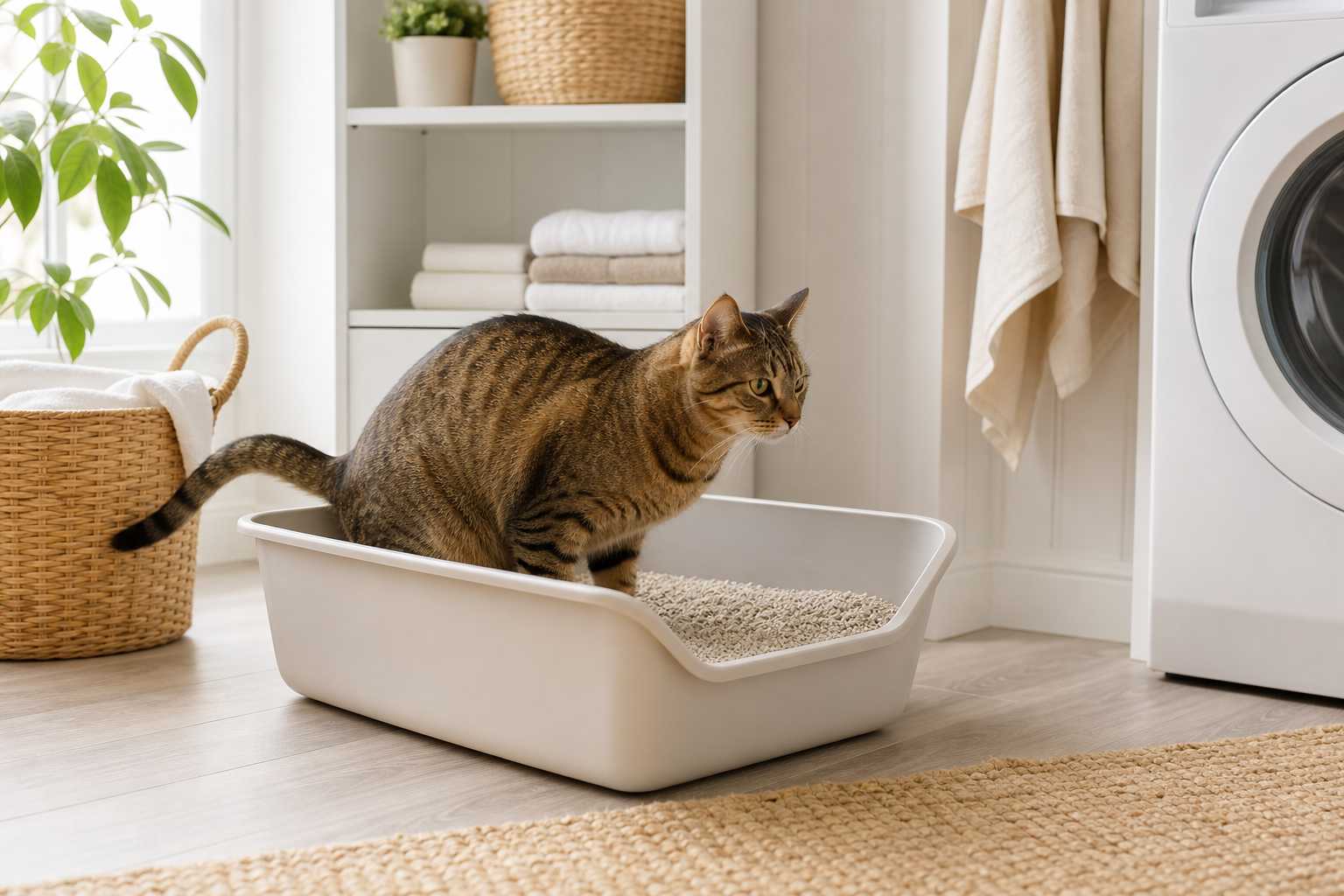
When comparing covered vs. uncovered litter boxes, neither style universally wins. In a small study of 27 cats, 70% showed no clear preference; 15% used the covered box more and 15% the uncovered one. Both were large, matched boxes with the same litter and daily scooping. Choose based on usable space, access, cleanliness, and your cat’s regular use.
A cover may hide waste from view or limit some litter scatter, but it does not replace scooping. It can also concentrate odors and make the interior feel cramped. If you are unsure, offer a fair choice while keeping the familiar box available.
Do cats prefer covered or uncovered litter boxes?
Research does not show one lid style that every cat prefers. Two small studies found different patterns, and the amount of usable floor space may matter as much as the cover.
| Study | What researchers observed | What the result can and cannot tell us |
|---|---|---|
| Grigg et al. (2013): 27 cats, two large boxes, same litter and daily scooping over 14 days | Nineteen cats (70%) showed no significant preference; four used the covered box more and four used the uncovered box more. | The matched setup helps isolate the cover, but the sample was small and excluded cats with a recent history of litter box problems. |
| Beugnet & Beugnet (2019): two four-week tests in single-cat indoor homes | In the first test, 13 cats had boxes with equal floor area and there was no significant difference at the 5% level. In the second, 12 cats were offered a covered box with 17% more floor area; use favored the larger covered box. | These small tests do not prove that cats prefer covers: in the second test, cover and usable area changed together. |
The practical lesson is to avoid choosing by a blanket rule. A cat may accept either style, while another may consistently use one more comfortably. The studies do not establish what a cat with current house-soiling will choose, so a new accident should not be treated as a simple vote against the lid. 1 2
How do the two styles compare in daily use?
The main trade-offs are airflow, visibility, entry, usable interior space, and how much litter escapes the box. The cover itself does not make an undersized, dirty, or poorly placed box suitable.
| What you are comparing | Uncovered box | Covered box | Check before choosing |
|---|---|---|---|
| Air and odor | More airflow around the litter | Can concentrate odors inside the enclosure | Scoop every day; judge odor at the box, not only from across the room. 3 |
| View and exit | Easier for the cat to see the area and leave | Hood or doorway can narrow the view and route out | In a home with other pets, make sure another animal cannot block or ambush the cat. 4 |
| Litter scatter and visibility | More litter may land outside; contents are visible | May contain some kicked litter and hide waste from view | A cover can make it easier for people to overlook cleaning. |
| Room to turn | No hood limiting headroom | A hood may reduce usable height or floor area | Measure the inside, then confirm the cat can enter, turn, dig, and posture. |
| Entry for kittens or older cats | Low-sided options are easy to find | Some covered models have a high step or narrow opening | Prioritize a low, comfortable entrance with either style. 3 5 |
Ohio State’s Indoor Pet Initiative notes that cats generally prefer large, uncovered boxes, while also recognizing that some cats prefer the privacy of a covered box. It also cautions that covers concentrate odors and need to be kept very clean. That is useful general guidance, not a reason to override what an individual cat is already using comfortably. 3
When can a covered litter box work well?
A covered box can be a reasonable option when your cat enters voluntarily, has enough room inside, and keeps using it without hesitation or new accidents. Check the interior floor area and entry height; the outside dimensions of a hooded box can make it look roomier than the space your cat can actually use.
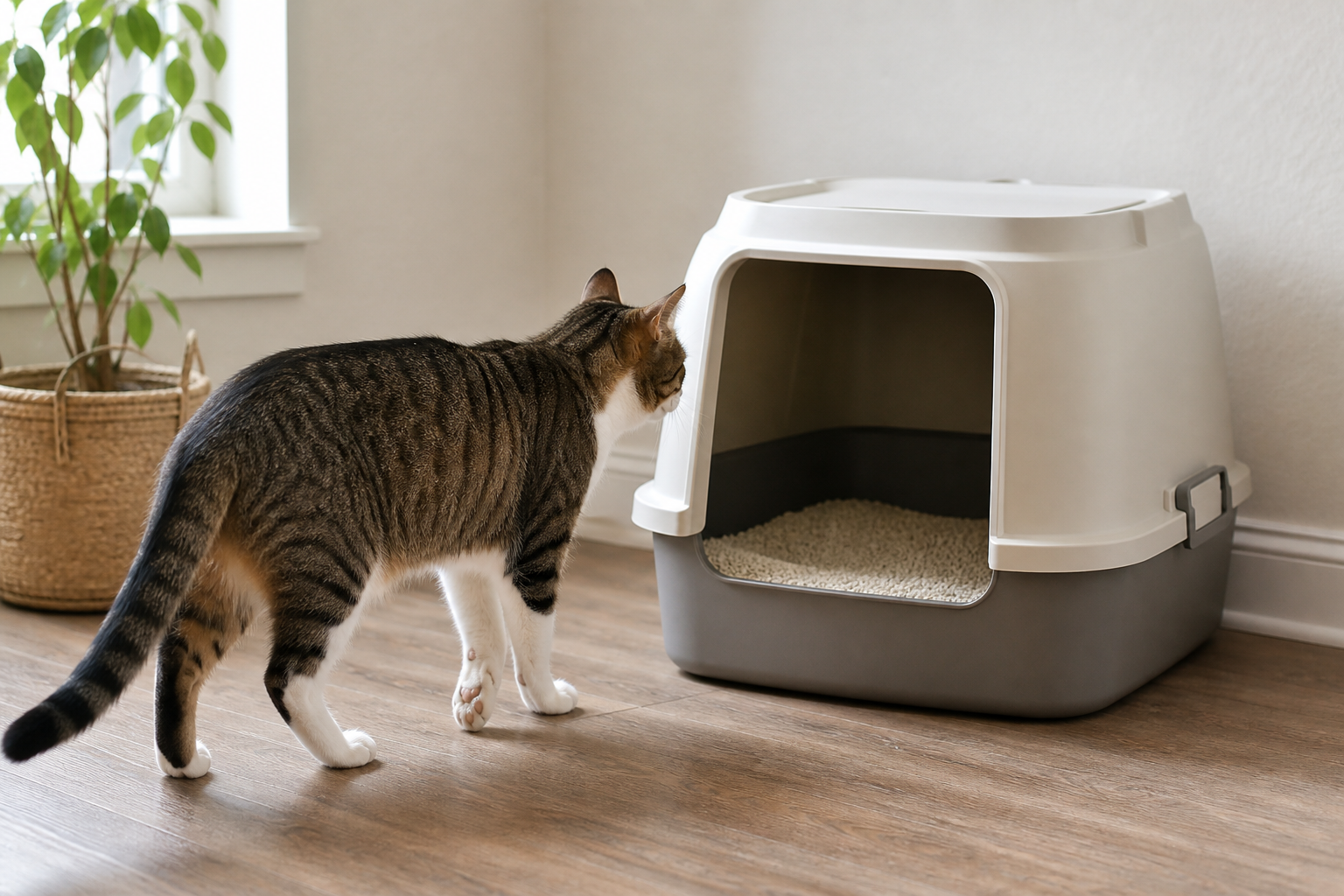
Some cats may value the privacy, and a hood may contain some litter thrown during digging. Keep the box easy to inspect and scoop. A covered box that stays dirty or traps strong odors may be less attractive, even if the cat initially accepts it. Avoid adding a door flap during a comparison; it changes the entry and adds another variable.
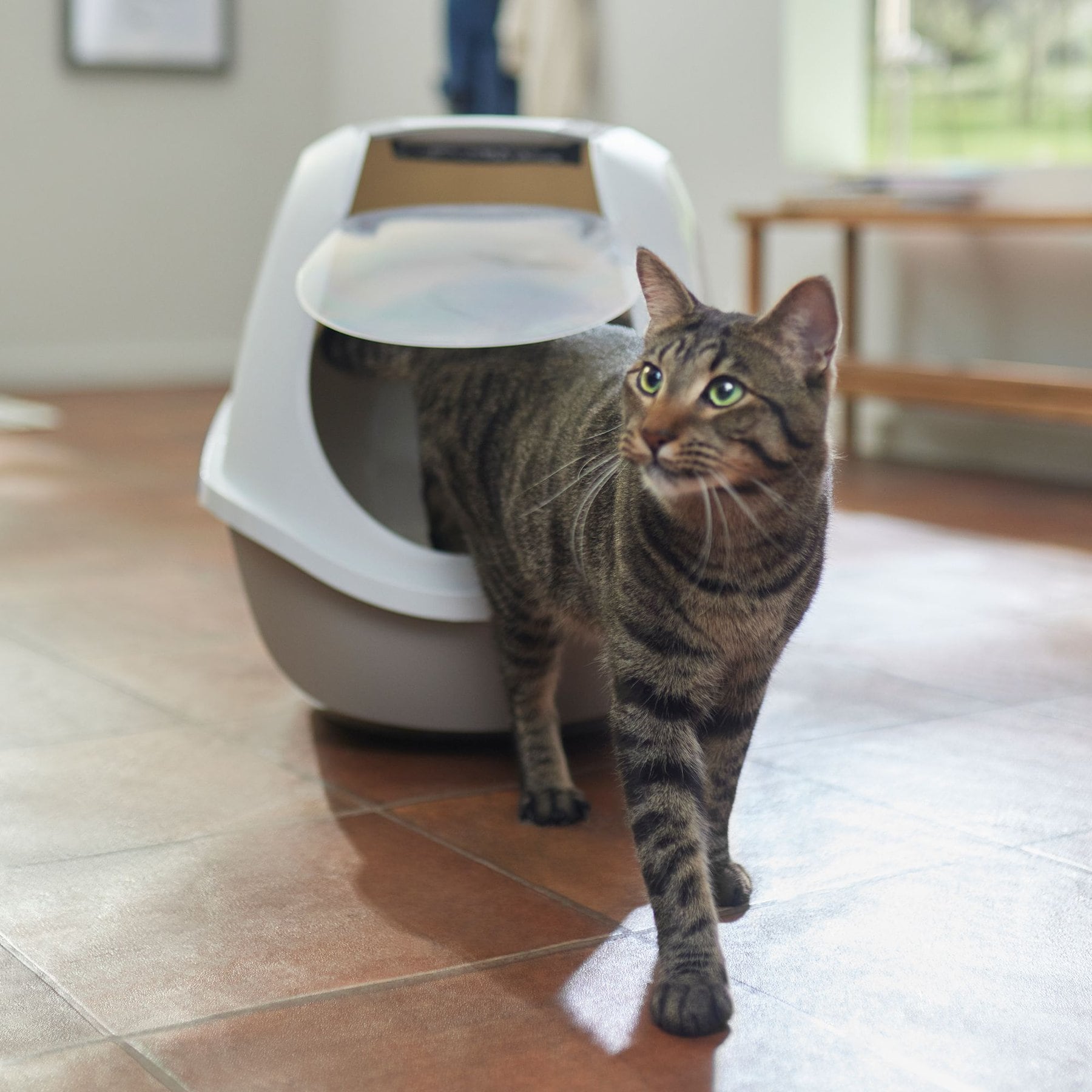
This Frisco hooded model has a removable door flap. For a fair first comparison, test the hood without the flap and check the interior floor and entrance for your cat.
A hooded model to compare without its flap
The door flap is removable. Compare the hood separately from the flap, and keep your cat’s familiar box available.
Frisco
Frisco Hooded Cat Litter Box, Gray, 26-in
This covered litter box from Frisco by Chewy is all business—as in the business your kitty handles in the litter box. The hooded design…
$33.99
Check price and availabilityWe may earn a commission if you buy through this Chewy link, at no extra cost to you. Product details and prices can change.
When is an uncovered litter box a better fit?
An uncovered box is a better fit when your cat chooses it more consistently, has trouble entering or turning in a hooded model, or seems less comfortable with a restricted view. It is also easier for you to see the contents and notice changes in urine or stool.
That does not mean every kitten, older cat, anxious cat, or cat in a multi-cat home must use an open box. For kittens and cats with mobility limits, a low entrance matters with either style. In a multi-cat home, quiet placement, clear access, separate locations, and enough boxes matter more than assuming one lid style solves conflict. 3 4
What matters whichever style you choose?
A good box gives the cat enough room, a comfortable entrance, a clean surface, and an accessible location. These basics can matter more than the lid.
- Usable size: A common veterinary guideline is a rectangular box about 1.5 times your cat’s nose-to-tail-base length. Measure the inside floor area; the cat litter box size calculator can help compare the minimum inside length with the box you are considering. 5
- Easy entry: Choose a low entrance if your kitten, older cat, or cat with limited mobility has trouble stepping in. A low-entry design can be open or covered. 3 5
- Cleanliness: Scoop at least daily and wash the box regularly with mild soap. A covered box still needs the same cleaning routine; use this litter box cleaning schedule for more detail. 3 5
- Location: Place the box somewhere quiet and easy to reach, away from food and water. Avoid a spot where another pet can block the entrance or trap the cat. 3 4
- Number and distribution: One box per cat plus one extra is a common starting guideline, with boxes in separate locations. Adapt the arrangement to your home and the cats’ access needs. 3
For the broader setup checklist, see our full cat litter box setup guide.
How can you compare the two styles fairly?
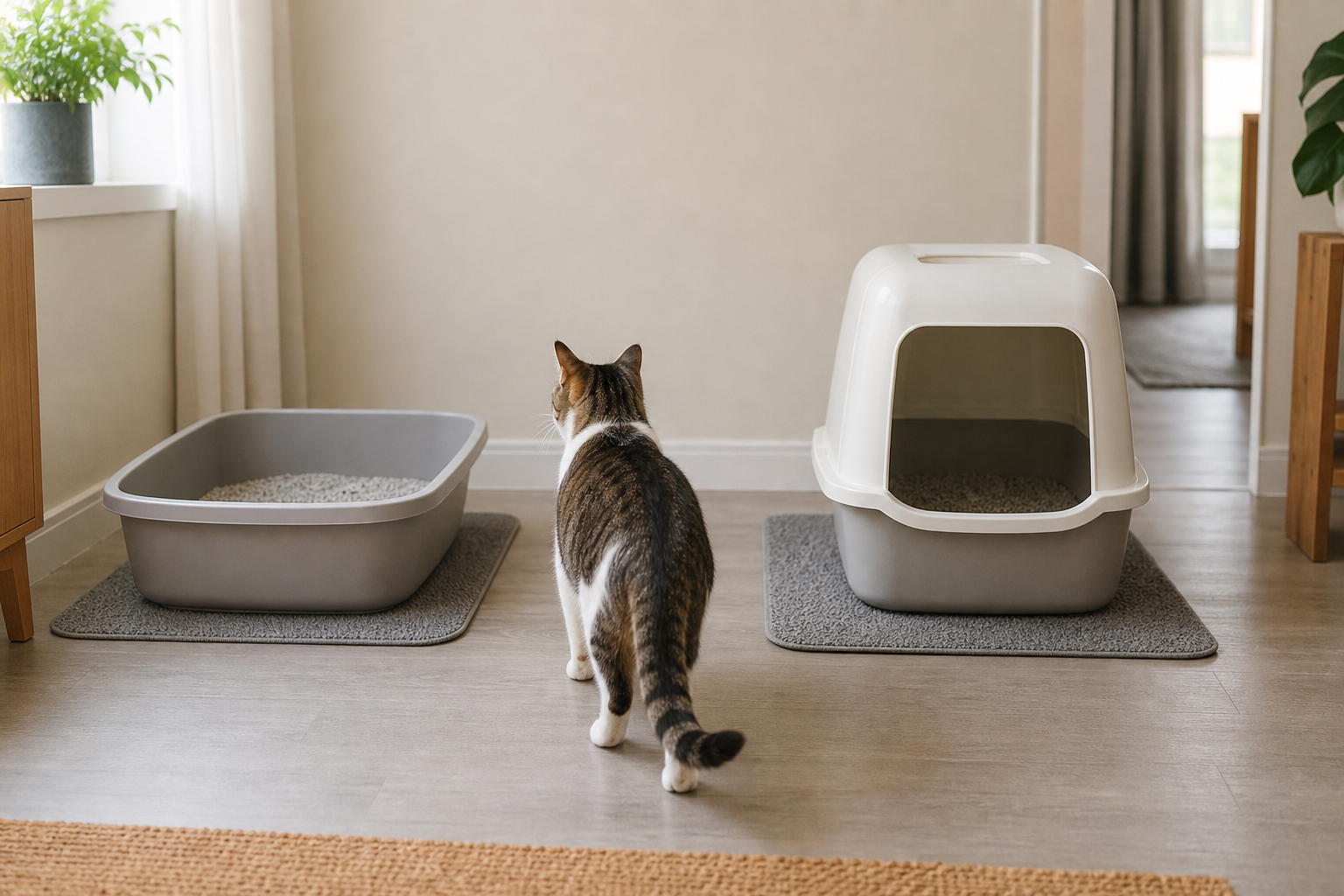
Keep the familiar box in place and let your cat choose. For a useful comparison, change the cover while keeping litter, litter depth, cleaning, entry height, and usable floor area as similar as possible.
- Keep the current box available. Do not abruptly remove the style your cat already uses.
- Offer the alternative. If possible, use the same box with and without its hood, or choose two boxes with similar usable dimensions. Use the same litter and depth in both.
- Keep both equally clean and accessible. Put them in quiet locations that are similarly easy to reach. If one box is in a much better spot, location may explain the choice as much as the cover.
- Observe normal use. Notice repeated choices, hesitation at the entrance, ability to turn, digging, quick exits, or accidents. In a multi-cat home, do not assume you know which cat used a box unless you can tell.
- Keep the option your cat uses comfortably. There is no single research-defined trial duration for every household. Continue only while your cat uses the boxes normally, and keep the familiar option available until the new setup is clearly accepted.
If you see avoidance or a new accident, return to the setup your cat was using comfortably and review cleanliness, litter, access, and location. Do not lock a cat in a room or force it to use one style.
If your cat avoids either box
Avoidance, eliminating beside a box, or a sudden change in urination or stool is not proof that the lid is the cause. Medical discomfort, the litter, cleanliness, location, or tension with another pet can also contribute. Cornell recommends considering the box, litter, location, and possible conflict with other pets when investigating house-soiling. 4
Arrange a veterinary assessment for new or persistent house-soiling instead of treating it as a preference problem alone. Straining or making repeated attempts to urinate with little or no urine can be an emergency, especially in a male cat. 5 Our litter box avoidance checklist and stress-related urination guide can help you note environmental factors, and our guide to urinary warning signs that need veterinary attention explains when to seek care.
Conclusion
The best choice is the style your cat can enter, use, and leave comfortably while it stays clean and roomy. Since research does not support one universal winner, compare like-for-like boxes, keep the familiar one available, and let repeated normal use guide the decision.
Frequently Asked Questions
Do cats prefer covered or uncovered litter boxes?
There is no universal winner. In one small study, most cats showed no clear preference, while a small minority favored either style. Offer a covered box only if it is roomy, clean, and easy for your cat to access. 1
Do covered litter boxes control odor better?
A cover may hide litter and waste from view, but it can concentrate odor inside the box. Scoop at least daily and keep the whole box clean; do not rely on a lid to replace maintenance. 3 5
Should a kitten or senior cat use an uncovered box?
Not automatically. Choose a box with a low entrance that the cat can cross comfortably. A roomy open box may be easier to access, but some covered models can also work if the opening is low and the cat uses it comfortably. 3 5
Can a covered box cause a cat to stop using the litter box?
It can contribute if the interior is too small, dirty, difficult to enter, or located where another pet can block the exit. But a new litter-box problem can also have medical or environmental causes, so ask a veterinarian when the change is sudden or persistent. 4 5
References
[1] Grigg EK, Pick L, Nibblett B. Litter box preference in domestic cats: covered versus uncovered. Journal of Feline Medicine and Surgery. 2013. Full article
[2] Beugnet VV, Beugnet F. Field assessment in single-housed cats of litter box type (covered/uncovered) preferences for defecation. Journal of Veterinary Behavior. 2019. Article abstract and DOI
[3] The Ohio State University Indoor Pet Initiative. Litter Boxes.
[4] Cornell Feline Health Center. Feline Behavior Problems: House Soiling.
[5] Merck Veterinary Manual. Providing a Litter Box for a Cat. Last reviewed July 2025.
 EN
 DE
 ES
 PT