
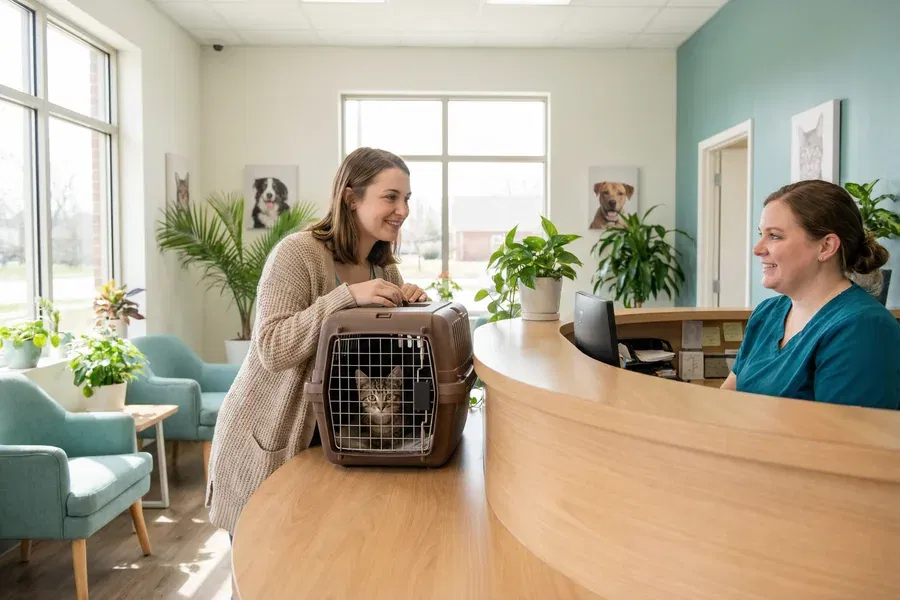
Wondering when to take a kitten to the vet for its first kitten check up? AAHA recommends scheduling a newly adopted kitten’s first wellness exam within the first 7 days at home—or immediately if your kitten seems lethargic, sneezes, has diarrhea, or skips meals [1]. Track age milestones with our Cat Age Calculator.
Educational note: This guide summarizes veterinary wellness guidelines and does not replace individualized care from your veterinary team.
Table of Contents
- When to bring a kitten or new cat to the vet (timing guide)
- What to do before booking the appointment
- What to bring to your kitten’s or cat’s first vet visit
- What happens during the first kitten check up?
- Kitten vaccine & deworming booster timeline
- Questions to ask at the appointment
- How to make the vet visit less stressful
- Costs and follow-up: what to clarify
- If you have other cats at home
- Conclusion
- Frequently Asked Questions
- References
When to bring a kitten or new cat to the vet (timing guide)
Bring a newly adopted kitten or adult cat to the veterinarian within the first week at home so the clinic can verify baseline health, review shelter records, and prevent gaps in vaccine or parasite protection [1] [3]:
- New kitten check up (first 7 days): Book within your kitten’s first week home, even if the shelter gave initial shots—kittens need repeat FVRCP boosters every 3–4 weeks and targeted fecal/deworming checks [1] [2].
- New adult cat (first 1–2 weeks): Schedule promptly to establish a baseline weight, check teeth and heart, and confirm microchip and vaccine records [3].
- Same-day or emergency visit: Seek immediate care for trouble breathing, repeated vomiting, watery diarrhea, refusal to eat for 12–24 hours (especially in young kittens), eye/nasal discharge, or urinary straining.
What to do before booking the appointment
Request all shelter, rescue, or breeder paperwork before calling the clinic, tell the receptionist you are scheduling a new kitten or cat checkup, and ask whether to bring a fresh stool sample for fecal parasite testing [1].
What to bring to your kitten’s or cat’s first vet visit
Pack adoption records, current food/preventive names, a short symptom log, and a secure carrier lined with a familiar towel (carry rigid carriers from underneath rather than swinging by the top handle) [4]. Prepare supplies with our new cat supplies checklist and home routine in our first 30 days with a new cat guide.
What happens during the first kitten check up?
During the first checkup, the veterinarian weighs your kitten or cat, examines eyes, ears, teeth, heart, lungs, skin, and abdomen, and recommends fecal parasite testing and FeLV/FIV screening based on age and history [1] [3].
Kitten vaccine & deworming booster timeline
Because maternal antibodies fade gradually during kittenhood, AAHA/AAFP guidelines schedule core FVRCP boosters every 3 to 4 weeks from 6–8 weeks through 16–20 weeks of age, paired with FeLV, rabies, and parasite prevention [2]:
| Age window | Typical kitten check-up focus | What to confirm with your vet |
|---|---|---|
| 6–8 weeks | First wellness exam, FVRCP #1, fecal float, deworming, FeLV/FIV test | Which shelter doses were already given and next booster date [2] |
| 10–12 weeks | FVRCP #2, FeLV #1 (recommended core for kittens <1 yr), weight & dental check | Year-round flea, heartworm, and intestinal parasite prevention |
| 14–16+ weeks | Final FVRCP booster (through 16–20 wks), FeLV #2, Rabies vaccine | Spay/neuter scheduling, microchip registration, and adult diet transition |
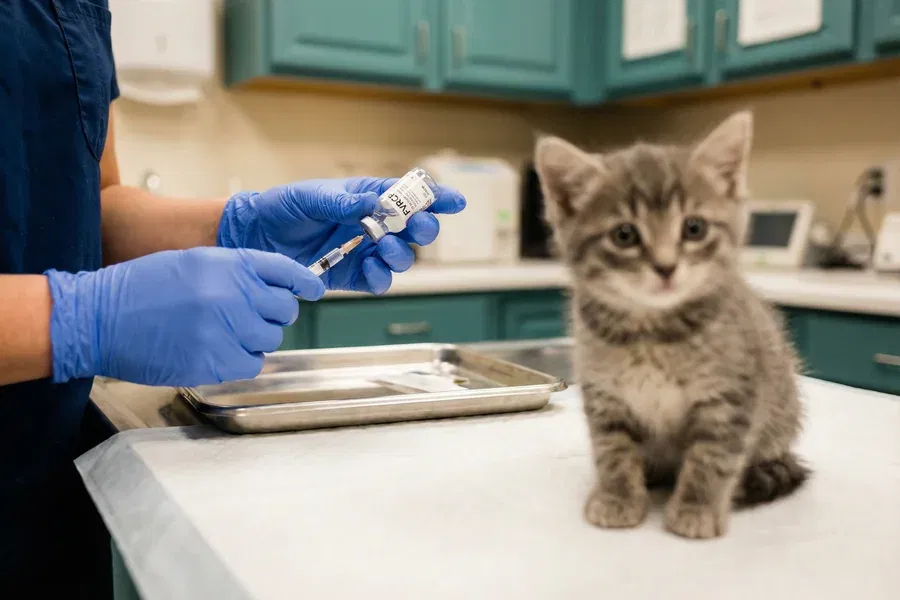
Review full booster details in our cat vaccines and boosters guide and carrier prep in how to prepare a cat for vaccines.
Questions to ask at the appointment
Ask which vaccines and parasite preventives are due today, how many grams or calories to feed your growing kitten, when to schedule spay/neuter, and how long to separate the newcomer from resident pets [1] [3].
How to make the vet visit less stressful
Leave the carrier open at home with treats inside several days before the visit, drape a light towel over the carrier in the car for visual calm, and never open the carrier in the lobby [4].
A top-load carrier for the first vet trip
A secure carrier can make transport and clinic handling easier. Familiarize your cat with it gradually at home and follow your clinic’s instructions for arrival and sample collection.

Petmate
Petmate Top Load Cat Kennel, Pearl Bubble Grape/Black
The Petmate Top Load Cat Kennel is designed for cat companions who weigh up to 10 pounds. Purr-fect for travel or house-training, this kennel…
$44.99
Shop ChewyWe may earn a commission if you buy through this Chewy link, at no extra cost to you. Product details and prices can change.
Costs and follow-up: what to clarify
Ask the clinic for an itemized estimate before testing or vaccines, bring shelter paperwork so completed services are not duplicated, and plan initial exam and vaccine expenses with our Cat Adoption Cost Calculator.
If you have other cats at home
Keep your newly adopted kitten or cat in a separate starter room until a veterinarian completes the initial exam and parasite/FeLV/FIV screening, then follow our step-by-step guide to introducing two cats without fighting [3].
Conclusion
Scheduling your kitten’s or new cat’s first vet checkup promptly sets up accurate vaccine timing, parasite protection, and a healthy baseline before resident-pet introductions. Book a wellness visit within the first 7 days at home (or immediately for illness signs), bring all adoption records and a fresh stool sample if requested, and leave with written booster and spay/neuter dates [1] [2].
Frequently Asked Questions
When should I take a new kitten to the vet for its first check up?
Schedule a kitten’s first wellness checkup within the first 7 days of bringing it home—even if the shelter or breeder already started shots—and call immediately if your kitten has diarrhea, sneezing, eye discharge, lethargy, or poor appetite [1].
How many vet visits does a kitten need in the first year?
Most kittens visit the veterinarian every 3 to 4 weeks between 6–8 weeks and 16–20 weeks of age for core FVRCP boosters, FeLV and rabies vaccines, fecal tests, and deworming, followed by a spay/neuter visit and an annual adult wellness exam [1] [2].
Should I bring a stool sample to my kitten’s first vet visit?
Ask your clinic when booking—most veterinarians recommend bringing a fresh, coin-sized stool sample (collected within 12 hours in a clean bag or container) so they can screen for roundworms, hookworms, and coccidia at the first checkup [1].
Should I separate my new kitten or cat from resident cats before the vet visit?
Yes—keep a newly adopted kitten or cat in a separate room with dedicated bowls and a litter box until a veterinarian performs a physical exam and clears infectious or parasite risks [3].
References
[1] American Animal Hospital Association (AAHA). Kitten Health Care Guide.
[2] AAHA/AAFP. Core Vaccines for Pet Cats.
[3] Cornell Feline Health Center. Choosing and Caring for Your New Cat.
[4] Feline Veterinary Medical Association. Visiting Your Veterinarian.