
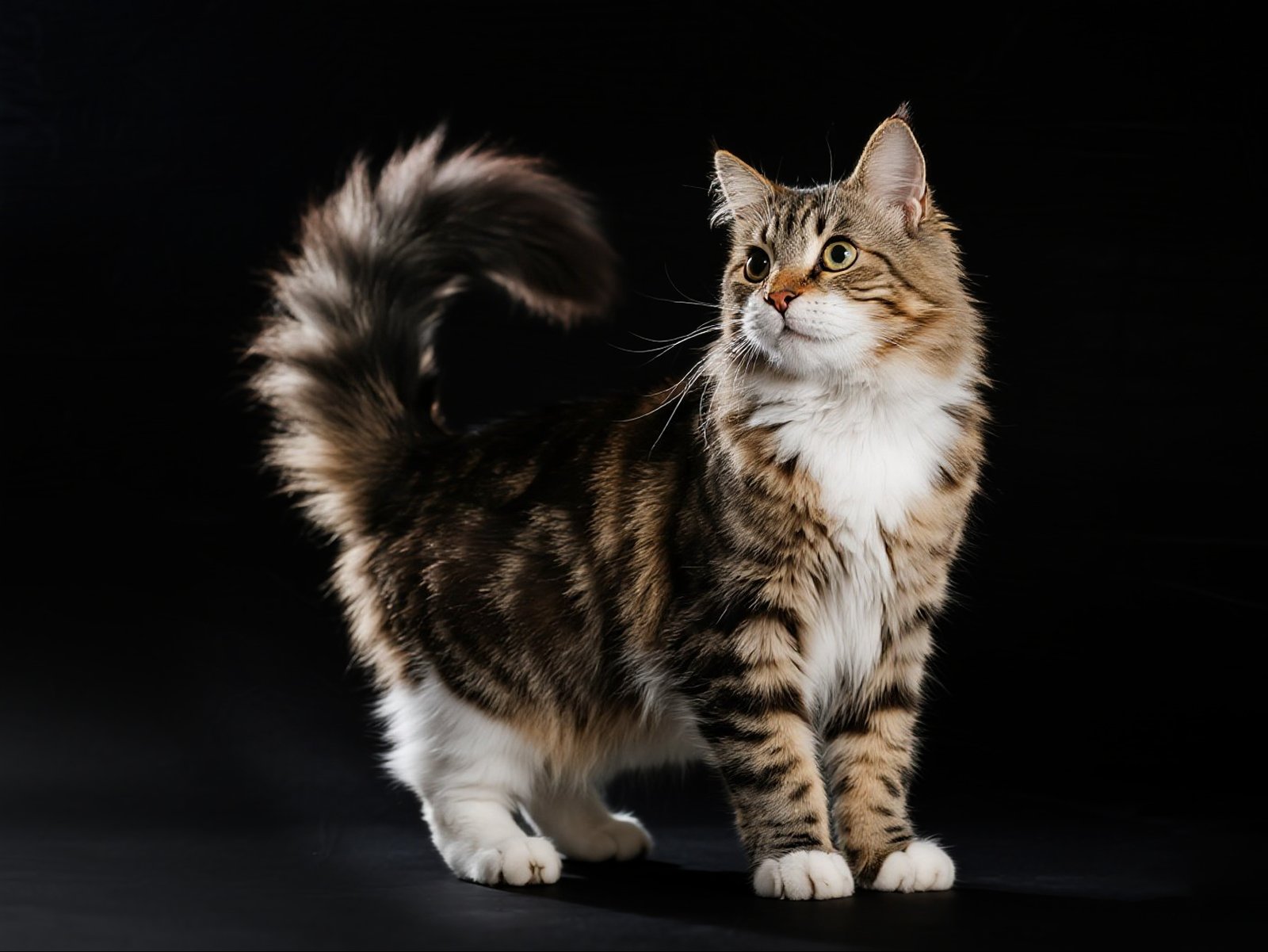
The Siberian cat is a large, affectionate, playful breed from Russia known for its thick triple coat, strong jumping ability, and social personality. It is a great fit for families who want an active, intelligent cat and can handle regular brushing, moderate-to-heavy seasonal shedding, and daily interaction.
Siberians are often friendly with children, cats, and dogs, but they are not a low-maintenance breed. They do best in homes that can provide climbing space, play, companionship, and routine grooming.
Table of Contents
| Characteristic | Description |
| Personality | Affectionate, playful, intelligent, loyal, energetic, curious, problem-solvers, good with kids/pets, not clingy, enjoys water, vocal (chirps, trills) |
| Body Type | Muscular, strong-boned, broad chest, barrel-shaped body, powerful hind legs slightly longer than front |
| Weight | Males: 15-20 lbs; Females: 8-17 lbs (General range: 8-20 lbs) |
| Origin Region | Siberia, Russia |
| Lifespan | 10-18 years |
| Coat Type | Semi-long, long, thick, triple-layered, water-resistant |
| Coat Colors | Full spectrum of colors and patterns, including white, black, blue, red, cream, silver, various patterns/shadings, solid, tortoiseshell, color point, brown tabby common |
| Shedding Level | ⭐⭐⭐⭐☆ (Moderate to High) |
| Affection Toward Humans | ⭐⭐⭐⭐⭐ (Very High) |
| Care Difficulty | ⭐⭐⭐☆☆ (Moderate) |
Introduction
The Siberian cat is a natural breed from Russia known for its dense triple coat, muscular build, and affectionate temperament.
Siberians are widely valued for being social, playful, intelligent, and athletic, making them a strong fit for households that want an interactive and people-oriented companion.
The breed is also recognized for its strong jumping ability, cold-weather-adapted coat, and, in some individuals, an unusual comfort around water.
History and Origins of the Siberian Cat Breed
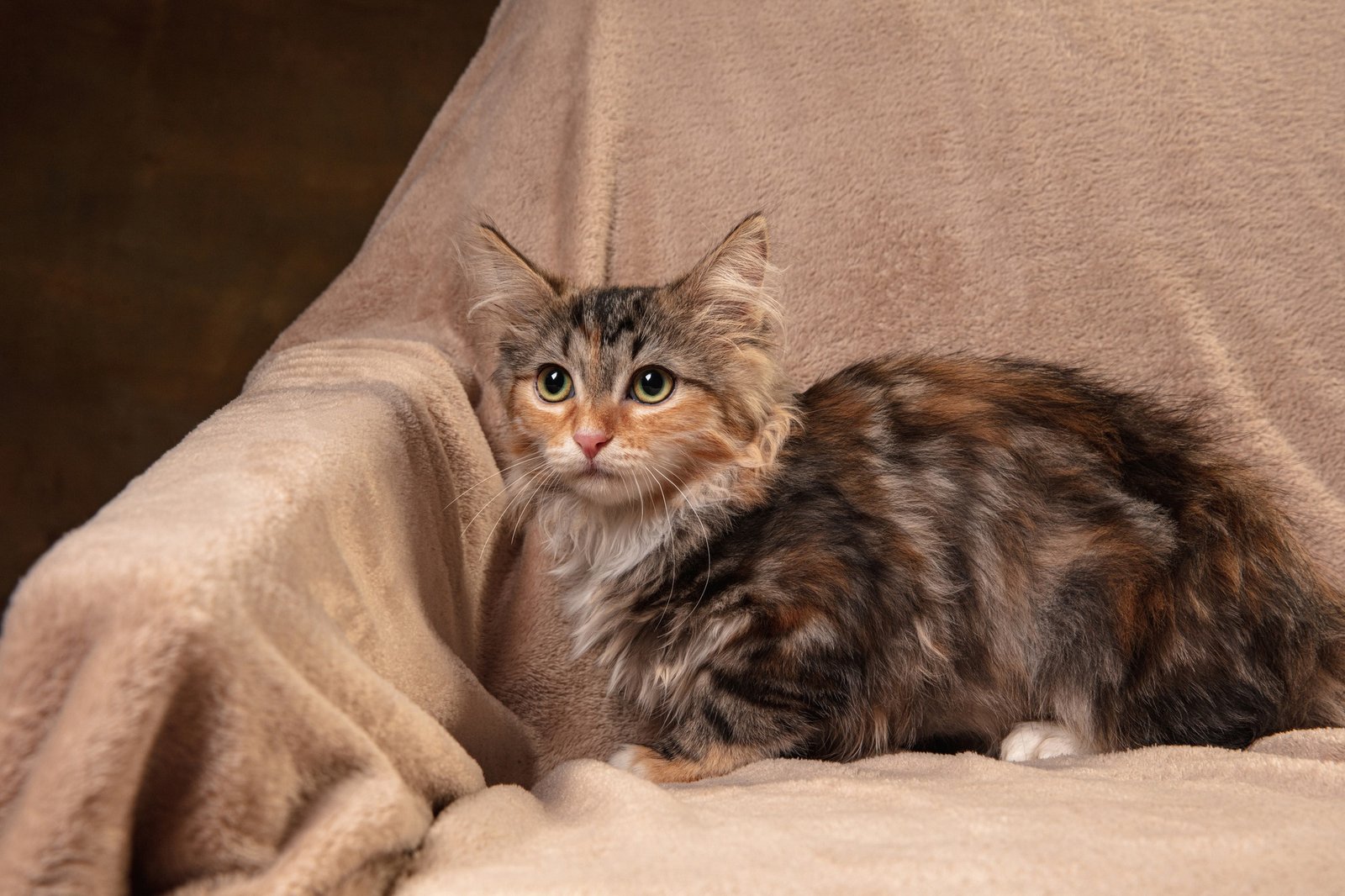
The Siberian is a naturally occurring breed (landrace) native to Russia, celebrated for its dense, weather-protective coat and robust build. Major cat registries, including The International Cat Association (TICA) and the Cat Fanciers’ Association (CFA), recognize the Siberian as a long-established natural breed rather than a recently engineered show cat.
Natural Evolution and Early History
Historically, the breed’s physical characteristics evolved as a direct adaptation to Russia’s harsh, subarctic climate. Modern breed standards from TICA, CFA, and the American Cat Fanciers Association (ACFA) consistently describe the Siberian as a strong, slow-maturing feline equipped with a heavy, triple-layered coat necessary for survival in extreme weather.
While early documentation is sparse, TICA notes that the earliest known references to Siberian cats trace back to approximately 1000 AD.
19th Century Cat Fancy Records
Though the breed was not yet standardized, Siberian-type cats were well-known to early feline enthusiasts. Late 19th-century historical records establish their presence in the early days of the organized cat fancy:
- 1870s: Earliest modern references to the breed appear in cat fancy literature.
- 1884: Siberian cats are documented appearing at the Madison Square Garden cat show.
- Late 1800s: Prominent early cat authors, including Harrison Weir and John Jennings, formally mention the breed in their published works.
Modern Standardization and U.S. Importation
The modern, documented history of the Siberian cat as a formalized pedigree breed began in the late 20th century, culminating in rapid international recognition.
- 1980s: Organized feline record-keeping expanded in Russia. Early breed standards were drafted, and Siberians began actively competing in formalized cat shows.
- 1990: The breed’s international presence accelerated. Breeder Elizabeth Terrell imported the first breeding Siberians to the United States for Starpoint Cattery. Concurrently, TICA records the foundational importation of three specific Siberians: Ofelia, Naina, and Kaliostro.
- 1991: The CFA records the arrival of the first U.S.-born Siberian litter.
Official Registry Recognition Timeline
Following their introduction to the United States, Siberians quickly achieved official recognition from the world’s leading cat registries:
- 1992: TICA accepts the Siberian into its New Breed program.
- 1996: TICA grants the Siberian full Championship status.
- 2000: The CFA officially accepts the Siberian for registration.
- 2007: The CFA elevates the Siberian to full Championship status.
Siberian Cat Physical Standards & Characteristics
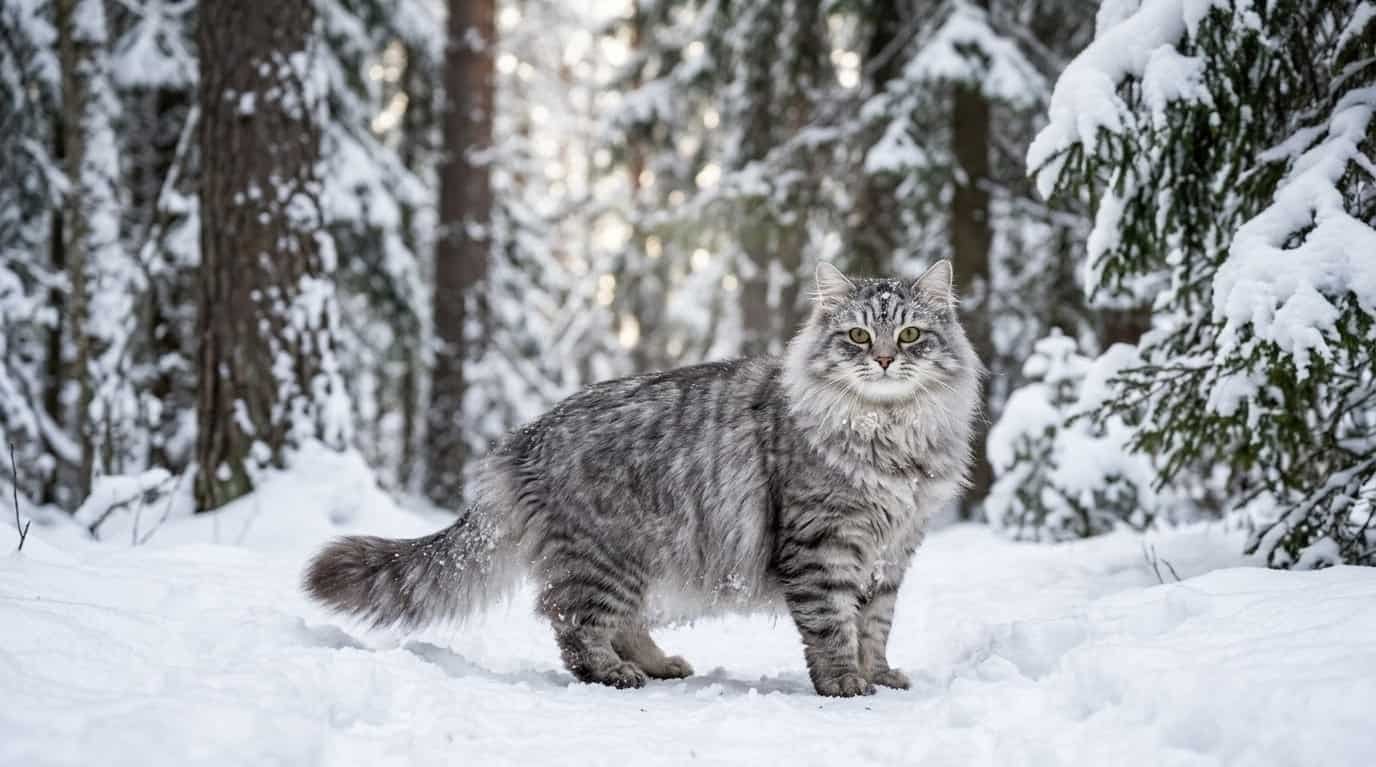
Siberian cats are medium-to-large, heavily boned, and muscular, with a rounded, substantial build rather than a long, fine-boned frame. Adult males often fall around 12 to 18 pounds, while females are usually smaller, though body type and condition matter more than weight alone. Breed standards consistently describe the Siberian as powerful, slow-maturing, and surprisingly heavy for its size.
The head is a modified wedge with rounded contours, not a sharp triangle. Siberians typically have medium-to-large ears with rounded tips and noticeable furnishings, plus large, expressive eyes that are almost round. Accepted eye colors commonly include green, gold, green-gold, or copper, while white cats or cats with white may have blue or odd eyes.
The body is built for strength and athletic movement. Siberians have substantial boning, a firm barrel-shaped torso, rounded feet, and hind legs that are slightly longer than the front legs. That structure helps explain why many Siberians are strong jumpers and confident climbers.
The coat is one of the breed’s defining features. Official breed descriptions call for a dense triple coat with a tighter undercoat in mature cats, plus seasonal variation that makes the coat fuller in cold weather and lighter in warmer months. Siberians are also recognized in a wide range of colors and patterns, including colorpoint varieties.
Siberians are sometimes described as better tolerated by some allergy sufferers, but they are not hypoallergenic. All cats produce Fel d 1, the major cat allergen, and Fel d 1 is associated with saliva, skin, sebaceous glands, and fur. Hair length itself does not appear to determine Fel d 1 production, so allergy response varies from person to person.
For readers with allergies, the practical advice is simple: test your own response before adopting. Breed reputation alone is not a reliable predictor of whether a specific person will tolerate a specific cat.
Siberian Cat vs Other Popular Breeds
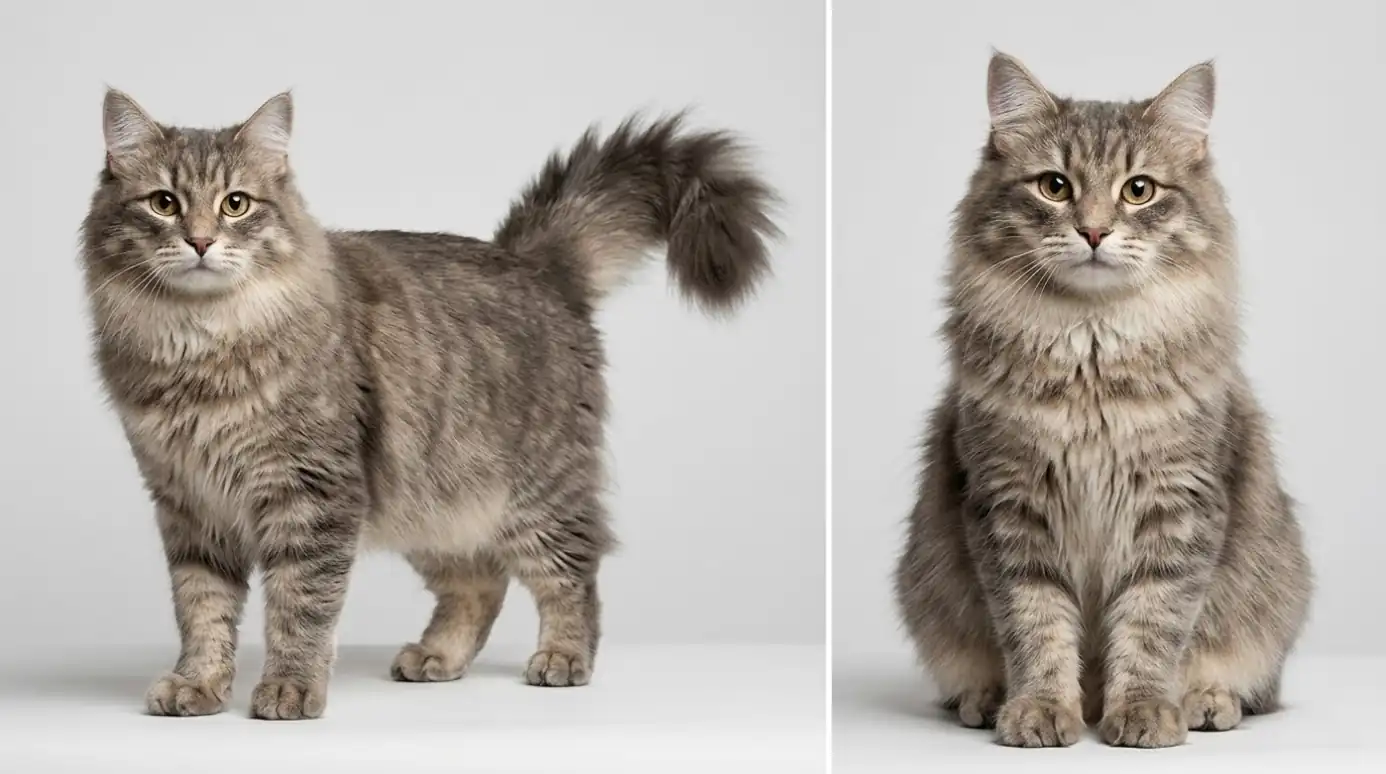
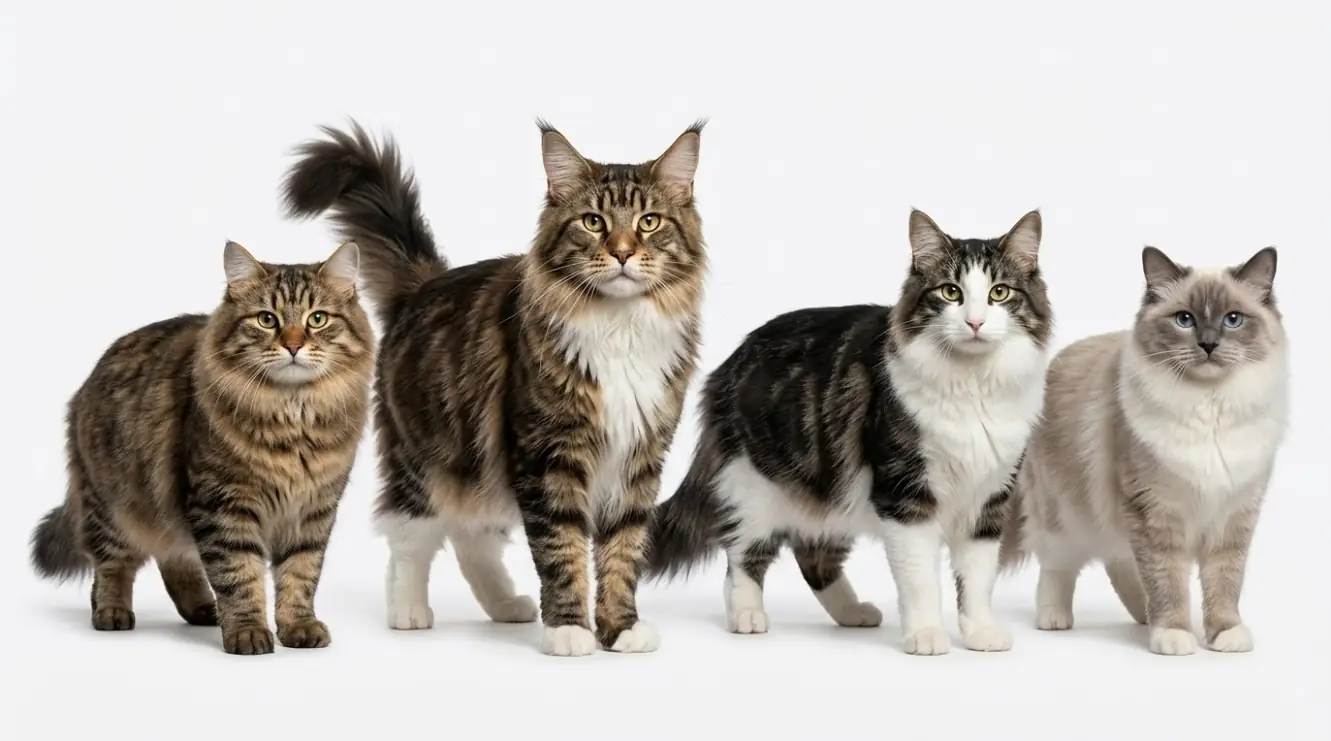
When selecting between a Siberian, Maine Coon, Norwegian Forest Cat (Wegie), or Ragdoll, the decision rests on three pillars: Thermoregulation/Coat Type, Social Drive, and Verticality (Athleticism). While they share a “forest cat” aesthetic, their evolutionary backgrounds dictate distinct household behaviors.
Quick Comparison: Breed Profiles at a Glance
| Feature | Siberian | Maine Coon | Norwegian Forest Cat | Ragdoll |
| Coat Type | Dense Triple Coat | Heavy Double Coat | Water-repellent Double | Plush Single/Double |
| Energy Level | High (Athletic) | Moderate (Playful) | Moderate (Climber) | Low (Sedentary) |
| Social Style | “Dog-like” / Involved | Laid-back / “Clownish” | Independent / Loyal | Docile / Dependent |
| Size | Medium-Large | Large (Giant) | Large | Large |
| Hypoallergenic? | Potential (Low Fel d 1) | No | No | No |
1. The Siberian: The Agile All-Rounder
The Siberian is defined by its powerful hindquarters, making it the most athletic of the four.
Best For: Active households seeking an interactive “problem-solver.”
Siberians are unique for producing lower levels of the Fel d 1 protein, making them a frequent choice for allergy sufferers (though not 100% hypoallergenic). Their triple coat is more oil-resistant than the Ragdoll’s, requiring less frequent bathing but consistent deshedding during “molting” seasons.
2. The Maine Coon: The “Gentle Giant”
The Maine Coon is prized for its size and dog-like temperament but tends to be more “grounded” than the Siberian.
Best For: Families who want a visible, vocal, and steady companion.
Distinguished by rectangular body shapes and prominent ear tufts (lynx tips). While social, they often prefer “hanging out” near their humans rather than being constant lap cats.
3. The Norwegian Forest Cat: The Independent Explorer
Often confused with the Siberian, the Norwegian Forest Cat has a distinct triangular head profile and a more “reserved” dignity.
Best For: Owners who appreciate a cat that is affectionate but doesn’t require constant “entertainment.”
Evolutionarily built for the outdoors, they have sturdier claws for climbing down trees head-first. They are generally more comfortable with solitude than the Ragdoll or Siberian.
4. The Ragdoll: The Indoor Specialist
The Ragdoll lacks the “wild” ancestry of the others, bred specifically for a docile, indoor-only temperament.
Best For: Low-energy environments and owners prioritizing a “lap cat” experience.
Unlike the forest breeds, Ragdolls lack a thick undercoat, giving them a silky, rabbit-like texture. However, they lack the “street smarts” and athletic reflexes of the Siberian, making them strictly indoor companions.
Siberian Cat Behavior
The Siberian Forest Cat is a centuries-old landrace breed from Russia, known for a unique “dog-like” temperament and a slow maturation process. Understanding their psychological needs is essential for prospective owners.
1. The “Heart-Dog” Temperament
Siberians are frequently categorized as “heart-dogs” because of their intense loyalty. Unlike more solitary breeds, Siberians form deep familial bonds.
- Proximity over Proximity-Seeking: While they aren’t typical “velcro cats” that demand to be on your lap at all times, they are “room-to-room” companions. They prefer to be in the same space as their owners, acting as quiet observers of household activity.
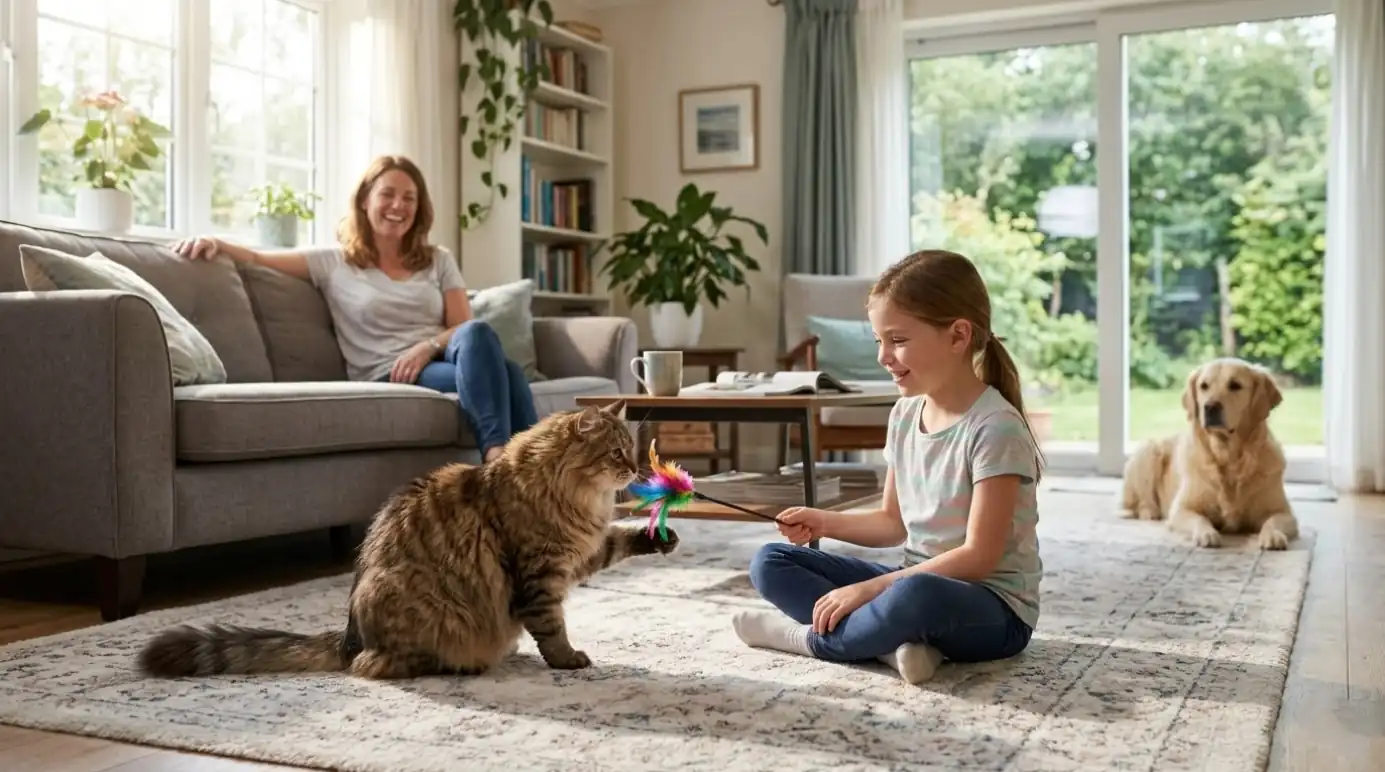
- Social Integration: They possess a high social EQ, making them exceptionally well-suited for multi-pet households and families with children. Their calm demeanor means they are rarely “flighty” around loud noises or strangers.
2. Cognitive Requirements & Problem-Solving
Ranked among the most intelligent domestic feline breeds, the Siberian’s brain requires as much exercise as its body.
- The “Slow-to-Mature” Factor: Siberians take up to five years to reach full physical and emotional maturity. This results in a prolonged “kittenhood” characterized by high energy and intense curiosity well into adulthood.
- Mischief through Intelligence: Their problem-solving skills are legendary. Without environmental enrichment (such as puzzle feeders, high-perch shelving, and clicker training), a bored Siberian may learn to operate door levers, open cabinets, or engage in “vocal protesting.”
3. Biological Adaptations: The Triple Coat and Water Affinity
A defining physiological trait of the Siberian is their water-repellent triple coat.
- Evolutionary Context: Developed in the harsh sub-arctic climate of Siberia, their fur consists of guard hairs, awn hairs, and down.
- Aquatic Interest: Unlike most felids, many Siberians exhibit a fascination with water. It is common to find them “pawing” at water bowls or attempting to join owners in the shower—a behavior rooted in their ancestral history of hunting near frozen water sources.
Summary Table: Siberian Breed Traits at a Glance
| Trait | Level | Note |
| Affection Level | High | Deeply loyal; prefers being near rather than on you. |
| Intelligence | Exceptional | Requires daily mental stimulation to prevent mischief. |
| Child/Pet Friendly | Excellent | Highly adaptable and rarely stressed by activity. |
| Vocalization | Moderate | Known for unique “chirps” and “trills” rather than loud meows. |
| Energy Level | High | Playful nature persists for 5+ years due to slow maturation. |
Expert Tips for Prospective Owners
- Avoid Long Solitude: Because of their social nature, Siberians can develop separation anxiety. They are best suited for households where someone is home or where there is another animal companion.
- Vertical Space is Mandatory: As natural forest dwellers, they have a strong instinct to climb. Provide tall cat trees to satisfy their need for “high-ground” observation.
Trust Note: Always verify a Siberian’s lineage through TICA or CFA registration to ensure the temperament matches the breed standard. True Siberians are also known for producing lower levels of Fel d 1 protein, making them a popular (though not guaranteed) choice for allergy sufferers.
Care Guide
Siberian cats are a robust, slow-maturing breed known for their athleticism, high intelligence, and dense triple-layered coats. Providing optimal care requires understanding their unique physiological and behavioral needs.
Diet and Weight Management
Because Siberians are heavily muscled and take up to five years to fully mature, their dietary needs differ from standard domestic cats. Early weight gain in this broad-framed breed is often hidden by their dense coats, making proactive weight management critical.
- Nutritional Focus: Feed a high-quality, complete, and balanced diet rich in animal protein to support their significant muscle mass.
- Portion Control: Avoid free-feeding. Utilize measured, scheduled meals or puzzle feeders to prevent overeating and provide mental stimulation.
- Monitoring Health: Rely on regular weigh-ins and veterinary Body Condition Scoring (BCS) rather than appetite to guide food intake. This reduces the risk of obesity-related conditions like feline diabetes, osteoarthritis, and reduced mobility.
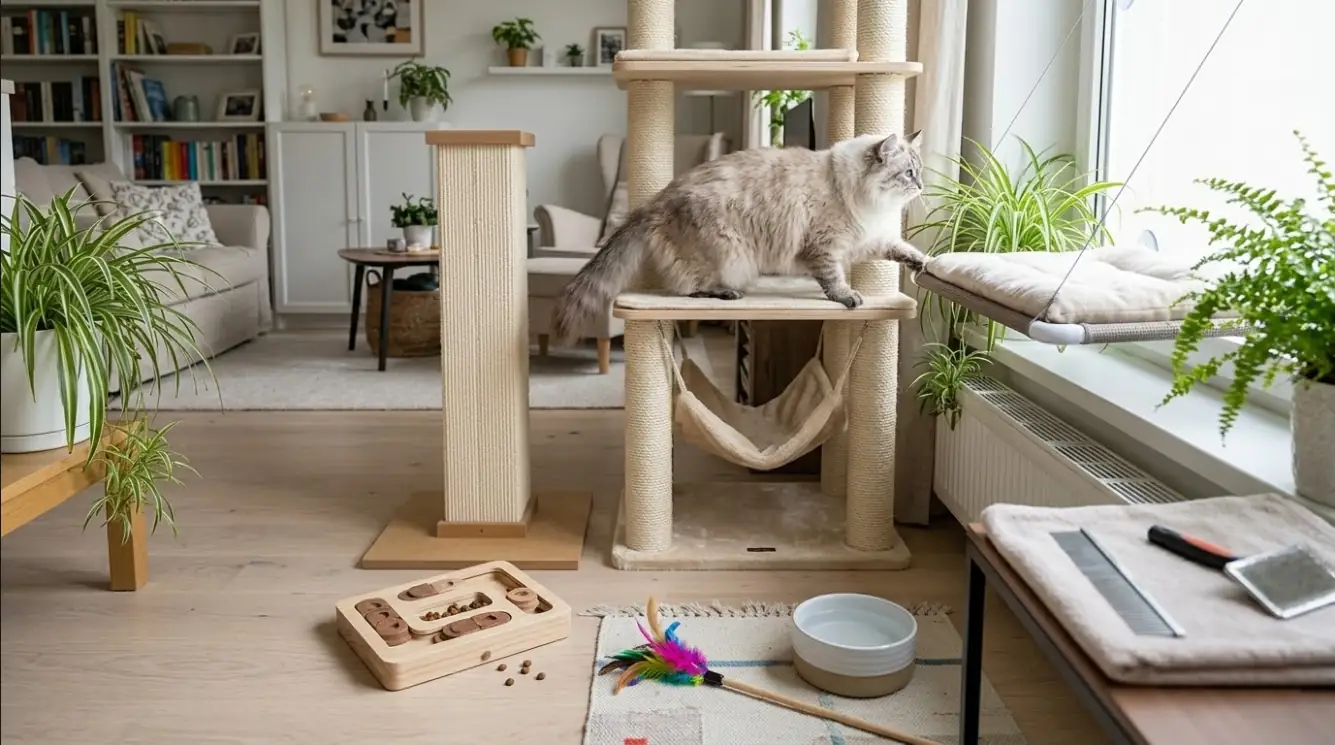
Expert Tip: Always provide fresh water in multiple locations. Because Siberians are famously fascinated by water, heavy ceramic bowls or pet water fountains are recommended to prevent them from tipping their water over while playing.
Exercise and Physical Activity
Siberians possess powerful hind legs designed for exceptional jumping and climbing. They are an athletic breed that requires daily, vigorous exercise to maintain muscle tone and stave off behavioral issues.
- Senior Care: As Siberians age, maintain joint health and muscle tone through gentle, daily play and by providing ramps or easily accessible, low-impact climbing options.
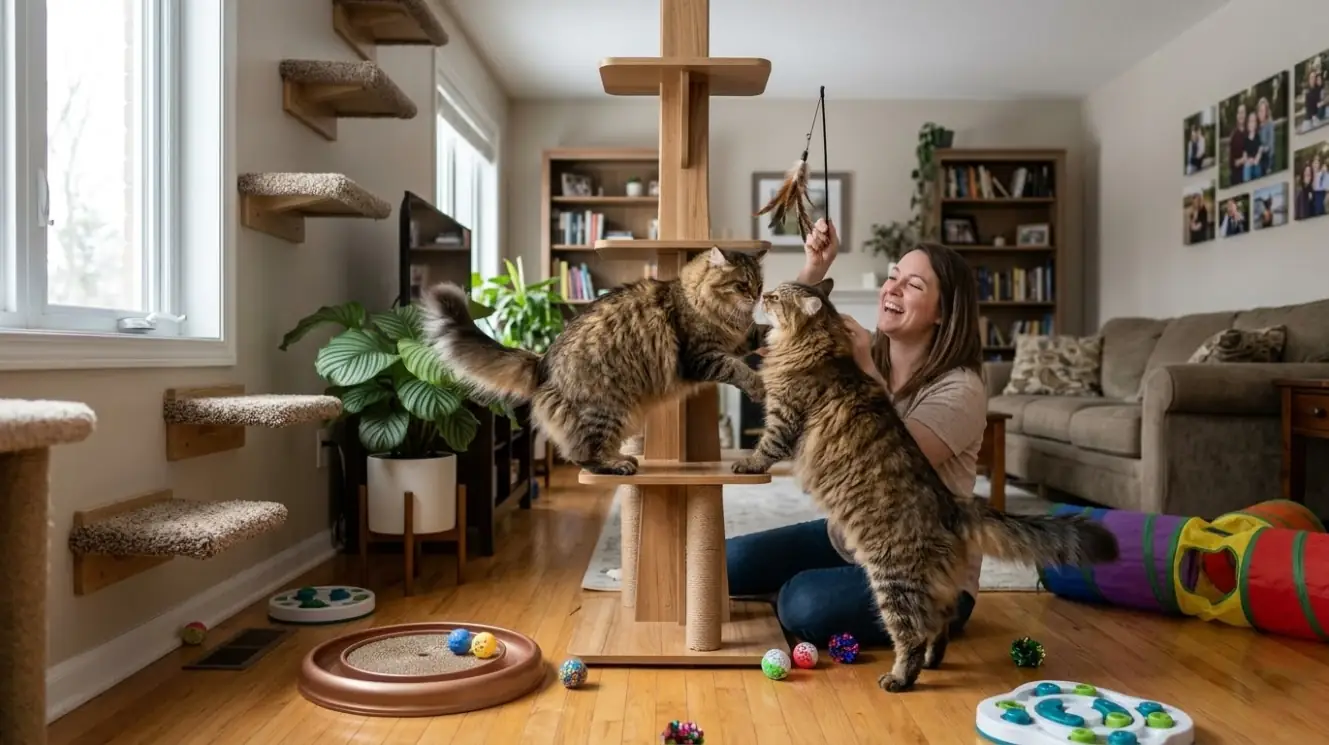
- Vertical Exploration: Prioritize vertical territory. Tall cat trees, sturdy wall shelves, and ceiling-height scratching posts are essential for satisfying their biological drive to climb.
- Interactive Play: Use wand toys and fetch games to simulate hunting. Interactive play burns excess energy and prevents intelligent, under-stimulated Siberians from becoming restless or destructive.
Environment and Enrichment
Siberians thrive in homes that give them room to climb, observe, and participate in daily life. Tall cat trees, sturdy shelves, window perches, and strong scratching posts help satisfy their need for vertical space and make the home feel more usable from the cat’s perspective.
Mental enrichment is just as important as physical space. Rotating toys, puzzle feeders, short play sessions, and simple training games help prevent boredom and give this problem-solving breed an outlet for its curiosity.
Most Siberians are social cats that do best when they are included in household routines. They may become bored or frustrated if left alone for long periods without stimulation. In homes where people are away often, extra enrichment or a well-matched companion animal may help.
Safe outdoor access can be beneficial when it is secure and controlled. A catio, enclosed garden, or supervised harness walk gives a Siberian more opportunities to explore without the risks associated with free roaming.
Many Siberians are also known for their interest in water. A shallow tray with floating toys can be an easy form of enrichment for cats that enjoy splashing and investigating.
Although the breed developed for cold climates, Siberians can still overheat in warm weather. Shade, fresh water, airflow, and cool resting spots are important during hot months. Owners should watch for heat stress, especially in summer or poorly ventilated spaces.
Coat Care and Grooming
The Siberian’s defining physical trait is its dense, water-resistant, triple-layered coat (comprising a visible guard coat, an awn coat, and a thick downy undercoat). While less prone to severe matting than Persians, they still require dedicated maintenance.
- Bathing: Bathing is rarely necessary due to the coat’s natural oils and water resistance. If a bath is required, be prepared for a lengthy drying process; always ensure the thick undercoat is thoroughly dried to prevent skin infections.
- Routine Brushing: Brush 1 to 2 times a week using a stainless steel greyhound comb and a gentle slicker brush. Focus on friction areas: the chest, belly, armpits, and “britches” (back legs).
- Seasonal Molting: Increase brushing to daily sessions during the heavy spring and fall shedding seasons to minimize hairballs and prevent painful tangles.
Mental Stimulation and Training
Often described as having “dog-like” personalities, Siberians are highly trainable. Engaging their brains is just as vital as exercising their bodies.
- Positive Reinforcement: Utilize clicker training and high-value treats to teach practical behaviors like recall, carrier training, sitting, and leash walking.
- Problem-Solving: Integrate food puzzles, snuffle mats, and scent games into their daily routine.
Expert Takeaway: Mental stimulation is not optional for a Siberian. Short, 5-minute daily training sessions build a stronger human-animal bond and drastically reduce anxiety and boredom-induced destructive behaviors.
Health Concerns
| Condition | Description & Symptoms | Management & Prevention |
|---|---|---|
| Hypertrophic Cardiomyopathy (HCM) | Heart muscle thickening; may cause lethargy, appetite loss, or breathing issues—often only detected via heart murmur. | Regular vet checkups, medications, low-sodium diet, and stress-free environment. |
| Injuries | Prone to falls or accidents due to climbing behavior and boldness. | Use safe climbing structures (e.g., stable cat trees), secure furniture, consider pet insurance. |
| Obesity | Naturally broad build can mask weight gain; true obesity raises risk of diabetes and arthritis. | Vet-guided weight management with portion control, balanced diet, and daily exercise. |
| Dental Disease | Tartar buildup can lead to pain, infection, and eating problems. | Daily tooth brushing with cat-safe toothpaste, annual professional cleanings, dry food as a supplement only. |
| Urinary Tract Problems | Symptoms include frequent/painful urination, blood in urine, or urinating outside the box. | High-moisture wet food, fresh water access, and encouraging fluid intake. |
| Parasite Prevention | At risk for fleas, ticks, and especially heartworm, which has no cure in cats. | Year-round use of vet-approved parasite prevention medications (even for indoor cats). |
Is a Siberian Cat Right for You?
A Siberian cat is an excellent fit for active households seeking a highly affectionate, “dog-like,” and interactive feline companion. They thrive in environments where they receive daily mental enrichment, vertical climbing space, and regular grooming. However, a Siberian is not ideal for individuals seeking a low-maintenance, independent, or completely hypoallergenic pet.
When a Siberian Cat is an Ideal Fit
A Siberian cat will thrive in your home if your lifestyle aligns with their unique physical and psychological needs:
- You desire a highly social companion: You want a loyal, affectionate cat that acts as a true family member, often following you from room to room.
- You prioritize mental and physical enrichment: You enjoy providing interactive toys, puzzle feeders, and structured daily playtime to engage their high intelligence.
- You can provide vertical territory: You are willing to invest in tall cat trees, wall shelves, or climbing furniture to satisfy their natural instinct to jump and observe from above.
- You have a multi-pet or family household: You have children, other cats, or cat-friendly dogs, and are prepared to manage slow, proper introductions.
- You enjoy vocal feline communication: You appreciate a cat that “talks” to you using a wide vocabulary of soft chirps, trills, and meows.
- You can manage a triple-layered coat: You are comfortable brushing their dense, water-resistant coat 1–2 times a week to prevent matting, increasing frequency during the heavy spring and fall shedding seasons.
When to Reconsider a Siberian Cat
Because of their specific social and physical requirements, a Siberian may not be the best match if:
- Your schedule requires long absences: You work long hours or travel frequently and cannot provide the daily companionship this highly bonded breed requires.
- You prefer a low-energy or independent pet: You are looking for a quiet, aloof cat that requires minimal engagement or play.
- You are seeking a zero-maintenance coat: You dislike shedding, sweeping up hair, or lack the time for consistent grooming sessions.
- Your home lacks environmental enrichment: You live in a space where you cannot provide climbing structures, scratching posts, or safe indoor activities.
- You intend to let the cat roam freely outdoors: You plan to allow the cat unsupervised access to unsafe, unenclosed outdoor areas.
- You have budget constraints: You are not prepared for the long-term financial commitment of a purebred cat, including high-quality nutrition, grooming tools, and preventative veterinary care.
Bottom line
The Siberian is a magnificent, robust breed best suited for owners who want an engaged, active, and deeply affectionate family member. They are a poor match for individuals seeking a solitary, low-maintenance pet that is content being left alone for extended periods.
FAQ
Are Siberian cats truly hypoallergenic?
No cat is 100% hypoallergenic, as all cats produce the Fel D1 protein, which is the primary allergen. However, Siberians are often better tolerated by individuals with mild allergies because they are said to produce less of this protein in their saliva and urine. It is always recommended for allergy sufferers to spend time with a Siberian before adoption to test their reaction.
Do Siberian cats like water?
Yes, unlike many domestic cat breeds, many Siberians are known to enjoy playing in water and may even join you in the bath or shower. This is due to their water-repellent triple coat, an adaptation from their cold, wet native environment.
Are Siberian cats good with children and other pets?
Absolutely. Siberians are known for their friendly, patient, and adaptable temperaments. They generally get along very well with children, other cats, and even dogs, making them excellent family pets when introduced properly.
How much grooming do Siberian cats need?
Despite their thick, long fur, Siberians have moderate grooming needs. Their water-resistant coat is less prone to matting than some other long-haired breeds. Weekly brushing is usually sufficient, but daily brushing is recommended during their seasonal shedding periods (spring and fall) to manage loose hair and prevent hairballs.
Can Siberian cats be left alone for long periods?
Not ideal on a regular basis. Siberians are commonly described as lively and highly affectionate, so they usually do best in homes that provide daily interaction, play, and enrichment rather than long, repeated absences. If someone is away often, puzzle toys, climbing space, and a compatible companion may help reduce boredom.
How long do Siberian cats live?
Siberians are often listed with a life expectancy of about 11 to 18 years or longer. Good breeding practices, routine veterinary care, weight management, and appropriate nutrition all matter more than breed reputation alone.
Quick Breed Notes
Loyal and people-oriented
Siberians are widely described as affectionate cats that bond closely with their families. That is why many owners compare them to more people-focused pets, even though individual personality still varies from cat to cat.
Slow to mature
Siberians mature more slowly than many other breeds. CFA and TICA both note that they may take up to about five years to reach full maturity, which helps explain their long-lasting playful, kitten-like behavior.
Expressive without being extreme in voice
Siberians are often described as interactive and expressive, but not usually among the loudest cat breeds. A careful way to phrase this is that many communicate clearly with their people without being constantly noisy.
Russia’s native forest cat
CFA describes the Siberian as Russia’s native forest cat and refers to it as a national cat or national treasure of Russia. That makes the breed’s origin story both culturally important and easy to verify from official cat association sources.
Linked with Russian folklore
Breed history materials from CFA also connect Siberians with Russian fairy tales, where they appear as protectors of children and magical beings. Framing this clearly as folklore, not proven behavioral history, makes the statement more trustworthy and citation-safe.
References
Somerville, Louisa (2007). The Ultimate Guide to Cat Breeds. Edison, New Jersey: Chartwell Books. p. 86. ISBN 9780785822646. According to legend, the Siberian Forest Cats traditionally lived in Russian monasteries, where they patrolled the rafters on the lookout for intruders. Although fierce, the monks treated them as loving and loyal companions.
“Siberian Cat Breed Info”. Archived from the original on 28 February 2009. Retrieved 8 August 2009.
Morris, Desmond (1999). Cat Breeds of the World; A Complete Illustrated Encyclopedia. Viking. ISBN 9780670886395.
Baggaley, Ann; Goddard, Jolyon; John, Katie (2014). The Cat Encyclo
pedia. London: Dorling Kindersley. ISBN 9781409347903. OCLC 879716720.
“Siberian Breed Presentation” (PDF). CFA.org. Cat Fanciers’ Association. June 2018. Archived (PDF) from the original on 29 February 2024. Retrieved 14 September 2023.
“Siberian cat”. CFA.org. Cat Fanciers’ Association (CFA). Archived from the original on 22 February 2023. Retrieved 15 February 2023.
Bell, Jerold; Cavanagh, Kathleen; Tilley, Larry; Smith, Francis W. K. (2012). Veterinary Medical Guide to Dog and Cat Breeds. Jackson, Wyoming: CRC Press. p. 578. ISBN 9781482241419.
Magiera, Angelika; Penar, Weronika; Klocek, Czeslaw (2020). “Occurrence of nonlinear phenomena in Siberian and Neva Masquerade cats’ vocalisation”. Forum Acusticum: 2767–2770. doi:10.48465/FA.2020.0201. Archived from the original on 13 July 2021. Retrieved 22 March 2023.
“Siberian Pointed Breed Standards” (PDF). CCA-AFC.com. Canadian Cat Association. 12 May 2022. Archived (PDF) from the original on 9 February 2023. Retrieved 9 February 2023.
“Siberian / Neva Masquerade – Breed Standards” (PDF). FIFeWeb.org. Fédération Internationale Féline. 1 January 2023. Archived from the original (PDF) on 2 August 2022. Retrieved 8 February 2023.
“Recognised and admitted breeds in the WCF”. WCF.info. World Cat Federation. Archived from the original on 25 March 2023. Retrieved 27 March 2023.
“Neva Masquerade Breed Standard”. ACF.asn.au. Australian Cat Federation. 2021. Archived from the original on 9 February 2023. Retrieved 8 February 2023.
“Siberian Breed Standard” (PDF). TICA.org. The International Cat Association. 1 May 2005. Archived (PDF) from the original on 21 April 2023. Retrieved 8 February 2023.
Schmitt, Kristen A. “There’s No Such Thing as a Hypoallergenic Cat”. SmithsonianMag.com. Smithsonian Institution. Archived from the original on 30 January 2019. Retrieved 4 September 2019.
Sartore, Stefano; Landoni, Eleonora; Maione, Sandra; Tarducci, Alberto; Borrelli, Antonio; Soglia, Dominga; Rasero, Roberto; Sacchi, Paola (1 December 2017). “Polymorphism Analysis of Ch1 and Ch2 Genes in the Siberian Cat”. Veterinary Sciences. 4 (4): 63. doi:10.3390/vetsci4040063. PMC 5753643. PMID 29194349.
“Siberian – Breed Standards” (PDF). CCA-AFC.com. Canadian Cat Association. 1 May 2009. Archived (PDF) from the original on 8 February 2023. Retrieved 8 February 2023.
“Siberian cat breed”. GCCFCats.org. Governing Council of the Cat Fancy. Archived from the original on 8 February 2023. Retrieved 22 March 2023.
“Are Maine coon cats really from Maine?”. 27 January 2023. Archived from the original on 27 January 2023. Retrieved 9 September 2023.
Lipinski, Monika J.; Froenicke, Lutz; Baysac, Kathleen C.; Billings, Nicholas C.; Leutenegger, Christian M.; Levy, Alon M.; Longeri, Maria; Niini, Tirri; Ozpinar, Haydar; Slater, Margaret R.; Pedersen, Niels C.; Lyons, Leslie A. (1 January 2008). “The ascent of cat breeds: Genetic evaluations of breeds and worldwide random-bred populations”. Genomics. 91 (1): 12–21. doi:10.1016/j.ygeno.2007.10.009. ISSN 0888-7543. PMC 2267438. PMID 18060738.
Brehm, Alfred Edmund (1864). Illustrirtes Thierleben: eine allgemeine Kunde des Thierreichs. Erster Band. Erste Abtheilung: Die Säugethiere. Erste Hälfte: Affen und Halbaffen, Flatterthiere und Raubthiere (in German). Vol. 1. Hildburghausen: Bibliographisches Institut. p. 293.
Weir, Harrison (1892). Our Cats and All About Them. London: Fanciers’ Gazette. pp. 30–38. ISBN 9781846640964 – via Internet Archive.
Weir, Harrison (1892). Our Cats and All about Them. London: Fanciers’ Gazette. p. xiii. ISBN 9781846640964 – via Internet Archive.
Sadovnikova, Irina (2008). “The Siberian Cat – The history of love and public recognition”. Pawpeds.com. Archived from the original on 27 September 2022. Retrieved 19 March 2023.
“GCCF Registration Policy for Siberian Cats” (PDF). GCCFCats.org. Governing Council of the Cat Fancy. 2021. Archived (PDF) from the original on 8 February 2023. Retrieved 16 September 2023.
“Analysis of breeds registered”. The Governing Council of the Cat Fancy. Governing Council of the Cat Fancy. Archived from the original on 21 May 2023. Retrieved 8 July 2023.
“Finding the Purr-fect Pedigreed Kitten”. CFA.org. The Cat Fanciers’ Association. Retrieved 30 March 2023.
“What are Papers and Do I Need Them For My Pedigree Kitten?”. Registered Pets. Retrieved 30 March 2023.
“WCF Breeding and Registration rules for all member clubs”. WCF.info. World Cat Federation. Archived from the original on 30 March 2023. Retrieved 30 March 2023.
“GCCF Registers affect showing and breeding”. GCCFCats.org. Governing Council of the Cat Fancy. Archived from the original on 30 March 2023. Retrieved 30 March 2023.
“Disqualifiers and General Faults”. WorldCatCongress.org. World Cat Congress. Archived from the original on 30 March 2023. Retrieved 30 March 2023.
“Definitions in the Standard”. WCF.info. World Cat Federation. Archived from the original on 30 March 2023. Retrieved 30 March 2023.
“Siberian Breed”. TICA.org. The International Cat Association. 13 August 2018. Archived from the original on 11 October 2023. Retrieved 14 September 2023.
“Breed standards”. fifeweb.org. Fédération Internationale Féline. Archived from the original on 20 December 2015. Retrieved 14 September 2023.
“About the Siberian”. CFA.org. Cat Fanciers’ Association. 2023. Archived from the original on 27 September 2023. Retrieved 14 September 2023.
“FIFe breeding statistics summary 2023” (PDF). fifeweb.org/. June 2024. Archived (PDF) from the original on 20 November 2024. Retrieved 12 May 2025.
“FIFe breeding statistics summary 2019” (PDF). fifeweb.org/. December 2023. Archived (PDF) from the original on 19 May 2024. Retrieved 12 May 2025.
“LOOF – Races/annee”. bis.loof.asso.fr. Archived from the original on 23 April 2025. Retrieved 12 May 2025.
“The Cat Fanciers’ Association Announces Most Popular Breeds for 2017”. CFA.org. Cat Fanciers’ Association. March 2018. Retrieved 8 July 2023.
“The Cat Fanciers’ Association Announces Most Popular Breeds for 2012”. CFA.org. Cat Fanciers’ Association. 2013. Archived from the original on 8 July 2023. Retrieved 8 July 2023.
“The Cat Fanciers’ Association Announces Most Popular Breeds for 2022”. CFA.org. Cat Fanciers’ Association. 2022. Archived from the original on 17 November 2023. Retrieved 8 July 2023.
“TICA Registered Cattery Names”. TICA.org. The International Cat Association. Archived from the original on 31 March 2022. Retrieved 8 July 2023.
“Siberian Breeders”. TICA.org. The International Cat Association. 6 August 2018. Archived from the original on 11 October 2023. Retrieved 11 October 2023.
“Cattery Name Search”. FIFeWeb.org. Fédération Internationale Féline. Archived from the original on 7 September 2023. Retrieved 7 September 2023.
“The Siberian Database”. PawPeds.com. 6 September 2023. Archived from the original on 7 September 2023. Retrieved 7 September 2023.
“Breed Profile: The Siberian”. CFA.org. Cat Fanciers’ Association. Archived from the original on 10 April 2018. Retrieved 27 June 2018.
“Siberian breed standard” (PDF). ACF.asn.au. Australian Cat Federation. 2003. Archived (PDF) from the original on 22 October 2023. Retrieved 11 October 2023.
Bryan, Kim (2021). The complete cat breed book – choose the perfect cat for you (2nd ed.). London: Dorling Kindersley Limited. ISBN 9780241446317.
“Siberian Breed Standard” (PDF). WCF.de. World Cat Federation. 24 February 2022. Archived (PDF) from the original on 29 March 2023. Retrieved 9 February 2023.
“Siberian cat breed”. GCCFCats.org. Governing Council of the Cat Fancy. Archived from the original on 8 February 2023. Retrieved 22 March 2023.
Beauvois, H.; Dufaure de Citres, C.; Gache, V.; Abitbol, M. (10 May 2021). “Siberian cats help in solving part of the mystery surrounding golden cats”. Animal Genetics. 52 (4): 482–491. doi:10.1111/age.13076. ISSN 0268-9146. PMID 33970502. S2CID 234343679.
Abitbol, Marie; Dargar, Tanushri; Gache, Vincent (16 May 2022). “Golden cats: The story goes on”. Animal Genetics. 53 (4): 543–545. doi:10.1111/age.13215. ISSN 0268-9146. PMID 35574714. S2CID 248811965.
“BAER testing for white cats”. gccfcats.org. Governing Council of the Cat Fancy. Archived from the original on 24 September 2023. Retrieved 14 September 2023.
Netherlands Food and Consumer Product Safety Authority (NVWA) (14 August 2023). “Fokken met uw hond of kat – wat mag wel en wat niet?”. NVWA.nl (in Dutch). Retrieved 14 September 2023.
Anderson, Heidi; Davison, Stephen; Lytle, Katherine M.; Honkanen, Leena; Freyer, Jamie; Mathlin, Julia; Kyöstilä, Kaisa; Inman, Laura; Louviere, Annette; Foran, Rebecca Chodroff; Forman, Oliver P.; Lohi, Hannes; Donner, Jonas (16 June 2022). “Genetic epidemiology of blood type, disease and trait variants, and genome-wide genetic diversity in over 11,000 domestic cats”. PLOS Genetics. 18 (6): e1009804. doi:10.1371/journal.pgen.1009804. ISSN 1553-7404. PMC 9202916. PMID 35709088.
Veterinary Genetics Laboratory. “Colourpoint Restriction”. UC Davis School of Veterinary Medicine. Archived from the original on 22 March 2023. Retrieved 22 March 2023.
Dinsmore, Diane; Plounick, Julie; Voss, Chart; Everson, Andrene (2017). The Royal Canin Cat Encyclopedia. France: Royal Canin / Aniwa Publishing.
Penar, Weronika; Magiera, Angelika; Klocek, Czeslaw (2020). “The influence of individual features on the vocalisation of cats of different breeds”. Forum Acusticum: 2041–2045. doi:10.48465/FA.2020.0199.
Jasik, Agnieszka; Kulesza, Marek (2014). “Polycystic kidney disease in a Neva Masquerade cat”. Journal of Small Animal Practice. 55 (7): 387. doi:10.1111/jsap.12240. PMID 24905486. Archived from the original on 22 March 2023. Retrieved 22 March 2023.
Hadar, Barr N.; Bonnett, Brenda N.; Poljak, Zvonimir; Bernardo, Theresa M. (13 March 2023). “Morbidity of insured Swedish cats between 2011 and 2016: Comparing disease risk in domestic crosses and purebreds”. Veterinary Record. 192 (12): e2778. doi:10.1002/vetr.2778. ISSN 0042-4900. PMID 36912155. S2CID 257494830.
“Siberian cat”. The Show Cat Magazine. Archived from the original on 7 January 2009. Retrieved 8 August 2009.
“Siberian – Cat Breed Information & Breed Facts”. Petside. Archived from the original on 29 April 2011. Retrieved 8 August 2009.
“The Siberian cat … hypoallergenic?”. Archived from the original on 6 July 2008. Retrieved 27 June 2018.
Carayol, N.; Birnbaum, J.; Magnan, A.; Ramadour, M.; Lanteaume, A.; Vervloet, D.; Tessier, Y.; Pageat, P. (June 2000). “Fel d1 production in cat skin varies according to anatomical sites”. Allergy. 55 (6): 570–573. doi:10.1034/j.1398-9995.2000.00588.x. PMID 10858990. S2CID 40468260.
“Siberian Allergen Levels”. SiberianResearch.com. 2013. Archived from the original on 17 April 2015. Retrieved 29 November 2013.
 EN
EN DE
DE ES
ES PT
PT