

If your cat kicks while sleeping, it is usually normal when the movements are brief, gentle, and paired with loose posture and easy breathing.
A few paw kicks, toe flexes, tail flicks, or tiny leg paddles can happen during active sleep, especially if your cat wakes up normally and acts like herself afterward.
The part that deserves attention is intensity and context. A relaxed sleeper who kicks once or twice is different from a cat who stiffens, paddles hard, loses awareness, drools, urinates, wakes confused, or keeps twitching while awake. This guide helps you tell ordinary sleep movement from muscle spasms, pain clues, or seizure-like signs that need veterinary advice.
Table of Contents
- Is it normal for cats to kick while sleeping?
- Why do cats kick or paddle during sleep?
- What does normal sleep kicking look like?
- When should sleep kicking worry you?
- Could kicking be a seizure, pain, or feline hyperesthesia?
- What should you record before calling the vet?
- How can you make sleep safer without interrupting your cat?
- Conclusion: What should cat parents remember?
- Frequently Asked Questions
- References
Is it normal for cats to kick while sleeping?
Yes. Brief kicking while asleep can be normal for cats, especially when it looks like a soft paw movement, a small leg stretch, a toe flex, or a few gentle paddles. Cats Protection describes whisker twitches, ear flicks, paw or leg movements, rapid eye movements under closed lids, and small noises as common sleep behaviors that are usually normal 1.
If your cat's movement is more like a tiny sleep start than a full event, start by reading the whole body. Loose shoulders, an easy breathing rhythm, relaxed whiskers, and a normal wake-up are reassuring signs. This overlaps with our guide to cat twitching in sleep, but kicking usually draws more attention because the legs move more visibly.
The safest rule is pattern plus recovery. Normal sleep kicking is short, mild, and followed by ordinary behavior. Your cat should be able to wake naturally, look oriented, walk normally, eat, drink, groom, and use the litter box as usual.
Do not shake your cat awake to test her. Startling a sleeping cat can frighten her and may lead to a defensive scratch or bite. If you are concerned, speak softly from a distance and look for comfortable breathing, safe positioning, and whether the movement stops on its own.
Why do cats kick or paddle during sleep?
Cats can kick or paddle during sleep because active sleep can include small motor movements. We cannot know exactly what a cat is dreaming, and Cats Protection notes that visible movements do not prove what a cat is experiencing internally 1. It is more accurate to say that mild paw or leg movements can occur during sleep and often fit normal feline rest.
Some cats also make tiny sounds, purr, chirp, or shift position while sleeping. If sound is part of the pattern, compare it with our guide to cat purring while sleeping so you are not judging the kick in isolation.
Kittens may show more active sleep movement because their sleep patterns are still developing. Senior cats may sleep more lightly or change sleep positions more often. In both life stages, the movement matters less than the full picture: breathing, awareness, appetite, mobility, grooming, and whether the behavior is new for that cat.
Occasional kicks can also happen as your cat changes position. A cat stretched on her side may extend one rear leg, curl the toes, then settle again. That can look dramatic from across the room even when your cat is simply shifting into a more comfortable posture.
What does normal sleep kicking look like?
Normal sleep kicking is usually brief, mild, and local. It may involve one paw, both back legs for a second or two, a tail-tip flick, whisker movement, or a small body ripple while the rest of the cat stays relaxed.
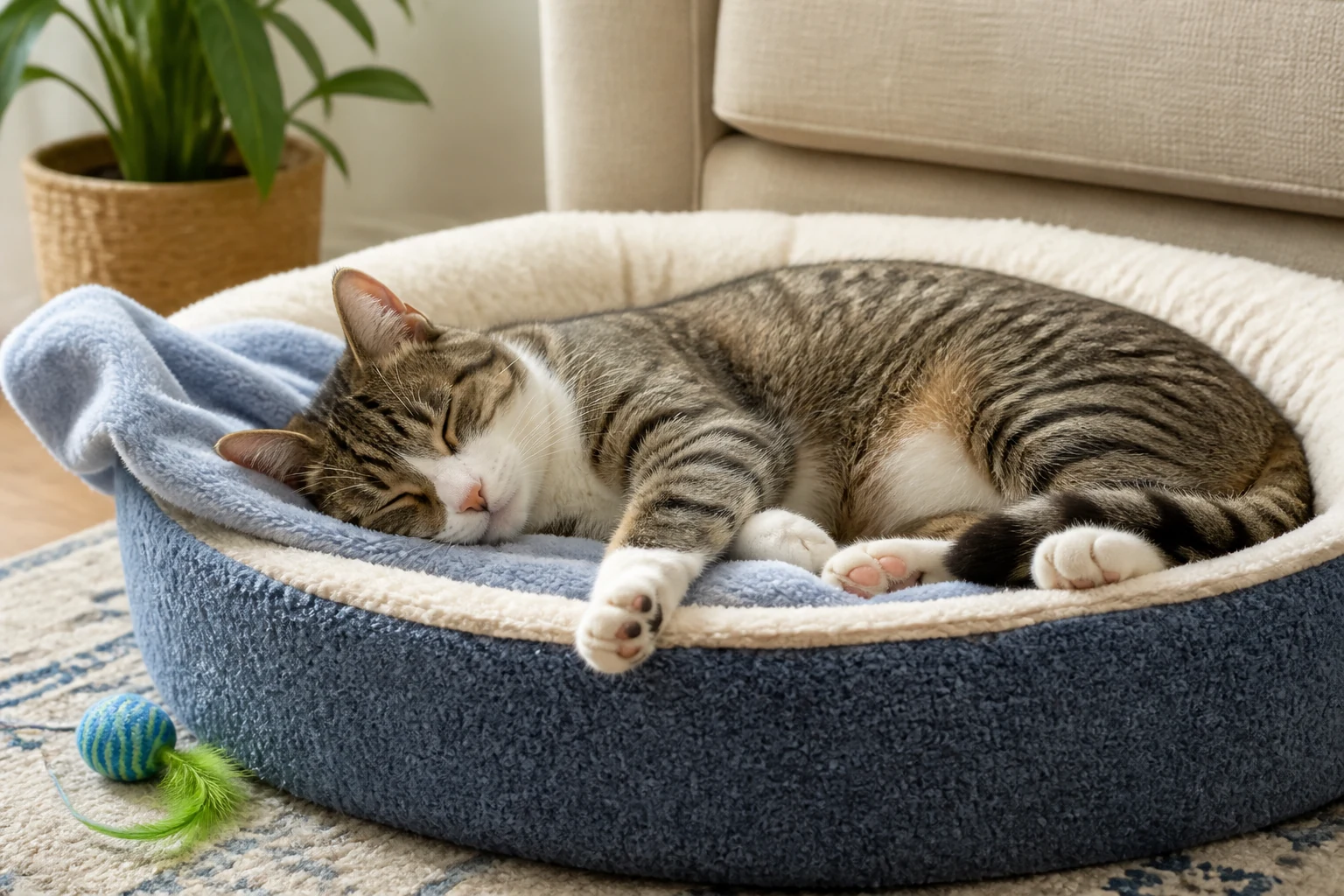
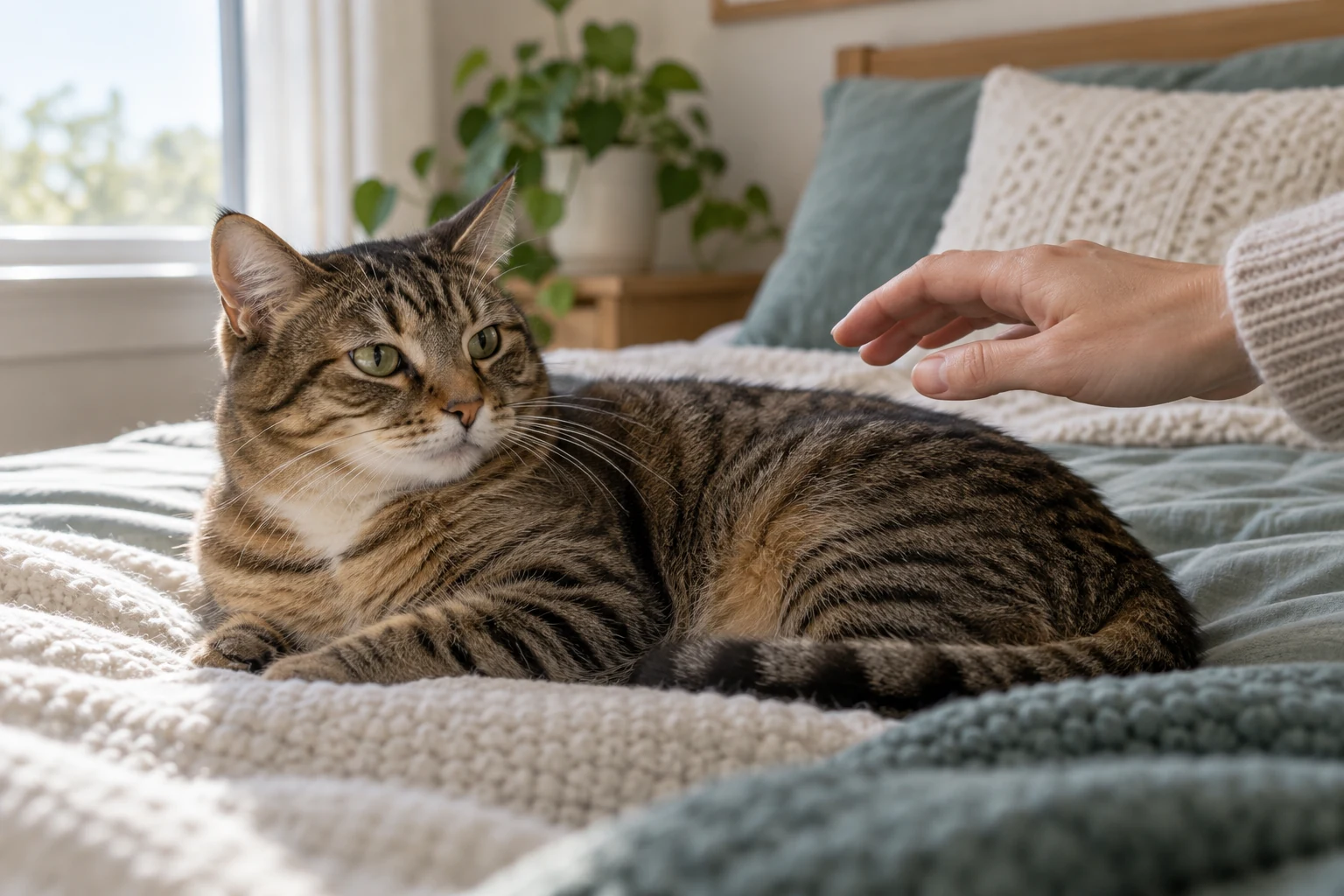
Normal sleep kicking is usually brief, mild, and paired with relaxed breathing and a soft body.
Use this practical comparison:
| What you see | More likely normal when | Worth calling your vet when |
|---|---|---|
| One or two paw kicks | Your cat stays asleep and relaxed | The kicks become violent, repeated, or hard to interrupt safely |
| Small leg paddles | They last seconds and stop on their own | The whole body stiffens or paddles strongly |
| Tiny chirps or sleep sounds | Your cat stays peaceful and wakes normally later | Vocalizing is frantic, new, or paired with confusion |
| Tail or whisker twitches | They happen only during rest | They continue while awake with agitation or skin rippling |
| A sudden body jerk | It happens once as your cat settles | It repeats many times, causes falling, or appears with weakness |
A short event that happens during deep rest and then disappears is usually less concerning than a movement that spreads, repeats, or appears when your cat is awake. The more the event looks rhythmic, forceful, or uncontrolled, the more useful a veterinary opinion becomes.
Also check the sleep setup. A cat sleeping on a narrow chair edge may kick and nearly slide off, even if the movement itself is harmless. Move future rest areas to safer surfaces rather than waking the cat mid-kick unless she is in immediate danger.
When should sleep kicking worry you?
Sleep kicking should worry you when it is intense, prolonged, repetitive, new for your cat, or paired with other symptoms. Merck Veterinary Manual describes seizures as events that may involve impaired or lost consciousness, abnormal motor activity, sensory signs, or autonomic signs such as salivation, vomiting, urination, or defecation 2.
Call your veterinarian promptly if you notice:
- Kicking or paddling that continues after your cat wakes.
- Stiffening, collapse, falling, or loss of awareness.
- Drooling, urination, defecation, vomiting, or frantic vocalizing during the event.
- One-sided facial, ear, eyelid, or limb twitching that is new or repeated.
- Confusion, pacing, blindness-like behavior, or unusual clinginess after the event.
- Weakness, poor balance, appetite loss, hiding, pain, or rapid behavior change.
- Possible toxin exposure, head trauma, high fever, or a known medical condition.
VCA lists convulsions or seizures as cat emergencies, especially if a seizure lasts more than five minutes or if several happen close together 5. Do not put your hand in your cat's mouth during a seizure. Keep the area safe, prevent falls if you can do so without being bitten, and contact emergency veterinary care.
Nighttime patterns can blur the picture. A cat who is awake, pacing, crying, or unable to settle is not simply "kicking in sleep." If that sounds familiar, compare the broader routine with cat restless at night and cat yowling at night, then call your vet if the change is sudden or paired with health signs.
Could kicking be a seizure, pain, or feline hyperesthesia?
Yes, kicking can sometimes be part of a medical issue, but the details matter. Do not diagnose from one movement. Instead, separate sleep-only gentle motion from awake episodes, pain responses, skin sensitivity, and seizure-like events.
Merck notes that generalized seizures can include sudden loss of consciousness, limb motor activity, loss of bladder or bowel control, pupil dilation, vocalization, salivation, vomiting, or diarrhea, while focal seizures can involve abnormal movements or twitching of one side of the body 2. A cat may also seem disoriented after a seizure.
Pain can change sleep too. A sore cat may jerk when turning over, guard one leg, avoid jumping, hide more, groom less, or react sharply when touched. If the kicking appears with tense posture, limping, reluctance to climb, appetite change, or a hunched "not right" look, use our guide to subtle cat pain signs as a checklist before you call your vet.
Feline hyperesthesia is another pattern to know. Cornell Feline Health Center describes hyperesthesia as extreme skin sensitivity, often on the back near the tail, with possible skin rippling, dilated pupils, drooling, scratching, digging, tail chasing, vocalizing, urination, or sudden reactive behavior 3. That pattern is usually noticed while the cat is awake or being touched, not as a peaceful sleep-only kick.
There are also rare sleep movement disorders. In a small veterinary study of five cats and three dogs, researchers confirmed abnormal sleep movements with electrographic or behavioral monitoring; some cases were linked with central nervous system disease, while others had no clear cause 4. That does not mean most sleep kicks are dangerous. It does mean repeated violent sleep movements deserve real veterinary assessment instead of online guessing.
What should you record before calling the vet?
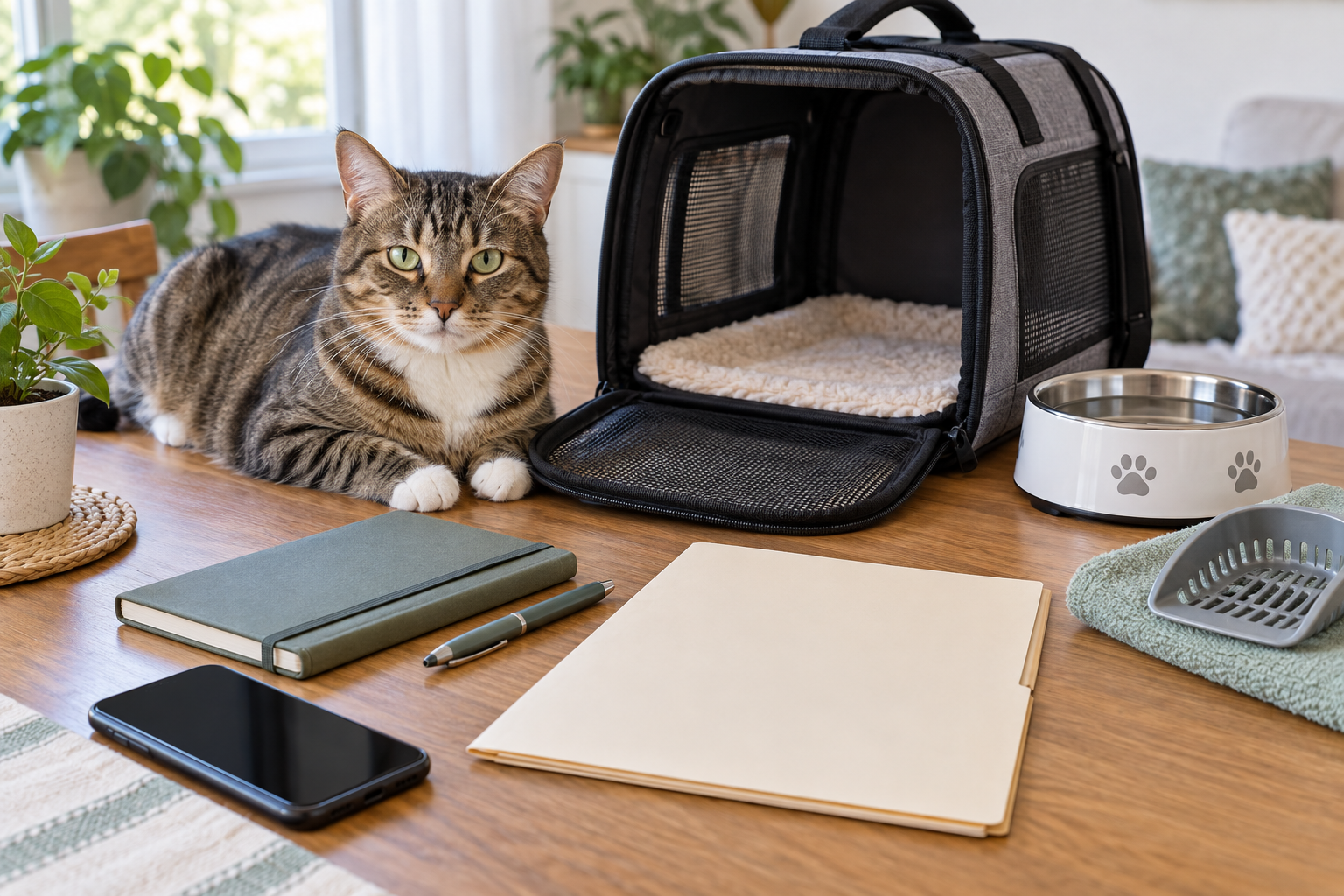
Record the event if you can do it safely. A clear 10- to 30-second video often gives your veterinarian better evidence than a long verbal description, especially when the movement is intermittent. Cats Protection also recommends video when sleep movements are intense, prolonged, repetitive, or paired with other concerning signs 1.

A short video, timing notes, and context can help your veterinarian judge whether the movement fits sleep or needs a closer look.
Write down:
- Date and time.
- How long the movement lasted.
- Whether your cat was asleep, waking, or already awake.
- Which body parts moved.
- Whether the movement was gentle, rhythmic, stiff, or violent.
- Whether your cat responded to your voice.
- Breathing changes, drooling, urination, defecation, vomiting, or vocalizing.
- How your cat behaved afterward.
- Recent appetite, thirst, litter box, mobility, medication, toxin, or stress changes.
If the event is severe, do not wait to build a perfect log. Emergency signs come first. Video is useful only when you can record without delaying care or putting your hands near your cat's mouth.
For mild but repeated sleep kicks, a simple pattern log for a few days can help. Note whether the episodes happen after hard play, after meals, in one sleeping location, during loud household activity, or at a specific time of night.
How can you make sleep safer without interrupting your cat?
Make your cat's sleep spaces broad, low, soft, and easy to leave. If your cat sometimes kicks hard enough to shift position, avoid narrow chair arms, high shelves without edges, cluttered desks, or the top of an unstable cat tree. A wide bed, low sofa corner, or floor-level blanket is safer for active sleepers.
Keep the room predictable. Cats often rest better when they have quiet zones, familiar bedding, and routes that do not force them through conflict. If your bigger question is whether your cat's overall rest is normal for her age, review how long cats sleep by age.
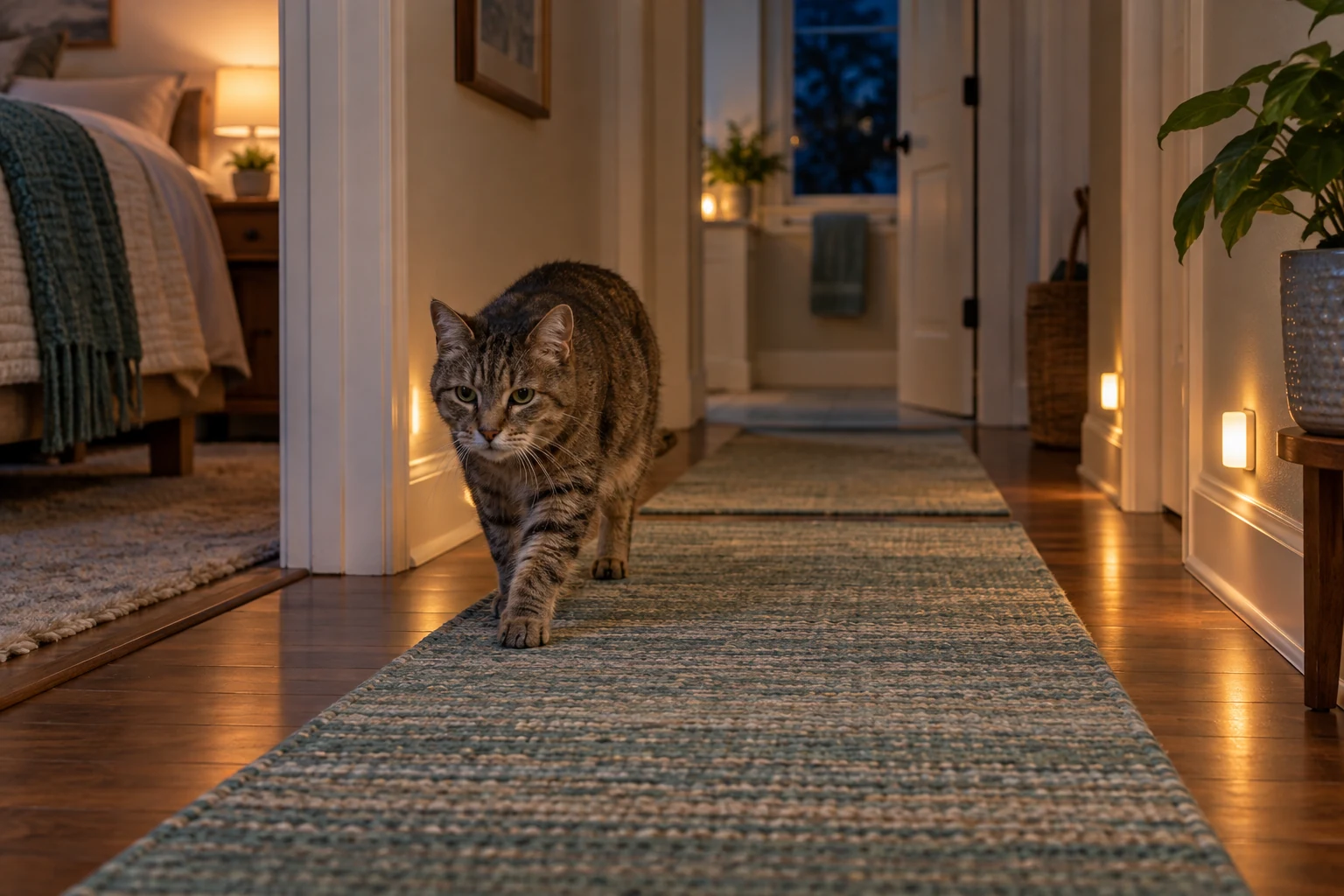
For older cats, add night lights, low beds, and clear paths to water, litter, and favorite sleeping places. Senior cats can have sensory, mobility, or cognitive changes that show up most at night. If your senior cat also wedges into corners, seems confused, or chooses wall-following routes, compare the pattern with senior cat disorientation clues.
Do not punish, spray, or scold a cat for sleep movements. She is not choosing the kick. If the movement is normal, punishment creates stress. If the movement is medical, punishment delays help.
The best home response is calm observation, a safer sleep surface, and a clear threshold for veterinary advice. Call sooner when the movement is new, escalating, hard to describe, or paired with any change in appetite, litter box habits, breathing, balance, awareness, or pain.
Conclusion: What should cat parents remember?
Most cats who kick while sleeping are simply showing brief sleep movement. A relaxed body, easy breathing, short duration, and normal behavior afterward are reassuring clues.
The red flags are force, repetition, loss of awareness, stiffening, collapse, drooling, accidents, breathing trouble, confusion, awake twitching, pain signs, or rapid behavior change. If you see those, record safely if possible and call your veterinarian. For a long seizure, repeated seizures, suspected toxin exposure, collapse, or breathing trouble, seek emergency veterinary care right away.
Frequently Asked Questions
Why does my cat kick her back legs while sleeping?
Gentle back-leg kicks during sleep can be normal, especially when your cat looks relaxed and wakes normally later. Call your vet if the kicking is forceful, repetitive, continues while awake, or comes with drooling, accidents, confusion, weakness, or collapse.
Should I wake my cat if she is kicking in her sleep?
Usually no. It is generally better not to disturb a sleeping cat unless she is about to fall or is in immediate danger. If you are worried, speak softly from a distance and watch breathing, posture, and whether the movement stops.
What is the difference between sleep kicking and a seizure?
Sleep kicking is usually mild, brief, and happens while the cat remains relaxed. A seizure-like event may include loss of awareness, stiffening, strong paddling, drooling, urination or defecation, vocalizing, collapse, or confusion afterward. Contact a veterinarian if you are unsure.
Can cats have muscle spasms while sleeping?
Cats can have brief twitches or jerks during sleep, and many are harmless. Repeated spasms, painful-looking movements, one-sided twitching, or movements that also happen while awake deserve veterinary advice.
Is it normal for kittens to kick more in their sleep?
Kittens often have active sleep and may twitch, paddle, or move more visibly than some adult cats. The movement should still be brief and paired with normal nursing or eating, warmth, weight gain, play, and alertness when awake.
When is cat sleep movement an emergency?
Treat it as urgent if your cat collapses, struggles to breathe, has a seizure lasting more than five minutes, has repeated seizures close together, may have contacted a toxin, cannot stand, or does not recover normally after the event. Contact emergency veterinary care right away.
References
[1] Cats Protection. (2026). Do cats dream? Exploring feline sleep. URL
[2] Merck Veterinary Manual. (2025). Epilepsy in Small Animals. URL
[3] Cornell Feline Health Center. (n.d.). Hyperesthesia Syndrome. URL
[4] Hendricks, J. C., Lager, A., O'Brien, D., & Morrison, A. R. (1989). Movement disorders during sleep in cats and dogs. URL
[5] VCA Animal Hospitals. (2024). Emergencies in Cats. URL



 EN
EN DE
DE ES
ES PT
PT