
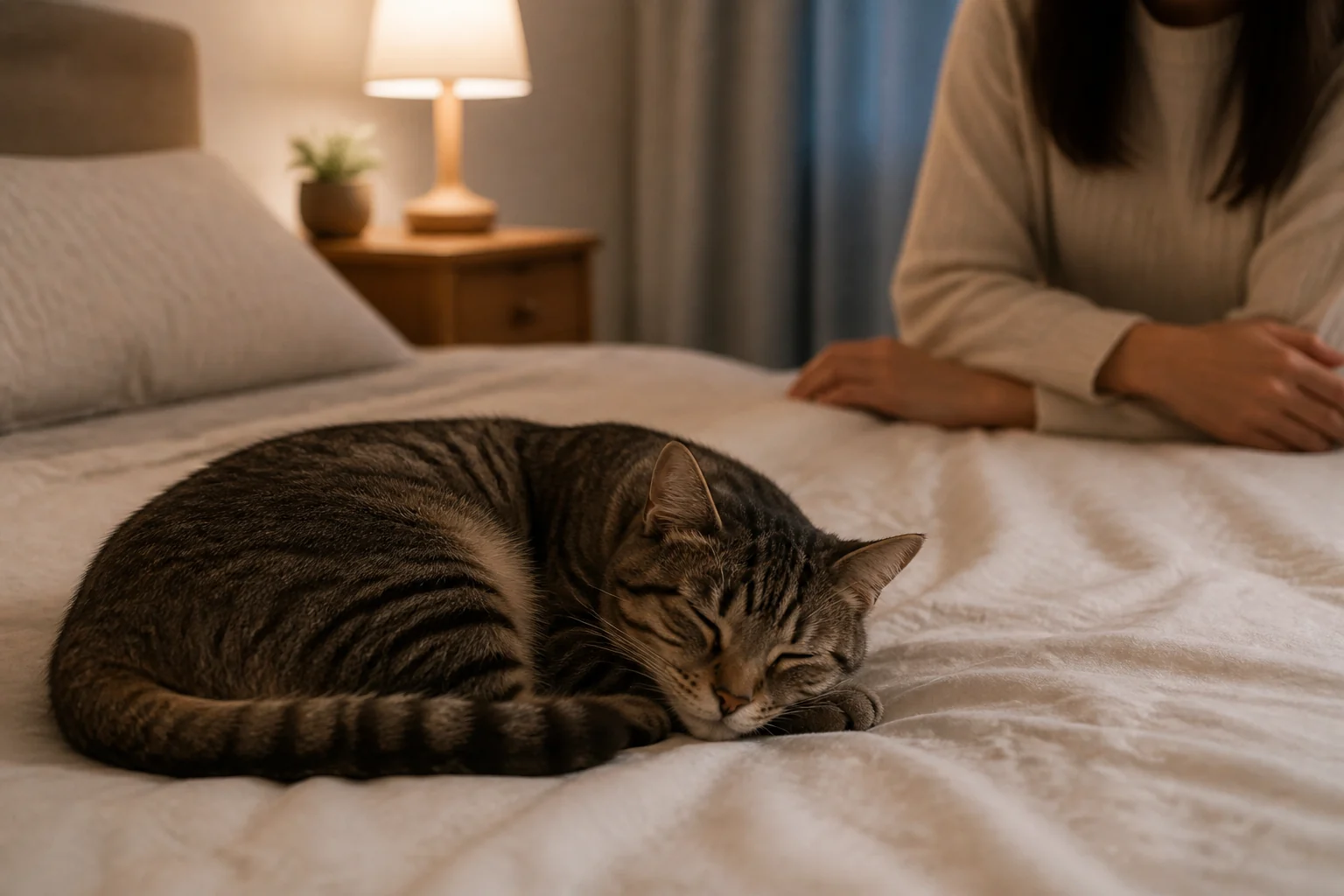
If your cat purrs while sleeping, it is usually a sign that she is relaxed, lightly asleep, or drifting through a comfortable sleep cycle. The sound alone does not prove she is dreaming or perfectly healthy, though, because cats may also purr when they are stressed, uncomfortable, or trying to self-soothe.
The safest way to read sleep purring is to look at the whole picture: posture, breathing, appetite, mobility, litter box habits, age, and whether the pattern is new. A cat who purrs softly while curled up with loose paws is very different from a senior cat who purrs during broken sleep, wakes often, hides, limps, drinks more, or seems disoriented.
This guide explains what purring during sleep can mean, how to tell normal dream-like sleep from health clues, when to let your cat rest, and when to call your veterinarian.
Table of Contents
- Is it normal for a cat to purr while sleeping?
- What does purring during sleep usually mean?
- Can cats dream and purr at the same time?
- What should you observe when your cat purrs in sleep?
- When can sleep purring be a health clue?
- How can you support better sleep without interrupting your cat?
- Conclusion: How to read cat purring while sleeping
- Frequently Asked Questions
- References
Is it normal for a cat to purr while sleeping?
Yes, it can be normal for a cat to purr while sleeping, especially if the purr is soft, rhythmic, and paired with relaxed body language. Many cats doze in light sleep, shift between sleep stages, twitch a paw or whisker, and make small sounds without needing help.
Cats sleep a lot compared with humans, and their sleep can include periods of lighter rest and REM sleep. During REM sleep, cats may twitch or show small movements, and dream-like activity is possible 2. A sleeping purr may happen during this in-between state, when your cat is not fully awake but is still responsive to comfort, scent, warmth, and familiar surroundings.
If you already know your cat purrs when she is content, a quiet sleeping purr is usually just another version of that pattern. For a broader explanation of why cats purr, it helps to remember that purring is communication plus self-regulation, not a single emotion.
Normal sleep purring often looks like this:
| What you notice | More reassuring pattern | More concerning pattern |
|---|---|---|
| Posture | Loose curl, side sleeping, relaxed paws | Hunched, tucked, tense, guarded |
| Breathing | Smooth and quiet | Labored, open-mouth, noisy, very fast |
| Waking | Settles again easily | Wakes repeatedly or seems confused |
| Daily pattern | Eating, playing, grooming, and using the box normally | Appetite, thirst, weight, litter box, or mobility changes |
| Age context | Stable habit in an otherwise well cat | New behavior in a senior cat or a cat with illness |
Do not wake a comfortable sleeping cat just to check. Watch quietly first. If your cat wakes easily, stretches, changes position, and returns to normal behavior later, that is usually more reassuring than a purr paired with distress.
What does purring during sleep usually mean?
Purring during sleep usually means comfort, light sleep, or self-soothing. It may happen because your cat feels safe in a favorite spot, is resting after play, is close to a trusted person, or is responding to touch, warmth, or routine.
AAHA notes that cats may purr for several reasons, including contentment, communication, bonding, and distress or discomfort 1. That range matters because the purr is only one clue. A purr with loose whiskers, normal breathing, and a soft sleeping posture usually reads differently from a purr with hiding, tension, appetite loss, or touch sensitivity.
Think of sleep purring in three common buckets:
- Comfort purring: your cat is deeply settled, warm, and safe.
- Transition purring: your cat is drifting between waking, dozing, and sleep.
- Self-soothing purring: your cat may be trying to calm herself during stress, discomfort, or illness.
The first two are common and usually harmless. The third is why context matters. If your cat has a known pain condition, recent surgery, dental disease, urinary trouble, arthritis, or a sudden behavior change, do not use purring as proof that she is fine.
If the pattern happens when the house is quiet rather than when your cat is asleep, compare it with our guide to cat purring at night. Nighttime purring can overlap with hunger, attention, stress, pain, or normal bonding, while sleep purring is more specifically tied to rest.
Can cats dream and purr at the same time?
Cats may show dream-like sleep behaviors, but you cannot know exactly what your cat is dreaming from purring alone. Small twitches, whisker movement, paw flexing, tiny squeaks, and a soft purr may appear during active sleep, but they should stay brief and gentle.
The Sleep Foundation describes REM sleep in cats as a stage when eyes can move behind closed lids and cats may twitch or lose muscle tone 2. That helps explain why a sleeping cat can look busy for a moment and then relax again. A purr during that time may simply be part of your cat's sleep-wake boundary.
There is a difference between normal sleep movement and a possible sleep disorder or medical event. Texas A&M's veterinary guidance notes that disturbed sleep patterns can be associated with age, disease, or illness, and that disorders such as narcolepsy and cataplexy can be dangerous in some animals 5. Those conditions are not the usual explanation for a softly purring cat, but they are a reminder to take dramatic or repeated abnormal sleep events seriously.
Call your veterinarian if sleep episodes include:
- Violent paddling, thrashing, or repeated falls from furniture.
- Collapse, seizure-like activity, or unresponsiveness.
- Open-mouth breathing, blue or pale gums, or obvious distress.
- Sudden behavior changes after waking.
- New episodes in a senior cat or a cat with known neurologic disease.
For ordinary tiny twitches or purrs, give your cat space. Touching or startling a sleeping cat can frighten her, and it may teach her that resting near people is less safe.
What should you observe when your cat purrs in sleep?
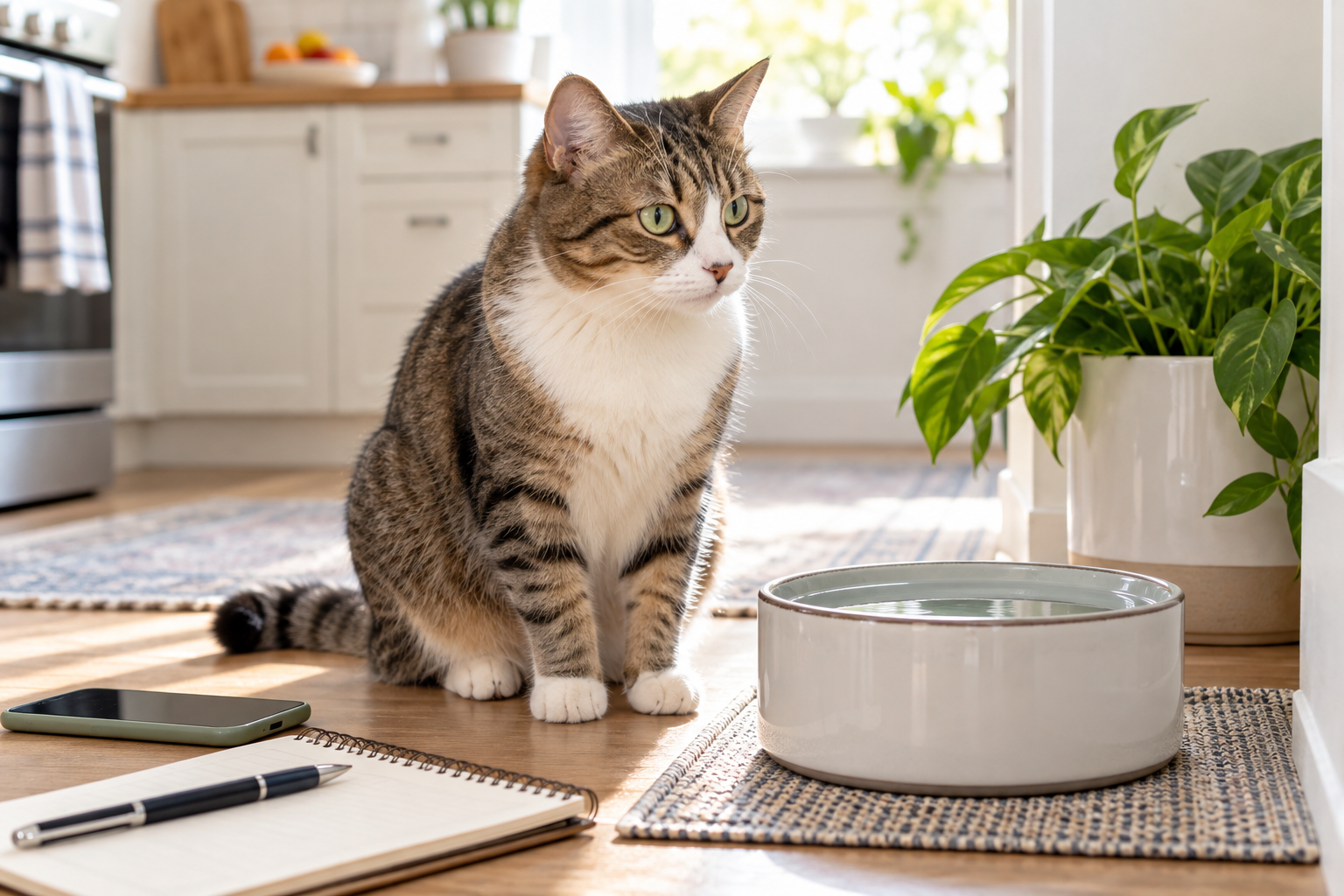
Observe the pattern, not just the sound. Note when the purring happens, how your cat is positioned, how she breathes, whether she wakes normally, and whether anything else has changed in the past few days.
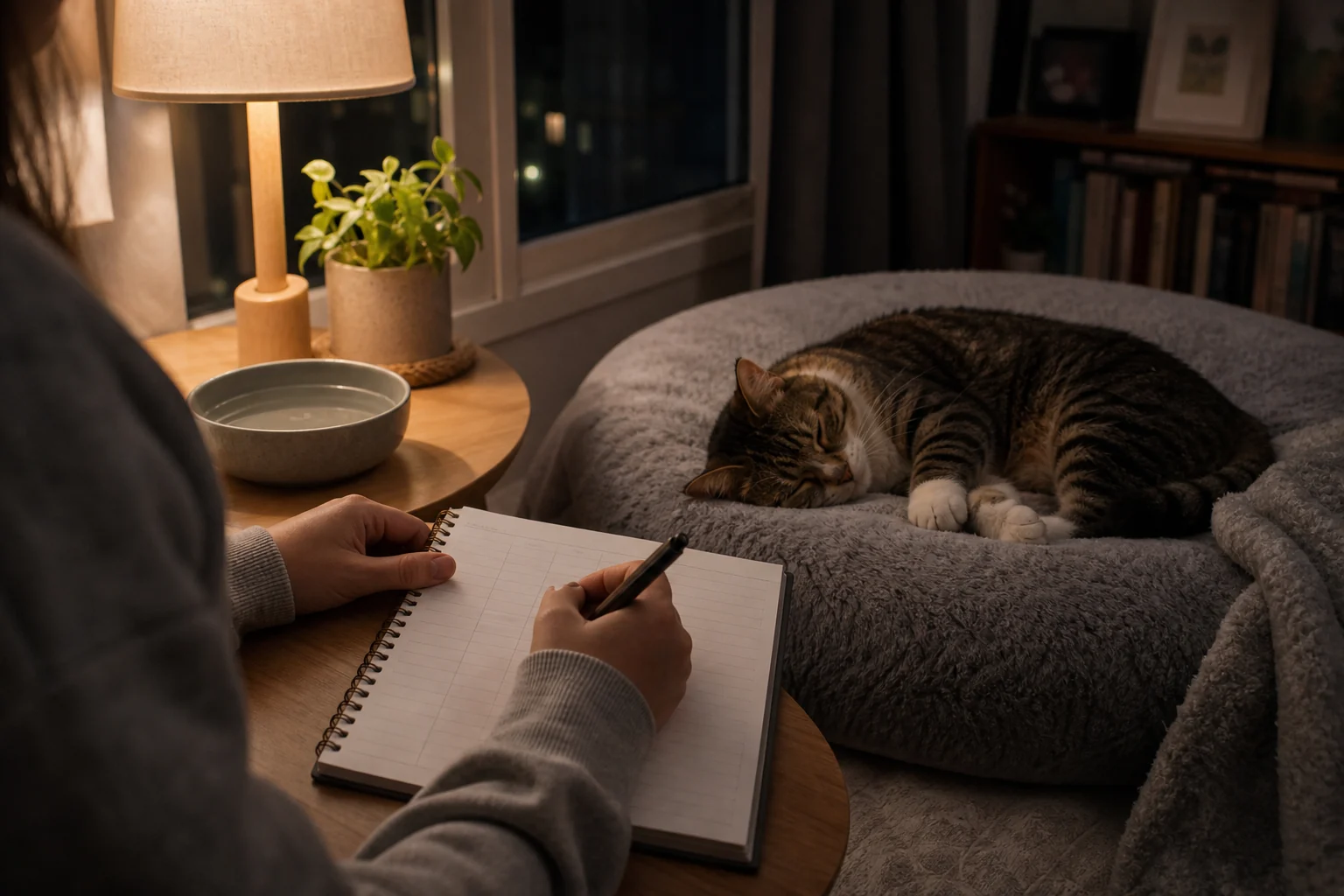
Use a simple 7-day log if the behavior is new or you feel unsure:
- Time of day or night.
- Sleeping place and body position.
- Purr volume and rhythm.
- Breathing: calm, noisy, fast, or labored.
- Movements: small twitches, paw flexes, jolts, or repeated waking.
- Appetite, water intake, vomiting, stool, and urination.
- Jumping, stairs, grooming, play, and hiding.
- Whether your cat seems normal after waking.
Merck Veterinary Manual lists behavioral pain clues such as eating less, restlessness or anxiety, hiding or withdrawing, and mood or personality changes 3. That is why the best observation log includes daily behavior, not just sleep. A purr can sound sweet while the broader pattern tells you something is off.
For example, a healthy adult cat who purrs softly during an afternoon nap, wakes, stretches, eats, plays, and uses the litter box normally is usually not a concern. A senior cat who purrs during short broken naps, stops grooming, avoids jumping, hides, or seems painful when picked up deserves a veterinary check.
When can sleep purring be a health clue?
Sleep purring can be a health clue when it is new, intense, paired with poor sleep, or appears with appetite, thirst, litter box, mobility, breathing, grooming, weight, or personality changes. It is especially worth noting in older cats and cats with chronic health conditions.
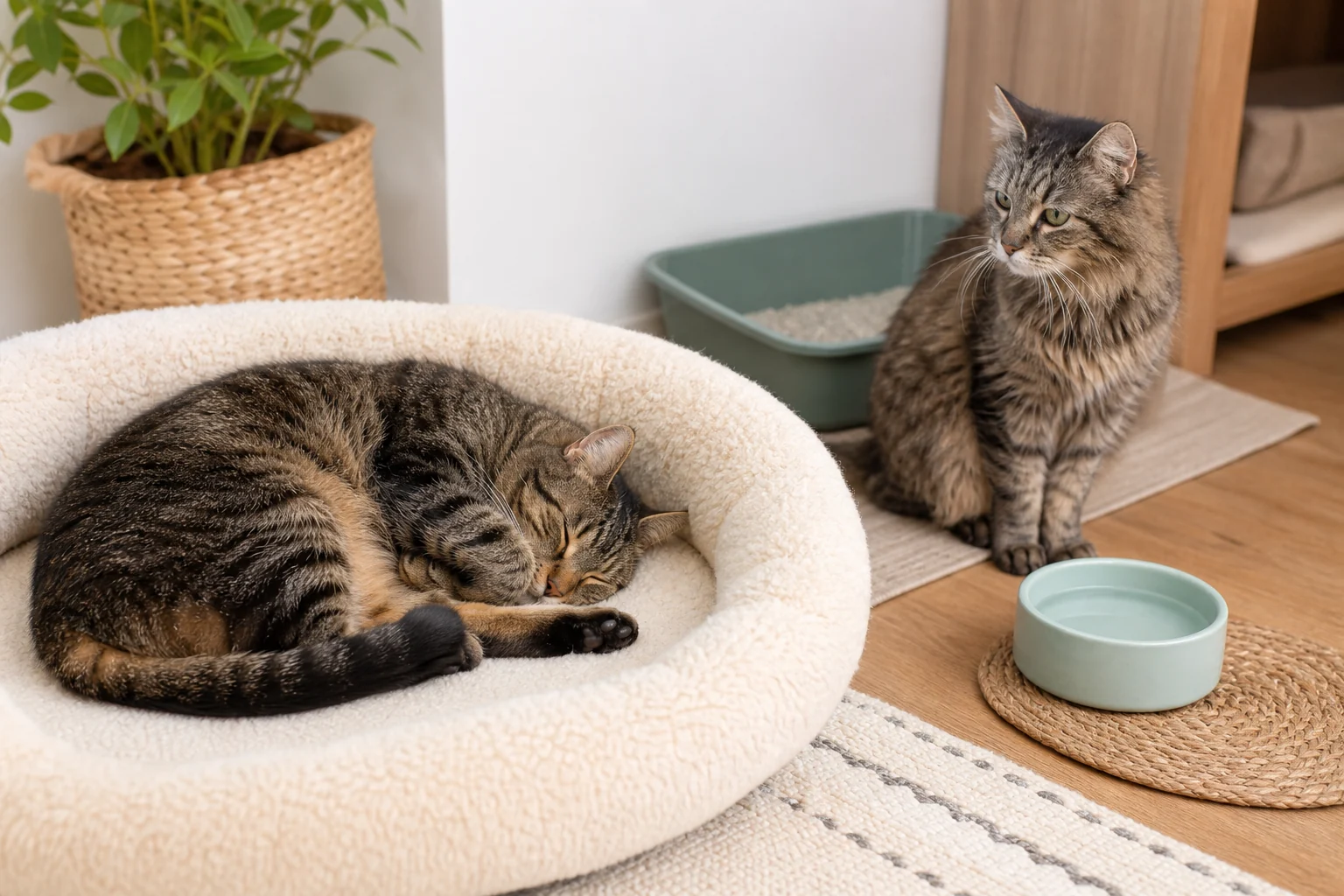
AAFP/ISFM guidelines emphasize that fear, anxiety, pain, and frustration can all shape feline behavior 4. In the home, those states can show up quietly: a cat may sleep in a new hidden place, resist touch, reduce movement, vocalize differently, or purr when she is trying to cope.
Pay closer attention if sleep purring comes with:
| Added clue | Why it matters | What to do next |
|---|---|---|
| Limping, stiffness, or avoiding jumps | Possible pain, arthritis, injury, or weakness | Schedule a veterinary exam |
| Eating less or losing weight | Pain, nausea, dental disease, endocrine disease, or other illness | Call your vet promptly |
| Drinking or urinating more | Kidney, thyroid, diabetes, or urinary concerns are possible | Book a checkup and bring notes |
| Repeated litter box trips or straining | Urinary blockage can be an emergency, especially in male cats | Seek urgent care if urine is not passing |
| Hiding, irritability, or touch sensitivity | Cats often mask discomfort | Review subtle cat pain signs |
| Night waking, pacing, or confusion | Senior-cat pain, sensory changes, or cognitive issues can affect sleep | Compare with cat restless at night |
Urgent signs need urgent care, not observation. Go now or call an emergency veterinarian if your cat has trouble breathing, collapses, has seizures, cannot urinate, has repeated vomiting, has sudden paralysis or severe weakness, may have been exposed to poison, or seems rapidly worse.
If the only sign is a soft purr during sleep and your cat is otherwise normal, you can monitor calmly. If several small changes cluster together, do not wait for one dramatic sign.
How can you support better sleep without interrupting your cat?
Support better sleep by making your cat's day more predictable: active play, appropriate meals, clean litter, water access, safe resting places, and a quiet evening routine. The goal is not to stop normal purring, but to help your cat rest comfortably and reveal any pattern that needs care.
Try these steps:
- Offer active play before the final meal. A daily interactive play routine can help indoor cats use energy before the house goes quiet.
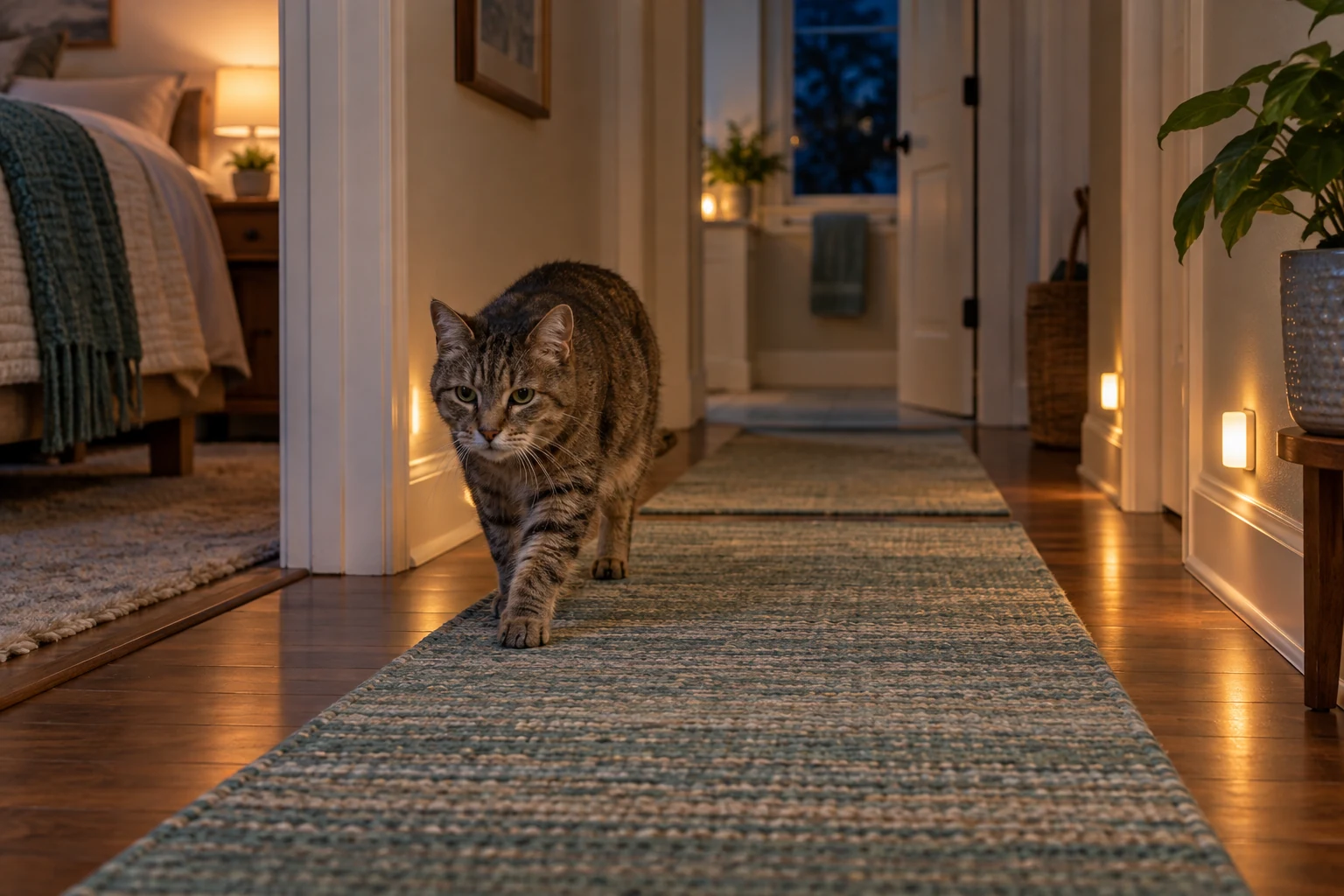
- Keep sleeping spots warm, stable, and easy to access. Senior cats may need lower beds, ramps, or non-slip paths.
- Avoid waking your cat for casual reassurance. Watch breathing and posture first, then let her sleep if she seems comfortable.
- Keep water and litter easy to reach, especially overnight.
- Record new sleep patterns rather than guessing from memory.
- Schedule a vet visit if sleep purring is new and your cat is older, painful, losing weight, drinking more, or acting unlike herself.
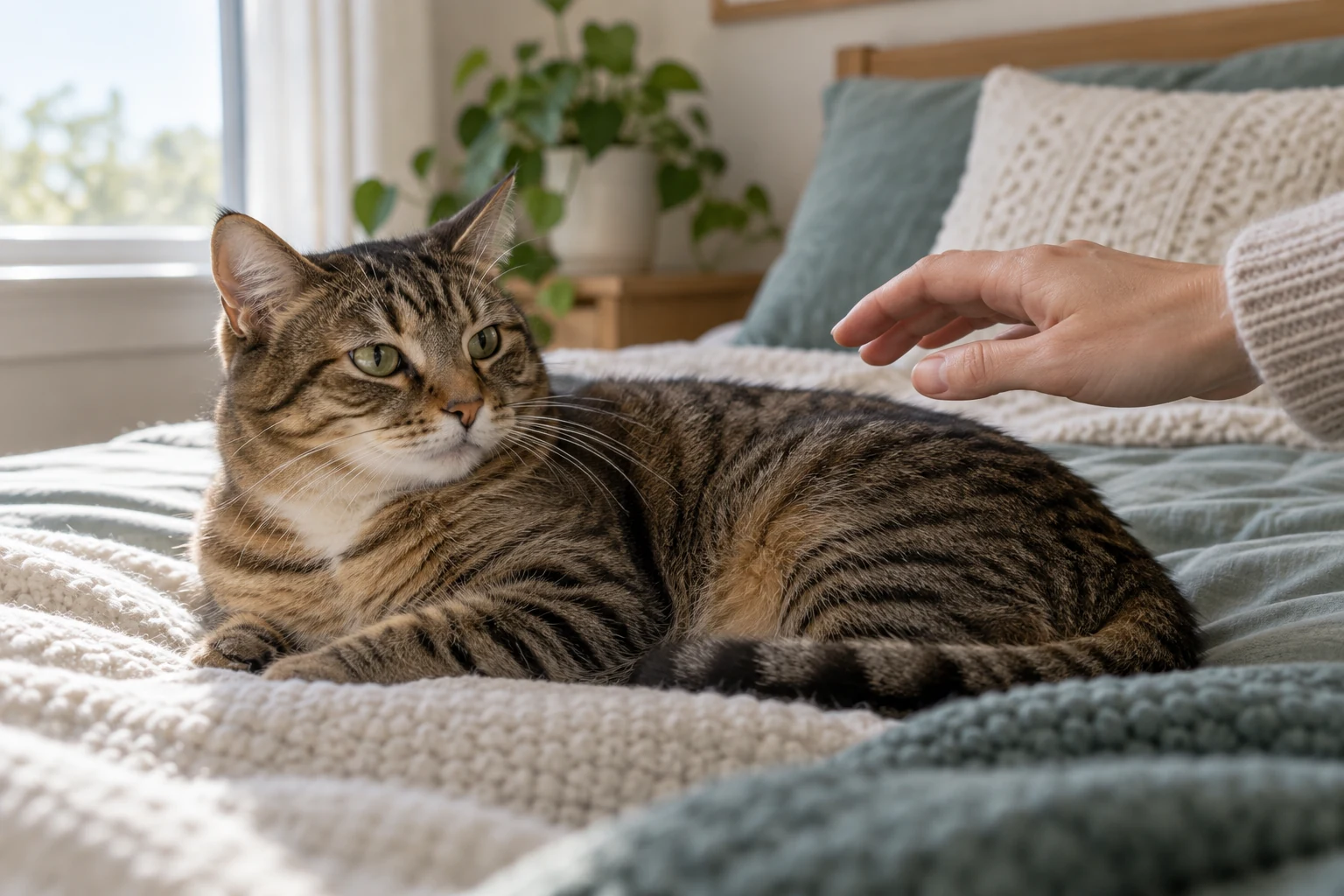
Do not punish, startle, or repeatedly move a cat who purrs while sleeping. Those reactions can make rest feel unsafe. If your cat chooses to sleep near you and purrs quietly, that may be a strong sign of trust.
Also avoid turning normal purring into a test. A cat who stops purring after you touch her may simply have woken up. A cat who continues purring does not automatically need attention. Let the broader health picture guide your response.
Conclusion: How to read cat purring while sleeping
Cat purring while sleeping is often normal, especially when your cat is relaxed, breathing comfortably, and acting well after waking. It may reflect comfort, light sleep, dream-like activity, or a familiar self-soothing rhythm.
The important safety rule is simple: never judge the purr alone. Compare it with posture, breathing, appetite, thirst, litter box habits, mobility, grooming, age, and whether the behavior is new. A peaceful sleeping purr can be left alone. A new purr paired with pain signs, senior-cat confusion, poor appetite, urinary trouble, breathing changes, or rapid decline should be discussed with a veterinarian.
Frequently Asked Questions
Why does my cat purr in her sleep?
Your cat may purr in her sleep because she feels safe, warm, and comfortable, or because she is drifting between light sleep and waking. If her breathing, appetite, litter box habits, and daily behavior are normal, a soft sleep purr is usually not a concern.
Does sleep purring mean my cat is dreaming?
It might happen during dream-like active sleep, but purring alone cannot prove what your cat is dreaming. Small twitches and whisker movements can be normal during REM sleep, while violent movement, collapse, or breathing distress should be treated as a veterinary concern.
Should I wake my cat if she is purring while sleeping?
Usually, no. If your cat looks relaxed and breathes comfortably, let her rest. Wake or move your cat only if there is an immediate safety concern, such as labored breathing, falling risk, seizure-like activity, or another urgent sign.
Can cats purr when they are in pain?
Yes. Cats may purr when they are content, but they may also purr when stressed, uncomfortable, or trying to self-soothe. That is why pain clues such as hiding, reduced appetite, stiffness, touch sensitivity, or litter box changes matter more than the purr by itself.
Why does my senior cat purr and wake up a lot at night?
A senior cat who purrs and wakes often may have discomfort, sensory changes, altered sleep-wake cycles, thyroid or kidney issues, high blood pressure, cognitive changes, or anxiety. New nighttime sleep changes in an older cat are a good reason to schedule a veterinary exam.
Is loud purring during sleep normal?
Some cats naturally purr loudly, including during sleepy cuddles. It is more concerning if the loud purr is new, paired with tense posture, repeated waking, hiding, appetite changes, labored breathing, or signs of pain.
References
[1] AAHA. (2024). The Secret Feline Language: 5 Reasons Why Your Cat Purrs. URL
[2] Sleep Foundation. (2025). How Many Hours Do Cats Sleep?. URL
[3] Merck Veterinary Manual. (2025). Recognizing and Assessing Pain in Animals. URL
[4] AAFP/ISFM. (2022). 2022 AAFP/ISFM Cat Friendly Veterinary Interaction Guidelines. URL
[5] Texas A&M Veterinary Medicine & Biomedical Sciences. (2009). Sleeping Disorders in Animals. URL
 EN
EN DE
DE ES
ES PT
PT