
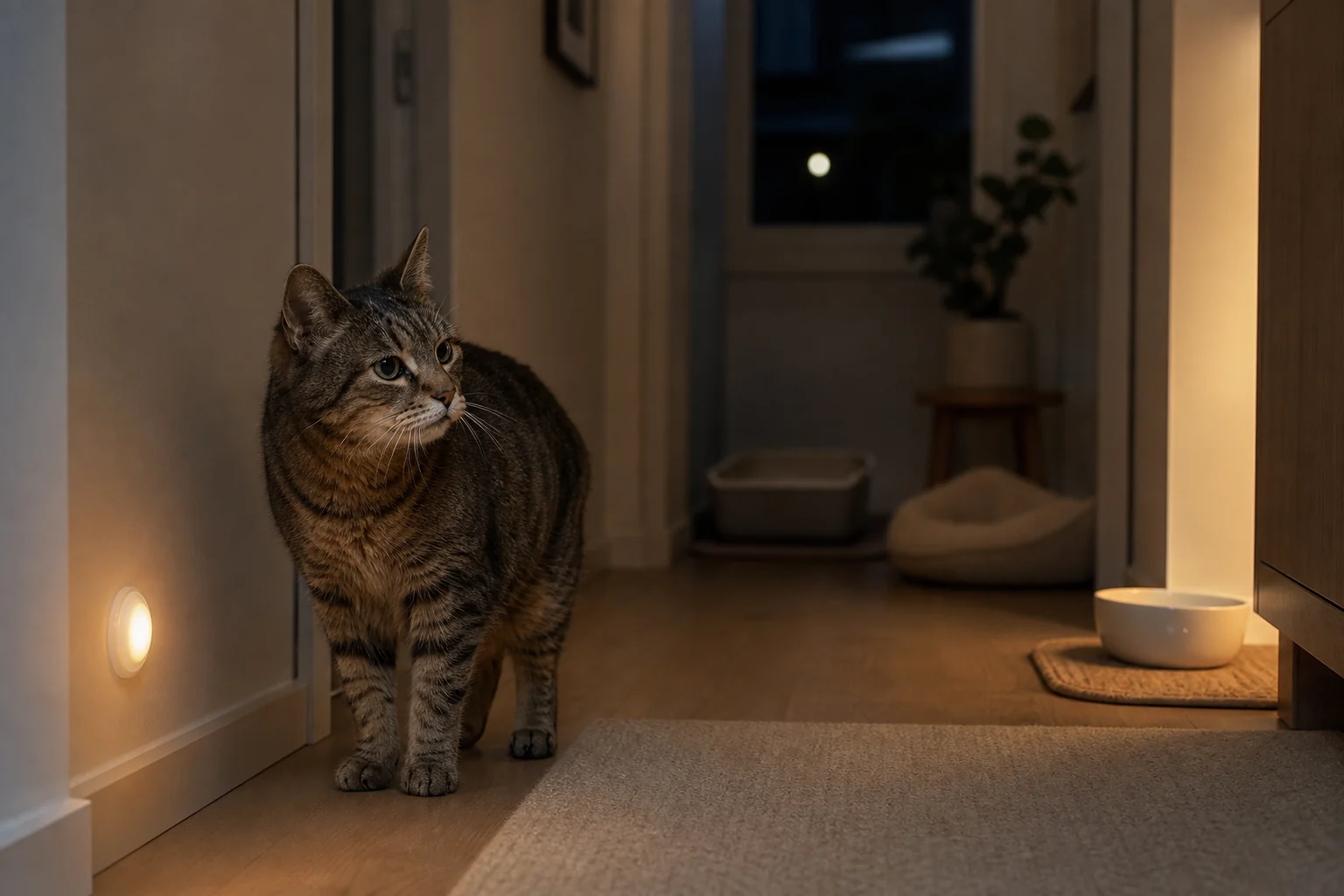
If your cat is restless at night, start by asking what changed: sleep timing, play, meals, household stress, outdoor triggers, pain, thirst, litter box habits, or age. Some nighttime activity is normal for cats, but new pacing, repeated waking, loud calling, or restlessness in a senior cat should be treated as a clue, not a nuisance.
The goal is not to force your cat to sleep on a human schedule overnight. It is to work out whether your cat is under-stimulated, anxious, uncomfortable, disoriented, hungry, reacting to something outside, or showing a medical warning sign. Once you know which pattern fits, you can choose a calmer routine or call your veterinarian sooner.
This guide explains the most common reasons cats pace, roam, and wake at night, what to track, which senior-cat clues matter, and how to build a bedtime routine that protects both your cat's comfort and your sleep.
Table of Contents
- Why is my cat restless at night?
- Is nighttime restlessness the same as yowling?
- Why are senior cats more likely to pace or wake at night?
- What clues should you track before you change the routine?
- How can you help a restless cat settle at night?
- When should a restless cat see the vet?
- Conclusion: What to do if your cat is restless at night
- Frequently Asked Questions
- References
Why is my cat restless at night?
Your cat may be restless at night because she slept through the day, did not get enough active play, expects food or attention, hears outdoor animals, feels stressed by a routine change, or is uncomfortable from pain or illness. In older cats, night restlessness can also reflect sensory decline, altered sleep-wake cycles, hyperthyroidism, high blood pressure, arthritis, urinary problems, or cognitive dysfunction.
Start with the pattern rather than the label. A young cat who does energetic hallway runs after a quiet day may need better play timing. A cat who paces between the water bowl and litter box may need a health check. A senior cat who wanders as if lost, stares at corners, sleeps more in the day, and calls at night fits a different risk category.
Here are common patterns:
| Night pattern | What it may suggest | Safer next step |
|---|---|---|
| Short bursts of running or zooming | Unspent energy, normal predatory play rhythm | Add active evening play before dinner |
| Pacing at doors or windows | Outdoor animals, access frustration, changed house rule | Block triggers and keep rules consistent |
| Restless after a missed play session | Boredom or learned attention-seeking | Schedule play before the behavior starts |
| Waking you for food | Hunger, meal timing, learned reward, appetite change | Review portions and watch weight or thirst |
| Wandering in a senior cat | Disorientation, pain, sensory change, illness | Book a senior-cat exam and track signs |
| Repeated litter box trips | Urinary discomfort, constipation, diarrhea, confusion | Call your vet promptly, urgently if straining |
Restlessness is not automatically bad behavior. It is information. Your job is to notice whether the behavior is predictable and mild, or new and paired with physical changes.
Is nighttime restlessness the same as yowling?
Not always. Restlessness describes movement and inability to settle, while yowling describes a loud vocal signal. They often overlap at night because a cat who is anxious, bored, disoriented, hungry, or uncomfortable may roam and call at the same time.
If the main problem is loud calling, compare the pattern with our guide to cat yowling at night. If your cat vocalizes across the whole day, not only overnight, our guide to why cats meow so much can help you separate greetings, food requests, stress, and health concerns.
The distinction matters because the response is different. A cat who is simply awake and under-stimulated needs daytime activity, evening play, and predictable resources. A cat who is restless and crying in the litter box, losing weight, drinking more, vomiting, limping, or acting confused needs veterinary help before behavior training.
VCA lists attention-getting behavior, play behavior, sexual behavior, medical problems, discomfort, and aggressive displays among common reasons for persistent feline vocalization, and recommends veterinary evaluation for middle-aged or elderly cats to rule out medical causes such as pain, endocrine dysfunction, and hypertension 5. That same logic applies when vocalization comes with pacing.
Why are senior cats more likely to pace or wake at night?
Senior cats are more likely to pace or wake at night because aging can affect vision, hearing, mobility, pain sensitivity, blood pressure, thyroid function, kidney health, and cognition. Cornell Feline Health Center notes that cognitive dysfunction can involve disorientation, altered sleep-wake cycles, staring, house soiling, and loud vocalizing in the middle of the night 1.
Older cats can also be restless for reasons that are not cognitive dysfunction. Cornell lists weight loss, increased appetite, increased thirst and urination, vomiting, diarrhea, hyperactivity, and an unkempt coat among signs seen with feline hyperthyroidism 4. Merck Veterinary Manual also links medical categories such as neurologic disease, sensory dysfunction, endocrine disease, pain, gastrointestinal problems, and urogenital problems with signs that can include altered sleep, vocalization, restlessness, increased activity, or waking at night 3.
That is why "my senior cat is restless at night" should not be brushed off as normal aging. Normal aging may bring a slower pace and changing preferences, but sudden nighttime pacing, confusion, appetite change, weight loss, thirst, litter box change, or mobility trouble deserves a medical review.
If your older cat hesitates to jump, seems stiff after resting, or avoids stairs and high places, compare the pattern with these older cat arthritis signs. Pain often looks quieter than people expect, and cats may show it by changing routes, sleeping spots, litter box habits, or nighttime movement.
What clues should you track before you change the routine?
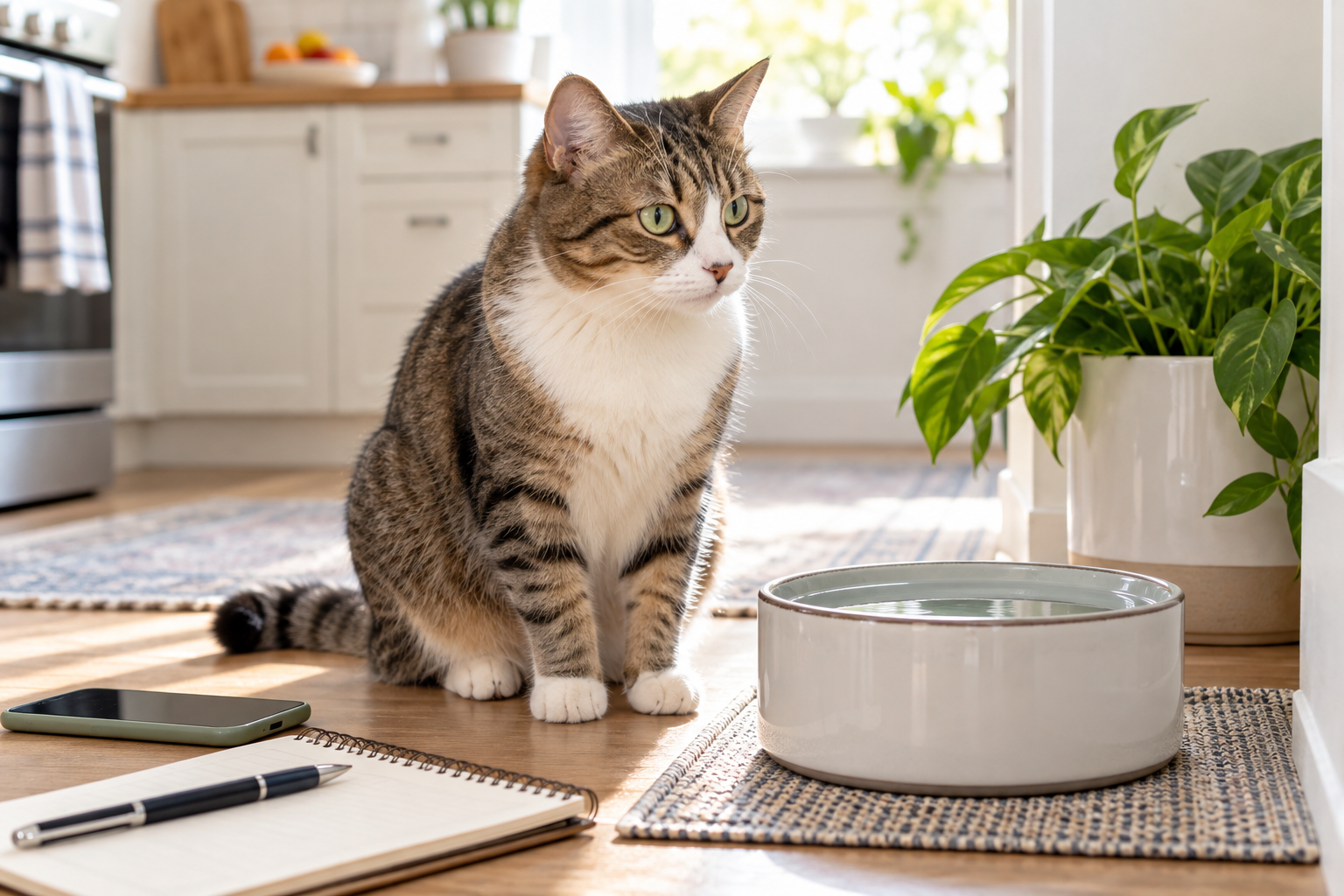
Track the time, place, body language, sound, food and water changes, litter box output, mobility, and whether the behavior is new or escalating. A simple log gives your veterinarian better information and keeps you from guessing based on one sleepless night.
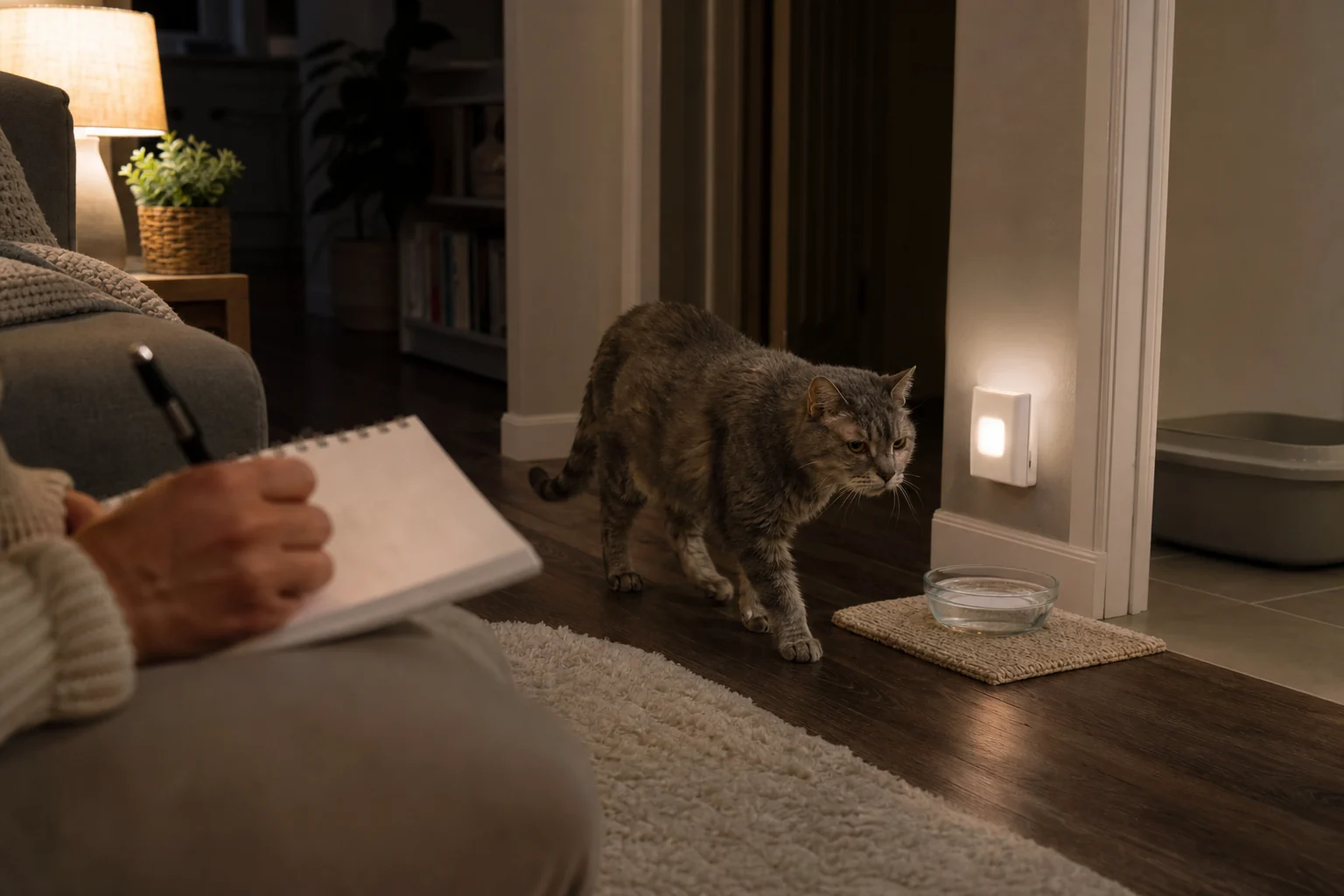
For 7 to 14 days, write down:
- Time the restlessness starts and stops.
- Where your cat goes first: door, window, kitchen, hallway, litter box, water bowl, bedroom, or hiding spot.
- Whether your cat vocalizes, purrs, pants, growls, or stays quiet.
- Food changes, appetite changes, treats, and meal timing.
- Water intake and urination patterns.
- Stool changes, vomiting, hairballs, or signs of nausea.
- Jumping, stair use, stiffness, grooming, and touch sensitivity.
- Household changes such as guests, construction, new pets, new work hours, or closed doors.
- Whether play, food, attention, or ignoring changes the behavior.
ASPCA's senior-cat guidance lists signs such as wandering aimlessly, getting stuck, restlessness, urgent vocalization, restless sleep, night waking, more daytime sleep, and nighttime vocalization as possible cognitive clues, while also emphasizing that the first step is to rule out medical causes 2. That is the key: track behavior, but do not diagnose your cat at home.
If the nighttime pattern includes purring, compare whether your cat seems relaxed or unsettled with our guide to cat purring at night. Purring can happen during comfort, stress, or pain, so the surrounding body language matters.
How can you help a restless cat settle at night?
Help a restless cat settle by moving the most exciting parts of the day earlier into the evening: active play, a planned meal, water, clean litter access, quiet navigation lighting, and a comfortable resting spot. Make the routine happen before the pacing starts so it does not become a reward for waking you.
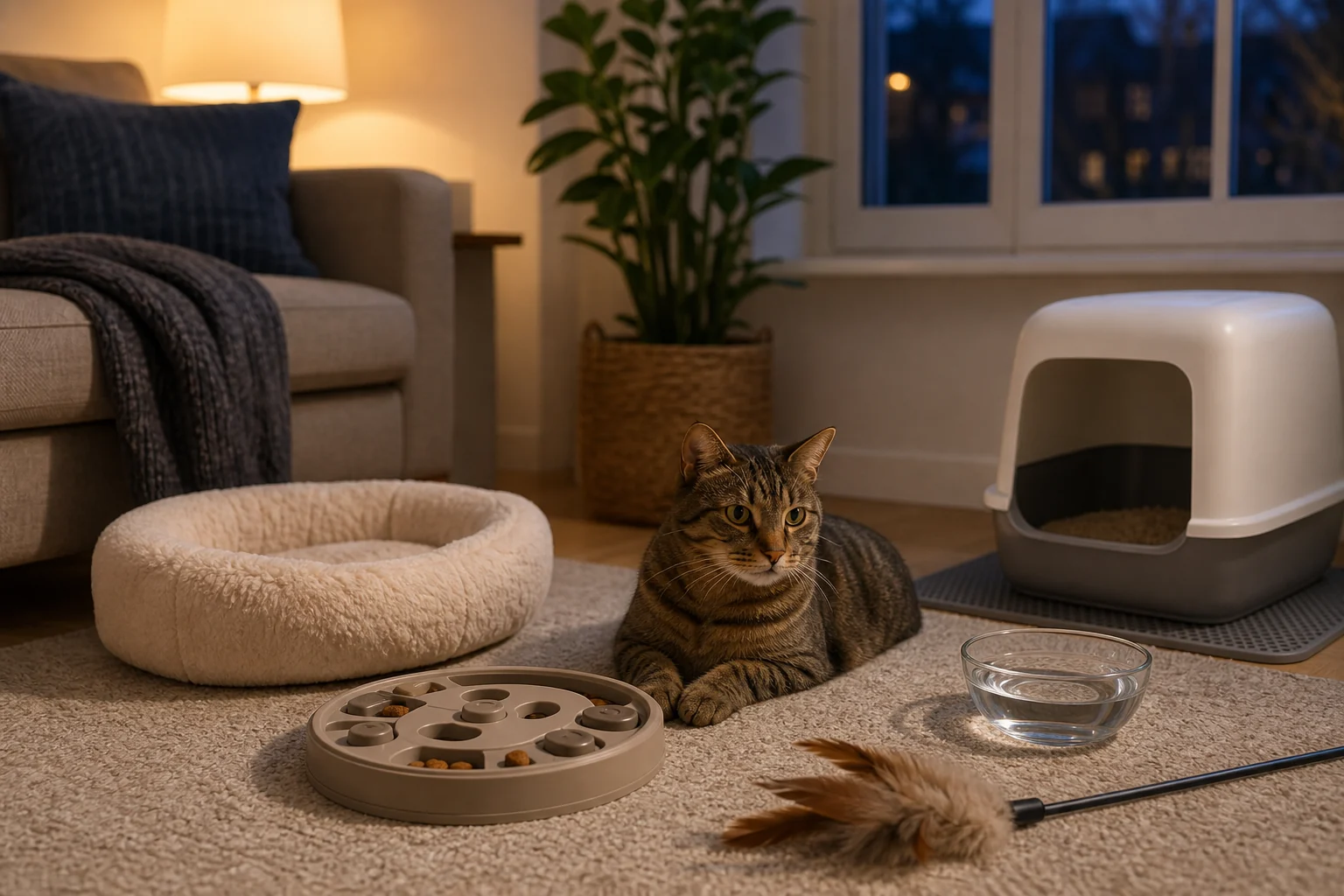
Try this routine for two weeks if your cat is otherwise healthy:
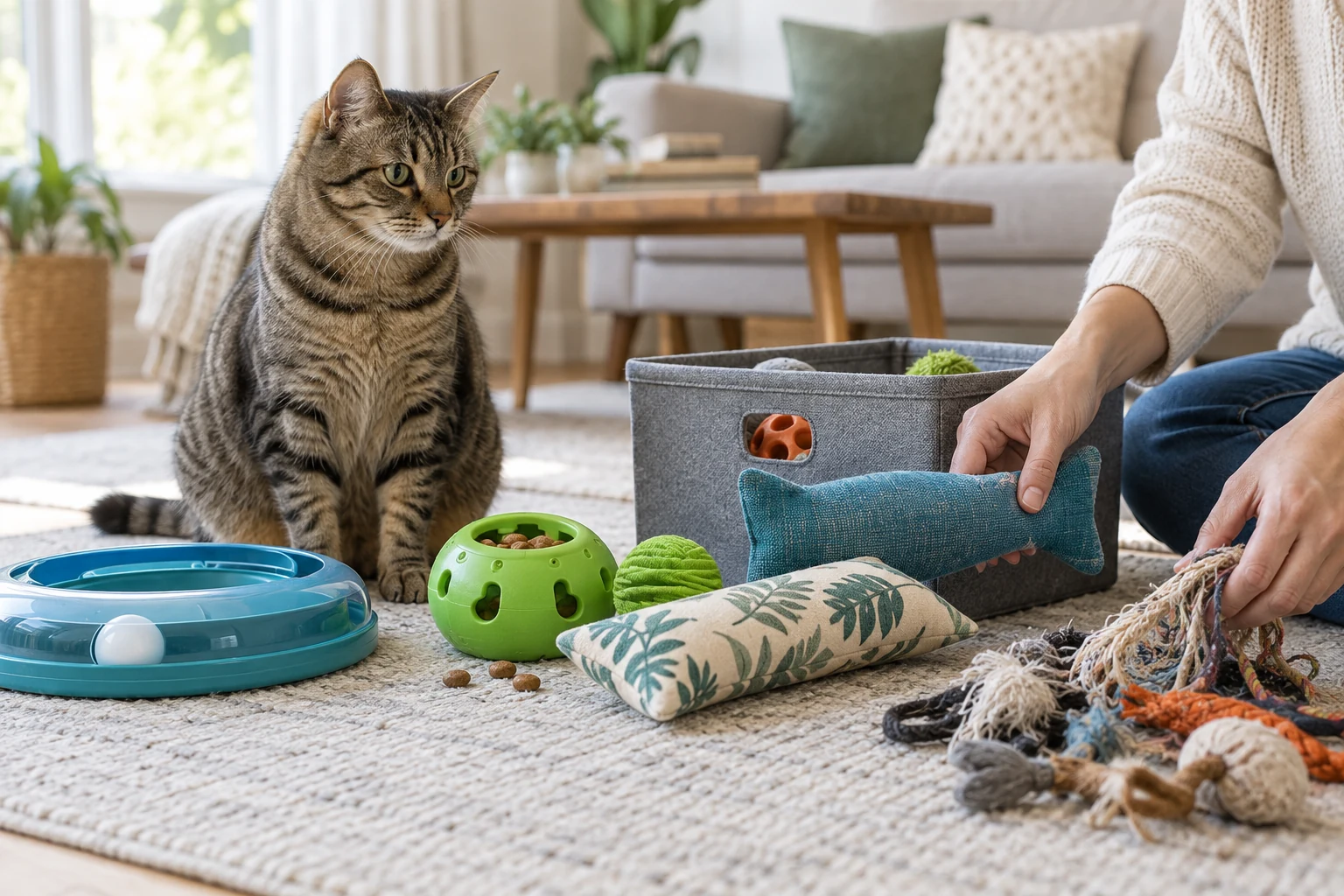
- Add a hunting-style play session 60 to 90 minutes before bed. Let your cat stalk, chase, catch, and wind down. This daily interactive play routine explains the sequence in more detail.
- Offer the final planned meal after play. This mimics a more natural hunt-eat-rest rhythm.
- Use food puzzles only when appropriate for your cat. Puzzle feeders for cats can add mental work, but they should be easy enough that your cat does not become frustrated.
- Consider timing support for predictable hunger. Timed feeders for cats can help some early-morning food demand patterns, especially when portions are measured.
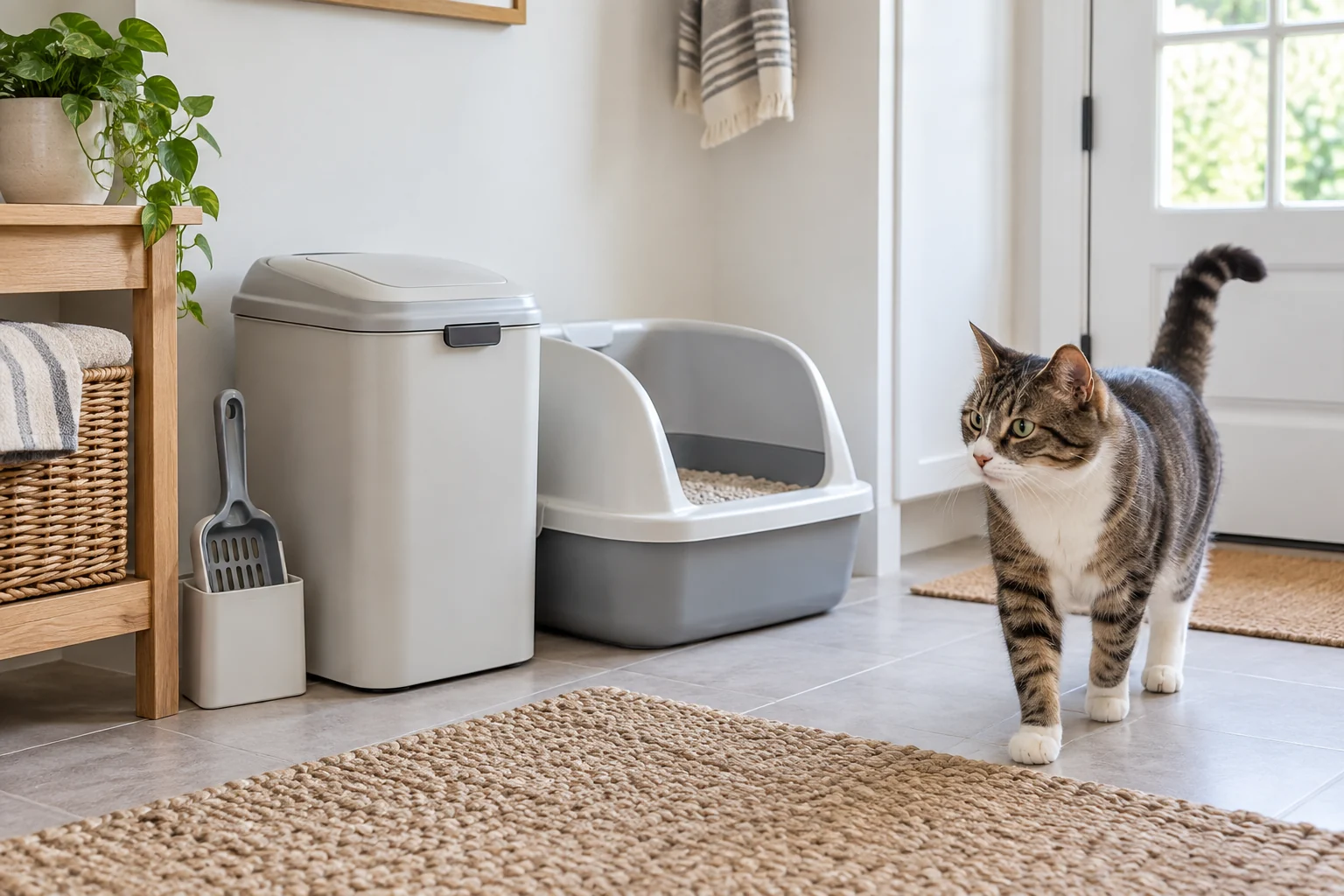
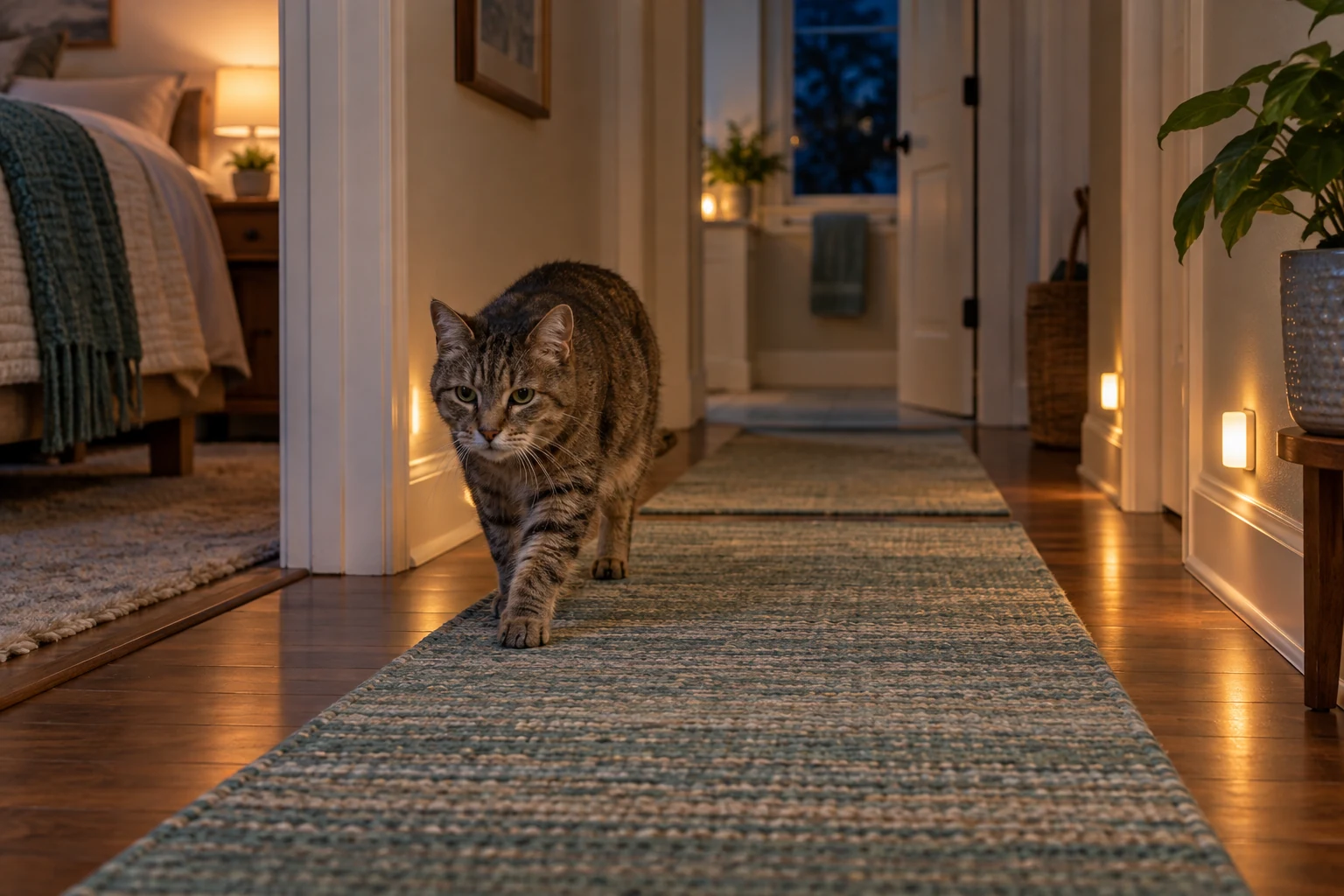
- Refresh water and scoop litter before bed. Senior cats should not have to travel far in the dark to reach essentials.
- Add a dim nightlight for older cats or cats with reduced vision.
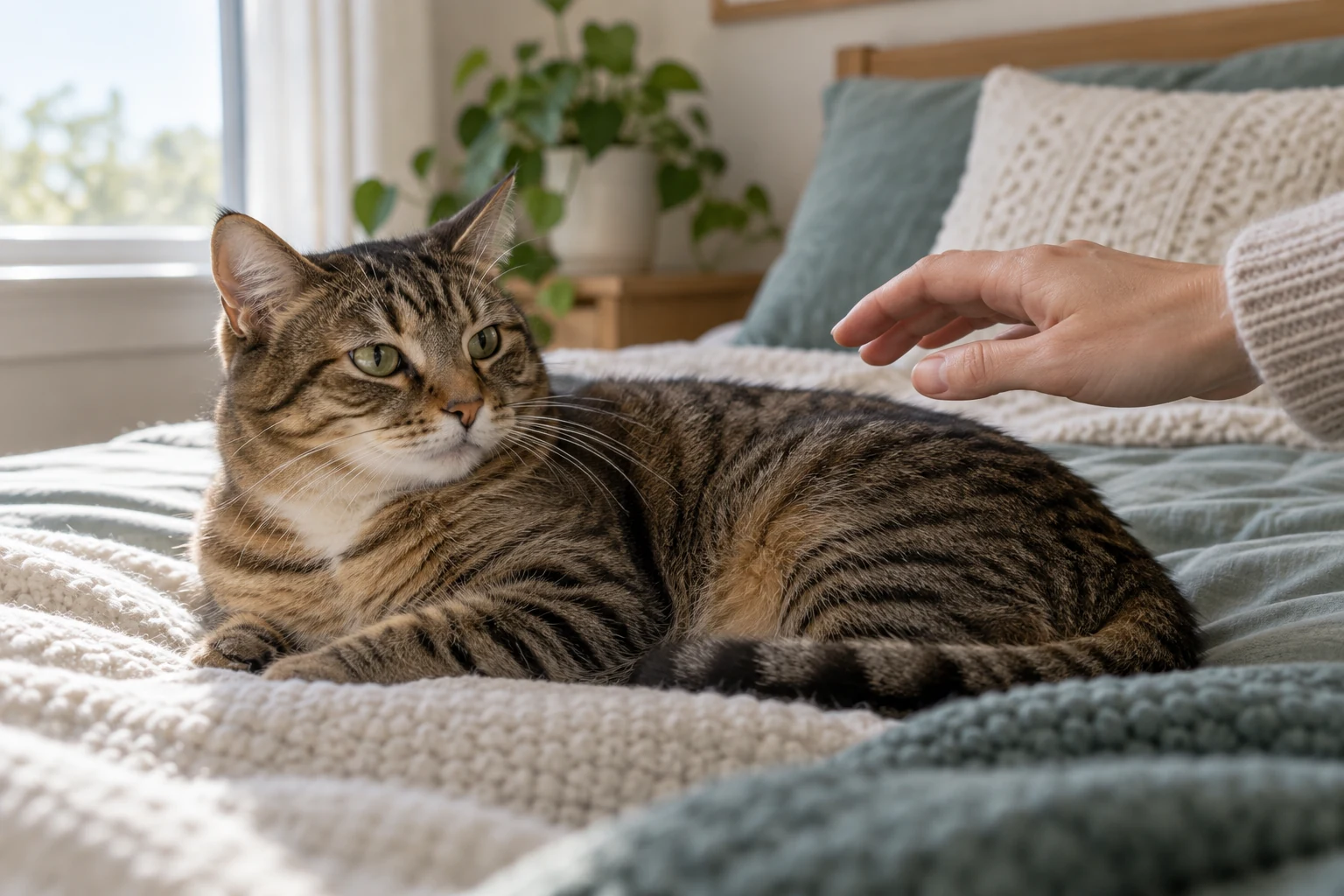
- Keep responses calm and boring. If you need to check your cat, rule out urgent needs, then return to bed without exciting attention.
Avoid yelling, spraying water, startling, or chasing your cat. Those reactions may suppress one behavior briefly while increasing fear or nighttime anxiety. VCA notes that rewarding quiet behavior and building a richer daytime routine can help with nighttime vocalization patterns, while food, play, affection, or attention during the unwanted vocalization can reinforce it 5.
If your cat is restless because of outdoor animals, block the view at night, close blinds, use white noise, and avoid giving access to windows that reliably trigger arousal. If the problem is a new closed bedroom door, decide the rule and keep it consistent instead of changing it after a long bout of pacing.
When should a restless cat see the vet?
A restless cat should see the vet when the behavior is new, escalating, happening in a senior cat, or paired with appetite, thirst, weight, litter box, mobility, breathing, vomiting, stool, grooming, or personality changes. For senior cats, a checkup is especially important because medical conditions can look like behavior problems.
Book a prompt appointment if you notice:
- Weight loss, especially with normal or increased appetite.
- Drinking or urinating more than usual.
- Repeated litter box trips, straining, crying in the box, or blood in urine.
- Vomiting, diarrhea, constipation, or reduced appetite.
- Limping, stiffness, reluctance to jump, or difficulty entering the litter box.
- New hiding, clinginess, irritability, aggression, or touch sensitivity.
- Cloudy eyes, bumping into objects, seeming lost, or staring at walls.
- Loud nighttime vocalizing or pacing in an older cat.
Seek urgent care now if your cat cannot urinate, has trouble breathing, collapses, has seizures, has sudden weakness or paralysis, may have been exposed to poison, has repeated vomiting, or seems rapidly worse. For subtle discomfort clues, review these subtle cat pain signs and share your observations with your veterinarian.
Before the appointment, bring your behavior log, photos or video if possible, a list of foods and medications, and notes about weight, water, litter box output, and sleep timing. This helps your veterinarian decide whether to check pain, blood pressure, thyroid values, kidney markers, urine, vision, hearing, dental health, or neurologic signs.
Conclusion: What to do if your cat is restless at night
Nighttime restlessness in cats can come from ordinary energy, a thin evening routine, learned attention, hunger, outdoor triggers, stress, pain, illness, or senior cognitive changes. The safest response is to look at the whole pattern instead of assuming your cat is being difficult.
If your cat is young, healthy, and predictably active after quiet days, shift more enrichment, play, and meal timing into the evening. If the restlessness is new, intense, linked with physical changes, or happening in an older cat, schedule a veterinary exam. Once medical causes are addressed or ruled out, a consistent play-meal-settle routine can make nights calmer for both of you.
Frequently Asked Questions
Why does my cat pace around the house at night?
Your cat may be under-stimulated, hungry, reacting to outdoor sights or sounds, anxious about a routine change, or uncomfortable. If the pacing is new, repetitive, paired with vocalizing, or happening in a senior cat, track the pattern and call your veterinarian.
Is it normal for cats to be more active at night?
Some nighttime activity is normal because cats are naturally active around dawn and dusk, and many indoor cats nap heavily during the day. It becomes more concerning when your cat cannot settle, seems distressed, vocalizes loudly, uses the litter box repeatedly, loses weight, drinks more, or acts confused.
Should I ignore my restless cat at night?
Do not ignore a new or distressed pattern until you have checked for health and safety issues. If your cat is healthy and the behavior is attention-seeking, meet needs before bedtime and keep nighttime responses calm, brief, and unrewarding.
Can a nightlight help a senior cat at night?
A dim nightlight may help some senior cats, especially if reduced vision or disorientation is part of the pattern. It works best with easy access to water, litter, familiar resting places, and a veterinary check for new nighttime behavior.
Why is my older cat suddenly restless at night?
An older cat may become restless at night because of pain, arthritis, thyroid disease, high blood pressure, kidney disease, urinary problems, sensory decline, or cognitive dysfunction. Sudden nighttime restlessness in a senior cat is a good reason to schedule a veterinary exam.
Will playing before bed stop my cat from waking me?
It can help when the cause is boredom, excess energy, or a poorly timed routine. Use active play followed by a planned meal and a quiet setup, but call your vet if the waking is new, intense, or linked with appetite, thirst, weight, litter box, or mobility changes.
References
[1] Cornell Feline Health Center. (2024). Cognitive Dysfunction. URL
[2] ASPCA. (2026). Older Cats with Behavior Problems. URL
[3] Merck Veterinary Manual. (2026). Medical Causes of Behavioral Signs. URL
[4] Cornell Feline Health Center. (2026). Hyperthyroidism in Cats. URL
[5] VCA Animal Hospitals. (2019). Cat Behavior Problems – Vocalization. URL
 EN
EN DE
DE ES
ES PT
PT