
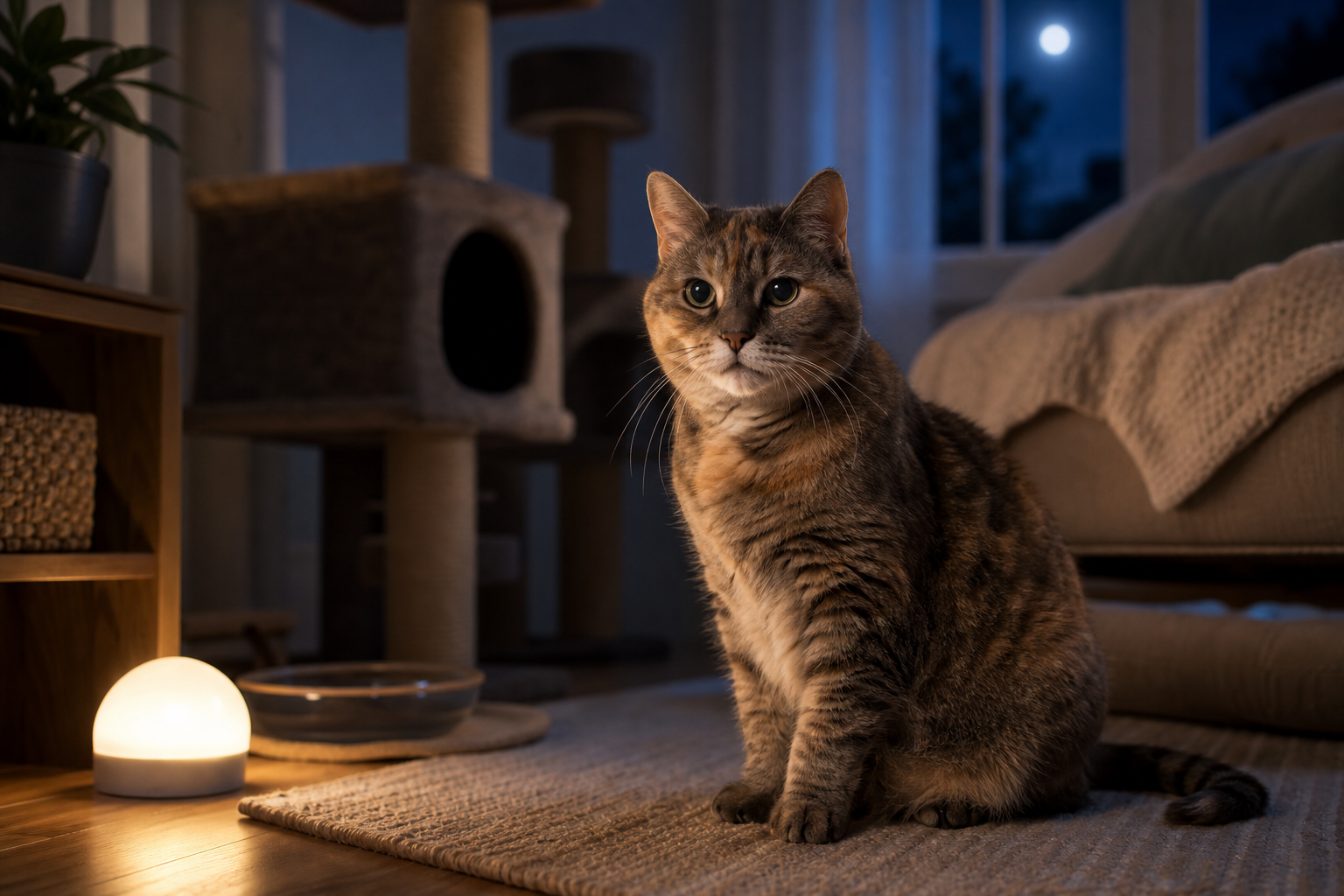
Cat yowling at night can mean your cat wants attention, feels disoriented, is bored after a quiet day, or is reacting to pain or illness. If the yowling is new, louder than usual, tied to appetite or litter box changes, or happening in a senior cat, treat it as a health clue before assuming it is just a habit.
Nighttime yowling is especially stressful because it interrupts sleep and can make a caring cat parent feel helpless. The goal is not to punish the noise. It is to work out whether your cat is asking for something normal, responding to a changed routine, or showing a sign that a veterinarian should check.
This guide walks through common causes, senior-cat clues, red flags, and a calmer bedtime routine that protects both your cat's comfort and your sleep.
Table of Contents
- What does cat yowling at night usually mean?
- Why do senior cats yowl more at night?
- What senior-cat clues should make nighttime yowling more concerning?
- Could attention, loneliness, or routine changes be involved?
- How can you calm bedtime yowling without rewarding it?
- When should you call the vet?
- Conclusion
- Frequently Asked Questions
- References
What does cat yowling at night usually mean?
Cat yowling at night usually means your cat is trying to communicate something more intense than an ordinary meow. It may be attention-seeking, hunger, boredom, stress, mating behavior in an unspayed or unneutered cat, confusion, pain, or a medical problem.
Yowling is longer, louder, and often more urgent than a short greeting meow. If you want a broader sound-by-sound overview, our guide to why cats meow so much explains everyday vocalization patterns. Night yowling, though, deserves its own lens because darkness, sleep cycles, and senior health changes can all amplify it.
Start with the pattern:
| Night yowling pattern | What it may suggest | What to do next |
|---|---|---|
| Yowling at the bedroom door | Attention, separation frustration, routine expectation | Adjust daytime enrichment and bedtime routine |
| Yowling while carrying a toy | Play drive, hunting sequence, wanting praise or interaction | Add structured evening play before bed |
| Yowling near the food bowl | Hunger, schedule mismatch, appetite change | Review feeding timing and watch for weight or appetite changes |
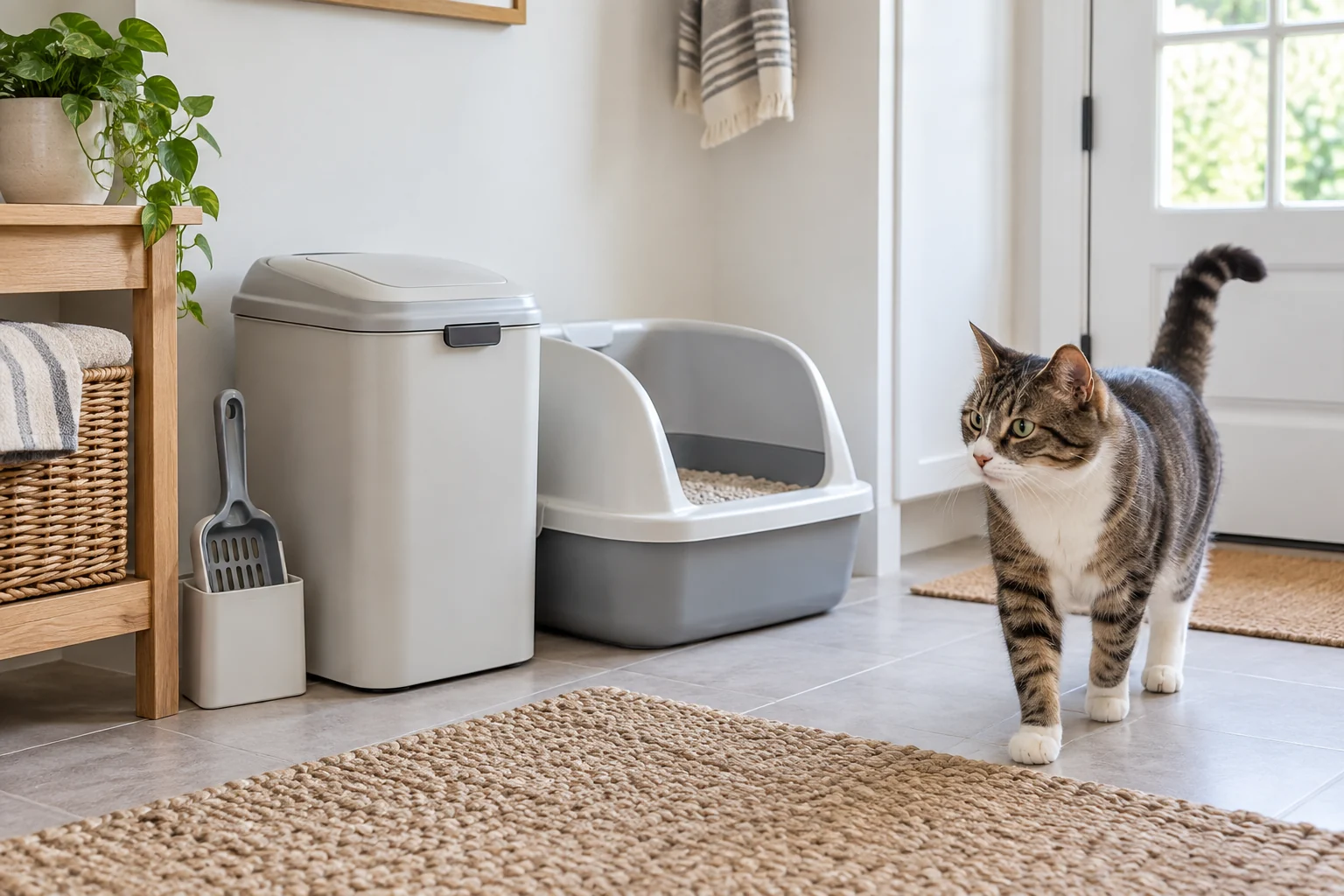
| Yowling near the litter box | Pain, urinary issue, constipation, confusion | Call your veterinarian promptly if straining or repeated trips occur |
| Wandering and yowling in an older cat | Disorientation, sensory decline, pain, illness, cognitive dysfunction | Book a senior-cat exam and track the behavior |
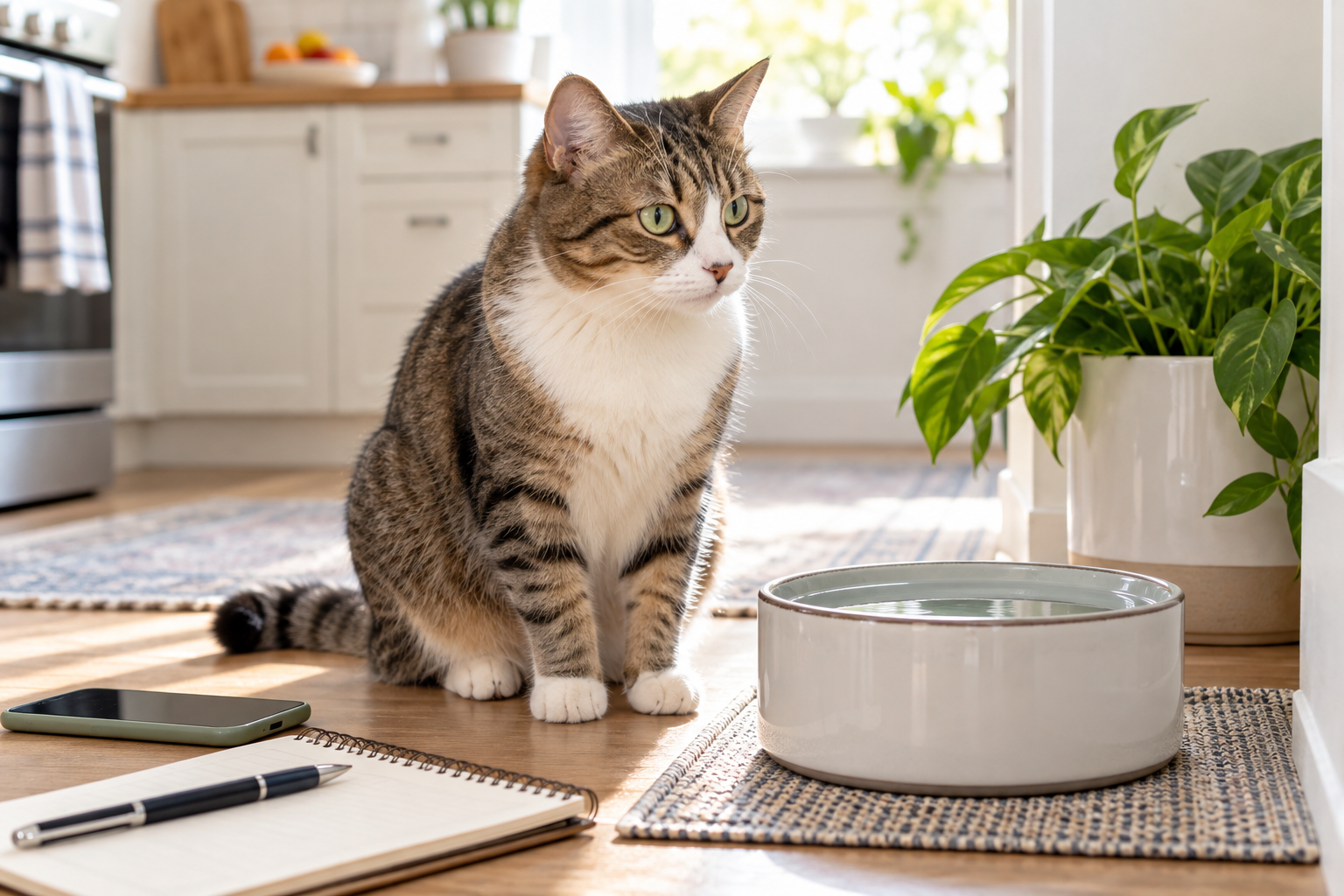
The most useful first step is to write down when the yowling happens, where your cat is standing, what else changed that week, and whether your cat can be redirected calmly. A two-week log can reveal whether the trigger is predictable, such as a missed play session, or whether the behavior is escalating.
Why do senior cats yowl more at night?
Senior cats may yowl more at night because aging can affect sleep, hearing, vision, mobility, pain sensitivity, blood pressure, thyroid function, kidney health, and cognition. Cornell Feline Health Center notes that nighttime vocalizing is relatively common in cats with conditions such as hyperthyroidism or hypertension, and that blindness or confusion can make older cats anxious 1.
The 2021 AAFP Feline Senior Care Guidelines emphasize that senior-cat care works best when veterinarians and caregivers track subtle changes over time, including behavior, pain, nutrition, mobility, and quality of life 2. That matters because a cat who yowls at 2 a.m. may not look obviously sick during the day.
Common senior-cat contributors include:
- Sensory changes: Reduced hearing or vision can make the house feel less predictable in the dark.
- Pain or stiffness: Arthritis, dental pain, or other discomfort can interrupt sleep or make movement harder.
- Cognitive dysfunction: Older cats can become disoriented, restless, or stuck in changed sleep-wake patterns.
- Medical disease: Hyperthyroidism, hypertension, kidney disease, diabetes, and urinary problems can all change nighttime behavior.
- Resource access: A cat who cannot easily reach water, food, a litter box, or a preferred bed may call out instead.
Do not assume a senior cat is "just getting old." Aging is not a diagnosis. A veterinarian can check blood pressure, thyroid values, kidney markers, pain signs, dental health, weight trends, and vision or hearing concerns.
What senior-cat clues should make nighttime yowling more concerning?
Nighttime yowling is more concerning when it appears with disorientation, appetite change, weight loss, thirst, litter box problems, hiding, clinginess, irritability, mobility trouble, or a change in sleep-wake rhythm. ASPCA lists nighttime vocalization, restless sleep, confusion, altered social behavior, and house soiling among signs that may point to cognitive changes in older cats 5.
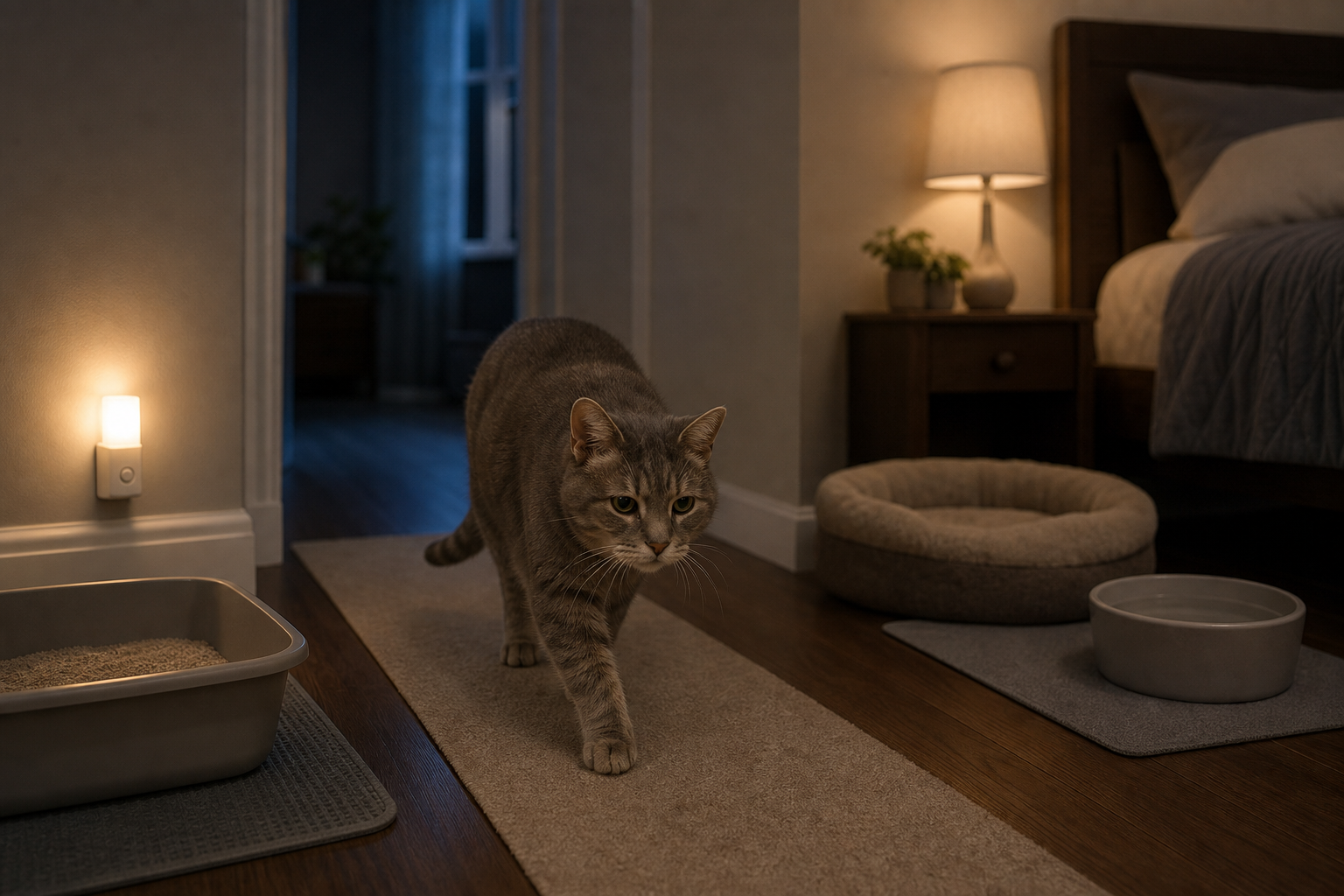
If your older cat yowls at night, ask these questions:
- Does your cat seem lost in familiar rooms?
- Does your cat stare at walls, corners, or empty spaces more often?
- Is your cat sleeping more during the day and roaming more at night?
- Has your cat become unusually clingy, withdrawn, or irritable?
- Are there new accidents outside the litter box?
- Is your cat drinking more, eating more, eating less, or losing weight?
- Does your cat hesitate to jump, climb stairs, or enter the litter box?
One clue by itself does not prove cognitive dysfunction. Many medical conditions can look like behavior changes. Merck Veterinary Manual notes that unwanted behaviors may be linked to species-typical behavior, emotional disorders, mental health problems, medical conditions, or stressful events 3. That is why the safest approach is to look for the pattern and rule out physical causes first.
Could attention, loneliness, or routine changes be involved?
Yes. Some cats yowl at night because the home is quiet, their people are unavailable, they slept much of the day, or the household routine changed. This is more likely when your cat is otherwise eating, drinking, eliminating, moving, and interacting normally.
Common routine triggers include:
- A cat parent working longer hours or going to bed earlier.
- A recent move, renovation, new pet, new baby, guest, or changed room access.
- Less daytime play, less hunting-style enrichment, or too many long naps.
- A closed bedroom door after your cat was previously allowed in.
- A feeding schedule that leaves your cat alert and hungry at night.
If separation or schedule disruption may be part of the picture, review your daytime setup as well as bedtime. Our guide to leaving cats alone safely can help you plan resources during quiet hours, while moving with a cat covers stress reduction after a location change.
The tricky part is responding without accidentally training louder yowling. If your cat yowls and you immediately offer food, intense play, or a big emotional reaction every time, the behavior can become more persistent. That does not mean ignoring distress. It means first checking health and needs, then creating a predictable routine so your cat does not have to escalate.
How can you calm bedtime yowling without rewarding it?
You can often reduce bedtime yowling by giving your cat a predictable evening sequence: active play, a small planned meal or puzzle feeder, fresh water, clean litter access, low light for navigation, and a quiet resting place. The routine should happen before the yowling starts, not as a reward after a long episode.
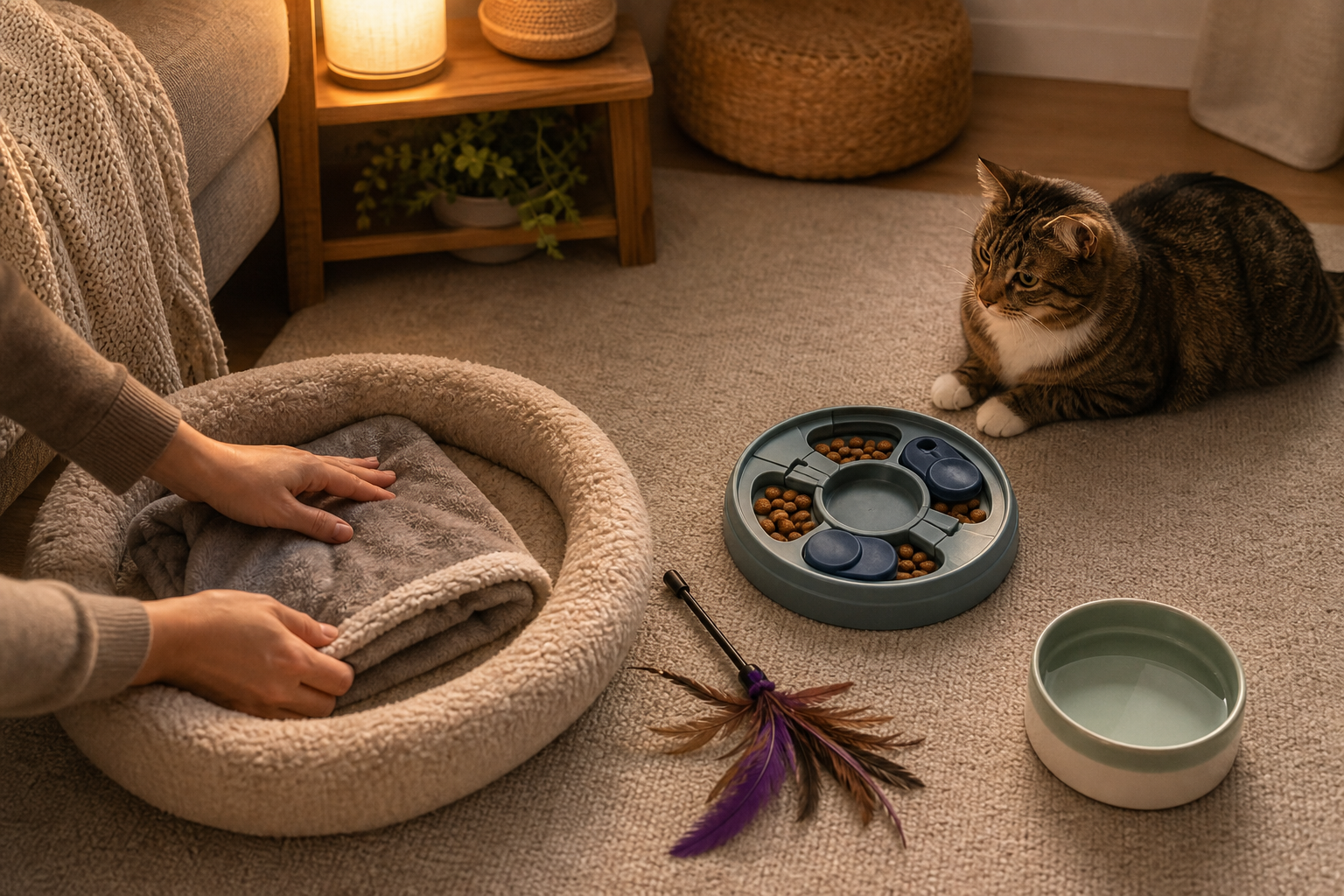
Try this simple plan for 10 to 14 nights:
- Schedule a hunting-style play session 60 to 90 minutes before bed. Use a wand toy, let your cat stalk and chase, then end with a "catch."
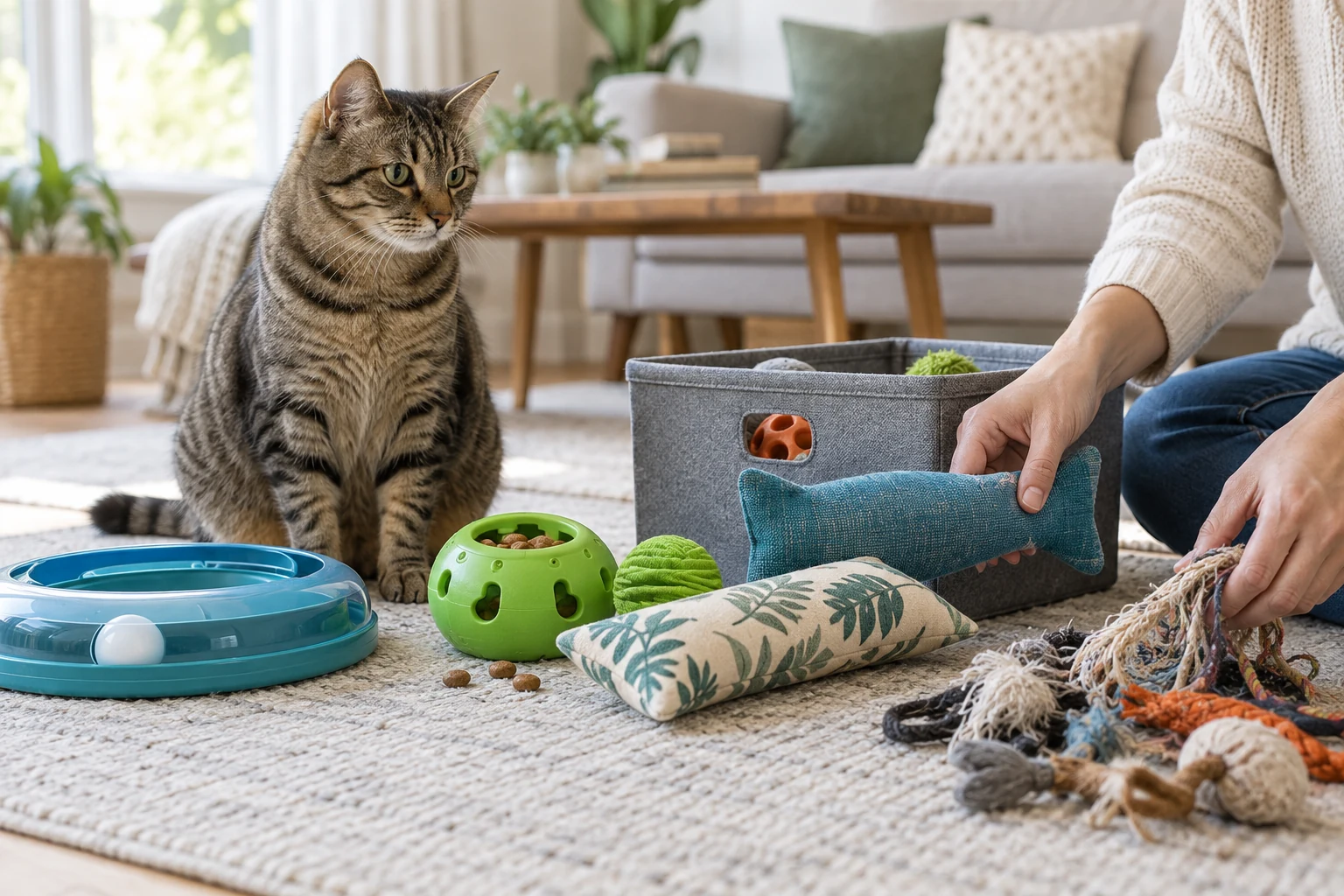
- Offer the final planned meal after play. If your cat eats dry food, a puzzle feeder may slow the meal and add mental work.
- Check resources before you sleep. Refresh water, scoop the litter box, and make sure your cat can reach preferred resting spots.
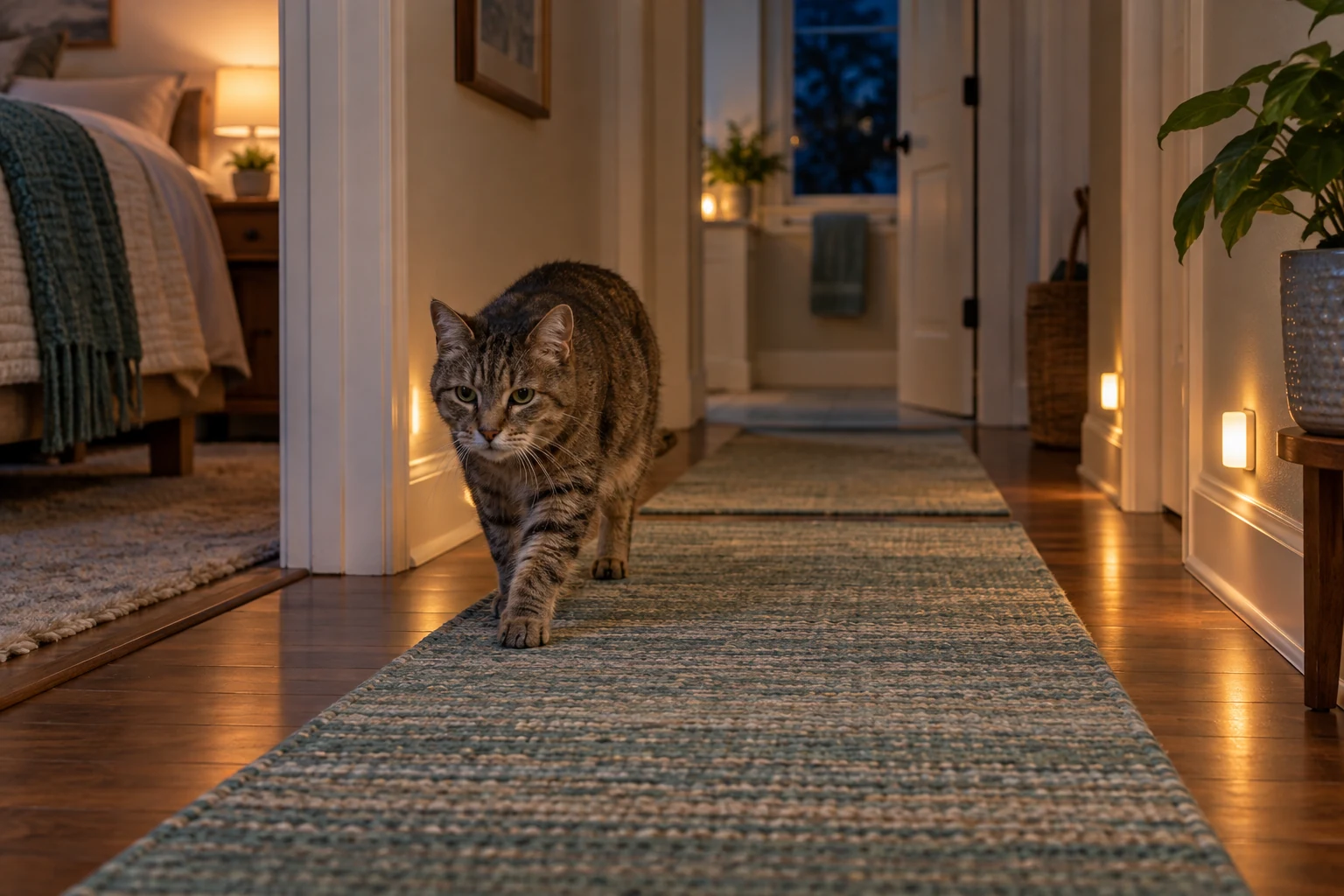
- Add gentle navigation support. A dim nightlight can help older cats or cats with reduced vision.
- Keep responses boring and consistent. If you must check your cat, do it calmly, rule out urgent needs, then return to bed without food or exciting play.
- Increase daytime enrichment. Short play sessions, window perches, food puzzles, and interactive cat toys can reduce the sleep-all-day, roam-all-night cycle.
Feeding timing matters too. If the yowling is tied to hunger, compare your routine with a cat feeding schedule by age and ask your veterinarian before making major diet changes, especially for kittens, seniors, or cats with medical conditions.
Avoid punishment, yelling, spraying water, or startling your cat. Those reactions can increase anxiety and may make nighttime calling worse. A calm routine works better because it changes the conditions around the behavior.
When should you call the vet?
Call your veterinarian if the nighttime yowling is new, escalating, happening in a senior cat, or paired with any change in appetite, thirst, weight, litter box behavior, mobility, breathing, grooming, or social behavior. VCA notes that older cats with sensory dysfunction or cognitive decline may wake and vocalize more at night, and individual cases need to be handled in the context of the cat's physical health 4.
Book a prompt appointment if you notice:
- Weight loss despite a good or increased appetite.
- Drinking or urinating more than usual.
- Repeated litter box trips, straining, crying in the box, or blood in urine.
- Vomiting, diarrhea, constipation, or reduced appetite.
- Hiding, sudden aggression, or major clinginess.
- Limping, reluctance to jump, stiffness, or difficulty climbing into the litter box.
- Cloudy eyes, bumping into objects, or seeming lost in familiar rooms.
- A senior cat yowling loudly at night for the first time.
Seek urgent care now if your cat cannot urinate, has trouble breathing, collapses, has seizures, shows sudden weakness or paralysis, has repeated vomiting, may have been exposed to poison, or seems rapidly worse. For pain clues you might otherwise miss, see our guide to subtle cat pain signs. For litter box and urinary patterns, review these cat urinary warning signs.
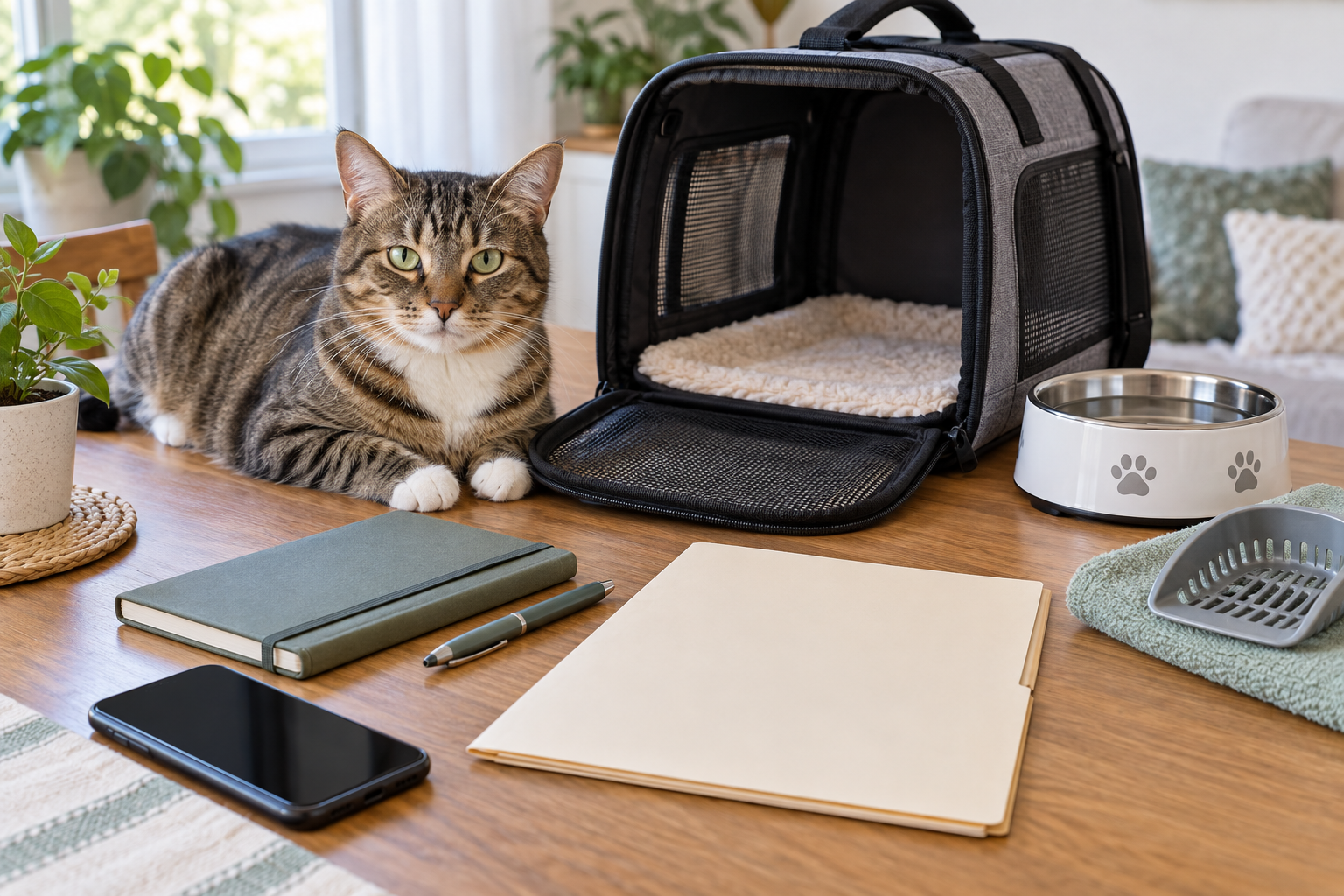
Before the appointment, bring your behavior log, a short video of the yowling if possible, and notes about food, water, medication, litter box output, weight, and daily routine. This gives your veterinarian a clearer starting point than "my cat cries at night."
Conclusion:
Cat yowling at night can be a normal request for attention, but it can also be a signal of pain, sensory change, illness, or cognitive decline, especially in senior cats. The safest path is to observe the pattern, check for red flags, protect your cat's nighttime access to resources, and use a calm bedtime routine before the yowling starts.
If the behavior is new, intense, or paired with any health change, schedule a veterinary exam. Once medical causes are addressed or ruled out, a predictable rhythm of play, food, low light, clean litter access, and daytime enrichment can make nights easier for both of you.
Frequently Asked Questions
Why does my cat walk around yowling at night?
Your cat may be bored, hungry, seeking attention, responding to outdoor animals, feeling disoriented, or reacting to pain or illness. If the walking and yowling are new, happen in a senior cat, or come with appetite, thirst, weight, or litter box changes, call your veterinarian.
Should I ignore my cat yowling at night?
Do not ignore a new or distressed-sounding yowl until you have checked for health and safety issues. If your cat is healthy and the behavior is attention-seeking, respond with a better pre-bed routine instead of giving food, play, or strong attention only after the yowling begins.
Why is my senior cat yowling at night all of a sudden?
A senior cat may suddenly yowl at night because of pain, high blood pressure, thyroid disease, kidney disease, vision or hearing loss, urinary problems, or cognitive dysfunction. Sudden nighttime yowling in an older cat is a good reason to schedule a veterinary exam.
Can a nightlight help a cat that yowls at night?
A dim nightlight may help some older cats, especially cats with reduced vision or nighttime disorientation. It is not a cure by itself, but it can be part of a senior-friendly setup with easy access to water, litter, beds, and familiar pathways.
Does feeding my cat before bed stop yowling?
Sometimes, especially if hunger or routine timing is part of the pattern. Pair active play with a planned final meal before bed, but avoid feeding only after your cat yowls or you may teach your cat that loud nighttime calling brings food.
References
[1] Cornell Feline Health Center. (2024). Cognitive Dysfunction. https://www.vet.cornell.edu/departments-centers-and-institutes/cornell-feline-health-center/health-information/feline-health-topics/cognitive-dysfunction
[2] Ray, M., Carney, H. C., Boynton, B., Quimby, J., Robertson, S., St. Denis, K., Tuzio, H., & Wright, B. (2021). 2021 AAFP Feline Senior Care Guidelines. https://pmc.ncbi.nlm.nih.gov/articles/PMC10812122/
[3] Merck Veterinary Manual. (2025). Behavior Problems of Cats. https://www.merckvetmanual.com/behavior/behavior-of-cats/behavior-problems-of-cats
[4] VCA Animal Hospitals. (2024). Cat Behavior Problems: Vocalization. https://vcahospitals.com/know-your-pet/cat-behavior-problems—vocalization
[5] ASPCA. (2024). Older Cats with Behavior Problems. https://www.aspca.org/pet-care/cat-care/common-cat-behavior-issues/older-cats-behavior-problems
 Why Does My Cat Flinch When Touched While Sleeping? Startle, Trust, and Pain Clues">
 Cat Scratching Baseboards: Trim Guards and Route Fixes">
 EN
EN DE
DE ES
ES PT
PT