
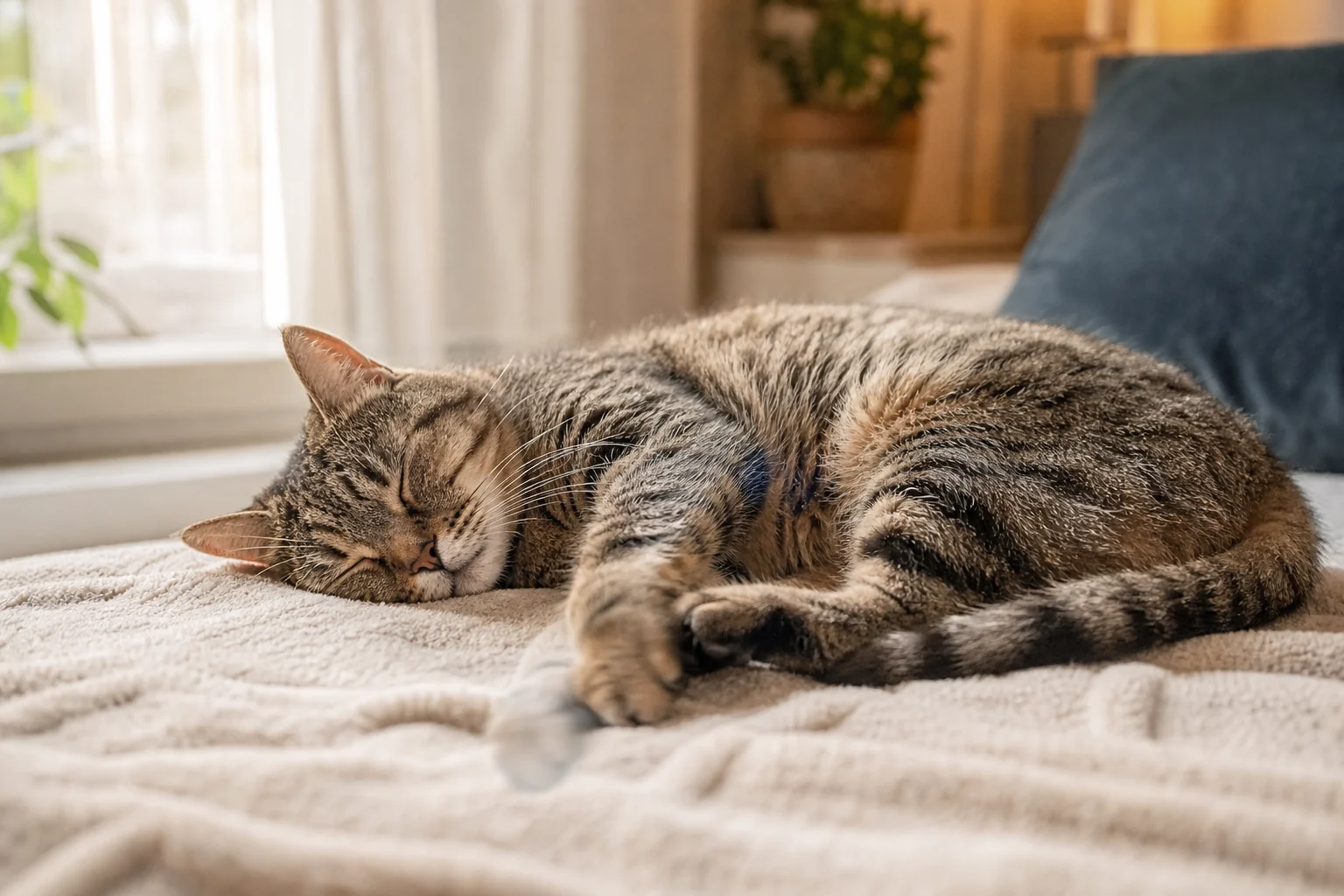
If your cat twitches in sleep, it is usually normal. Small paw kicks, whisker flicks, ear movements, tail swishes, tiny meows, or face twitches often happen while a cat is deeply asleep and should not be interrupted unless your cat seems unsafe or distressed.
The important part is context. A relaxed sleeping cat who twitches for a few seconds is very different from a cat who stiffens, paddles, loses awareness, drools, urinates, wakes confused, or keeps twitching while awake. This guide explains how to tell normal sleep movement from warning signs, what to watch for, and when to call your veterinarian.
Table of Contents
- Is it normal for cats to twitch in sleep?
- Why do cats twitch when they dream?
- What does normal sleep twitching look like in cats?
- When is twitching during sleep a warning sign?
- Could twitching mean pain, stress, or a seizure?
- What should I do if I am not sure whether it is normal?
- Do kittens and senior cats twitch differently?
- Conclusion: What should cat parents remember?
- Frequently Asked Questions
- References
Is it normal for cats to twitch in sleep?
Yes, brief twitching during sleep is normal for many cats. Cats Protection notes that a deeply sleeping cat may have mouth or paw twitches, and this is commonly linked with dreaming 1. Purina also describes small movements such as whisker twitching, ear flicking, paw movement, tail movement, and facial changes as common sleep behaviors 2.
This kind of twitching often appears when your cat is fully relaxed: curled on a blanket, stretched in a sun patch, or tucked into a favorite bed. You may also notice soft purring, little chirps, or a paw motion that looks like batting at a toy. For more on the sound side of sleep behavior, see our guide to cat purring while sleeping.
Normal sleep twitching should be short, mild, and easy to separate from your cat's awake behavior. Your cat should breathe comfortably, stay loosely positioned, and wake normally if she naturally stirs.
Why do cats twitch when they dream?
Cats have active sleep phases, and deep sleep can include small muscle movements. We cannot ask a cat what she is dreaming about, but the combination of relaxed sleep, brief twitches, eye movement behind closed lids, and tiny sounds is commonly treated as dream-like sleep behavior in everyday cat care.
Cats also sleep a lot compared with humans, so you may simply be around for more of these little movements than you realize. If your bigger question is whether your cat's whole sleep pattern is normal, read why your cat is sleeping so much alongside this guide.
Twitching is not proof that your cat is chasing imaginary prey or replaying the day. It is safer to say that mild sleep twitches can happen during deep sleep and are usually harmless when the rest of the body looks relaxed.
What does normal sleep twitching look like in cats?
Normal sleep twitching is usually gentle and localized. It may involve one paw, the whiskers, ears, lips, tail tip, or a small facial movement. It often comes in short bursts, then stops.
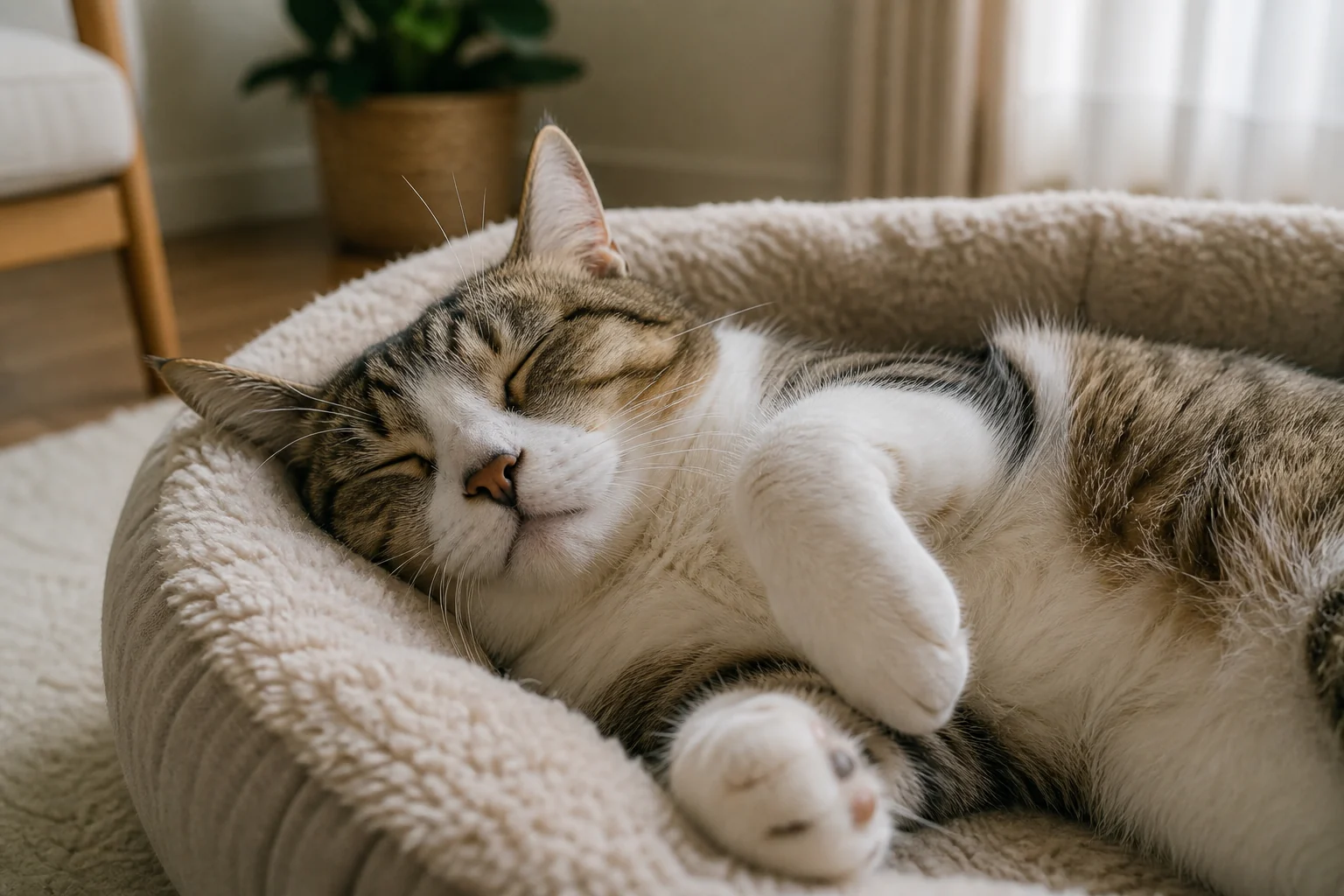
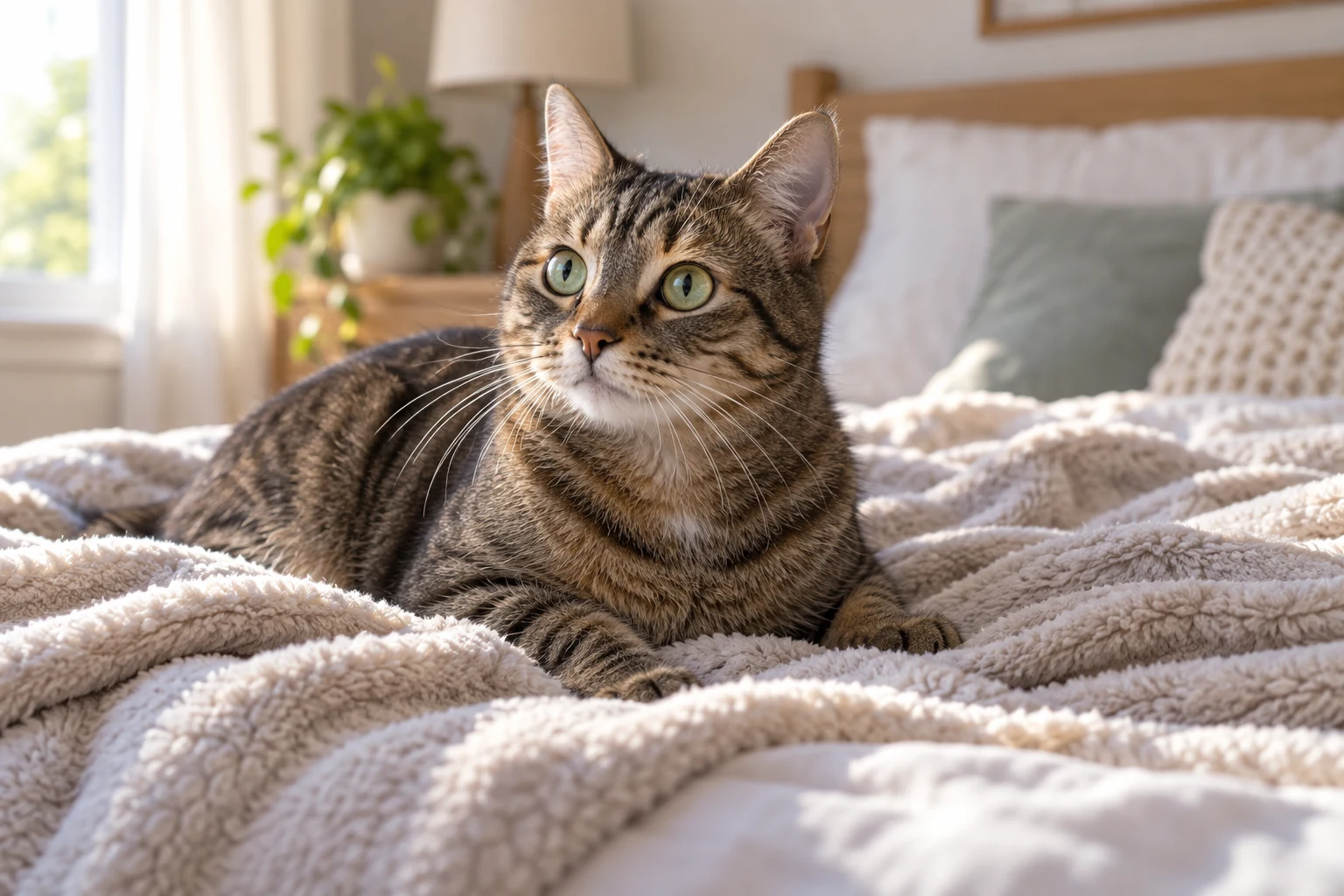
Normal sleep twitching is usually brief, gentle, and paired with a loose, restful body posture.
Use the whole cat, not one twitch, to judge the situation.
| What you see | More likely normal when | Worth calling a vet when |
|---|---|---|
| Paw or whisker twitches | The body is loose and breathing looks easy | Movements become violent, repetitive, or continue after waking |
| Tiny meows or chirps | Your cat stays asleep and settles quickly | Vocalizing is new, frantic, paired with collapse, or happens while awake |
| Tail flicks | They are brief and your cat remains relaxed | Tail or back rippling happens while awake with agitation, biting, or distress |
| Eye movement under closed lids | Your cat is asleep and otherwise comfortable | Eyes are open with confusion, weakness, or loss of awareness |
Do not shake your cat awake to test her. Sudden waking can startle a cat and may lead to scratching or biting. If you need to check safety, speak softly from a distance and look for normal breathing and a safe body position.
When is twitching during sleep a warning sign?
Twitching is more concerning when it does not fit normal sleep. Call your veterinarian promptly if the movement is intense, repeated, one-sided in a new way, happens while awake, or comes with behavior changes such as hiding, stumbling, appetite loss, vomiting, weakness, or disorientation.
Seek urgent veterinary help if your cat collapses, has full-body paddling or stiffening, loses awareness, has blue or pale gums, struggles to breathe, cannot stand normally, may have contacted a toxin, or has repeated events close together. VCA lists seizures and convulsions as emergencies, especially if a seizure lasts more than five minutes or several occur in rapid succession 5.
Nighttime behavior can also overlap with restlessness, pain, sensory decline, or cognitive changes, especially in older cats. If your cat is awake and pacing, crying, or unsettled rather than sleeping peacefully, our guides to a cat restless at night and cat yowling at night may help you organize the pattern before a vet visit.
Could twitching mean pain, stress, or a seizure?
Sometimes, yes, but the pattern matters. Sleep twitching is usually brief and relaxed. Pain, stress, skin sensitivity, neurological events, or seizures are more likely when the signs happen while your cat is awake, are difficult to interrupt, or come with other changes.
The MSD Veterinary Manual describes seizures as episodes that may involve impaired or lost consciousness, abnormal motor activity, sensory or behavioral signs, and autonomic signs such as salivation, vomiting, urination, or defecation 3. Cornell Feline Health Center explains that epilepsy involves abnormal electrical transmission in the cerebral cortex and that seizures may have underlying causes such as head injury, metabolic problems, or tumors 4.
That does not mean every twitch is a seizure. It means you should look for a cluster of signs:
- loss of awareness or inability to respond normally
- collapse, stiffening, paddling, or repeated jerking
- drooling, foaming, vomiting, urination, or defecation during the event
- confusion, hiding, hunger, clinginess, or pacing after the event
- twitching that happens while awake or keeps returning in the same unusual pattern
- new pain clues, such as hiding, guarding, limping, appetite change, or a tense face
If you see pain-like behavior around sleep, compare it with subtle cat pain signs rather than relying on twitching alone. A cat who sleeps oddly because she is sore may also avoid jumping, resent touch, groom less, or change her usual resting places.
What should I do if I am not sure whether it is normal?
If your cat is breathing normally, safely positioned, and only making small sleep movements, let her rest. Quiet observation is usually better than touching, lifting, or waking her.
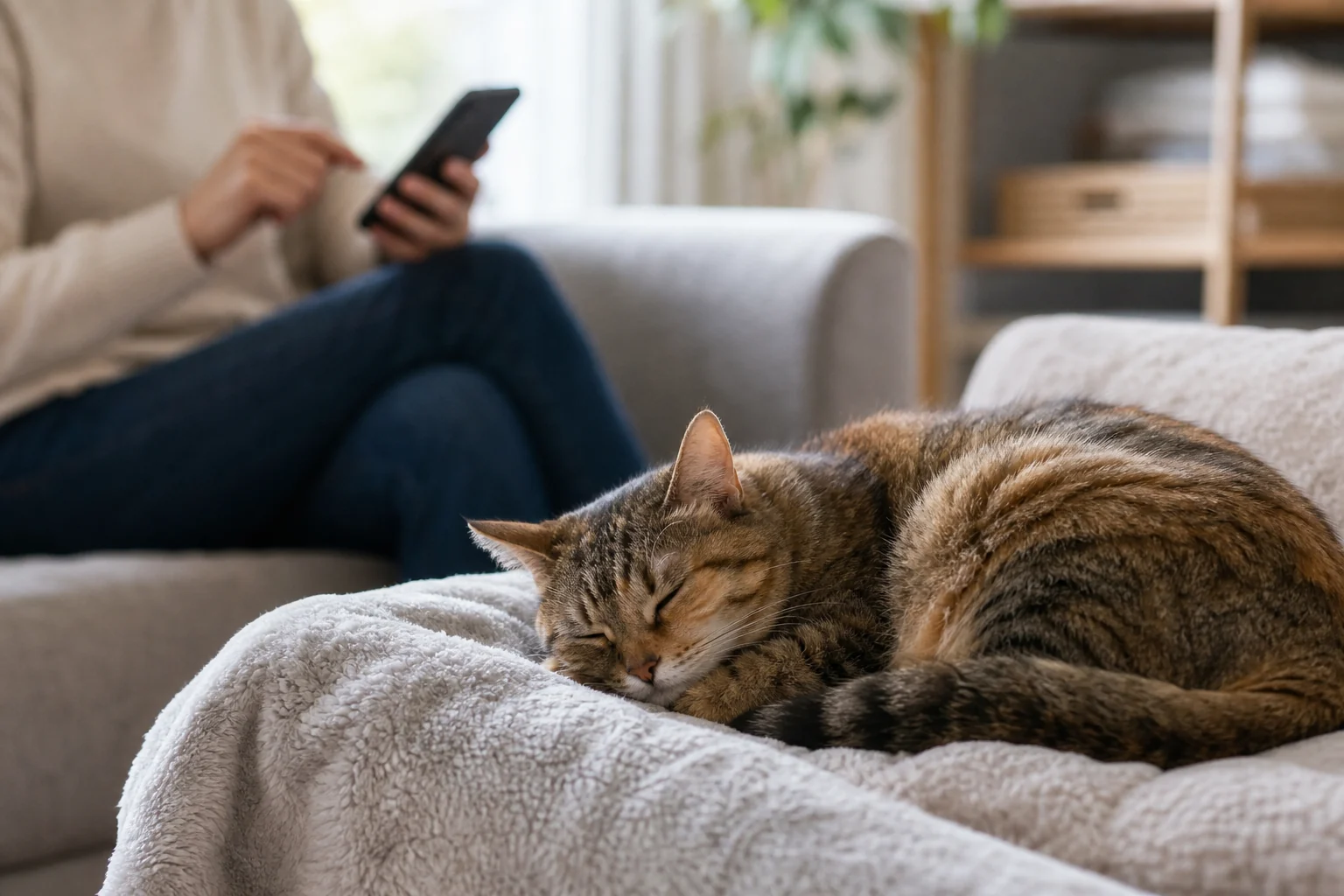
A short video and simple notes can help your veterinarian understand whether twitching is sleep-related or concerning.
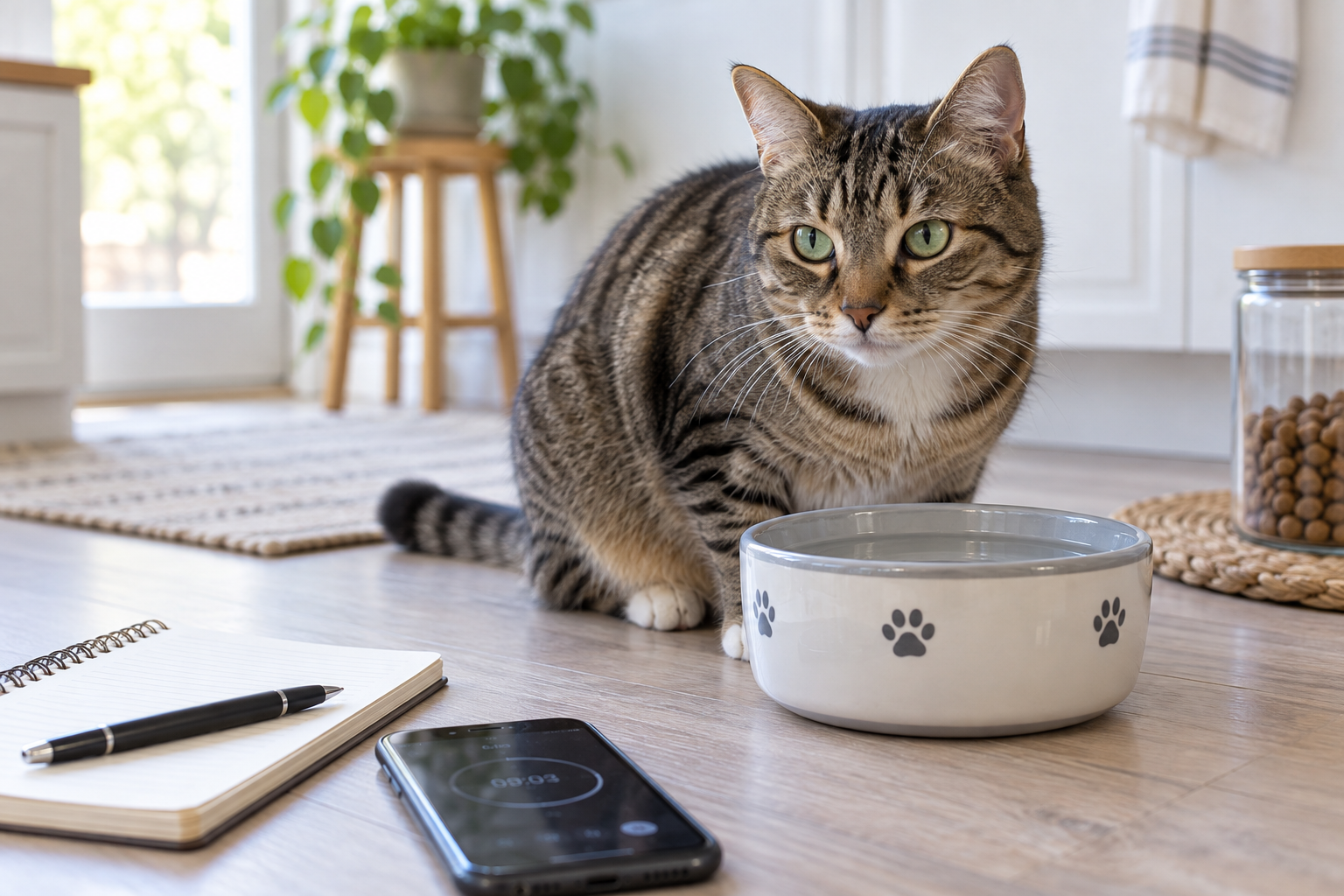
If you are unsure, record a short video from a safe distance. Note the date, time, how long the movement lasted, whether your cat was asleep or awake, what body parts moved, how breathing looked, and how she behaved afterward. A video is often more useful than a long description because your veterinarian can see the rhythm, posture, and awareness level.
Do not put your hands near your cat's mouth during a suspected seizure. Do not give human medication, essential oils, supplements, or sedatives. Do not try to restrain strong movements unless your cat is about to fall or hit something dangerous; instead, clear nearby hazards if it is safe.
If your cat also purrs, chatters, or makes small sounds during sleep, read why cats purr to understand why one sound can have several meanings. Then use your notes to decide whether this is a familiar sleep habit or a new pattern worth discussing with your vet.
Do kittens and senior cats twitch differently?
Kittens may appear especially active in sleep because they spend so much time resting and growing. Small twitches, paw movements, and little sounds can be part of normal kitten sleep, as long as the kitten wakes normally, nurses or eats well, breathes comfortably, and has normal energy when awake.
Senior cats need a slightly lower threshold for concern. Age itself does not make every twitch dangerous, but older cats are more likely to have pain, high blood pressure, metabolic disease, sensory changes, or neurological problems that can affect sleep and movement. If you are not sure where your cat falls developmentally, the cat age calculator can help you think in life-stage terms.
Call your veterinarian sooner for kittens, senior cats, cats with known heart, kidney, thyroid, neurologic, or toxin-exposure risks, and any cat whose twitching pattern changes suddenly. A familiar tiny paw flutter during a nap is one thing; a new episode with collapse, confusion, or weakness is another.
Conclusion: What should cat parents remember?
Most cat sleep twitching is normal, especially when it is brief, gentle, and paired with a loose body, easy breathing, and normal behavior after waking. Paw kicks, whisker flicks, ear movements, tail twitches, and tiny sleep sounds often fit ordinary deep sleep.
The warning signs are intensity, loss of awareness, collapse, paddling, drooling, urination, repeated episodes, twitching while awake, or a clear change in appetite, movement, mood, breathing, or litter box habits. When in doubt, take a short video, keep your cat safe without startling her, and ask your veterinarian whether the pattern needs an exam.
Frequently Asked Questions
Should I wake my cat if she twitches in sleep?
Usually no. If your cat looks relaxed and breathes normally, let her sleep. Waking a cat suddenly can startle her and does not help you understand the pattern.
Why does my cat's paw twitch while sleeping?
A small paw twitch is commonly part of normal deep sleep. It is more reassuring when your cat's body is loose, the movement lasts only seconds, and she wakes normally later.
Is my cat having a seizure or dreaming?
Dream-like sleep movement is usually brief, gentle, and happens while your cat is clearly asleep. A seizure is more concerning when there is collapse, stiffening, paddling, loss of awareness, drooling, urination, repeated events, or confusion afterward.
Why does my cat twitch while awake?
Twitching while awake deserves more attention than twitching during sleep. It may relate to irritation, pain, skin sensitivity, stress, neurologic issues, or another medical problem, so call your veterinarian if it is new, repeated, intense, or paired with other changes.
Can senior cats twitch in sleep normally?
Yes, senior cats can have normal sleep twitches. Because older cats have higher risk for pain, blood pressure changes, metabolic disease, and neurologic problems, new or worsening twitching should be discussed with a veterinarian.
References
[1] Cats Protection. (2026). Cats and Sleep. https://www.cats.org.uk/help-and-advice/cat-behaviour/cats-and-sleep
[2] Purina. (2026). Why is My Cat Twitching in Their Sleep? https://www.purina.com/articles/cat/behavior/understanding-cats/why-do-cats-twitch-in-sleep
[3] MSD Veterinary Manual. (2026). Epilepsy in Small Animals. https://www.msdvetmanual.com/nervous-system/epilepsy-in-small-animals/epilepsy-in-small-animals
[4] Cornell Feline Health Center. (2026). Neurological Disorders. https://www.vet.cornell.edu/departments-centers-and-institutes/cornell-feline-health-center/health-information/feline-health-topics/neurological-disorders
[5] VCA Animal Hospitals. (2024). Emergencies in Cats. https://vcahospitals.com/know-your-pet/emergencies-in-cats

 Why Does My Cat Jerk Awake Suddenly? Startle Reflexes, Sleep Starts, and Vet Clues">
 Cat Scratching Door Frame: How to Protect Trim">
 EN
EN DE
DE ES
ES PT
PT