
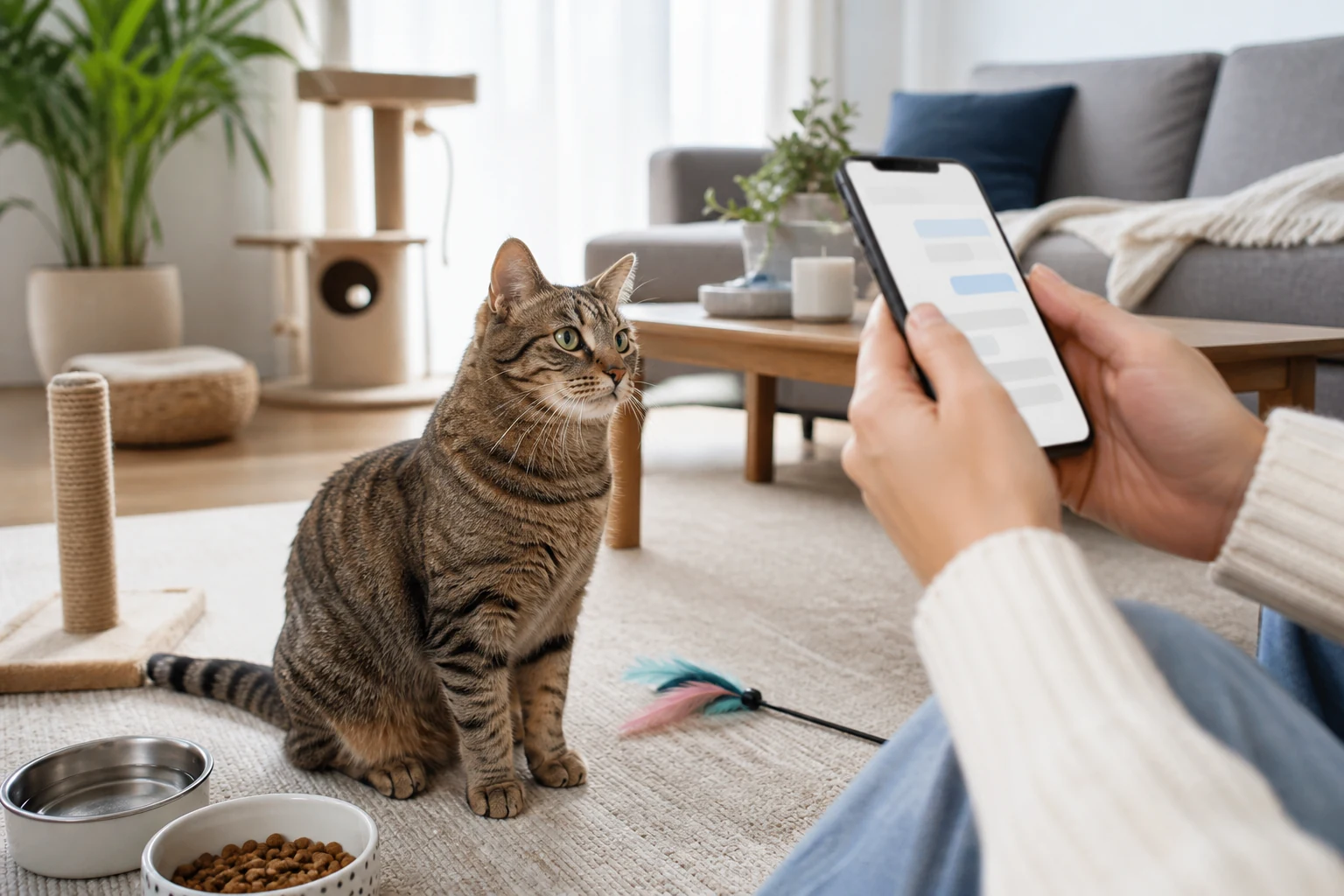
A good cat sitter update tells you three things quickly: your cat was seen, the daily care tasks were completed, and anything unusual was either minor or already escalated. The best template is short enough for a sitter to use every visit, but specific enough to catch changes in appetite, litter box use, hiding, breathing, mobility, or behavior.
Use the template below as a starting point, then customize it before you leave. If your cat has a medical condition, medication schedule, senior mobility issue, or recent appetite change, ask your veterinarian what should count as urgent for your individual cat.
Table of Contents
- What should a cat sitter update include?
- What update schedule should you agree on before the trip?
- What photos should a cat sitter send?
- How should litter, appetite, and behavior notes be reported?
- Which red flags should trigger a call instead of a text?
- How can you make the template easy for the sitter to follow?
- Cat sitter update template you can paste into a message
- Conclusion: make updates simple, specific, and escalation-ready
- Frequently Asked Questions
- References
What should a cat sitter update include?
A cat sitter update should include the visit time, whether your cat was seen, food and water status, litter box notes, medication confirmation if relevant, behavior observations, photos, and any action needed from you. It should not be a vague "all good" unless both you and the sitter have agreed what "good" means.
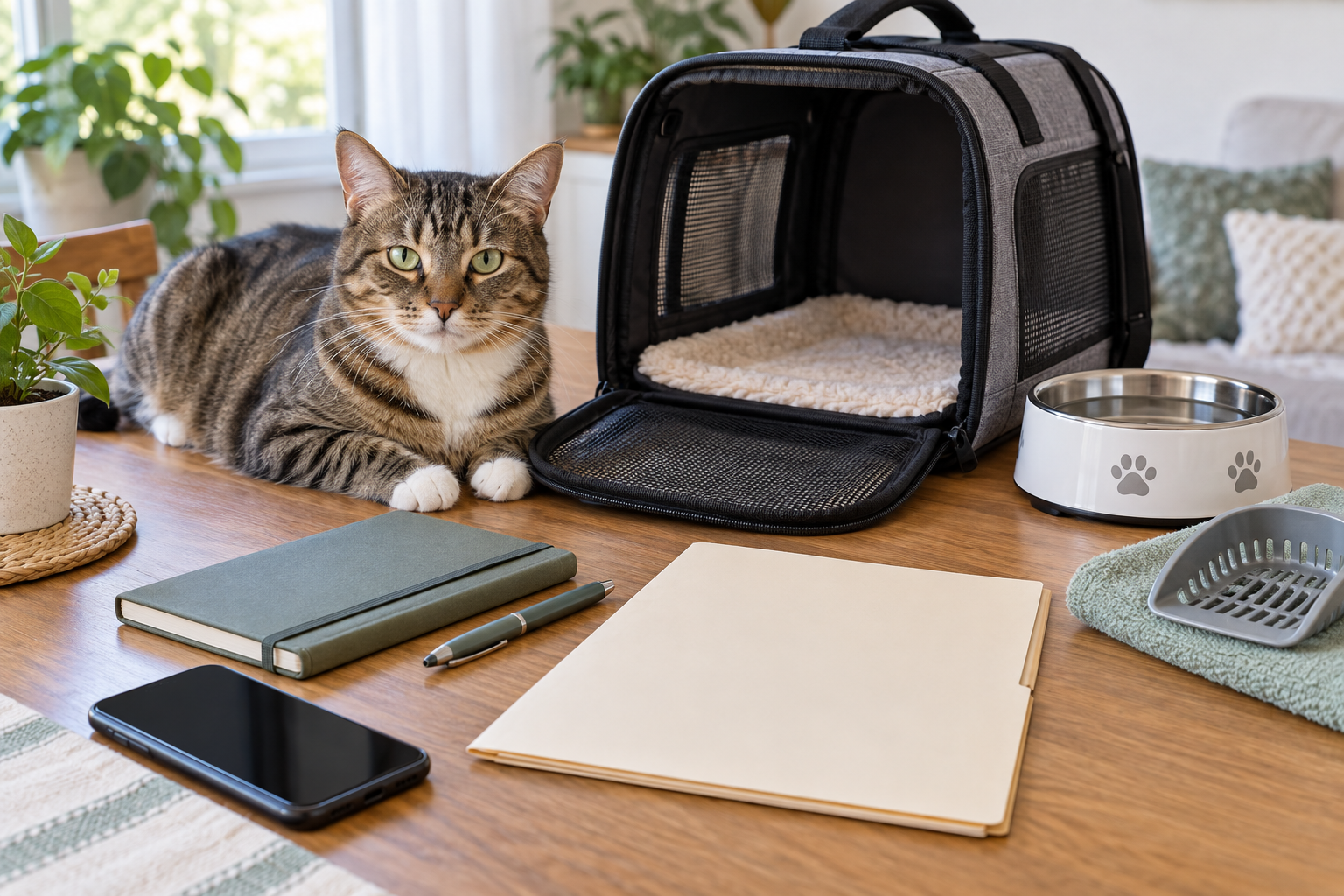
Before the trip, give your sitter a full set of cat sitter instructions with feeding amounts, medication directions, hiding places, carrier location, vet contacts, and home access notes. The update template is the daily snapshot; the instruction sheet is the full operating manual.
AAHA recommends leaving detailed pet information, daily routine notes, supply locations, emergency contacts, and emergency procedures for a sitter, including veterinary and 24-hour clinic details 1. Peninsula Humane Society & SPCA gives similar advice for cats: list food, water, treats, medication instructions, litter box location, disposal routine, supplies, emergency contacts, and behavior tips before you leave 2.
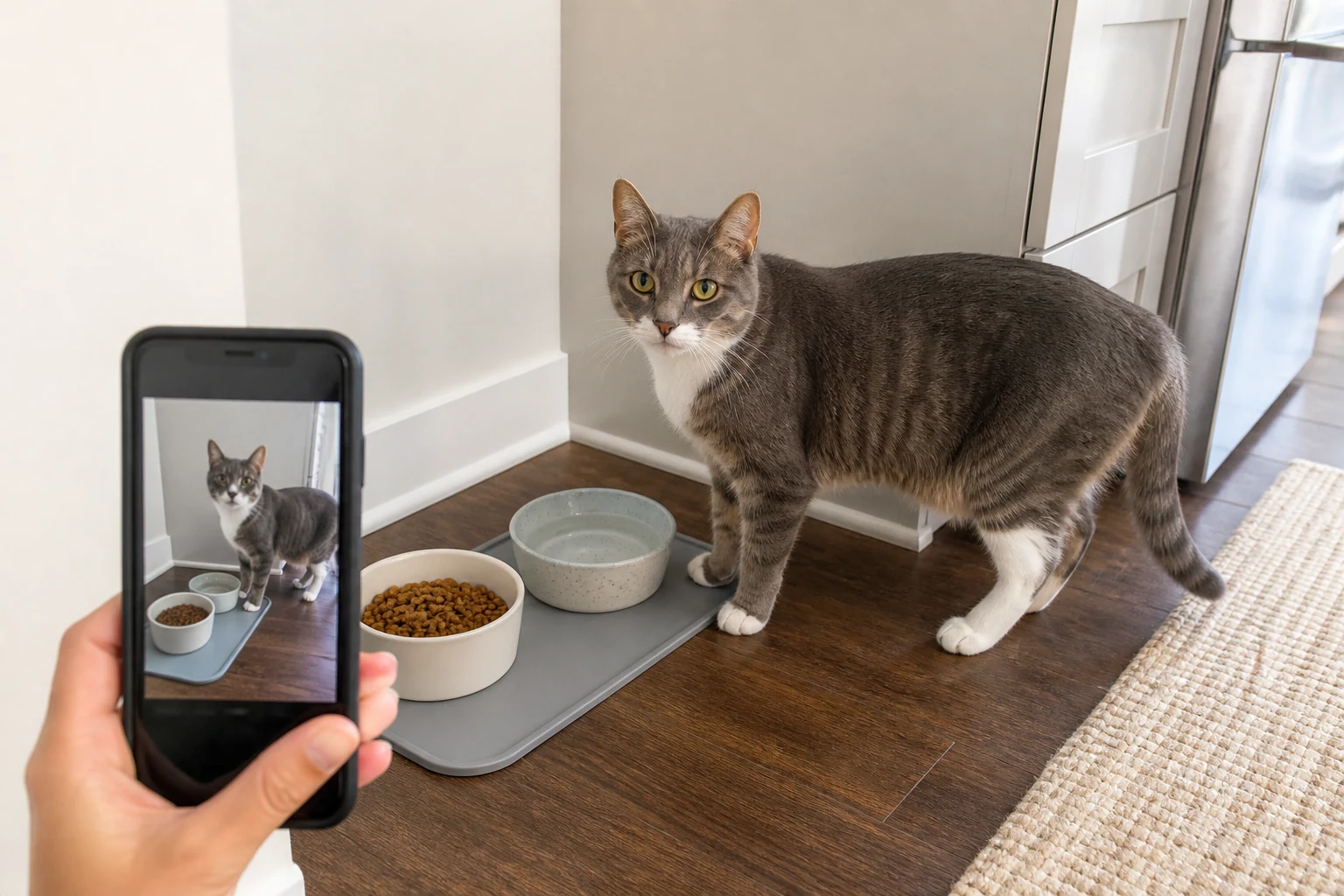
For most healthy adult cats, one useful update can be five lines:
| Update item | What the sitter should report | Why it matters |
|---|---|---|
| Time seen | "Saw Luna at 6:10 p.m." or "Luna hid under bed, eyes visible." | Confirms the cat was located or explains why no full photo was possible. |
| Food and water | How much food was served and whether the previous food looked eaten. | Appetite changes can be one of the first signs something is off. |
| Litter box | Scooped, normal amount, no urine seen, loose stool, blood, straining, or outside-box accident. | Litter changes can signal stress, urinary trouble, digestive upset, or routine disruption. |
| Behavior | Normal greeting, hiding, playful, withdrawn, vocal, limping, breathing normally. | Owners know the baseline; the sitter reports the change. |
| Photos | Cat photo plus food, water, litter setup, medication, or concern photo when useful. | Photos reduce guesswork and help you decide whether to escalate. |
What update schedule should you agree on before the trip?
Agree on the update schedule before you leave, not after you are already anxious and refreshing your phone. For a once-daily visit, ask for one message after the visit is complete. For twice-daily care, ask whether you want two short updates or one longer end-of-day summary.
If you are still deciding whether a sitter is the right option, compare visit frequency, experience, communication style, and emergency readiness in this guide on how to choose a cat sitter. If your question is whether a sitter is needed at all, start with SnuggleSouls' guide to leaving cats alone and be more cautious with kittens, seniors, cats on medication, cats with medical conditions, and multi-cat homes.
Set three communication levels:
- Routine update: sent after every scheduled visit.
- Same-day question: text first, then call if you do not respond within your chosen time window.
- Urgent concern: call you, call your backup contact, and call the veterinary clinic or emergency hospital according to your written authorization.
The AVMA advises pet owners to prepare for who can authorize care while they are away, including emergency authorization and contact planning 3. That matters because a sitter should not be stuck waiting for a text reply if your cat is showing signs that need veterinary help.
What photos should a cat sitter send?
Ask for photos that answer a care question, not just cute pictures. A relaxed face photo is comforting, but a practical update photo can show whether food was eaten, water was refreshed, litter was scooped, medication was given, or a hiding cat was safely located.
Useful photo requests include:
- A clear photo of your cat at least once per visit when possible.
- A food bowl photo before and after feeding if appetite is a concern.
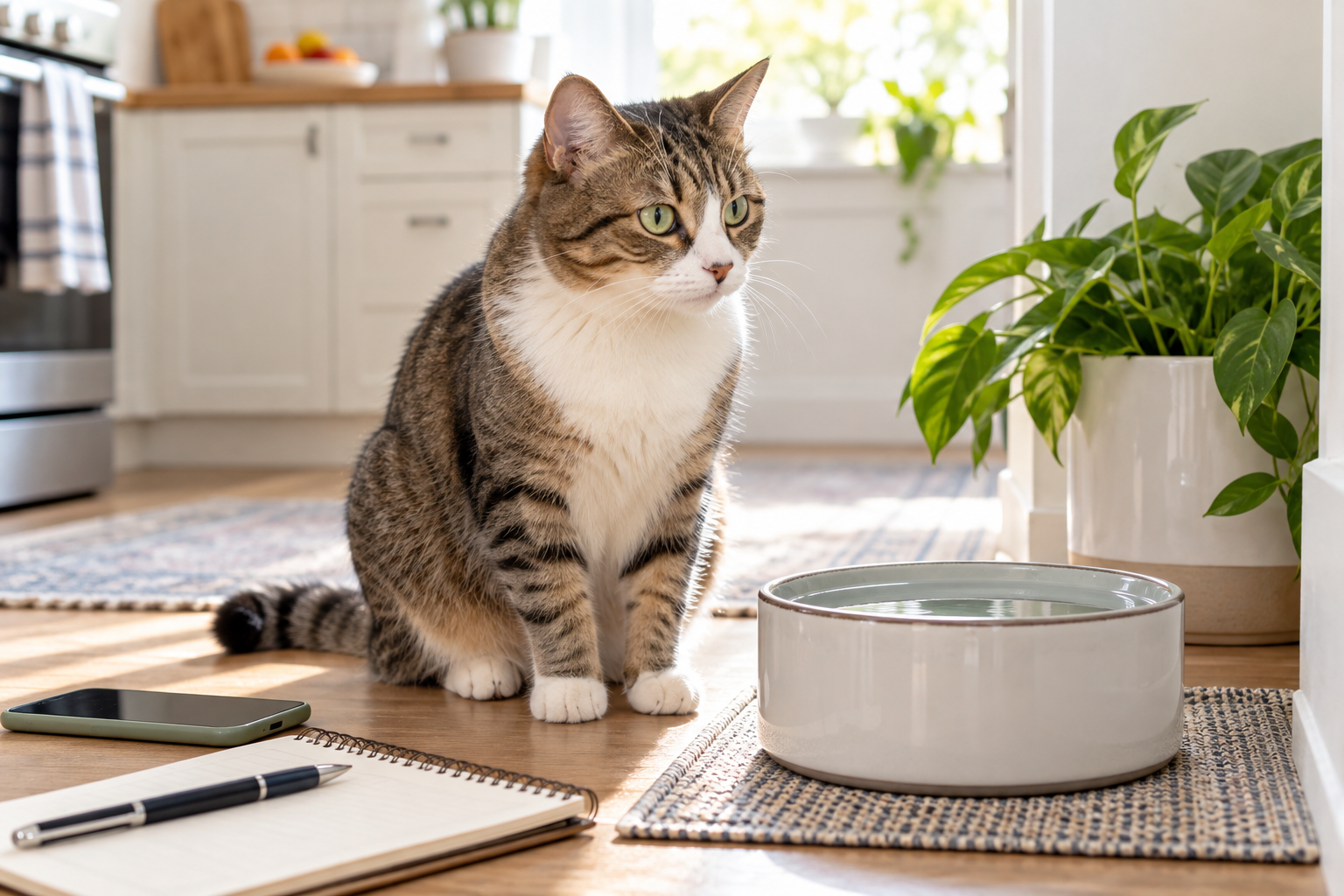
- A water bowl or fountain photo after refreshing.
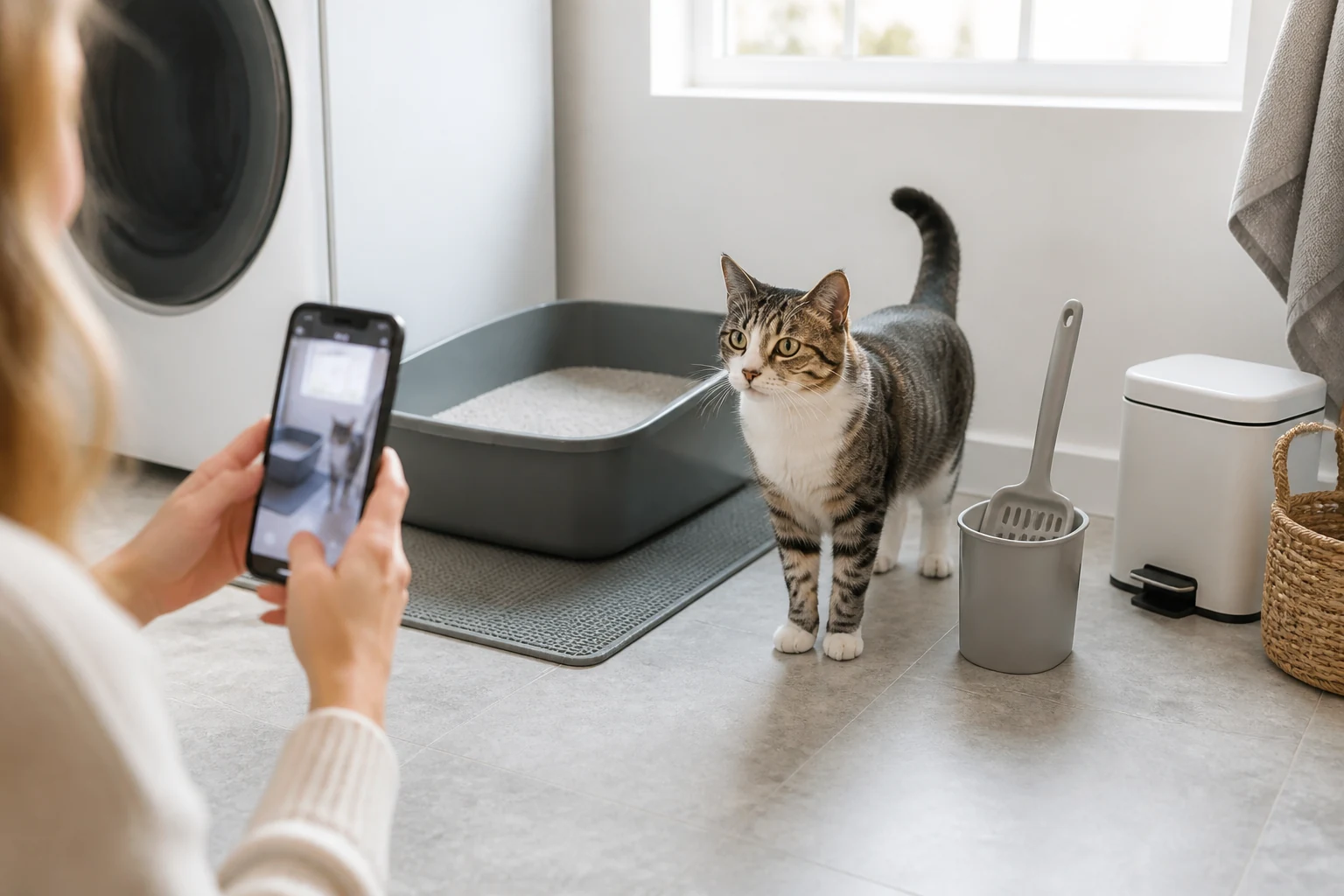
- A wide litter-box setup photo if there is an accident, missed urine, loose stool, or unusual digging.
- A medication setup photo if your cat needs pills, liquids, insulin, inhalers, or topical medication.
- A location photo if your cat is hiding but visible and breathing comfortably.
Do not ask a sitter to chase, corner, pull out, or force a hiding cat just for a better picture. A cautious cat may feel safer if the sitter photographs from a distance and notes, "Seen under guest bed, eyes bright, breathing normal, came out after I left food." For more context, SnuggleSouls has a separate guide on why cats hide and when hiding is more concerning.
How should litter, appetite, and behavior notes be reported?
Litter, appetite, and behavior notes should compare today with your cat's normal baseline. "Scooped" is helpful, but "normal urine clumps, one normal stool, no accidents" is much better. If the sitter does not know your cat's baseline, write it down before you leave.
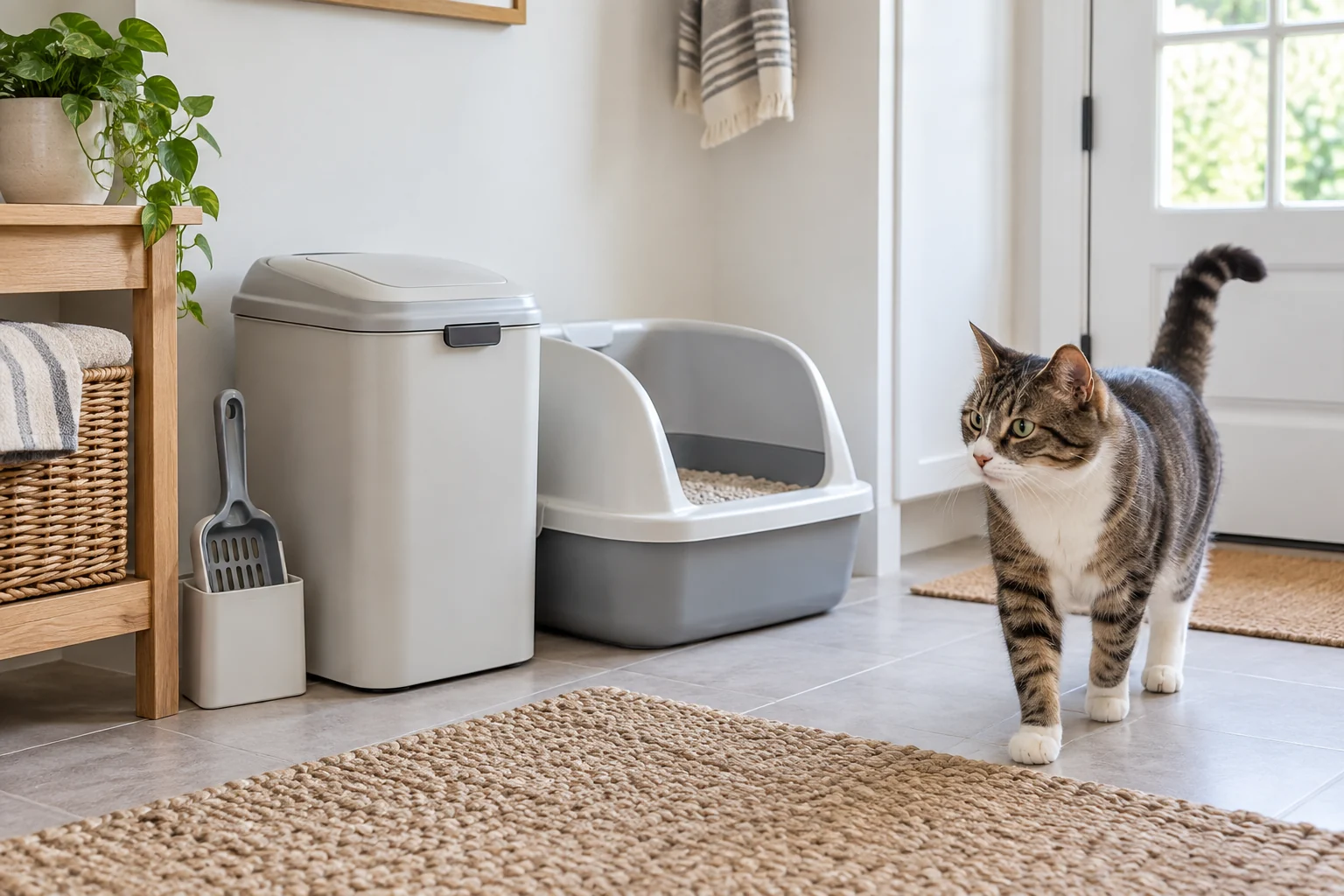
For litter boxes, tell the sitter what normal looks like: number of boxes, litter type, usual clump size, usual stool frequency, where bags go, and what changes require a message. If your cat has ever avoided the box, the setup itself matters; review the best cat litter box setup so the sitter is not blamed for a box that was already hard for your cat to use.
Use a simple normal-versus-alert table:
| Area | Normal update | Message you promptly | Call or escalate |
|---|---|---|---|
| Food | Ate most or all usual meal. | Ate less than usual, skipped one meal but bright. | Refusing food and withdrawn, repeated vomiting, or no food for about a day. |
| Water | Bowl refreshed, normal drinking. | Water untouched when usually used, or unusually high drinking. | Not drinking with lethargy, vomiting, collapse, or rapid decline. |
| Urine | Normal clumps in expected box. | Smaller, larger, or fewer clumps than usual. | Straining, crying, repeated box trips, no urine seen, or blood. |
| Stool | Normal stool, no accident. | Loose stool once, constipation concern, outside-box stool. | Repeated diarrhea, blood, severe weakness, or pain signs. |
| Behavior | Greets, hides normally, plays, naps. | More hidden, more vocal, less social, mild limp. | Labored breathing, collapse, seizure, severe pain, sudden paralysis, or major injury. |
This is not a diagnosis tool. It is a communication tool that helps the sitter notice changes and helps you decide whether to call your veterinarian.
Which red flags should trigger a call instead of a text?
A sitter should call, not only text, when a cat may need same-day veterinary advice or emergency care. If you cannot be reached quickly, the sitter should follow your written backup-contact and veterinary authorization plan.
The AVMA's first-aid guidance tells owners to contact a veterinarian or emergency hospital and identifies situations that need immediate veterinary attention, including severe bleeding, choking, eye injury, heat stress, poisoning, seizures, and other serious signs 4. For cats specifically, breathing trouble deserves urgent action. Cornell Feline Health Center explains that cats with breathing difficulty may breathe rapidly, pant with an open mouth, cough, lower the head, extend the body forward, or appear to gag, and that any question about a cat's ability to breathe comfortably should be handled by a veterinarian right away 5.
Ask your sitter to call immediately for:
- Open-mouth breathing, labored breathing, blue or pale gums, or collapse.
- Straining to urinate, repeated litter-box trips with little or no urine, crying in the box, or blood in urine.
- Seizure, sudden inability to stand, sudden paralysis, or severe weakness.
- Repeated vomiting, severe diarrhea, blood in vomit or stool, or a swollen painful belly.
- Known or suspected toxin exposure, including human medication, lilies, rodenticide, cleaning chemicals, or unknown plants.
- Trauma, fall, bite wound, bleeding, burn, or a door/window escape.
- Not eating with lethargy, especially in kittens, senior cats, diabetic cats, overweight cats, or cats with known disease.
- A medication mistake, missed critical medication, insulin concern, or possible double dose.
Write your preferred emergency clinic, normal veterinarian, backup decision-maker, and spending authorization into the sitter instructions. The update template should point to that plan, not replace it.
How can you make the template easy for the sitter to follow?
Make the template easy by removing decisions. Put the message format in the same app the sitter will use, label supplies, leave the carrier visible, and write what counts as normal for your cat.
Before you leave, do a five-minute walkthrough:
- Show the sitter where your cat usually hides.
- Show food, water, treats, medication, litter, bags, towels, cleaning supplies, and carrier.
- Explain which doors, windows, closets, balconies, appliances, and rooms are off-limits.
- Confirm how to enter, lock up, and handle alarms.
- Send the update template as a pinned message.
- Confirm the emergency call order: you, backup contact, veterinarian, emergency hospital.
If you have multiple cats, make the update cat-by-cat. "Both cats ate" is less helpful than "Milo ate all wet food; June sniffed and walked away; both seen; one normal urine clump in upstairs box."
Cat sitter update template you can paste into a message
Copy this into your sitter chat and edit the brackets before your trip.
“`text Cat visit update for [Cat Name] – [Date/Time]
Seen:
- [Seen clearly / hiding but visible / not seen yet]
- Photo sent: [yes/no and why]
Food and water:
- Food served: [type + amount]
- Previous food eaten: [all / most / some / none / unsure]
- Water refreshed: [yes/no]
Litter:
- Box scooped: [yes/no]
- Urine: [normal / less / more / none seen / blood / unsure]
- Stool: [normal / loose / hard / none seen / blood / outside box]
Behavior:
- [normal greeting / hiding / playful / vocal / withdrawn / limping / other]
- Breathing looks normal: [yes/no/unsure]
Medication, if any:
- [given / skipped / problem / not applicable]
Anything needed:
- [No action needed / please reply / I am calling now because of a red flag]
“`
For a nervous cat, add: "If she hides, do not pull her out. Confirm she is visible and breathing comfortably, leave food nearby, take a distance photo if possible, and note the hiding spot."
For a cat with a medical condition, add the veterinarian's custom thresholds. For example, a diabetic cat, cat with kidney disease, cat with urinary history, or cat on timed medication may need a stricter escalation plan than a healthy young adult cat.
Conclusion: make updates simple, specific, and escalation-ready
A cat sitter update template works best when it is boring in the right way: same order every visit, same basic checks, clear photos, and no guessing about when to escalate. Food, water, litter, behavior, and "cat seen" status give you a useful daily picture without overwhelming the sitter.
The most protective step is deciding red flags before you leave. A calm routine update can wait until the visit is finished; breathing trouble, urinary straining, collapse, toxin exposure, repeated vomiting, serious injury, or a major medication problem should trigger calls and veterinary guidance right away.
Frequently Asked Questions
How often should a cat sitter send updates?
For once-daily visits, one update after each visit is usually enough. For twice-daily visits, you can ask for a short message after each visit or one longer evening summary, but urgent concerns should be called through immediately.
What if my cat hides and the sitter cannot get a good photo?
Ask for a safe distance photo only if the cat is visible and not being stressed. If the sitter cannot see the cat, they should check known hiding spots, confirm doors and windows are secure, look for food/litter evidence, and follow your agreed plan for when "not seen" becomes urgent.
Should the sitter send litter box photos?
Routine graphic photos are usually unnecessary. A clean setup photo or a note is enough unless there is an accident, no urine, diarrhea, blood, unusual stool, or a change you specifically asked the sitter to document.
What should I do if a sitter reports my cat did not eat?
Ask for context: how much food was left, whether treats were accepted, whether your cat is hiding, vomiting, lethargic, or breathing normally, and whether urine and stool look normal. If your cat is not eating and seems unwell, or if appetite loss continues, contact your veterinarian for individual advice.
Can I use this template for kittens or senior cats?
Yes, but tighten the thresholds. Kittens, senior cats, cats with chronic illness, cats on medication, and cats with urinary or appetite history should have more frequent updates and clearer instructions for when the sitter should call a veterinarian.
References
[1] AAHA. (2025). Preparing for the Unexpected: Essential Pet Sitter Instructions. AAHA resource
[2] Peninsula Humane Society & SPCA. (2025). Prepping for a Cat Sitter. PHS/SPCA resource
[3] American Veterinary Medical Association. (2026). Who's in charge of your animal's care while you're away? AVMA resource
[4] American Veterinary Medical Association. (2026). First aid tips for pet owners. AVMA resource
[5] Cornell Feline Health Center. (2026). Dyspnea (Difficulty Breathing). Cornell Feline Health Center resource
 EN
EN DE
DE ES
ES PT
PT