
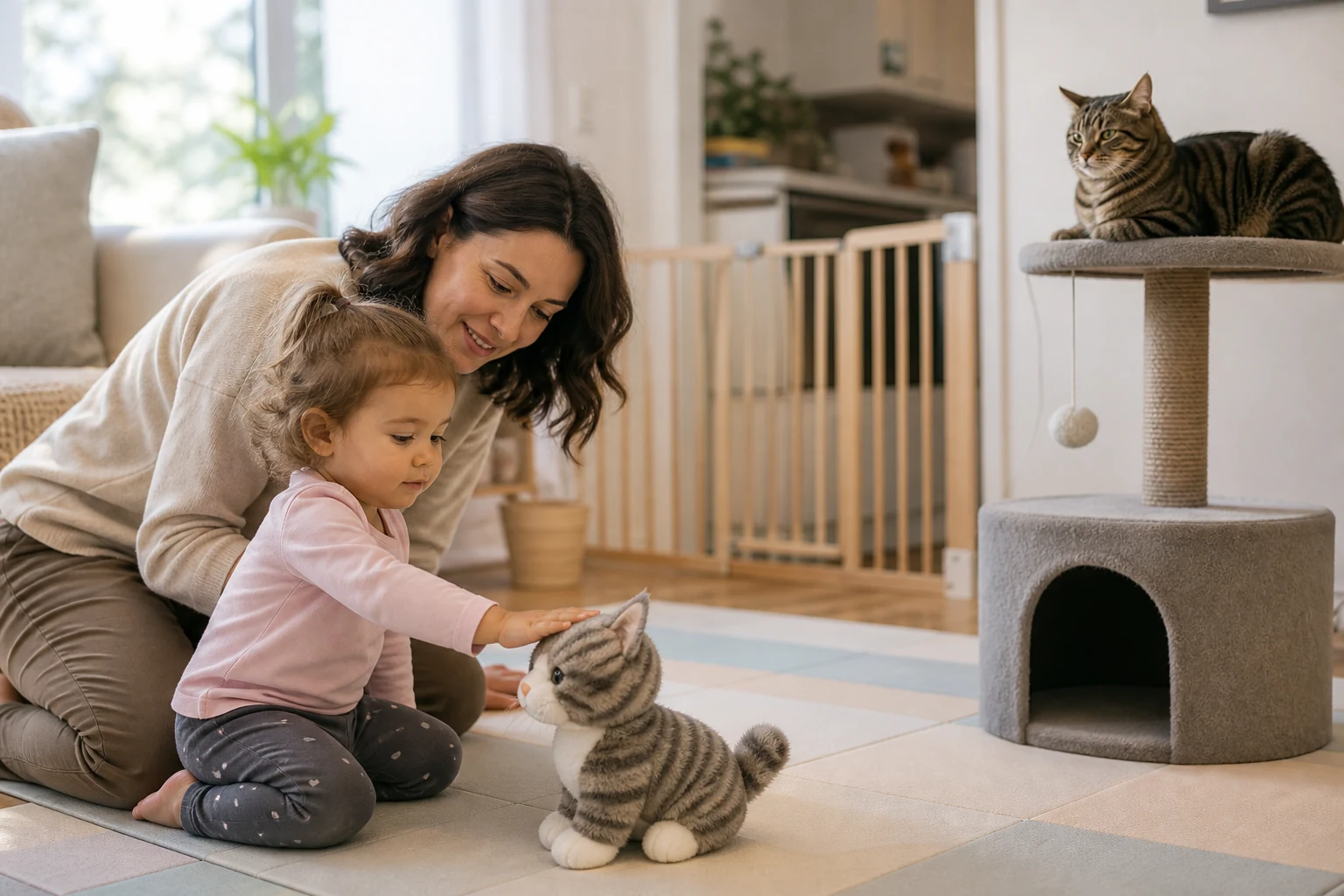
Teaching a toddler gentle hands with cats starts away from the cat: practice slow feet, soft touch, hands-off stop cues, and letting the cat leave every time.
That may sound basic, but it is the difference between a cat who chooses to stay near the family and a cat who learns that small hands mean grabbing, chasing, or blocked exits. Toddlers are still learning impulse control. Cats are sensitive to fast movement, noise, restraint, and surprise. Your job is to make the lesson simple enough for a toddler and protective enough for the cat.
This guide focuses on practice games and stop cues, not first introductions or chase prevention alone. If your toddler is already running after the cat, start with the SnuggleSouls guide on how to stop a toddler from chasing the cat. If your child has just started crawling, the guide to introduce a cat to a crawling baby will help you set the first boundaries.
Table of Contents
- What should gentle hands mean in a toddler home?
- What setup makes gentle hands easier?
- How do you practice gentle hands before your toddler touches the cat?
- Which stop cues should your toddler learn around cats?
- What games teach gentle hands without bothering the cat?
- What cat body language means the lesson should stop?
- How do you build a daily gentle-hands routine?
- What should you avoid teaching by accident?
- Conclusion: Make the cat's choice part of the lesson
- Frequently Asked Questions
- References
What should gentle hands mean in a toddler home?
"Gentle hands" should mean calm body, slow feet, open hand, one short stroke only if the cat chooses to stay, and hands away when the cat leaves. It should never mean asking the cat to tolerate hugging, grabbing, carrying, tail-touching, face-to-face contact, or repeated petting.
Cats Protection encourages teaching children respect, empathy, and safe day-to-day involvement with cats, but those lessons need adult supervision and age-appropriate limits for toddlers 1. A toddler may love the cat and still squeeze, poke, squeal, follow, or fall toward them. Love is not enough structure.
Use a short household definition:
- Eyes look.
- Feet stay slow.
- Hands stay soft.
- One stroke, then stop.
- Cat can walk away.
The last rule matters most. Cat-friendly interaction guidance is built around reading the cat's emotional state and giving the cat a sense of control 4. In a toddler home, that means the cat does not have to earn escape by hissing, swatting, or biting.
What setup makes gentle hands easier?
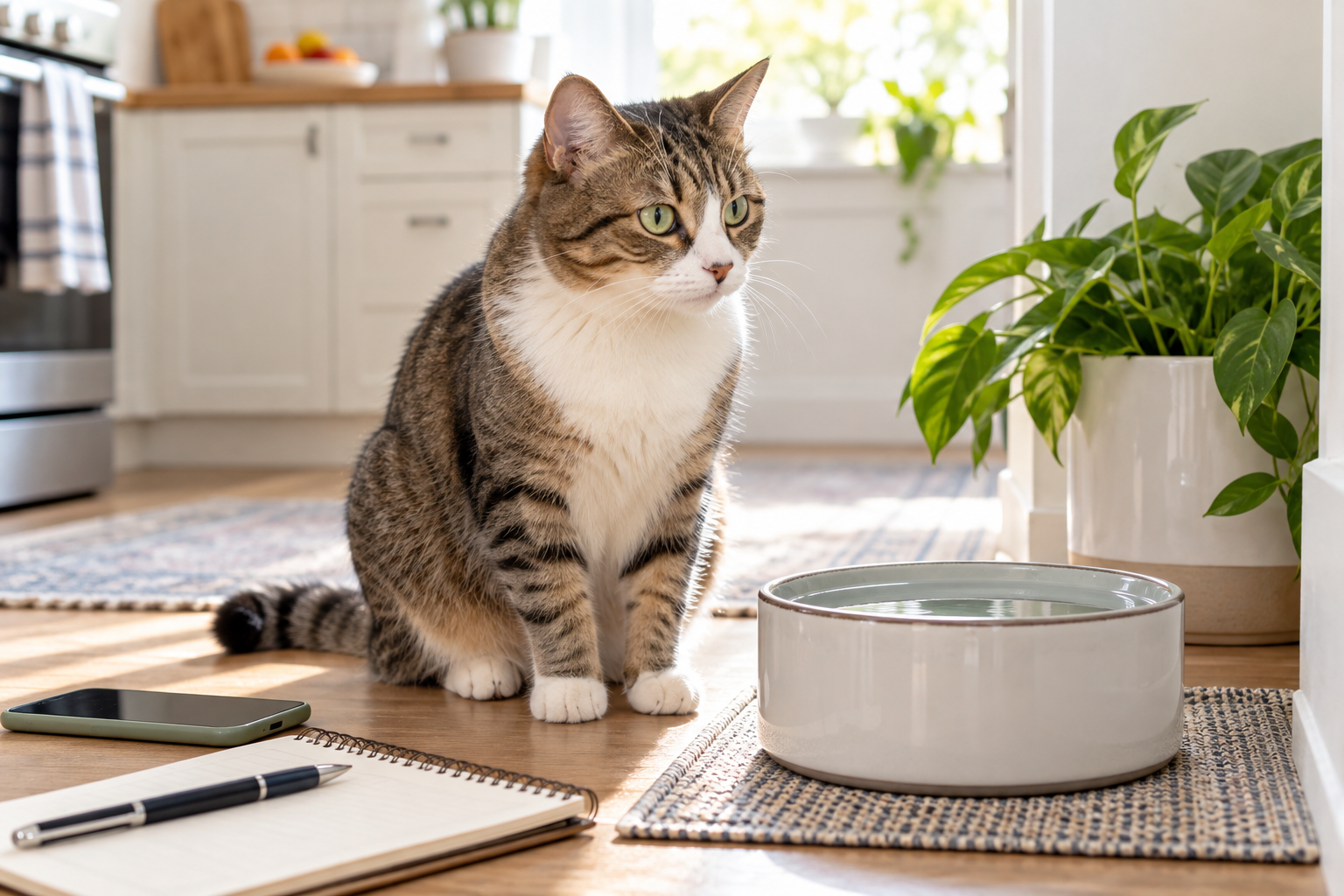
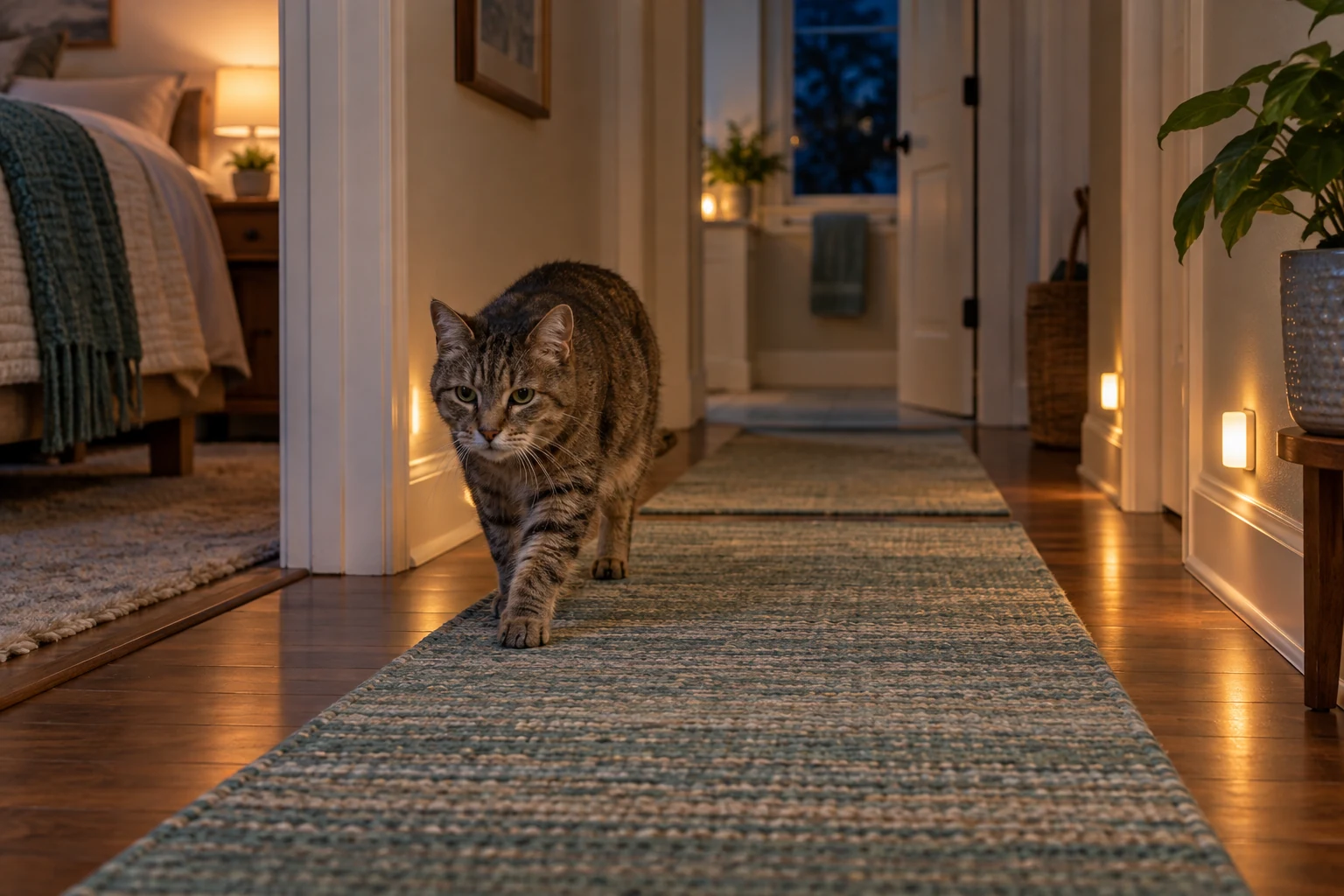
Gentle hands are easier when the cat has protected space and the toddler cannot reach the cat every time they notice them. Use gates, high perches, cat trees, closed doors, and adult positioning to make the right behavior physically easier.
Before practice, check the room:
| Setup question | Better answer | Why it helps |
|---|---|---|
| Can the cat leave? | Yes, through an open route the toddler cannot block | Prevents trapped-cat panic |
| Is there height? | Cat tree, shelf, sofa back, or perch | Lets the cat observe without being handled |
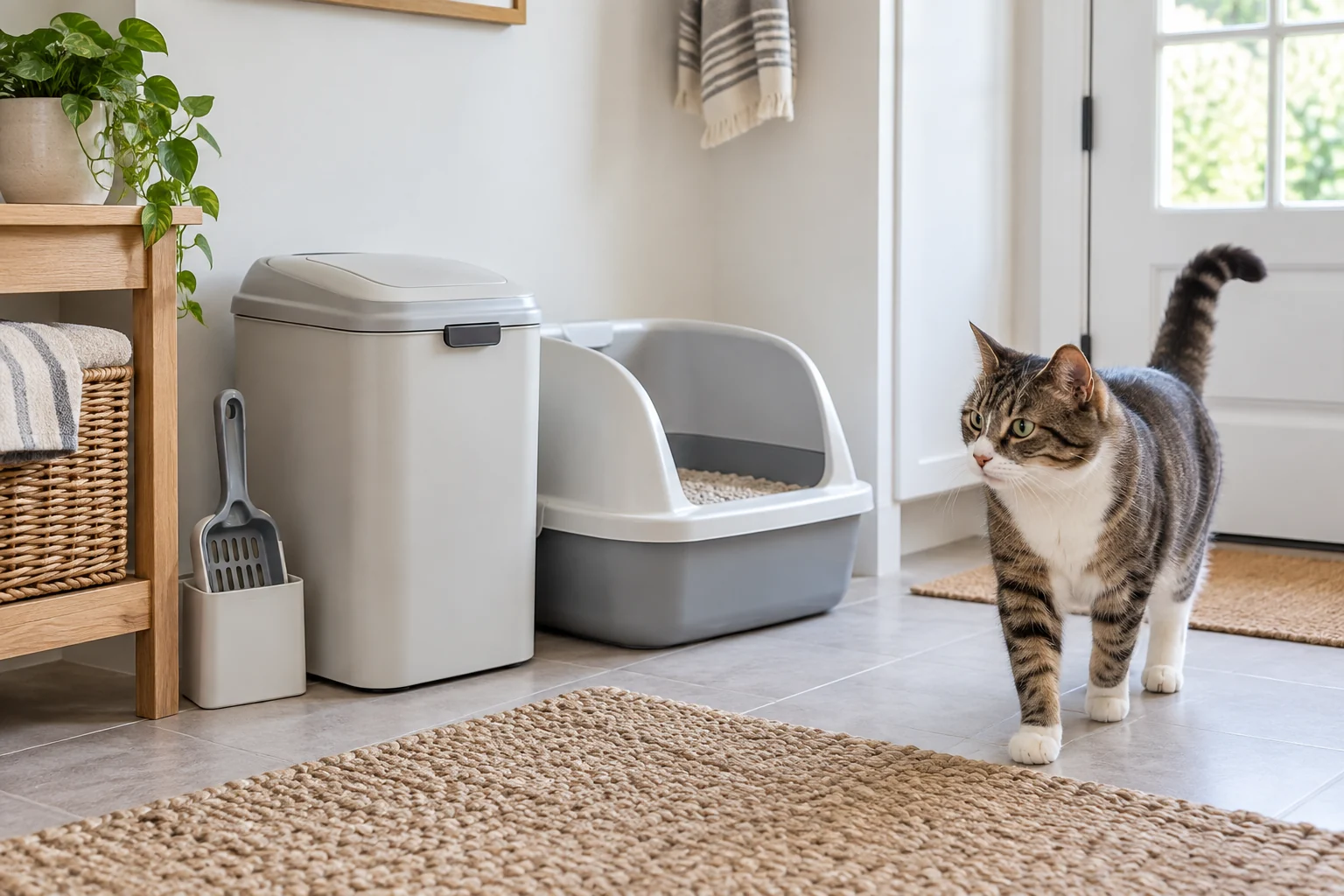
| Are resources protected? | Food, water, litter, and bed are toddler-free | Reduces stress around essential needs |
| Is the toddler grounded? | Sitting with an adult, high chair nearby, or play mat | Reduces sudden lunging |
| Is practice short? | One to three minutes | Matches toddler attention span |
If you are also preparing for a younger sibling or a busier home routine, review how to prepare your cat before the baby arrives. The same idea applies here: prevent pressure before asking the cat to cope with it.
HSE's child-safety guidance around cats includes supervision, calm behavior, respecting the cat's space, and leaving cats alone when they are eating, sleeping, or using the litter box 2. Those are not optional details. They are the boundaries that make gentle touch possible.
How do you practice gentle hands before your toddler touches the cat?
Practice on a plush cat, pillow, or your own forearm before involving the real cat. The toddler is learning a body movement, and the cat should not be the practice surface for trial and error.
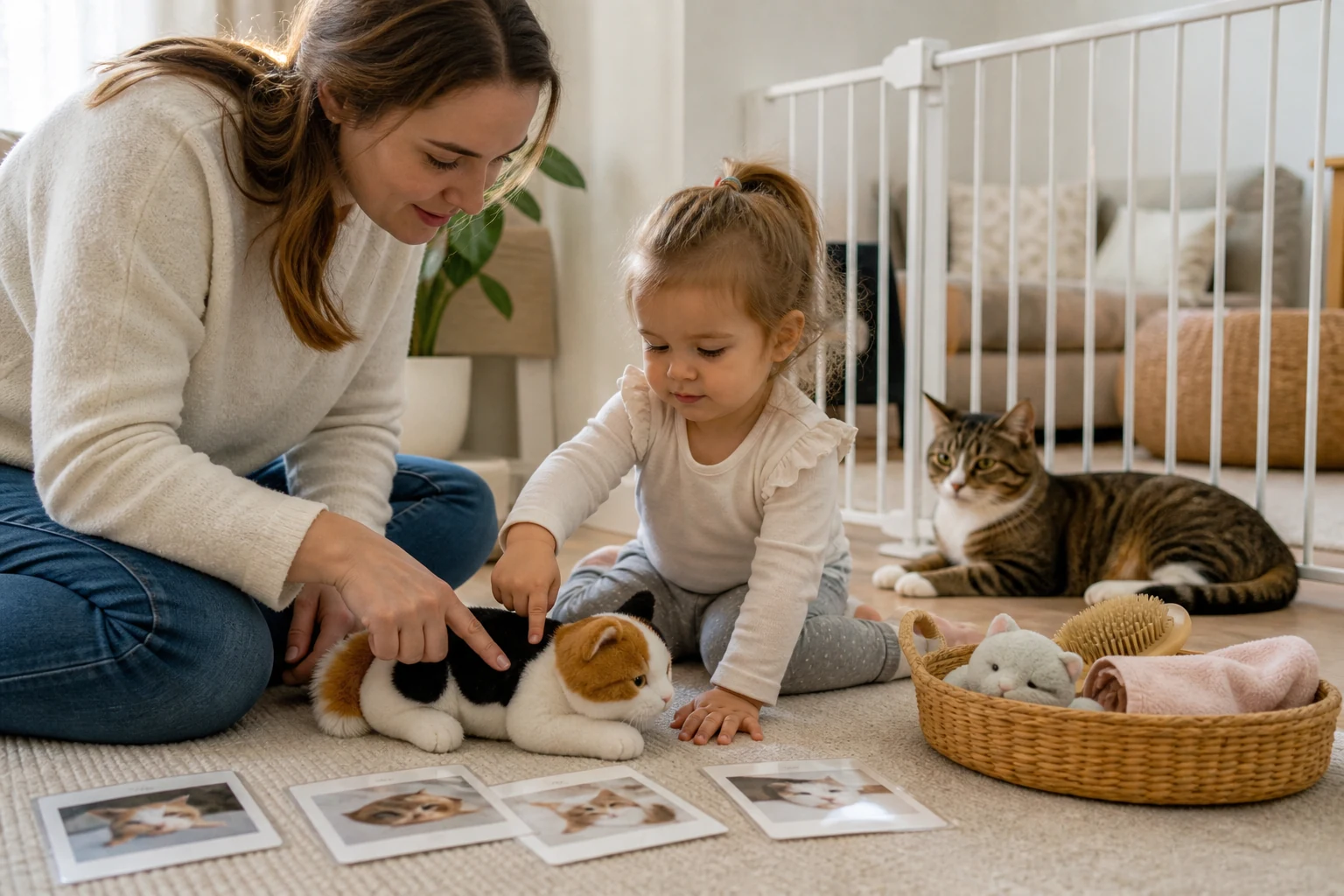
Try this five-step rehearsal:
- Sit beside your toddler, not across the room.
- Put a plush cat in front of them.
- Show one slow stroke from shoulder to back.
- Say, "Soft hand. Stop."
- Move both hands back to the toddler's lap.
Keep the words boring and repeatable. "Soft hand. Stop." is often easier than "Be gentle with the kitty because we do not want to hurt her." Toddlers learn from short cues, repeated movement, and immediate redirection.
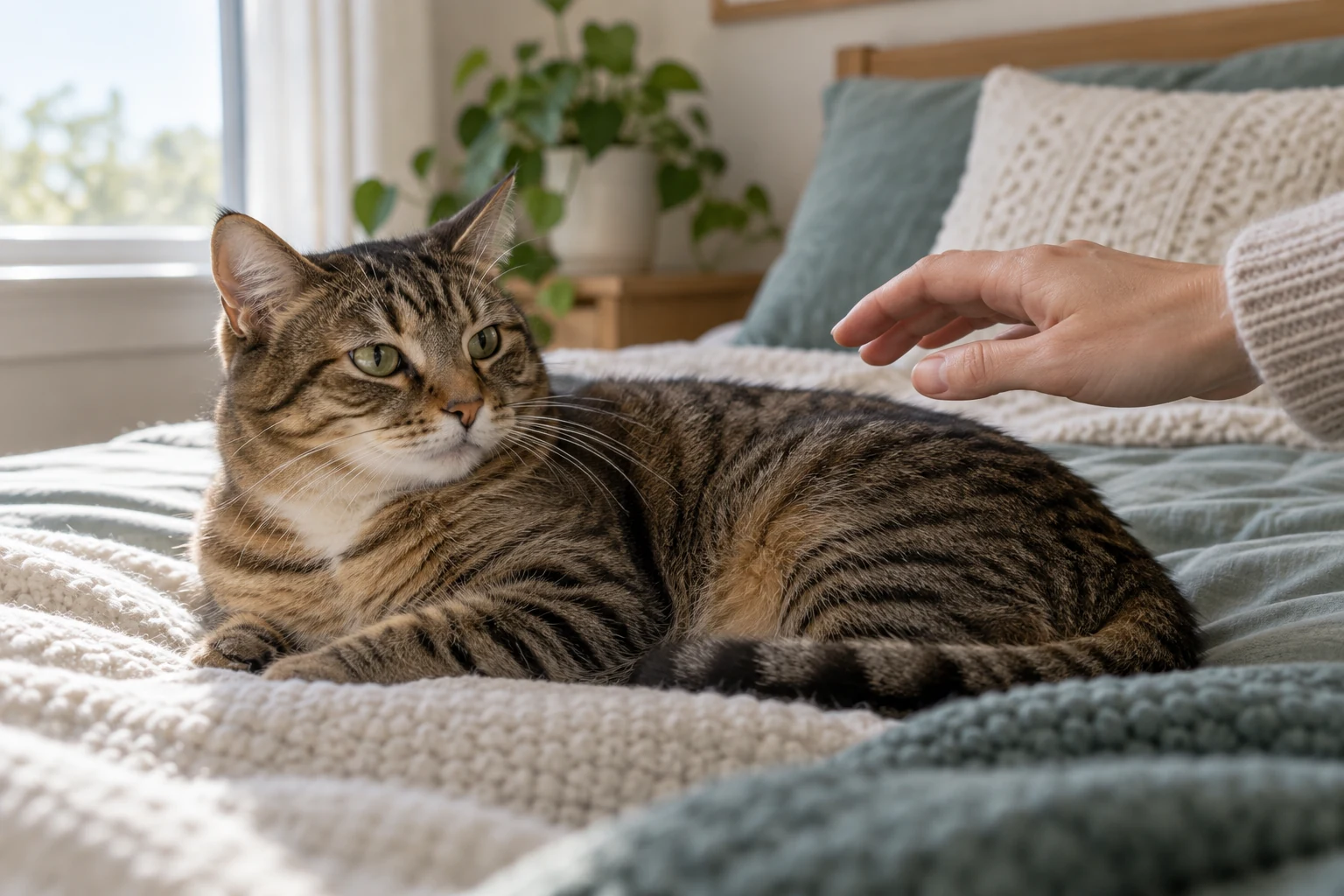
Once your toddler can copy the motion on a toy, you can practice near the real cat without touching. Wave at the cat from behind a gate. Put hands in lap. Say "cat walks away" when the cat leaves. If the cat approaches and stays relaxed, one adult may allow one brief back stroke, then end the contact before the toddler gets excited.
Do not let practice become a test of the cat's patience. International Cat Care advises that cats should be handled gently and respectfully, with attention to whether they want interaction 3. For toddlers, that means adults end the interaction early.
Which stop cues should your toddler learn around cats?
Your toddler should learn a few stop cues that pair a word with a body action. The goal is not obedience on the first try. The goal is a repeatable script you can use before the toddler grabs, follows, or corners the cat.
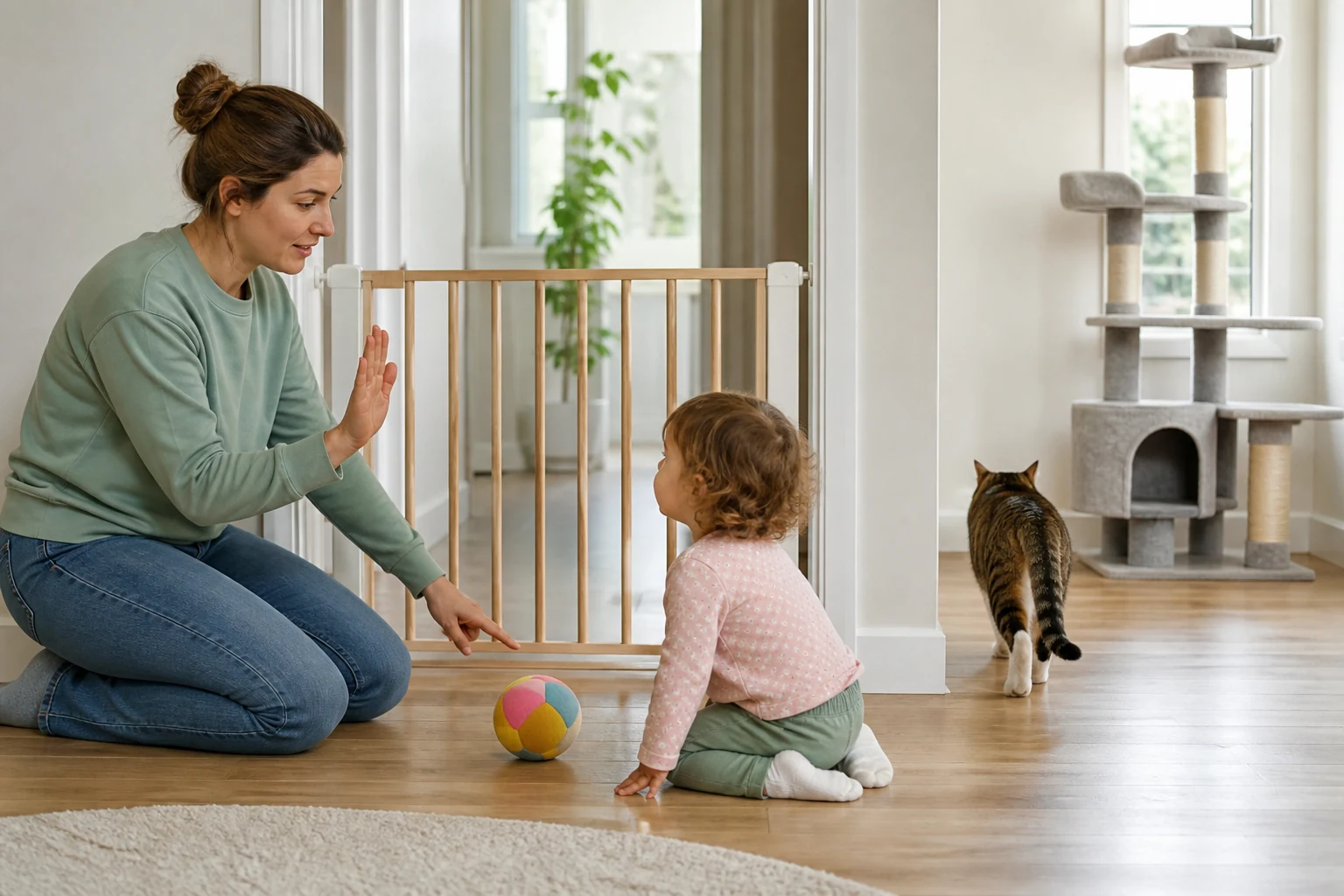
Useful cues include:
- "Freeze feet." Toddler stops moving.
- "Hands back." Hands go to lap, belly, or adult hand.
- "Wave bye." Toddler waves as the cat leaves.
- "Cat resting." Toddler moves away from a sleeping cat.
- "Cat says no." Adult blocks access when the cat turns away, hides, hisses, or stiffens.
Always pair the cue with action. If you say "hands back," gently guide your toddler's hands to their lap. If you say "wave bye," move your toddler away from the cat after the wave. If you say "cat says no," the interaction ends.
The cat's "no" can be quiet. It may be walking away, turning the head, skin twitching, tail flicking, flattening ears, crouching, or freezing. AAFP/ISFM cat-friendly guidance emphasizes interpreting and responding to cats' emotional states rather than pushing through discomfort 4. That principle is just as useful at home as it is in a veterinary setting.
What games teach gentle hands without bothering the cat?
The best toddler games teach impulse control, empathy, and slow movement without putting the real cat in the middle. Use games that let your toddler practice seeing the cat, copying calm behavior, and moving attention away.
Try these:
- Plush cat care: brush a plush toy, offer pretend food, then say "all done."
- Freeze feet: everyone freezes when the cat walks through the room.
- Wave and walk: toddler waves hello from a distance, then walks with the adult to another toy.
- Soft ball roll: toddler rolls a soft ball away from the cat into a basket.
- Hands in lap: toddler watches the cat from a seated position for five seconds.
- Cat helper job: toddler helps carry a sealed food scoop, towel, or toy basket with adult supervision.
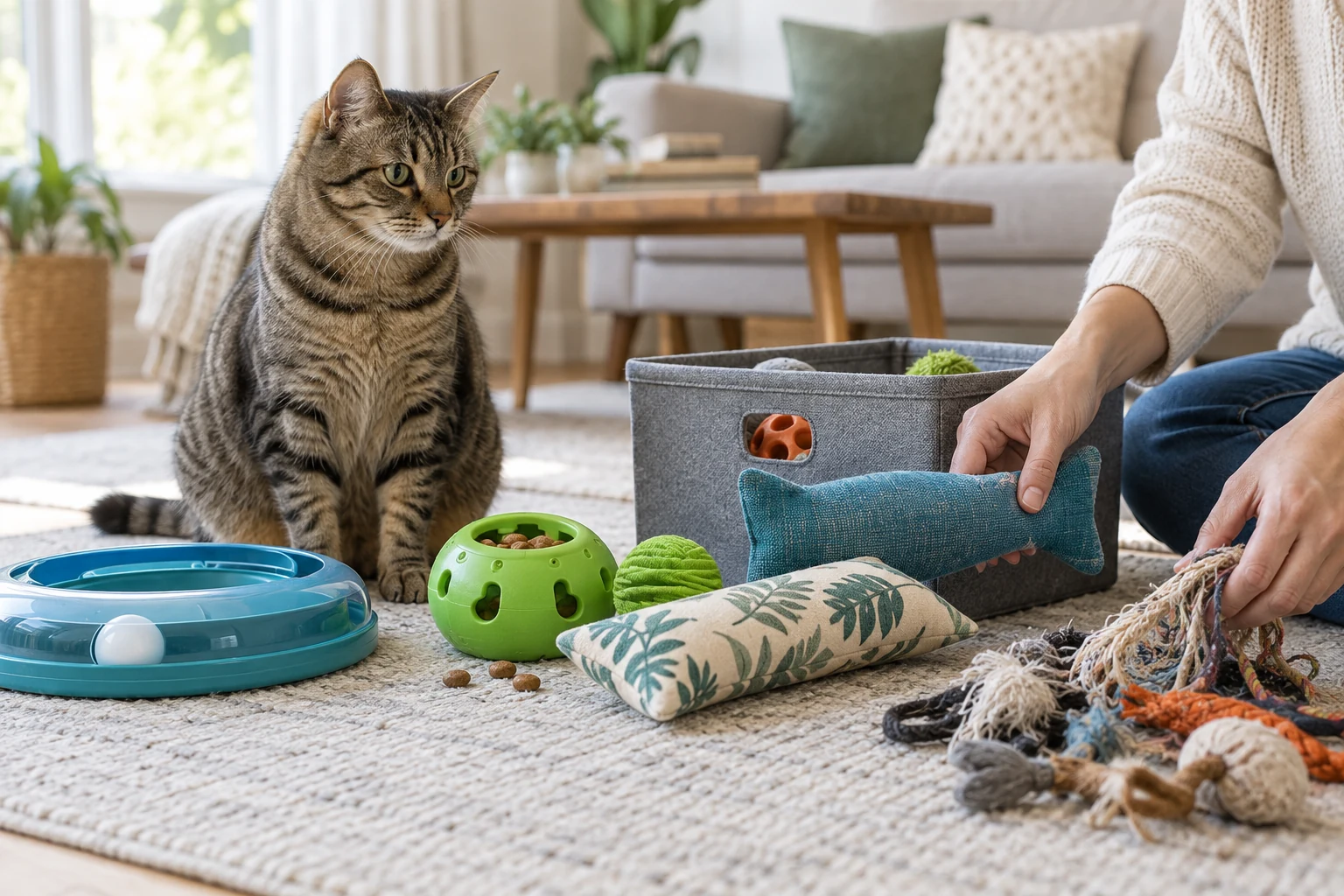
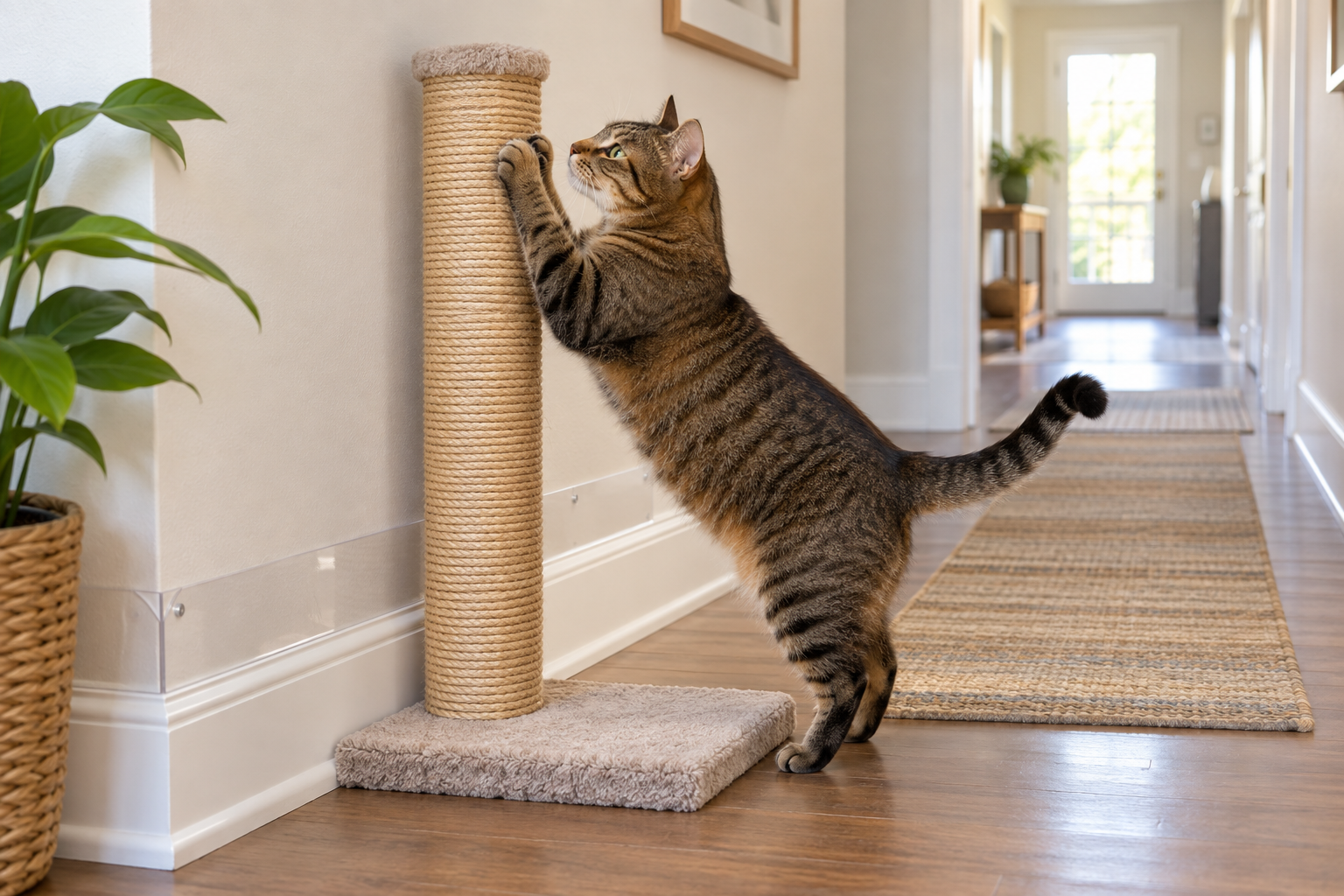
If your cat wants play, keep cat play adult-led and separate from toddler touching. A daily interactive play routine gives your cat a safe outlet for stalking and pouncing without making toddler hands part of the game. For extra enrichment, choose interactive cat toys for indoor cats that the adult controls or that stay in the cat's protected zone.
Toddlers should not wave string toys near a cat's face, pull wand toys away at random, chase the cat with toys, or use their hands as prey. That can teach both child and cat the wrong pattern: the toddler learns excitement around the cat, and the cat learns that small hands are unpredictable.
What cat body language means the lesson should stop?
Stop the lesson when the cat shows any sign of wanting distance. You do not need to wait for a hiss, scratch, or bite.
| Cat signal | What it may mean | Adult response |
|---|---|---|
| Walks away or turns head away | The cat is ending contact | Say "wave bye" and block following |
| Tail flicks or skin ripples | Arousal or irritation is rising | End the lesson now |
| Crouches, freezes, or hides | The cat may feel unsafe | Move toddler away and open exits |
| Ears flatten or pupils widen | Fear, stress, or defensive emotion | Separate calmly |
| Hiss, growl, swat, or bite | The cat is warning or defending | Stop all contact and revise setup |
If your cat bites during family interactions, read SnuggleSouls' guide to why cats bite. If the pattern looks like affection followed by a sudden nip, the article on licking then biting can help you spot overstimulation earlier.
ASPCA guidance on cats and babies emphasizes planning ahead, gradual adjustment, and safety for both the child and the cat 5. With a toddler, planning ahead means you assume the toddler will forget the rule sometimes. Barriers and adult hands are part of the lesson, not proof that the lesson failed.
Contact your veterinarian if your cat suddenly becomes reactive, hides most of the day, stops eating, avoids the litter box, growls at normal family movement, or seems painful when touched. Stress can change behavior, but illness or pain can lower a cat's tolerance too. If a scratch or bite breaks skin, clean it promptly and contact your child's pediatrician for individual medical advice.
How do you build a daily gentle-hands routine?
Build the routine around short, predictable practice, not occasional long lessons. One calm minute every day is better than waiting until your toddler is already excited and your cat is already cornered.
A simple week-one routine can look like this:
| Moment | Toddler job | Cat protection |
|---|---|---|
| Morning | Wave to the cat behind a gate | Cat eats without toddler access |
| Midday | Practice one stroke on plush cat | Real cat stays on perch or in another room |
| Afternoon | Roll soft ball away from cat zone | Adult blocks hallway chasing |
| Evening | Hands in lap while cat walks by | Cat has open route to tree or room |
| Bedtime | Say "night-night cat" from doorway | Cat keeps quiet space after toddler sleep |
Keep sessions neutral. Do not force the cat to perform. Do not bring the cat to the toddler. Do not make touching the cat the reward for calm behavior. The reward can be praise, a favorite toddler game, or helping with a safe cat-care task.
As your toddler matures, add more responsibility: placing a bowl on the counter for an adult to fill, carrying a clean towel, sorting toy mice into a basket, or choosing between two adult-approved cat toys. Cats Protection notes that supervised activities like grooming, play, and feeding can support bonding when children are taught respect and care 1. For toddlers, "helping" should still be managed by an adult.
What should you avoid teaching by accident?
Avoid teaching that the cat is a toy, a reward, or a problem your toddler can solve by getting louder. The patterns adults accidentally reward often become the patterns toddlers repeat.
Common mistakes include:
- Laughing when the toddler grabs, squeals, or chases.
- Saying "gentle" while allowing repeated rough strokes.
- Letting the toddler corner the cat under furniture.
- Picking up the cat and placing them in the toddler's lap.
- Allowing hugs, kisses, face-to-face contact, or tail touching.
- Using the cat as the reward for stopping a chase.
- Expecting the cat to stay because they are usually tolerant.
Replace each mistake with a clearer pattern:
| Instead of | Do this |
|---|---|
| "Pet kitty nicely" while the toddler keeps reaching | "One soft stroke. Stop. Hands back." |
| Pulling the cat closer | Let the cat approach or leave |
| Repeating warnings from across the room | Move close, block, and redirect |
| Making the cat tolerate hugs | Hug a plush toy instead |
| Waiting for a hiss | End contact at the first avoidance signal |
The point is not to make your toddler afraid of the cat. It is to make respect concrete. Toddlers understand routines before they understand long explanations.
Conclusion: Make the cat's choice part of the lesson
Gentle hands work when the toddler learns a tiny routine and the cat keeps real choice. Practice on a plush toy, use short stop cues, protect exits, reward hands-off calm, and end contact before the cat has to escalate.
Your toddler does not need perfect self-control to start learning. Your cat does need adults to manage the room, read body language, and protect rest. When those pieces work together, "gentle hands" becomes more than a phrase. It becomes a daily habit that keeps both your child and your cat safer.
Frequently Asked Questions
What age can a child learn gentle hands with cats?
Many toddlers can start practicing simple routines like "soft hand," "hands back," and "wave bye," but they still need direct adult supervision. Do not expect reliable impulse control from a toddler around a cat.
Should I let my toddler pet the cat if the cat seems calm?
Only if the cat can leave, the toddler is seated or held close by an adult, and the contact is brief. One slow stroke followed by hands away is safer than repeated petting.
What should I do if my toddler pulls the cat's tail?
Separate immediately and calmly, check the cat and child for injury, and prevent another chance to rehearse the behavior. Practice on a plush toy later, but do not make the real cat continue the lesson.
Is it okay for my toddler to hug the cat?
No. Hugging can feel like restraint to a cat, and a toddler's face may be too close to teeth and claws. Teach your toddler to hug a plush toy and wave to the real cat instead.
Why does my cat walk away when my toddler is gentle?
Walking away is healthy communication. Praise your toddler for letting the cat leave, then redirect to another game. The lesson is working when the cat does not have to hiss or swat to get space.
References
[1] Cats Protection. (2026). Cats and Children. Cats and Children
[2] Health Service Executive. (2026). Cats – teaching your child to be safe. Cats – teaching your child to be safe
[3] International Cat Care. (2025). Handling and interactions. Handling and interactions
[4] AAFP and ISFM. (2022). 2022 AAFP/ISFM Cat Friendly Veterinary Interaction Guidelines: Approach and Handling Techniques. 2022 AAFP/ISFM Cat Friendly Veterinary Interaction Guidelines
[5] ASPCA. (2026). Cats and Babies. Cats and Babies
 EN
EN DE
DE ES
ES PT
PT