

Most healthy adult cats can handle a normal workday alone if their home is safe, their resources are fresh, and their routine is predictable. Longer absences need more planning: kittens, seniors, cats on medication, and cats with anxiety or medical problems usually need a trusted person checking in sooner.
The real question is not only "how many hours can my cat be alone?" It is whether your cat has reliable food, water, clean litter, safe hiding and resting places, and enough enrichment to stay comfortable without you. Cats are independent compared with many dogs, but they are not low-maintenance decorations. They still depend on people to keep the environment stable and notice early signs that something is wrong.
This guide explains how long is reasonable, what to prepare before you leave, when to arrange a sitter, and what warning signs mean your cat needs more support.
Table of Contents
- How long can cats be left alone safely?
- Which cats should not be left alone for long?
- What should you prepare before leaving a cat alone?
- How should food and water be handled while you are away?
- How can you make alone time less stressful?
- What signs mean your cat is not coping well?
- When do you need a sitter, friend, or boarding plan?
- Conclusion
- Frequently Asked Questions
- References
How long can cats be left alone safely?
For many healthy adult cats, 8 to 12 hours alone is usually reasonable when the home is prepared. A single overnight may be possible for some calm adults, but it is safer to arrange at least one check-in if you will be gone around 24 hours or longer.
International Cat Care notes that cats are often more independent than dogs and can usually be left alone for longer periods, but that does not remove the need for daily care and welfare planning 1. A good rule is to plan around your actual cat, not an internet maximum.
Use this as a practical starting point:
| Time away | Usually okay for | What to prepare |
|---|---|---|
| Workday, about 8-12 hours | Healthy adult cats with a stable routine | Fresh water, measured food, clean litter, safe rooms, enrichment |
| One long day or overnight | Some healthy adult cats | Extra water, reliable feeding setup, clean litter, camera or check-in if possible |
| 24 hours or more | Only with planning | A sitter, friend, or neighbor should check food, water, litter, and behavior |
| Several days | Not a leave-alone plan | Daily visits, an in-home sitter, or carefully chosen boarding |
If you are unsure, choose the more conservative plan. A quick check-in is not just about companionship; it catches spills, locked doors, failed feeders, litter box problems, vomiting, or a cat that has stopped eating.
Which cats should not be left alone for long?
Some cats need more frequent care even if they seem independent. Kittens, seniors, newly adopted cats, recently moved cats, and cats with health conditions can become stressed or unsafe faster than a confident adult with an established routine.
Be more cautious with:
- Kittens, especially if they need frequent meals, supervision, or social learning.
- Senior cats with mobility, appetite, hydration, vision, hearing, or cognitive changes.
- Cats on medication, prescription diets, insulin, fluids, or timed feeding plans.
- Cats recovering from surgery, dental work, illness, diarrhea, vomiting, or injury.
- Cats with a history of urinary issues, constipation, seizures, diabetes, kidney disease, or not eating well.
- Newly adopted cats that are still learning where resources are.
- Cats who panic when alone, overgroom, hide intensely, vocalize, soil outside the box, or damage exit points.
For health concerns, do not try to solve the problem by simply adding more food and leaving. Call your veterinarian if your cat is not eating, repeatedly vomiting, straining in the litter box, breathing abnormally, collapsing, having seizures, showing sudden weakness, or declining quickly.
What should you prepare before leaving a cat alone?
Prepare the home as if your cat will spend the day making ordinary cat choices: sleeping, drinking, eating, scratching, watching the window, using the litter box, hiding, and playing in short bursts. The FelineVMA environmental needs guidance emphasizes separate key resources such as food, water, toileting areas, scratching, play, and resting spaces 3.
Start with safety. Close rooms where your cat could get trapped, secure windows and screens, remove string-like hazards, put away medications and toxic foods, and check cords, recliners, washers, dryers, balconies, and unstable shelves. If you have not recently done a safety pass, use this cat-proofing your home guide before a longer absence.
Then prepare the resources:
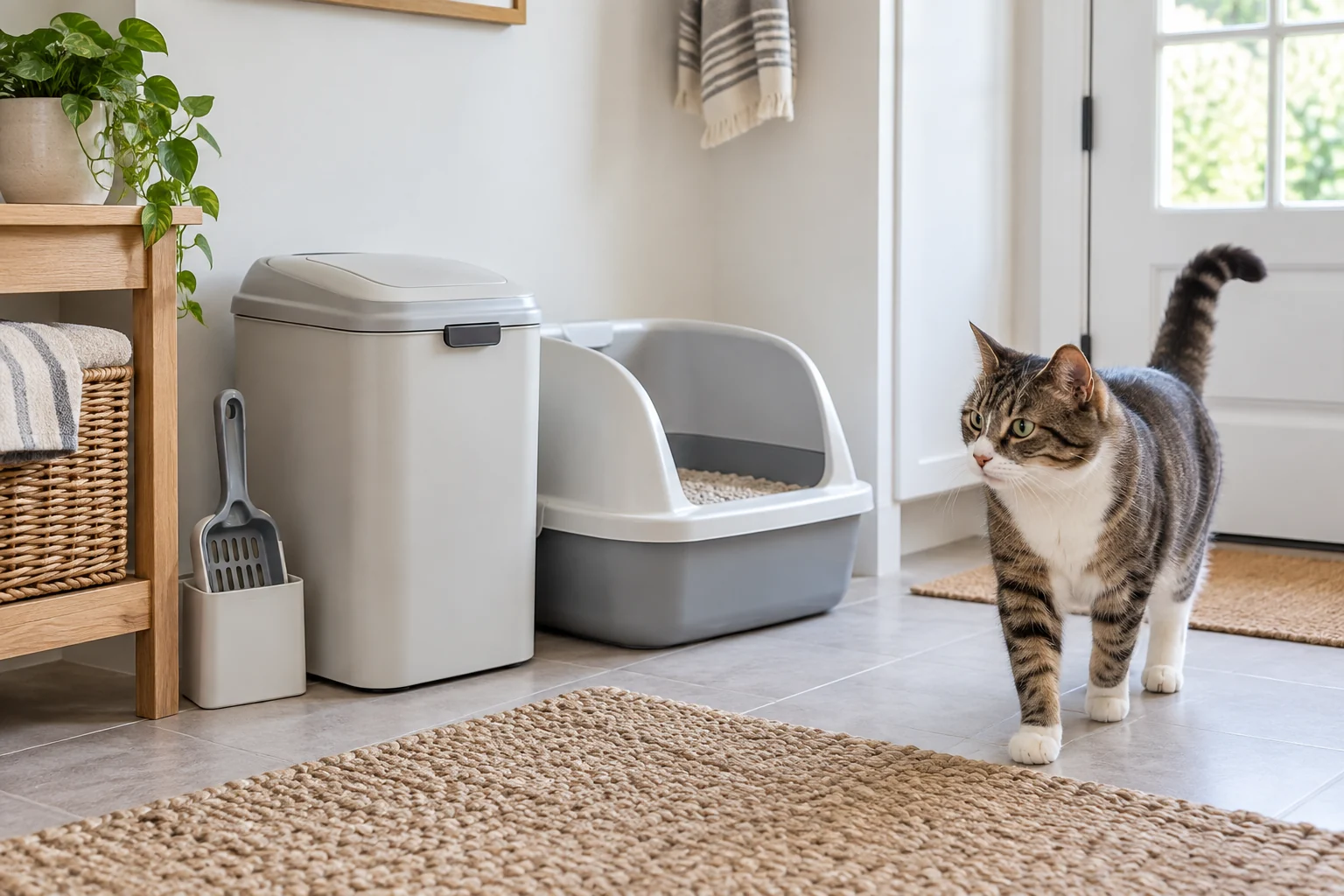
- Scoop the litter box before you leave. For multiple cats, provide multiple boxes in separate accessible locations when possible.
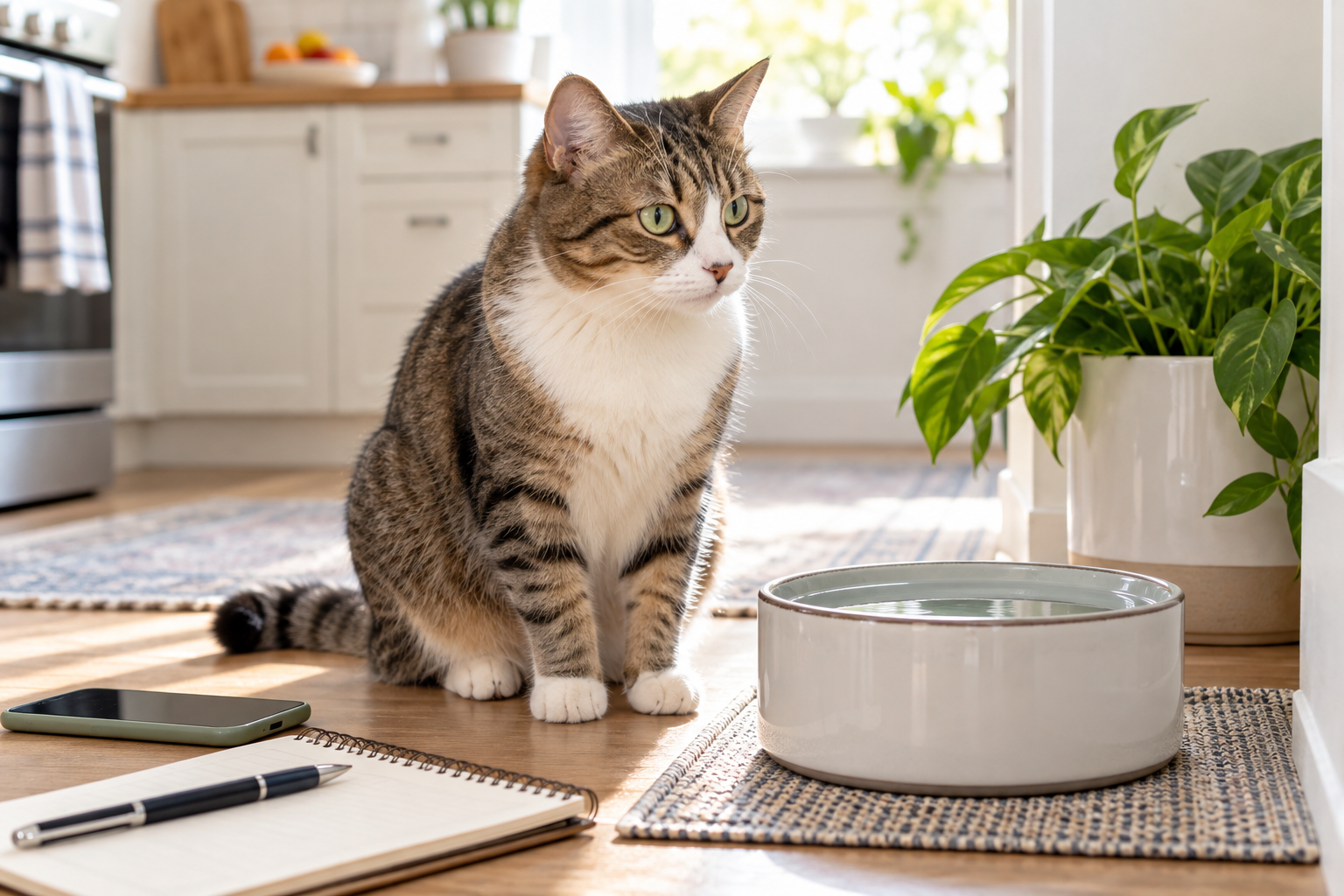
- Place water in more than one spot in case one bowl spills.
- Measure food so you do not accidentally overfeed out of guilt.
- Keep food and water away from the litter box.
- Leave a few safe solo toys, a scratching surface, and a familiar sleeping area.
- Make sure the room temperature will stay comfortable.
- Leave interior doors either fully open or fully closed so they cannot swing shut and trap your cat away from resources.
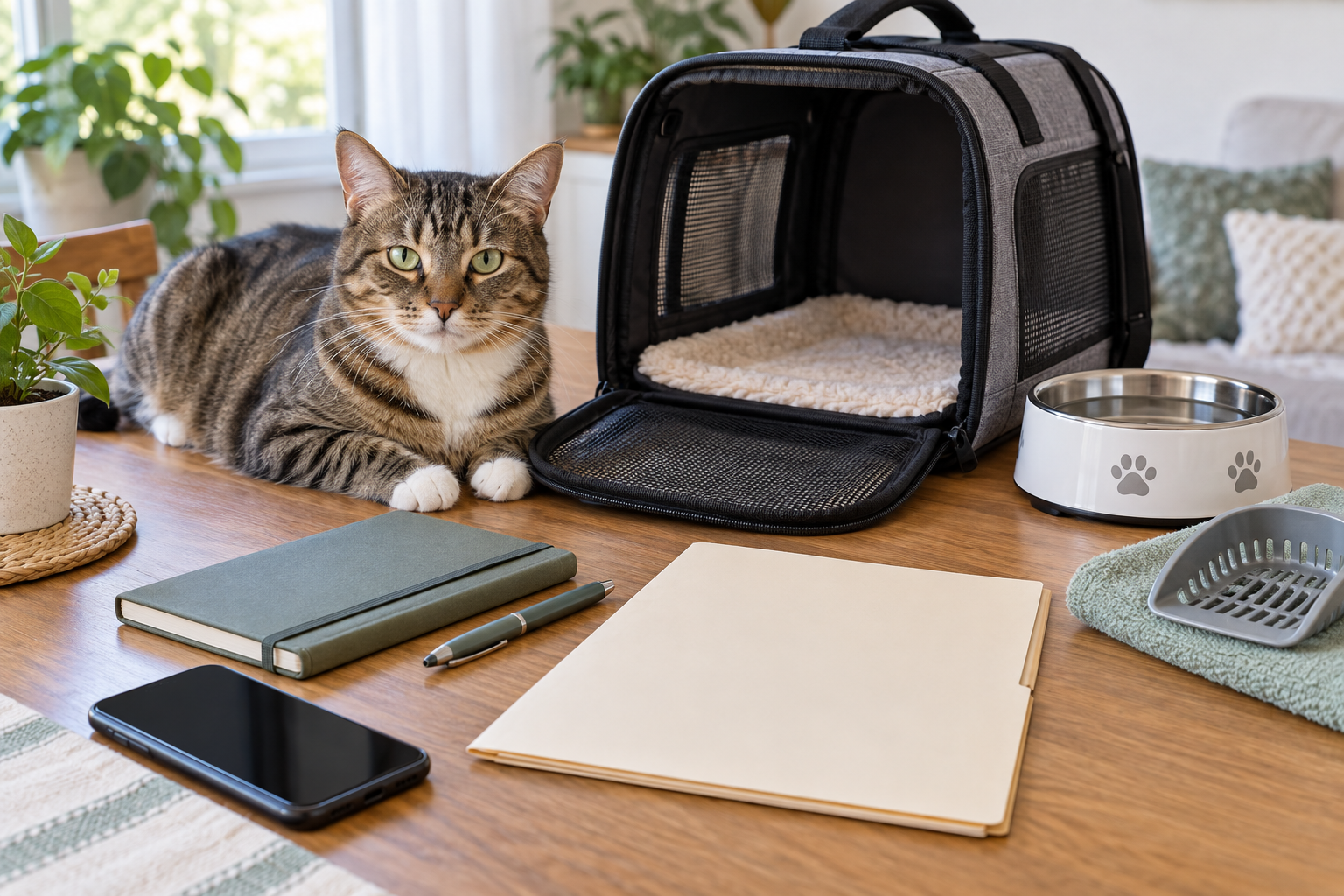
- Put a spare key or entry instructions with the person who would check on your cat in an emergency.
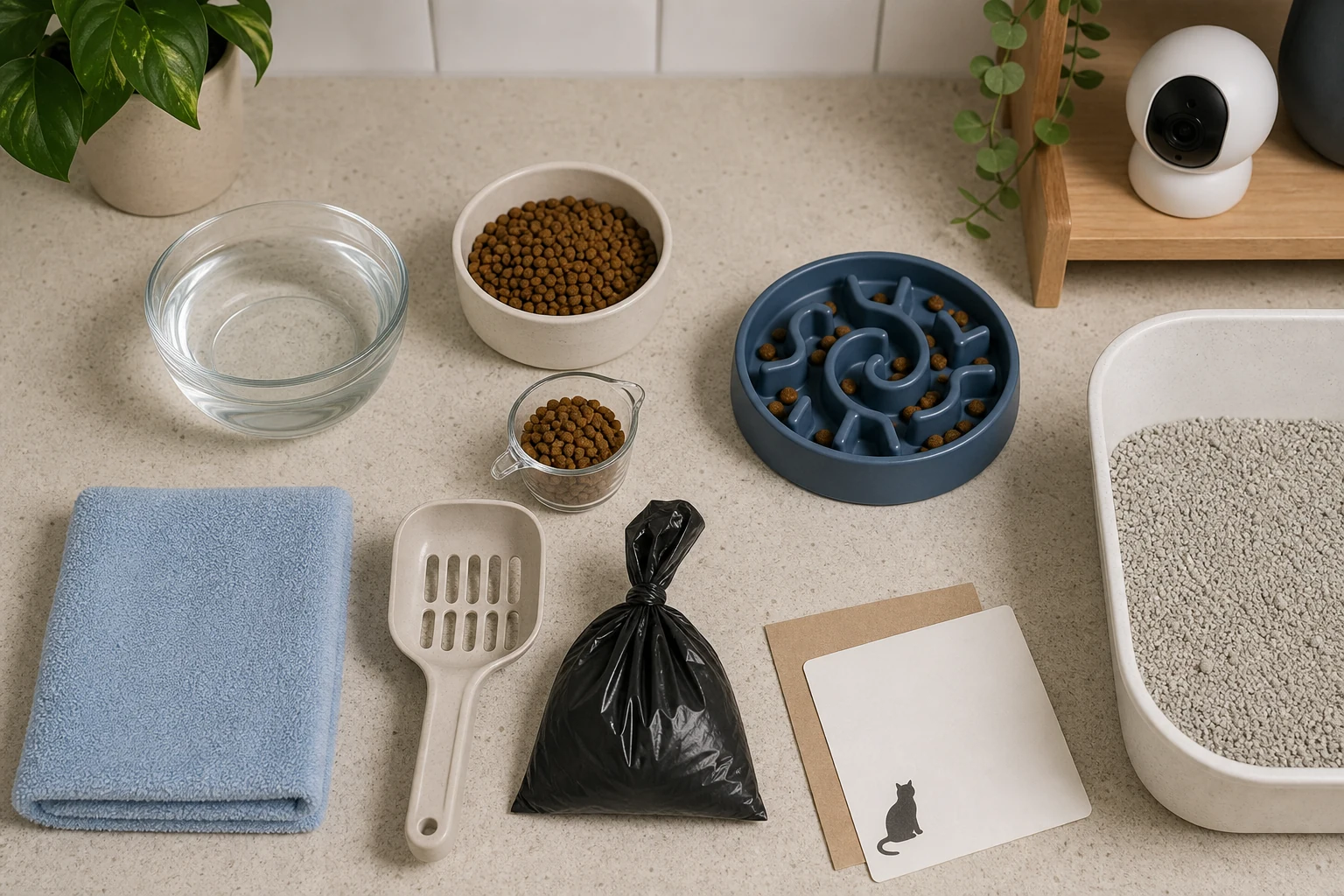
If litter box access is a weak point in your home, review the best cat litter box setup before relying on a long absence.
How should food and water be handled while you are away?
Food and water should be boringly reliable. Leave more water capacity than your cat usually drinks, and use a feeding setup that you have tested while you are home.
For a workday, many adult cats do well with their normal meal schedule, a timed feeder, or part of a meal placed in a puzzle feeder. For overnight absences, use a plan that protects freshness and portion control. Dry food is easier to leave safely than wet food, but wet food may be important for some cats' hydration or medical plans. If wet food is part of your cat's routine, ask your veterinarian or sitter how to handle timing and storage.
Avoid these common mistakes:
- Leaving a huge bowl of food for a cat who overeats.
- Using an automatic feeder for the first time on the day you leave.
- Placing all water in one lightweight bowl that can tip.
- Assuming a fountain is enough without a backup bowl.
- Changing food right before your absence.
If your cat's weight or meal amount is already a question, estimate portions with the cat calorie calculator and confirm any medical diet plan with your veterinarian.
How can you make alone time less stressful?
Cats cope better when the environment gives them control. International Cat Care describes a cat-friendly home as safe, stimulating, and set up around feline needs, not just human convenience 2.
A good alone-time setup offers:
- Height: a stable perch or window spot.
- Hiding: a box, covered bed, tunnel, or quiet room.
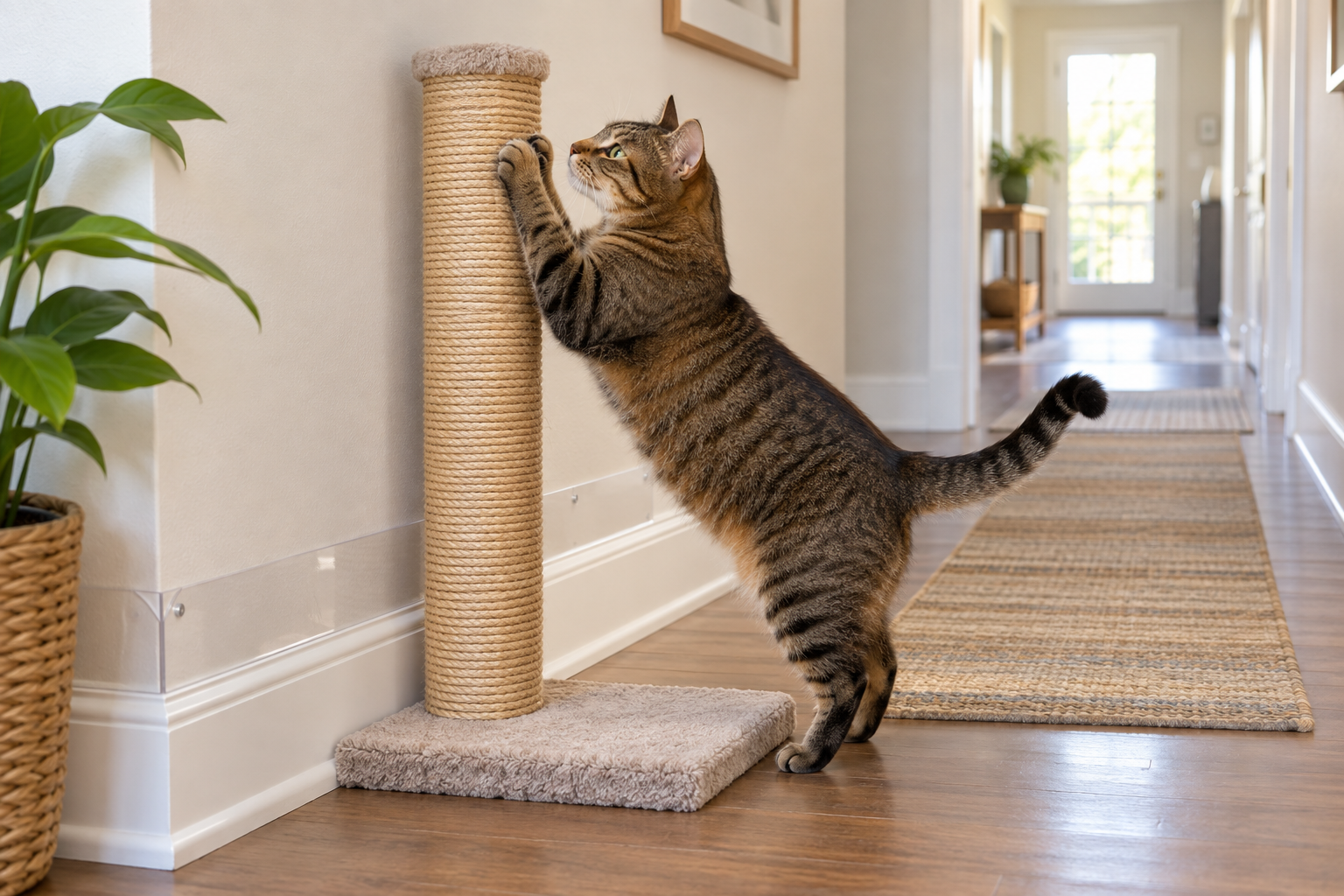
- Scratching: a post or pad near where your cat already rests.
- Scent familiarity: bedding that smells like home.
- Predictable sound: normal household quiet, or low background sound if your cat is used to it.
- Safe play: solo toys that cannot be swallowed, shredded, or wrapped around the body.
- Choice: separate areas for food, water, litter, rest, and play.

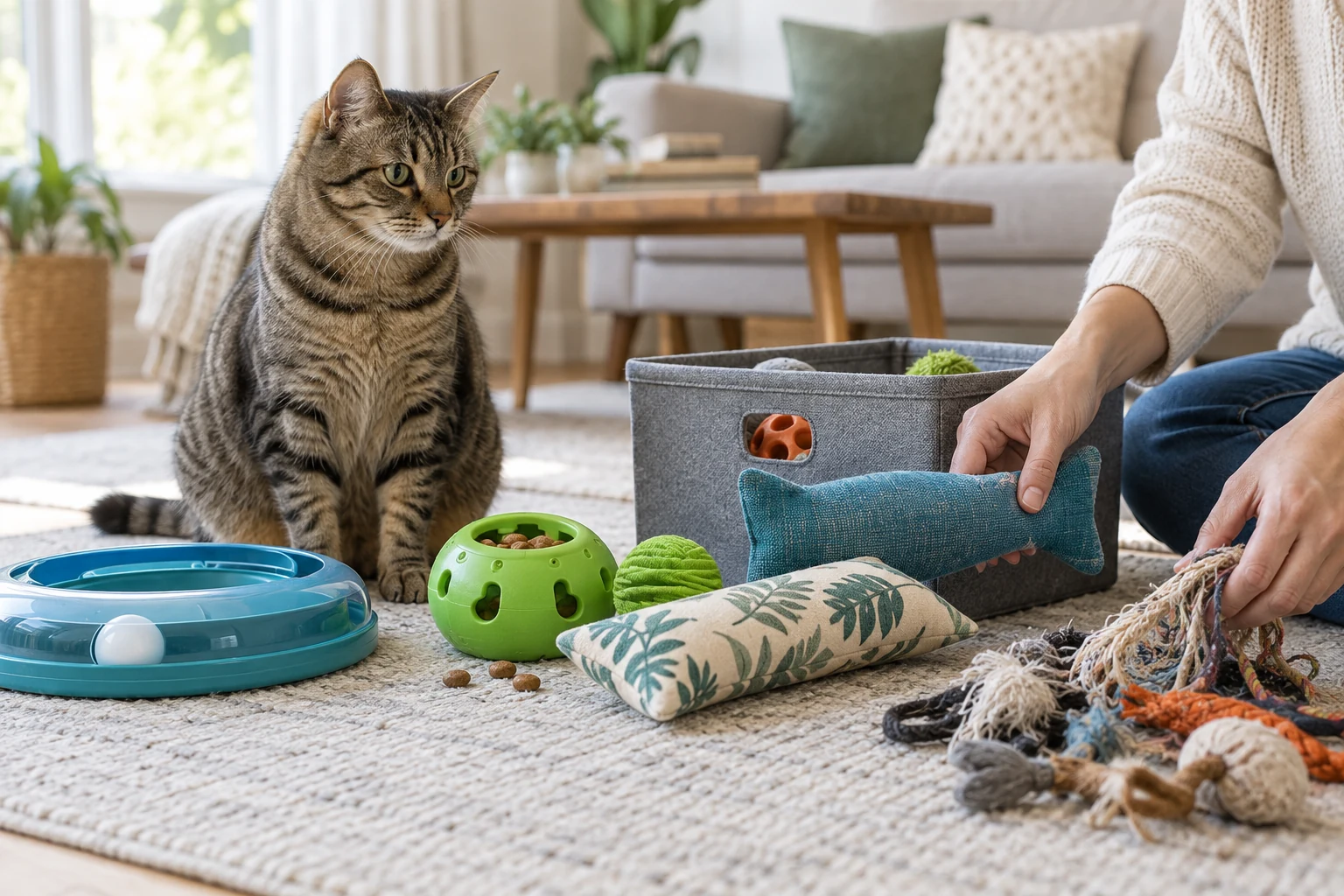
Food puzzles and simple toys can help, but do not leave anything with loose strings, feathers that come off easily, rubber bands, hair ties, or small parts. For low-cost ideas that work well under supervision first, see these near-free cat toys.
If your cat becomes upset when you pick up keys or put on shoes, practice short departures on normal days. Leave for a few minutes, return calmly, and avoid making departures or returns dramatic. VCA notes that pets can show distress when routines suddenly change and that cameras can help reveal what a pet is doing while alone 4.
What signs mean your cat is not coping well?
A cat who is not coping may show changes in appetite, litter box habits, grooming, vocalization, activity, or hiding. Do not punish these signs. Treat them as information about stress, unmet needs, or a possible medical problem.
Watch for:
| Sign after alone time | What it may mean | What to do next |
|---|---|---|
| Not eating or barely eating | Stress, illness, dental pain, nausea, food access problem | Call your veterinarian if appetite is poor or absent |
| Urinating outside the box | Stress, box access issue, urinary disease | Check resources and call a vet promptly for urinary signs |
| Diarrhea or repeated vomiting | Illness, diet issue, stress, toxin exposure | Contact your veterinarian, especially if repeated or severe |
| Overgrooming or bald patches | Stress, itch, pain, parasites, allergy | Schedule a veterinary exam |
| Intense hiding after every absence | Fear, stress, illness, lack of safe places | Add predictable safe spaces and monitor closely |
| Destructive behavior near doors/windows | Separation distress or escape panic | Shorten absences and ask a vet or behavior professional |
| New aggression between cats | Resource conflict or redirected stress | Separate resources and reintroduce carefully |
Cornell notes that house soiling is a common feline behavior problem and that the solution depends on the underlying cause 5. If you see urine outside the box, do not assume your cat is being spiteful. Start with health and access.
These SnuggleSouls guides can help you sort patterns without guessing: stress-related peeing, litter box problems, and why cats hide.
When do you need a sitter, friend, or boarding plan?
Arrange a sitter or reliable check-in when the absence is longer than a normal day, your cat has special needs, or the home setup has any failure point you cannot personally check. A sitter visit should be more than dropping food into a bowl.
Ask the sitter to:
- Confirm your cat is seen or has clearly eaten and used normal hiding places.
- Refresh water and check backup bowls.
- Feed the planned amount.
- Scoop litter and report changes in urine, stool, or box avoidance.
- Check for vomit, broken items, trapped doors, unsafe temperatures, or feeder failures.
- Spend calm time with your cat if your cat wants interaction.
- Send a photo or written update.
Boarding may be useful for some cats when daily home visits are impossible, but many cats find travel and unfamiliar spaces stressful. If you board, choose a cat-aware facility with separate cat housing, quiet handling, vaccination requirements, clean litter management, and a plan for appetite monitoring.
For most cats, staying home with a dependable daily visitor is less disruptive than being moved. The exception is when home care cannot be made safe.
Conclusion:
Leaving cats alone is safest when you plan around resources, routine, and your individual cat's risk level. A healthy adult may handle a workday alone with fresh water, measured food, clean litter, safe rooms, and enrichment. Longer absences need a check-in, and cats with medical, age-related, anxiety, or feeding needs deserve a more cautious plan.
Before you leave, think like your cat: Can I drink? Can I eat safely? Can I use the litter box? Can I hide? Can I scratch? Can I rest somewhere secure? Can someone notice if something goes wrong? If every answer is yes, you are much closer to a calm, safe absence.
Frequently Asked Questions
Can I leave my cat alone for 24 hours?
Some healthy adult cats may manage 24 hours with careful preparation, but a check-in is safer. A visitor can catch spilled water, feeder failure, litter issues, vomiting, or appetite changes that you would otherwise miss.
Is it okay to leave two cats alone together?
It depends on their relationship and resources. Cats who get along may be comfortable, but each cat still needs access to food, water, litter, resting places, and hiding spots without being blocked by the other cat.
Should I leave the TV or music on for my cat?
Only if your cat is already used to that sound and it stays at a calm volume. Predictable quiet is better than sudden loud sound, and background noise does not replace food, water, litter, safe spaces, or a sitter for longer absences.
Can I leave wet food out while I am gone?
Wet food spoils faster than dry food, so it is not ideal for long unattended periods unless you use a tested timed feeder with appropriate cooling and timing. If your cat medically needs wet food, arrange a sitter or ask your veterinarian for a safe feeding plan.
Why does my cat act clingy after I come home?
Your cat may simply be greeting you, asking for routine, or seeking reassurance after a quiet day. If clinginess comes with distress signs such as not eating, house soiling, overgrooming, panic vocalization, or destructive behavior, shorten absences and talk with your veterinarian.
References
[1] International Cat Care. (2025). Thinking of getting a cat? International Cat Care
[2] International Cat Care. (2025). Making your home cat friendly. International Cat Care
[3] FelineVMA / Cat Friendly Homes. (2025). Your Cat's Environmental Needs. Cat Friendly Homes PDF
[4] VCA Animal Hospitals. (2024). Preventing Separation Distress During and After a Pandemic. VCA Animal Hospitals
[5] Cornell Feline Health Center. (2024). Feline Behavior Problems: House Soiling. Cornell University College of Veterinary Medicine
 Why Does My Cat Flinch When Touched While Sleeping? Startle, Trust, and Pain Clues">
 Cat Scratching Baseboards: Trim Guards and Route Fixes">
 EN
EN DE
DE ES
ES PT
PT