
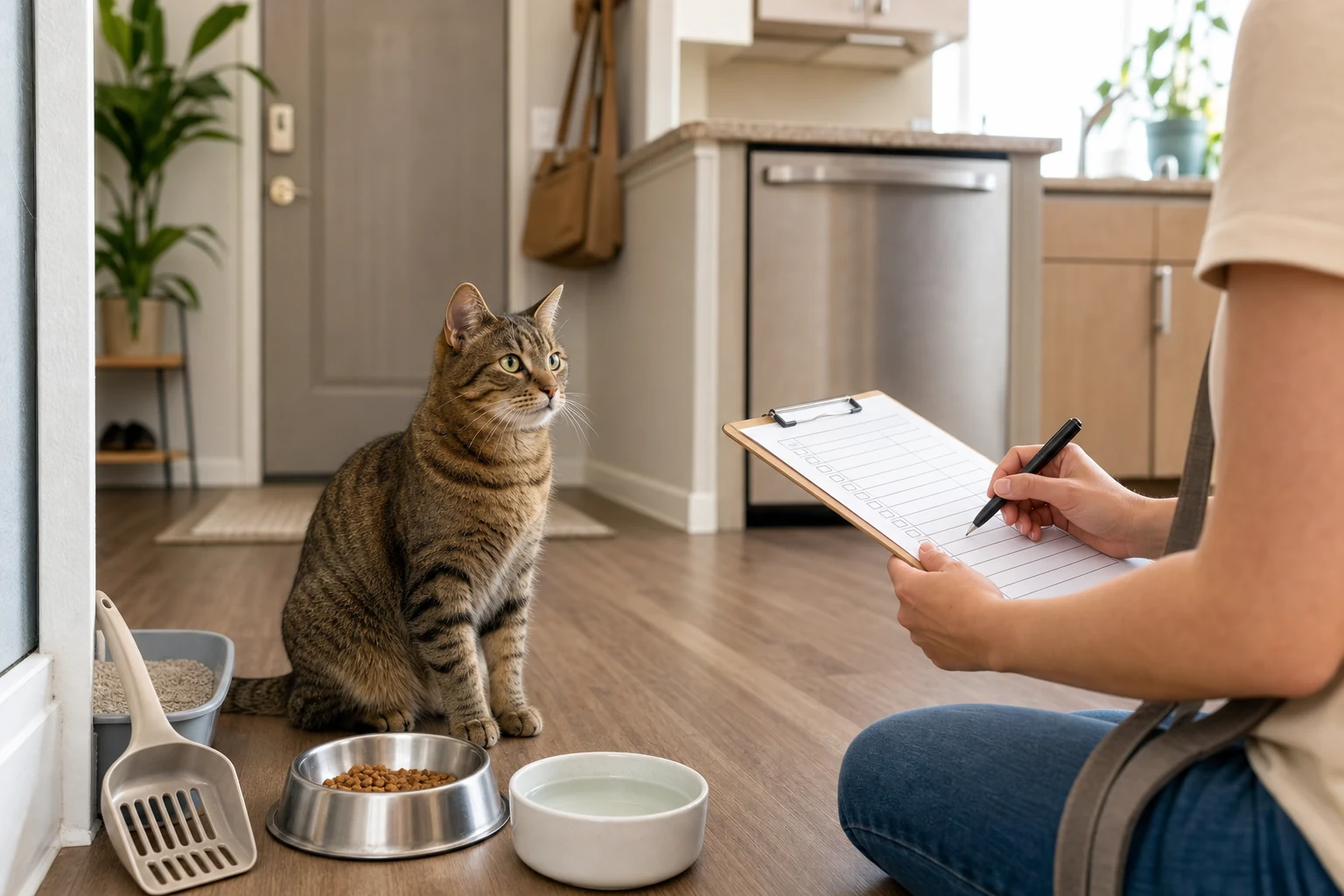
Choose a cat sitter by looking for cat-specific experience, calm handling, clear communication, reliable backup plans, and willingness to follow your written routine. A good sitter does more than refill bowls: they notice behavior changes, keep the litter area clean, send useful updates, and know when to call you or a veterinarian.
Cats often do best with care in their familiar home, but that only works when the person visiting understands both the routine and the individual cat. The goal is not to find someone who "likes cats" in a vague way. It is to find someone who can protect your cat's comfort, health, and safety while you are away.
Use this guide to screen sitters, decide how many visits your cat needs, and prepare a daily checklist that prevents missed meals, dirty litter boxes, medication confusion, and emergency guesswork.
Table of Contents
- What should you look for in a cat sitter?
- How many visits does your cat need?
- What questions should you ask before hiring a cat sitter?
- What instructions should you leave?
- What should a cat sitter do at each daily visit?
- What are red flags in a cat sitter?
- When is boarding or travel safer?
- Conclusion
- Frequently Asked Questions
- References
What should you look for in a cat sitter?
Look for a sitter who has cared for cats like yours, asks detailed questions, agrees to a meet-and-greet, and can explain what they would do if something changes. VCA's pet-sitter guidance recommends asking about experience, training, insurance or bonding, emergency clinic connections, professional membership, and whether the sitter is easy to reach while you are away 1.
Cat-specific experience matters because cats can hide pain, stress, blocked urination, appetite changes, and fear. A sitter who only checks whether food is gone may miss the bigger picture. During the first meeting, watch whether they let your cat approach at their own pace, avoid loud movements, and notice where the litter box, carrier, hiding spots, and exits are.
A strong cat sitter should be comfortable with:
- Following exact feeding instructions instead of guessing portions.
- Scooping litter and reporting urine, stool, or appetite changes.
- Sending photo or text updates at the interval you request.
- Finding your cat without dragging them from a hiding place.
- Handling keys, alarms, building access, and backup contacts reliably.
- Calling you, your backup person, or a veterinary clinic if a concern appears.
The best fit is not always the cheapest or closest person. For a nervous cat, an older cat, a kitten, a cat with medication, or a multi-cat household, choose someone whose experience matches the level of responsibility.
How many visits does your cat need?
Most healthy adult cats need at least one dependable visit per day, and many do better with two visits when they eat wet food, need medication, are social, are elderly, are very young, or have a history of urinary, appetite, or stress problems. Use your cat's routine, not a generic rule, to decide.
SnuggleSouls' guide to how long cats can be left alone can help you think through the baseline, but a sitter plan should be more specific than "one bowl of food and see you tomorrow." Fresh water, litter condition, appetite, behavior, home temperature, and safe access to the cat all matter.
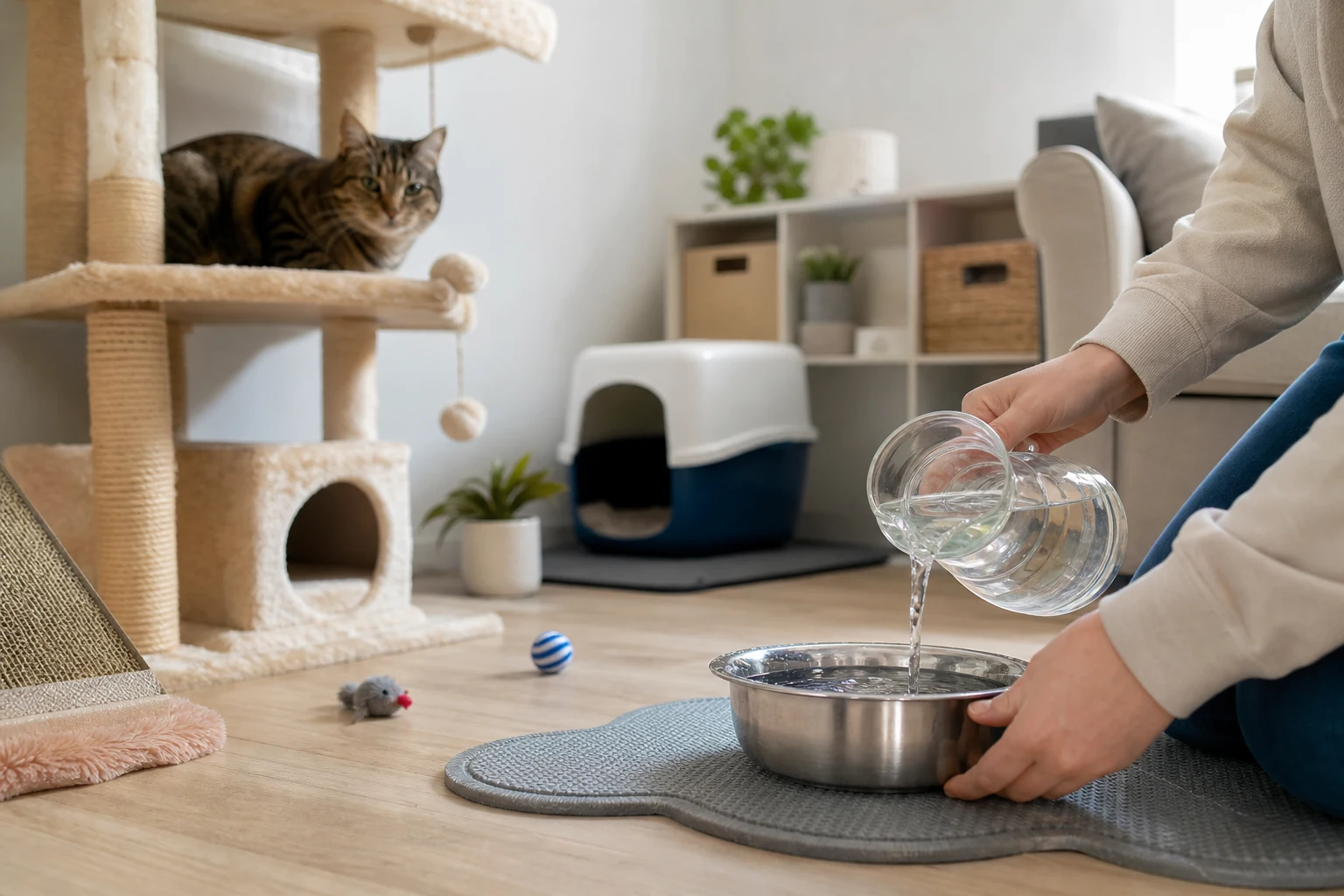
A good daily visit checks food, water, litter, behavior, safe hiding places, and the cat's comfort instead of only dropping food in a bowl.
| Cat situation | Sensible visit plan | Why it matters |
|---|---|---|
| Healthy adult cat eating dry food | At least daily | Confirms appetite, water, litter, safety, and behavior. |
| Cat eating wet food | One to two visits daily | Wet food timing, cleanup, and appetite tracking are easier with planned visits. |
| Kitten, senior cat, or social cat | Two visits or longer visits | Younger, older, and highly bonded cats often need closer monitoring and interaction. |
| Cat on medication | Schedule around the medication plan from your veterinarian | Missed or double doses can be risky, so instructions must be exact. |
| Cat with urinary, appetite, diabetes, seizure, heart, kidney, or other health history | Ask your veterinarian before travel | A sitter may need specific monitoring instructions and emergency thresholds. |
If your cat does not eat for 24 hours, strains in the litter box, seems weak, breathes with effort, repeatedly vomits, has severe diarrhea, collapses, has a seizure, shows sudden paralysis, or rapidly declines, the sitter should treat that as urgent and contact you and a veterinarian immediately. This article is educational, so ask your own veterinarian for instructions tailored to your cat before you travel.
What questions should you ask before hiring a cat sitter?
Ask questions that reveal how the sitter thinks, not only whether they are available. A careful sitter should welcome specifics because they make the job safer.
Start with these:
| Question | What a good answer sounds like | Watch out for |
|---|---|---|
| How much cat-sitting experience do you have? | Specific examples with shy cats, seniors, kittens, medication, or multi-cat homes. | "Cats are easy; they take care of themselves." |
| Will you do a meet-and-greet before the trip? | Yes, with time to review food, litter, keys, hiding spots, and emergency contacts. | Wants the key only, with no walkthrough. |
| Are you insured, bonded, licensed, or part of a professional organization? | Gives a clear answer and documentation when relevant. | Gets defensive or vague. |
| How do you handle a cat who hides? | Checks safe hiding places, avoids forcing contact, verifies food/litter use, and updates you. | Says they will pull the cat out to prove they saw them. |
| What updates will you send? | Photos, food and water notes, litter notes, behavior notes, and timing. | Only sends "all good" with no details. |
| What is your backup plan if you are sick or locked out? | Names a backup sitter, contact process, and escalation plan. | No backup plan. |
| What would make you call me or a vet? | Mentions not eating, breathing trouble, urinary straining, collapse, repeated vomiting, injury, poisoning, or sudden severe change. | Says they would wait until the next scheduled visit. |
The AVMA recommends making sure someone is clearly in charge of an animal's care while you are away and has up-to-date medical and vaccination information, relevant care instructions, and authority details for veterinary care 2. That is especially important if you will be hard to reach.
What instructions should you leave?
Leave one printed or shared checklist that covers your cat, your home, and what counts as an emergency. AAHA recommends a detailed pet profile with essential instructions and emergency planning for sitters 3. Do not rely on a long text thread that the sitter has to scroll through at the door.
Your cat-sitter sheet should include:
- Your travel dates, time zone, and best contact method.
- Your cat's name, age, photo, microchip number if available, and normal personality.
- Feeding amounts, food location, treat limits, and timing. If you are changing routines, review a cat feeding schedule by age before the trip instead of asking the sitter to improvise.
- Water bowl or fountain instructions.
- Litter box locations, scooping routine, trash instructions, and what unusual urine or stool looks like for your cat.
- Medication name, dose, timing, storage, and what to do if a dose is missed, written exactly as your veterinarian instructed.
- Favorite hiding places and places the sitter should check.
- Carrier location and how to get your cat into a carrier safely in an emergency.
- Your veterinarian, nearest emergency hospital, and a written payment/authorization plan if you cannot be reached.
- A local backup contact who can enter the home.
- Home details: keys, alarm code, parking, building access, thermostat limits, plants or rooms to avoid, and utility shutoffs if relevant.
Before you leave, finish basic cat-proofing your home: put away string, ribbon, hair ties, toxic foods, fragile objects, unsafe plants, open trash, and any small items your cat might swallow. The ASPCA notes that cats who stop eating or show vomiting, diarrhea, lethargy, or anorexia should be assessed by a veterinarian if signs continue, and its general care guidance also warns about unsafe foods such as onion or garlic in baby food 4. A sitter cannot protect your cat from hazards they do not know about.
What should a cat sitter do at each daily visit?
At each visit, the sitter should complete the same core routine: confirm the cat is seen or safely accounted for, refresh food and water, clean the litter area, check the home, provide calm interaction if the cat wants it, and send a useful update. A cat clinic checklist for sitters includes feeding routine, treats, exercise or play, medications, and emergency contact details 5.
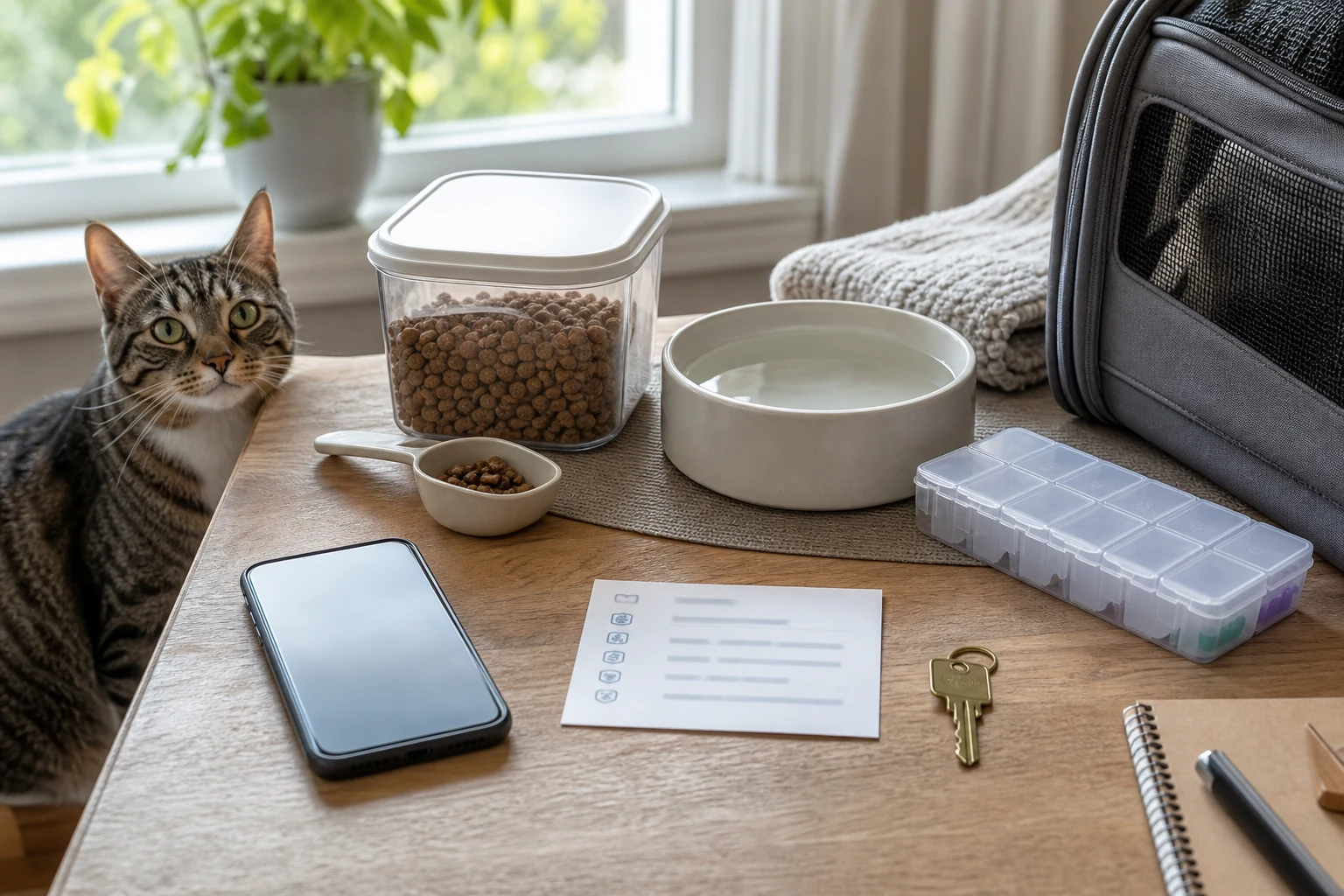
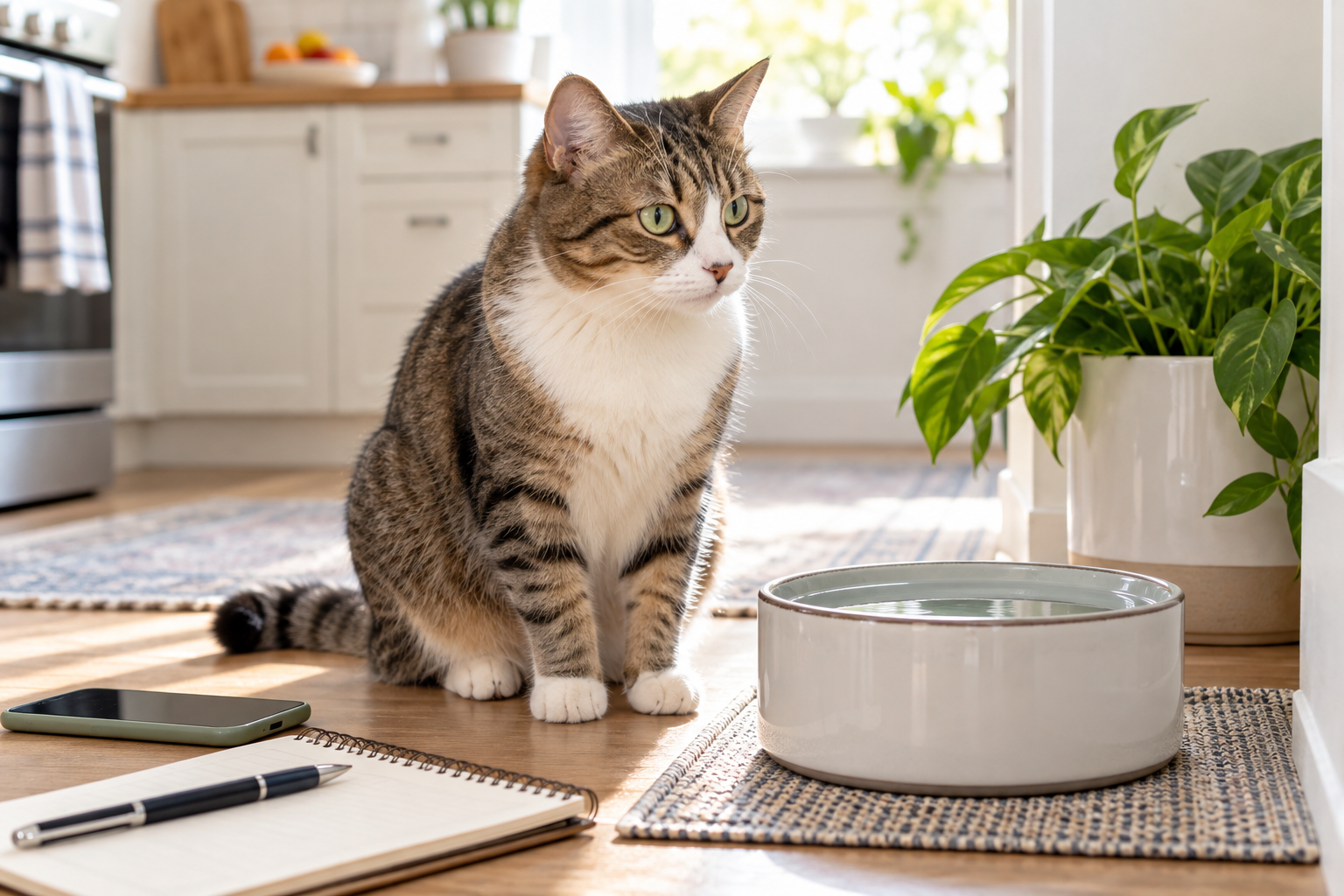
Set up a sitter station with measured food, fresh water instructions, emergency contacts, keys, and any special care notes.
Here is a practical visit checklist:
| Visit task | What the sitter should check | What they should report |
|---|---|---|
| Find or account for the cat | Seen directly, heard, or confirmed through safe hiding spot and normal signs. | Photo when possible; if hiding, where and whether food/litter use looks normal. |
| Food | Correct food, amount, bowl cleanup, appetite since last visit. | Ate all, some, none, vomited, or food untouched. |
| Water | Fresh water, clean bowl or working fountain. | Any unusual increase or decrease if obvious. |
| Litter | Scoop waste, note urine clumps and stool condition. | No urine, repeated trips, diarrhea, blood, or major change. |
| Environment | Temperature, windows, doors, hazards, spills, broken items. | Anything changed or unsafe. |
| Enrichment | Play, brushing, or quiet companionship if the cat wants it. | Mood: relaxed, hiding, vocal, playful, withdrawn, or unusually clingy. |
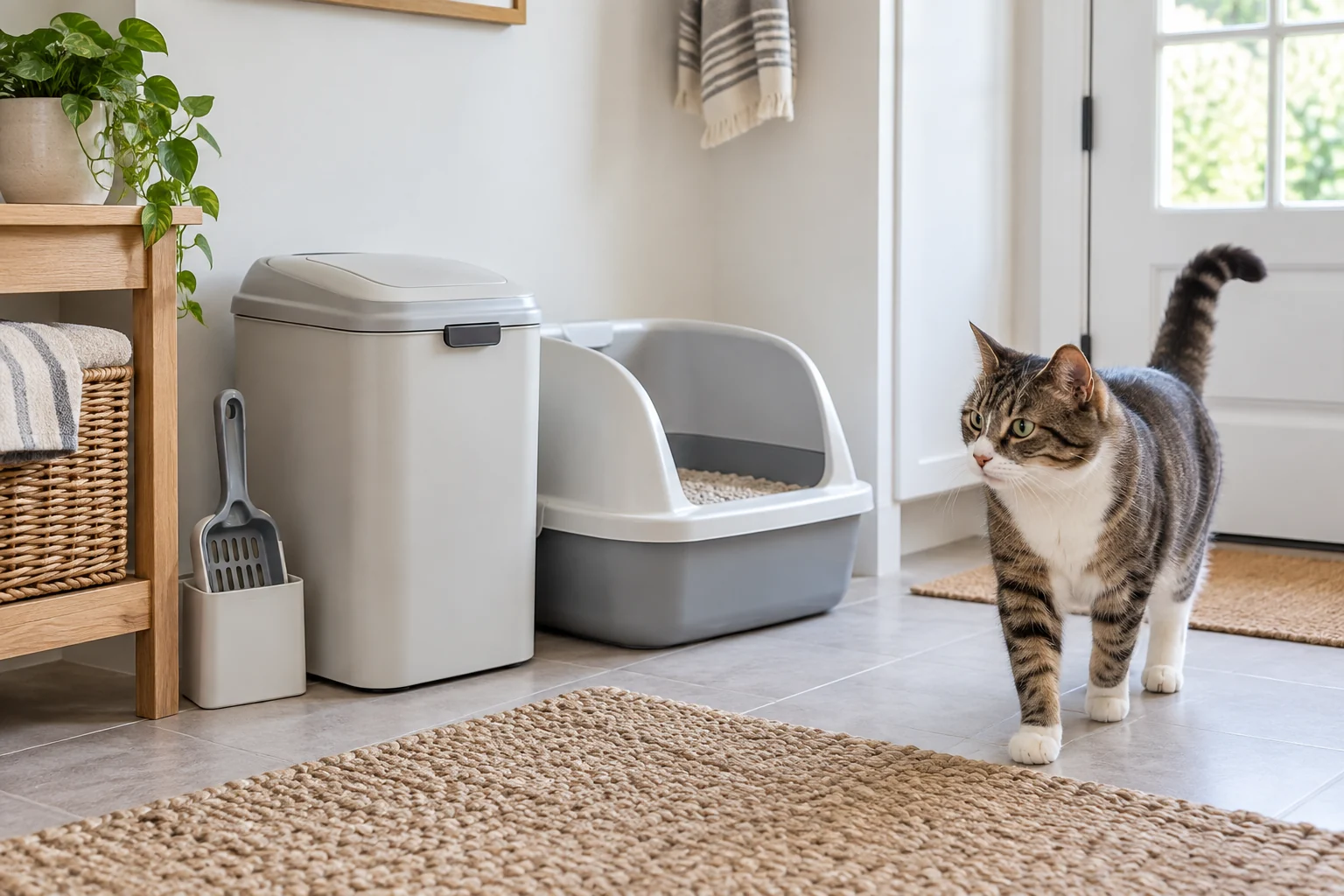
Use your existing setup to make the job easier. A clear best cat litter box setup and a realistic plan for how often to clean the litter box make odor, avoidance, and missed warning signs less likely. If your cat likes interaction, ask for a short version of their normal daily interactive play routine rather than rough chase games or forced cuddling.
Photo updates should be specific. "Milo ate half his wet food, water refreshed, two urine clumps and normal stool, played with wand toy for five minutes, hiding under bed but blinked and relaxed" is much more useful than "Milo is fine."
What are red flags in a cat sitter?
Red flags include dismissing written instructions, refusing a meet-and-greet, giving vague emergency answers, arriving late without notice, not sending updates, forcing interaction with a fearful cat, or acting annoyed by litter, medication, or detailed feeding notes.
Be cautious if a sitter:
- Says cats only need food every few days.
- Does not ask where the carrier is.
- Cannot explain what they would do if your cat does not eat.
- Treats hiding as disobedience instead of stress or caution.
- Will not provide references, reviews, insurance details, or business information when appropriate.
- Plans to bring another person, child, or animal into your home without permission.
- Uses automatic feeders or water fountains as a substitute for visiting.
- Gives medical advice that conflicts with your veterinarian's instructions.
Trust your instincts during the meet-and-greet. A sitter who is calm, observant, and organized usually makes your cat's routine easier. A sitter who rushes, jokes about skipping details, or seems irritated by questions is not the right person for a vulnerable animal in an empty home.
When is boarding or travel safer?
In-home sitting is often the least disruptive option for cats, but it is not always the safest. Boarding, veterinary boarding, or delaying travel may be better if your cat needs intensive monitoring, complex medication, injections the sitter is not trained to give, or rapid access to veterinary care.
Consider another plan if:
- Your cat recently had surgery or a serious diagnosis.
- Your cat has unstable diabetes, urinary blockage history, seizures, heart disease, kidney disease, or repeated vomiting.
- Your cat is not eating normally before the trip.
- You cannot find a sitter who can visit often enough.
- Your home access is unreliable or unsafe.
- Your cat is likely to escape when the door opens.
For some trips, your cat may need to come with you or stay in a professionally supervised setting. If travel is the safer choice, prepare with a traveling with a cat checklist and ask your veterinarian how to reduce stress without using unapproved sedatives or supplements.
Conclusion:
The right cat sitter is the person who can follow your cat's normal routine, notice small changes, communicate clearly, and act quickly if something is wrong. Before you leave, choose someone with cat-specific experience, do a meet-and-greet, write one clear checklist, prepare the home, and agree on update and emergency rules.
That preparation gives your cat the best chance to stay comfortable in their familiar space. It also gives the sitter a clear job: protect the cat in front of them, not guess what you would have wanted later.
Frequently Asked Questions
Should I hire a professional cat sitter or ask a friend?
A careful friend can work for a low-risk adult cat, but a professional sitter is often better when your cat needs medication, multiple visits, detailed updates, or backup coverage. Whoever you choose should do a walkthrough, follow written instructions, and know when to call you or a veterinarian.
Is one visit per day enough for a cat?
One visit per day may be enough for some healthy adult cats on a simple routine, but many cats need more. Wet-food diets, kittens, seniors, medication, medical history, loneliness, or litter concerns can make twice-daily visits or longer visits safer.
What should I leave out for a cat sitter?
Leave measured food, bowls, litter supplies, trash bags, cleaning supplies, medications in their original or clearly labeled containers, carrier, emergency contacts, keys, and a printed checklist. Keep unsafe foods, string, ribbon, toxic plants, and breakable items out of reach.
Should the sitter send photos every visit?
Yes, photos are useful when your cat is comfortable being seen. If your cat hides, ask for a note about where they hid, whether food and litter signs were normal, and whether the sitter noticed any change in behavior.
What if my cat hides from the sitter?
Tell the sitter your cat's normal hiding places and how to confirm safety without forcing contact. A sitter can quietly check the room, look for normal food and litter use, and send an update; pulling a scared cat from a hiding place can make the next visit harder.
Can automatic feeders replace a cat sitter?
No. Feeders and fountains can support a sitter plan, but they cannot notice illness, blocked urination, vomiting, water spills, heat problems, escape risks, or a cat who has stopped eating.
References
[1] VCA Animal Hospitals. (2026). Pet Sitter Options. https://vcahospitals.com/know-your-pet/pet-sitter-options
[2] American Veterinary Medical Association. (2026). Ensuring Your Pet Is Protected When You're Away. https://www.avma.org/resources-tools/pet-owners/emergencycare/whos-charge-your-animals-care-while-youre-away
[3] AAHA. (2025). Preparing for the Unexpected: Essential Pet Sitter Instructions. https://www.aaha.org/resources/preparing-for-the-unexpected-essential-pet-sitter-instructions/
[4] ASPCA. (2026). General Cat Care. https://www.aspca.org/pet-care/cat-care/general-cat-care
[5] Sunnyvale Cat Clinic. (2024). Guide to Using a Pet Sitter: Checklist and Tips. https://sunnyvalecatclinic.com/news/pet-sitter-checklist
 Why Does My Cat Flinch When Touched While Sleeping? Startle, Trust, and Pain Clues">
 Cat Scratching Baseboards: Trim Guards and Route Fixes">
 EN
EN DE
DE ES
ES PT
PT