
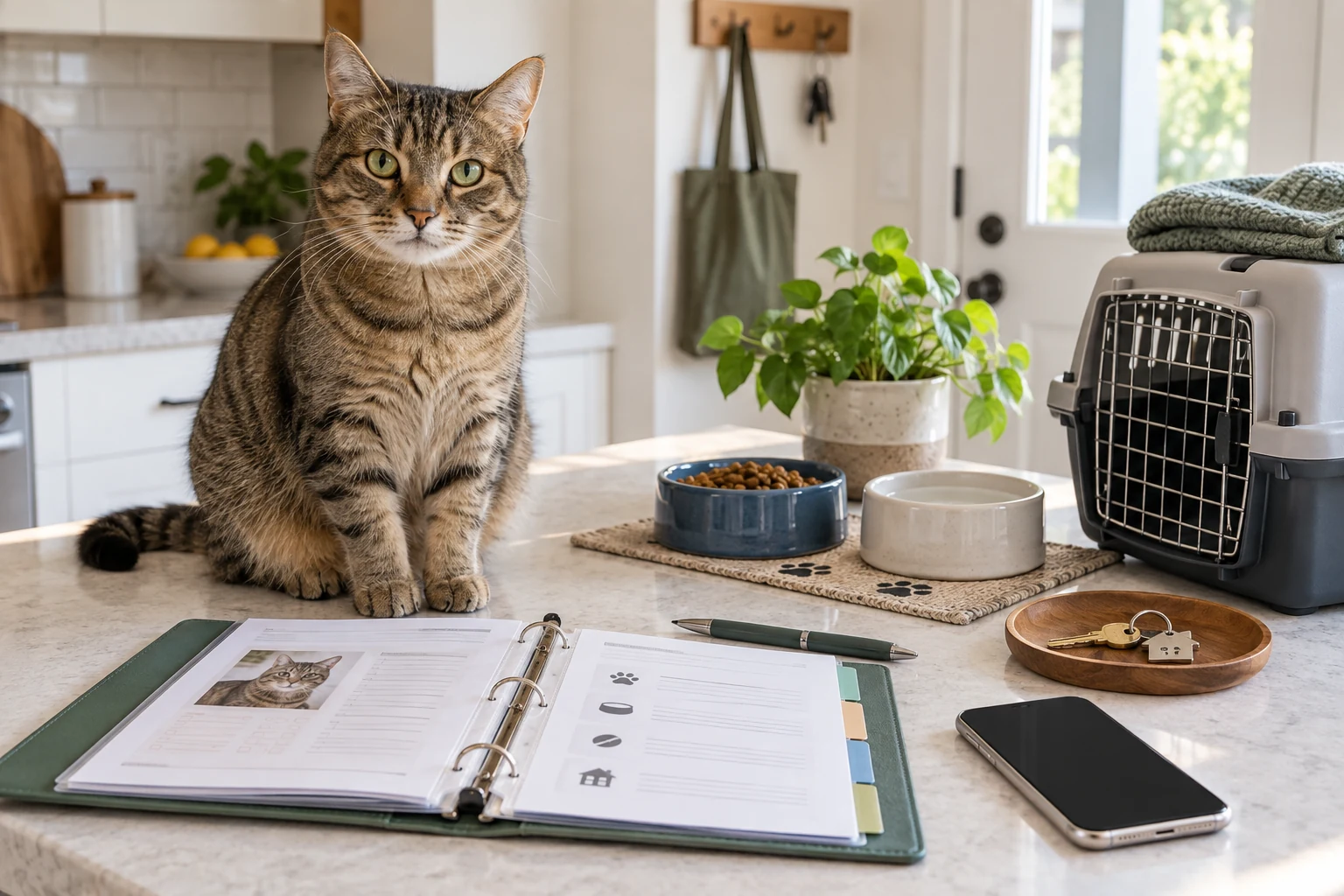
A backup cat sitter plan is the written plan for what happens if your main sitter gets sick, cannot enter your home, misses a visit window, or needs emergency help while you are away. The safest version names a real backup person, explains home access, lists vet and emergency contacts, and tells the sitter exactly when to escalate instead of guessing.
Most cat-sitting plans cover feeding and litter. The backup plan covers the uncomfortable question: what if the plan breaks? AAHA recommends clear sitter instructions, pet details, routine information, supply locations, home access details, and emergency contact information before you leave a pet with someone else 1. For cats, that preparation matters because a missed meal, locked door, failed feeder, or delayed urinary concern can become serious faster than a vague "all good" text suggests.
Use this guide as a companion to your main cat sitter instructions. The goal is not to make your sitter anxious. It is to make the next step obvious when your usual plan runs into real life.
Índice
- What should a backup cat sitter plan include?
- Who should be your backup cat sitter?
- How should you handle keys and home access?
- What emergency contacts and vet details should be ready?
- When do you need last-minute coverage?
- How do you make the backup plan easy to use?
- How do you review and improve the plan afterward?
- Conclusion: Keep backup care simple and usable
- Preguntas frecuentes
- Referencias
What should a backup cat sitter plan include?
A backup cat sitter plan should include one primary sitter, one backup sitter, one local emergency contact, one vet or emergency clinic plan, one tested home-access method, and short instructions for food, water, litter, medication, hiding spots, and red flags. Keep it simple enough that someone can use it during a stressful moment.
Start with this core list:
| Plan item | What to write down | Por qué es importante |
|---|---|---|
| Primary sitter | Name, phone, visit dates, expected visit window | Confirms who owns the original plan |
| Backup sitter | Name, phone, availability limits, payment agreement | Prevents a scramble if the first person cancels |
| Local helper | Neighbor, friend, family member, or building contact | Gives the sitter someone nearby for keys, entry, or urgent supplies |
| Vet plan | Primary vet, nearest emergency clinic, authorization limits | Helps the sitter act fast if you are unreachable |
| Home access | Key location, lockbox code, alarm steps, parking, building entry | Solves the most common trip-breaking problem |
| Cat baseline | Appetite, litter output, hiding spots, medication, medical history | Helps a backup person notice what is not normal |
| Escalation rules | What requires a text, call, video, vet call, or emergency visit | Removes guesswork when timing matters |
AAHA's sitter guidance specifically calls out daily routine, meal amounts, medication timing, litter box scooping frequency, supply locations, home access, and emergency contacts 1. Do not bury those details in a long message thread. Put them in one printable or shareable document.
If you already have a sitter sheet, add a short section called "If the sitter cannot complete a visit." That section should say who gets called first, where the backup key is, and what happens if no one responds within a set time.
Who should be your backup cat sitter?
Your backup cat sitter should be someone who has agreed in advance, can enter your home legally and safely, understands your cat's basic needs, and is willing to contact you or a vet if something looks wrong. A backup is not just the first person who replies to a panicked text.
Good backup options include:
- A second professional sitter you have already screened.
- A trusted neighbor who can handle access, food, water, and litter for one visit.
- A nearby friend or family member who has met your cat.
- Your primary sitter's documented backup, if you use a professional service.
- A boarding or vet-clinic backup for cats who need medical supervision.
Cats Protection advises researching sitters, checking references, arranging a meet-up before travel, and having a backup sitter in case an unexpected cancellation happens 2. If your cat needs medication, injections, fluids, prescription food, or careful appetite monitoring, the backup person should be capable of that exact care or know when to hand off to someone who is.
Use the same judgment you would use when deciding how to choose a cat sitter. A lovely friend may be perfect for a key drop and one meal, but not for a diabetic cat, a senior cat with mobility issues, or a cat who hides so thoroughly that the sitter must interpret indirect signs.
Before your trip, send the backup person three things:
- The date range when they might be needed.
- The minimum task list they may have to complete.
- The maximum decision they are allowed to make without you.
If the person cannot commit, thank them and choose someone else. A backup plan that depends on "maybe" is still a gap.
How should you handle keys and home access?
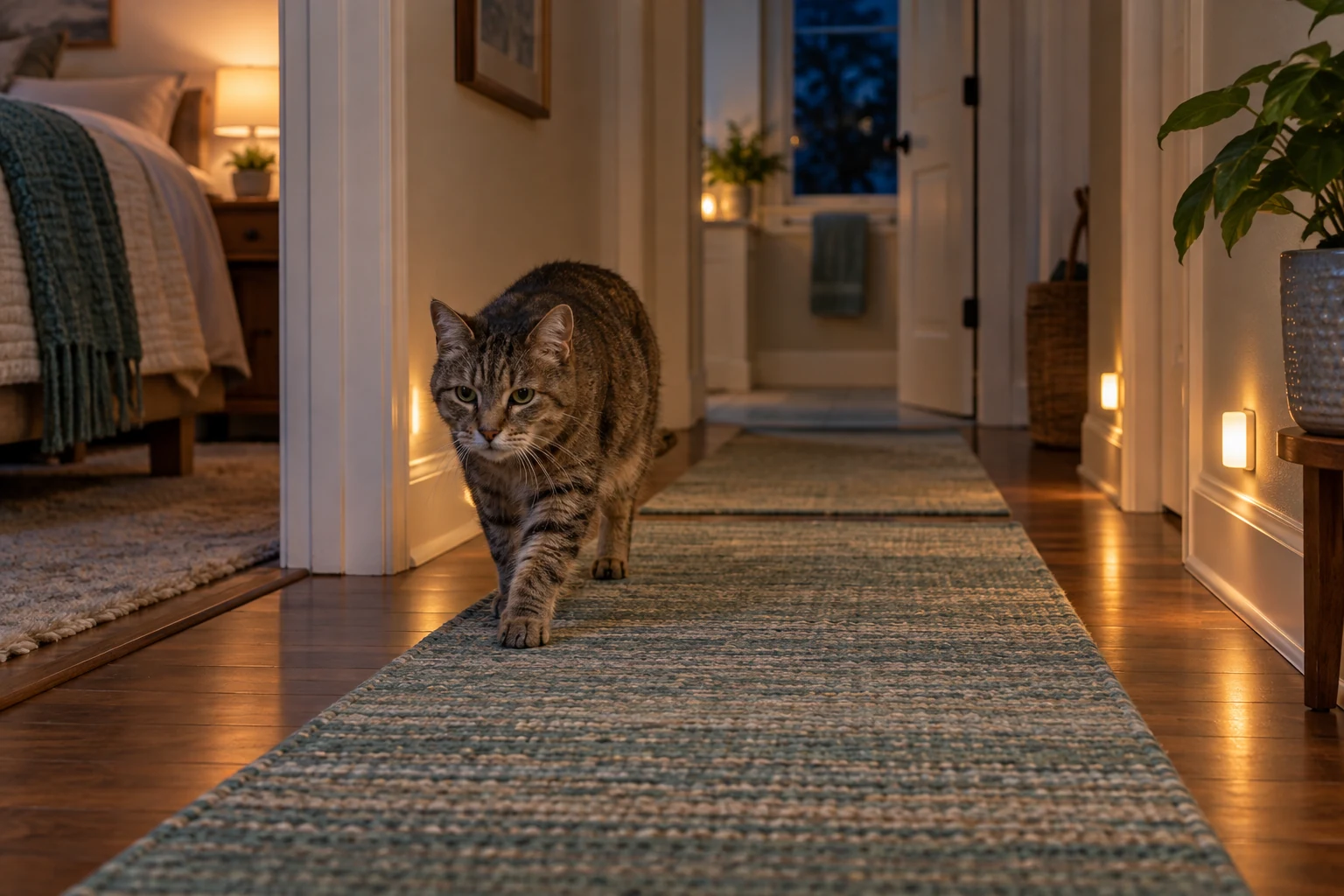
Home access should have two tested routes: the primary sitter's normal key or code, plus a backup method that does not depend on the same person, phone, or battery. Test both before you leave.
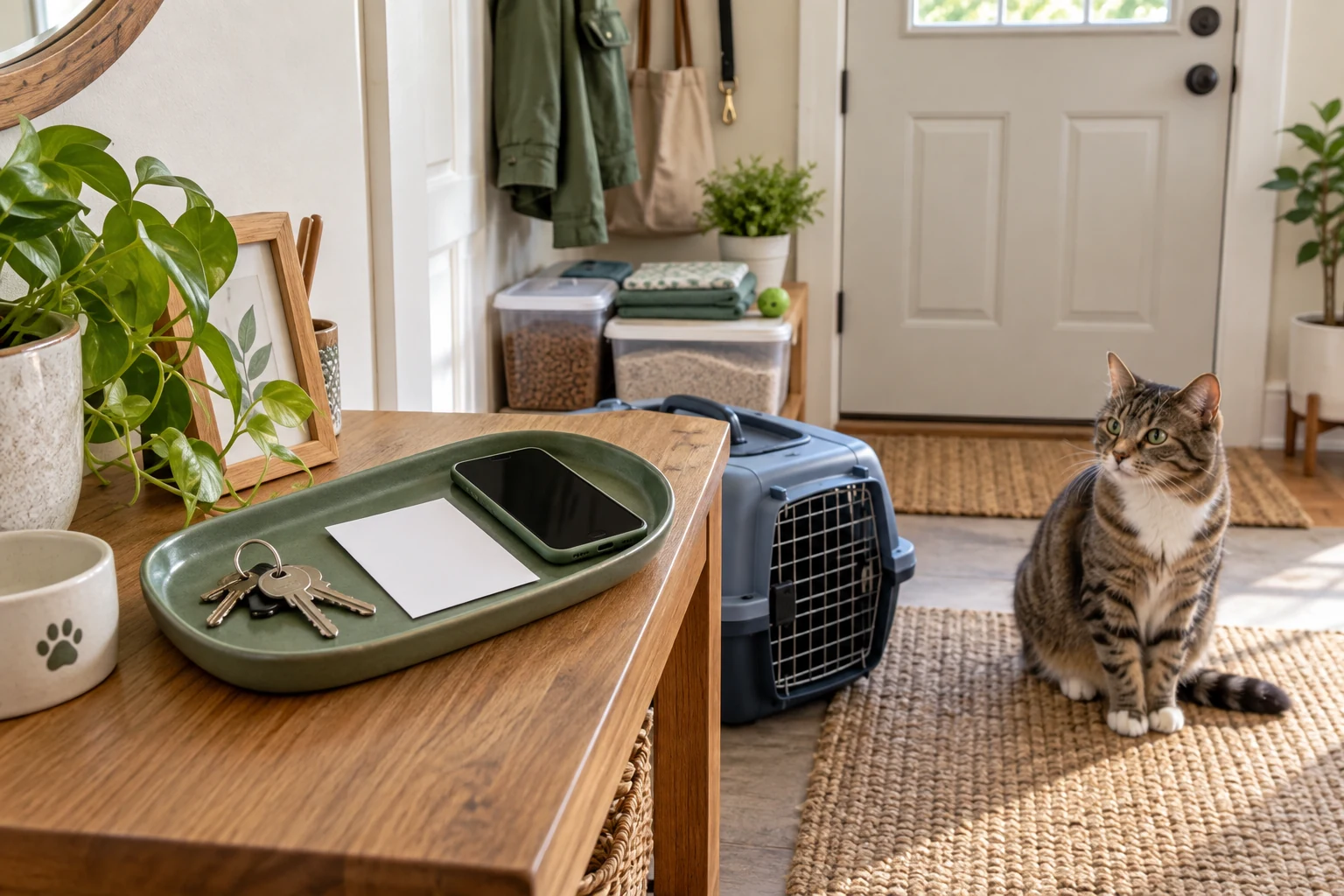
A key handoff plan should include a tested backup access route, not just one key with one person.
Write the access plan in plain steps:
- Primary sitter uses the main key, lockbox, building code, or concierge process.
- If that fails, primary sitter calls the named local helper.
- If the local helper is unreachable, backup sitter uses the second approved access method.
- If no one can enter and the cat may miss essential care, the sitter calls you and follows your emergency property-access instructions.
Avoid single points of failure. A smart lock can fail. A phone can die. A key can be copied incorrectly. A lockbox can be hard to find in the dark. A building front desk may require an ID, written permission, or a guest list. If you rent, live in a gated building, or use a doorman or concierge, confirm the rules before travel.
Keep safety in mind. Do not hide a key in an obvious outdoor spot. Do not text a full alarm code to a large group. Do not ask a sitter to force a door or climb through a window. If access is complicated, leave a sealed spare key with a trusted local contact or use a proper lockbox in a discreet, agreed location.
Also prepare the house itself. Close trap-risk rooms, secure windows and screens, and remove hazards before leaving. If you have not done a recent room-by-room check, review una casa a prueba de gatos before depending on a backup person to spot every problem quickly.
What emergency contacts and vet details should be ready?
Your emergency contacts should tell the sitter who to call, who can make decisions, which vet or emergency clinic to use, where the carrier is, and how payment or authorization will work if you are unreachable. Do not make the sitter invent this under pressure.
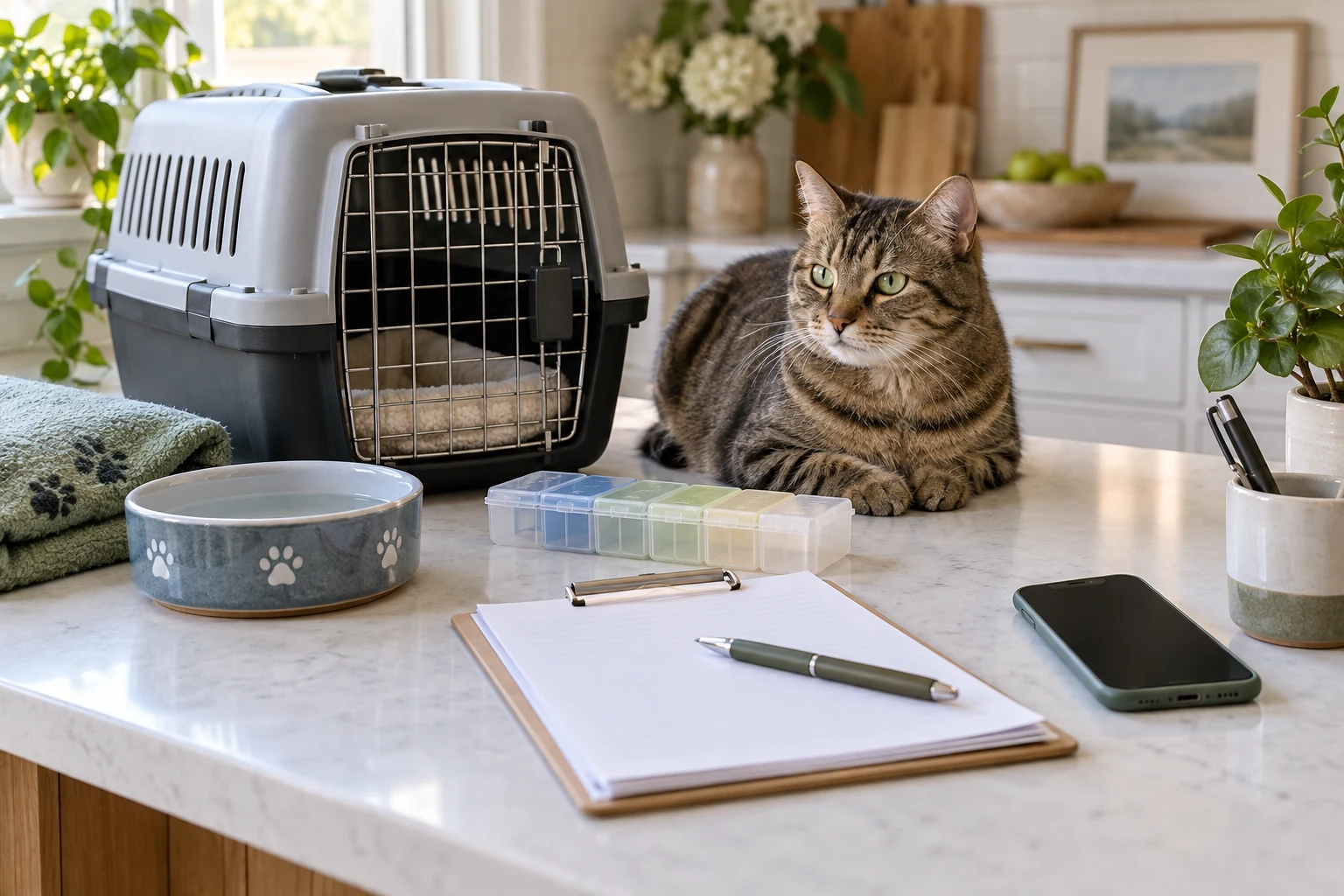
Emergency contacts are most useful when the sitter knows who can make decisions, where the carrier is, and which clinic to call.
ASPCA recommends giving sitters your contact information, trip itinerary, emergency contacts who can make medical decisions, pet health details, veterinarian and emergency clinic information, medication instructions, and a clear emergency plan 3. AAHA similarly suggests a visible emergency contact card with the primary veterinarian, closest 24-hour clinic, poison control contact, and a nearby person who can step in 1.
For cats, include these details:
- Your phone number, travel dates, time zone, and times you may be unreachable.
- A second owner or household decision-maker, if there is one.
- A local emergency contact who knows your cat or can enter your home.
- Primary veterinarian name, phone, address, and patient account name.
- Nearest 24-hour emergency clinic and driving notes.
- Carrier location and how to load your cat safely.
- Medication list, medical conditions, allergies, diet restrictions, and microchip number.
- Written permission for the sitter to seek veterinary care if you cannot be reached.
- A spending or decision threshold, if your vet or sitter requires one.
AAHA's senior-care resources go further for older pets: if the caregiver is away, a sitter letter may need the owner's phone number and time zone, sitter authorization, payment plan, and a designated representative authorized to make healthcare decisions 5. That level of clarity is especially helpful for senior cats, cats on medication, and cats with chronic illness.
Add behavior context too. If your cat hides from visitors, list normal hiding spots and what counts as abnormal. A sitter who knows por qué se esconden los gatos can avoid forcing contact while still checking food, water, litter, and safety clues.
When do you need last-minute coverage?
You need last-minute coverage when a planned visit cannot happen on time, your cat has special care needs, your home access fails, your trip is delayed, or your cat's current signs suggest waiting is unsafe. The backup plan should name which situations can wait a few hours and which require immediate action.
Cats Protection says a cat sitter may need to visit at least twice a day for many holiday situations, and very young, old, or medically vulnerable cats may need more frequent visits 2. SnuggleSouls' guide to leaving cats alone can help you think through absence length, but your cat's health history should drive the final decision.
Use this escalation table:
| Situación | Backup action | Por qué es importante |
|---|---|---|
| Primary sitter is sick or delayed before the first visit | Backup sitter or local helper completes the first visit | The first visit confirms access, food, water, and litter |
| Key, lockbox, code, or building entry fails | Local helper uses the second access method | A locked-out sitter cannot verify your cat's safety |
| Flight is canceled or return is delayed | Extend sitter visits before supplies run low | Cats still need fresh water, litter care, and observation |
| Automatic feeder, fountain, HVAC, or litter robot fails | Human check-in replaces the device until you return | Backup devices do not replace a person when they malfunction |
| Cat is not seen and food/litter signs are unclear | Sitter checks safe hiding spots without chasing | Hiding may be stress-related, but missing basic signs needs follow-up |
| Cat skips meals, vomits repeatedly, strains to urinate, collapses, or has breathing trouble | Call you, then vet or emergency clinic according to the plan | These are not wait-and-see sitter notes |
ASPCA's emergency-care guidance encourages pet owners to plan emergency care before they need it and keep emergency clinic information easy to access 4. For cats, be especially cautious with no urine, straining in the litter box, repeated vomiting, breathing difficulty, collapse, seizures, suspected poisoning, trauma, severe pain, sudden weakness, or not eating.
If your cat is diabetic, has kidney disease, has a urinary blockage history, takes timed medication, or is elderly and fragile, ask your veterinarian before travel what exact signs should trigger a call. Put that instruction in the backup plan.
How do you make the backup plan easy to use?
Make the backup plan short, visible, and redundant. The best plan is not the most detailed one; it is the one a tired sitter can use at 9 p.m. when a lockbox sticks or your return flight is delayed.
Use three layers:
- A one-page printed sheet at home.
- A digital copy shared with the primary sitter, backup sitter, and local emergency contact.
- A short phone note with only urgent numbers and access steps.
Keep the printed sheet near the supplies, not buried in a drawer. Put food, litter, medications, cleaning supplies, carrier, and trash instructions in predictable places. Labeling can help, but avoid leaving sensitive personal information in plain view if other workers or guests can access your home.
Your update expectations should be simple:
- Photo or message when the sitter enters.
- Food, water, and litter note before the sitter leaves.
- Photo of anything unusual.
- Phone call for urgent health, access, or safety issues.
- Message to the backup person if the next visit is at risk.
If your sitter already uses a message format, adapt the SnuggleSouls cat sitter update template so the backup person can read the last update quickly. Consistent updates make it much easier to notice whether a missed meal, unused litter box, or hidden cat is new or part of the normal pattern.
Do not make the backup sitter search through five apps. Put the plan in one shared document, one printed sheet, and one saved phone note. If something changes during the trip, update everyone who may need to act.
How do you review and improve the plan afterward?
Review the plan after every trip where something almost failed: a delayed visit, confusing instruction, low supply, access problem, medication uncertainty, missed update, or cat behavior change. The point is not blame. The point is to make the next trip safer.
Use a quick debrief:
| Question | What to improve |
|---|---|
| Did the sitter enter easily every time? | Key copies, lockbox location, building permissions, alarm notes |
| Did the sitter know what to do when plans changed? | Backup call order, visit windows, emergency thresholds |
| Did supplies run low or become hard to find? | Refill amounts, storage labels, backup food or litter |
| Were health notes clear enough? | Baseline appetite, litter output, medication steps, vet triggers |
| Did your cat seem more stressed than expected? | Visit frequency, hiding-spot checks, quiet-room setup, sitter fit |
| Did updates help you make decisions? | Template prompts, photo requirements, urgent call rules |
Los SnuggleSouls cat sitter debrief checklist can help you compare food, water, litter, behavior, and follow-up questions after you get home. Add one or two fixes while the trip is still fresh. Waiting until the next vacation usually means the same weak spot survives.
For a smooth trip, your backup plan may never be used. That is fine. The real value is that everyone knows what to do if the first plan breaks.
Conclusion: Keep backup care simple and usable
A backup cat sitter plan protects your cat from the ordinary failures that happen around travel: sickness, missed visits, locked doors, flight delays, unclear medical authority, and supplies nobody can find. Write down the backup sitter, access method, emergency contacts, vet plan, cat baseline, and escalation rules before you leave.
Keep the plan short enough to use quickly and specific enough to remove guessing. Your cat does not need a complicated binder. They need reliable food, water, litter care, safety checks, and a prepared human who knows what to do when the original plan changes.
Preguntas frecuentes
Do I really need a backup cat sitter for a short trip?
Yes, if your cat would be unsafe after a missed visit, if home access is complicated, or if your trip could be delayed. Even for a short trip, a backup local contact can solve key, entry, feeder, water, litter, or urgent supply problems.
Should the backup sitter meet my cat before the trip?
Ideally, yes. A short meet-and-greet helps the person understand your home, your cat's hiding spots, and the supply setup. If that is not possible, share photos, access steps, and a brief video walkthrough before you leave.
Is a lockbox enough for backup access?
A lockbox can help, but it should not be the only plan. Test it before travel, confirm the code, make sure the sitter can find it, and have a second approved contact or key route in case the lockbox fails or building rules change.
What should I authorize a sitter to do in an emergency?
Write down whether the sitter may contact your vet, go to an emergency clinic, approve basic stabilization, and spend up to a specific amount if you are unreachable. For cats with medical conditions, ask your veterinarian what wording they prefer.
What if my cat hides from the backup sitter?
Tell the sitter not to chase or drag your cat out. They should check safe hiding spots calmly, verify food, water, litter, vomiting, damage, and access to resources, then update you. If hiding is paired with no eating, no urine, repeated vomiting, weakness, or breathing trouble, follow your vet escalation plan.
Referencias
[1] AAHA. (2025). Preparing for the Unexpected: Essential Pet Sitter Instructions. AAHA resource
[2] Cats Protection. (2026). Going On Holiday Without Your Cat. Cats Protection guide
[3] ASPCA. (2017). Pet Sitter Safety: What to Know Before You Go. ASPCA article
[4] ASPCA. (2026). Emergency Care for Your Pet. ASPCA emergency care guide
[5] AAHA. (2023). Senior Care Kits. AAHA senior care resource
 EN
EN DE
DE ES
ES PT
PT