
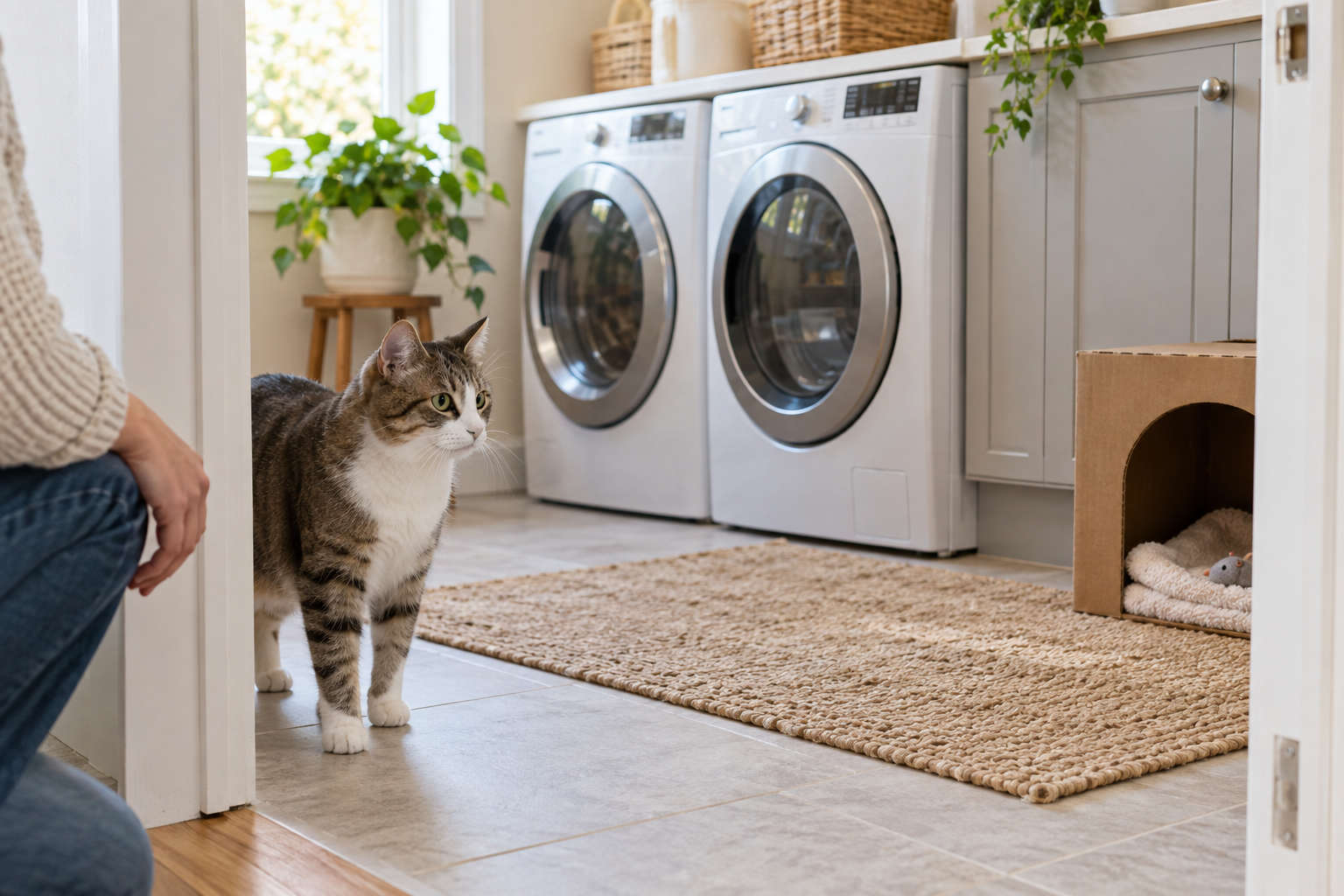
Let a new cat explore a laundry room only after the machines, chemicals, doors, and hiding gaps are controlled. The safest first visit is short, supervised, quiet, and easy to leave.
Laundry rooms can look ordinary to people and intense to cats. They may contain rumbling appliances, detergent pods, dryer sheets, warm clothes, baskets, swinging doors, floor gaps, and cabinets that smell interesting. For a newly adopted cat still mapping the home, that mix can invite curiosity and panic at the same time.
This guide is the laundry-room follow-up to SnuggleSouls' article on how to help a new cat explore a basement safely. A laundry room deserves its own plan because washer and dryer doors create a specific safety risk, and because noise and vibration can change a cautious cat's confidence quickly.
Índice
- What should be true before laundry-room access?
- What laundry-room hazards should you fix first?
- How do you check washer and dryer doors without scaring your cat?
- How can you help a new cat handle laundry noise?
- What should the first supervised laundry-room visit look like?
- What confidence cues mean your cat is ready for more laundry-room time?
- When should laundry-room behavior make you pause or call a vet?
- Conclusion: Keep the laundry room boring, checked, and easy to leave
- Preguntas frecuentes
- Referencias
What should be true before laundry-room access?
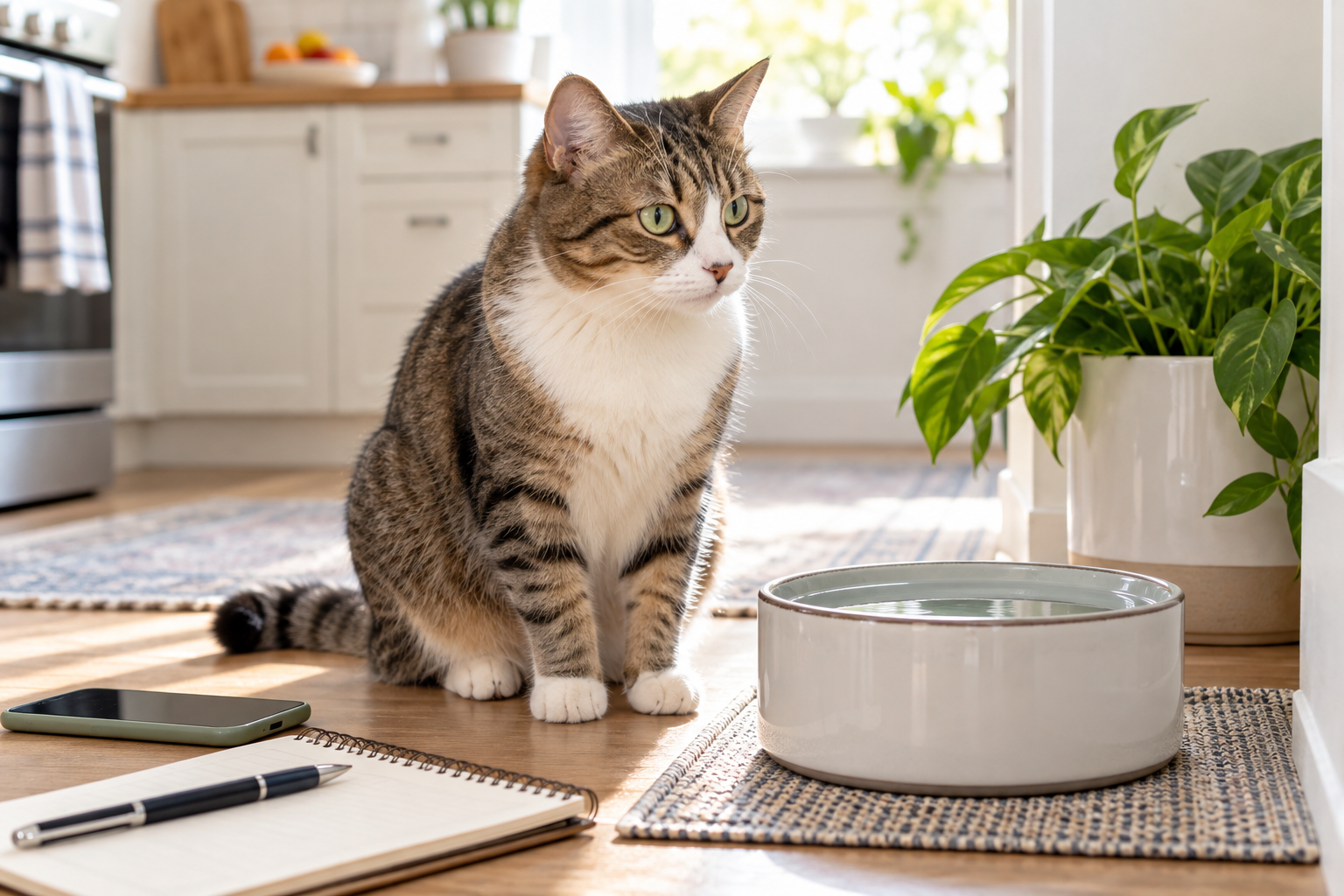
Laundry-room access should wait until your new cat has a stable base routine. That means your cat is eating, drinking or taking wet food reliably, using the litter box, resting in a familiar room, and returning to normal after small new-home experiences.
Cats cope better when they have safe places, predictable resources, and some control over whether they approach or retreat. The AAFP and ISFM environmental needs guidelines describe safe resting places, separated resources, and positive human interaction as core parts of a healthy feline environment.1 A laundry-room plan should protect those needs instead of adding a loud, narrow room before your cat is ready.
Use this readiness check:
| Readiness signal | Ready enough to try | Wait if you see this |
|---|---|---|
| Daily routine | Eats, drinks, sleeps, and uses the litter box predictably | Skips meals, hides from food, or has litter box changes |
| Starter area | Returns to a familiar room or bed after exploring | Cannot settle after new spaces |
| Doorway confidence | Sniffs and watches from the hall without bolting | Dashes through doors or freezes at thresholds |
| Noise recovery | Startles, then recovers within minutes | Hides for hours after routine household sounds |
| Handling and recall | Comes for a familiar voice, meal, or toy | Panics when approached or moved |
If the laundry room sits near stairs, first make sure your cat can use that route calmly with the guide to help a new cat explore stairs safely. If your cat is still learning the home layout, work through how to let a new cat explore the house room by room before adding a loud utility room.
Cornell Feline Health Center advises setting new cats up with food, water, litter, scratching, sleeping areas, and a gradual adjustment process in the new home.2 The laundry room should come after that foundation, not replace it as a place to confine or force confidence.
What laundry-room hazards should you fix first?
Fix the room before your cat enters it. A new cat can squeeze behind machines, nose at scented products, climb into warm laundry, or hide in a cabinet faster than a person can react.
Start with the high-risk items:
- Keep washer and dryer doors closed when they are not being actively loaded or checked.
- Store detergent, pods, bleach, fabric softener, dryer sheets, stain removers, and cleaning sprays in a latched cabinet.
- Pick up dropped pods, dryer sheets, lint, rubber bands, twist ties, and loose packaging immediately.
- Block narrow gaps behind appliances, under utility sinks, around pipes, and beside cabinets.
- Keep laundry baskets stable so they cannot tip onto a cat.
- Close exterior doors, garage doors, pet flaps, and windows before the session.
- Keep strings, drawcords, hangers, and drying racks out of reach.
- Route electrical cords along walls instead of leaving loops on the floor.
- Move plants, essential oil diffusers, mothballs, pest products, and garage chemicals out of cat reach.
Use SnuggleSouls' broader una casa a prueba de gatos checklist, then do one extra laundry-room pass from cat height. Look at the room from the floor: the space behind the dryer, the cabinet toe-kick, the utility-sink base, and the gap between a hamper and the wall may all look like hiding spots.
Laundry products deserve special caution. ASPCA Poison Control notes that liquid laundry detergent and pods can irritate the mouth and throat and cause stomach upset, while dryer sheets and fabric softeners may contain cationic detergents that can injure the mouth, esophagus, and stomach.4 If exposure is possible, do not wait to see whether symptoms become dramatic. Contact your veterinarian or a pet poison control service promptly.
How do you check washer and dryer doors without scaring your cat?
Make washer and dryer checks boring, consistent, and separate from your cat's exploring time. The rule is simple: look inside every drum before every cycle, and keep cats out of the room while loading or unloading.
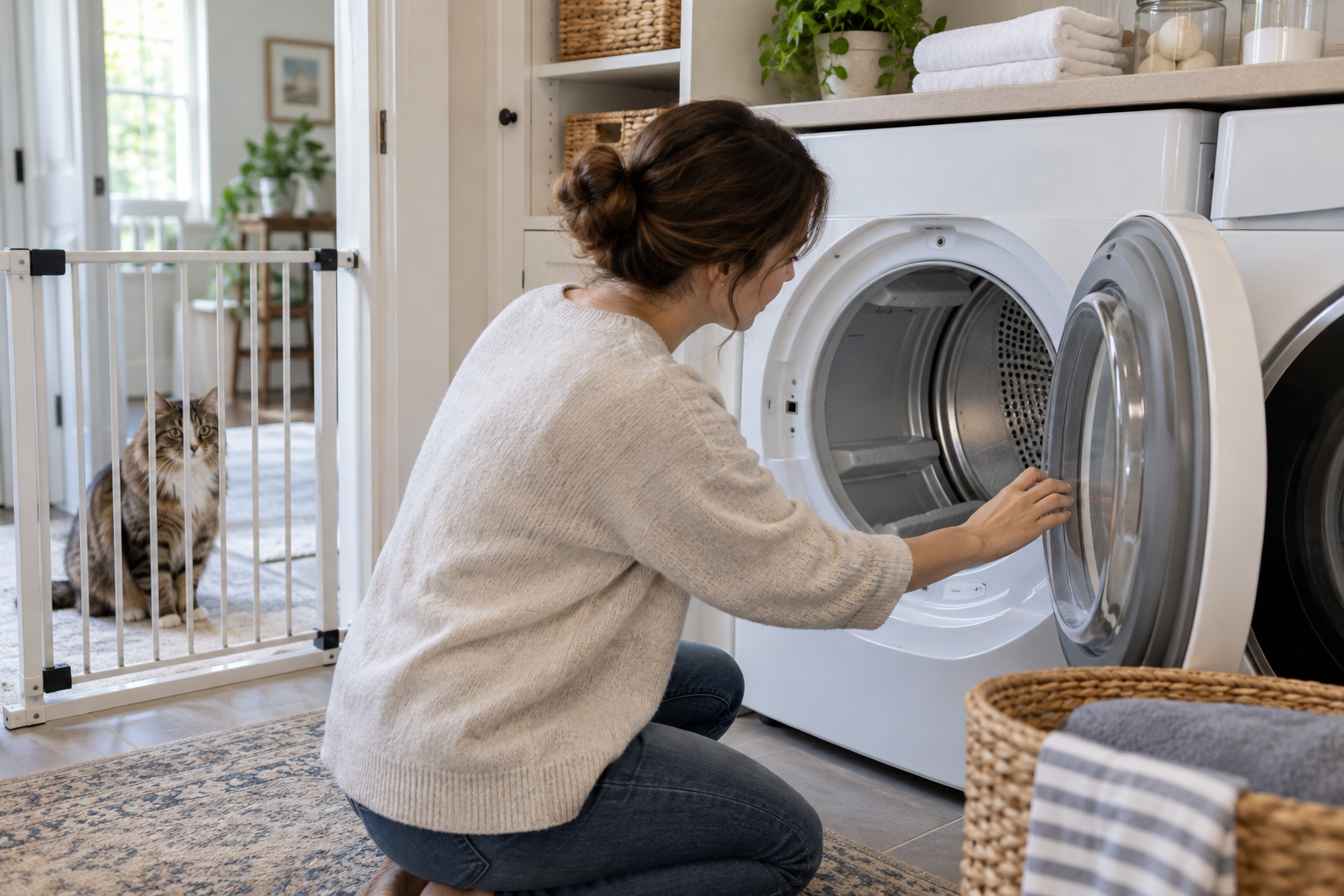
Make checking empty washer and dryer drums part of the routine before every cycle, especially in homes with curious new cats.
Try this routine:
- Move your cat out of the laundry room before opening a machine.
- Check inside the washer and dryer with your eyes and hand.
- Shake towels or blankets before loading them.
- Load the machine while the cat is outside the room or behind a closed door.
- Close the appliance door firmly before walking away.
- Check the room before starting the cycle.
- Recheck the drum if anyone interrupts the loading process.
The Schwarzman Animal Medical Center warns that cats trapped in dryers can suffer severe trauma and heat-related injuries, and that front-loading washers can create risks including near drowning, aspiration pneumonia, and chemical injury.3 Their prevention advice includes keeping cats out of the laundry room while loading machines and closing doors or using safe appliance locks when machines are not in use.3
Avoid making the appliance check into a chase. If your cat slips in while you are sorting clothes, calmly pause the task, leave the door open, and guide your cat out with a meal, toy, or familiar voice. Then close the room and restart the loading routine.
If you need to air out a washer, use a setup that prevents cat access, such as closing the laundry-room door or using a manufacturer-safe child lock that leaves the machine ajar without creating an opening large enough for a cat. Do not leave a front-loading machine wide open in a home with an exploring cat.
How can you help a new cat handle laundry noise?
Help your cat handle laundry noise by separating exploration from active washing at first. Let the first few visits happen while the machines are off, then add sound gradually from outside the room before your cat spends time near the machines.
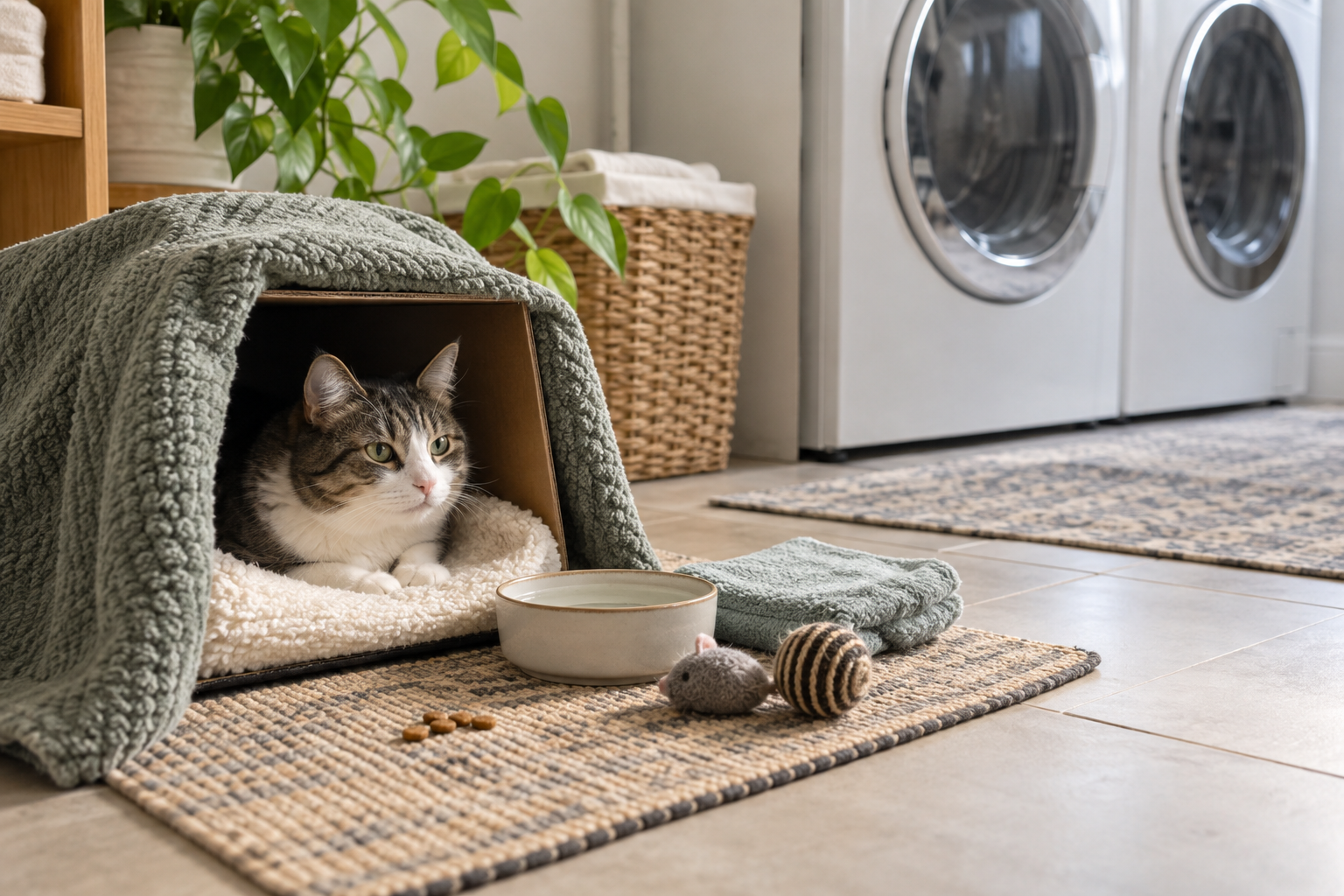
A reachable hiding spot away from machine vibration lets a cautious cat watch the room without feeling trapped.
Create a noise-friendly setup:
- Place a covered box, open carrier, or soft hide near the doorway, not beside the machines.
- Add a familiar towel or blanket that smells like the cat's starter room.
- Keep water available, but away from detergent storage and the litter box.
- Use soft lighting so corners and routes are easy to read.
- Run machines during the day when you can supervise your cat's reaction.
- Start with the cat in a nearby familiar area before allowing laundry-room access during a cycle.
- Use treats or play only if your cat is relaxed enough to enjoy them.
Cat Friendly Homes explains that cats need secure places where they can retreat and feel protected, and that meeting environmental needs can reduce stressors that may contribute to behavior or medical problems.5 In a laundry room, the safe place should be reachable and quiet. It should not be behind the dryer, inside a hamper, or under a cabinet where you cannot safely retrieve the cat.
If your cat hides during the spin cycle, that does not automatically mean the room has failed. Hiding can be a normal way to cope with new sounds. The key question is whether your cat can recover afterward. If hiding becomes longer or your cat stops eating, playing, or using the litter box normally, step back and read SnuggleSouls' guide to por qué se esconden los gatos for context.
What should the first supervised laundry-room visit look like?
The first visit should be a quiet inspection, not laundry day. Machines should be off, doors should be closed, supplies should be secured, and your cat should be free to leave.
Use this first-session sequence:
- Put dogs, young children, and resident cats elsewhere.
- Close washer and dryer doors.
- Secure all laundry products and remove loose dryer sheets.
- Open the laundry-room door and stand to the side.
- Let your cat sniff the threshold, floor, hampers, and safe hide.
- Keep the visit to five or ten minutes.
- Reward calm looking, sniffing, turning back, or choosing the hide.
- End before the cat becomes frantic, overstimulated, or hard to find.
Do not carry your cat into the laundry room and shut the door. Do not start a machine during the first visit to "get them used to it." Do not block the doorway with your body or invite several people to watch.
If your cat only looks from the hallway, that still counts. New cats often build confidence by collecting small pieces of information: scent, sound, lighting, floor texture, and escape routes. SnuggleSouls' guide to how to settle a cat into a new home can help you keep that pacing consistent across the whole house.
What confidence cues mean your cat is ready for more laundry-room time?
Your cat is ready for more laundry-room time when they can explore and recover without losing their normal routine. Confidence is not the same as charging into every corner. It looks like flexible curiosity.
Green-light cues include:
- sniffing the doorway and walking away calmly
- entering the room with a normal body posture
- checking the safe hide without disappearing behind appliances
- eating a treat or playing briefly near the doorway
- returning to the hallway or starter room without being chased
- grooming, resting, eating, and using the litter box normally afterward
- tolerating distant machine sounds without hours of hiding
Slow down if you see:
| Signal | Qué puede significar | ¿Qué hacer ahora? |
|---|---|---|
| Diving behind the dryer | Too much access or an unsafe hiding pull | Block gaps and return to doorway sessions |
| Obsessing over open machines | Warm laundry or drum spaces are too attractive | Close appliances and keep the cat out during laundry |
| Hiding after every cycle | Noise or vibration is overwhelming | Run machines while the cat is in a familiar room |
| Skipping meals after visits | Stress may be affecting recovery | Pause laundry-room access and rebuild from safe routines |
| Swatting or growling near baskets | The room feels crowded or cornering | Reduce people, baskets, and session length |
Add one variable at a time. If your cat can visit the quiet room calmly, try hearing the washer from the hallway. If that goes well, try a short supervised visit after the machine finishes and the room is quiet again. Save active spin cycles and dryer noise for later.
When should laundry-room behavior make you pause or call a vet?
Pause laundry-room access if the room changes your cat's eating, litter box habits, hiding, sleep, or willingness to approach you. A utility room is not worth pushing if it makes the rest of the new-home adjustment harder.
Pause and reassess if you notice:
- your cat is harder to find after laundry-room sessions
- hiding gets longer instead of shorter
- your cat bolts toward open machines, cabinets, or exterior doors
- your cat startles and runs during every washer or dryer sound
- appetite, water intake, urine, stool, or sleep changes after access
- a resident pet blocks the doorway or chases the new cat near the room
Call your veterinarian urgently if your cat may have been trapped in a washer or dryer, fell behind an appliance, was exposed to detergent, swallowed a dryer sheet, has breathing trouble, repeated vomiting, drooling, burns around the mouth, sudden weakness, collapse, seizures, severe diarrhea, or rapid decline. Suspected poisoning or appliance injury should be treated as an emergency, not a behavior issue.
If laundry-room access is part of a larger move or home setup change, connect it back to the calmer routines in SnuggleSouls' guide on how to move with a cat. The room should support daily life, not become the place where your cat disappears from observation.
Conclusion: Keep the laundry room boring, checked, and easy to leave
A safe laundry-room plan starts with prevention: closed washer and dryer doors, secured laundry products, blocked hiding gaps, and a habit of checking machines before every cycle. After that, keep early visits short, quiet, supervised, and optional.
Your new cat does not need to love the laundry room. They only need to understand where the exits are, where they can safely watch, and that no one will force them toward noise or trap them behind appliances. When the room stays boring, checked, and easy to leave, curiosity can grow at your cat's pace.
Preguntas frecuentes
Can a new cat go in the laundry room on the first day home?
Usually, no. Most new cats do better with one quiet starter room first. Add the laundry room later, after eating, litter box use, hiding, and sleep are stable.
Should I leave the washer door open so it dries?
Only if your cat cannot access it. If you need airflow, close the laundry-room door or use a safe appliance lock that prevents a cat from entering the machine.
Why does my cat want to climb into the dryer?
Dryers and laundry baskets can be warm, enclosed, and full of familiar fabric smells. That makes them attractive resting spots, but they are not safe. Keep appliance doors closed and check drums before every cycle.
Are laundry detergent pods dangerous for cats?
Yes. Pods and liquid detergents can irritate the mouth and throat and may cause serious problems if swallowed or aspirated. Store them in a latched cabinet and call your veterinarian or poison control if exposure is possible.
How do I get my cat used to washer and dryer noise?
Start with the machines off, then let your cat hear laundry sounds from a familiar room. Move closer only if your cat recovers quickly, eats normally, and chooses to approach.
Is it okay to put a litter box in the laundry room?
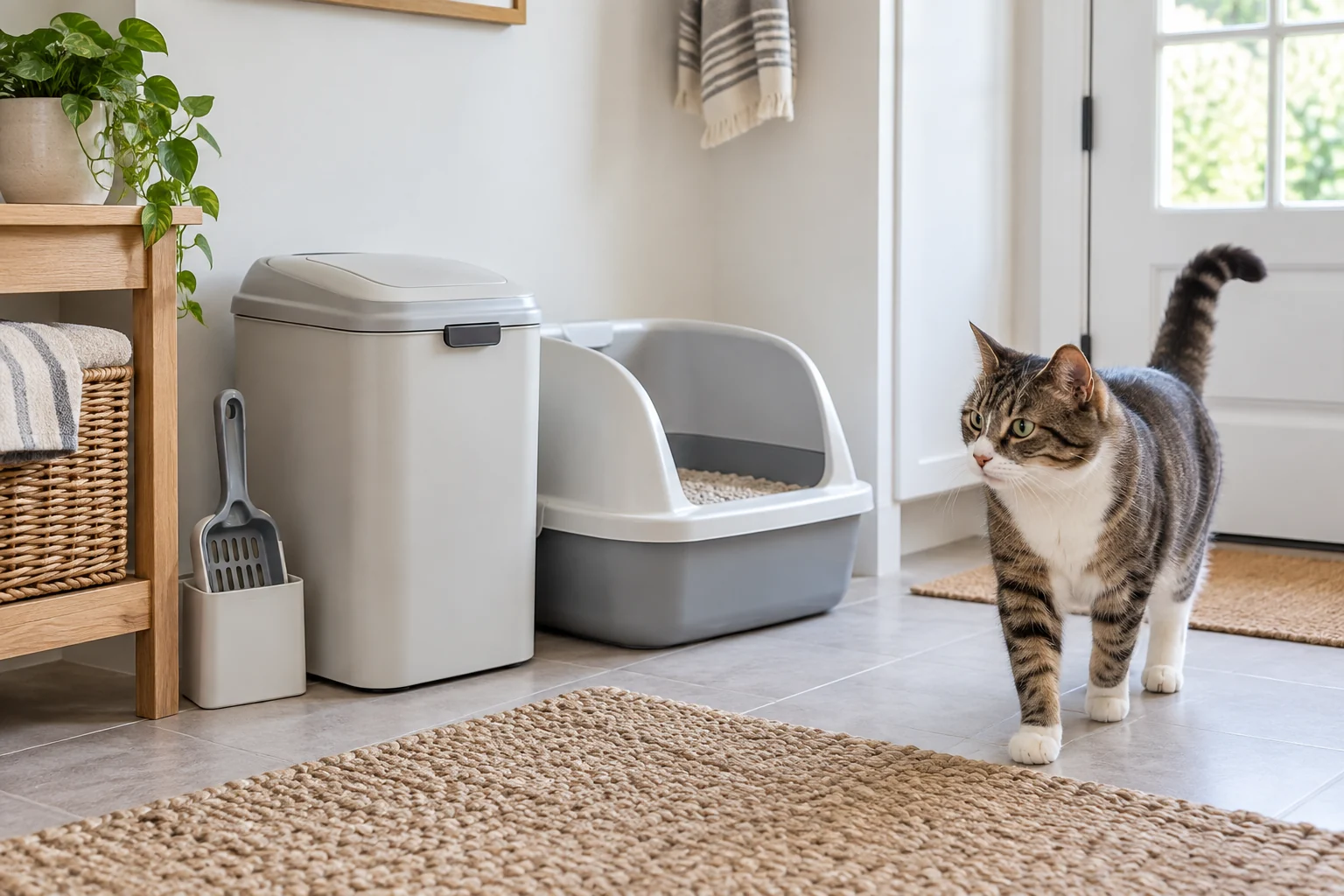
It can work for some cats, but avoid placing the box next to loud machines, stored chemicals, or a busy doorway. Keep another reliable litter box available while your cat adjusts.
What if my cat hides behind the washer or dryer?
Do not chase unless there is immediate danger. Turn off machines, close exits, keep the room quiet, and use food or a familiar voice to encourage your cat out. Block the gap before the next session.
Can I do laundry while my new cat explores the room?
Wait until your cat already knows the room calmly. During loading, unloading, and active cycles, it is safer to keep your cat outside the laundry room so you can check machines and handle supplies without distraction.
Referencias
[1] AAFP and ISFM. (2013). Directrices sobre las necesidades ambientales de los gatos. URL
[2] Cornell Feline Health Center. (2017). Cómo elegir y cuidar a tu nuevo gato. URL
[3] Schwarzman Animal Medical Center. (2026). A Cat's Close Call in a Dryer: The Real Risks of Laundry Machines for Pets. URL
[4] ASPCA. (n.d.). Poisonous Household Products. URL
[5] Cat Friendly Homes. (2026). What Your Cat Needs to Feel Secure. URL
 EN
EN DE
DE ES
ES PT
PT