
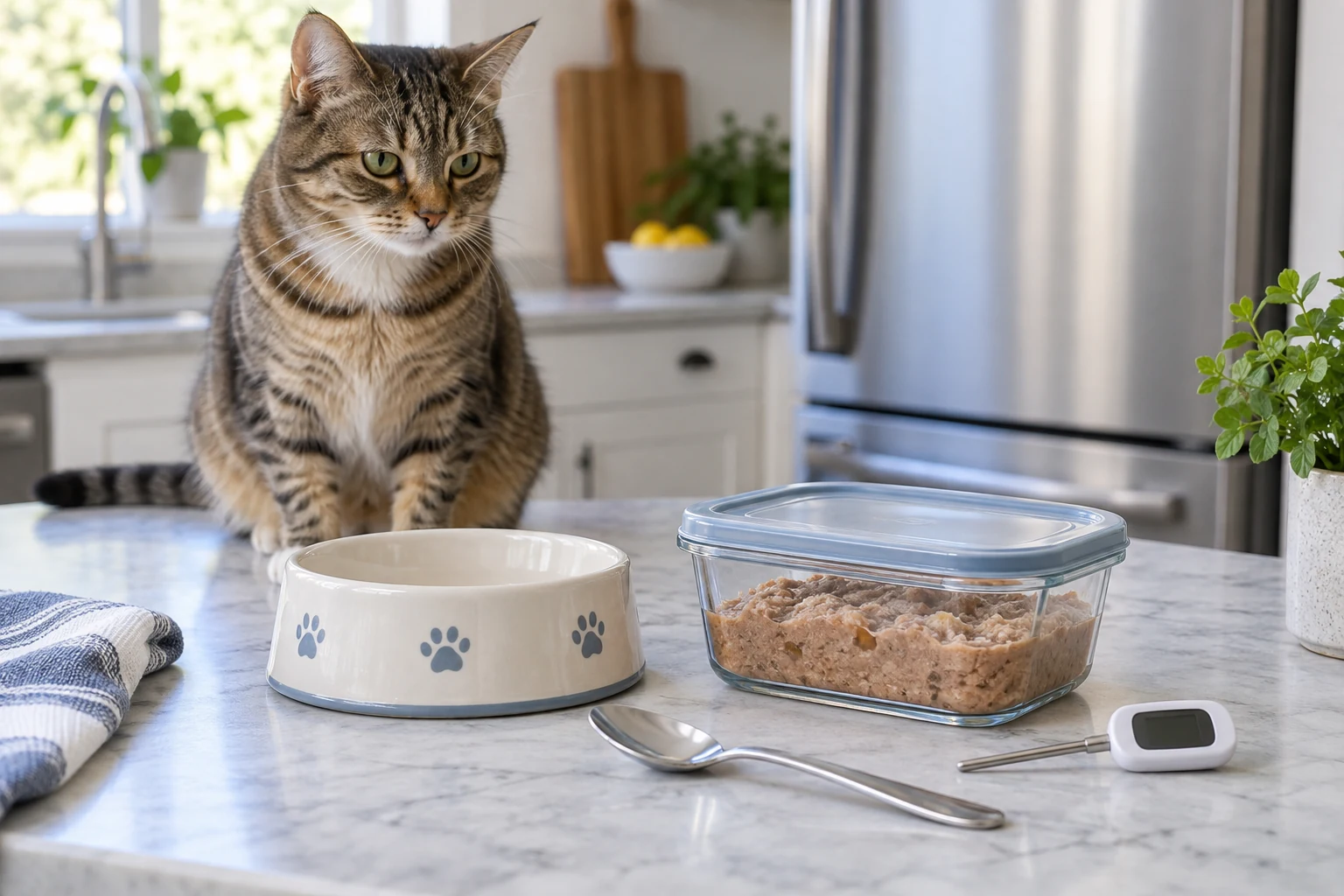
Thaw wet cat food for cats in the refrigerator whenever you can, then stir it, check the texture, and serve it from a clean bowl.
Freezing or chilling wet food can help with portion planning, lick-mat prep, and leftovers, but thawing changes the routine. The food still needs safe cold storage, clean utensils, measured portions, and a texture your cat will actually eat. The goal is simple: keep the food safe, keep the meal predictable, and avoid turning dinner into a puzzle when your cat needs reliable calories.
This guide explains fridge timing, what to avoid, how to warm a portion gently, which texture changes matter, and when a feeding problem is big enough for a veterinarian.
Índice
- What is the safest way to thaw wet cat food for cats?
- How long does wet cat food take to thaw in the fridge?
- Can you thaw wet cat food on the counter or in hot water?
- How do you bring refrigerated wet food closer to serving temperature?
- What texture changes matter after thawing?
- How should you portion, serve, and store leftovers?
- Which cats need extra caution with thawed wet food?
- What warning signs mean this is not a thawing problem?
- Conclusion: Thaw wet cat food slowly, serve it cleanly
- Preguntas frecuentes
- Referencias
What is the safest way to thaw wet cat food for cats?
The safest default is to thaw a covered portion in the refrigerator, then serve it soon after it softens. Keep the food cold while it thaws, use clean utensils, and discard anything with an uncertain timeline, unusual smell, mold, or texture you would not trust in a bowl.
FDA pet-food guidance recommends washing pet food bowls and utensils with soap and hot water after use, and its storage guidance says unused or leftover canned and pouched pet food should be refrigerated promptly or thrown away 1, 2. That matters whether the food came from a fresh can, a chilled container, or a portion you froze ahead.
Use this basic routine:
- Portion the wet food into a clean, covered food-safe container.
- Move the frozen portion to the refrigerator before the meal you plan to serve.
- Keep it covered while it thaws.
- Stir it before serving so cold spots and separated gravy mix back in.
- Serve the meal in a clean bowl.
- Pick up leftovers after the meal window and wash the bowl.
For opened cans, pouches, and leftovers that are not frozen, the SnuggleSouls wet cat food storage guide can help you set a household discard routine.
How long does wet cat food take to thaw in the fridge?
Small wet cat food portions often thaw in the refrigerator within several hours, while a thicker container may need overnight. The exact timing depends on portion size, container shape, freezer temperature, refrigerator temperature, and food texture.
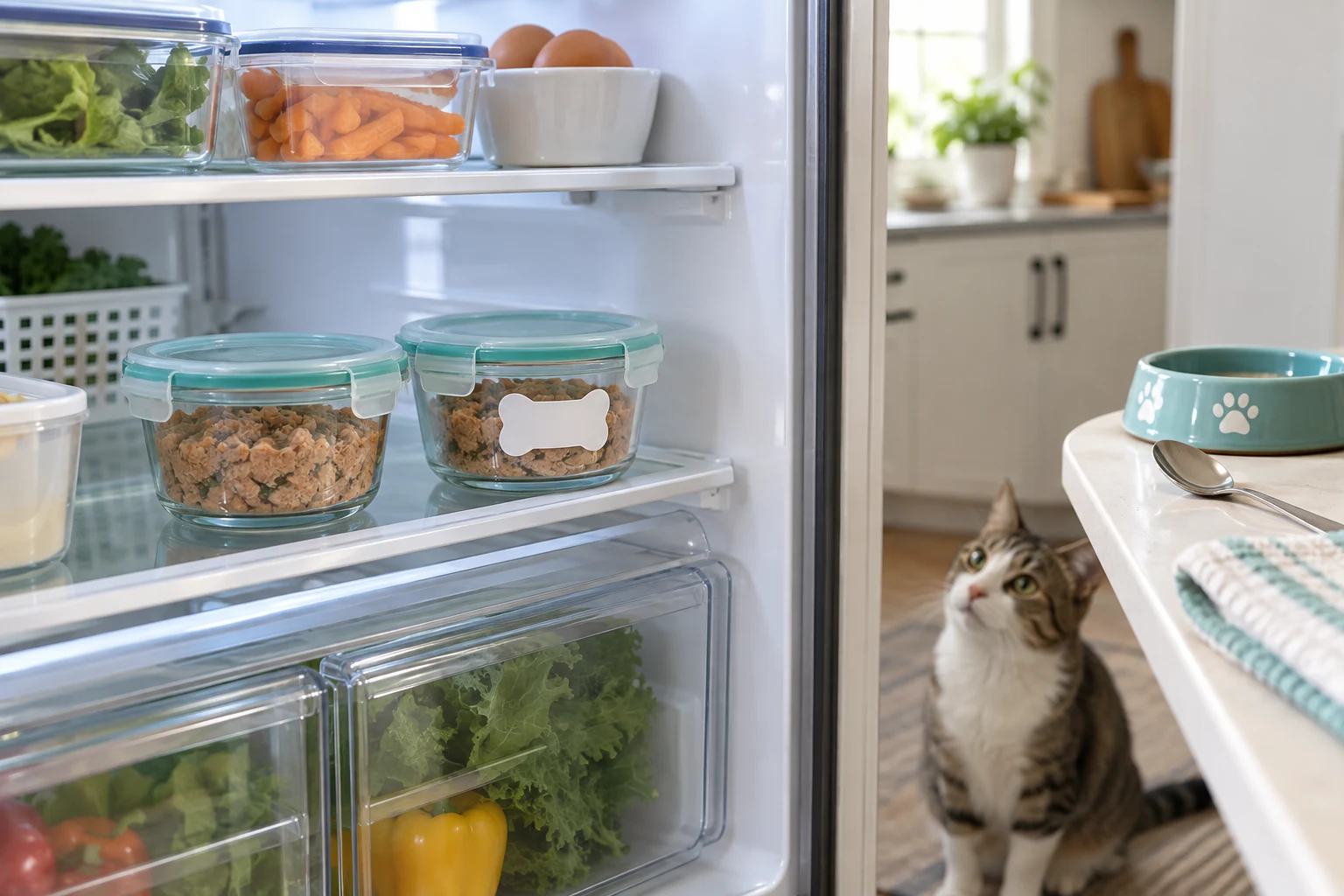
The refrigerator is the safest default place to thaw covered wet cat food portions because the food stays cold while it softens.
USDA food-safety guidance for frozen food recommends refrigerator thawing when possible because the food stays at a safe, steady cold temperature 3. For cat food, think in small household portions rather than large packages. A thin lick-mat smear, a few spoonfuls in a shallow container, or a single meal portion thaws much faster than a full tub.
Use this timing guide as a starting point:
| Frozen wet food setup | Fridge thaw estimate | Best practice |
|---|---|---|
| Thin lick-mat layer | A few hours | Check that the surface is soft enough to lick |
| 1 to 2 spoonfuls in a shallow container | Several hours | Stir before serving |
| Single meal portion in a small container | Several hours to overnight | Move it to the fridge the night before |
| Thick block or full container | Overnight or longer | Divide into smaller portions next time |
| Food still icy at meal time | Not ready | Serve a fresh portion instead |
Do not plan so tightly that your cat misses a meal if the food is still icy. If the thawed portion is not ready, serve fresh wet food, shelf-stable food opened at that meal, or another veterinarian-approved option.
Can you thaw wet cat food on the counter or in hot water?
Do not make counter thawing your routine. Wet cat food should stay cold while it thaws, and food left at room temperature for too long becomes harder to judge safely.
Counter thawing is especially risky when you set out a frozen portion and forget it, leave it near sunlight, or use a thick container that thaws unevenly. The outside may warm while the center stays frozen. Hot water can create a different problem: it may warm the outside quickly, leave icy pockets inside, change the smell and texture, or make the portion too warm for your cat.
Here is a safer decision table:
| Situación | Better choice | Why |
|---|---|---|
| Tomorrow's meal | Refrigerator thaw | Slow, cold, predictable |
| Small frozen portion needed soon | Serve a fresh unfrozen portion if available | Avoid rushing food safety |
| Food is half icy, half soft | Keep thawing in the fridge or discard if timing is uncertain | Uneven texture can hide cold centers |
| Fully thawed but too cold for your cat | Warm the bowl gently, not the whole container | Keeps leftovers cold |
| Lick mat is frozen too hard | Let the surface soften under supervision | Avoid biting or frustration |
If your question is about a frozen enrichment setup rather than a normal meal, read SnuggleSouls' guide to frozen lick mats for cats. A lick mat should be a measured, supervised activity, not the only way your cat can access dinner.
How do you bring refrigerated wet food closer to serving temperature?
Warm only the portion you are about to serve, and keep it gentle. Many cats prefer food that is not refrigerator-cold because aroma and texture are more appealing, but it should never be hot.
A practical method is to place the covered serving bowl or a small sealed container in warm water for a few minutes, then stir and test the food before offering it. Keep water out of the food unless adding water is already part of your cat's feeding plan. Do not warm the full leftover container just to serve one spoonful, because repeated warming and cooling makes the storage timeline harder to trust.
Before serving, check:
- The center is not icy.
- The food is not hot.
- The texture is easy to lick or chew.
- The smell seems normal for that food.
- The bowl and spoon are clean.
- The portion matches the meal plan.
If your cat likes the food slightly chilled, that is fine. If your cat consistently refuses cold food, plan smaller thawed portions and warm the serving bowl gently. Do not chase acceptance with rich toppers unless they fit the diet plan and calories.
What texture changes matter after thawing?
Texture matters because cats may reject food that has separated, dried at the edges, become watery, or stayed icy in the middle. Stir thawed wet food before serving, then look and smell before your cat eats it.
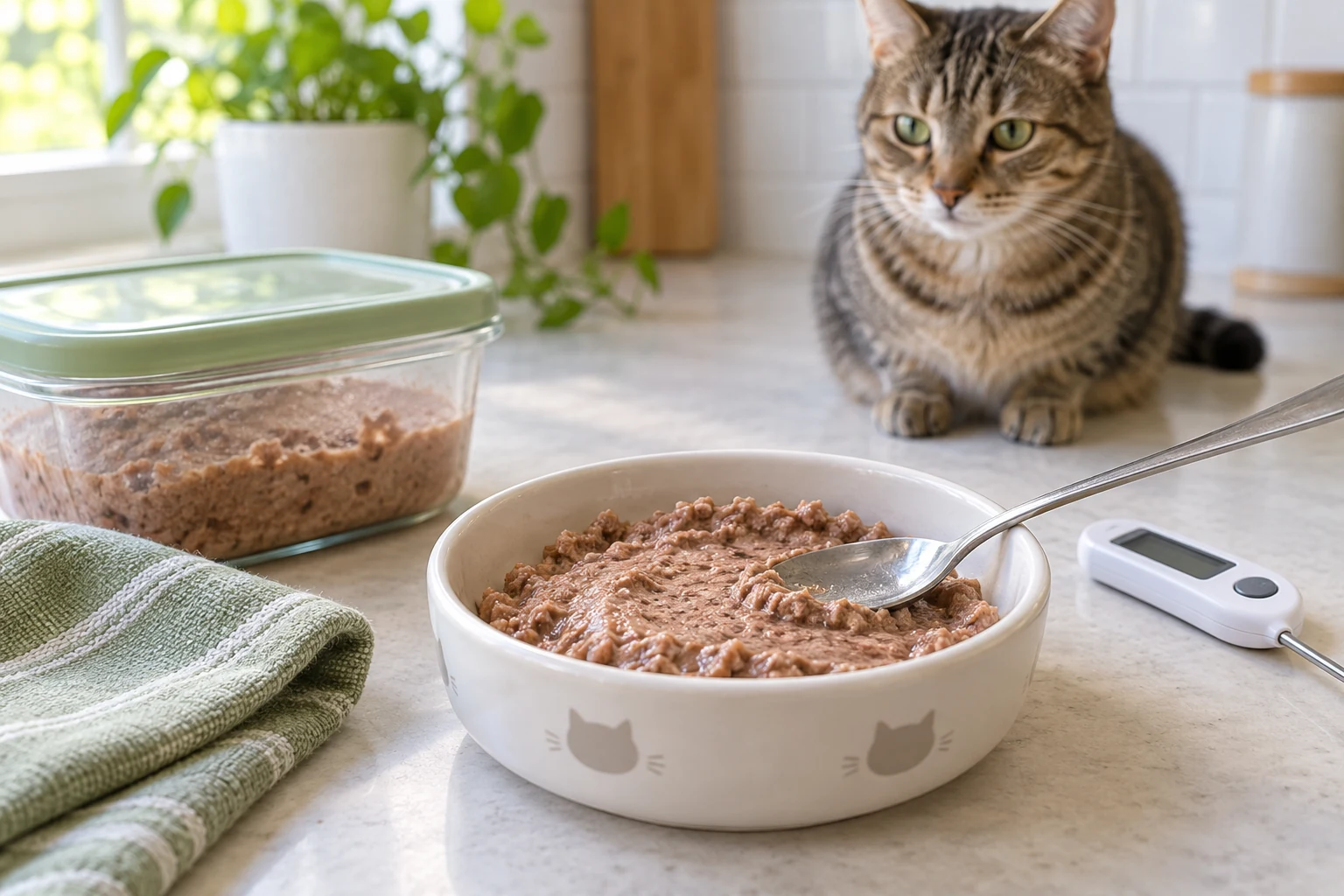
Before serving, stir thawed wet food and check for icy centers, hot spots, sour odor, or texture changes your cat may reject.
Cornell Feline Health Center notes that canned food can be palatable for cats and that unused opened canned food should be refrigerated to maintain quality and prevent spoilage 4. Freezing and thawing may still change how a particular food feels. Smooth pate often handles thawing better than large chunks in gravy because it can be stirred back into an even texture.
Use this texture check:
| After thawing, you see… | Qué puede significar | Qué hacer |
|---|---|---|
| Light liquid separation | Normal for some wet foods | Stir and serve if smell and timing are safe |
| Icy center | Not fully thawed | Keep thawing in the fridge or use fresh food |
| Dry edges | Freezer exposure or uncovered storage | Discard if quality is questionable |
| Sour, rancid, or unusual smell | Possible spoilage | Throw it away |
| Mold or color change | Unsafe | Throw it away |
| Cat sniffs and walks away repeatedly | Texture, temperature, nausea, or dislike | Offer a fresh normal meal and monitor |
Check the cat food feeding directions before freezing or thinning a new food. Some textures depend on the recipe, and some therapeutic diets should be handled exactly as your veterinarian recommends.
How should you portion, serve, and store leftovers?
Portion wet food before freezing whenever possible, then thaw only what you plan to serve. That keeps the daily calorie plan cleaner and helps you avoid thawing a large container just to scoop out one meal.
AAFCO explains that pet food calorie statements help owners understand calories by weight or familiar units, such as per can or cup 5. For wet food, that means you can divide the food by grams, calories, or container fractions. If you are already working from a calorie target, the SnuggleSouls calculadora de calorías para gatos can give a starting point to discuss with your veterinarian, and our guide on ¿Qué cantidad de comida húmeda hay que darle a un gato? explains daily wet-food amounts.
For repeatable portions:
- Read the calories and net weight on the label.
- Decide how many meals the container should cover.
- Use a clean spoon and container for each portion.
- Label the household container with the food name and date if several people feed the cat.
- Freeze flat, shallow portions when you need faster thawing.
- Move only the next portion to the fridge.
- Discard food when the timeline, smell, or texture is uncertain.
If you split cans, pouches, or trays often, it helps to weigh wet cat food portions o use a kitchen scale for cat food portions. In multi-cat homes, review how to portion wet cat food for two cats so one cat's thawed meal does not quietly become another cat's extra calories.
Which cats need extra caution with thawed wet food?
Use extra caution when a cat cannot afford missed meals, needs a strict diet, or has a health condition that changes feeding risk. Thawed wet food can be perfectly workable, but it should not make eating harder for a medically fragile cat.
Ask your veterinarian before changing thawing, warming, or portion routines if your cat:
- has diabetes, kidney disease, urinary disease, pancreatitis, inflammatory bowel disease, food allergy, dental pain, or obesity
- eats a prescription or therapeutic diet
- is a kitten, pregnant, nursing, elderly, underweight, or recovering from illness
- has a history of not eating enough
- needs medication hidden in food
- has repeated vomiting or diarrhea
- suddenly rejects a food they normally eat
For these cats, consistency matters more than convenience. If thawing changes smell or texture enough that your cat eats less, use smaller fresh containers, thaw more slowly, or ask your veterinary team for a plan.
What warning signs mean this is not a thawing problem?
Call a veterinarian if your cat refuses food, vomits repeatedly, seems painful, or shows urinary, breathing, or collapse signs. Do not assume the thawed food is the only issue when the cat's body language or appetite changes suddenly.
Get prompt veterinary advice if you notice:
- not eating for 24 hours, or sooner for kittens, seniors, or sick cats
- repeated vomiting, severe diarrhea, or signs of dehydration
- drooling, pawing at the mouth, chewing on one side, or crying while eating
- sudden weight loss or clear appetite decline
- straining to urinate, frequent litter box trips, or producing little urine
- weakness, collapse, seizures, breathing trouble, or rapid decline
- possible toxin exposure or spoiled-food ingestion
If your cat skipped one thawed portion but happily eats a fresh serving and otherwise acts normal, the issue may be texture or temperature. If appetite stays off, treat it as a health clue rather than a preference.
Conclusion: Thaw wet cat food slowly, serve it cleanly
Thaw wet cat food in the refrigerator, keep it covered, stir it before serving, and offer it from a clean bowl. Smaller portions are easier to thaw safely and easier to fit into your cat's calorie plan.
The best routine is boring in a good way: portion, cover, chill, thaw, stir, serve, clean. If your cat rejects the texture or needs reliable intake for medical reasons, choose fresh food or ask your veterinarian for a feeding plan that keeps meals simple.
Preguntas frecuentes
Can cats eat wet food straight from the fridge?
Many cats can eat refrigerated wet food if they accept the texture and temperature. If your cat refuses cold food, warm only the serving portion gently and stir well before offering it.
Can I thaw frozen wet cat food overnight?
Yes, overnight refrigerator thawing is usually the easiest plan for a single meal portion. Keep it covered, use a clean container, and serve it within a safe household storage timeline.
Is it okay to microwave wet cat food?
Use caution. Microwaves can create hot spots and uneven texture, so a warm-water bath around the serving container is often gentler. If you do microwave a small portion, stir thoroughly and test the temperature before serving.
Can I refreeze wet cat food after it thaws?
Avoid refreezing food that has been served, licked, warmed, or left out. If a sealed portion thawed safely in the refrigerator and was never served, follow the food label and your veterinarian's guidance; when in doubt, discard it.
Why does my cat refuse thawed wet food?
The food may smell weaker, feel colder, separate, dry at the edges, or have a texture your cat dislikes after freezing. Repeated refusal can also signal nausea, mouth pain, stress, or illness, so watch for other changes.
How can I thaw wet food for a picky cat?
Freeze smaller, flatter portions, thaw them in the refrigerator, stir well, and warm only the serving bowl slightly before mealtime. If your cat still refuses, use fresh wet food rather than forcing a frozen routine.
Referencias
[1] U.S. Food and Drug Administration. (2026). Tips for Safe Handling of Pet Food and Treats. Tips for Safe Handling of Pet Food and Treats
[2] U.S. Food and Drug Administration. (2026). Proper Storage of Pet Food and Treats. Proper Storage of Pet Food and Treats
[3] USDA Food Safety and Inspection Service. (2026). The Big Thaw: Safe Defrosting Methods. The Big Thaw: Safe Defrosting Methods
[4] Centro de Salud Felina de Cornell. (2026). Cómo alimentar a tu gato. Cómo alimentar a tu gato
[5] Association of American Feed Control Officials. (2026). Calorías. Calorías
 EN
EN DE
DE ES
ES PT
PT