
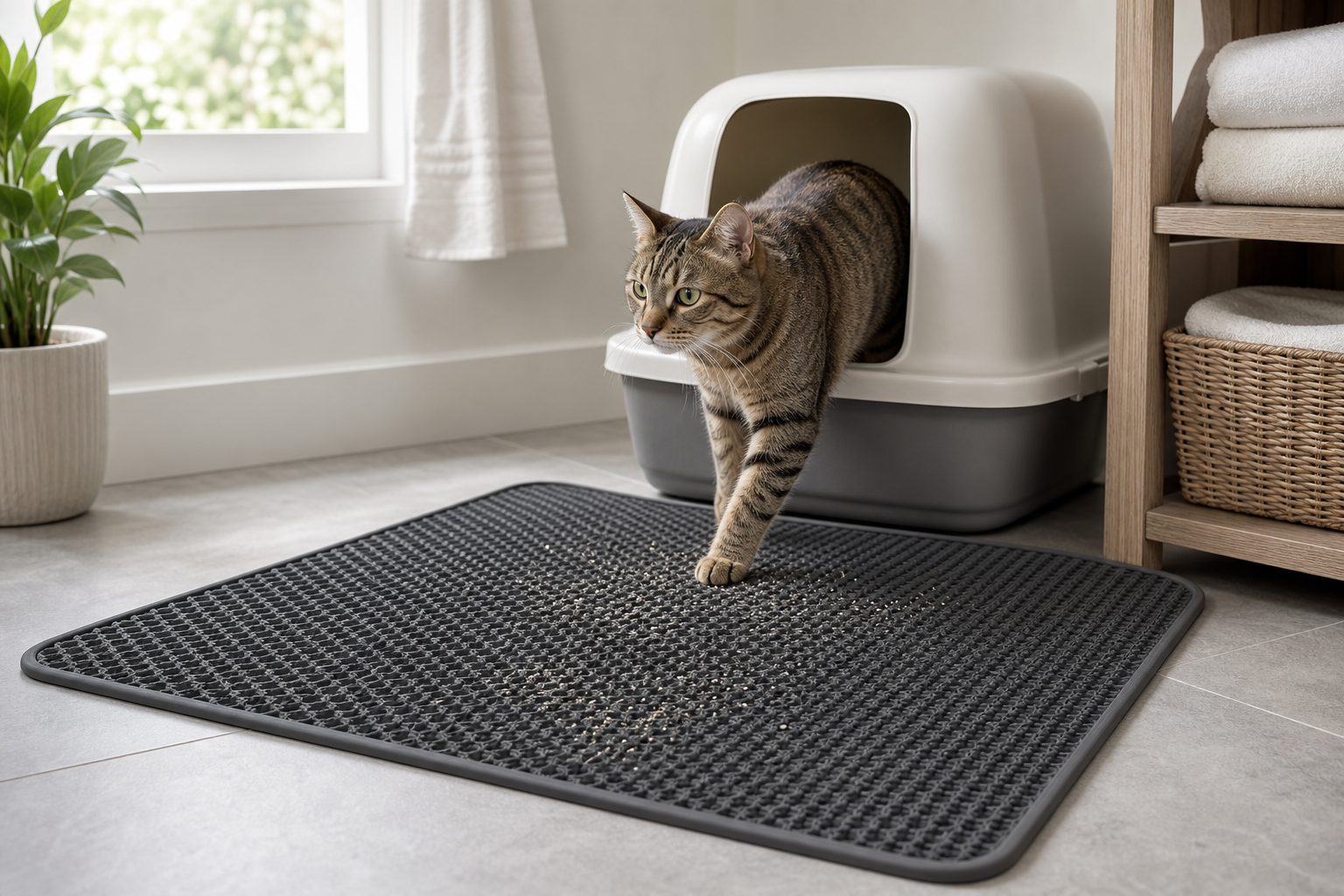
A cat litter mat should be large enough to cover your cat's normal exit path, soft enough that your cat willingly walks across it, and easy enough to clean that it does not become the smelliest part of the litter area.
The right mat will not fix a poor litter box setup by itself. Cats can avoid a toileting area because of the box, litter, location, stress, pain, or household conflict, so a mat should support your cat's comfort rather than make the area feel blocked or strange 1. Use it as one piece of a cleaner, cat-friendly bathroom station.
Table of Contents
- What size litter mat should you buy?
- What texture is best for a cat litter mat?
- Where should you place a cat litter mat?
- How should the mat fit your litter box setup?
- Which cats need extra-careful mat choices?
- How do you keep a litter mat clean?
- What if litter still spreads everywhere?
- Conclusion
- Frequently Asked Questions
- References
What size litter mat should you buy?
Choose a mat that extends at least one full cat body length from the main exit of the litter box, with extra width if your cat jumps out sideways. For many homes, that means a mat around 24 by 36 inches or larger, but the better rule is to match your actual box size and your cat's exit habit.
A tiny mat in front of a large box often catches only the first step. A nervous or athletic cat may leap over it completely. A senior cat or large cat may need more floor coverage because they turn slowly, step carefully, or track litter between toes after using a bigger box.
If you already adjusted your large cat litter box size, choose the mat afterward. The mat should be wider than the doorway or open side of the box and long enough that your cat takes several natural steps on it before reaching the floor.
| Litter box situation | Better mat size | Why it helps |
|---|---|---|
| Front-entry covered box | Long rectangular mat in front of the opening | Catches litter as the cat walks straight out |
| Open box with several exit paths | Wider mat or two mats along common exits | Covers the real walking route instead of only one side |
| Large cat or high-sided box | Oversized low-profile mat | Gives more landing room and reduces scatter |
| Small bathroom or hallway | Thin mat that fits without blocking doors | Keeps the area usable and less stressful |
What texture is best for a cat litter mat?
The best texture is the one your cat will actually step on. Look for a surface that catches granules while staying gentle under sensitive paws, because cats can form preferences or aversions to toileting surfaces and locations 1.
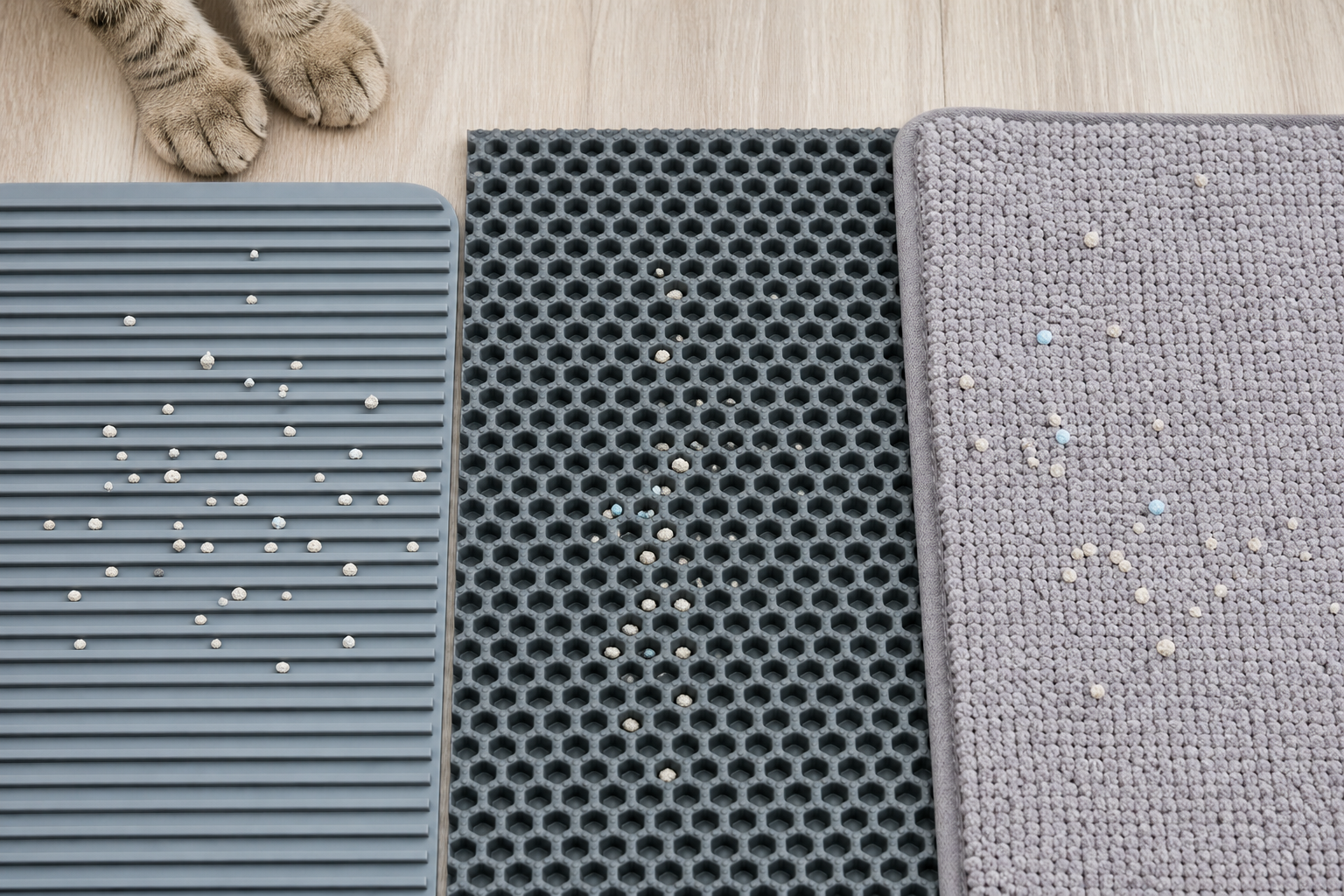
Texture matters: the best mat traps litter without feeling sharp, sticky, or unstable under your cat's paws.
Common mat textures include:
- Soft ribbed silicone or rubber: easy to rinse and usually comfortable, but shallow grooves may catch less litter.
- Honeycomb or double-layer mats: good for trapping granules, but some cats dislike the hollow feel or larger holes.
- Low-pile washable fabric: soft underfoot and helpful for delicate cats, but it may hold moisture and odor if not washed often.
- Coarse loop or scratchy mesh: effective at grabbing litter, but risky for cats who dislike rough paw contact.
Match the mat to the litter. Large pellets may need a different surface than fine clay. If your main issue is litter scattered through the house, pair the mat with a low-tracking cat litter that your cat still accepts.
Where should you place a cat litter mat?
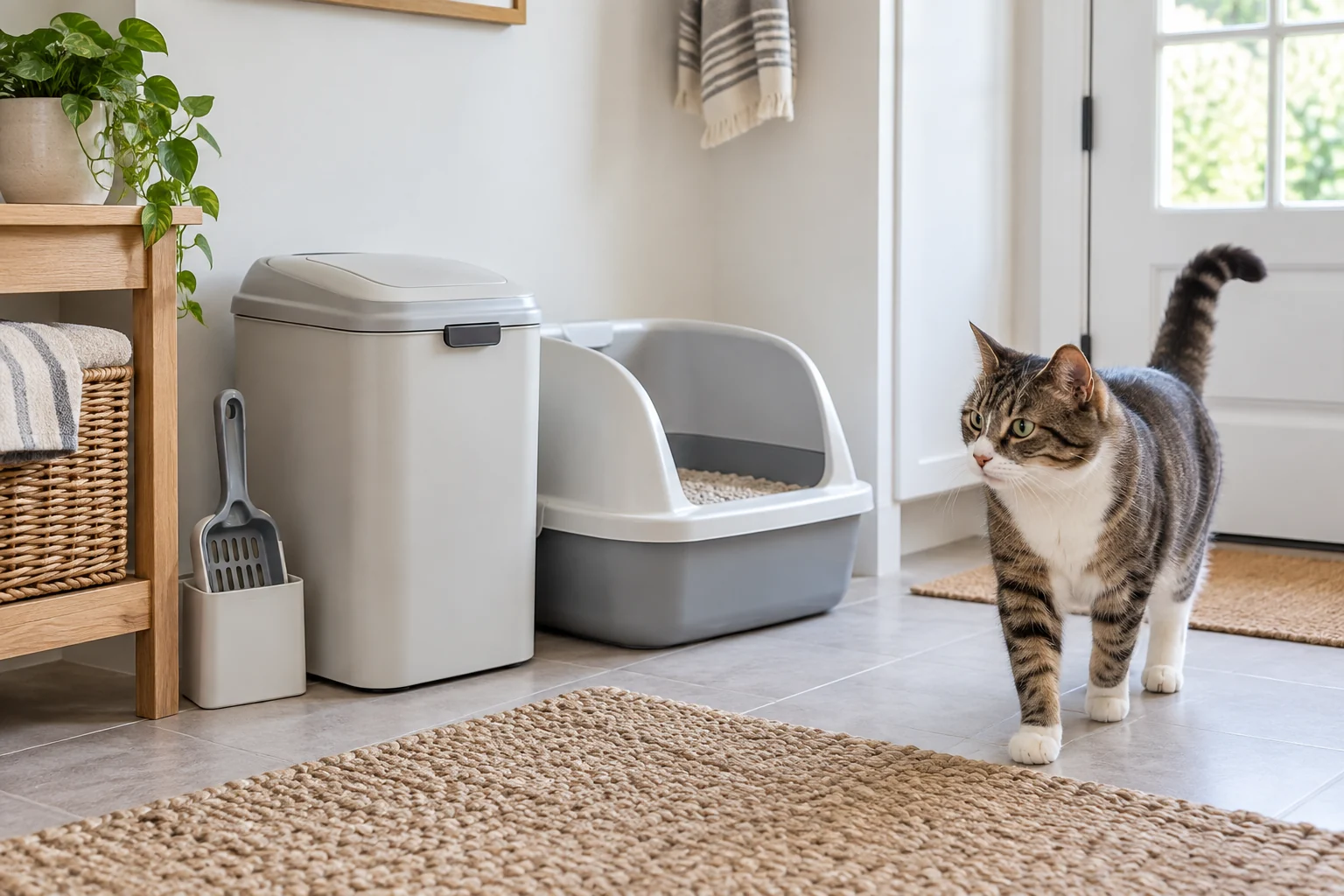
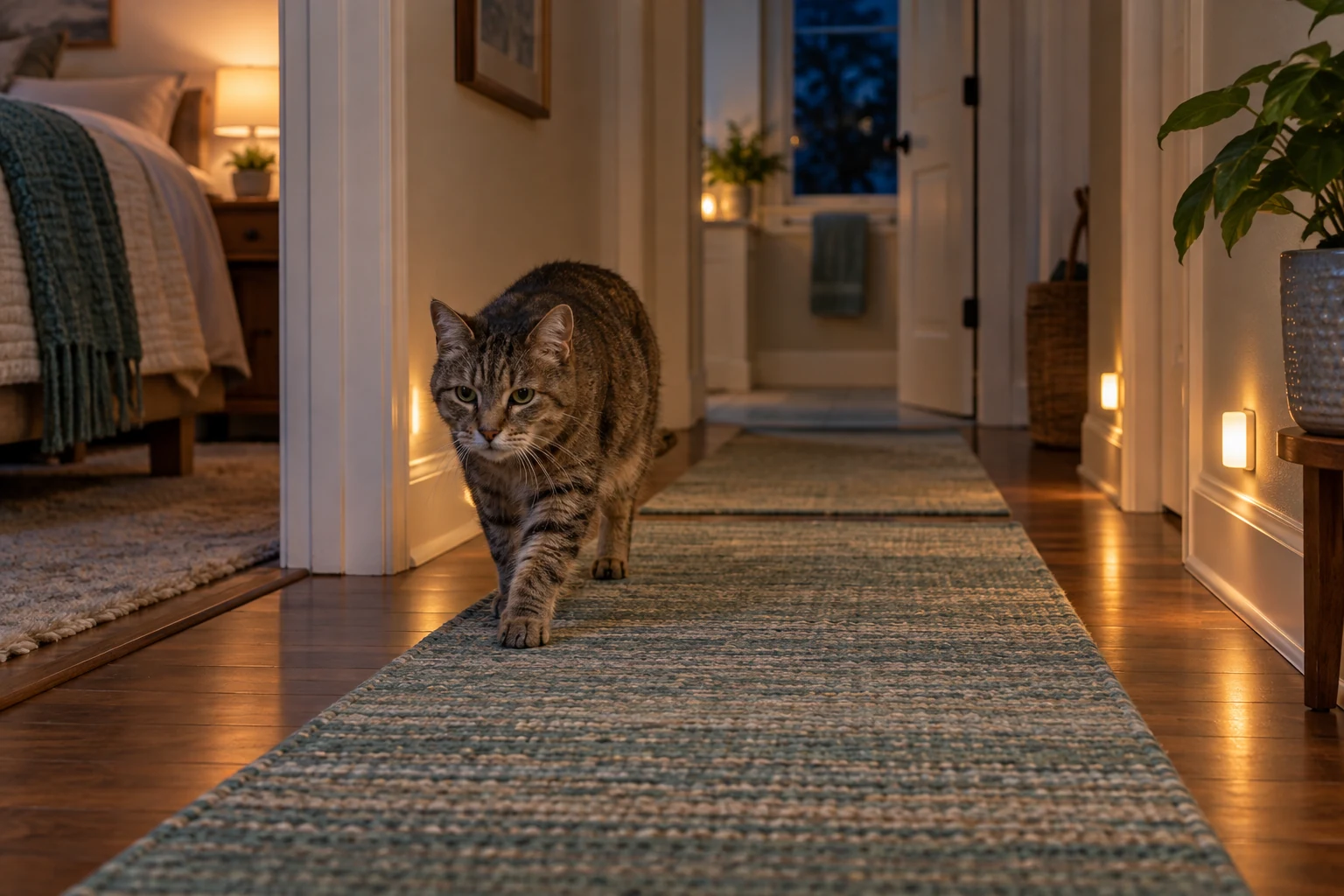
Place the mat where your cat naturally exits the box, not where it looks neatest to you. Cats need quiet, accessible toileting areas and can be startled by noisy appliances, air movement, or people and pets approaching unexpectedly 4.
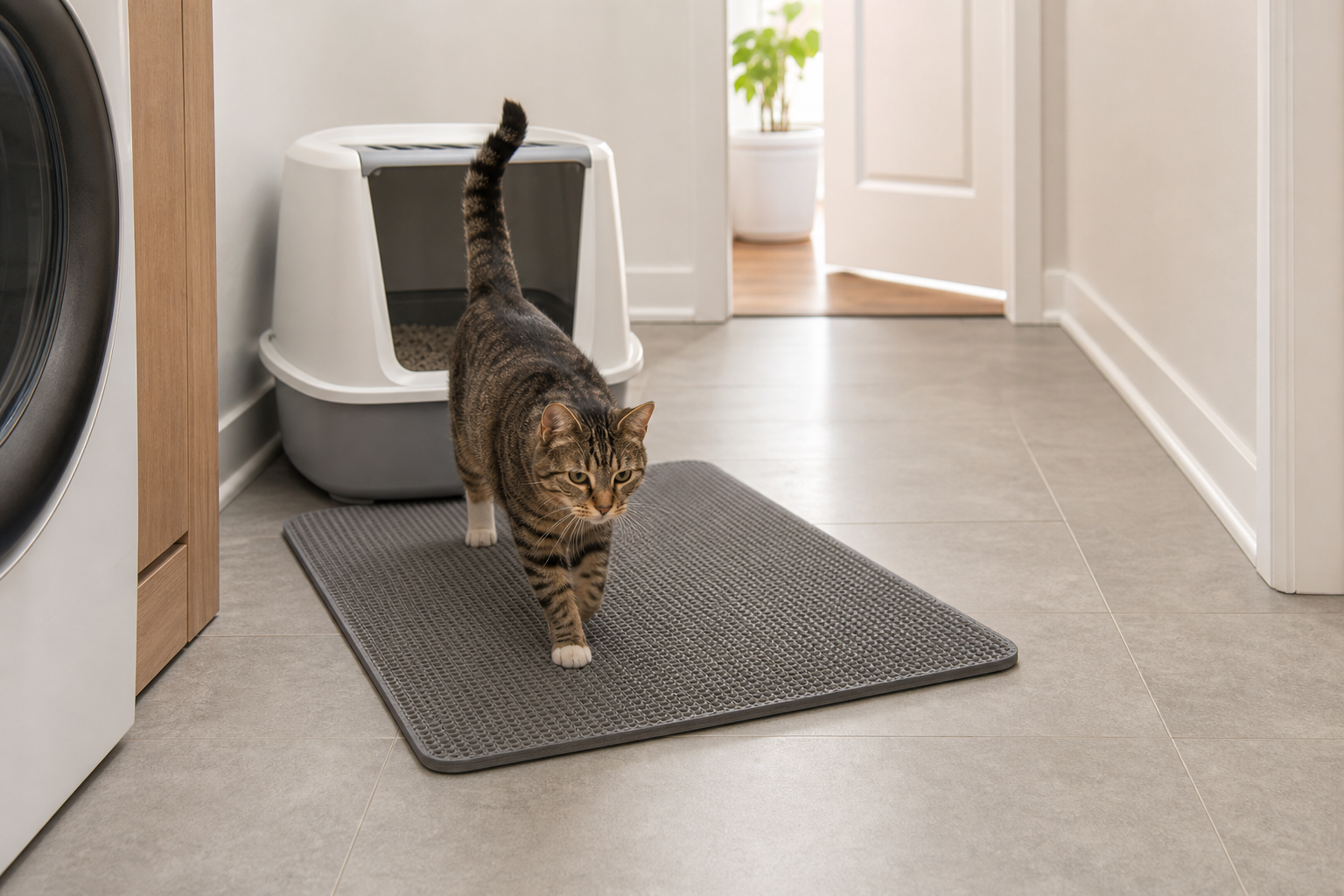
Place the mat where your cat naturally exits, but keep the route open so the litter area still feels safe and accessible.
A mat should not trap your cat between the box and a wall, create a slick landing area, or force a tight turn. In multi-cat homes, blocked access to resources can contribute to stress, especially when one cat can control a narrow pathway 2. Keep the litter area open enough that a cat can enter and leave without confrontation.
Good placement usually means:
- The mat sits flush with the main exit.
- The edge does not curl up.
- Door clearance is preserved.
- Food and water are not placed directly beside the toileting area.
- The cat has a simple path out of the room.
How should the mat fit your litter box setup?
A litter mat works best after the core litter box setup is already cat-friendly. If the box is too small, too covered, too dirty, or too hard to access, the mat may become one more reason your cat avoids the area.
Start with the basics from a best cat litter box setup: a box your cat can turn around in, a quiet location, enough boxes for the household, and a cleaning routine your cat can trust. If you use a hooded box, review whether covered vs uncovered litter boxes fit your cat's comfort.
Then add the mat as a supporting surface. It should catch scatter without narrowing the entry, raising the threshold, or making the exit feel unstable. Avoid placing a thick mat under the front edge of a lightweight box if it makes the box wobble.
Which cats need extra-careful mat choices?
Kittens, senior cats, declawed cats, cats with arthritis, and cats recovering from injury may need a softer, lower-profile mat. Cats with mobility limits may also need easy access to boxes and resources placed at reachable levels 2.
Choose a mat that is:
- Thin enough that the cat does not trip.
- Soft enough for tender paws.
- Stable on the floor without sliding.
- Easy to cross with slow, short steps.
- Washable if accidents happen.
For older cats, the litter box entry matters as much as the mat. A low-entry litter box for senior cats may do more for comfort than a heavy-duty tracking mat.
Call your veterinarian if your cat suddenly avoids the litter box, strains, cries, urinates very often, produces little urine, has blood in urine or stool, or seems painful. Litter box changes can be behavioral, but urinary and digestive problems need medical attention, and blocked urination is an emergency 3.
How do you keep a litter mat clean?
Clean the mat before it smells. A mat that holds damp litter, urine drips, or dust can make the whole litter area less appealing.
Shake or vacuum dry litter daily if tracking is heavy. Wash rubber, silicone, and plastic mats according to the product directions, then dry them fully before putting them back. Launder fabric mats often enough that they do not hold odor.
Cleaning the box itself still matters more than the mat. If you are deciding how often to scoop, wash, or replace litter, use a practical how often to clean a litter box schedule and adjust for the number of cats in your home.
Avoid harsh scented cleaners around the litter area. Strong smells can bother cats, and some cats avoid boxes or locations they associate with unpleasant experiences 1.
What if litter still spreads everywhere?
If litter still travels beyond the mat, look at the whole system before blaming one product. Tracking can come from litter texture, litter depth, box height, exit direction, paw fur, and how energetically your cat digs.
Try these adjustments one at a time:
- Rotate the mat to match the exit path.
- Add a second mat along the side your cat uses.
- Switch to a lower-tracking litter your cat accepts.
- Check whether the box is too small or too shallow.
- Trim long paw tufts only if your cat tolerates grooming calmly.
- Review your litter depth so there is enough to dig but not so much that every step launches granules.
Do not punish a cat for tracking litter or eliminating outside the box. Punishment can increase fear and stress, while environmental problem-solving gives you a better chance of finding the real cause 5.
Conclusion:
A good cat litter mat is practical, not magic. Buy one that is large enough for your cat's real exit route, comfortable under paws, stable on the floor, and simple to clean.
Most importantly, let your cat's behavior decide. If the mat makes the litter area easier to use and easier to keep clean, it is doing its job. If your cat avoids stepping on it, jumps over it, or stops using the box reliably, choose a softer, flatter, or differently placed option and check for health or stress triggers.
Frequently Asked Questions
Are cat litter mats worth it?
Yes, a litter mat is worth trying if clean litter is spreading from the box into the room. It works best when paired with the right box size, litter type, placement, and cleaning routine.
What size cat litter mat is best?
Choose a mat that covers several steps beyond your cat's main exit path. For many homes, an oversized rectangular mat works better than a small doormat-style mat.
Do cats prefer soft or textured litter mats?
Many cats prefer a softer texture, especially seniors, kittens, and cats with sensitive paws. The ideal mat catches litter but does not feel sharp, sticky, unstable, or noisy.
Can a litter mat make a cat avoid the litter box?
Yes, if the mat is uncomfortable, slippery, strongly scented, or blocks the exit route. If your cat starts avoiding the box after a mat change, remove the mat and reintroduce a gentler option slowly.
Should the litter mat go under the litter box?
Usually, place most of the mat outside the exit path rather than fully under the box. A small overlap can help, but the box should stay level and stable.
References
[1] Cornell Feline Health Center. (2024). Feline Behavior Problems: House Soiling. Cornell University College of Veterinary Medicine
[2] Ellis, S. L. H., et al. (2013). AAFP and ISFM Feline Environmental Needs Guidelines. National Library of Medicine
[3] ASPCA. (2024). Litter Box Problems. ASPCA
[4] The Ohio State University Indoor Pet Initiative. (2024). Litter Boxes. The Ohio State University
[5] AAFP and ISFM. (2014). Guidelines for Diagnosing and Solving House-Soiling Behavior in Cats. catvets.com
 EN
EN DE
DE ES
ES PT
PT