
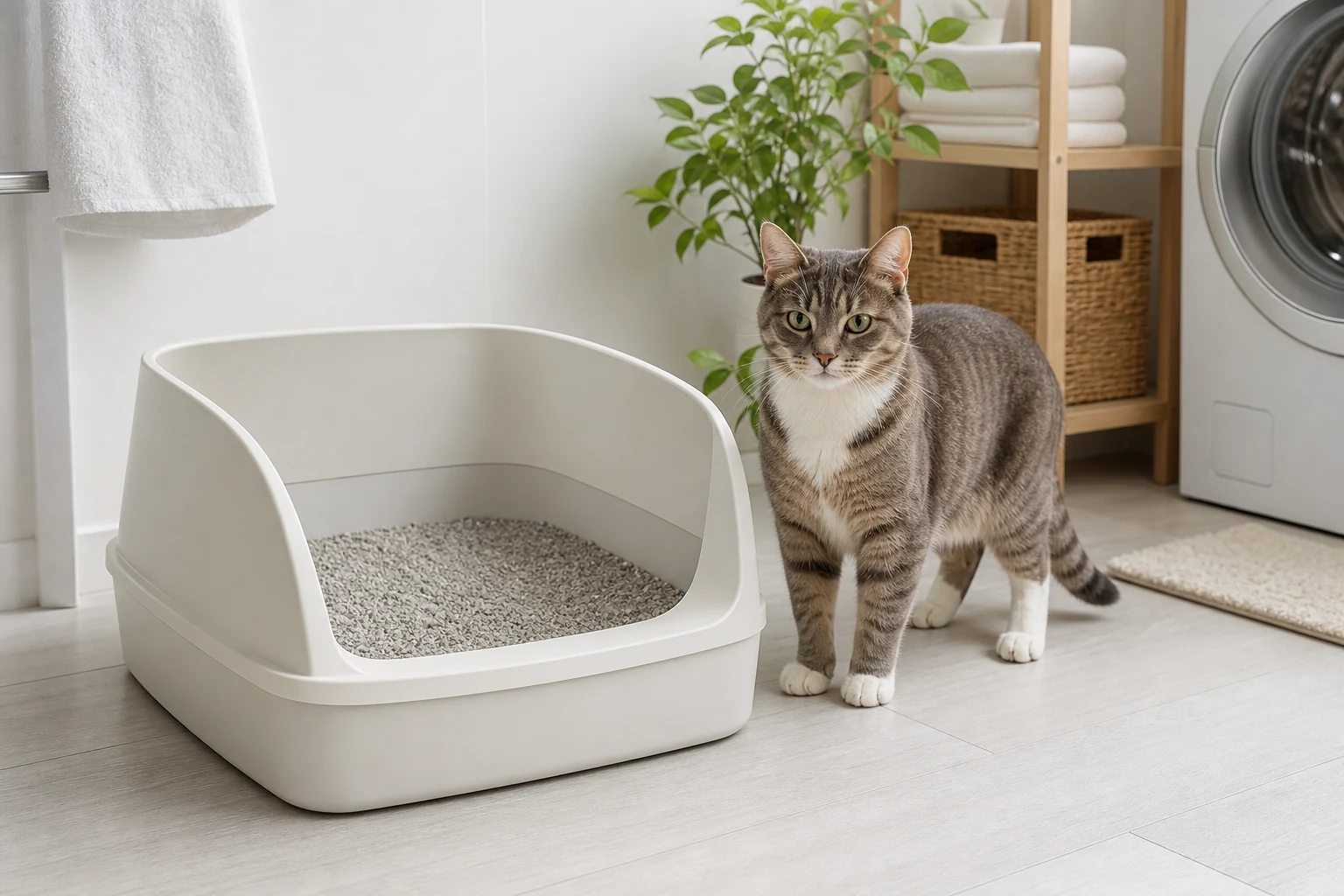
Most cats do well with about 2-3 inches of litter in a clean, roomy box, but the best depth is the one your cat can dig in comfortably without sinking, slipping, or hitting the plastic bottom every time. Start with a moderate layer, scoop daily, top up small amounts as needed, and fully refresh the box before odor or damp residue builds up.
Using more litter is not always kinder to your cat. A very deep box can feel unstable, waste litter, and hide dirty lower layers. Too little litter can leave urine on the tray bottom, make covering difficult, and create odor faster. The goal is a clean, consistent surface your cat trusts.
Table of Contents
- How much cat litter should you use?
- What depth should you start with?
- How do you know the litter depth is wrong?
- Should you top up litter or replace it?
- Does box style change the ideal depth?
- How can you reduce waste without making the box dirty?
- When is a litter-box change a health warning?
- Conclusion: Use enough litter to keep the box stable and clean
- Frequently Asked Questions
- References
How much cat litter should you use?
For most adult cats, pour enough litter to make an even layer about 2-3 inches deep, then adjust by watching how your cat uses the box. Some cats prefer a slightly shallower surface, while enthusiastic diggers may need a little more. What matters is that the litter stays clean, dry, diggable, and predictable.
Merck Veterinary Manual emphasizes that cats are naturally clean and may refuse a box that is not kept clean, so depth cannot compensate for poor maintenance.1 A cat needs enough litter to dig, eliminate, and cover waste, but not so much that the feet sink deeply or clumps disappear into a neglected lower layer.
Use these starting points:
| Situation | Practical starting depth | Watch for |
|---|---|---|
| Average adult cat using clumping litter | 2-3 inches | Easy digging, clumps not sticking hard to the bottom |
| Kitten or small cat | 1.5-2 inches | Easy entry, no deep sinking, no eating litter |
| Large cat or strong digger | 3 inches, then adjust | Comfortable turning and covering without litter spilling everywhere |
| Senior cat or cat with mobility limits | Moderate, stable layer | No slipping, wobbling, or reluctance to step in |
| Non-clumping litter | Follow product directions closely | Faster urine saturation and more frequent full changes |
Do not fill the box to the rim. Cats need room to step in, turn around, dig, and cover without litter spilling over the sides at every movement.
What depth should you start with?
Start with 2-3 inches in a large open box, keep the same litter type for the first trial, and observe your cat for several days. If clumps stick hard to the bottom, add a little more. If your cat hesitates, sinks, or kicks huge piles out of the box, reduce the depth slightly.
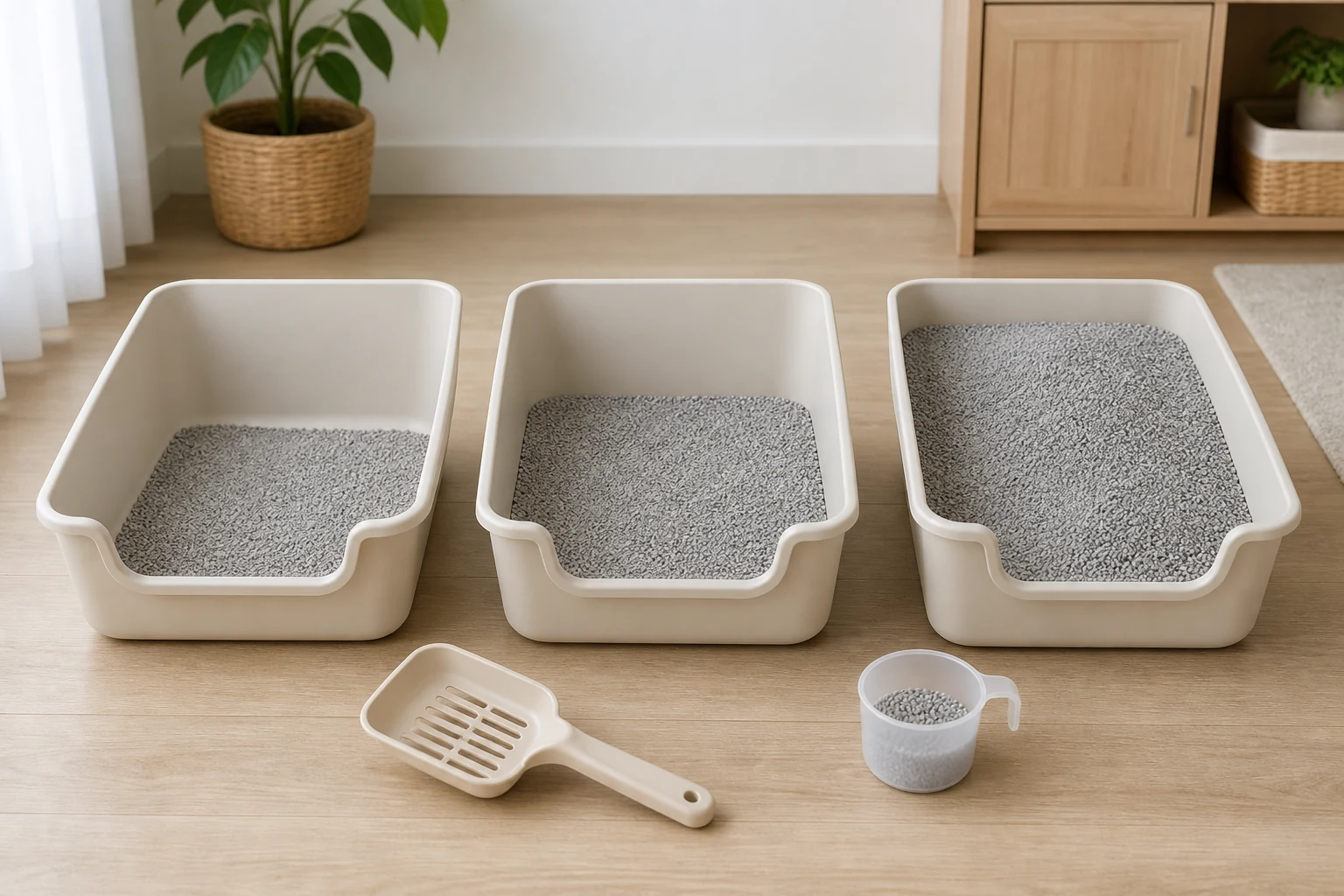
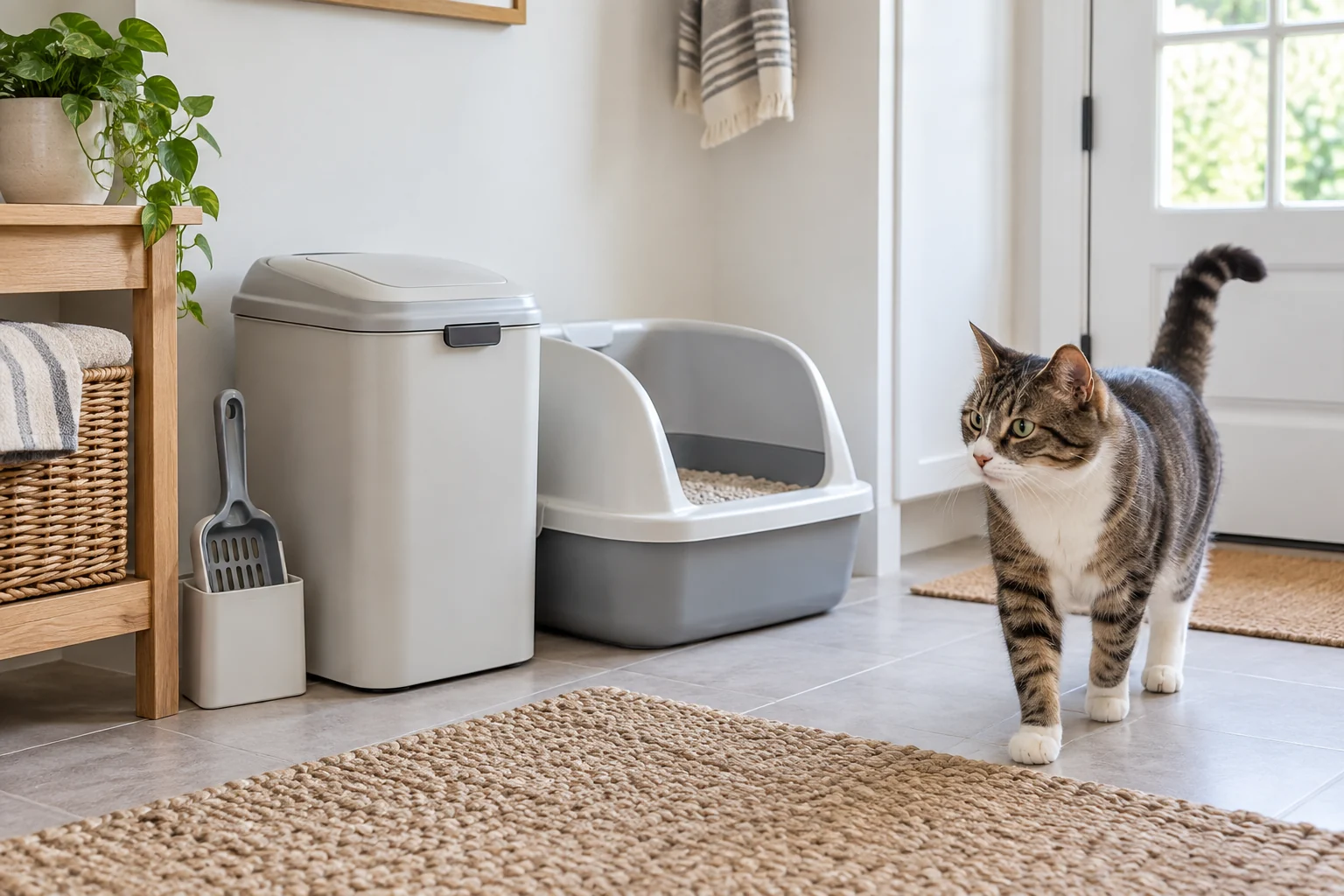
A comfortable litter depth works with the whole station. Box size, entry height, location, and cleanliness all affect how the surface feels. If the box is cramped or hard to enter, adding extra litter will not solve the problem. Review the best cat litter box setup if your cat seems uncomfortable even when the litter level is reasonable.
Make changes slowly unless the box is clearly unusable. Sudden changes in depth, litter texture, scent, or box style can make a familiar toilet area feel unfamiliar. If you need to test a new depth, change one box first while leaving another trusted box available.
How do you know the litter depth is wrong?
The litter is probably too shallow if urine reaches the plastic bottom every day, clumps break apart because they are stuck to the tray, odor appears quickly after scooping, or your cat scratches the bare bottom after using the box. A shallow layer can also make covering waste harder.
The litter may be too deep if your cat steps in carefully, sinks, shakes paws, avoids turning normally, digs without finding a stable spot, or sends large amounts of clean litter over the sides. Some cats like to dig, but a box that looks like a loose dune can feel insecure to others.
Watch for behavior as well as mess:
- Sniffing the box and walking away.
- Perching on the edge instead of standing normally.
- Eliminating beside the box.
- Rushing out immediately after using it.
- Using one box but avoiding another with a different depth.
- Choosing laundry, rugs, beds, or tubs instead.
These signs can relate to depth, cleanliness, box style, location, stress, or health. If accidents are happening, start with environmental basics and read more about litter box avoidance before assuming the cat is being stubborn. The AAFP/ISFM house-soiling guidelines emphasize evaluating litter box design, location, cleanliness, and household stressors together.2
Should you top up litter or replace it?
Top up clean clumping litter after scooping when the layer has become too shallow, but do not use fresh litter to bury old, damp, smelly, or crumbling litter. Topping up is maintenance; replacing is cleaning. You need both.
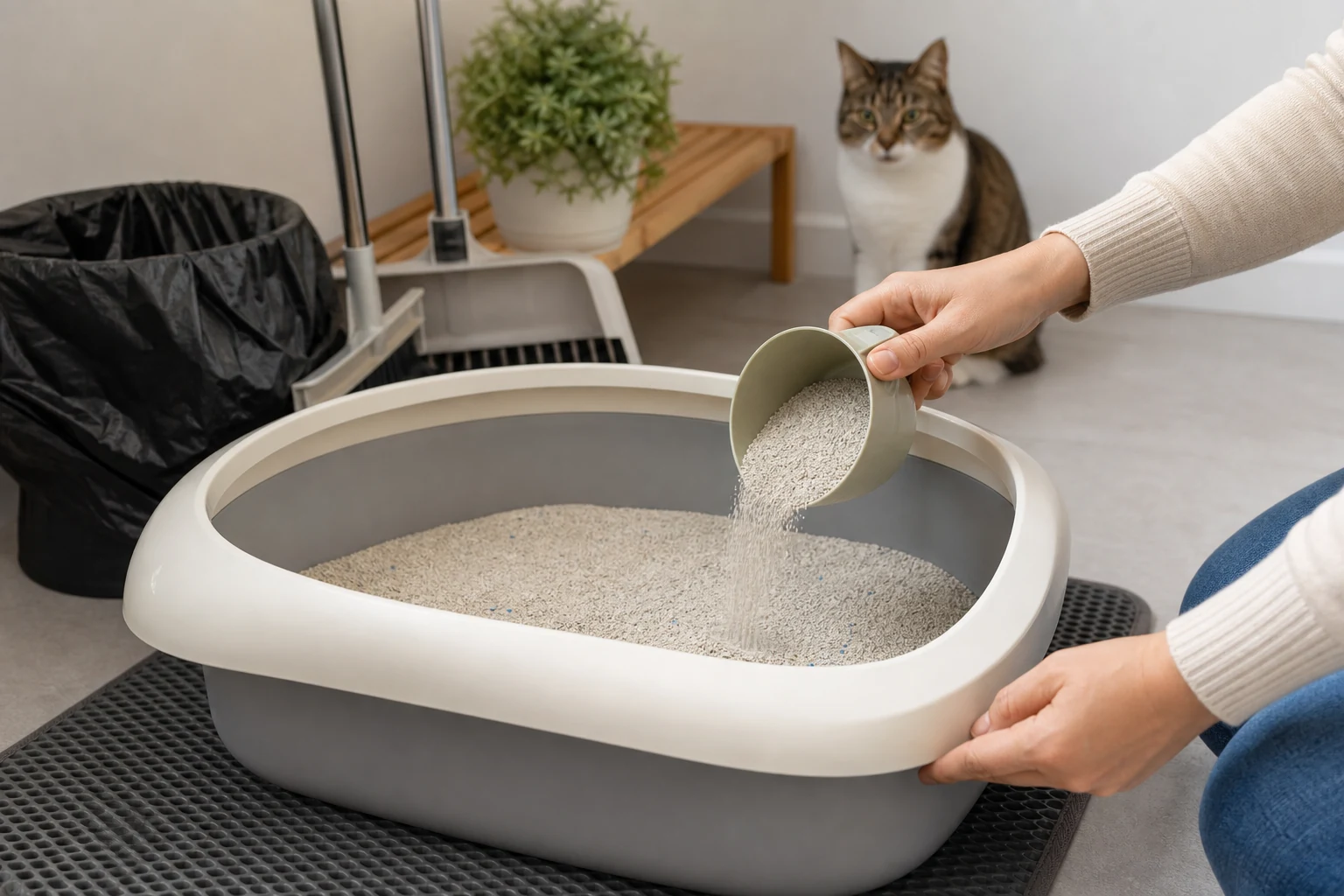
After each scoop, level the surface and check whether the depth is still comfortable. Add a small amount of fresh litter only when the remaining litter is dry and clean enough to keep. If clumps are breaking apart, odor remains, or the tray bottom is sticky, it is time for a full change and wash rather than another pour of clean litter.
For most homes, a practical rhythm looks like this:
| Task | When to do it | Why it helps |
|---|---|---|
| Scoop feces and urine clumps | At least daily | Keeps clean spots available |
| Level the surface | After scooping | Shows whether the box is becoming too shallow |
| Top up | When clean litter level drops | Maintains a familiar digging surface |
| Empty and wash | Before odor, dampness, or residue persists | Removes buildup that topping up cannot fix |
| Replace damaged boxes | When scratches or odor remain | Deep scratches can hold residue |
Use your litter box cleaning schedule as the backbone. Merck recommends daily scooping and regular full cleaning, with more frequent cleaning when more cats use the box.1
Does box style change the ideal depth?
Yes, box style can change how much litter works in practice. A low-sided box may need a slightly more careful depth because extra litter spills easily. A high-sided box can hold more litter, but that does not mean every cat wants a deeper surface. A covered box can hide depth problems and trap odor, so it needs close monitoring.
The Ohio State Indoor Pet Initiative recommends providing enough litter boxes and making them accessible in useful locations, especially in multi-level homes.3 Those basics matter more than trying to solve every issue with deeper litter.
Consider these adjustments:
- Low-entry senior box: Keep the surface stable and moderate so the cat can step in confidently.
- High-sided box: Use the side height to contain scatter, not to overfill the tray.
- Covered box: Scoop often and check odor inside the hood, because trapped smells can make the box less appealing.
- Automatic box: Follow the manufacturer's fill line exactly; overfilling can interfere with sensors and rakes.
- Large storage-bin style box: Measure depth by the litter layer, not the height of the container walls.
If you are deciding between covered vs uncovered litter boxes, test the style separately from depth. Changing both at once makes it harder to know what your cat disliked.
How can you reduce waste without making the box dirty?
Reduce waste by scooping carefully, topping up small amounts, using a box that fits your cat, and fully replacing litter only when the remaining litter is no longer clean. Do not reduce waste by keeping a box too shallow or delaying necessary changes.
Try these habits:
- Use a scoop that matches the litter granule size so clean litter falls back into the box.
- Let clumps firm up before scooping if the product instructions recommend it.
- Level the surface after scooping so you can see the true depth.
- Add fresh litter in small amounts instead of dumping in a large layer.
- Keep a mat outside the box to capture clean tracked litter.
- Store litter dry and sealed so it does not clump or absorb humidity before use.
- Replace the whole box when scratches hold odor.
If your cat urinates outside the box, clean the area thoroughly so odor does not invite repeat use. The ASPCA advises avoiding ammonia-based cleaners for urine accidents because the smell can attract a cat back to the same spot.4 SnuggleSouls also has a practical guide on how to clean cat pee properly.
Waste control should never come at the cost of hygiene. Cats are sensitive to dirty or uncomfortable toileting areas, and a box that saves a little litter but creates avoidance is more expensive in the long run.
When is a litter-box change a health warning?
Call a veterinarian when litter-box behavior changes suddenly, especially if your cat strains, cries, makes frequent trips, produces little or no urine, has blood in urine or stool, vomits, has diarrhea, seems painful, hides, stops eating, or declines quickly. A cat who repeatedly tries to urinate but cannot pass urine needs emergency veterinary care.
Cornell Feline Health Center explains that medical conditions affecting urination, defecation, pain, mobility, or urgency can cause litter box problems.5 That means a cat who starts missing the box may not be objecting to litter depth at all.
Use litter maintenance as observation time. Notice changes in:
- Urine clump size or number.
- Stool consistency, color, or frequency.
- Straining, repeated visits, or vocalizing.
- New accidents near the box.
- Reluctance to climb into a box that used to be easy.
- Pawing, licking, or discomfort after leaving.
For urinary red flags, review cat UTI symptoms and contact your veterinarian promptly. Home adjustments can support comfort, but they cannot diagnose pain, urinary blockage, infection, constipation, arthritis, or other medical problems.
Conclusion: Use enough litter to keep the box stable and clean
A good litter depth is usually moderate, consistent, and easy to keep clean. Start around 2-3 inches, adjust gradually for your cat's size and digging style, and use daily scooping to decide when to top up or fully replace the litter.
The right amount of litter is not the maximum your box can hold. It is the amount that lets your cat enter, dig, eliminate, cover, and leave comfortably in a box that stays clean enough to trust.
Frequently Asked Questions
Is 2 inches of cat litter enough?
For many cats, 2 inches is enough if the box is clean and clumps are not sticking hard to the bottom. If urine regularly reaches the tray or your cat cannot cover waste, try increasing the depth gradually.
Is 4 inches of litter too much?
Four inches may be more than many cats need, and some cats dislike sinking into a deep layer. It can also waste litter if the lower layer stays dirty. Use that much only if your cat clearly digs comfortably and the box stays clean.
Should I add new litter every day?
Add a small amount when scooping leaves the clean layer too shallow. You do not need to pour in fresh litter every day if the depth is still right, and you should not use fresh litter to cover dirty litter that needs replacing.
How deep should litter be for kittens?
Kittens usually do better with a shallower, easy-to-enter box, often around 1.5-2 inches depending on their size and the product directions. Watch closely to make sure the kitten is not eating litter and can step in and out safely.
Why does my cat dig to the bottom of the litter box?
Some cats simply dig vigorously, but repeated scraping on the plastic bottom can mean the layer is too shallow or clumps are sticking. Add a little more clean litter, check the box size, and keep the surface level after scooping.
References
[1] Merck Veterinary Manual. (2025). Providing a Litter Box for a Cat. Read the Merck guide
[2] Feline Veterinary Medical Association and International Society of Feline Medicine. (2014). 2014 AAFP/ISFM Guidelines for Diagnosing and Solving House-Soiling Behavior in Cats. Read the guidelines
[3] The Ohio State University Indoor Pet Initiative. (2026). Litter Boxes. Read the litter box guidance
[4] American Society for the Prevention of Cruelty to Animals. (2026). Litter Box Problems. Read the ASPCA guidance
[5] Cornell Feline Health Center. (2026). Feline Behavior Problems: House Soiling. Read the Cornell guide
 Why Does My Cat Flinch When Touched While Sleeping? Startle, Trust, and Pain Clues">
 Cat Scratching Baseboards: Trim Guards and Route Fixes">
 EN
EN DE
DE ES
ES PT
PT