
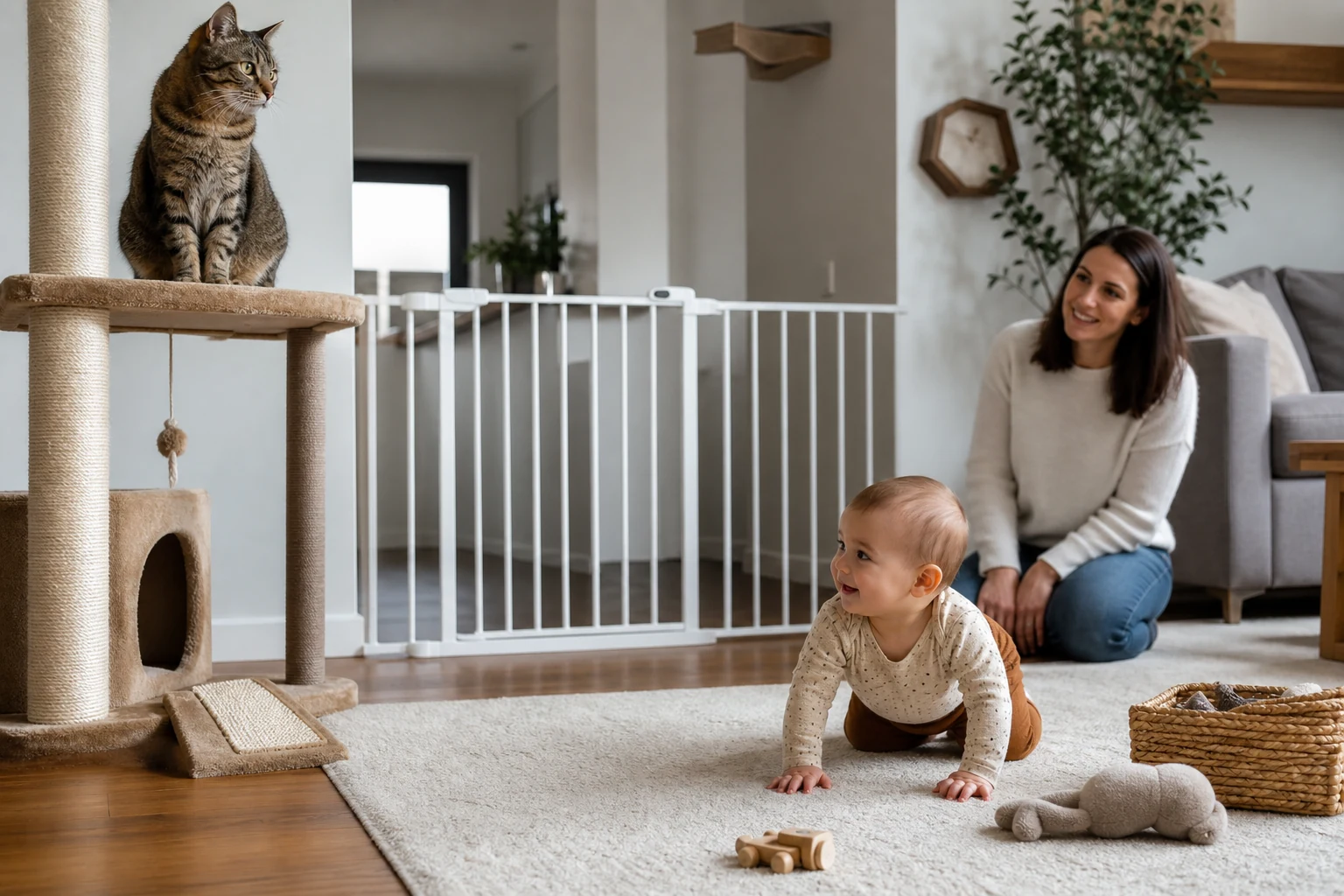
When your baby starts crawling, the safest cat introduction is not a big first meeting. It is a supervised routine that gives your cat distance, escape routes, protected resources, and a predictable way to say "no" before anyone gets scratched or scared.
A crawling baby changes the whole picture for a cat. Before this stage, your cat may have watched the baby from a sofa, sniffed a blanket, or chosen to nap in another room. Once the baby can move, reach, squeal, and follow, the cat may suddenly feel pursued in places that used to feel safe.
That does not mean your cat and baby cannot grow into a gentle bond. It means the adult has to manage the environment. Cats Protection specifically notes that supervision becomes especially important as babies get older and begin crawling, because unexpected movement and noise can frighten cats and lead to injury 1.
Table of Contents
- What changes when your baby starts crawling?
- What boundaries should you set before crawling starts?
- How should you supervise your cat and crawling baby?
- How should you teach gentle touch before your baby reaches for the cat?
- What cat body language means the interaction should stop?
- What if your cat swats, hisses, or scratches?
- What daily routine helps a cat accept a mobile baby?
- Conclusion: How to keep both your baby and cat safe
- Frequently Asked Questions
- References
What changes when your baby starts crawling?
Crawling turns the baby from a mostly stationary sound-and-scent change into a moving, reaching, unpredictable presence. From your cat's point of view, that can feel like a new animal has entered the home, even if the baby has been there for months.
This stage often adds three stressors at once: faster approach, lower-to-the-ground eye contact, and clumsy hands. A baby may crawl directly toward a resting cat, grab fur for balance, pull a tail without meaning harm, or block the cat's path under a table. Toddlers can seem unpredictable to cats because their movement, voices, and timing are still unsteady 1.
If you already used scent, sound, and first-meeting steps to prepare your cat before the baby arrives, keep those routines. The crawling stage simply needs a second layer: physical boundaries, short managed interactions, and more cat-only resting space.
Think of the goal as parallel comfort before direct contact. Your baby can be on the rug while your cat watches from a perch. Your cat can eat, use the litter box, scratch, and nap without being followed. Direct petting can wait until the baby has adult help and the cat has chosen to stay.
What boundaries should you set before crawling starts?
Set boundaries that make the right behavior easy: baby cannot reach cat resources, cat can leave without being chased, and adults can interrupt gently before tension builds. The HSE advises always supervising children around cats and teaching respectful interaction when children are old enough, while also recognizing that young children cannot be expected to understand danger 2.
Start by creating at least one baby-free cat zone. This can be a bedroom, office, laundry room, or hallway corner with a baby gate your cat can jump over or pass through. Include water, a bed, scratching options, and a route to the litter area. If you need a broader home safety pass, use a full cat-proofing your home checklist before crawling becomes fast.
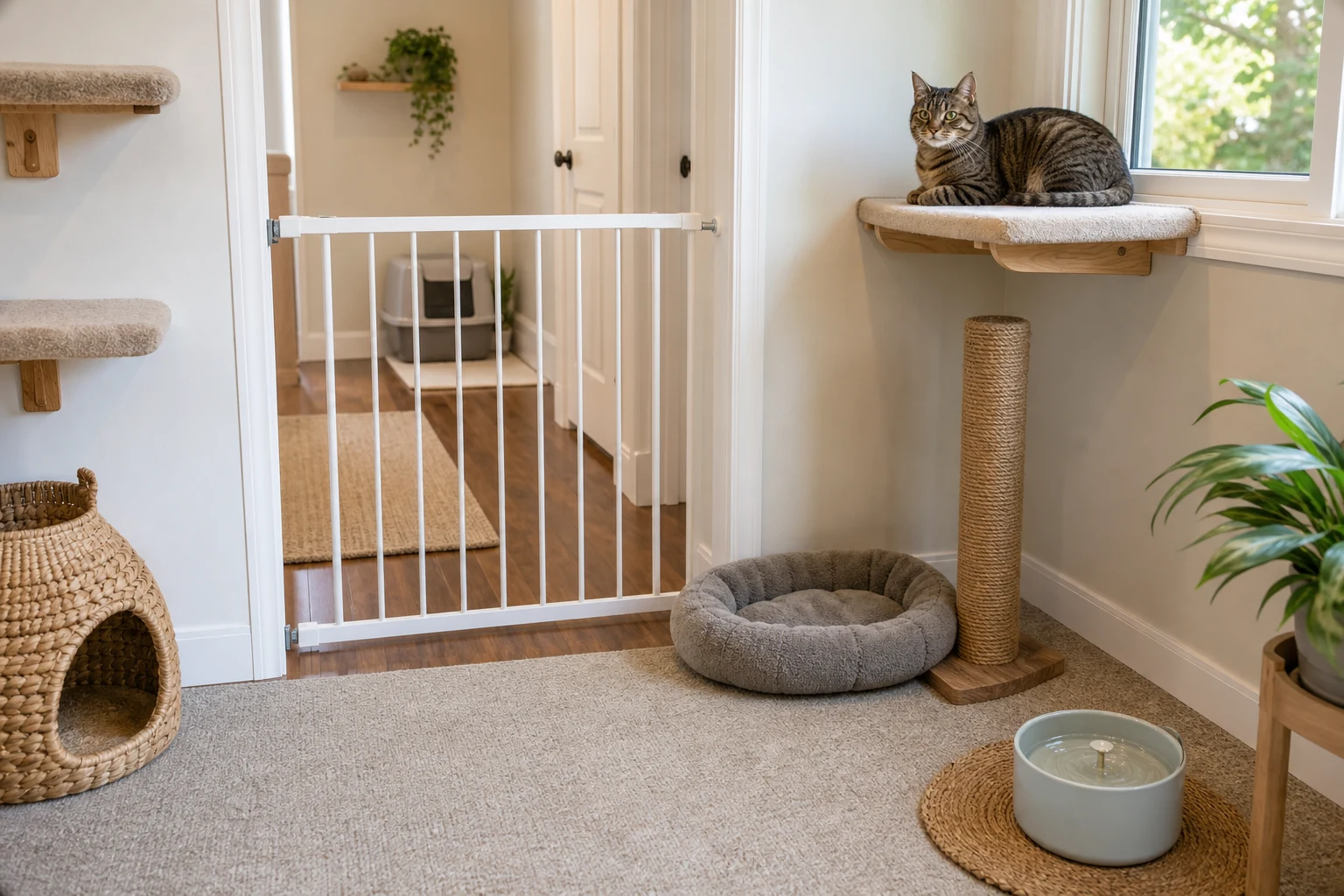
A baby-free cat zone protects food, water, litter access, scratching needs, and the cat's ability to decompress.
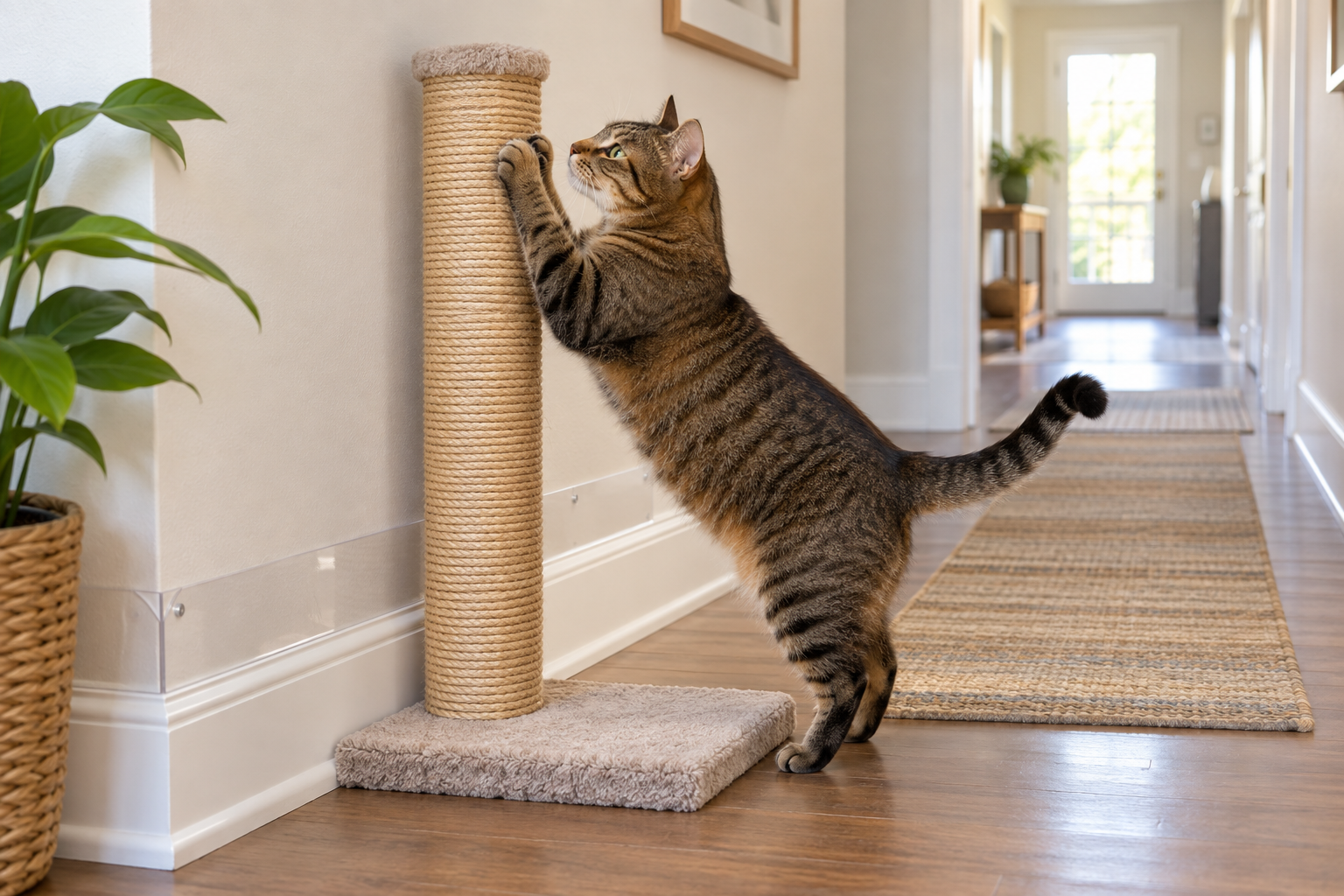
Use vertical space generously. A cat tree, wall shelf, window perch, or sofa-back route lets your cat stay socially present without being reachable. Add scratching posts for cats near family rooms so your cat has a normal stress-release behavior in the same area where baby activity happens.
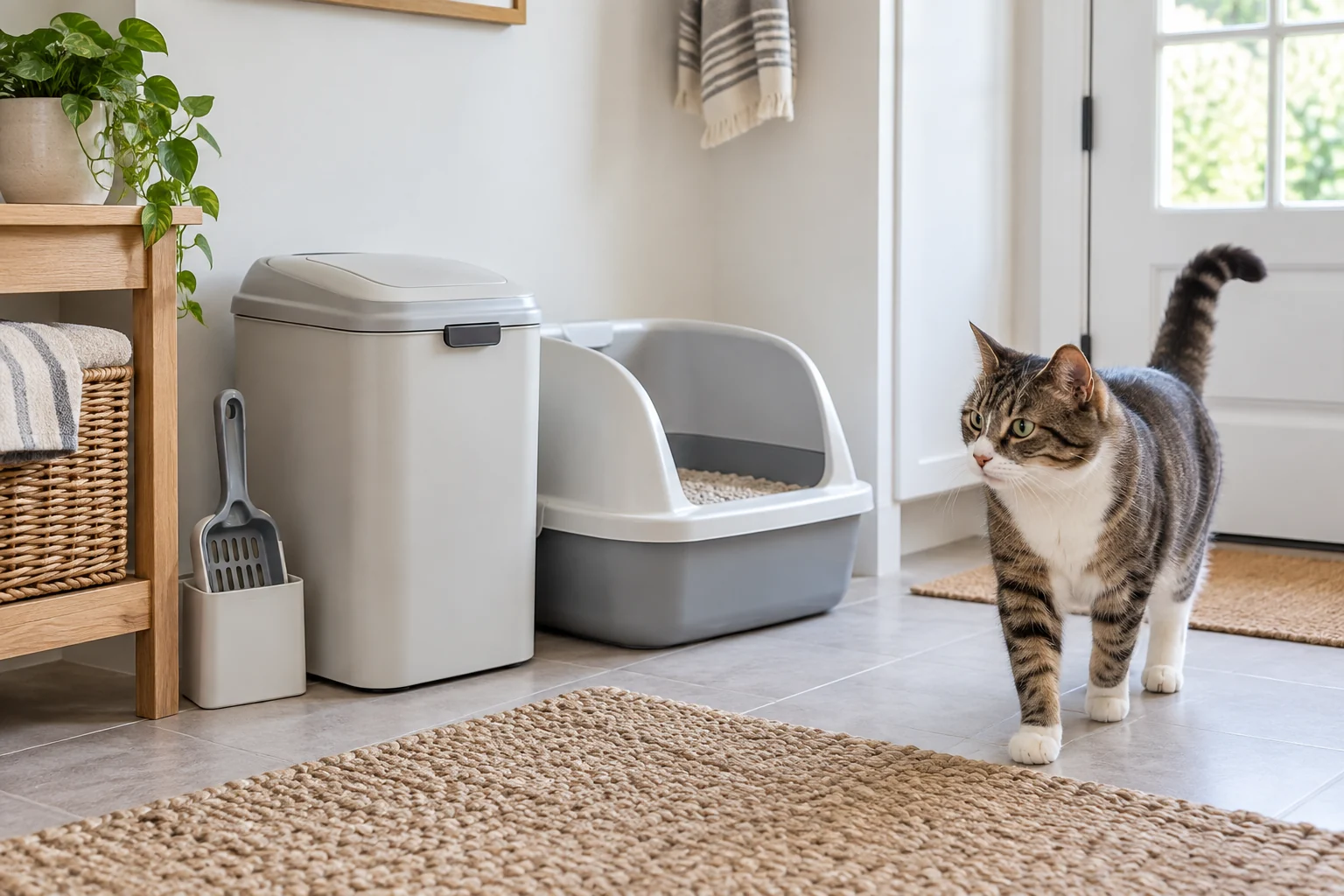
Protect litter access, too. A crawling baby should never have access to litter, scoops, waste bags, or food bowls. If your cat has had litter box stress, improve the best cat litter box setup before the baby starts exploring every doorway.
| Boundary | Why it matters | Practical setup |
|---|---|---|
| Baby-free room or gated zone | Gives the cat a predictable retreat | Use a gate, tall perch, bed, water, and scratcher |
| Protected litter route | Prevents baby access and cat avoidance | Put litter behind a gate or in a room the cat can enter freely |
| Elevated resting spots | Lets the cat observe without contact | Add a cat tree, shelf, or window perch near family space |
| Toy and food separation | Reduces guarding, stealing, and mess | Keep cat toys, treats, and bowls outside the baby's reach |
| Adult-only introductions | Prevents grabs and surprise contact | No direct petting unless an adult is close enough to guide hands |
How should you supervise your cat and crawling baby?
Supervision means being close enough to intervene immediately, not simply being in the same room. If you cannot stop a grab before it happens, the setup needs a gate, playpen, closed door, or cat perch between them.
Use a simple rule: one mobile baby, one reachable cat, one adult within arm's reach. If you need to cook, shower, answer the door, or focus on another child, separate them first. This is the same safety logic pediatric groups use around pets and young children: familiar family animals can still react when startled, hurt, or cornered 5.
Good supervision also protects the cat's choice. Do not carry your cat to the baby, hold the cat in place, or let the baby crawl after a retreating cat. The HSE recommends letting the cat approach for petting instead of picking the cat up to show the child 2. That matters because restraint can make a cat feel trapped.
Try short, calm windows:
- Put the baby on the floor with a toy.
- Let the cat enter or stay away.
- Reward calm cat behavior with soft praise or a treat tossed away from the baby.
- End while everyone is still relaxed.
- Separate before the baby becomes excited, tired, loud, or grabby.
Five peaceful minutes are more valuable than a long session that ends with a hiss.
How should you teach gentle touch before your baby reaches for the cat?
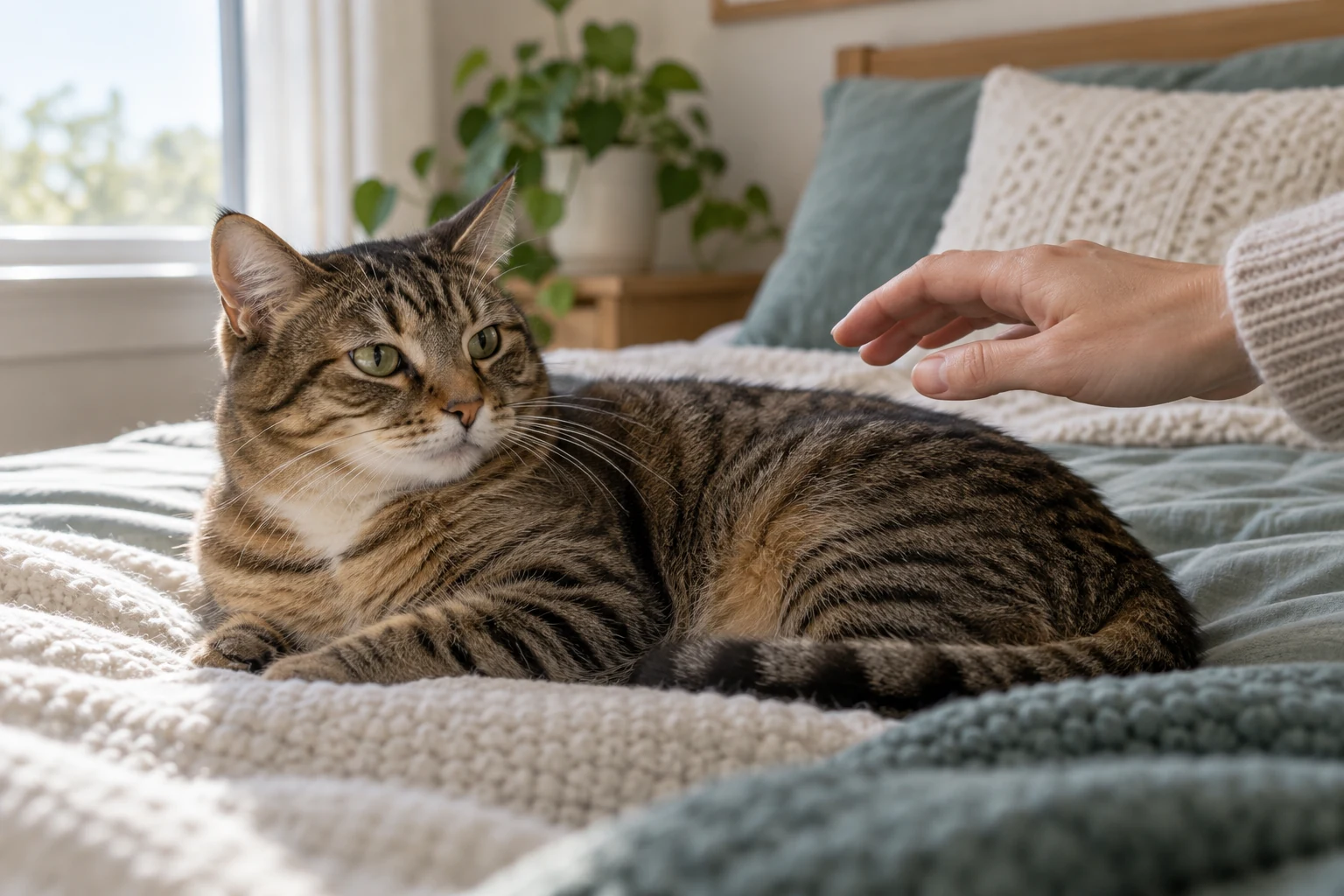
Teach gentle touch on a plush toy, your own arm, or a blanket before practicing near the real cat. A crawling baby does not understand empathy yet, but repetition helps build a safe habit: open hand, slow stroke, one or two touches, then hands away.
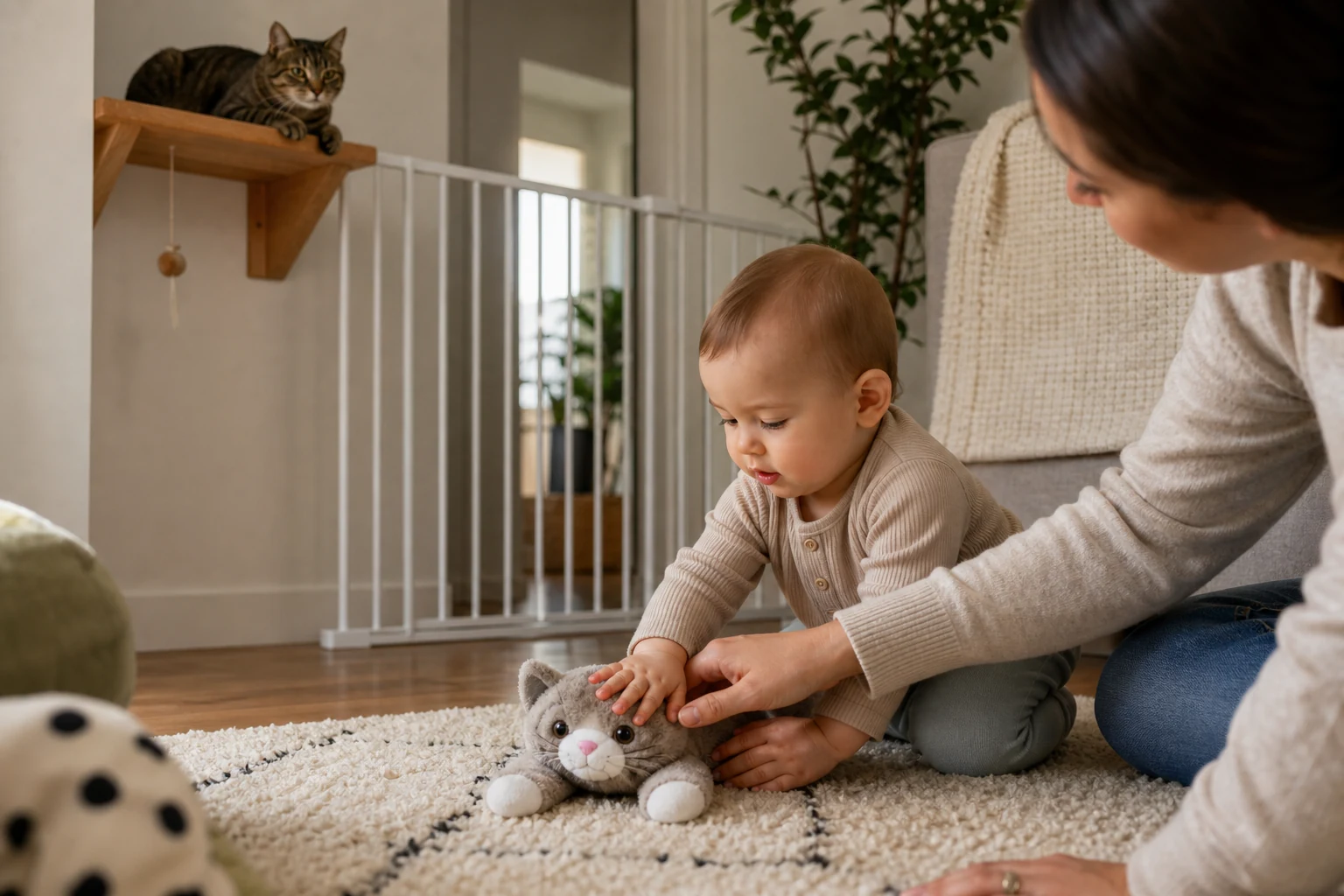
Practice gentle touch on a toy first, then use short supervised moments only when the cat chooses to stay nearby.
Use the same calm phrase every time, such as "gentle hands" or "soft touch." Guide from the baby's wrist, not by pushing the baby's hand into the cat. Pet the cat only on areas your cat already enjoys, usually the cheek, shoulder, or upper back. Avoid belly, paws, tail, whiskers, and face-to-face contact.
Keep the first real-cat touches optional and brief. If your cat walks away after one stroke, that is a successful introduction. Your baby saw the cat, practiced touch, and learned that the cat leaving is normal.
Do not use food to lure the cat into the baby's reach. Treats can be useful for rewarding calm behavior, but toss them away from the baby so the cat moves out of the interaction instead of deeper into pressure.
What cat body language means the interaction should stop?
Stop before a hiss, swat, or bite. Most cats give earlier signals that the interaction is too much: tail twitching, ears rotating sideways, skin rippling, crouching, freezing, turning the head toward the hand, dilated pupils, or trying to leave.
The ASPCA describes petting-induced aggression as a situation where a cat becomes irritated by touch, nips or bites, and then leaves 3. The SF SPCA explains that overstimulation can happen when petting or handling is uncomfortable or lasts too long, and cats vary widely in how much touch they tolerate 4.
For a crawling baby, treat any early discomfort as a stop sign.
| Cat signal | What it may mean | What to do next |
|---|---|---|
| Tail flicking or thumping | Rising arousal or irritation | Move baby away and give the cat space |
| Ears sideways or back | Anxiety, annoyance, or fear | End the interaction calmly |
| Cat freezes or crouches | The cat may feel trapped | Open an escape route immediately |
| Cat turns head toward hand | Warning that touch is too much | Stop petting before a nip |
| Hiss, growl, or swat | Clear boundary | Separate and reassess the setup |
If your cat has a pattern of licking then biting or you are trying to understand why cats bite, assume the baby stage requires shorter contact, more distance, and more escape routes.
What if your cat swats, hisses, or scratches?
Do not punish the cat. A hiss or swat is communication that the situation has become too intense. Punishment can increase fear and make future reactions faster or less predictable.
First, separate calmly. Pick up the baby or guide the baby away. Let the cat leave. Then check whether the cat was cornered, startled, woken from sleep, touched too long, blocked from food or litter, or approached while already stressed.
If a scratch or bite breaks skin, wash the wound with soap and water and contact your child's pediatrician for individualized advice. Pediatric guidance for animal bites emphasizes prompt cleaning and medical follow-up when a child is bitten 5. Cat bites and scratches can become infected, so do not ignore swelling, redness, warmth, pus, fever, or increasing pain.
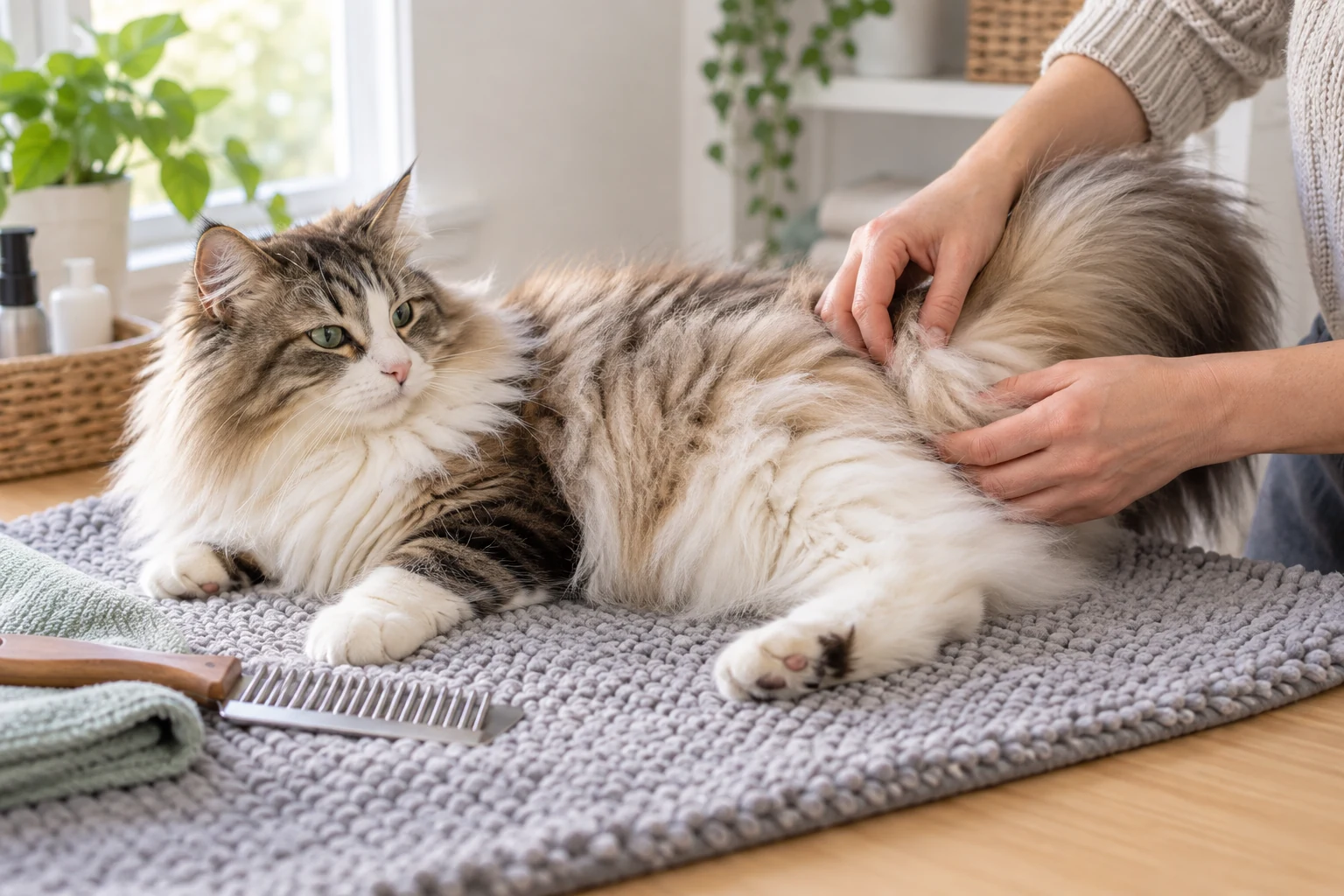
For prevention, keep your cat's nails maintained with a low-stress trim cat nails safely routine. Nail trims reduce scratch severity, but they do not replace supervision. A frightened cat with trimmed nails can still hurt a child, and a frightened child can also scare the cat.
Call your veterinarian or a qualified feline behavior professional if your cat begins hiding most of the day, stops eating, avoids the litter box, growls at normal baby sounds, guards pathways, or reacts aggressively in situations that used to be calm. Sudden behavior changes can be stress-related, pain-related, or both.
What daily routine helps a cat accept a mobile baby?
A predictable routine helps your cat feel that the baby's mobility has not taken away every good thing. Keep meals, play, litter cleaning, and quiet attention as consistent as possible.
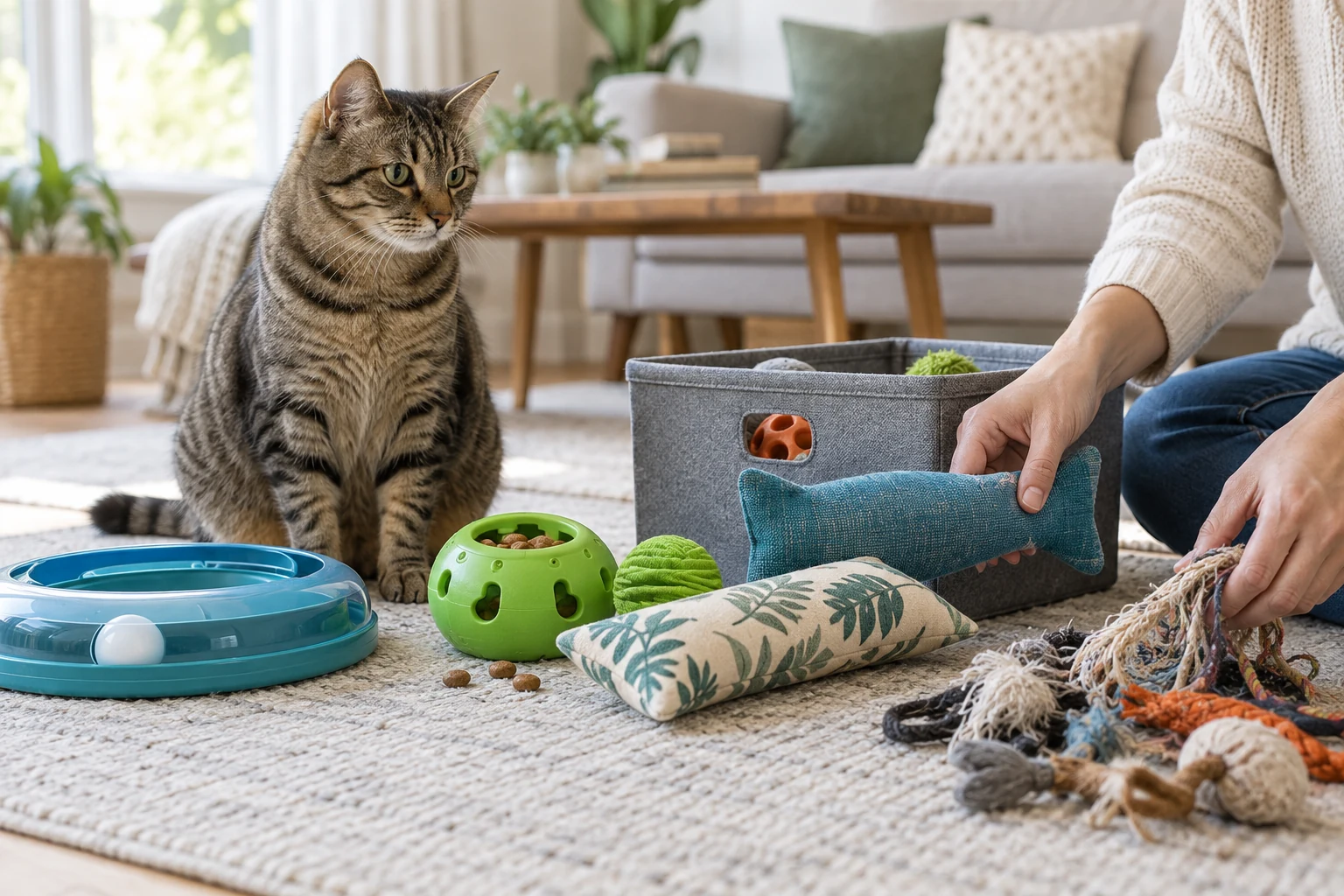
Give your cat one or two baby-free attention windows each day. Ten minutes of wand play, brushing if your cat enjoys it, or quiet sitting can lower frustration. Do this away from the baby so the cat does not have to compete for space.
Use distance-based rewards. If the baby crawls nearby and the cat stays relaxed on a perch, toss a treat to the perch or place one in the cat zone later. You are not rewarding the cat for tolerating grabbing. You are rewarding calm observation from a safe place.
Rotate baby access instead of giving the baby the whole home at once. During active crawling practice, close off the cat's favorite resting room. During cat playtime, use a baby gate or playpen for the baby. Both family members get freedom, but not at the other's expense.
Most importantly, keep direct contact rare until the baby is older, steadier, and able to follow simple instructions. A strong cat-baby relationship is built from hundreds of calm, protected moments, not from forcing cuddles.
Conclusion: How to keep both your baby and cat safe
Introducing a cat to a crawling baby is really about managing movement, space, and choice. Your baby needs constant supervision because they cannot yet understand the cat's boundaries, and your cat needs safe places to eat, rest, scratch, use the litter box, and leave.
Start with gates, perches, and baby-free zones. Practice gentle touch on toys before touching the cat. Watch early body language and end interactions before your cat has to escalate. With patient routines, your cat can learn that the mobile baby is not a threat, and your baby can grow up learning that animals deserve gentle, respectful space.
Frequently Asked Questions
Can my cat be in the same room as my crawling baby?
Yes, if an adult is actively supervising and the cat has a safe way to leave. If you are distracted or cannot intervene quickly, use a baby gate, playpen, closed door, or cat-only room.
Should I let my baby pet the cat?
Only for very short, adult-guided moments when the cat approaches or chooses to stay. Practice gentle touch on a plush toy first, then stop after one or two calm strokes.
What should I do if my baby keeps chasing the cat?
Separate them sooner and change the layout. Use gates, play yards, vertical cat spaces, and closed doors so your baby cannot practice chasing and your cat does not feel cornered.
Is hissing at the baby a bad sign?
Hissing means your cat needs more space right now. It does not mean the relationship is ruined, but it does mean the next setup should include more distance, shorter exposure, and better escape routes.
Should I rehome my cat if I have a crawling baby?
Most families do not need to rehome a cat because a baby starts crawling. Start with environmental management, supervision, and behavior support. If there is repeated aggression, severe stress, or a safety incident, speak with your veterinarian and a qualified feline behavior professional.
References
[1] Cats Protection. (2026). Cats and babies. Cats Protection
[2] Health Service Executive. (2026). Cats – teaching your child to be safe. HSE
[3] ASPCA. (2026). Aggression in Cats. ASPCA
[4] San Francisco SPCA. (2026). Overstimulation. San Francisco SPCA
[5] American Academy of Pediatrics / HealthyChildren.org. (2018). Dog Bite Prevention Tips. HealthyChildren.org

 Why Does My Cat Flinch When Touched While Sleeping? Startle, Trust, and Pain Clues">
 Cat Scratching Baseboards: Trim Guards and Route Fixes">
 EN
EN DE
DE ES
ES PT
PT