
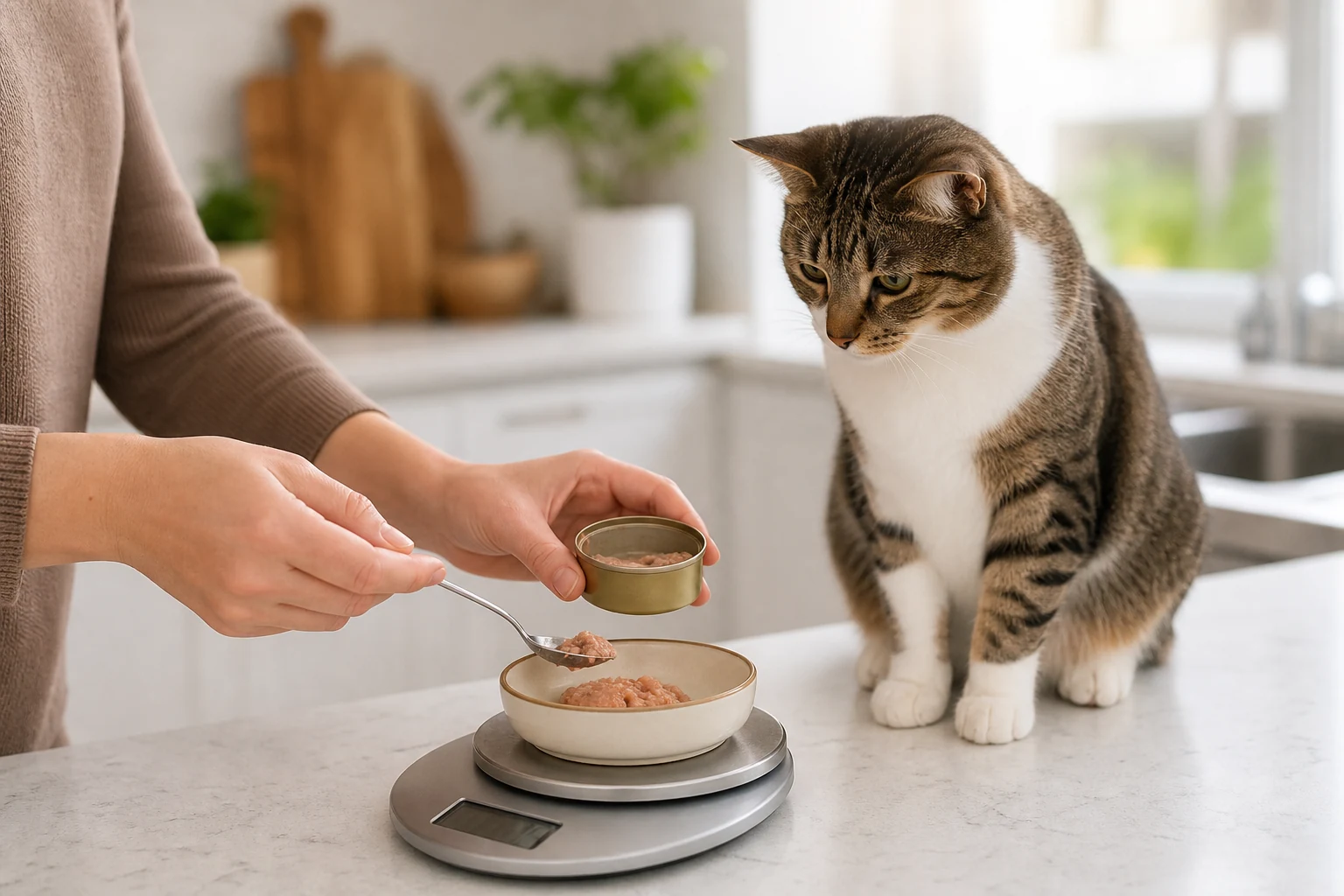
If your cat is always hungry, the cause may be as simple as an under-measured meal, a young active body, boredom around food, or a feeding schedule that does not fit your cat. But constant hunger can also be a warning sign when it comes with weight loss, increased thirst, vomiting, diarrhea, restlessness, or a sudden change in behavior.
The useful question is not only "why is my cat always hungry?" It is "is my cat getting enough appropriate calories, and does this appetite match their body condition and health?" This guide walks through normal appetite, feeding mistakes, and the signs that should prompt a veterinary visit.
Table of Contents
- Could your cat simply need a different meal plan?
- When is a hungry cat normal, and when is it a warning sign?
- What health problems can make a cat act starving?
- How can you help a food-obsessed cat feel more satisfied?
- What will your veterinarian want to know?
- Conclusion: What to do if your cat always seems hungry
- Frequently Asked Questions
- References
Could your cat simply need a different meal plan?
A hungry cat may truly need a feeding adjustment, especially if portions are guessed by scoop size or copied from a package chart without checking weight and body condition. Feeding guides are starting points, not a guarantee for every cat.
Cats need individualized nutrition based on life stage, body condition, muscle condition, activity level, reproductive status, and health concerns. The 2021 AAHA/AAFP life stage guidelines recommend assessing nutrition with those factors instead of relying on age alone 3. If you have not recently checked calories, start with SnuggleSouls' guide to how much should I feed my cat or use the cat calorie calculator as a planning tool, then confirm the plan with your veterinarian.
Common non-medical reasons cats seem hungry include:
- Meals are too small for the cat's current weight, activity, or growth stage.
- A kitten, adolescent, pregnant cat, or nursing cat has higher energy needs.
- Dry food portions are being measured inconsistently.
- Treats are replacing balanced meals, leaving the cat unsatisfied.
- One cat in a multi-cat home is stealing food from another.
- The cat eats quickly, then begs because the meal ended before fullness cues had time to settle.
- The cat has learned that meowing, pawing, or waking you up earns food.
A simple seven-day feeding log often reveals the pattern. Write down each meal, treats, water changes, vomiting, stool changes, and body weight if you can weigh your cat safely. If appetite is intense but weight is stable and the cat is otherwise well, the next step is usually portion accuracy and routine, not panic.
When is a hungry cat normal, and when is it a warning sign?
Hunger is more concerning when it is new, extreme, or paired with physical changes. A cat who has always loved food but maintains a healthy shape is different from a cat who suddenly raids counters, cries constantly, loses weight, and drinks more water.

Use body condition as your anchor. Weight alone can miss changes in fat and muscle, so pair weigh-ins with a shape check. If you need a refresher, review the SnuggleSouls cat body condition guide and look for changes over time rather than one isolated number.
| What you notice | More likely routine | More concerning |
|---|---|---|
| Appetite | Predictable begging before meals | Sudden ravenous appetite or food stealing |
| Weight | Stable weight and healthy body condition | Weight loss despite eating well |
| Water | Normal drinking | Drinking and urinating more than usual |
| Energy | Normal play, sleep, and grooming | Restlessness, weakness, hiding, or rapid decline |
| Digestion | Occasional hairball or isolated stomach upset | Repeated vomiting, diarrhea, bulky stool, or dehydration |
| Behavior | Learned mealtime demanding | Confusion, agitation, yowling, or major personality change |
Call your veterinarian promptly if hunger comes with weight loss, increased thirst or urination, repeated vomiting, diarrhea, a swollen belly, poor coat quality, weakness, or a major behavior change. Seek urgent care for collapse, breathing trouble, seizures, suspected poisoning, inability to urinate, severe dehydration, or rapid decline.
What health problems can make a cat act starving?
Several medical problems can make a cat seem hungry even when meals have not changed. This article cannot diagnose your cat, but it can help you decide when appetite deserves a veterinary exam.
Diabetes is one important possibility. Cornell Feline Health Center notes that owners commonly notice weight loss despite a good appetite, along with increased thirst and urination 1. A diabetic cat may eat eagerly because the body is not using glucose normally. Testing usually involves blood and urine evaluation, so guessing at home is not enough.
Hyperthyroidism is another classic cause in older cats. Merck Veterinary Manual describes weight loss despite a normal or increased appetite as a common sign, often with hyperactivity, excessive vocalization, vomiting, diarrhea, increased thirst, or increased urination 2. Because this condition is especially common in middle-aged and senior cats, a new "bottomless appetite" in an older cat should be taken seriously.
Other possibilities include intestinal parasites, malabsorption, inflammatory bowel disease, food insecurity after a period of underfeeding, medication effects, pregnancy, poor diet fit, or conflict in a multi-cat home. Pain, stress, and boredom can also change food-seeking behavior. The pattern matters: a hungry overweight cat may need a safer satiety plan, while a hungry thin cat needs a medical workup sooner.
How can you help a food-obsessed cat feel more satisfied?
Help starts with measured meals, a predictable routine, and enrichment that makes food last longer. Adding more food every time your cat asks can create weight gain, while abruptly cutting food can be unsafe and frustrating.
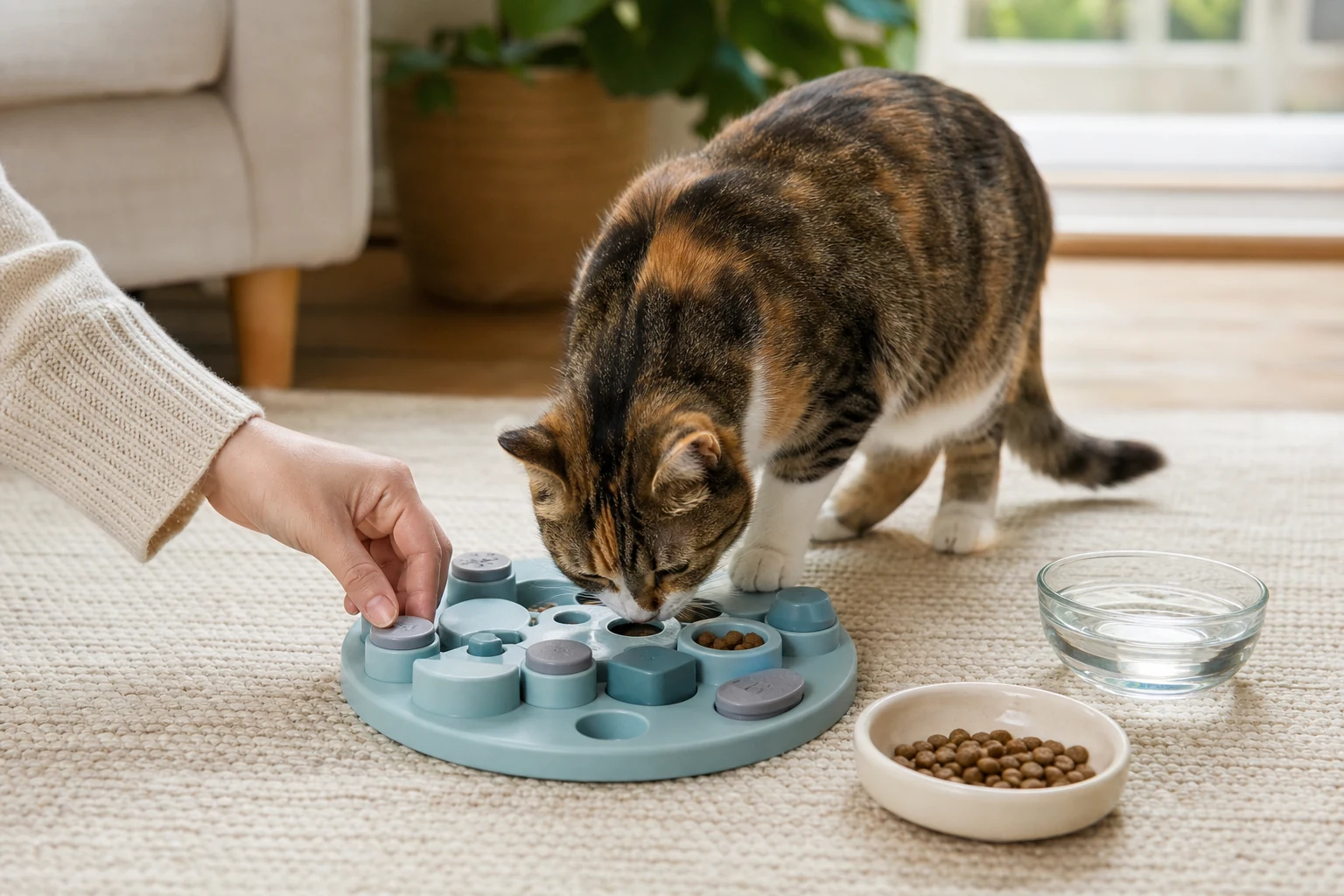
Try these safer steps:
- Measure food by calories, not by a vague scoop.
- Split the daily amount into several small meals.
- Use puzzle feeders, food balls, lick mats, or hidden mini-meals for cats who eat too fast.
- Keep each cat's food separate in multi-cat homes.
- Use play before meals so the routine feels like hunt, catch, eat, groom, rest.
- Replace high-calorie treats with part of the measured daily ration.
- Keep fresh water available and note any sudden increase in drinking.
The 2010 AAFP/AAHA guidelines note that different feeding styles can maintain health, including meals or free choice, but they also emphasize monitoring intake, water access, quiet feeding areas, foraging devices, and multiple small meals when helpful 4. For many indoor cats, a puzzle feeder turns "I am starving" energy into a slower, more natural eating task.
Food type can also affect satisfaction. Wet food often has more moisture by volume, while dry food can be calorie-dense and easy to overpour. If you are comparing options, see SnuggleSouls' wet vs dry cat food guide and our article on choosing healthy cat food. The best choice is not the trendiest food; it is a complete, balanced diet your cat tolerates well and that supports a healthy body condition.
What will your veterinarian want to know?
Your veterinarian will want specifics, not just "my cat is hungry." Bring a short record so the visit can move from a vague symptom to a practical plan.
Useful details include:
- Your cat's age, current weight, and recent weight trend.
- Brand, formula, calories per can or cup, and exact daily amount.
- Treats, toppers, table food, and supplements.
- How meals are offered and whether other pets can access the food.
- Water intake changes, litter box changes, vomiting, diarrhea, or stool changes.
- Activity level, behavior changes, vocalization, sleep, grooming, and hiding.
- Any medications or recent diet changes.
The WSAVA Global Nutrition Committee encourages nutrition screening as part of routine care, including diet history and body condition assessment 5. If this is a new cat or you are preparing for an appointment, the SnuggleSouls first vet visit checklist can help you organize questions without forgetting important details.
Do not start a weight-loss diet, supplement, appetite medication, dewormer, or home treatment because of hunger alone. Cats who lose weight too quickly can become seriously ill, and a hungry cat with medical disease needs the cause addressed, not just a different bowl.
Conclusion: What to do if your cat always seems hungry
A cat who is always hungry may need a better meal routine, more accurate calorie tracking, slower feeding, or more enrichment. But constant hunger becomes a veterinary concern when it is sudden, intense, or paired with weight loss, increased thirst, vomiting, diarrhea, restlessness, weakness, or behavior change.
Measure the food, track the pattern for a few days, check body condition, and call your veterinarian if the appetite does not match your cat's weight, water intake, or overall health. You do not need to guess alone, and the safest plan is the one that fits your individual cat.
Frequently Asked Questions
Why is my cat always hungry but losing weight?
Hunger with weight loss is a warning sign. Diabetes and hyperthyroidism are two possible causes, especially when weight loss appears with increased thirst, increased urination, vomiting, diarrhea, or restlessness 1 2. Schedule a veterinary exam rather than increasing food indefinitely.
Is my cat hungry or just begging?
Begging is more likely when your cat has stable weight, normal water intake, normal stool, and a predictable pattern around mealtimes. True concern rises when the behavior is new, extreme, or paired with physical changes such as weight loss, vomiting, diarrhea, or drinking more water.
Should I free-feed a cat who acts starving?
Free-feeding can work for some cats, but it can also hide appetite changes and make overeating easier. If your cat is food-obsessed, measured meals, puzzle feeders, and several smaller portions are often easier to monitor. Ask your veterinarian before changing the plan for a kitten, senior cat, diabetic cat, underweight cat, or cat with chronic disease.
Can boredom make a cat seem hungry all the time?
Yes. Some cats ask for food because food is the most predictable interaction in the day. Play, climbing spaces, scent games, puzzle feeders, and scheduled attention can reduce food-seeking behavior without adding unnecessary calories.
When should I take a hungry cat to the vet?
Book a visit if the hunger is sudden, severe, or paired with weight loss, increased thirst, increased urination, vomiting, diarrhea, poor coat, weakness, restlessness, or behavior change. Seek urgent care for collapse, breathing trouble, seizures, suspected poisoning, blocked urination, severe dehydration, or rapid decline.
References
[1] Cornell Feline Health Center. (2026). Feline Diabetes. Cornell Feline Health Center
[2] Merck Veterinary Manual. (2024). Hyperthyroidism in Animals. Merck Veterinary Manual
[3] AAHA and AAFP. (2021). 2021 AAHA/AAFP Feline Life Stage Guidelines. PubMed Central
[4] AAFP and AAHA. (2010). Feline Life Stage Guidelines. PubMed Central
[5] WSAVA Global Nutrition Committee. (2024). Global Nutrition Guidelines. WSAVA

 Why Does My Cat Flinch When Touched While Sleeping? Startle, Trust, and Pain Clues">
 Cat Scratching Baseboards: Trim Guards and Route Fixes">
 EN
EN DE
DE ES
ES PT
PT