
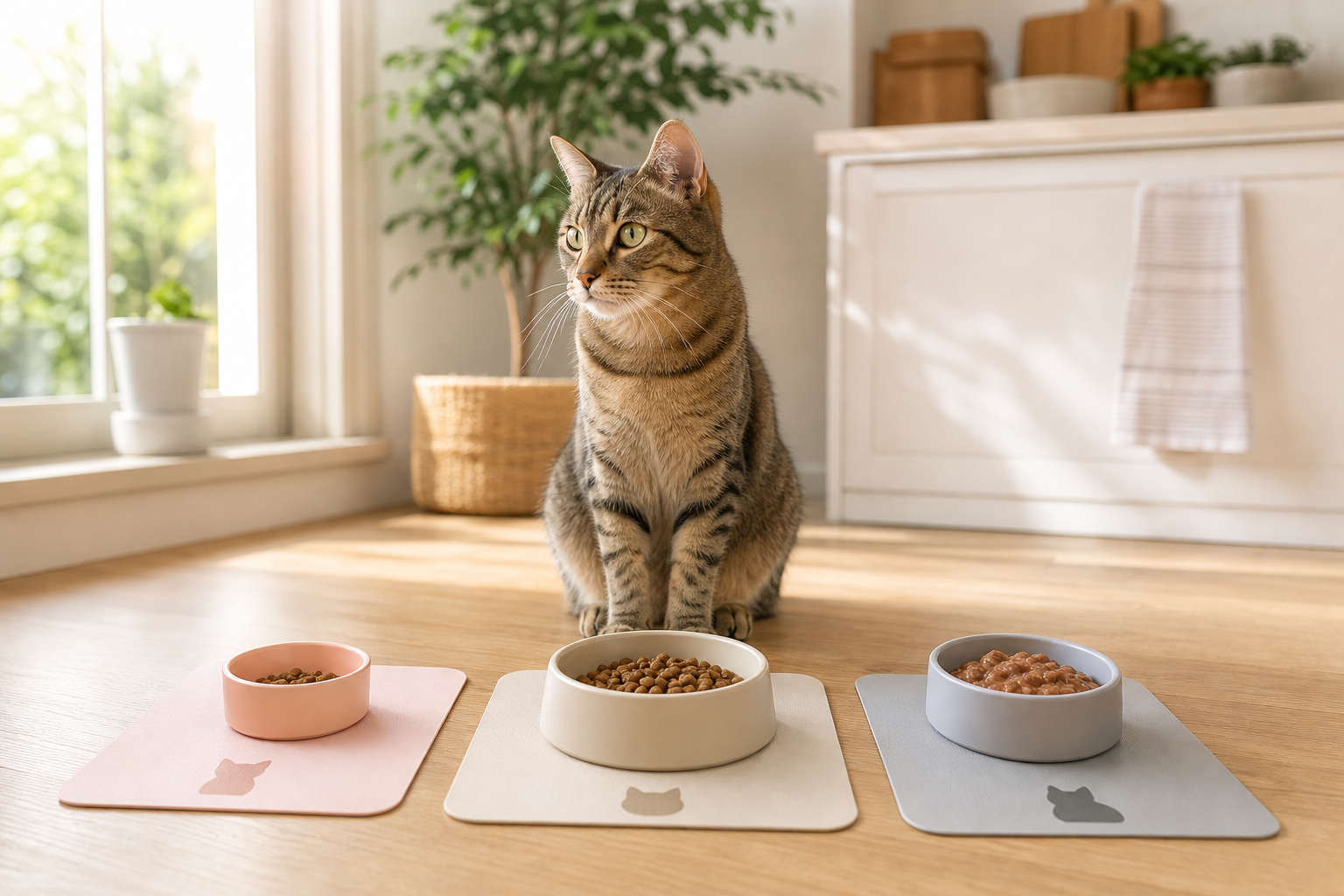
A good cat feeding schedule by age starts with this simple rule: kittens usually need more frequent meals, most healthy adults do well with one or two measured meals, and senior cats should keep a steady routine unless their veterinarian recommends a change. The exact plan still depends on calories, body condition, food type, health, and whether your cat eats too fast, grazes, or loses interest in food.
Cat parents often ask for a clock-based answer: breakfast at 7, dinner at 6, done. Real feeding works better when you pair the clock with your cat's life stage and daily calorie target. Cornell Feline Health Center notes that meal frequency depends on age, health, and preference, and that adult cats can often eat once or twice daily when healthy 1.
Use this guide to build a practical meal rhythm for kittens, adults, mature adults, and seniors without turning every bowl into a guessing game.
Table of Contents
- How do you build a daily cat feeding schedule?
- How often should kittens eat?
- How many meals should adult cats eat?
- Should senior cats eat on a different schedule?
- Can cats free-feed, or are scheduled meals better?
- When should a feeding schedule change?
- What sample feeding schedules work by age?
- Conclusion: Build a schedule your cat can thrive on
- Frequently Asked Questions
- References
How do you build a daily cat feeding schedule?
Build the schedule in this order: choose the right life-stage food, calculate the daily amount, divide it into meals, and then watch your cat's weight, stool, appetite, and energy. A schedule is useful only if the total food amount is right.
Start with the food label and your veterinarian's advice, then check the calories per can, pouch, or cup. If you need help estimating the total daily amount, use our guide on how much should I feed my cat or the cat calorie calculator as a starting point.
WSAVA recommends nutritional assessment as part of routine care, including the animal, the diet, feeding management, and environmental factors 4. That matters because two cats of the same age may need different schedules. A lean, playful young adult may handle two meals easily. A cat with diabetes, kidney disease, dental pain, nausea, or medication timing may need a plan from a veterinarian.
Before you set meal times, write down:
- Your cat's age or life stage.
- The exact food and calories per serving.
- Whether your cat eats wet food, dry food, or both.
- Current weight and body condition.
- Any vomiting, diarrhea, dental pain, appetite change, or medical diagnosis.
- How many cats share the home.
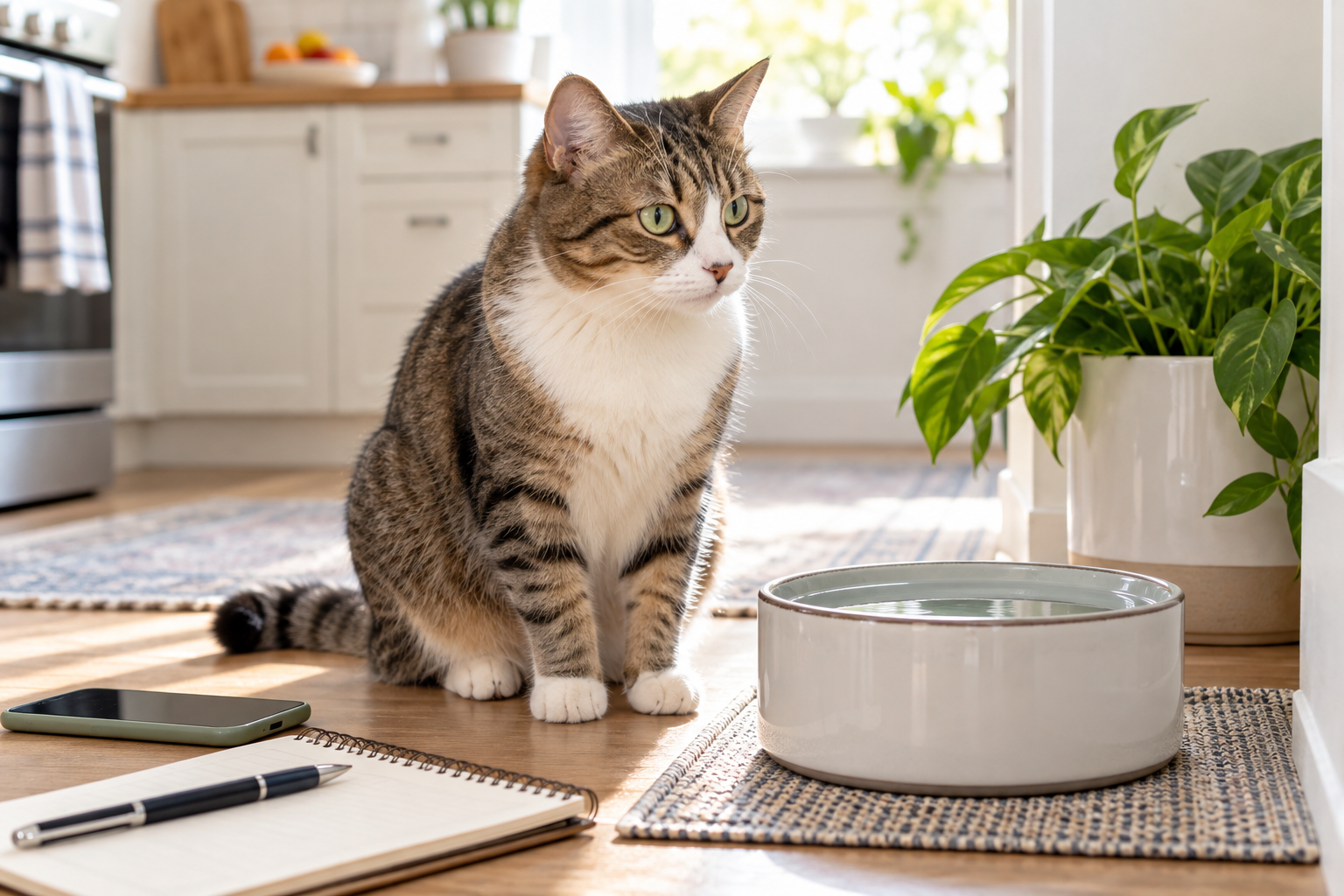
Then divide the daily calories into meals your cat can finish comfortably. Scheduled meals make it easier to notice appetite changes, while puzzle feeders or timed feeders can help cats who need smaller portions across the day.
How often should kittens eat?
Most kittens do best with three to four small meals a day during rapid growth, then gradually move toward an adult routine near one year of age. Young kittens have small stomachs, high energy needs, and less reserve if they skip food.
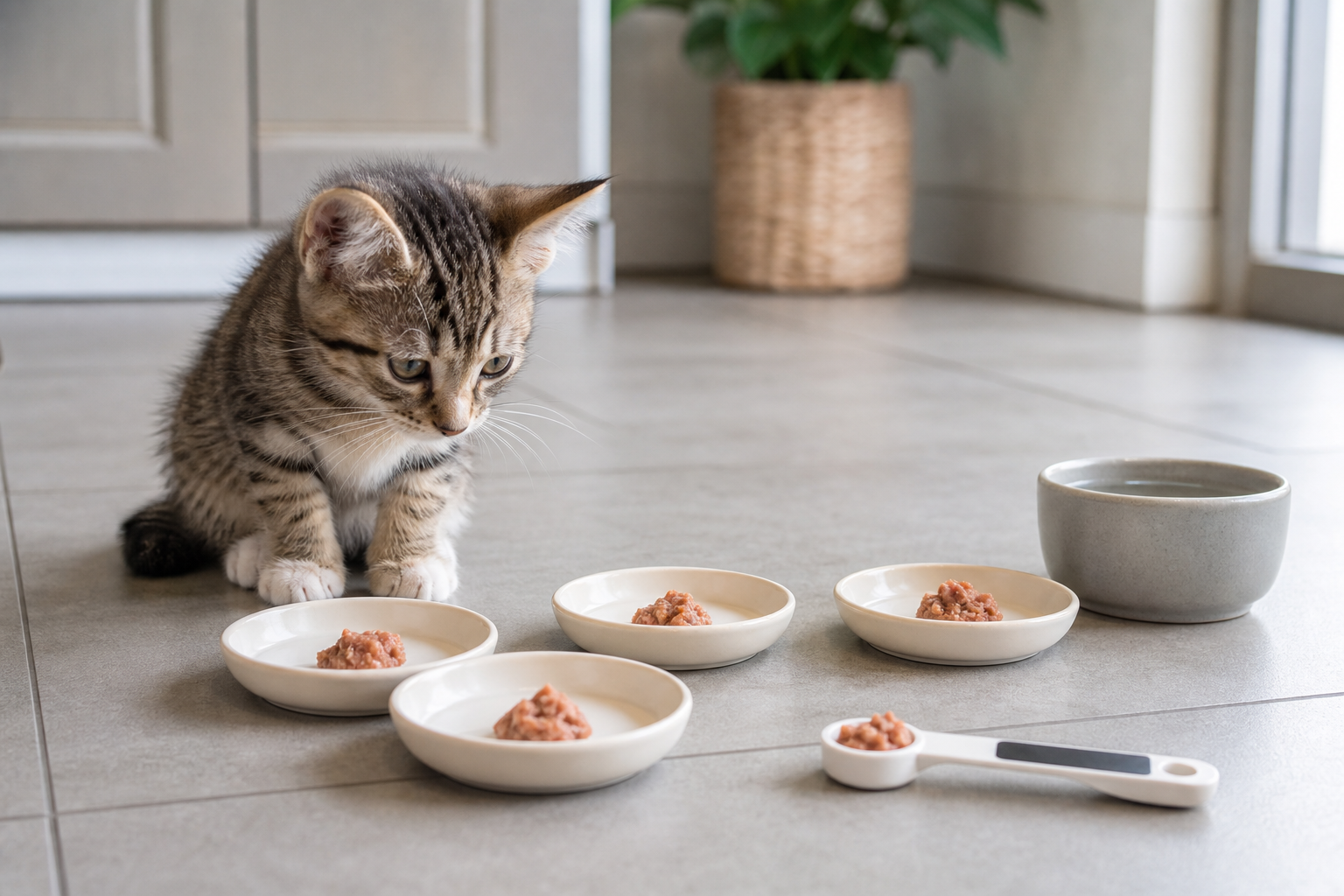
Kittens need food formulated for growth, not adult maintenance, because growth diets are built for higher nutrient demands. Merck Veterinary Manual describes higher protein requirements for growing kittens than adult cats, which is one reason life-stage labeling matters 5. If you are approaching the transition point, read our guide on when to switch from kitten to cat food before changing both the food and the schedule at the same time.
A simple kitten rhythm can look like this:
| Kitten age | Common meal pattern | What to watch |
|---|---|---|
| 8 weeks to 4 months | 4 small meals daily | Steady growth, normal stool, no long gaps without food |
| 4 to 6 months | 3 to 4 meals daily | Healthy appetite without overfilling the bowl |
| 6 to 12 months | 2 to 3 meals daily | Smooth transition toward adult portions |
| Around 12 months | Often 2 adult meals daily | Body condition, activity, and neuter-related calorie changes |
Do not restrict a growing kitten's food aggressively without veterinary guidance. If a kitten refuses food, seems weak, vomits repeatedly, has severe diarrhea, or is losing weight, call a veterinarian promptly.
How many meals should adult cats eat?
Most healthy adult cats can eat one or two measured meals per day, but many households do better with two meals because it spreads hunger, supports routine, and makes appetite changes easier to see. VCA notes that feeding at least two meals per day is a common recommendation and that cats benefit from predictable routines 2.
Two meals also fit many human schedules:
- Morning meal before work or school.
- Evening meal about 10 to 12 hours later.
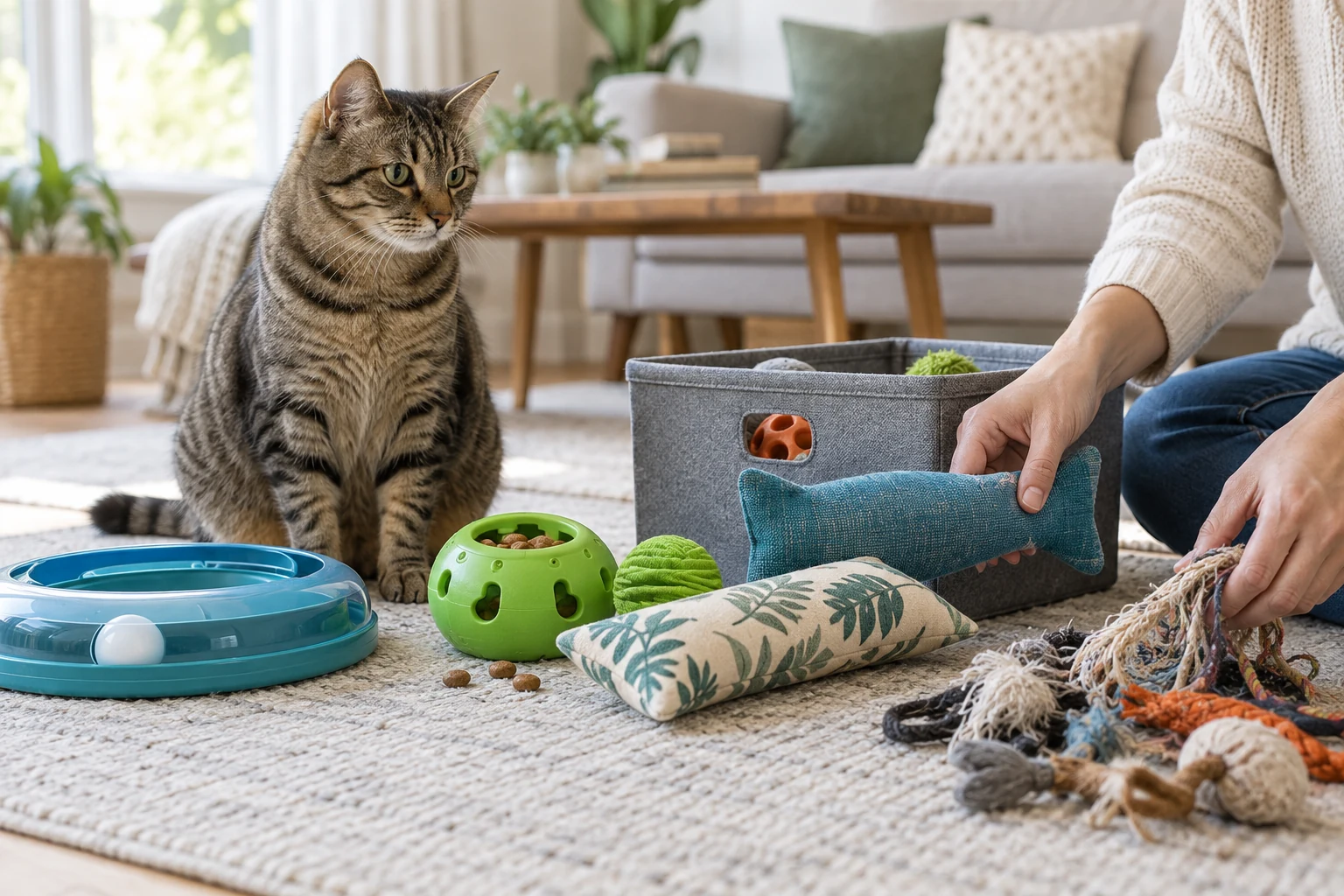
- A small puzzle-feeder portion if your cat gets restless between meals.
If your adult cat eats wet food, meal timing matters because wet food should not sit out all day. For wet-food-specific timing, see how often to feed cat wet food. If your cat eats dry food, you still need measured portions; a constantly topped-up bowl can hide overeating in one cat and under-eating in another.
The adult schedule should also match your cat's behavior. A cat who eats too fast may need smaller meals, a slow feeder, or a puzzle feeder. A cat who begs all evening may need enrichment, a better portion split, or a check for medical causes rather than simply getting more food.
Should senior cats eat on a different schedule?
Senior cats often keep the same feeding frequency they had as adults, but they need closer monitoring and sometimes smaller, more comfortable meals. Cornell notes that senior cats 10 years and older can usually maintain the same feeding regimen unless a veterinarian advises otherwise 1.
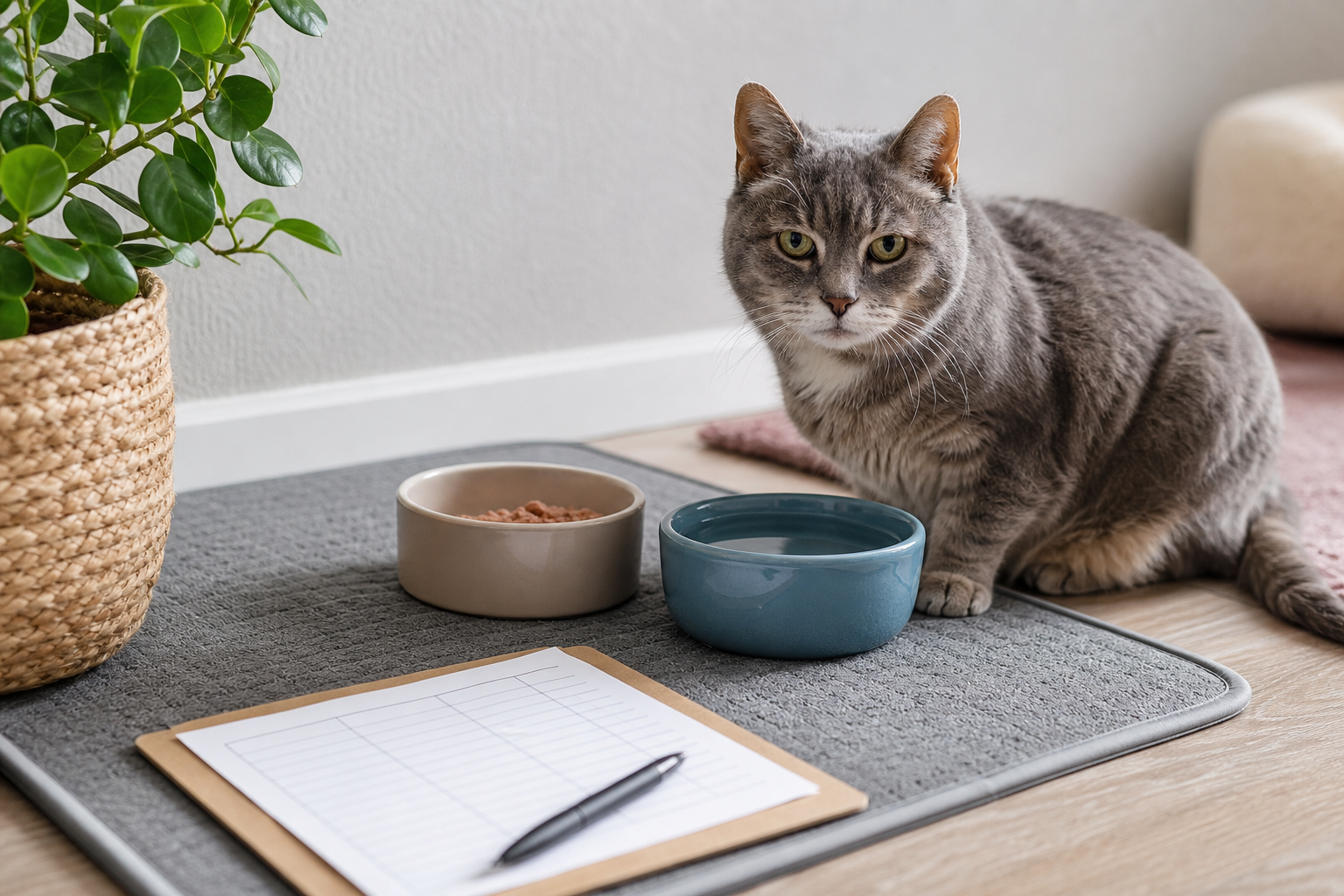
The AAHA/AAFP life stage guidelines define kitten, young adult, mature adult, and senior stages and emphasize that care should evolve as cats age 3. For feeding, that means the clock is only one part of the plan. Senior cats may develop dental disease, arthritis, kidney disease, hyperthyroidism, diabetes, nausea, or changes in smell and taste. Any of these can change how easily they eat.
For many older cats, a practical routine is:
- Two measured meals daily if appetite and weight are stable.
- Three smaller meals if large meals trigger vomiting or poor interest.
- Raised or easy-access bowls if arthritis makes posture difficult.
- Wet food, added water, or texture changes only when appropriate for the cat's health plan.
- Weekly weight checks at home if your vet has asked you to monitor weight.
Call your veterinarian if a senior cat skips meals, loses weight, drinks much more, vomits often, seems painful while eating, or suddenly becomes ravenous. Do not assume appetite changes are just old age.
Can cats free-feed, or are scheduled meals better?
Scheduled meals are usually easier to monitor, but some cats can use measured free-feeding or timed feeders safely. The problem is not the bowl style by itself; it is whether you can control total intake and notice changes.
Free-feeding dry food may work for a cat who self-regulates, maintains ideal body condition, and lives alone. It is riskier for cats who overeat, live in multi-cat homes, eat from each other's bowls, or need wet food. Wet food and mixed feeding need more structure because freshness, calories, and portion balance matter. If your cat eats both formats, use our guide on how to mix wet and dry cat food without accidentally doubling calories.
| Feeding method | Best fit | Main risk |
|---|---|---|
| Two scheduled meals | Many healthy adult cats | Hunger between meals if portions are poorly split |
| Three smaller meals | Kittens, seniors, fast eaters, some vomiting-prone cats | Requires more planning or a timed feeder |
| Timed feeder | Busy households, early-morning begging | Can fail if cats steal from each other |
| Puzzle feeder | Indoor cats needing enrichment | Not ideal for cats who are ill or not eating enough |
| Free-feeding measured dry food | Rare self-regulating cats | Overeating and missed appetite changes |
In multi-cat homes, meal feeding is often clearer. Separate bowls, separate rooms, or microchip feeders can prevent one cat from quietly gaining weight while another loses it.
When should a feeding schedule change?
Change the schedule when your cat's life stage, health, body condition, food type, or appetite changes. Do it gradually unless your veterinarian gives urgent instructions.
Common reasons to adjust include:
- A kitten is approaching adulthood.
- A cat has been spayed or neutered and is gaining weight.
- Your cat is moving from dry food to wet food, or to mixed feeding.
- Your cat is begging, stealing food, or waking you early.
- Your cat is losing weight, gaining weight, vomiting, or having stool changes.
- A veterinarian diagnoses a condition that affects diet or meal timing.
If the issue is constant begging, read why your cat is always hungry before assuming the answer is more food. If the issue is body shape, compare weight with body condition using the cat body condition calculator.
Urgent red flags need veterinary care rather than schedule tweaking. Call a vet promptly if your cat has breathing trouble, collapse, repeated vomiting, severe diarrhea, signs of poisoning, blocked urination, sudden weakness, or refuses food for 24 hours. For kittens, seniors, diabetic cats, and cats with known disease, ask sooner.
What sample feeding schedules work by age?
Use these sample schedules as templates, not strict prescriptions. Your cat's calories and health plan still come first.
| Life stage | Sample schedule | Practical notes |
|---|---|---|
| Kitten, 8 weeks to 4 months | 7 a.m., noon, 5 p.m., 10 p.m. | Small meals support growth and reduce long fasting gaps. |
| Kitten, 4 to 12 months | 7 a.m., 2 p.m., 8 p.m. | Move toward fewer meals as growth slows, if body condition stays healthy. |
| Healthy adult, 1 to 6 years | 7 a.m. and 7 p.m. | Two measured meals are simple and easy to monitor. |
| Mature adult, 7 to 10 years | 7 a.m. and 7 p.m., with optional puzzle portion | Watch weight, muscle, dental comfort, and activity. |
| Senior, 10+ years | 7 a.m., 2 p.m., 8 p.m. if smaller meals help | Keep the routine steady unless your vet changes the plan. |
If your cat has a medical condition, the right schedule may be different. Cats taking insulin, prescription diets, appetite medications, or nausea medication need individualized instructions from their veterinary team.
Conclusion: Build a schedule your cat can thrive on
The best cat feeding schedule by age is measured, predictable, and flexible. Kittens usually need several small meals, healthy adults often do well with one or two measured meals, and seniors benefit from consistency plus closer monitoring.
Do not let the clock replace observation. If your cat's weight, appetite, stool, vomiting pattern, thirst, or behavior changes, revisit the schedule and talk with your veterinarian. A good routine should make your cat's day calmer and make health changes easier to notice.
Frequently Asked Questions
Is it better to feed a cat once or twice a day?
Many healthy adult cats can manage once-daily feeding, but twice daily is often easier for hunger control and appetite monitoring. If your cat vomits bile, begs intensely, eats too fast, or has a medical condition, ask your veterinarian whether smaller, more frequent meals are better.
What time should I feed my cat?
Choose times you can keep consistently. Many cats do well with morning and evening meals about 10 to 12 hours apart, while kittens and some seniors may need a midday or late-evening meal too.
Should kittens have food available all day?
Some kittens can have frequent access to measured food, but long-term free-feeding can make it hard to track intake. Three to four planned meals are often easier for monitoring growth, stool, and appetite.
Do senior cats need three meals a day?
Not always. Many seniors can keep their adult schedule, but three smaller meals may help if they lose interest, vomit after large meals, or need closer appetite monitoring. Sudden appetite changes in a senior cat deserve a vet call.
How do I feed multiple cats on different schedules?
Feed them in separate rooms, use timed or microchip feeders, and pick up bowls after each meal. Multi-cat feeding needs structure because one cat may steal food while another quietly eats too little.
References
[1] Cornell Feline Health Center. (2026). How Often Should You Feed Your Cat? URL
[2] VCA Animal Hospitals. (2026). Feeding Times and Frequency for Your Cat. URL
[3] AAHA and AAFP. (2021). 2021 AAHA/AAFP Feline Life Stage Guidelines. URL
[4] World Small Animal Veterinary Association. (2024). Global Nutrition Guidelines. URL
[5] Merck Veterinary Manual. (2024). Nutritional Requirements of Small Animals. URL
 Why Does My Cat Flinch When Touched While Sleeping? Startle, Trust, and Pain Clues">
 Cat Scratching Baseboards: Trim Guards and Route Fixes">
 EN
EN DE
DE ES
ES PT
PT