
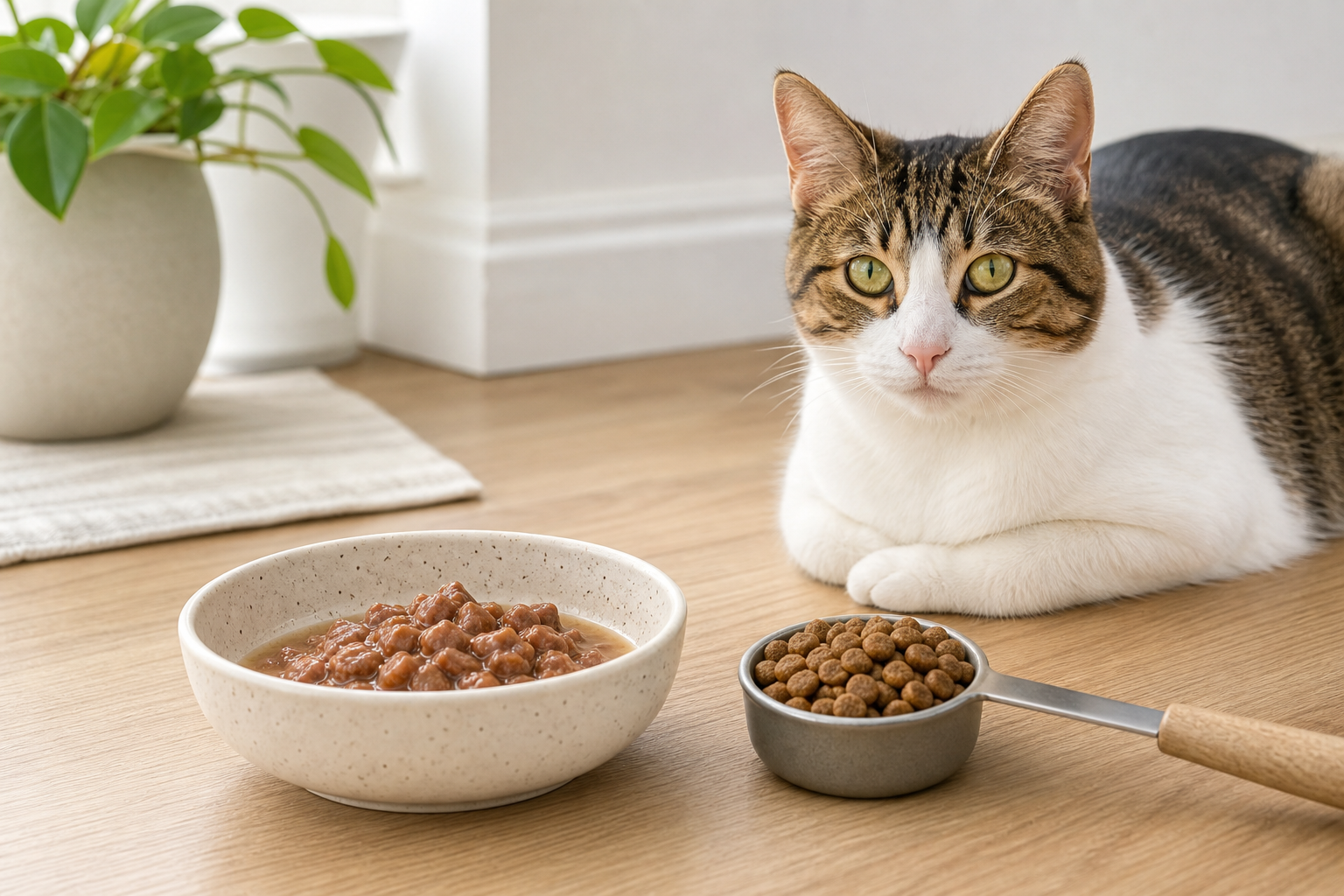
You can mix wet and dry cat food safely if both foods are appropriate for your cat and the total calories stay within one daily budget. The mistake is feeding a full dry-food portion, then adding wet food as an extra meal every day.
Mixed feeding can be a practical middle ground: wet food adds moisture and meal satisfaction, while dry food can support timed feeders, food puzzles, budget, and routine. The goal is not a perfect wet-to-dry ratio. The goal is a measured plan that keeps your cat hydrated, comfortable, and at a healthy body condition.
Table of Contents
- Is it okay to mix wet and dry cat food?
- How do you calculate wet and dry food together?
- How much wet food should replace dry food?
- What mixed feeding schedule works best?
- How do you transition without stomach upset?
- How do you know if the plan is working?
- What if your cat begs after mixed meals?
- When should a veterinarian guide mixed feeding?
- Conclusion: Mixed feeding works when the math is clear
- Frequently Asked Questions
- References
Is it okay to mix wet and dry cat food?
Yes, it is okay to mix wet and dry cat food when both foods are complete and balanced for your cat's life stage, tolerated well, and measured by calories. Many cats do well with wet meals plus a small dry portion for puzzles, training, or timed feeding.
The benefit of mixed feeding is flexibility. Wet food usually contains much more moisture than kibble, so it can help cats take in more water through food. Dry food is easier to store, measure, and use in enrichment toys. VCA notes that food choices differ in moisture and energy density, and that calorie content should be evaluated when deciding how much to feed 1.
Mixed feeding is not automatically healthier if the portions are wrong. A cat can gain weight on premium wet food, dry food, or a mix of both if daily calories are too high. If you are still deciding whether your cat should eat mostly wet, mostly dry, or both, start with SnuggleSouls' wet vs dry cat food guide, then use this article to build the actual mixed-feeding math.
How do you calculate wet and dry food together?
Calculate mixed feeding by adding wet-food calories and dry-food calories together. That combined number should fit your cat's daily calorie target, including treats and toppers.
The cleanest method is:
- Estimate your cat's daily calorie target.
- Find the calories per can, pouch, tray, cup, or gram on each food label.
- Choose how many calories will come from wet food.
- Use dry food only for the remaining calories.
- Recheck weight and body condition every few weeks.
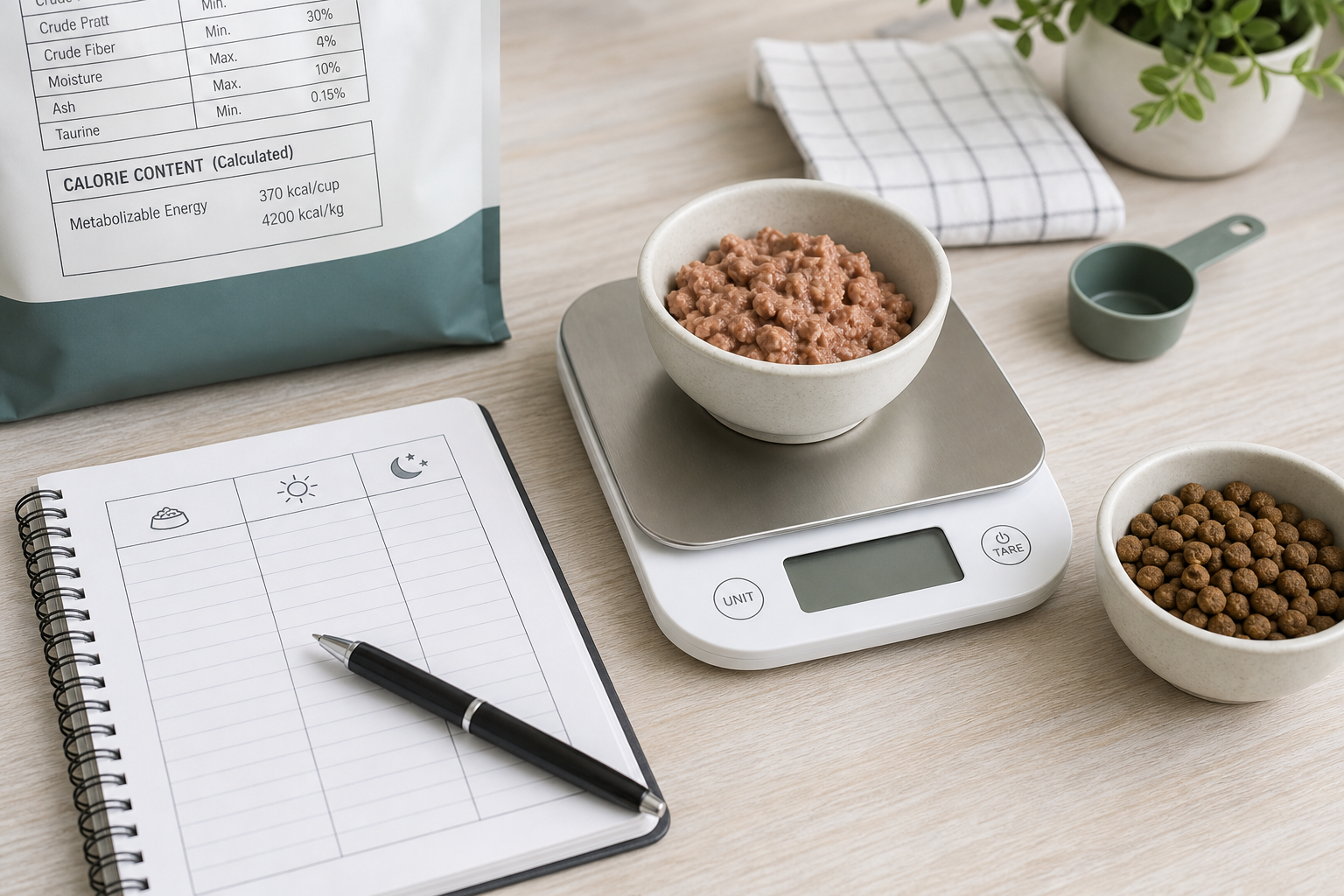
For example, if your cat's starting target is 220 kcal per day and one wet-food can is 80 kcal, feeding one can leaves about 140 kcal for dry food and treats. If the dry food is 400 kcal per cup, that remaining 140 kcal is about 0.35 cup. A kitchen scale is more accurate than a loose scoop, especially for calorie-dense kibble.
Use SnuggleSouls' how much should I feed my cat guide for the full portioning process, or the cat calorie calculator for a starting estimate. Pet Nutrition Alliance also emphasizes that calorie calculations are guidelines and should be adjusted with monitoring, especially for cats with obesity or medical concerns 4.
| If you feed | Count this first | Then adjust |
|---|---|---|
| Wet food breakfast | Calories in the can, pouch, or tray | Reduce dry food by the same calories. |
| Dry food puzzle feeder | Calories in the measured kibble | Keep it inside the daily allowance. |
| Treats or toppers | Calories from every extra | Remove those calories from meals. |
| Multiple cats | Each cat's separate intake | Prevent food stealing or double portions. |
How much wet food should replace dry food?
Wet food should replace dry food by calories, not by spoonfuls or bowl size. A large-looking wet meal may have fewer calories than a small dry-food portion because wet food contains more water.
If your cat currently eats only dry food, begin by replacing a small part of the dry-food calories with wet food. For many cats, one small wet meal per day is enough to test tolerance and preference. If your cat likes the change and weight remains stable, you can increase the wet-food share gradually.
Here is a simple way to think about common mixed ratios:
| Wet/dry split | What it may fit | Watch for |
|---|---|---|
| 25% wet, 75% dry | Cat new to wet food or household needing dry feeder convenience. | Whether wet food is accepted consistently. |
| 50% wet, 50% dry | Balanced routine for moisture, budget, and enrichment. | Total calories and stool changes. |
| 75% wet, 25% dry | Cat needing more moisture or fuller meals. | Storage habits and cost. |
| Mostly wet with dry treats | Cat who benefits from wet meals but enjoys puzzle feeding. | Treat calories creeping upward. |
For wet-food-specific conversions, use SnuggleSouls' guide on how much wet food to feed a cat. If your cat is overweight, do not simply cut food sharply. Cats should lose weight gradually and under veterinary guidance when the extra weight is significant.
What mixed feeding schedule works best?
The best mixed feeding schedule is predictable, measured, and easy for your household to repeat. Many cats do well with wet food at set mealtimes and dry food reserved for a timed feeder or puzzle feeder.
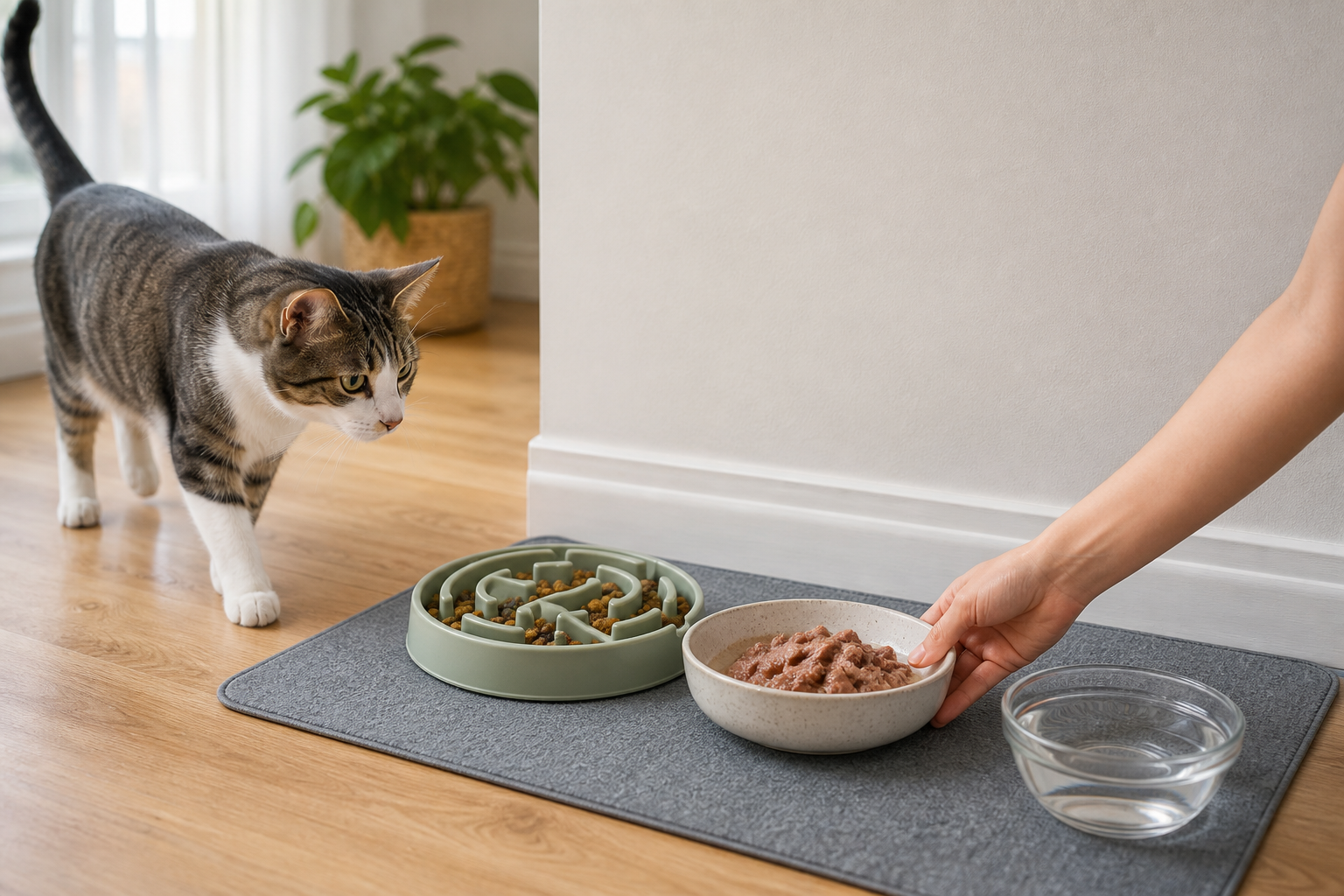
A practical day might look like this:
| Time | Meal | Why it works |
|---|---|---|
| Morning | Wet food meal | Fresh, hydrating meal while you can observe appetite. |
| Midday | Measured dry food in a puzzle or timed feeder | Enrichment without free-feeding extra calories. |
| Evening | Wet food meal | Predictable routine and another appetite check. |
| Bedtime if needed | Tiny measured dry portion | Helps cats who wake people for food. |
VCA's feeding frequency guidance notes that cats are creatures of habit and that regular feeding schedules can be useful 2. If you want wet-food timing ideas, SnuggleSouls' guide on how often to feed cat wet food can help you choose a routine.
In multi-cat homes, schedule matters even more. Feed cats in separate spaces if one cat eats quickly, guards food, or steals from others. Microchip feeders, closed doors, or supervised meals can prevent one cat from accidentally receiving the calories meant for everyone.
How do you transition without stomach upset?
Transition slowly, especially if your cat has a sensitive stomach or has eaten the same dry food for years. A sudden change can trigger vomiting, diarrhea, refusal, or stress even when the new food is appropriate.
Use a gradual plan:
| Days | What to do | What to monitor |
|---|---|---|
| 1-3 | Offer a teaspoon or small spoonful of wet food beside the normal meal. | Interest, nausea, stool, and stress. |
| 4-7 | Replace a small dry-food calorie amount with wet-food calories. | Whether total daily calories stay steady. |
| 8-14 | Move toward your target ratio if your cat is comfortable. | Appetite, water intake, weight, and litter box changes. |
| After 2 weeks | Keep measuring and adjust only as needed. | Body condition and meal satisfaction. |
Do not force a cat to eat a new food by withholding all familiar food. If your cat refuses meals, especially for 24 hours or longer, call your veterinarian. Cats can become medically vulnerable when they stop eating, and an overweight cat who stops eating is not in a safe weight-loss situation.
Small texture details can help. Some cats prefer pate, others prefer shreds or minced textures. Some prefer wet food slightly warmed to room temperature. Keep changes small and track what your cat accepts without pressure.
How do you know if the plan is working?
A mixed-feeding plan is working when your cat eats reliably, maintains a healthy body condition, has normal stool, drinks normally, and does not gain or lose weight unexpectedly. The bowl is only one data point; your cat's body tells you whether the plan fits.
Check these signs every two to four weeks:
- Weight is stable unless your veterinarian planned a gradual change.
- Ribs are easy to feel under a thin layer of fat.
- Waist is visible from above.
- Stool stays consistent.
- Vomiting does not increase.
- Coat, energy, and grooming remain normal.
- Appetite is predictable rather than suddenly intense or absent.
Use the SnuggleSouls cat body condition and weight calculator to pair scale weight with shape. WSAVA's nutrition guidelines emphasize individualized nutrition assessment and monitoring rather than one generic feeding rule for every pet 3.
If your cat gains weight, reduce total daily calories slightly and recheck. If your cat loses weight without a plan, seems hungry all the time, vomits, has diarrhea, drinks more, urinates more, or becomes less active, contact your veterinarian instead of adjusting food blindly.
What if your cat begs after mixed meals?
Begging after mixed meals does not always mean your cat needs more calories. It may mean the meal ended too fast, the routine is inconsistent, another pet is creating food stress, or your cat has learned that persistent meowing earns extra food.
Before adding more food, ask:
- Did I subtract wet-food calories from the dry-food portion?
- Are treats, toppers, and table scraps being counted?
- Is one cat stealing another cat's food?
- Would smaller, more frequent measured meals help?
- Would a puzzle feeder slow the dry-food portion?
- Did the hunger appear suddenly or with weight loss?
For food-focused cats, use play before meals, puzzle feeders, hidden mini-meals, and predictable meal times. If hunger is new, extreme, or paired with weight loss, increased thirst, vomiting, diarrhea, restlessness, or behavior change, read SnuggleSouls' guide on why is my cat always hungry and book a veterinary visit.
When should a veterinarian guide mixed feeding?
Ask a veterinarian before changing food formats if your cat has diabetes, kidney disease, urinary disease, gastrointestinal disease, pancreatitis, food allergies, obesity, dental pain, pregnancy, nursing, or a prescription diet. In those situations, the wet-to-dry split can affect a medical plan.
Merck Veterinary Manual notes that wet food can help cats get water through the diet, but cats still need fresh drinking water available 5. For cats with urinary or kidney concerns, hydration and diet format are worth discussing with a veterinarian instead of guessing from general advice.
Call promptly if your cat stops eating, cannot urinate, vomits repeatedly, has severe diarrhea, collapses, has breathing trouble, shows signs of poisoning, or declines rapidly. Mixed feeding is a routine nutrition tool, not a home treatment for urgent symptoms.
Conclusion: Mixed feeding works when the math is clear
Mixing wet and dry cat food can work very well when it is planned. Wet food can add moisture and mealtime satisfaction, while dry food can support convenience, puzzle feeding, and a routine that real households can maintain.
The rule is simple: one cat, one daily calorie budget. Count the wet food, count the dry food, count the treats, then watch body condition and appetite over time. If your cat has a medical condition, sudden appetite change, weight change, vomiting, diarrhea, urinary signs, or pain while eating, make the plan with your veterinarian.
Frequently Asked Questions
Can I mix wet and dry cat food in the same bowl?
Yes, you can mix them in the same bowl if your cat likes the texture and eats the meal promptly. Many cats prefer separate bowls because wet food softens kibble quickly, so use whichever setup helps your cat eat comfortably without leaving food out too long.
Is mixed feeding better than dry food only?
Mixed feeding may be better for cats who need more dietary moisture, fuller meals, or more feeding flexibility. Dry food only can still work for some healthy cats if it is complete and balanced, measured carefully, and paired with plenty of fresh water.
How much dry food should I give with one can of wet food?
Subtract the wet-food calories from your cat's daily calorie target, then use dry food for the remaining calories. The answer depends on your cat's needs and the calories in both foods.
Can mixed feeding make cats overweight?
Yes, mixed feeding can cause weight gain if wet food is added without reducing dry food. Count both foods as part of one daily allowance.
Should cats eat wet food every day?
Many cats can eat wet food every day if it is complete and balanced for their life stage and stored safely. Some cats eat a mix because wet food supports moisture intake while dry food supports convenience or enrichment.
What if my cat only licks the gravy and leaves the food?
Try a different texture, smaller portion, or slightly warmed meal. If your cat repeatedly leaves food, loses weight, vomits, drools, or seems painful while eating, ask your veterinarian to check for dental, digestive, or medical causes.
References
[1] VCA Animal Hospitals. (2024). Dry, Canned, or Semi-Moist: Food Choices for Cats. VCA Animal Hospitals
[2] VCA Animal Hospitals. (2024). Feeding Times and Frequency for Your Cat. VCA Animal Hospitals
[3] World Small Animal Veterinary Association. (2024). Global Nutrition Guidelines. WSAVA
[4] Pet Nutrition Alliance. (2026). Calorie Calculator. Pet Nutrition Alliance
[5] Merck Veterinary Manual. (2025). Proper Nutrition for Cats. Merck Veterinary Manual
 Why Does My Cat Flinch When Touched While Sleeping? Startle, Trust, and Pain Clues">
 Cat Scratching Baseboards: Trim Guards and Route Fixes">
 EN
EN DE
DE ES
ES PT
PT