
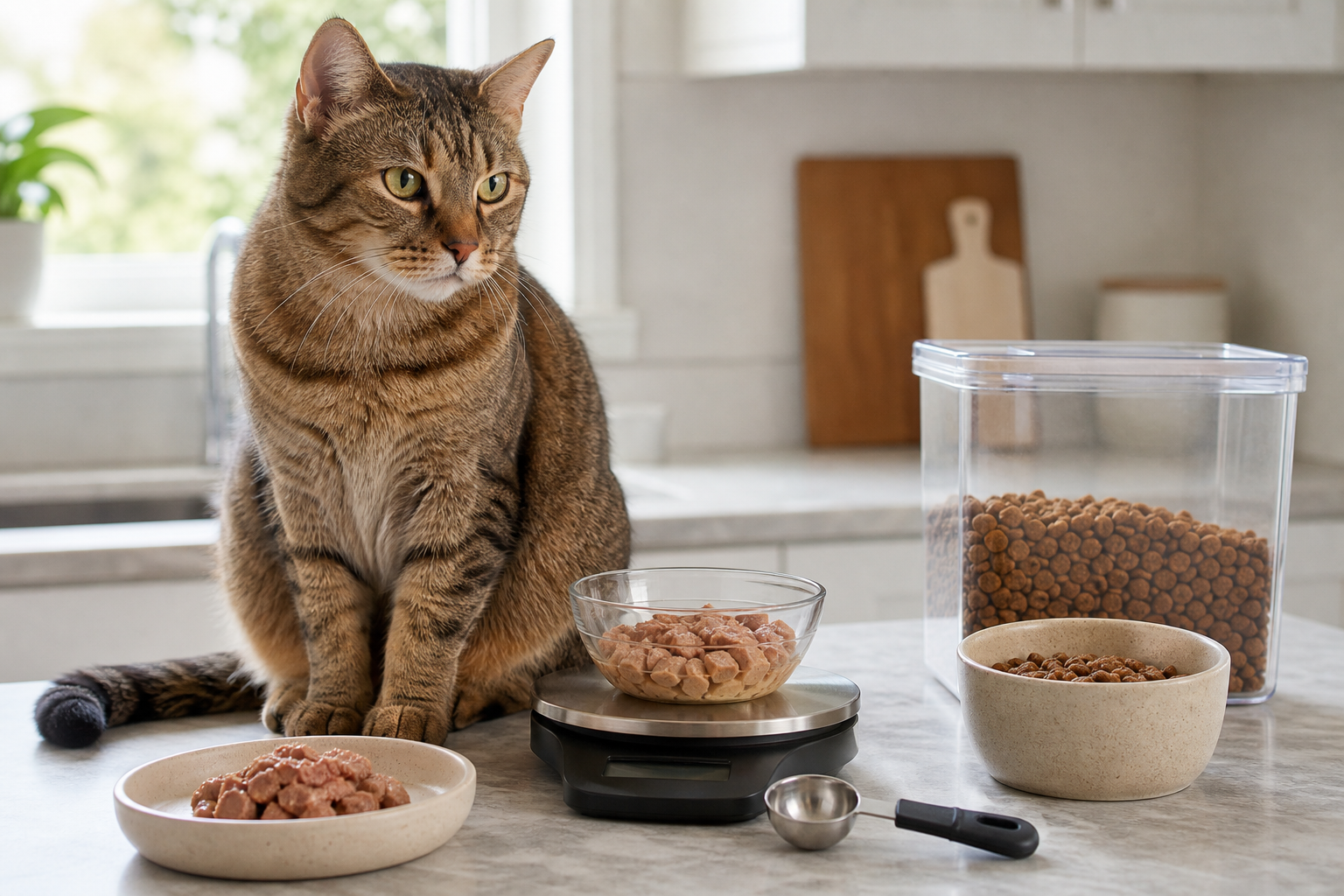
High protein cat food can be useful for many cats, but the label alone does not tell you whether it is the right food. The better question is whether the food is complete and balanced for your cat's life stage, fits your cat's calories, supports lean muscle, and is safe for any medical conditions your veterinarian is monitoring.
Cats are obligate carnivores, so protein is not a trend for them. It is a basic part of feline nutrition. Still, "high protein" can mean very different things on a dry food bag, a canned food label, or a fresh-style diet. A food that looks lower in protein on the can may actually be higher in protein once moisture is removed from the comparison.
This guide explains how to read protein claims without getting misled, which cats may benefit from a higher-protein diet, and when a veterinarian should guide the decision.
Table of Contents
- What does high protein cat food mean?
- How do you compare protein in wet and dry cat food?
- Which cats may benefit from more protein?
- Can high protein food help cats lose weight?
- When can high protein cat food be risky?
- How should you switch to a high protein cat food?
- Conclusion
- Frequently Asked Questions
- References
What does high protein cat food mean?
High protein cat food usually means the diet has more protein than the minimum required for a complete and balanced cat food. For adult maintenance, the AAFCO cat food nutrient profile minimum for crude protein is 26 percent on a dry matter basis, according to the FDA's explanation of complete and balanced pet food labels 1. Growth and reproduction diets have higher requirements.
That minimum is not a target for every cat. It is a regulatory floor used to help define nutritional adequacy. A good food also has the right amino acid balance, fat level, minerals, vitamins, calories, digestibility, and life-stage claim. That is why a "high protein" claim should never replace checking the full nutritional adequacy statement.
If you are comparing options, start with a complete diet from a company that can explain its formulation and feeding trials. Then use protein level as one factor within the bigger decision. Our guide on how to choose healthy cat food walks through the broader label questions that matter before you focus on one nutrient.
How do you compare protein in wet and dry cat food?
Compare protein on a dry matter basis, not only by the number printed in the guaranteed analysis. Wet food contains much more moisture than kibble, so its as-fed protein percentage often looks lower even when the food provides more protein after water is removed.
The Merck Veterinary Manual gives a simple dry matter comparison method: subtract moisture from 100 to estimate dry matter, then divide the nutrient percentage by the dry matter percentage and multiply by 100 2. For example, a canned food with 10 percent protein and 78 percent moisture has about 22 percent dry matter. Its protein on a dry matter basis is about 45 percent.
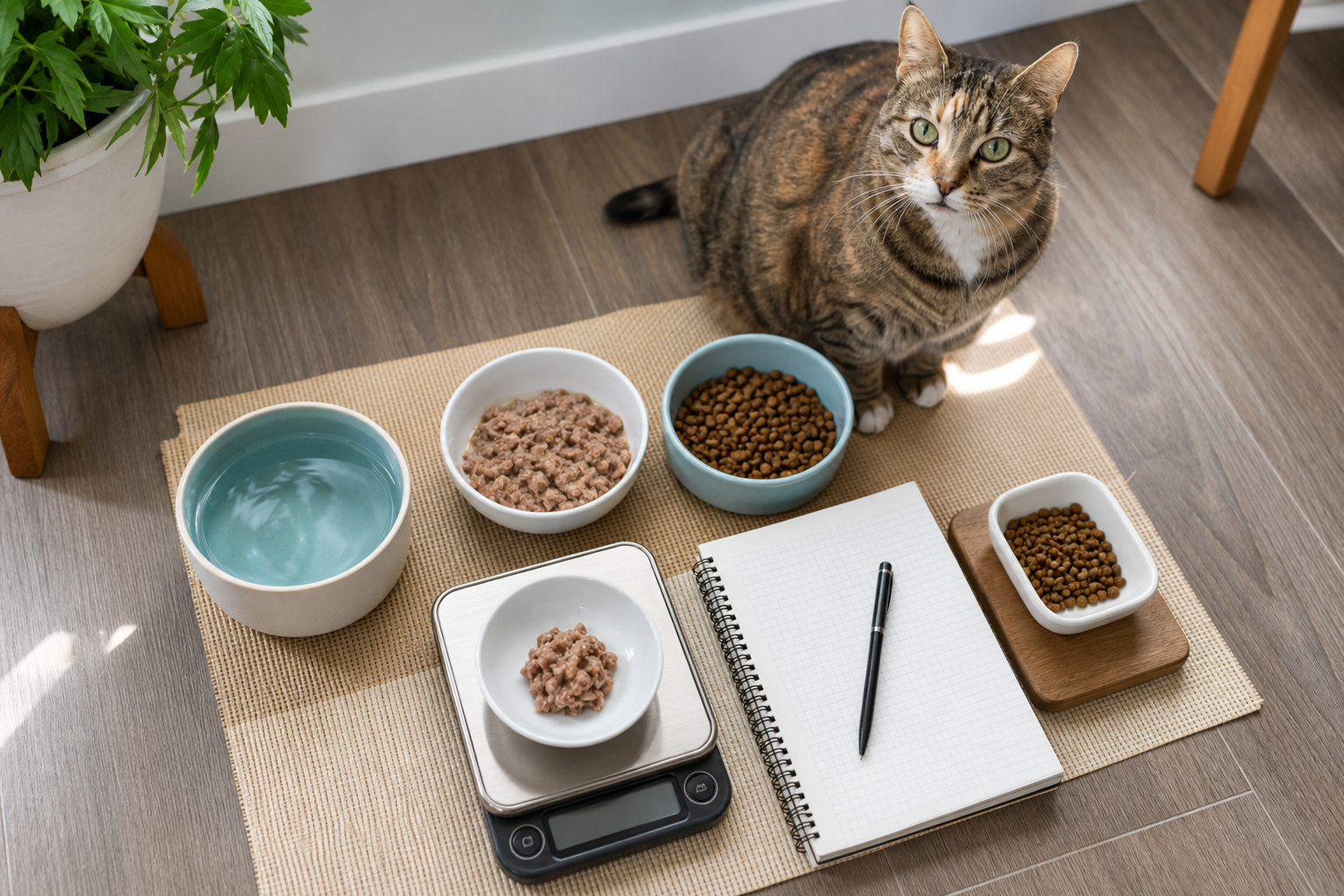
This is why a direct bag-to-can comparison can mislead you. A dry food that lists 34 percent protein may be moderate after dry matter adjustment, while a canned food listing 10 percent protein may be relatively high.
Use this quick checklist:
| Label question | Why it matters | What to do |
|---|---|---|
| Is it complete and balanced? | Protein alone cannot make a diet safe. | Check the nutritional adequacy statement. |
| What life stage is it for? | Kittens, pregnant cats, adults, and seniors have different needs. | Match the label to your cat's life stage. |
| What is the dry matter protein? | Moisture changes the printed percentage. | Convert before comparing wet and dry foods. |
| How many calories are in each serving? | More protein does not cancel extra calories. | Measure portions and track body condition. |
If you are deciding between formats, compare this article with our wet vs dry cat food guide so you can weigh moisture, convenience, dental assumptions, and calorie density together.
Which cats may benefit from more protein?
Some cats may do well with a higher-protein food, especially when the diet is complete, calorie-appropriate, and tolerated well. Kittens and pregnant or nursing cats need growth or reproduction diets, and MSD Veterinary Manual notes that growth diets for kittens commonly contain 30 to 40 percent protein on a dry matter basis 3.
Adult cats may also benefit when the goal is preserving lean muscle. This can matter for active cats, cats losing weight under veterinary guidance, and some senior cats with muscle loss. The AAHA/AAFP feline life-stage guidance emphasizes that cats have narrow nutritional requirements and require essential amino acids from protein sources 6.
Protein quality matters as much as protein quantity. Cats need specific amino acids, including taurine, and a complete commercial diet is designed to provide them in safe balance. Adding plain meat on top of a balanced food may increase protein, but it can also dilute minerals, vitamins, and calories if it becomes more than a small treat.
Watch your cat's shape, not just the bowl. If ribs become too visible, the spine feels sharp, or the hips look bony, that is not a "lean high-protein success." If the belly and waist are disappearing, the food may still be too calorie dense. A guide to body condition and muscle condition can help you notice changes before they become obvious.
Can high protein food help cats lose weight?
High protein food may support a weight-loss plan because it can help preserve lean tissue while calories are reduced, but it is not a free pass to feed more. Weight loss still depends on controlled calories, measured meals, and regular body-condition checks.
Many cat parents switch foods because their cat seems hungry all the time. Sometimes a higher-protein, higher-moisture diet helps a cat feel more satisfied, especially compared with very calorie-dense grazing. But persistent hunger can also be linked to boredom, feeding routine, diabetes, hyperthyroidism, intestinal disease, or other health problems. If appetite changes suddenly, review why your cat is always hungry and call your veterinarian if warning signs fit.
For weight management, use protein as part of a plan:
- Measure meals with a gram scale or consistent measuring cup.
- Keep treats under the limit your veterinarian recommends; Cornell notes that treats should generally be limited and should not replace a complete diet 5.
- Recheck body weight every 2 to 4 weeks.
- Adjust calories gradually instead of making sharp cuts.
- Ask your veterinarian before putting a kitten, senior cat, or sick cat on a weight-loss diet.
If you need a starting point for portions, use our how much to feed your cat guide and the cat calorie calculator as planning tools, then confirm the target with your vet for overweight or medically complex cats.
When can high protein cat food be risky?
High protein cat food can be the wrong choice when a cat has a medical condition that changes nutrition needs. Cats with chronic kidney disease, urinary issues, pancreatitis history, food allergies, gastrointestinal disease, diabetes, hyperthyroidism, or unexplained weight loss should not be moved to a high-protein diet without veterinary input.
Kidney disease deserves special caution. The concern is not that healthy cats must avoid protein. The concern is that cats with kidney disease often need a complete therapeutic plan that may include careful control of phosphorus, calories, hydration, sodium, and protein quality. A random high-protein food may miss the part of the plan that matters most.
Call your veterinarian before switching foods if your cat has any of these signs:
| Sign | Why it matters | Safer next step |
|---|---|---|
| Weight loss despite eating | Can signal endocrine, intestinal, dental, kidney, or cancer-related disease. | Book an exam and bring the current food label. |
| Drinking or urinating more | Can fit kidney disease, diabetes, or other problems. | Ask about bloodwork and urinalysis. |
| Vomiting or diarrhea | Diet changes can worsen an unstable gut. | Stabilize the problem before changing foods. |
| Poor appetite for 24 hours or more | Cats can decline quickly when they stop eating. | Seek veterinary advice promptly. |
| Senior muscle loss | May need calories, protein quality, and disease screening together. | Discuss body condition and muscle condition scoring. |
WSAVA's nutrition resources emphasize assessing the animal, the diet, feeding management, and body condition together rather than judging food by a single claim 4. That is the safest way to treat protein as useful information instead of a shortcut.
How should you switch to a high protein cat food?
Switch slowly over 7 to 10 days unless your veterinarian gives different instructions. A gradual transition gives your cat's digestive system time to adjust and gives you time to notice whether the new food is causing vomiting, diarrhea, constipation, itching, or refusal.
A simple transition schedule:
| Day | Old food | New food |
|---|---|---|
| 1 to 2 | 75 percent | 25 percent |
| 3 to 4 | 50 percent | 50 percent |
| 5 to 6 | 25 percent | 75 percent |
| 7+ | 0 percent | 100 percent |
Go slower for sensitive cats. If stool softens or appetite drops, pause at the current mix or return to the last tolerated step. Do not force a cat to wait out hunger if they refuse the new food; cats need consistent food intake, and abrupt fasting can be dangerous.
During the first month, track three things: appetite, litter box output, and body condition. If the new food is higher in calories than the old one, the portion may need to shrink even if the bowl looks smaller. If it is a high-moisture wet food, the portion may look larger but still fit the calorie target.
Conclusion:
High protein cat food can be a good fit for many cats, especially when it is complete and balanced, matched to life stage, and portioned by calories. It is not automatically better because the number is higher, and it is not automatically risky for healthy cats simply because it contains more protein.
The safest approach is practical: compare wet and dry foods on a dry matter basis, check the adequacy statement, watch body and muscle condition, and involve your veterinarian when your cat is senior, losing weight, overweight, or living with a medical condition.
Frequently Asked Questions
Is high protein cat food good for indoor cats?
It can be, but indoor cats still need calorie control. A high-protein food that is too calorie dense can cause weight gain, while a measured complete diet may support lean muscle and satiety.
What protein percentage should cat food have?
For adult maintenance, AAFCO's minimum crude protein level is 26 percent on a dry matter basis, but many complete cat foods are higher 1. Kittens and pregnant or nursing cats need diets labeled for growth or reproduction.
Is wet high protein cat food better than dry?
Not always. Wet food often provides more moisture and may compare favorably on a dry matter basis, but the best choice depends on your cat's calories, health, preferences, and the food's overall nutrient balance.
Can high protein cat food hurt kidneys?
Healthy cats should not be assumed to have kidney harm from a complete high-protein diet, but cats with known or suspected kidney disease need a veterinarian-guided nutrition plan. Do not switch a kidney patient to a high-protein food without asking your vet.
Can I add chicken or fish to increase protein?
Small treat portions may be fine for many healthy cats, but large add-ons can unbalance a complete diet. Avoid raw meat, bones, seasoning, and frequent extras unless your veterinarian or veterinary nutritionist has built them into a balanced plan.
References
[1] U.S. Food and Drug Administration. (2019). Complete and Balanced Pet Food. Complete and Balanced Pet Food
[2] Merck Veterinary Manual. (2024). Dog and Cat Foods. Dog and Cat Foods
[3] MSD Veterinary Manual. (2024). Feeding Practices in Small Animals. Feeding Practices in Small Animals
[4] WSAVA. (2024). Global Nutrition Guidelines. Global Nutrition Guidelines
[5] Cornell Feline Health Center. (2026). Feeding Your Cat. Feeding Your Cat
[6] AAHA and AAFP. (2021). Nutrition and Weight Management. Nutrition and Weight Management
 Why Does My Cat Flinch When Touched While Sleeping? Startle, Trust, and Pain Clues">
 Cat Scratching Baseboards: Trim Guards and Route Fixes">
 EN
EN DE
DE ES
ES PT
PT