

If your cat begs for food right after eating, the reason may be a small portion, a meal that ended too quickly, boredom, learned behavior, or food competition in the home. It can also be a health clue when the begging is new, intense, or paired with weight loss, thirst, vomiting, diarrhea, or behavior changes.
The goal is not to ignore your cat or keep adding food every time they ask. The safer goal is to check whether the daily calories, body condition, feeding routine, and health signs all match.
Table of Contents
- Could your cat still be hungry after eating?
- Why do some cats beg right after a meal?
- What signs mean begging may be a health problem?
- How can you stop post-meal begging without overfeeding?
- What should you track before calling the vet?
- Conclusion: what to do if your cat begs after meals
- Frequently Asked Questions
- References
Could your cat still be hungry after eating?
Yes, your cat may still be hungry after eating if the meal is too small, too low in calories for their needs, eaten too quickly, or not matched to their life stage and body condition. But a cat can also beg after eating because the behavior has been rewarded before.
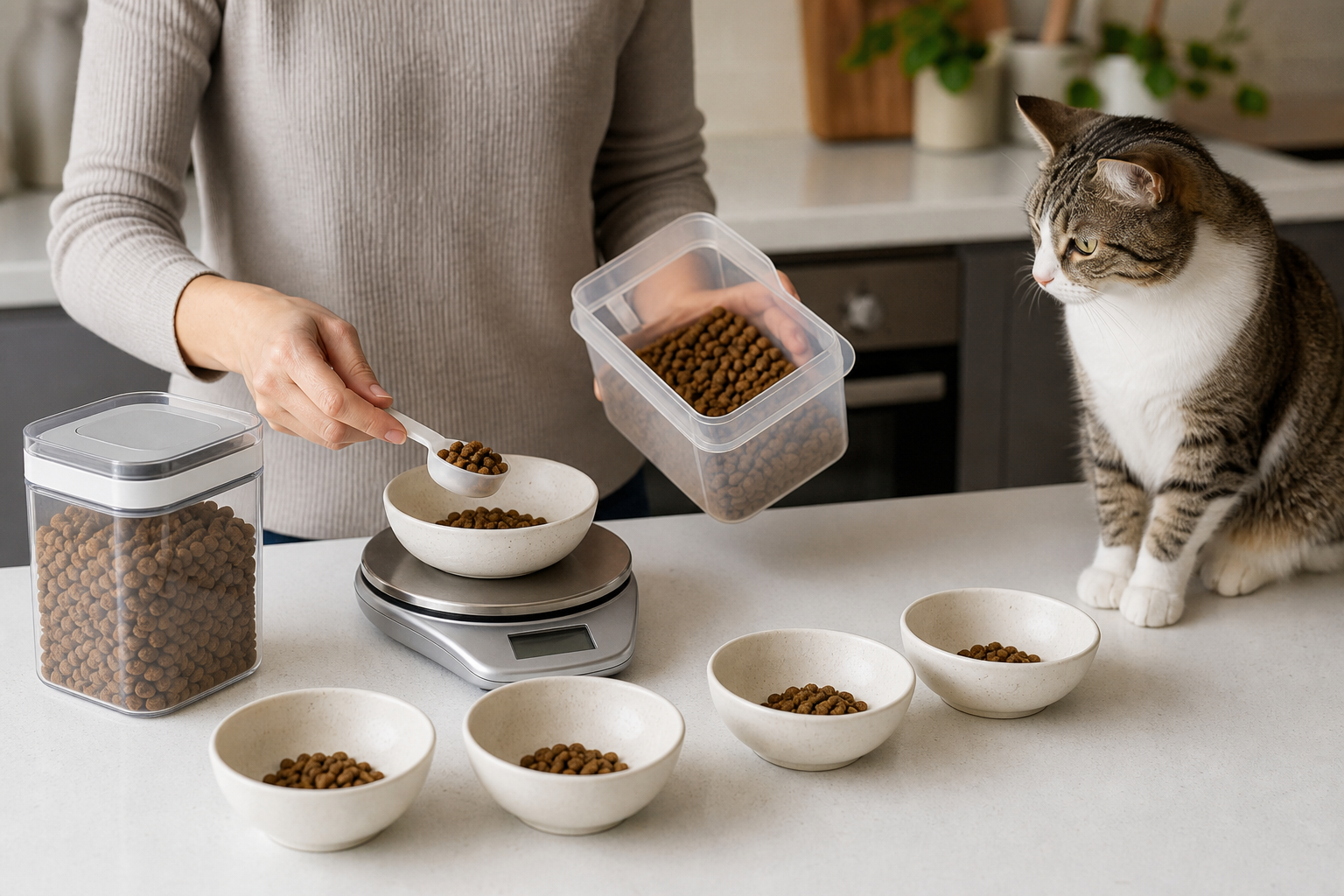
Start with the measurable part: the total food offered in 24 hours. Package directions are only a starting point. The 2021 AAHA/AAFP feline life stage guidelines emphasize that nutrition recommendations should consider life stage, body condition, muscle condition, activity, reproductive status, and health risk, not age alone 1.
If you are estimating with a random scoop, it is easy to underfeed one week and overfeed the next. Compare the food label calories with your cat's current weight and shape. SnuggleSouls' guide to how much should I feed my cat and the cat calorie calculator can help you organize a starting point, but your veterinarian should guide changes for kittens, seniors, pregnant cats, cats with chronic disease, or cats that need weight loss.
Post-meal begging is more likely to be routine hunger when:
- Your cat is a kitten, adolescent, very active adult, pregnant cat, or nursing cat.
- Meals are spaced far apart, so your cat anticipates hunger between feedings.
- Another pet steals part of the meal.
- Dry food is measured inconsistently.
- Treats are replacing balanced meals.
- Your cat eats fast and the meal ends before they feel settled.
For a deeper look at constant appetite patterns, read SnuggleSouls' guide to why your cat always seems hungry. The post-meal pattern is a narrower version of that bigger appetite question.
Why do some cats beg right after a meal?
Many cats beg after eating because food is predictable, rewarding, and emotionally important. If meowing at the bowl once earned a second spoonful, your cat may repeat that strategy even when their body has had enough.
Common behavior and routine causes include:
| Cause | What it looks like | What to try first |
|---|---|---|
| Learned begging | Cat meows, paws, or follows you after meals because it has worked before | Stop feeding from begging moments; reward calm behavior later |
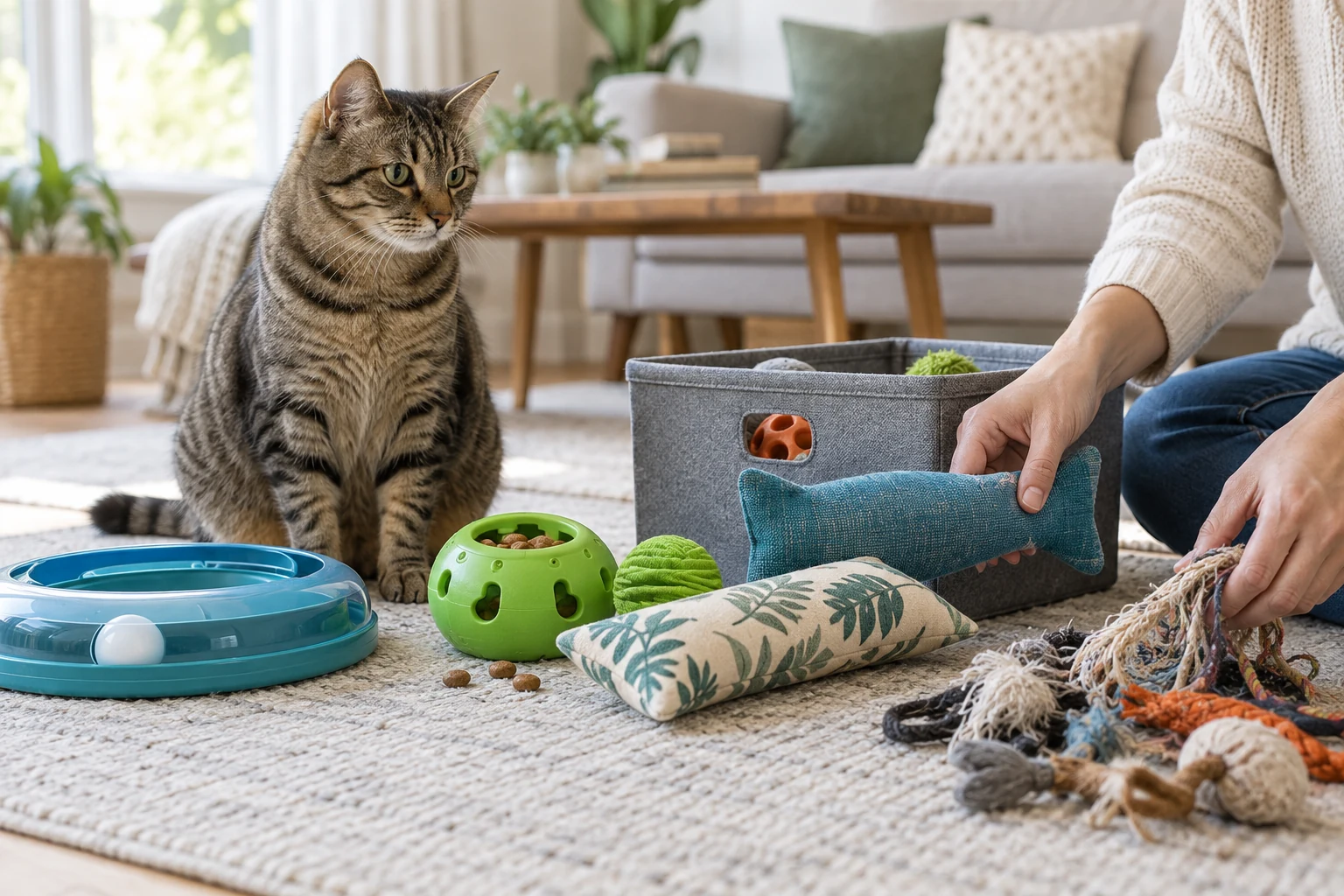
| Fast eating | Meal disappears in seconds, then the cat immediately asks for more | Use a slow feeder or puzzle feeder with the same measured portion |
| Boredom | Begging is worse when the home is quiet or the cat has little play | Add play before meals and enrichment after meals |
| Food competition | One cat hovers, rushes, or checks another cat's bowl | Feed cats separately and confirm each cat gets their own portion |
| Schedule mismatch | Cat begs long before the next meal | Split the same daily calories into more small meals |
| Treat habit | Cat expects extras after every meal | Count treats inside the daily calorie budget |
Cats are also crepuscular, meaning many are naturally active around dawn and dusk. A cat who begs after breakfast may not be "bad"; they may be asking for the next event in the routine. Try a short play session, grooming, window time, or a puzzle feeder before assuming food is the only answer.
What signs mean begging may be a health problem?
Begging is more concerning when it is new, extreme, or paired with physical changes. A cat who has always asked for snacks but stays at a healthy body condition is different from a cat who suddenly cries for food, loses weight, drinks more, or seems restless.
Use body condition as your anchor. The WSAVA Global Nutrition Guidelines promote body condition assessment as part of routine nutrition screening, because weight alone does not show fat distribution, muscle changes, or whether a feeding plan fits the individual cat 2. If you need a practical visual check, use the SnuggleSouls cat body condition guide.
Call your veterinarian if post-meal begging comes with:
- Weight loss despite eating normally or more than usual.
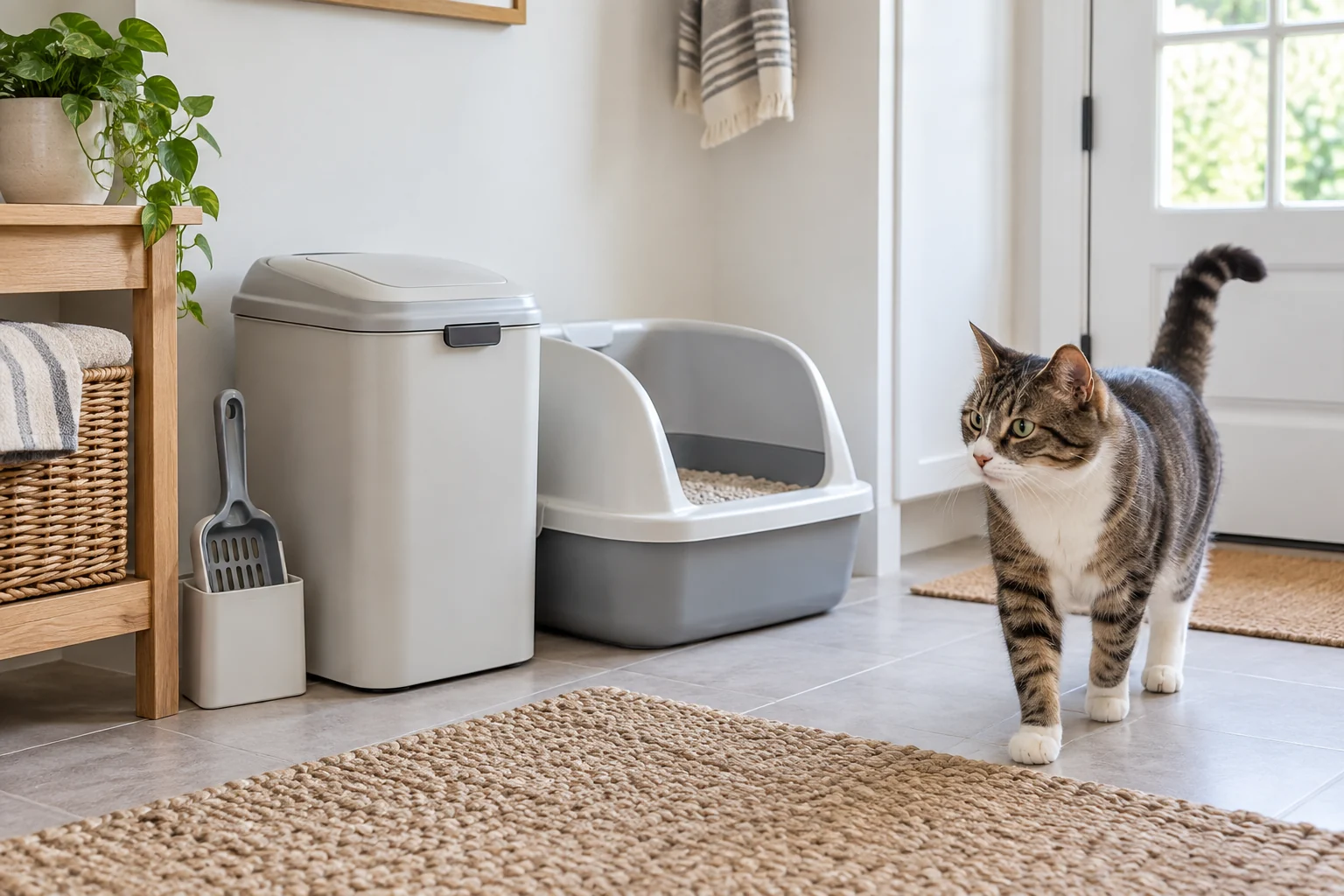
- Increased thirst or larger urine clumps in the litter box.
- Repeated vomiting, diarrhea, bulky stool, or blood in stool.
- A swollen belly, poor coat quality, weakness, or rapid fatigue.
- Restlessness, yowling, hiding, confusion, or a major personality change.
- Sudden appetite change in a senior cat.
Hyperthyroidism is one reason older cats may seem ravenous while losing weight. Cornell Feline Health Center lists weight loss, increased appetite, increased thirst, increased urination, vomiting, diarrhea, hyperactivity, and coat changes among common signs 4. Diabetes can also cause weight loss despite appetite changes, often with increased thirst and urination 5. These problems need veterinary testing; they cannot be confirmed by appetite alone.
Seek urgent care if your cat cannot urinate, collapses, has breathing trouble, has seizures, may have eaten something toxic, shows severe dehydration, or declines rapidly. Begging is not the emergency by itself, but begging plus serious physical signs can point to a bigger problem.
How can you stop post-meal begging without overfeeding?
The best approach is to make meals more accurate, slower, and more predictable without adding unplanned calories. Adding food every time your cat asks can create weight gain, while sudden restriction can be unsafe, especially for overweight cats.
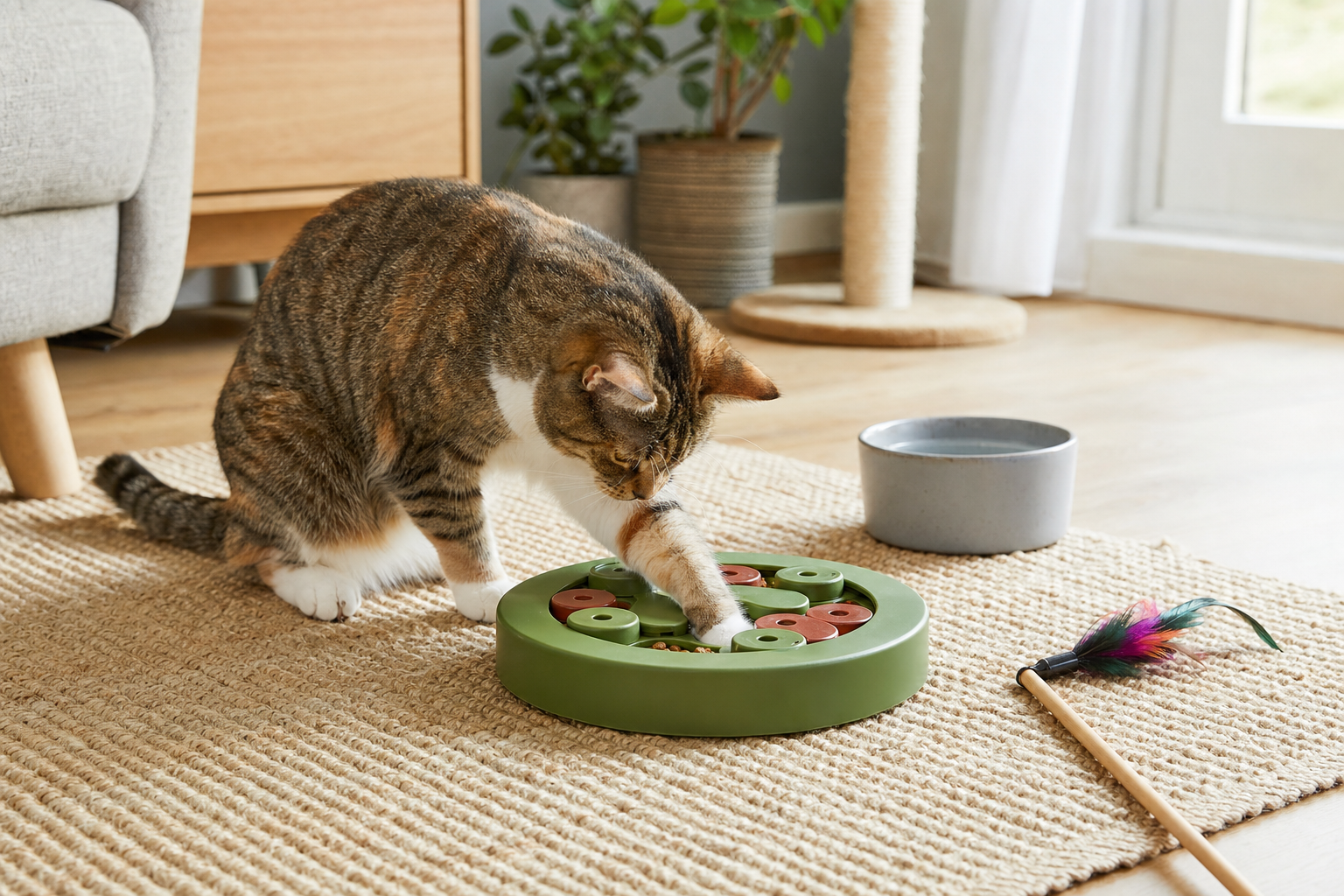
Try this sequence for one to two weeks if your cat is otherwise well:
- Measure the full daily amount by calories.
- Divide that amount into three to five smaller meals.
- Feed on a schedule rather than in response to begging.
- Add five to ten minutes of play before a meal.
- Put part of the meal in a puzzle feeder or slow feeder.
- Separate pets during meals.
- Keep treats tiny and count them as part of the daily intake.
Food texture can matter too. Some cats feel more satisfied with wet food because it adds moisture and volume, while dry food can be useful in puzzle feeders but easier to overpour. SnuggleSouls' wet vs dry cat food guide can help you compare the tradeoffs, and the article on choosing healthy cat food explains why complete and balanced nutrition matters more than trendy labels.
Do not put an overweight cat on a crash diet. Cornell Feline Health Center warns that feline weight reduction should be done under veterinary direction, because sudden starvation can put cats at risk for serious illness such as hepatic lipidosis 3. A safe plan usually changes calories gradually and tracks weight over time.
What should you track before calling the vet?
Track the pattern in plain detail. A short log helps your veterinarian separate a routine behavior problem from a nutrition mismatch or medical concern.
Write down:
- Food brand, formula, calories per can or cup, and exact daily amount.
- Meal times and whether begging happens immediately or later.
- Treats, toppers, table food, supplements, and dental chews.
- Body weight and body condition changes.
- Water intake, litter box size or frequency changes, vomiting, stool changes, and hairballs.
- Activity level, sleep, grooming, vocalization, hiding, or restlessness.
- Whether other pets can steal food or create pressure around meals.
Bring photos of the food label and a short video if the begging looks unusual. Do not start appetite medications, supplements, dewormers, diabetes care, thyroid treatment, or a weight-loss diet because of begging alone. Your veterinarian can decide whether your cat needs an exam, fecal testing, bloodwork, urinalysis, nutrition adjustment, or a behavior plan.
Conclusion: what to do if your cat begs after meals
A cat begging for food after eating may need more accurate portions, smaller meals, slower feeding, less treat reinforcement, or more enrichment after meals. The pattern becomes more serious when the begging is sudden, intense, or paired with weight loss, thirst, vomiting, diarrhea, weakness, restlessness, or senior-cat changes.
Measure the daily calories, check body condition, feed on a predictable schedule, and use play or puzzle feeders to stretch the routine. If your cat's appetite does not match their body condition or overall health, call your veterinarian instead of guessing.
Frequently Asked Questions
Why does my cat act starving after I feed them?
Your cat may act starving because the portion is too small, the meal was eaten too fast, the schedule leaves long gaps, another pet stole food, or begging has been rewarded before. If the behavior is new or comes with weight loss, thirst, vomiting, diarrhea, or behavior changes, schedule a veterinary check.
Should I feed my cat more if they beg after eating?
Not automatically. First confirm the total daily calories, body condition, life stage, and health signs. If your cat is at a healthy weight and otherwise well, smaller scheduled meals, slow feeders, and enrichment may help more safely than adding extra food.
Can a puzzle feeder help a cat who begs after meals?
Yes, a puzzle feeder can help some cats because it slows the meal and gives food-seeking behavior a task. Use part of the measured daily ration rather than extra food, and choose a puzzle that is easy enough that your cat does not become frustrated.
Is post-meal begging a sign of diabetes or thyroid disease?
It can be a clue when begging is paired with weight loss, increased thirst, increased urination, vomiting, diarrhea, restlessness, or senior-cat changes. Appetite alone cannot diagnose diabetes or thyroid disease, so a veterinarian needs to examine your cat and run appropriate tests.
How long should I track my cat's begging before calling the vet?
If your cat is bright, stable, and otherwise normal, track food, treats, water, litter box changes, and weight for about a week while tightening the routine. Call sooner if the begging is sudden, severe, or paired with any red-flag signs.
References
[1] AAHA and AAFP. (2021). 2021 AAHA/AAFP Feline Life Stage Guidelines. URL
[2] WSAVA Global Nutrition Committee. (2024). Global Nutrition Guidelines. URL
[3] Cornell Feline Health Center. (2026). Obesity. URL
[4] Cornell Feline Health Center. (2026). Hyperthyroidism in Cats. URL
[5] Cornell Feline Health Center. (2026). Feline Diabetes. URL
 Why Does My Cat Flinch When Touched While Sleeping? Startle, Trust, and Pain Clues">
 Cat Scratching Baseboards: Trim Guards and Route Fixes">
 EN
EN DE
DE ES
ES PT
PT