
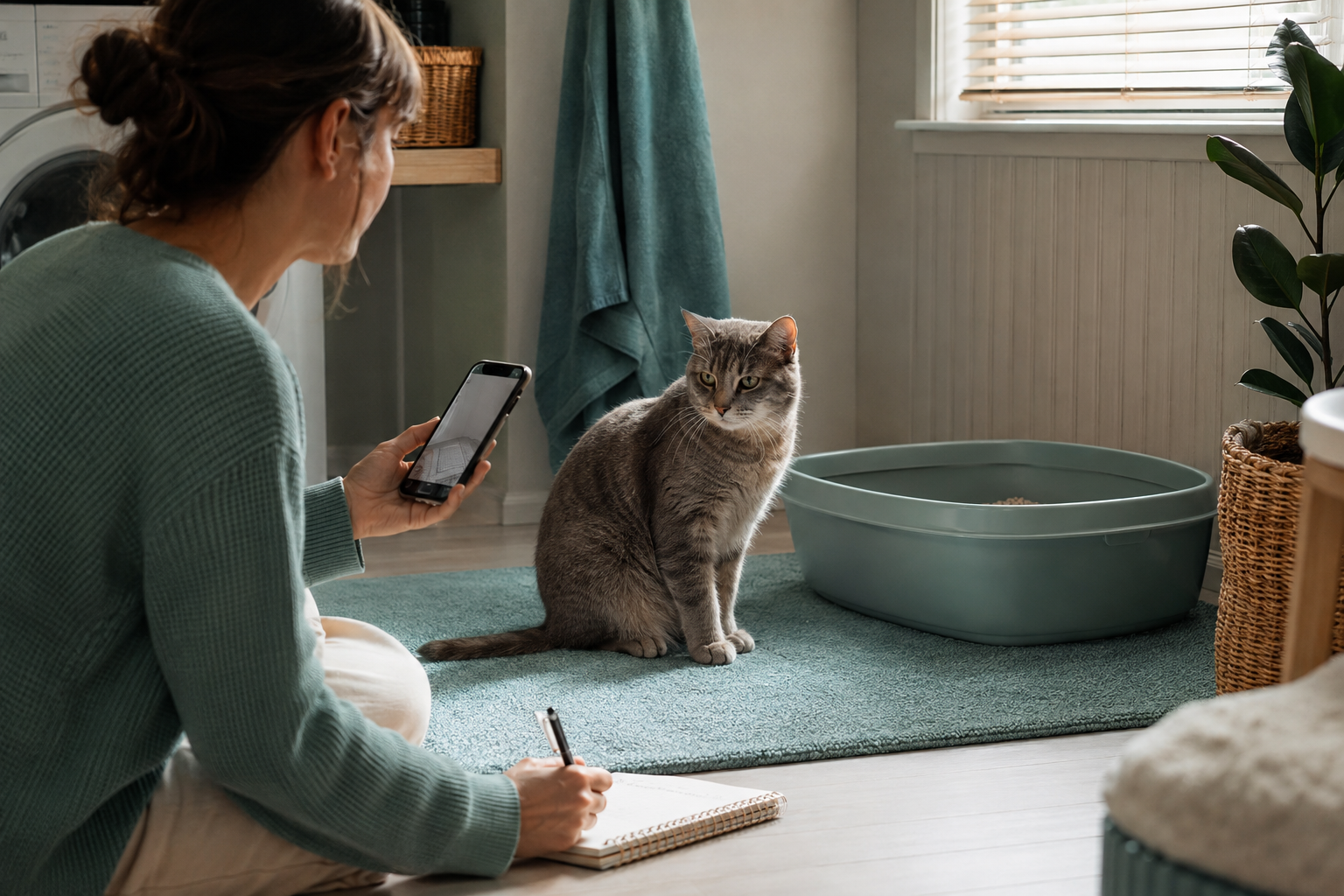
If your cat recently had urinary problems, urine clump size can help you notice patterns, but it cannot tell you the diagnosis by itself. The safest approach is to track clump timing, size changes, water intake, appetite, pain signs, and behavior so your veterinarian has clearer information at the next recheck.
Clumping litter gives cat parents a visible clue: bigger clumps often mean more urine in the box, while tiny clumps, repeated box trips, or no clump at all can signal discomfort or trouble passing urine. That clue is useful only when you compare it with the whole picture. Cats with lower urinary tract disease may strain, urinate frequently, cry in the litter box, pass blood, lick the genital area, or urinate outside the box 1.
This guide explains how to make a practical home log after your vet has already evaluated the urinary problem. It is not a way to diagnose a UTI, crystals, kidney disease, or a blockage at home.
Table of Contents
- When is a small clump or no clump an emergency?
- What does urine clump size actually tell you?
- How do you set up a simple clump log?
- What should you photograph without stressing your cat?
- How do clump patterns change after urinary treatment?
- What should you share at the vet recheck?
- What mistakes make clump tracking less useful?
- Conclusion: Use clump tracking as a pattern, not a diagnosis
- Frequently Asked Questions
- References
When is a small clump or no clump an emergency?
A cat who is straining and producing little or no urine needs urgent veterinary help, not more home tracking. Cornell describes urethral obstruction as an absolute emergency, and Merck notes that complete obstruction can lead to severe illness within 36 to 48 hours 1, 2.
Go to an emergency veterinarian now if your cat:
- Visits the box again and again but produces no urine or only drops
- Cries, pants, hides, vomits, collapses, or seems rapidly weaker
- Has a painful, tense, or swollen belly
- Is a male cat with possible blockage signs
- Stops eating or becomes dull after recent urinary treatment
- Has blood in the urine with repeated straining
Do not wait to see whether the next clump looks bigger. Lower urinary tract signs can look similar whether the cause is inflammation, stones, infection, stress-related bladder pain, or obstruction 1. A cat who cannot pass urine can deteriorate quickly.
If your cat was already treated for a blockage, follow the discharge instructions first and use SnuggleSouls' cat urinary blockage aftercare guide as a companion checklist. The log below is for stable at-home monitoring after your veterinarian has told you what to watch for.
What does urine clump size actually tell you?
Urine clump size tells you roughly how much liquid the litter absorbed in one spot, but it does not measure bladder health perfectly. Litter brand, litter depth, box humidity, how quickly you scoop, whether two cats use the same box, and whether one cat urinates in several small spots can all change what you see.
Think of clump size as a trend signal, not a lab result.
| What you see | What it may suggest | What to do next |
|---|---|---|
| One or two usual clumps at normal times | Pattern may be stable for your cat | Keep logging during the vet's recommended monitoring window |
| Many tiny clumps or damp spots | Possible frequent attempts, bladder irritation, or another cat using the box | Watch box visits closely and call your vet if it persists or comes with discomfort |
| No clump after repeated box visits | Possible inability to pass urine | Treat as urgent, especially in male cats |
| Much larger clumps than usual | More urine output, extra water intake, diet change, medication effect, or disease clue | Note water intake and ask your vet whether a recheck is needed |
| Clumps plus blood, crying, hiding, or licking | Lower urinary tract signs may be active | Contact your veterinarian promptly |
Small clumps often get attention after a urinary episode, but larger clumps matter too. Cornell notes that cats with chronic kidney disease may urinate greater volumes and drink more as the kidneys lose concentrating ability 3. Diabetes, medication changes, fluids, diet changes, and stress can also affect what you see, so the log should always include appetite, thirst, energy, and medication timing.
For broader warning signs, compare your notes with SnuggleSouls' guides to cat UTI symptoms and cat urine crystals, then call your veterinarian for case-specific advice.
How do you set up a simple clump log?
Use one simple system for seven to fourteen days, or for the exact period your veterinarian recommends. The goal is to make changes easy to compare, not to create a complicated medical chart.
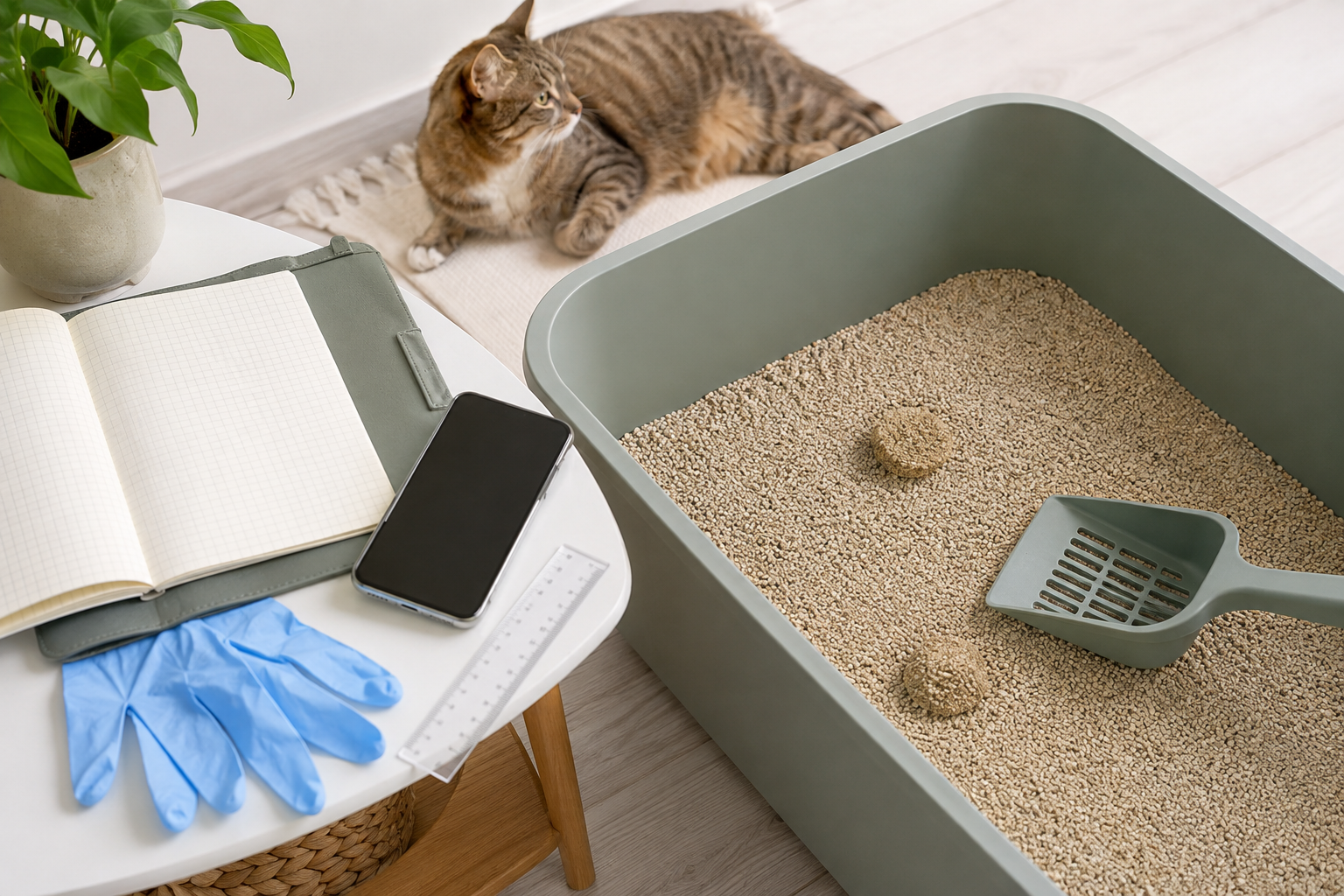
Set up the tracking routine this way:
- Keep the same litter brand and litter depth if your vet has not told you to change it.
- Scoop at consistent times, such as morning and evening.
- Write down the time, number of urine clumps, and a quick size note: tiny, small, usual, large, or very large.
- Add behavior notes: straining, crying, licking, hiding, extra box trips, appetite, vomiting, and energy.
- Record medication or diet timing if your cat is on a treatment plan.
- Photograph only unusual clumps or patterns; do not turn every box visit into a stressful event.
Consistency matters because clumping litter changes over time. A clump scooped after ten minutes may look different from one that sat overnight. A deep box may form rounder clumps than a shallow box. A dusty or overly shallow box can break apart and make urine output look smaller than it was.
The box itself should stay comfortable. Cornell recommends clean boxes in quiet, safe areas and usually one more litter box than the number of cats in the home 1. SnuggleSouls' best cat litter box setup and how often to clean a litter box guides can help you keep the setup easy to use while you monitor.
What should you photograph without stressing your cat?
Photograph changes that would be hard to describe later: a series of tiny clumps, a sudden very large clump, blood-tinged litter, no clump after repeated visits, or scattered damp spots around the box. You do not need a perfect photo. You need a calm, repeatable record.
Use the same angle when you can. Place a clean scoop or ruler near, not inside, the clump for scale if doing so is safe and hygienic. Avoid pushing your cat away from the box, hovering while they urinate, or flashing the camera in their face. Stress can worsen some lower urinary tract problems, and the 2025 iCatCare consensus summary notes that caregiver communication and environmental considerations are part of lower urinary tract disease management 4.
Good photo notes include:
- Date and time
- Which box it came from
- Whether you are sure which cat used the box
- Whether the clump is fresh or overnight
- Any behavior you saw before or after
- Whether food, water, litter, medication, or routine changed that day
In a multi-cat home, photos are less reliable unless you know which cat used the box. If you cannot separate the cats safely, record uncertainty plainly: "upstairs box, not sure which cat." That honesty is more useful than pretending the data is exact.
How do clump patterns change after urinary treatment?
After treatment, some cats settle into a more predictable urine pattern within days, while others need recheck testing, diet adjustment, pain control, stress reduction, or further investigation. Lower urinary tract signs can have different causes, and the same cat may have more than one factor involved 1, 5.
Here are patterns worth calling your vet about:
- Tiny clumps continue beyond the monitoring window your vet gave you
- The cat still enters the box often but seems uncomfortable
- Clumps become much larger and water intake rises
- Appetite drops, vomiting appears, or energy declines
- Blood returns after it had cleared
- Your cat urinates outside the box after previously improving
- A male cat has any renewed straining or poor urine output
If your veterinarian recommended more moisture, track water and food changes beside the clump notes. More wet food or added water can change urine volume, which may be expected in some plans. SnuggleSouls' guide to encourage a cat to drink more after urinary problems can help you make water easier to access without forcing intake.
Do not change a prescription urinary diet, supplement, medication schedule, or water strategy just because one day's clumps look different. A single day can be affected by stress, weather, food texture, sleep, or when you scooped. A pattern over several days is usually more useful, unless your cat has emergency signs.
What should you share at the vet recheck?
Bring the shortest version of the story your veterinarian can use quickly: what changed, when it changed, what the clumps looked like, and how your cat behaved. Cat Friendly Homes explains that veterinarians may use history, physical examination, urinalysis, blood tests, X-rays, or ultrasound depending on the cat's signs 5.
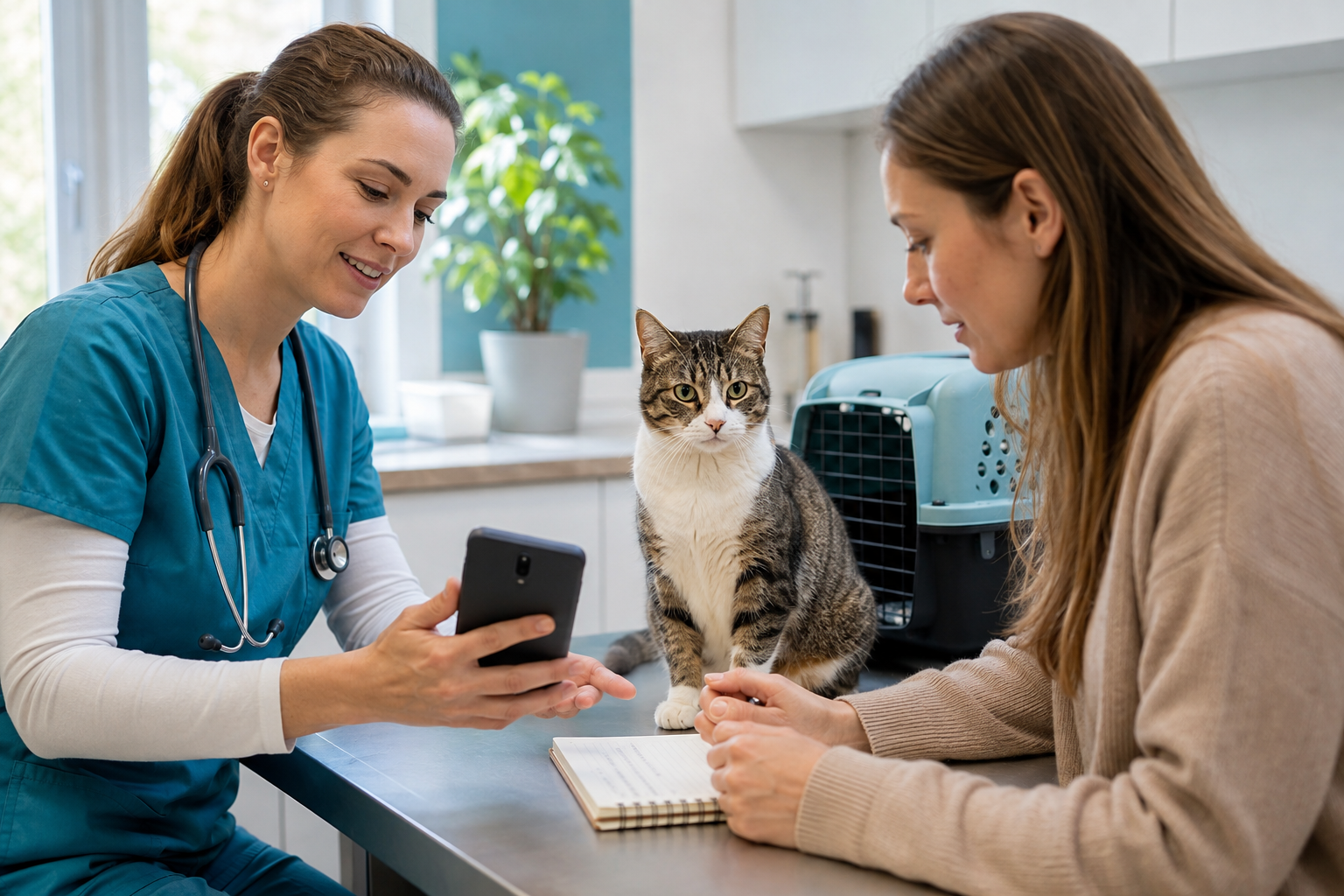
Share these details:
| Recheck detail | Example note |
|---|---|
| Dates monitored | "September 4 to September 10" |
| Box visits | "Normal once or twice daily, then five trips on Tuesday evening" |
| Clump pattern | "Usual clumps through Monday; three tiny clumps Tuesday; one normal clump Wednesday morning" |
| Pain signs | "No crying, but licking after box visits Tuesday" |
| Appetite and water | "Ate breakfast; drank more from fountain Tuesday night" |
| Medication or diet timing | "Started prescription food Friday; missed no doses" |
| Photos | "Two photos of tiny clumps from the same box" |
| Household changes | "Visitors stayed over the weekend; routine was noisier" |
Ask your clinic how they prefer updates. Some clinics want a portal message, some want a phone call, and some may ask you to bring a fresh urine sample only if they give specific collection instructions. Cornell notes that urinalysis gives important information about urine concentration, pH, and abnormal cells or bacteria, but collection method matters 3.
What mistakes make clump tracking less useful?
The biggest mistake is using clump size as proof that a cat is fine. A cat can produce urine and still have pain, inflammation, stones, infection, kidney changes, or relapse risk. The second biggest mistake is waiting during possible obstruction because you hope the next clump will appear.
Avoid these tracking errors:
- Changing litter type and box depth during the monitoring window without noting it
- Comparing clumps from different boxes as if the setup is identical
- Scooping randomly and forgetting whether a clump is fresh or overnight
- Letting several cats share the same data without marking uncertainty
- Taking photos so closely that your cat avoids the box
- Ignoring appetite, vomiting, hiding, crying, or genital licking
- Measuring clump weight as if it equals true urine volume
- Using scented products or harsh cleaning odors that discourage box use
Litter depth also affects clump shape and breakage. If your box has too little litter, urine may spread across the bottom and look like several smaller pieces when you scoop. SnuggleSouls' guide to how much cat litter to use can help you keep the box consistent while your vet handles the medical plan.
If you are worried, send the log sooner. A clear two-day record with symptoms is more useful than a perfect two-week spreadsheet that delayed care.
Conclusion: Use clump tracking as a pattern, not a diagnosis
Urine clump tracking is useful after cat urinary problems because it turns vague worry into a clearer pattern: how often your cat urinates, whether clumps are tiny or unusually large, what behavior appears around the box, and whether the pattern is improving. It is not a diagnosis and it is never a reason to wait during straining, pain, vomiting, collapse, or little-to-no urine.
Keep the system simple, consistent, and low-stress. Use photos only for meaningful changes, record uncertainty in multi-cat homes, and share the pattern with your veterinarian at the recheck. For more related monitoring and prevention context, browse SnuggleSouls' cat health guides.
Frequently Asked Questions
Is it normal for cat urine clumps to be smaller after urinary problems?
Small clumps can happen when a cat is urinating smaller amounts more often, but they can also be affected by litter depth, box sharing, timing, and litter type. If small clumps come with repeated trips, straining, crying, blood, licking, hiding, or poor appetite, call your veterinarian promptly.
How many urine clumps should a cat make per day?
There is no single normal number for every cat. Many cats urinate one to a few times daily, but diet moisture, age, disease, medication, stress, and water intake can change the pattern. Your own cat's baseline is the best comparison.
Should I weigh cat urine clumps?
Usually, a simple size category and photo are more practical than weighing clumps. Clump weight depends on litter type, timing, humidity, and how much dry litter sticks to the clump, so it should not be treated as a precise urine-volume measurement unless your veterinarian specifically asks for that method.
Can bigger urine clumps be a good sign after adding wet food?
Sometimes bigger clumps reflect improved moisture intake, especially if your veterinarian recommended wet food or added water. But much larger clumps plus increased thirst, weight loss, vomiting, appetite changes, or lethargy can also point to medical issues that need veterinary assessment.
What if I have more than one cat using the same litter boxes?
Mark the log as uncertain unless you directly saw which cat used the box. If your vet needs clearer information, ask whether temporary supervised separation, an extra box, a camera pointed only at the box area, or another low-stress plan is appropriate for your home.
References
[1] Cornell Feline Health Center. (2016). Feline Lower Urinary Tract Disease. Cornell Feline Health Center
[2] Merck Veterinary Manual. (2025). Urethral Obstruction in Small Animals. Merck Veterinary Manual
[3] Cornell Feline Health Center. (2026). Chronic Kidney Disease. Cornell Feline Health Center
[4] RCVS Knowledge. (2025). 2025 iCatCare consensus guidelines on the diagnosis and management of lower urinary tract diseases in cats. RCVS Knowledge
[5] Cat Friendly Homes. (2021). Feline Lower Urinary Tract Disease. Cat Friendly Homes
 EN
EN DE
DE ES
ES PT
PT