
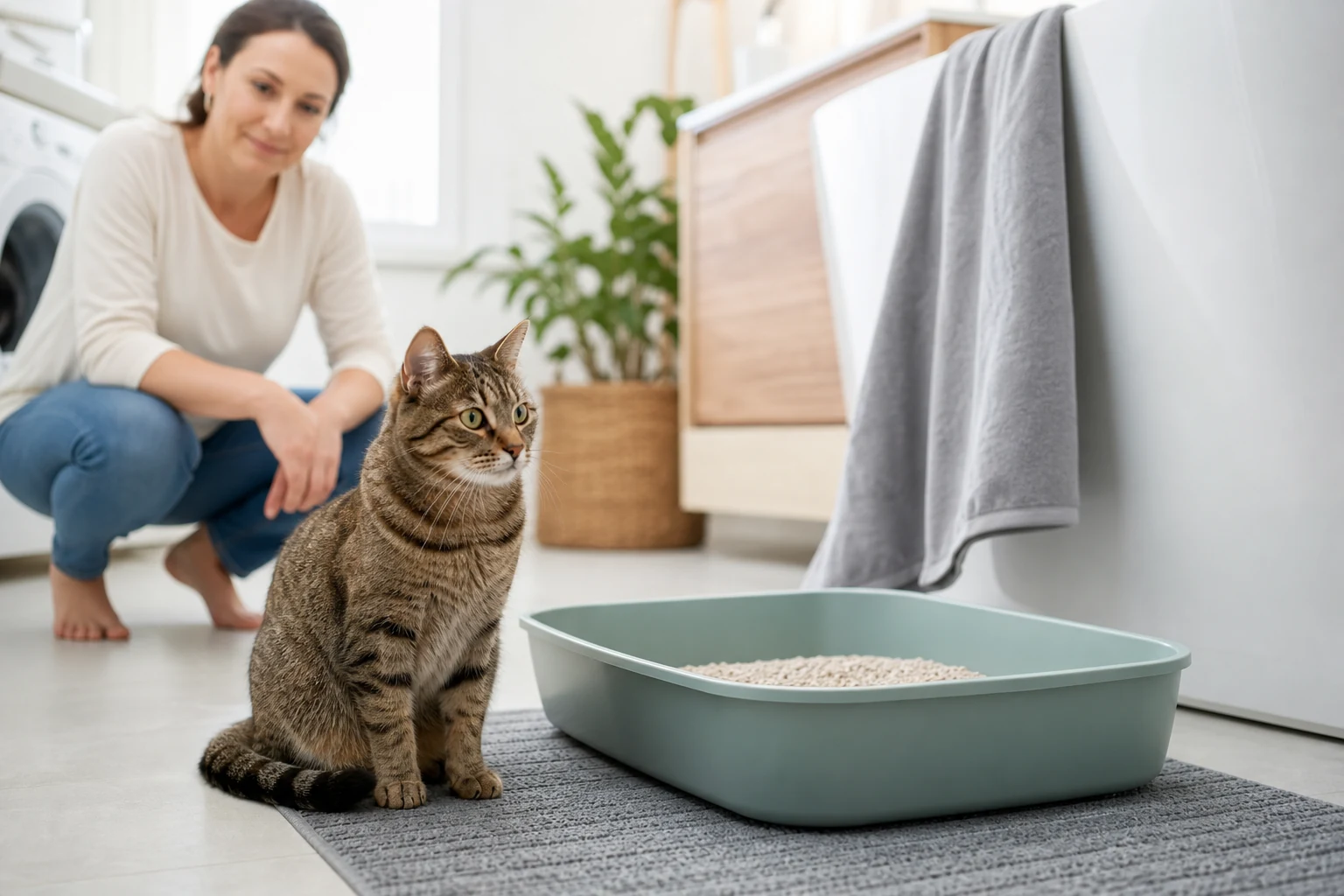
Cat urine crystals are microscopic minerals that may appear in a urine test, but the emergency is not the crystal itself. The urgent danger is a cat who is straining, passing little or no urine, crying in the litter box, vomiting, becoming weak, or acting distressed because a urinary blockage can become life-threatening fast 1.
If your cat is visiting the litter box repeatedly, producing only tiny clumps, or showing blood in the urine, treat it as a same-day veterinary problem. If your cat cannot pass urine, especially if he is male, go to an emergency veterinarian now. This guide explains what crystals mean, how they relate to stones and plugs, and what cat parents can safely do while avoiding risky home treatment guesses.
Table of Contents
- What are cat urine crystals?
- What signs suggest cat urine crystals, stones, or a blockage?
- When do cat urine crystals become an emergency?
- What causes crystals to form in cat urine?
- Could crystals be mistaken for a UTI or behavior problem?
- How will a veterinarian diagnose crystals, stones, or a blockage?
- How are cat urine crystals and stones treated?
- How can cat parents reduce crystal and stone risk at home?
- Conclusion
- Frequently Asked Questions
- References
What are cat urine crystals?
Cat urine crystals are tiny mineral structures that can be seen under a microscope during urinalysis. VCA notes that crystalluria by itself may not cause pain or obvious signs unless crystals contribute to larger stones, inflammation, or urinary blockage 3.
That distinction matters. A urine report that says "crystals present" does not automatically mean your cat is blocked, but it does mean your veterinarian needs the full picture: symptoms, urine concentration, urine pH, sediment findings, possible infection, imaging, and your cat's history.
The two crystal and stone types cat parents hear about most often are struvite and calcium oxalate. Merck Veterinary Manual describes struvite and calcium oxalate as common feline urolith types, with different prevention and treatment considerations 4. Because they behave differently, changing food or supplements without a diagnosis can backfire.
Crystals, bladder stones, urethral plugs, cystitis, and infection can all create similar lower urinary tract signs. That is why the practical question is not "Which crystal is this?" at home. The practical question is: "Is my cat passing urine normally, and how quickly does a vet need to see them?"
What signs suggest cat urine crystals, stones, or a blockage?
The most common warning signs are repeated litter box trips, straining, small urine amounts, blood in urine, crying while urinating, licking the genital area, and peeing outside the box. Cornell describes feline lower urinary tract signs as often having multiple possible causes, including inflammation, diet, infection, and behavioral factors 1.
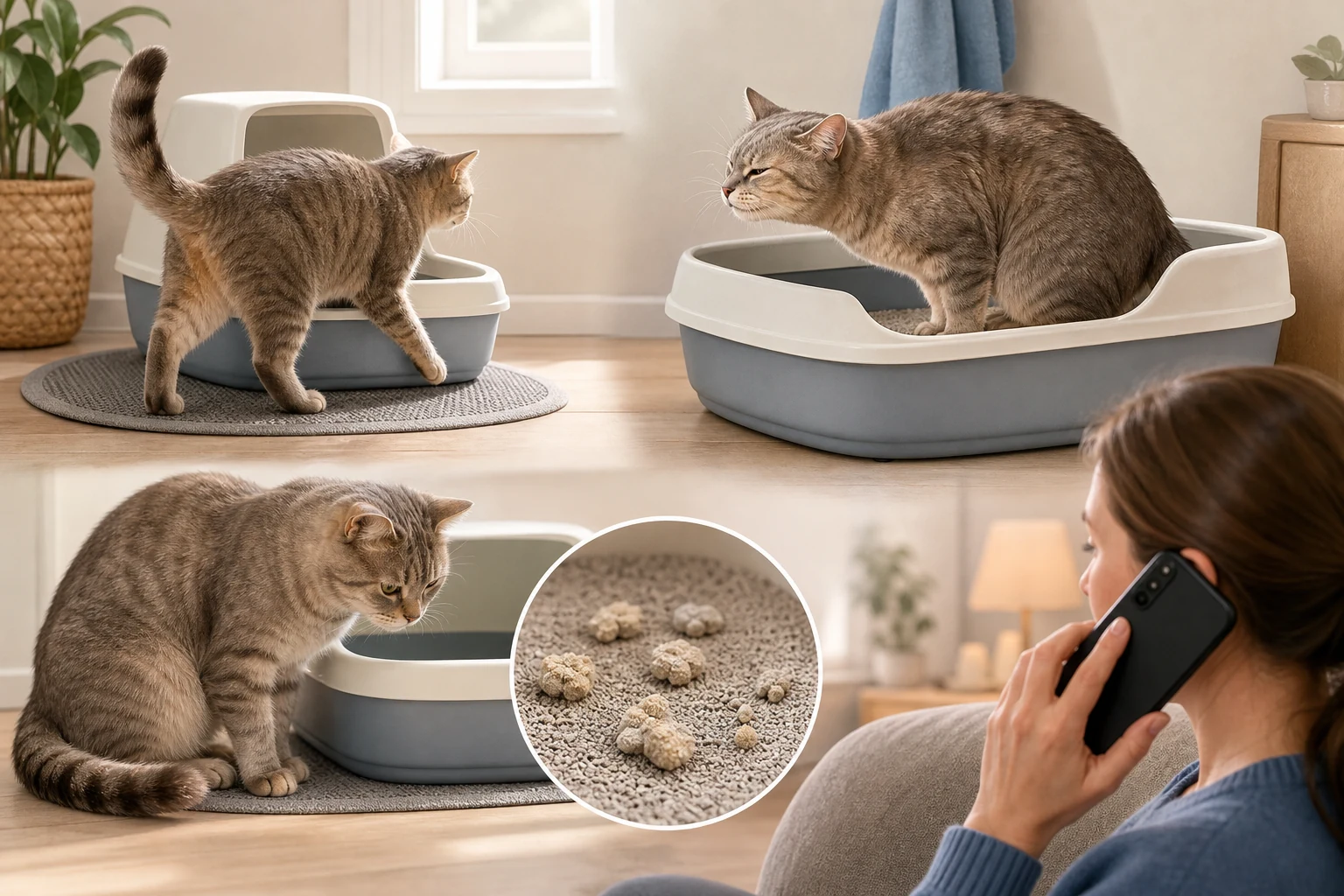
Watch the litter box pattern more than any single clue. A cat who urinates outside the box may be painful, urgent, stressed, or medically ill. A cat who keeps entering the box but leaves no normal clump is more concerning than a cat who simply chooses a new location once.
| What you see | What it may mean | What to do next |
|---|---|---|
| Frequent trips with tiny clumps | Bladder inflammation, crystals, stones, infection, or early obstruction | Call your veterinarian the same day |
| Straining but no visible urine | Possible urethral obstruction | Go to emergency care now |
| Blood-tinged urine | Irritation, stones, cystitis, infection, or trauma | Arrange prompt veterinary care |
| Crying, hiding, vomiting, or weakness | Pain, systemic illness, or blockage complications | Seek urgent veterinary care |
| Peeing outside the box | Medical discomfort or stress-related change | Start with a medical check, then address environment |
If you are also comparing signs of infection, read SnuggleSouls' guide to cat UTI symptoms. The symptoms overlap, and only testing can separate infection from crystals, sterile inflammation, stones, or blockage.
When do cat urine crystals become an emergency?
Crystals become an emergency when they are part of a blockage or when your cat cannot urinate normally. Cornell states that urethral obstruction is an absolute emergency requiring immediate veterinary treatment 1.
Emergency signs include:
- Straining with little or no urine.
- Repeated litter box visits with no normal clump.
- Crying, growling, or obvious pain in the box.
- A hard, painful belly or resistance to being picked up.
- Vomiting, collapse, severe lethargy, or rapid decline.
- Hiding, panting, or appearing unable to settle.
Male cats are at higher risk for a complete blockage because their urethra is narrow. Cornell's bladder and kidney stone guidance notes that a complete blockage can prevent waste elimination and may prove fatal without immediate care 2.
Do not wait overnight to "see if he goes." Do not press on the abdomen, try to express the bladder, give human pain medication, use leftover antibiotics, or start urine acidifiers at home. A blocked cat needs veterinary stabilization, pain control, bladder management, and lab monitoring.
What causes crystals to form in cat urine?
Crystals form when minerals in urine become concentrated enough to precipitate. The risk can be influenced by urine concentration, urine pH, diet, hydration, inflammation, infection, anatomy, body condition, stress, and individual metabolism 4.
Struvite crystals and stones are associated with magnesium, ammonium, and phosphate minerals. In cats, struvite stones may sometimes be managed with veterinarian-prescribed dissolution diets, but that decision depends on diagnosis and whether obstruction is present 4.
Calcium oxalate stones are different. Merck notes that calcium oxalate stones are expected to recur in cats and are approached with recurrence reduction rather than simple dissolution 4. This is one reason guessing the stone type from symptoms is unsafe.
Stress can also matter. Cornell describes lower urinary tract signs as having more than one possible cause and being connected with inflammation and behavioral factors in some cats 1. If your cat has stress-linked accidents, SnuggleSouls' guide to stress-related peeing changes can help you improve the environment after urgent medical causes are ruled out.
Could crystals be mistaken for a UTI or behavior problem?
Yes. A cat with crystals, stones, cystitis, or urethral irritation may look like a cat with a urinary tract infection or a litter box behavior issue. VCA lists lower urinary tract signs such as frequent urination, difficulty urinating, blood in urine, unusual urination locations, and genital licking 5.
This overlap is why "my cat is peeing outside the box" should begin with health questions. The behavior may be a message that urination hurts. SnuggleSouls has a broader guide to medical reasons cats pee outside the box and a separate guide to litter box problems once urgent disease is excluded.
UTIs are possible, especially in older cats or cats with other health conditions, but not every straining cat has a bacterial infection. Antibiotics are not a safe shortcut unless your veterinarian has evidence that infection is involved.
Behavior work still matters after medical care. Clean boxes, low-stress placement, enough litter stations, predictable routines, and conflict reduction can help prevent recurrence in cats prone to lower urinary tract flare-ups. But environmental care should not replace a same-day exam for painful urination.
How will a veterinarian diagnose crystals, stones, or a blockage?
A veterinarian will usually start with history, physical exam, and urinalysis. Urinalysis can assess urine concentration, pH, blood, inflammation, bacteria, and crystals under the microscope. Depending on the case, your vet may also recommend urine culture, bloodwork, X-rays, ultrasound, or stone analysis.
Diagnosis has two urgent goals. First, the vet needs to know whether your cat can pass urine. Second, they need to identify the likely cause so treatment does not accidentally make the problem worse.
Common veterinary checks include:
- Palpating the bladder to assess size, pain, and obstruction concern.
- Testing urine for concentration, pH, blood, crystals, and infection clues.
- Imaging to look for bladder stones or urethral stones.
- Bloodwork if blockage, kidney strain, dehydration, vomiting, or systemic illness is suspected.
- Follow-up testing to see whether a diet or treatment plan is working.
If a cat is blocked, diagnosis and treatment happen together because obstruction is time-critical. Your veterinary team may need to relieve the blockage, provide fluids, correct electrolyte changes, manage pain, and monitor urine output.
How are cat urine crystals and stones treated?
Treatment depends on whether your cat has microscopic crystals only, bladder inflammation, infection, stones, or a urethral blockage. There is no one safe home treatment that covers all of those possibilities.
Your veterinarian may recommend one or more of the following:
- Emergency unblocking and hospitalization if the cat cannot urinate.
- Pain relief and anti-spasm support chosen for cats.
- Prescription urinary food matched to the crystal or stone type.
- Increased water intake and wet-food strategies.
- Antibiotics only when infection is confirmed or strongly suspected.
- Surgery or other procedures for stones that cannot dissolve or are causing obstruction.
- Stress and litter box changes for cats with recurrent lower urinary tract signs.
Do not use over-the-counter urinary acidifiers, cranberry products, essential oils, human pain relievers, or leftover medication without veterinary instruction. Urine pH manipulation is not a harmless guess, especially when struvite and calcium oxalate risks differ.
If your cat is prescribed a urinary diet, ask the vet exactly what treats, toppers, supplements, and other foods are allowed. Mixing foods can interfere with a dissolution or prevention plan.
How can cat parents reduce crystal and stone risk at home?
The safest home plan is hydration, litter box monitoring, weight management, stress reduction, and following your veterinarian's diet plan exactly. These steps support urinary health without pretending to replace diagnosis.
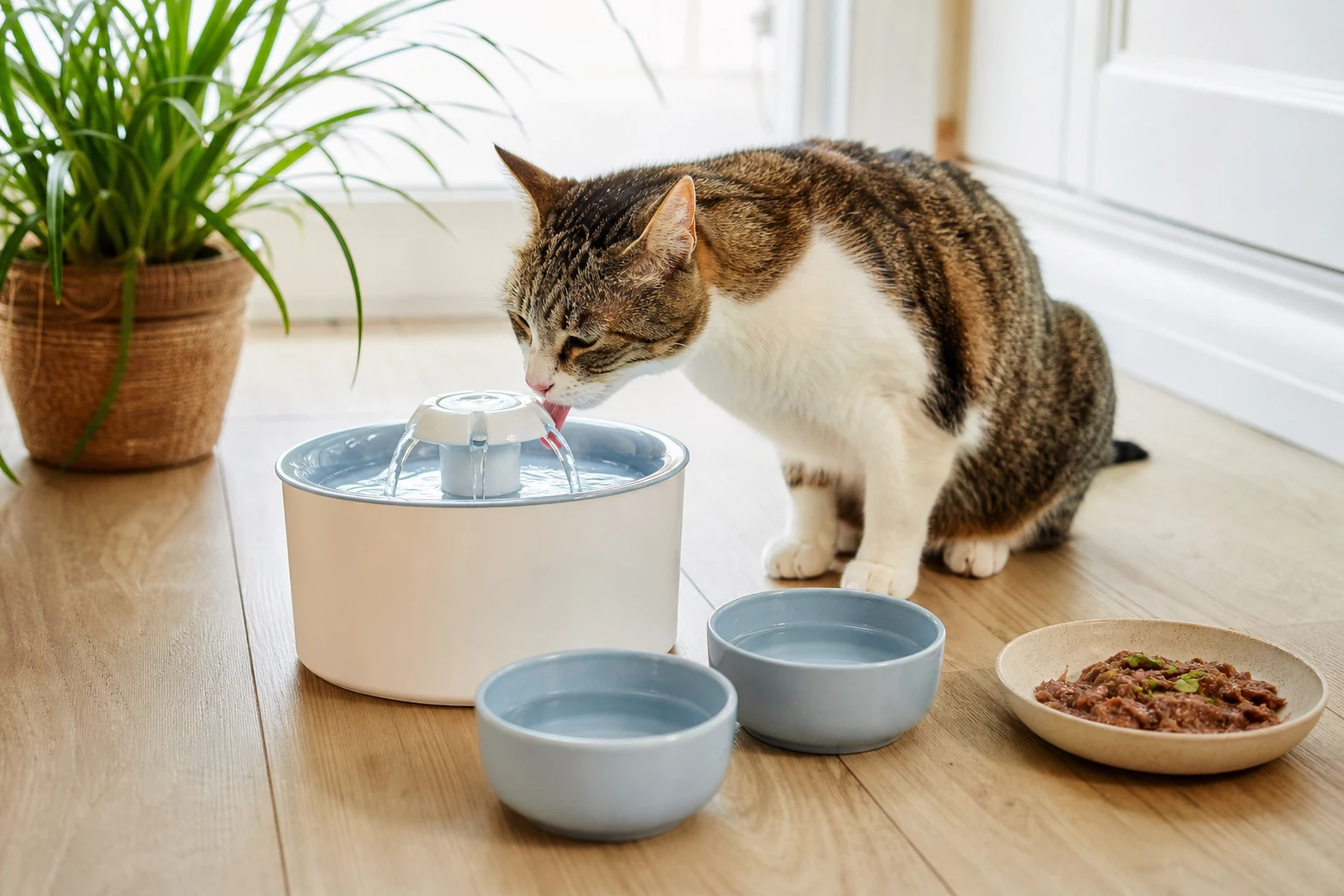
Practical prevention support includes:
- Offer multiple clean water stations in quiet locations.
- Consider a cat water fountain if your cat prefers moving water.
- Feed wet food if your veterinarian agrees; see the SnuggleSouls guide to the benefits of wet food for cats.
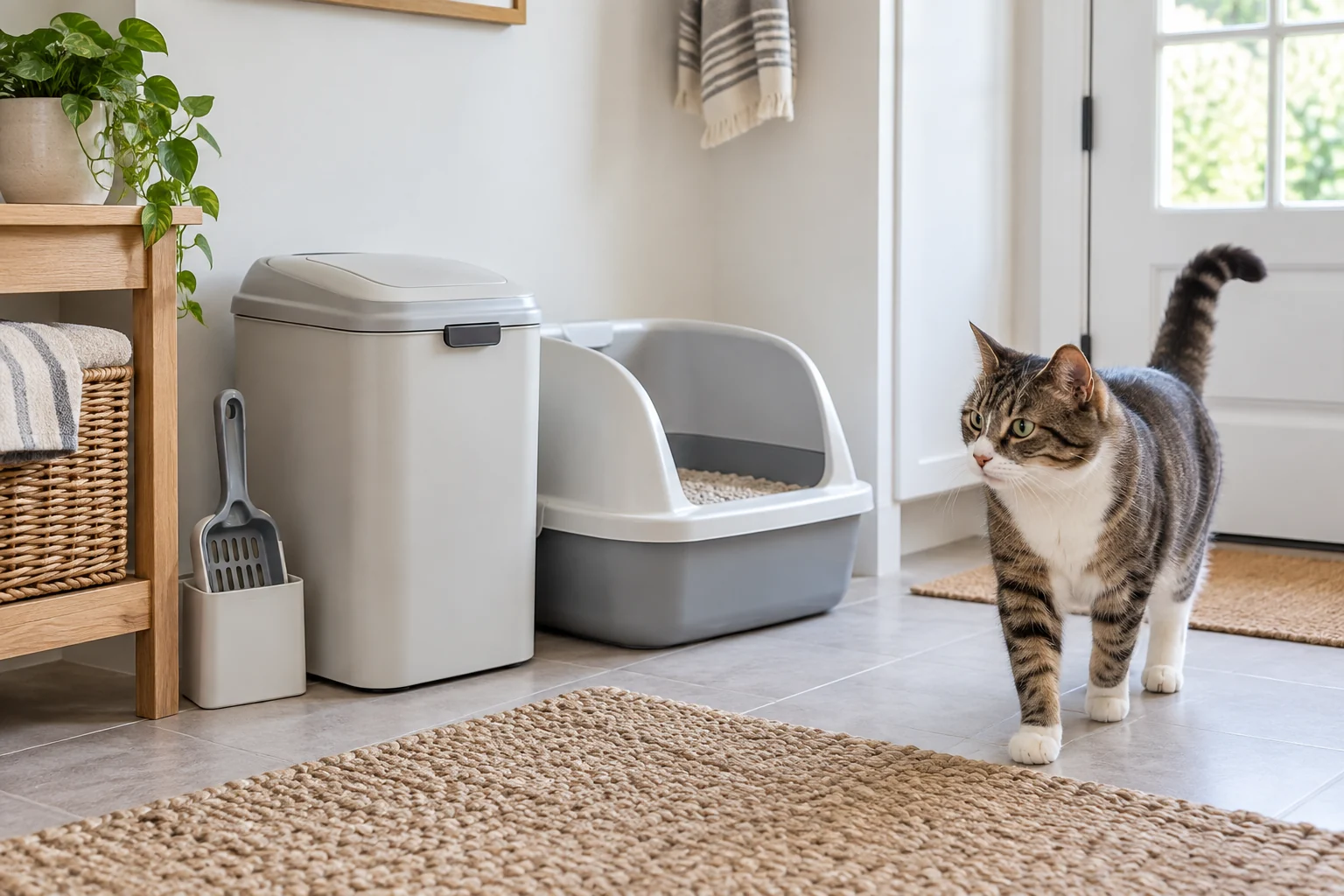
- Keep litter boxes clean, accessible, and easy to enter.
- Provide one box per cat plus one extra when possible.
- Track clump size, frequency, accidents, and discomfort.
- Maintain a healthy weight using a healthy body condition guide.
- Reduce household stress with predictable routines, safe resting spots, and separate resources for multi-cat homes.
If your cat has had stones or a blockage before, ask your veterinarian for a written recurrence plan. It should explain what food to use, how often to recheck urine, what signs require urgent care, and whether imaging follow-up is needed.
Conclusion:
Cat urine crystals are a lab finding, but straining, pain, blood, tiny urine clumps, and inability to urinate are real-world warning signs. The safest response is to assume urinary trouble can become serious until a veterinarian proves otherwise.
Go to emergency care immediately if your cat is straining without producing urine, crying in the litter box, vomiting, collapsing, or rapidly worsening. For less dramatic but abnormal urination, book same-day veterinary advice. For more follow-up reading after the urgent question is handled, browse SnuggleSouls' cat health guides.
Frequently Asked Questions
Are cat urine crystals always dangerous?
No. Microscopic crystals can appear on urinalysis without causing obvious pain by themselves 3. They become more concerning when your cat has urinary signs, stones, plugs, infection, inflammation, or trouble passing urine.
Can cat urine crystals go away on their own?
Sometimes crystals may change when urine concentration, pH, diet, or hydration changes, but you should not try to manage symptomatic crystals without a veterinarian. If your cat is straining, painful, bloody, or producing tiny amounts, the issue may be more than crystals.
What does a blocked cat look like?
A blocked cat may repeatedly enter the litter box, strain, cry, produce no normal urine clump, lick the genital area, hide, vomit, or become weak. This is an emergency, especially in male cats.
Are crystals the same as bladder stones?
No. Crystals are microscopic mineral structures, while bladder stones are larger mineral formations. Crystals can be part of the process that forms stones, but a urine test, imaging, and sometimes stone analysis are needed to understand the actual problem.
Should I change my cat's food if crystals are found?
Only with veterinary guidance. Struvite and calcium oxalate issues are managed differently, and the wrong diet or supplement choice can be unhelpful or risky. Ask your veterinarian what crystal or stone type is suspected and how follow-up will be measured.
References
[1] Cornell Feline Health Center. (2026). Feline Lower Urinary Tract Disease. Cornell University College of Veterinary Medicine
[2] Cornell Feline Health Center. (2026). Bladder and Kidney Stones. Cornell University College of Veterinary Medicine
[3] VCA Animal Hospitals. (2025). Crystalluria in Cats. VCA Animal Hospitals
[4] Merck Veterinary Manual. (2025). Urolithiasis in Cats. Merck Veterinary Manual
[5] VCA Animal Hospitals. (2026). Cystitis and Lower Urinary Tract Disease in Cats. VCA Animal Hospitals


 Why Does My Cat Flinch When Touched While Sleeping? Startle, Trust, and Pain Clues">
 Cat Scratching Baseboards: Trim Guards and Route Fixes">
 EN
EN DE
DE ES
ES PT
PT