

Peanut butter is not a nutritionally useful routine treat for cats. This guide explains what to do after an accidental lick and why medication or special-diet questions belong with a veterinarian.
Cats may investigate human food, but that interest does not make it a suitable treat. This guide focuses on practical safety and diet questions.
Let’s dive in with a clear answer up front: while a tiny lick of plain peanut butter probably won’t harm your cat, it’s generally not recommended as a cat treat.
Is Peanut Butter Safe for Cats? (The Short Answer)
Peanut butter is not a routine cat treat. It is calorie-dense (treats should stay under 10% of your cat’s daily target in our Cat Calorie Calculator), sticky, and offers no nutritional advantage over a complete cat food. Check the ingredient label and contact a veterinarian if your cat eats it and you have questions about the ingredients or symptoms.
However, “safe” doesn’t mean “healthy” or “recommended.” Peanut butter provides no nutritional value to cats and is essentially “empty calories” for them.
Peanut butter is plant-based and does not provide the nutrient balance of a complete cat food. It is not formulated to meet a cat’s nutritional needs.
Moreover, peanut butter is high in fat and calories, which our often-indoor, less-active feline friends don’t need in their diet. Calorie content varies by brand, so check the label; even a small spoonful can add substantial calories for a cat.
Why Peanut Butter Isn’t Ideal for Cats

The practical reasons to skip peanut butter are its calorie density, sticky texture, and possible added ingredients. It has no nutritional role that a cat cannot get from complete cat food or an appropriate cat treat.
Obligate Carnivores
Peanut butter is calorie-dense and does not provide the complete nutrient profile a cat needs. Keep the regular diet complete and balanced, and reserve treats for occasional use.
Empty Calories
As mentioned, it’s full of calories but lacks essential nutrients for cats. Every bite of peanut butter might displace some of the balanced cat food they should be eating.
Most Cats Don’t Even Like It
Some cats may investigate peanut butter because of its smell or texture. Interest does not mean that it is a suitable treat or meets a nutritional need.
If your cat shows interest, do not use that reaction as a reason to offer a serving. Choose a cat-specific treat if a treat is appropriate for your cat.
Do not rely on a cat’s interest in peanut butter as evidence that it is suitable; keep any treat small and occasional.
Stickiness & Texture
Peanut butter’s thick, sticky consistency can be difficult for cats to handle. Unlike dogs (who will happily lap up peanut butter), cats have smaller throats and a different tongue texture.
Its thick, sticky texture may be awkward for some cats. Do not deliberately offer a glob or use peanut butter as a regular treat.
Product Ingredients

One of the biggest problems with sharing peanut butter (or any human foods) with pets is the unknown additives lurking in the jar.
Products vary: some contain only peanuts and oil, while others add sugar, salt, or sweeteners. Those additives do not make peanut butter a useful cat food, and mixed products may include ingredients that pose separate risks. Read the whole label instead of assuming every sweetener has the same effect in cats.
Here’s a visual rundown of peanut butter components that can spell trouble for felines, and why:
| Ingredient/Component | What cat owners should know |
|---|---|
| Xylitol (artificial sweetener) | ASPCA reports that cats are not negatively affected by xylitol itself. Check the whole product for other ingredients that may be unsafe for cats. |
| Added sugars | They add calories without nutritional value for cats. They should not be described as directly causing diabetes from a small exposure; avoid using sweetened products as treats. |
| Salt (sodium) | Salt adds sodium without nutritional value for cats. Avoid salty products; if a cat eats a large amount or develops signs of illness, contact a veterinarian for case-specific advice. |
| Oils and fats | Peanut butter can be calorie-dense and may upset some cats’ stomachs. It is not a nutritionally useful routine treat. |
| Thick, sticky texture | The texture may be difficult for some cats to manage. Avoid offering a glob; peanut butter is not needed in a cat’s diet. |
Peanut Butter Is Not a Useful Routine Treat
Peanut butter does not provide complete feline nutrition, and cats have no dietary need for it. It is calorie-dense, so check the product label before considering even a tiny taste.
Healthy Alternatives to Peanut Butter for Cats

One silver lining of learning that peanut butter isn’t great for cats is that it encourages us to get creative with healthier treats. If you want to offer a treat, choose one intended for cats and keep treats occasional; ask your veterinarian about individual dietary restrictions. 1
Here are some cat-safe treat alternatives to use instead of peanut butter:
| Lean Meat Bits | Cats are carnivores, so lean cooked meats make excellent treats. Try offering a small piece of plain cooked chicken or turkey (no seasoning). If a cat can have it, a small amount of plain cooked meat may be an occasional treat.Other options: a bit of cooked fish like salmon or tuna (packed in water, unsalted), or a cooked egg (many cats enjoy scrambled or hard-boiled egg in moderation). These are high in protein and much healthier than peanut butter. |
|---|---|
| Commercial Cat Treats (in Moderation) | There are many store-bought treats formulated for cats’ nutritional needs. Aim for high-protein treats (freeze-dried meat treats, for example, which contain only meat). Freeze-dried salmon or chicken treats may suit cats that prefer meat flavors. Check the ingredients and calories, and offer them only as small extras. |
| Cat-Safe Vegetables | Yes, some cats will eat veggies! While cats don’t require vegetables, a few veggies can be given as low-calorie treats if your cat likes them. Examples include pumpkin, peas, cooked carrot, green beans, zucchini, or spinach.Pumpkin puree (plain, not spiced pie filling) is often used to help with digestion and many cats will lick a spoonful. Vegetables provide fiber and moisture.Always offer them plain (no butter, salt, or seasoning) and in small amounts. Not all cats have a taste for veggies, but it’s worth a try if yours seems curious. |
| Catnip or Cat Grass | If we broaden “treat” to things cats enjoy consuming, catnip deserves a mention. It’s a plant related to mint that gives many cats a harmless, euphoric pleasure when sniffed or eaten. Offering your cat a pinch of dried catnip or a fresh catnip plant to nibble can be a great reward or distraction.Similarly, cat grass (usually wheatgrass or oat grass) is a safe plant cats enjoy chewing on, which can aid digestion. These aren’t food treats per se, but they satisfy the urge to snack on something and may be enjoyed by some cats, but are not necessary foods. |
| Broth or “Cat Soup” | Some cats are finicky about drinking water. A treat that also hydrates is low-sodium meat broth. You can offer a tablespoon of plain chicken broth or tuna juice (the water from a tuna can, ideally low sodium) as a “soupy” treat.This can be especially nice on a hot day or for a cat that needs encouragement to drink.Make sure the broth does not contain onion or garlic, which are toxic to cats. |
| DIY Frozen Treats | If you want to get crafty, you can make simple cat-friendly frozen treats. One option is to blend a little plain pureed pumpkin with water or low-sodium broth, pour into small ice cube trays, and freeze.The result is a catsicle that some felines will lick and play with – enrichment and snack in one! You can also freeze small bits of meat in water to make a carnivore popsicle. This is enrichment as much as a treat. |
Want to explore more safe snack options for your feline friend? Don’t miss our full guide on what cats can safely eat — including surprising human foods that can double as healthy, occasional treats.
A cat-specific alternative to peanut butter
If you want to reward your cat, offer a treat made for cats instead of peanut butter or products that may contain unsuitable ingredients. Keep the portion small and count it in the daily calories.
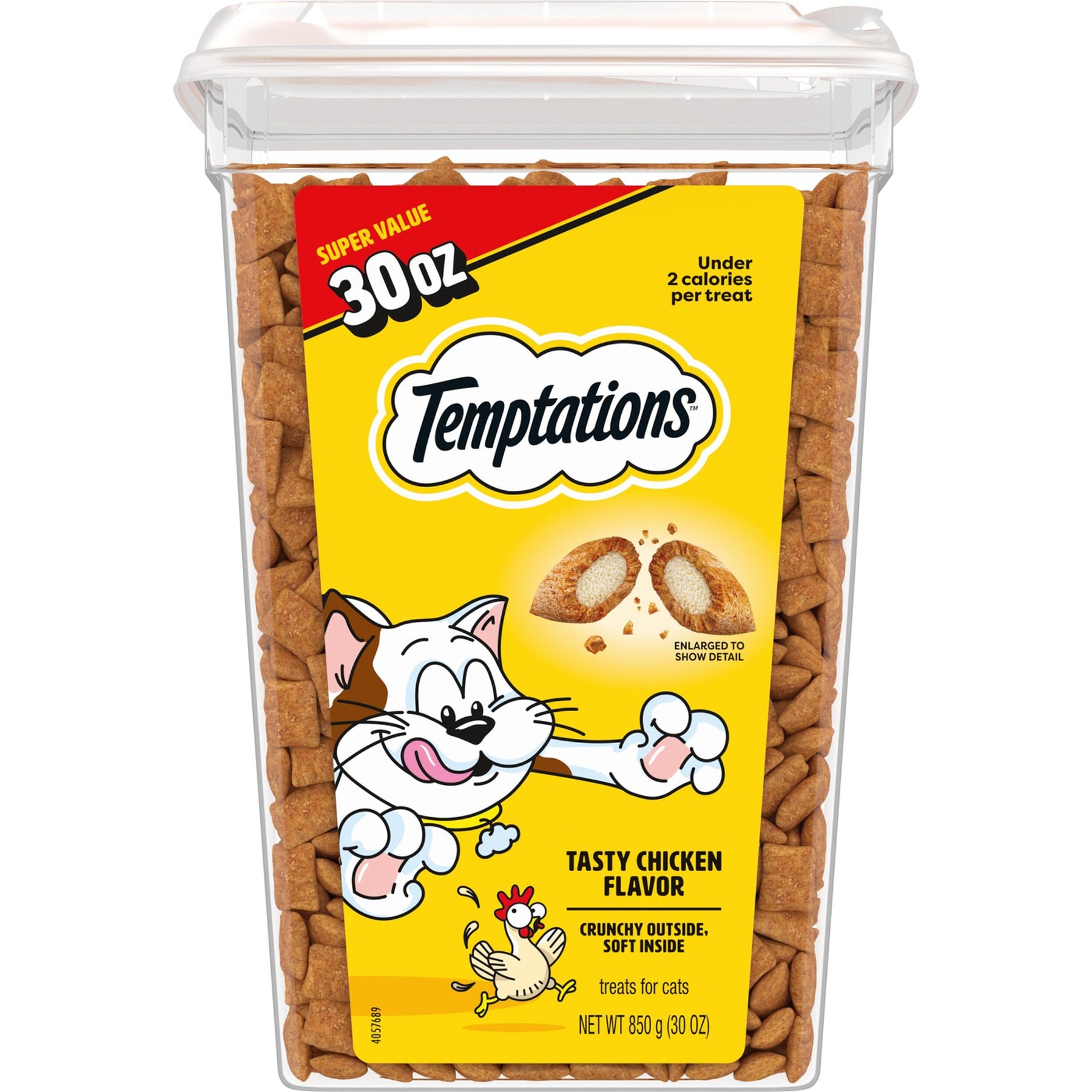
Temptations
Temptations Classic Tasty Chicken Flavor Soft & Crunchy Cat Treats, 30-oz tub
Bring out Temptations Classic Tasty Chicken Flavor Crunchy and Soft Cat Treats and watch your kitty come running the moment you open up the…
$14.97
Shop ChewyWe may earn a commission if you buy through this Chewy link, at no extra cost to you. Product details and prices can change.
Conclusion
In closing, if you ever catch yourself in the kitchen with a peanut butter jar in one hand and a pleading cat at your feet, you’ll know exactly what to do: offer a safer alternative (or a nice play session) and keep that peanut butter for your own sandwich.
I hope this article helped you feel more confident about why peanut butter isn’t the best treat for cats and gave you plenty of ideas for what to do instead. My aim is always to empower fellow cat lovers with knowledge that is evidence-informed and useful – after all, our cats rely on us to keep them safe.
Thank you for reading and putting your cat’s well-being first. Give your kitty some extra chin scratches or playtime today – they may not get peanut butter, but they’ll definitely know they’re loved!
For a broader list of human foods, see What Can Cats Eat?. For daily diet and portion basics, use our cat feeding guide.
FAQ
Can cats eat peanuts?
Plain, unsalted, shelled peanuts are not toxic to cats but are not recommended due to choking risks and high fat content. They offer no nutritional benefit to felines and may cause digestive upset.
What should I do if my cat licked some peanut butter?
Check the ingredient label and call your veterinarian or an animal poison-control service if you are unsure about an ingredient, the amount eaten, or your cat develops symptoms. Do not induce vomiting unless a veterinarian tells you to.
Is xylitol toxic to cats like it is to dogs?
The severe low-blood-sugar and liver-injury warning is well established for dogs; it should not be copied as a proven cat-specific effect. If the product contains other ingredients that may harm cats, or your cat is unwell, contact a veterinarian or animal poison-control service with the full ingredient list. 2
Can I give my cat peanut butter to help with medication?
Do not use peanut butter to hide medication unless the prescribing veterinarian approves that food and method for your cat and the specific medicine.
Are there any healthy alternatives to peanut butter for cats?
Yes! Lean meats like chicken or turkey, freeze-dried meat treats, plain pumpkin puree, cooked egg, and broth-based cat treats are all safer choices. You can download our Healthy Treats for Cats Cheat Sheet for more ideas.
References
[1] Cornell Feline Health Center. Feeding your cat.
[2] ASPCA Animal Poison Control Center. Updated safety warning on xylitol.
[3] ASPCA Animal Poison Control Center. (2020). People Foods to Avoid Feeding Your Pets. ASPCA.org. Retrieved from ASPCA: People Foods to Avoid Feeding Your Pets
[4] Cottam, E. M., & Dodds, R. (2022). Toxicology of Xylitol in Domestic Animals: A Veterinary Review. Journal of Veterinary Pharmacology and Therapeutics, 45(2), 173–182.
[5] Hill’s Pet Nutrition. (2021). Can Cats Eat Peanut Butter? Hillspet.com. Retrieved from Hill’s Pet Nutrition
[6] Pawlicy Advisor. (2023). Can Cats Eat Peanut Butter? Here’s Everything You Need to Know. Retrieved from Pawlicy Advisor: Can Cats Eat Peanut Butter?
[7] Purina. (n.d.). Can Cats Eat Peanut Butter? Purina Pet Care Advice. Retrieved from Purina: Can Cats Eat Peanut Butter?
[8] Smargiasso, C. (2021, October 11). Can Cats Eat Chocolate, Peanut Butter, or Ice Cream? Petcube. Retrieved from Petcube: Can Cats Eat Chocolate and Other Sweets?