
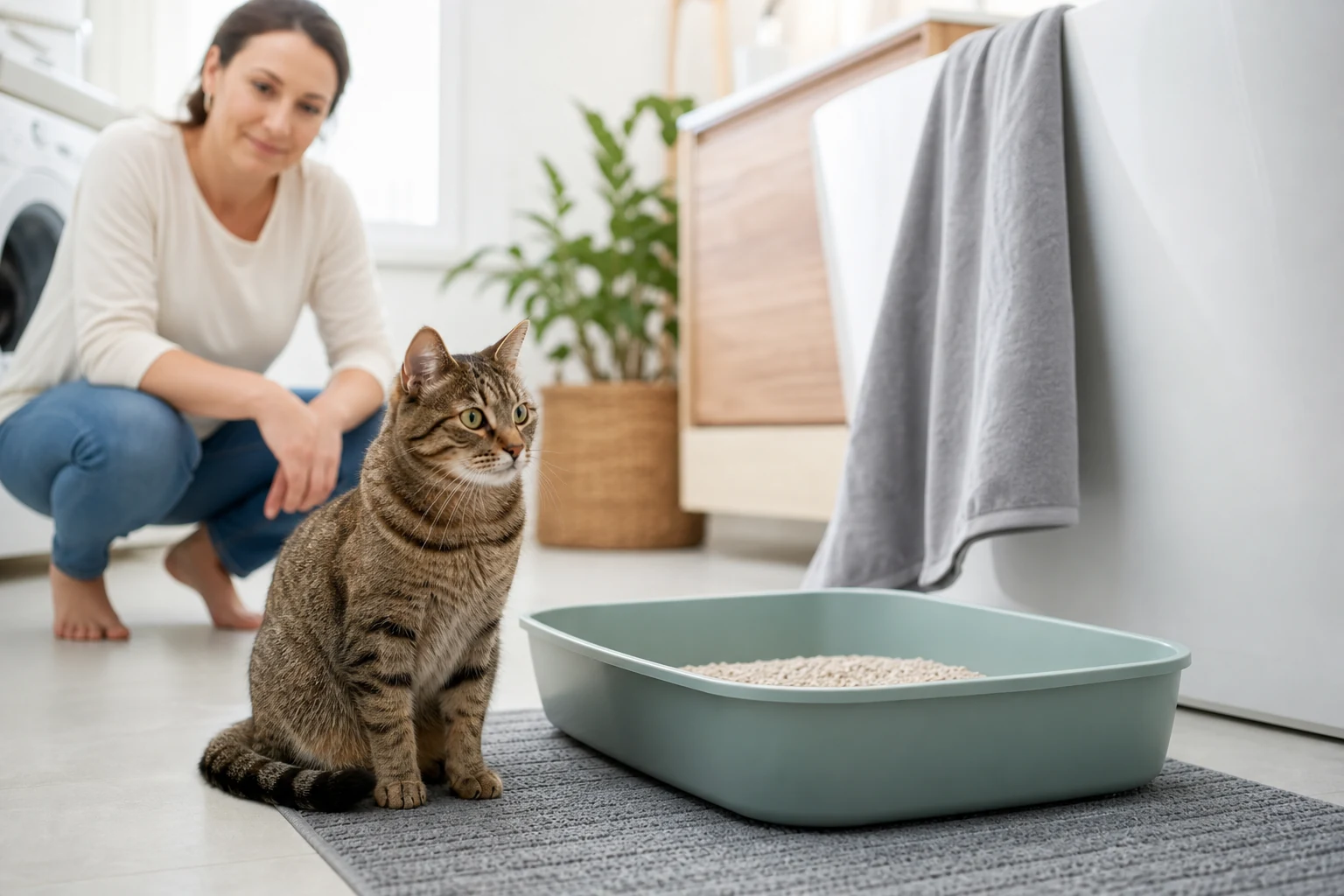
What a normal cat stool looks like
VCA describes a kitten's normal stool as chocolate-brown, formed and segmented. In an adult cat the same description holds: a moist, log-shaped stool that holds its shape on the scoop and leaves the tray clean when you lift it. Brown is the color because bile pigment from the liver is broken down as waste passes through the intestine.
Stool varies between cats and between days. What matters more than any single stool is the pattern: how often it changes, whether the change repeats, and whether your cat is eating, drinking and behaving normally alongside it. Scooping daily is what makes that pattern visible at all.
How this checker decides
The checker takes the most serious of what you selected, rather than averaging. Three factors feed into it, and any one of them can raise the result on its own.
Color sets a floor. Brown and very dark brown sit inside the normal range. Black or tarry stool, visible red blood, and pale or clay-colored stool each start at "contact your vet", because none of them can be explained by diet alone.
Consistency can raise the result too. Watery stool carries a dehydration risk, and straining with no stool can be constipation, an obstruction, or urinary straining mistaken for either.
What else you noticed can raise it to the top level. Weakness, pale gums, repeated vomiting or signs of pain move the answer to "urgent today" regardless of color, because those signs describe the cat rather than the stool.
Color on its own does not identify a cause. The checker tells you how to read one observation and how soon to act on it; your veterinarian is the one who can examine the cat and test a sample.
Signs that mean call now, not later
These signs override everything else on this page. If any of them is present, the stool color is no longer the question:
- Weakness, collapse, or a cat that will not stand
- Pale, white or gray gums
- Repeated vomiting, or vomiting alongside diarrhea
- Signs of pain, crying out, or a hunched, guarded posture
- Repeated straining with little or nothing produced, especially in a male cat
Cornell advises seeking veterinary care as soon as possible when diarrhea lasts longer than a day or two and comes with poor appetite, lethargy or vomiting. Merck notes that black, tarry feces may be a sign of bleeding in the stomach or small intestine, and that continuing diarrhea needs treatment because fluid loss can lead to dehydration, electrolyte imbalance and shock.
Kittens, senior cats and cats with a health condition
The same stool carries different weight depending on the cat. A kitten has little reserve: diarrhea can dehydrate one quickly, so VCA's guidance for kittens is to involve a vet rather than watch for several days. A senior cat is more likely to have an underlying disease contributing, and a change that would be minor in a young cat can be the first visible sign of something else.
A cat already being treated for kidney, thyroid, diabetes, liver, gut or pancreatic disease needs its own baseline. For those cats, the useful comparison is against their own recent normal, not against a general chart, and diet changes should go through the veterinary team managing the case.
Frequently asked questions
Is brown stool always normal?
Brown is the expected color, but color alone does not clear a stool. Brown, watery stool is still diarrhea, and brown stool with mucus, blood or a change in your cat's appetite still deserves a call. Read color and consistency together.
Can a new food change stool color?
Yes. Diet changes are one of the ordinary reasons stool shifts, which is why the checker asks whether the change repeats. Note the date you switched food and keep it in the same note as the stool change, so your vet can separate diet from disease.
My cat's stool looks black, but I am not sure.
Very dark brown stool can look black under indoor light. Photograph it in daylight next to something white for reference. If it still reads black, sticky or tarry in natural light, treat it as black stool and contact your vet.
Why does the checker ask about consistency as well as color?
Because the two answer different questions. Color points at where in the gut something may be happening; consistency points at how quickly waste is moving and how much water is being lost. A watery stool is a dehydration risk even when the color is unremarkable.
Should I bring a stool sample to the vet?
Ask when you call. Many clinics want a fresh sample, and Cornell notes that stool testing is part of how intestinal parasites are diagnosed. A photograph taken in daylight is a useful second record, particularly for color.
Does litter change what I am seeing?
It can. Clumping litter draws moisture out and can make stool look drier and lighter than it is, and litter dust lightens the surface. Judge color on a freshly passed stool, in daylight, before it has had time to dry.
Sources
- Cornell Feline Health Center. Diarrhea.
- Merck Veterinary Manual. Introduction to Digestive Disorders of Cats.
- VCA Animal Hospitals. What Color Should Kitten Poop Be?
- VCA Animal Hospitals. Emergencies in Cats.
- Cornell Feline Health Center. Gastrointestinal Parasites of Cats.
 EN
 DE
 ES
 PT